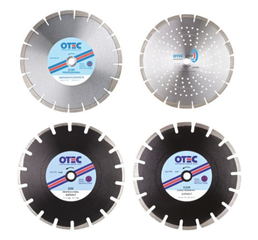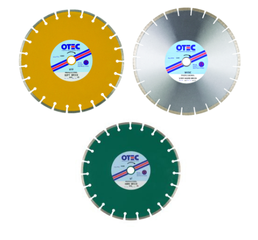
Benchsaw Blades

Benchsaw blades are diamond blades for bench-mounted and table-mounted saws used for specialist brick cutting, concrete block cutting and abrasive construction materials. CMT Group supplies OTEC benchsaw blades for soft brick, hard brick, ultra hard brick, concrete block, multi-purpose and asphalt-related applications ... Benchsaw blades are diamond blades for bench-mounted and table-mounted saws used for specialist brick cutting, concrete block cutting and abrasive construction materials. CMT Group supplies OTEC benchsaw blades for specialist brick cutting and specialist concrete block cutting, including options for soft brick, hard brick, ultra hard brick, multi-purpose use and asphalt-related applications where listed. Start with the application and material being cut, then confirm blade diameter, bore size, segment detail, machine type, maximum RPM rating and any stated wet cutting suitability on the product listing. Blade specification should be matched to the material being cut, so check the individual product data before ordering. For project quantities, repeat blade specifications or depot replenishment, CMT Group can help check suitable product options, availability and delivery requirements before you order. read more...read less
Choose the right benchsaw blade for your application
| Application | Use when | Specification checks | Typical options |
|---|---|---|---|
| Specialist brick cutting | For bench saw or table saw cutting into soft brick, medium/hard brick, hard brick or ultra hard brick | Brick type; blade diameter; bore size; segment height or width where stated; machine type; maximum RPM rating where stated; product data | OTEC W19, W19B, W19SC, W6SC, W7 and W63P options where listed for the relevant brick type |
| Soft brick blades | For soft brick cutting on a bench saw or masonry saw | Material suitability; blade diameter; bore size; segment detail; machine type; maximum RPM rating where stated; product data | OTEC W19, W19B or W19SC options where listed for soft brick; W19B available in 350x25mm where listed; W19SC silent centre option where listed |
| Hard and ultra hard brick blades | For medium/hard brick, hard brick or ultra hard brick cutting | Brick type; blade diameter; bore size; segment height or segment width where stated; machine type; maximum RPM rating where stated; product data | OTEC W6SC, W7 or W63P options where listed; W6SC silent centre option for ultra hard brick where listed; W63P available in 600x25mm where listed |
| Specialist concrete block cutting | For concrete block, concrete-related materials or abrasive construction materials on a bench saw | Material suitability; blade diameter; bore size; segment detail; undercut protection where stated; machine type; maximum RPM rating where stated; product data | OTEC D18P, X19P, D20B or D20 options where listed for the relevant material or application; undercut protection where shown in product data |
| Abrasive and asphalt-related materials | For abrasive materials, asphalt-related applications, sandstone, yorkstone or mixed construction materials on a bench saw | Material suitability; blade diameter; bore size; undercut protection where stated; segment detail; machine type; product data | OTEC X19P, D20B or D20 options where listed for abrasive materials or asphalt-related applications; D18P where listed for multi-purpose abrasive material applications |
| Machine, diameter and bore matching | For narrowing a benchsaw blade by machine specification, blade diameter and bore size before ordering | Blade diameter; bore size; machine specification; maximum RPM rating where stated; cutting depth where stated; product data | Confirm blade diameter and bore size against your machine specification on the individual product listing; sizes include 350x25mm and 600x25mm where listed; check additional sizes on the product listing before ordering |
| Project quantities and repeat specifications | For planned masonry works, paving packages, depot replenishment or keeping blade specifications consistent across sites and accounts | Application; material; blade diameter; bore size; SKU; pack quantity where stated; stock availability; account requirements | Repeat-order benchsaw blade specifications across brick cutting and concrete block cutting ranges; project quantities and depot replenishment lines |
Frequently asked questions
Which benchsaw blade should I choose for soft brick?
Start with blades listed for soft brick suitability. OTEC W19, W19B and W19SC sit within the Specialist Brick Cutting range for soft brick applications where listed. W19B is available in 350x25mm where listed and W19SC is a silent centre option where listed. Check blade diameter, bore size, segment detail, machine type and maximum RPM rating where stated on the individual product listing before ordering.
If you need help confirming which soft brick blade suits your machine or project, speak to our team before placing your order.
Which benchsaw blade should I choose for hard or ultra hard brick?
For medium/hard brick, hard brick or ultra hard brick, start with products listed for the correct brick type in the Specialist Brick Cutting range. OTEC W6SC, W7 and W63P options cover medium/hard, hard or ultra hard brick applications where listed. W6SC is a silent centre option listed for ultra hard brick, and W63P is available in 600x25mm where listed. Confirm brick type, blade diameter, bore size, segment detail and machine type on the product listing before ordering.
Blade specification should be matched to the brick type being cut, so check the individual product data before ordering.
Which benchsaw blades should I consider for concrete block or abrasive construction materials?
Start with the Specialist Concrete Block Cutting range where the product listing confirms suitability for concrete block, abrasive materials or related construction materials. OTEC D18P is listed for multi-purpose abrasive material applications, including concrete, sandstone and yorkstone where stated. OTEC X19P is listed for abrasive material and asphalt-related applications where stated. Check material suitability, blade diameter, bore size, undercut protection where stated and machine type on the product listing before ordering.
If you are unsure which concrete block cutting blade suits your material and machine, speak to our team.
When do D20B or D20 asphalt blades belong on this benchsaw page?
OTEC D20B and D20 sit within the Specialist Concrete Block Cutting range for asphalt or undercut-protected abrasive applications where stated. D20B is listed as a Super Premium option with undercut protection where stated, and D20 is listed as a Professional option with an 8mm or 10mm segment where stated. Confirm machine type, material suitability and all specification checks on the product listing before ordering. Always check the individual product data before specifying D20B or D20 for bench saw use.
Can one benchsaw blade cover several materials?
Some blades may be listed for multi-purpose or mixed-material use, but suitability depends on the individual product data. OTEC D18P is listed for multi-purpose abrasive material applications where stated. Whether a single blade suits the combination of materials on your bench saw depends on the product listing. For sustained or repeat cutting of a specific material, a material-specific blade may be more appropriate where available. Check the product data before specifying a multi-purpose blade for your project.
What should I check before ordering a benchsaw blade for my machine?
Before ordering, check: blade diameter; bore size; machine type; maximum RPM rating where stated on the product listing; segment height or segment width where stated; wet cutting suitability where stated; and material suitability. Bore size should be checked against your bench saw machine specification. Where standards, ratings or approvals are shown on individual product listings or datasheets, check these against your project requirements before ordering.
If the product listing does not confirm compatibility with your specific machine, speak to our team before ordering.
Are benchsaw blades different from floorsaw blades or handheld diamond blades?
Benchsaw blades are selected for bench-mounted and table-mounted saws for specialist brick cutting and concrete block cutting. Floorsaw blades are for floor saw and road saw machine cutting of concrete, asphalt and road surfaces. Handheld diamond blades and cutting discs are selected for angle grinders, petrol saws or cut-off saws, rather than bench-mounted saws.
If you are looking for large-diameter floor saw blades, the Floorsaw Blades range covers those applications. For handheld cutting products, see the Cutting and Grinding Discs section, and for the broader OTEC diamond blade range across multiple machine types, visit OTEC Diamond Blades.
Can CMT Group support repeat benchsaw blade specifications across sites or depots?
Yes. CMT Group can support trade and project accounts with repeat benchsaw blade specifications, stock checks, project quantities, depot replenishment and delivery planning. For procurement teams, site managers or masonry contractors specifying consistent blades across multiple sites or accounts, our team can confirm product availability, check specifications and plan delivery before you commit to an order. Account holders can use the EDGE B2B Portal for repeat purchasing and order tracking. Same-day and next-day UK delivery options are available on stocked benchsaw blades where availability allows.
For regular benchsaw blade requirements or framework procurement, contact our team to discuss account options and supply arrangements.
Ordering benchsaw blades for soft brick, hard brick, concrete block, abrasive materials, asphalt-related cutting or depot replenishment? CMT Group can support trade and project accounts with stock checks, repeat specifications and UK delivery options. For volume requirements or project-specific specifications, speak to our team or browse the benchsaw blade range below.
UK-wide delivery
Same-day and next-day UK delivery options on stocked benchsaw blades for trade and project accounts.Stock availability
Live availability across specialist brick cutting and specialist concrete block cutting benchsaw blade ranges, subject to current stock.EDGE B2B Portal
Self-serve procurement with trade pricing, order tracking and easy repeat ordering for account holders.Project and repeat procurement
Support for project quantities, depot replenishment and repeat benchsaw blade specifications across sites and accounts.Diamond Blades, Cores & Drills
Order benchsaw blades alongside OTEC diamond blades, floorsaw blades, diamond core drilling products, cutting and grinding discs and drilling products.Shop Benchsaw Blades by Application
Benchsaw Blades
Benchsaw blades are diamond blades for bench-mounted and table-mounted saws used for specialist brick cutting, concrete block cutting and abrasive construction materials. CMT Group supplies OTEC benchsaw blades for soft brick, hard brick, ultra hard brick, concrete block, multi-purpose and asphalt-related applications ... Benchsaw blades are diamond blades for bench-mounted and table-mounted saws used for specialist brick cutting, concrete block cutting and abrasive construction materials. CMT Group supplies OTEC benchsaw blades for specialist brick cutting and specialist concrete block cutting, including options for soft brick, hard brick, ultra hard brick, multi-purpose use and asphalt-related applications where listed. Start with the application and material being cut, then confirm blade diameter, bore size, segment detail, machine type, maximum RPM rating and any stated wet cutting suitability on the product listing. Blade specification should be matched to the material being cut, so check the individual product data before ordering. For project quantities, repeat blade specifications or depot replenishment, CMT Group can help check suitable product options, availability and delivery requirements before you order. read more...read less
Choose the right benchsaw blade for your application
| Application | Use when | Specification checks | Typical options |
|---|---|---|---|
| Specialist brick cutting | For bench saw or table saw cutting into soft brick, medium/hard brick, hard brick or ultra hard brick | Brick type; blade diameter; bore size; segment height or width where stated; machine type; maximum RPM rating where stated; product data | OTEC W19, W19B, W19SC, W6SC, W7 and W63P options where listed for the relevant brick type |
| Soft brick blades | For soft brick cutting on a bench saw or masonry saw | Material suitability; blade diameter; bore size; segment detail; machine type; maximum RPM rating where stated; product data | OTEC W19, W19B or W19SC options where listed for soft brick; W19B available in 350x25mm where listed; W19SC silent centre option where listed |
| Hard and ultra hard brick blades | For medium/hard brick, hard brick or ultra hard brick cutting | Brick type; blade diameter; bore size; segment height or segment width where stated; machine type; maximum RPM rating where stated; product data | OTEC W6SC, W7 or W63P options where listed; W6SC silent centre option for ultra hard brick where listed; W63P available in 600x25mm where listed |
| Specialist concrete block cutting | For concrete block, concrete-related materials or abrasive construction materials on a bench saw | Material suitability; blade diameter; bore size; segment detail; undercut protection where stated; machine type; maximum RPM rating where stated; product data | OTEC D18P, X19P, D20B or D20 options where listed for the relevant material or application; undercut protection where shown in product data |
| Abrasive and asphalt-related materials | For abrasive materials, asphalt-related applications, sandstone, yorkstone or mixed construction materials on a bench saw | Material suitability; blade diameter; bore size; undercut protection where stated; segment detail; machine type; product data | OTEC X19P, D20B or D20 options where listed for abrasive materials or asphalt-related applications; D18P where listed for multi-purpose abrasive material applications |
| Machine, diameter and bore matching | For narrowing a benchsaw blade by machine specification, blade diameter and bore size before ordering | Blade diameter; bore size; machine specification; maximum RPM rating where stated; cutting depth where stated; product data | Confirm blade diameter and bore size against your machine specification on the individual product listing; sizes include 350x25mm and 600x25mm where listed; check additional sizes on the product listing before ordering |
| Project quantities and repeat specifications | For planned masonry works, paving packages, depot replenishment or keeping blade specifications consistent across sites and accounts | Application; material; blade diameter; bore size; SKU; pack quantity where stated; stock availability; account requirements | Repeat-order benchsaw blade specifications across brick cutting and concrete block cutting ranges; project quantities and depot replenishment lines |
Frequently asked questions
Which benchsaw blade should I choose for soft brick?
Start with blades listed for soft brick suitability. OTEC W19, W19B and W19SC sit within the Specialist Brick Cutting range for soft brick applications where listed. W19B is available in 350x25mm where listed and W19SC is a silent centre option where listed. Check blade diameter, bore size, segment detail, machine type and maximum RPM rating where stated on the individual product listing before ordering.
If you need help confirming which soft brick blade suits your machine or project, speak to our team before placing your order.
Which benchsaw blade should I choose for hard or ultra hard brick?
For medium/hard brick, hard brick or ultra hard brick, start with products listed for the correct brick type in the Specialist Brick Cutting range. OTEC W6SC, W7 and W63P options cover medium/hard, hard or ultra hard brick applications where listed. W6SC is a silent centre option listed for ultra hard brick, and W63P is available in 600x25mm where listed. Confirm brick type, blade diameter, bore size, segment detail and machine type on the product listing before ordering.
Blade specification should be matched to the brick type being cut, so check the individual product data before ordering.
Which benchsaw blades should I consider for concrete block or abrasive construction materials?
Start with the Specialist Concrete Block Cutting range where the product listing confirms suitability for concrete block, abrasive materials or related construction materials. OTEC D18P is listed for multi-purpose abrasive material applications, including concrete, sandstone and yorkstone where stated. OTEC X19P is listed for abrasive material and asphalt-related applications where stated. Check material suitability, blade diameter, bore size, undercut protection where stated and machine type on the product listing before ordering.
If you are unsure which concrete block cutting blade suits your material and machine, speak to our team.
When do D20B or D20 asphalt blades belong on this benchsaw page?
OTEC D20B and D20 sit within the Specialist Concrete Block Cutting range for asphalt or undercut-protected abrasive applications where stated. D20B is listed as a Super Premium option with undercut protection where stated, and D20 is listed as a Professional option with an 8mm or 10mm segment where stated. Confirm machine type, material suitability and all specification checks on the product listing before ordering. Always check the individual product data before specifying D20B or D20 for bench saw use.
Can one benchsaw blade cover several materials?
Some blades may be listed for multi-purpose or mixed-material use, but suitability depends on the individual product data. OTEC D18P is listed for multi-purpose abrasive material applications where stated. Whether a single blade suits the combination of materials on your bench saw depends on the product listing. For sustained or repeat cutting of a specific material, a material-specific blade may be more appropriate where available. Check the product data before specifying a multi-purpose blade for your project.
What should I check before ordering a benchsaw blade for my machine?
Before ordering, check: blade diameter; bore size; machine type; maximum RPM rating where stated on the product listing; segment height or segment width where stated; wet cutting suitability where stated; and material suitability. Bore size should be checked against your bench saw machine specification. Where standards, ratings or approvals are shown on individual product listings or datasheets, check these against your project requirements before ordering.
If the product listing does not confirm compatibility with your specific machine, speak to our team before ordering.
Are benchsaw blades different from floorsaw blades or handheld diamond blades?
Benchsaw blades are selected for bench-mounted and table-mounted saws for specialist brick cutting and concrete block cutting. Floorsaw blades are for floor saw and road saw machine cutting of concrete, asphalt and road surfaces. Handheld diamond blades and cutting discs are selected for angle grinders, petrol saws or cut-off saws, rather than bench-mounted saws.
If you are looking for large-diameter floor saw blades, the Floorsaw Blades range covers those applications. For handheld cutting products, see the Cutting and Grinding Discs section, and for the broader OTEC diamond blade range across multiple machine types, visit OTEC Diamond Blades.
Can CMT Group support repeat benchsaw blade specifications across sites or depots?
Yes. CMT Group can support trade and project accounts with repeat benchsaw blade specifications, stock checks, project quantities, depot replenishment and delivery planning. For procurement teams, site managers or masonry contractors specifying consistent blades across multiple sites or accounts, our team can confirm product availability, check specifications and plan delivery before you commit to an order. Account holders can use the EDGE B2B Portal for repeat purchasing and order tracking. Same-day and next-day UK delivery options are available on stocked benchsaw blades where availability allows.
For regular benchsaw blade requirements or framework procurement, contact our team to discuss account options and supply arrangements.
Ordering benchsaw blades for soft brick, hard brick, concrete block, abrasive materials, asphalt-related cutting or depot replenishment? CMT Group can support trade and project accounts with stock checks, repeat specifications and UK delivery options. For volume requirements or project-specific specifications, speak to our team or browse the benchsaw blade range below.