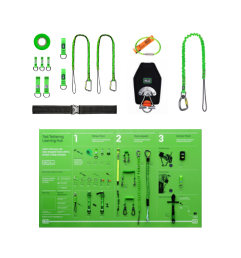
Tool Tethering

Tool tethering helps site teams keep tools controlled when working at height, near open edges or in busy access areas. CMT Group supplies NLG tool lanyards, tethers, anchor points, tool bags and tethering kits for construction, civils, utilities, rail and maintenance teams ... Tool tethering helps site teams keep tools controlled when working at height, near open edges or in busy access areas. CMT Group supplies NLG tool lanyards, tethers, anchor points, tool bags and tethering kits for construction, civils, utilities, rail and maintenance teams. Products should be selected against tool weight, attachment method, anchor-point suitability, connector compatibility, site rules and manufacturer guidance. Buyers can manage project quantities, depot replenishment and repeat supply through account-based purchasing, stock availability and fast UK delivery. read more...read less
Tool tethering product types, site use and buying considerations
| Product type | Common site use | Buying considerations |
|---|---|---|
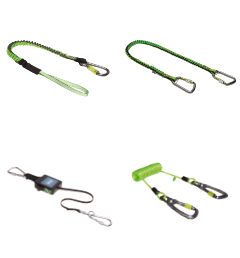
| Tool Lanyards | Connecting hand tools to a belt, harness or anchor point at height or near open edges to help support dropped-object control during construction, civils, utilities and maintenance work | Tool weight rating, lanyard length and reach, attachment method at the tool end and the anchor end, connector type, and any site rules or risk assessment requirements for controlled tool use |
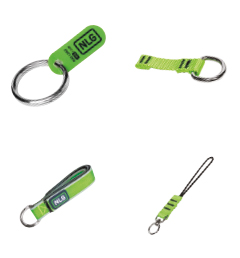
| Tool Tethers | Direct attachment fittings between a tool and a lanyard or anchor point, used across construction, access, rail and utilities environments where tools require a secondary connection point | Tether type, tool compatibility, weight rating, connection method and connector compatibility with the lanyard or anchor point being used; check manufacturer guidance before specifying |
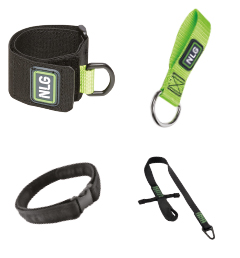
| Anchor Points | Fixed or wearable attachment points for connecting tool lanyards or tethers to a belt, harness, scaffold structure or access platform during work at height or near open edges | Load rating and compatibility with the tool weight, fixing or attachment method (wearable or structural), connector type compatibility with the lanyard being used, and site-specific anchor requirements |
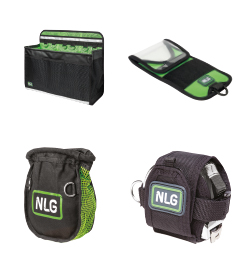
| Tool Bags | Securing and carrying tools at height or on access platforms where loose tools in pockets or belt holsters present a dropped-object risk during work at height and maintenance tasks | Bag capacity and tool fit, attachment method (belt loop, scaffold tie, harness clip), material durability for the working environment, and whether the bag is rated for the tools being carried |
| Tool Tethering Kits | Pre-configured sets of lanyards, tethers, anchor points and connectors for issue to site teams, project setup or equipping operatives working at height across construction and civils sites | Confirm kit contents against the tools to be tethered and the task; check that all components are compatible with each other and verify that weight ratings cover the tools being attached |
Frequently asked questions
What should buyers check before ordering tool lanyards for site teams?
Before ordering tool lanyards, buyers should confirm the weight of each tool to be tethered and check that the lanyard's rated capacity covers that weight. The attachment method at both ends should also be verified: the tool-end connection (integral ring, loop or dedicated attachment point on the tool) and the anchor-end connection (tool-rated belt, harness or structure attachment point).
Lanyard length and reach, connector type and any site rules or risk assessment requirements around controlled tool use should also be checked before ordering. Buyers should follow manufacturer guidance and relevant site procedures when specifying tethering products.
What is the difference between tool lanyards and tool tethers, and when should each be used?
Tool lanyards are flexible connections used to attach a tool to a person or anchor point, typically running from the tool to a belt, harness or fixed anchor. Tool tethers are attachment fittings that connect directly to the tool itself, providing the interface between the tool and the lanyard or anchor.
The right combination depends on the tool design, the task and the tethering system in use. Buyers should check that any lanyard and tether are compatible with each other, with the specific tool and with the anchor point before specifying. Not all lanyards and tethers are interchangeable.
How should procurement teams choose anchor points for a tethering system?
Anchor points must be rated for the load they will bear, taking into account the tool weight and any dynamic forces that may be applied if a tool is dropped or swings on the lanyard. Wearable anchor points attach to a tool-rated belt, harness or structure attachment point on the worker, while fixed anchor points on scaffolding, structures or access platforms are used for location-based setups. Tool tethering anchor points should not be treated as personal fall-arrest anchor points.
Buyers should check connector type compatibility with the lanyard or tether being used, confirm the anchor point is rated for the working environment and the tool weight, and follow manufacturer guidance and relevant site requirements when selecting anchor points.
When should teams order tool tethering kits rather than individual components?
Tool tethering kits provide matched sets of lanyards, tethers, anchor points and connectors that are already designed to work together, which can simplify the process of equipping a team or setting up a site. Kits are a practical option when tools and attachment methods are consistent across operatives and the kit contents match the task requirements.
For larger projects, sites with varied tool sets or specialist requirements, ordering individual components may give more flexibility to match specific tool weights, connector types and anchor configurations. Buyers should confirm kit contents against the tools to be tethered before ordering.
What weight information is needed before specifying a tool tethering product?
Each component in a tethering system, including the lanyard, tether, connectors and anchor point, has a rated load capacity. The static weight of the tool must fall within the rated capacity of every component in the system. Dynamic load factors, such as a tool swinging or a sudden arrest, mean that a lanyard or tether must be rated above the tool's static weight alone.
Buyers should check the weight rating for each component individually and confirm the complete system covers the heaviest tool to be attached. Manufacturer guidance and product data sheets should be consulted when specifying for a particular tool or task.
Should tethering products be inspected before use, and what should procurement teams account for?
Yes. Tethering lanyards, tethers, connectors and anchor points should be inspected before each use in line with manufacturer guidance, site rules and any relevant workplace safety requirements. Damaged, degraded, overloaded or modified tethering products should be taken out of service immediately.
Procurement teams should account for inspection intervals and planned replacement cycles when ordering, particularly for high-frequency or outdoor use where products may degrade more quickly. Consult manufacturer guidance and relevant site procedures for inspection criteria, service life and replacement frequency.
Can CMT Group supply tool tethering products for project rollouts or depot replenishment?
Yes. CMT Group supplies NLG tool lanyards, tethers, anchor points, tool bags and tethering kits for construction, civils, utilities, rail and infrastructure teams.
For project quantities, depot stock or repeat site supply, procurement teams can use the EDGE B2B Portal or speak to the team about stock availability, account-based ordering and delivery options.
The wider supply service is supported by supplier-level accreditations including BSIF Registered Safety Supplier, BSI ISO 9001:2015 Quality Management and CHAS Elite. Product suitability depends on the individual item, task, working environment, manufacturer guidance and any project-specific requirements.
Can all hand tools be tethered, and how should buyers assess compatibility?
Not all hand tools are designed to be tethered. A tool must have a suitable attachment point, such as an integrated tethering loop, a lanyard anchor hole or a dedicated connection point, for a tethering product to be attached securely. Attaching a lanyard to an unsuitable part of a tool may itself create a risk.
Buyers should check whether each tool has a compatible attachment method before specifying a lanyard or tether. Tool manufacturer guidance and any relevant site risk assessments should be consulted when assessing compatibility and selecting the appropriate tethering product.
What are tool bags used for within a tethering setup and what should buyers check?
Tool bags used at height allow tools to be held in a secured, contained position rather than in pockets or belt holsters, helping to reduce the risk of tools falling when not in active use. They are useful when working on access platforms, elevated structures or in areas near open edges where tools need to be managed carefully between tasks.
Buyers should check the bag's carrying capacity, the attachment method (belt loop, scaffold tie or harness clip), material durability for the working environment and whether the bag is rated for the combined weight of tools being carried. Not all tool bags are rated for every use case.
Managing tool tethering supply across vans, depots or live sites? Buyers can source lanyards, anchor points, tethers, bags and kits for controlled tool use, project setup and planned replenishment. For project quantities or specialist tethering requirements, speak to the team.
UK-wide delivery
Next-day and VIP same-day delivery on stocked tool tethering lines, with nationwide coverage for trade and project accounts.Stock availability
Large stockholding and repeat ordering support for tool lanyards, tethers, anchor points, tool bags and tethering kits.EDGE B2B Portal
Self-serve procurement with trade pricing, order tracking and easy repeat ordering for account holders.Wider site range
Order tool tethering alongside hand tools, measuring and marking products, groundwork tools, groundworks equipment and site machinery from the wider Hand & Groundworking Tools range.Sustainable procurement
Supply support for responsible procurement, project planning and social value commitments across construction and infrastructure.Shop Tool Tethering by Type
Tool Tethering
Tool tethering helps site teams keep tools controlled when working at height, near open edges or in busy access areas. CMT Group supplies NLG tool lanyards, tethers, anchor points, tool bags and tethering kits for construction, civils, utilities, rail and maintenance teams ... Tool tethering helps site teams keep tools controlled when working at height, near open edges or in busy access areas. CMT Group supplies NLG tool lanyards, tethers, anchor points, tool bags and tethering kits for construction, civils, utilities, rail and maintenance teams. Products should be selected against tool weight, attachment method, anchor-point suitability, connector compatibility, site rules and manufacturer guidance. Buyers can manage project quantities, depot replenishment and repeat supply through account-based purchasing, stock availability and fast UK delivery. read more...read less
Tool tethering product types, site use and buying considerations
| Product type | Common site use | Buying considerations |
|---|---|---|
| Tool Lanyards | Connecting hand tools to a belt, harness or anchor point at height or near open edges to help support dropped-object control during construction, civils, utilities and maintenance work | Tool weight rating, lanyard length and reach, attachment method at the tool end and the anchor end, connector type, and any site rules or risk assessment requirements for controlled tool use |
| Tool Tethers | Direct attachment fittings between a tool and a lanyard or anchor point, used across construction, access, rail and utilities environments where tools require a secondary connection point | Tether type, tool compatibility, weight rating, connection method and connector compatibility with the lanyard or anchor point being used; check manufacturer guidance before specifying |
| Anchor Points | Fixed or wearable attachment points for connecting tool lanyards or tethers to a belt, harness, scaffold structure or access platform during work at height or near open edges | Load rating and compatibility with the tool weight, fixing or attachment method (wearable or structural), connector type compatibility with the lanyard being used, and site-specific anchor requirements |
| Tool Bags | Securing and carrying tools at height or on access platforms where loose tools in pockets or belt holsters present a dropped-object risk during work at height and maintenance tasks | Bag capacity and tool fit, attachment method (belt loop, scaffold tie, harness clip), material durability for the working environment, and whether the bag is rated for the tools being carried |
| Tool Tethering Kits | Pre-configured sets of lanyards, tethers, anchor points and connectors for issue to site teams, project setup or equipping operatives working at height across construction and civils sites | Confirm kit contents against the tools to be tethered and the task; check that all components are compatible with each other and verify that weight ratings cover the tools being attached |
Frequently asked questions
What should buyers check before ordering tool lanyards for site teams?
Before ordering tool lanyards, buyers should confirm the weight of each tool to be tethered and check that the lanyard's rated capacity covers that weight. The attachment method at both ends should also be verified: the tool-end connection (integral ring, loop or dedicated attachment point on the tool) and the anchor-end connection (tool-rated belt, harness or structure attachment point).
Lanyard length and reach, connector type and any site rules or risk assessment requirements around controlled tool use should also be checked before ordering. Buyers should follow manufacturer guidance and relevant site procedures when specifying tethering products.
What is the difference between tool lanyards and tool tethers, and when should each be used?
Tool lanyards are flexible connections used to attach a tool to a person or anchor point, typically running from the tool to a belt, harness or fixed anchor. Tool tethers are attachment fittings that connect directly to the tool itself, providing the interface between the tool and the lanyard or anchor.
The right combination depends on the tool design, the task and the tethering system in use. Buyers should check that any lanyard and tether are compatible with each other, with the specific tool and with the anchor point before specifying. Not all lanyards and tethers are interchangeable.
How should procurement teams choose anchor points for a tethering system?
Anchor points must be rated for the load they will bear, taking into account the tool weight and any dynamic forces that may be applied if a tool is dropped or swings on the lanyard. Wearable anchor points attach to a tool-rated belt, harness or structure attachment point on the worker, while fixed anchor points on scaffolding, structures or access platforms are used for location-based setups. Tool tethering anchor points should not be treated as personal fall-arrest anchor points.
Buyers should check connector type compatibility with the lanyard or tether being used, confirm the anchor point is rated for the working environment and the tool weight, and follow manufacturer guidance and relevant site requirements when selecting anchor points.
When should teams order tool tethering kits rather than individual components?
Tool tethering kits provide matched sets of lanyards, tethers, anchor points and connectors that are already designed to work together, which can simplify the process of equipping a team or setting up a site. Kits are a practical option when tools and attachment methods are consistent across operatives and the kit contents match the task requirements.
For larger projects, sites with varied tool sets or specialist requirements, ordering individual components may give more flexibility to match specific tool weights, connector types and anchor configurations. Buyers should confirm kit contents against the tools to be tethered before ordering.
What weight information is needed before specifying a tool tethering product?
Each component in a tethering system, including the lanyard, tether, connectors and anchor point, has a rated load capacity. The static weight of the tool must fall within the rated capacity of every component in the system. Dynamic load factors, such as a tool swinging or a sudden arrest, mean that a lanyard or tether must be rated above the tool's static weight alone.
Buyers should check the weight rating for each component individually and confirm the complete system covers the heaviest tool to be attached. Manufacturer guidance and product data sheets should be consulted when specifying for a particular tool or task.
Should tethering products be inspected before use, and what should procurement teams account for?
Yes. Tethering lanyards, tethers, connectors and anchor points should be inspected before each use in line with manufacturer guidance, site rules and any relevant workplace safety requirements. Damaged, degraded, overloaded or modified tethering products should be taken out of service immediately.
Procurement teams should account for inspection intervals and planned replacement cycles when ordering, particularly for high-frequency or outdoor use where products may degrade more quickly. Consult manufacturer guidance and relevant site procedures for inspection criteria, service life and replacement frequency.
Can CMT Group supply tool tethering products for project rollouts or depot replenishment?
Yes. CMT Group supplies NLG tool lanyards, tethers, anchor points, tool bags and tethering kits for construction, civils, utilities, rail and infrastructure teams.
For project quantities, depot stock or repeat site supply, procurement teams can use the EDGE B2B Portal or speak to the team about stock availability, account-based ordering and delivery options.
The wider supply service is supported by supplier-level accreditations including BSIF Registered Safety Supplier, BSI ISO 9001:2015 Quality Management and CHAS Elite. Product suitability depends on the individual item, task, working environment, manufacturer guidance and any project-specific requirements.
Can all hand tools be tethered, and how should buyers assess compatibility?
Not all hand tools are designed to be tethered. A tool must have a suitable attachment point, such as an integrated tethering loop, a lanyard anchor hole or a dedicated connection point, for a tethering product to be attached securely. Attaching a lanyard to an unsuitable part of a tool may itself create a risk.
Buyers should check whether each tool has a compatible attachment method before specifying a lanyard or tether. Tool manufacturer guidance and any relevant site risk assessments should be consulted when assessing compatibility and selecting the appropriate tethering product.
What are tool bags used for within a tethering setup and what should buyers check?
Tool bags used at height allow tools to be held in a secured, contained position rather than in pockets or belt holsters, helping to reduce the risk of tools falling when not in active use. They are useful when working on access platforms, elevated structures or in areas near open edges where tools need to be managed carefully between tasks.
Buyers should check the bag's carrying capacity, the attachment method (belt loop, scaffold tie or harness clip), material durability for the working environment and whether the bag is rated for the combined weight of tools being carried. Not all tool bags are rated for every use case.
Managing tool tethering supply across vans, depots or live sites? Buyers can source lanyards, anchor points, tethers, bags and kits for controlled tool use, project setup and planned replenishment. For project quantities or specialist tethering requirements, speak to the team.