
Bolts are used across construction to create secure, load-bearing connections in concrete, masonry, steel, and timber. CMT Group supplies a comprehensive range of contractor-grade bolts including throughbolts, ankerbolts, socket bolts, hex bolts, cup square bolts, and hook and eye bolts. Whether the application is anchoring into concrete, connecting structural steelwork, or fixing timber frames, our range covers the bolt requirements of site teams, engineers, and procurement professionals across the UK.
Read moreRead less
Selecting the correct bolt for a structural or load-bearing application is critical. Unlike screws, which are primarily used in lighter fixing applications, bolts are engineered to transfer significant forces between materials, and the grade, diameter, embedment depth, and finish of the bolt must all be matched to the requirements of the connection. CMT Group has been supplying bolts and fixings to UK construction sites for over 20 years, with a range that covers the full scope of bolted connection requirements from general site use through to structural and specialist applications.
✓
Throughbolts for high-load anchoring into concrete and solid masonry
✓
Ankerbolts for fast, reliable fixing into concrete and masonry with hook and eye options
✓
Socket bolts for recessed hex key drive in structural and engineering applications
✓
Hex bolts for steel-to-steel and steel-to-timber structural connections
✓
Cup square bolts for timber connections and applications requiring a flush domed head
✓
Hook and eye bolts for suspension, tensioning, and ring fixing applications
✓
Zinc-plated, hot-dip galvanised, and stainless steel grades for all exposure environments
✓
Bulk supply available. Next day delivery standard. VIP 2-3 hour delivery also available
What Are Construction Bolts?
Construction bolts are threaded fasteners designed to create secure, load-bearing connections between structural components and base materials. Unlike screws, which are driven directly into a material to create their own thread, most construction bolts are used in conjunction with a pre-drilled hole and, in many applications, a matching nut and washer assembly. This allows bolted connections to be inspected, tensioned, and where necessary removed and re-made, which is a significant advantage in structural and temporary works applications.
The bolt type required for any given application is determined by the base material being fixed into, the direction and magnitude of the load, and the permanence of the connection. Throughbolts and ankerbolts are anchor-type fixings designed to transfer loads into concrete and masonry. Hex bolts and socket bolts are used in steel and timber structural connections where the bolt passes through both materials and is secured with a nut. Cup square bolts are used in timber connections where the square shank under the domed head prevents rotation during tightening. Hook and eye bolts are specialist products used for suspension, cabling, and ring applications.
Bolts by Type
Our range covers the bolt types required across construction, structural, and general site fixing applications.
Throughbolts
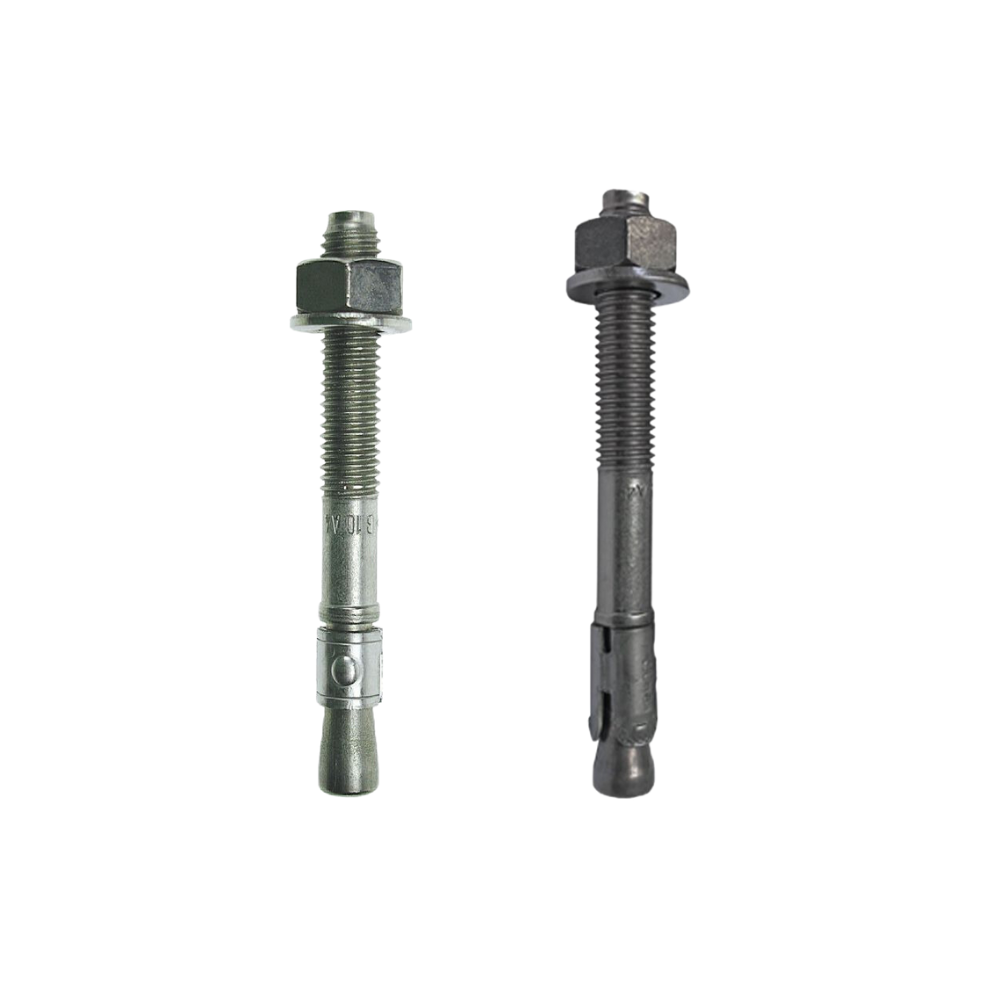
Heavy-duty sleeve anchor throughbolts for high-load fixing into concrete and solid masonry. A throughbolt is inserted into a pre-drilled hole at the full diameter of the bolt, and a sleeve expands behind the concrete surface as the nut is tightened, creating a secure mechanical interlock with the base material. Throughbolts are the standard heavy anchor fixing for structural steel connections to concrete, fixing heavy plant and equipment, and securing structural brackets to concrete slabs and walls. Available in multiple diameters and lengths with zinc-plated and stainless steel options.
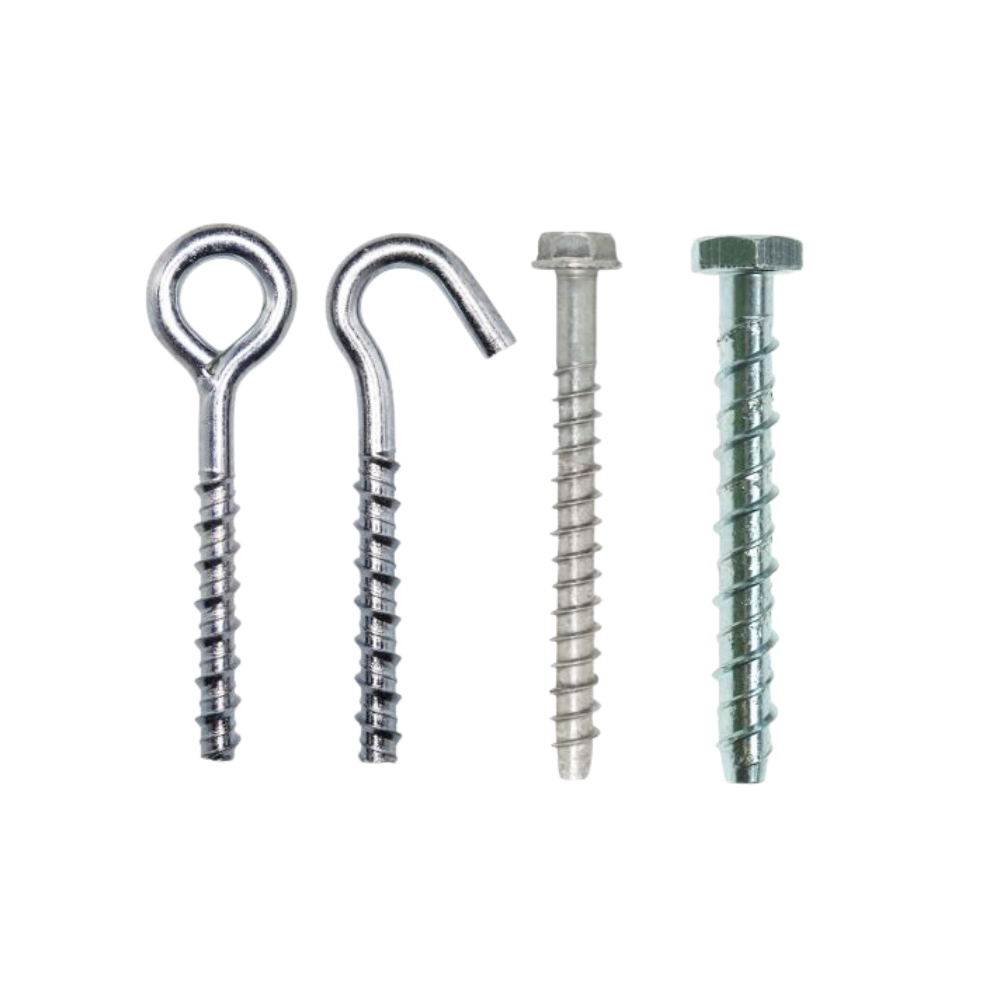
Ankerbolts are a combined screw anchor and bolt in a single component, providing fast and reliable fixing into concrete, brick, and block without a separate plug or anchor sleeve. The spiral thread on the shank cuts directly into masonry as the bolt is driven in, providing a strong fixing in a single operation. Available with hook and eye head configurations as well as standard hex head. Widely used for fixing conduit, cable management, brackets, and equipment to masonry substrates where installation speed is important.
Combined screw anchor · Concrete, brick and block · Hook, eye and hex head
Socket Bolt
Socket cap bolts with an internal hexagon (Allen key) drive recess for applications where a flush or low-profile head is required, or where access for a spanner is restricted. Socket bolts are used in structural engineering, machinery installation, and precision assembly applications where a clean finished appearance and high clamping force are both important. Available in high-tensile grades and stainless steel, typically to Grade 8.8 or 10.9, and in a range of metric thread diameters and lengths.
Allen key drive · High-tensile grades · Low-profile head · Metric diameters
Hex Bolts
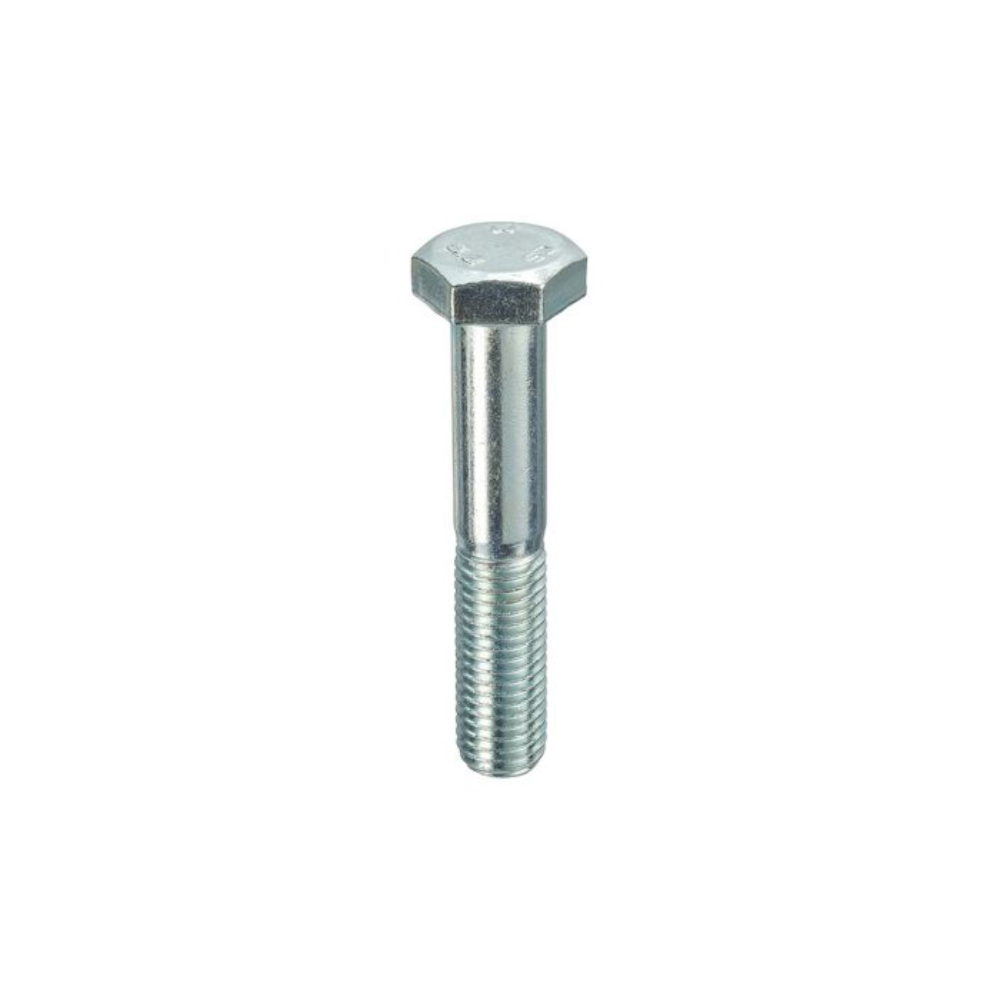
Partially and fully threaded hex head bolts for structural steel connections, timber connections, and general bolted assembly across construction applications. Hex bolts are driven with a spanner or socket wrench and are used with hex full nuts and flat or spring washers to complete the connection. Available in zinc-plated, hot-dip galvanised, and stainless steel grades and in a full range of metric diameters and lengths to suit different connection requirements and design loads.
Spanner drive · Structural steel and timber · Zinc, galvanised and stainless · With nuts and washers
Cup Square Bolts
Cup square bolts, also known as carriage bolts or coach bolts, have a smooth domed head and a square shank section beneath it. The square shank beds into timber or a square hole in thin steel as the nut is tightened, preventing the bolt from rotating during assembly without requiring a tool on the bolt head. Used for timber-to-timber and timber-to-steel connections in fencing, gates, playground equipment, decking subframes, and structural carpentry. Available in zinc-plated and hot-dip galvanised finishes for internal and external applications.
Domed head · Square anti-rotation shank · Timber connections · Zinc and galvanised
Hook and Eye Bolts
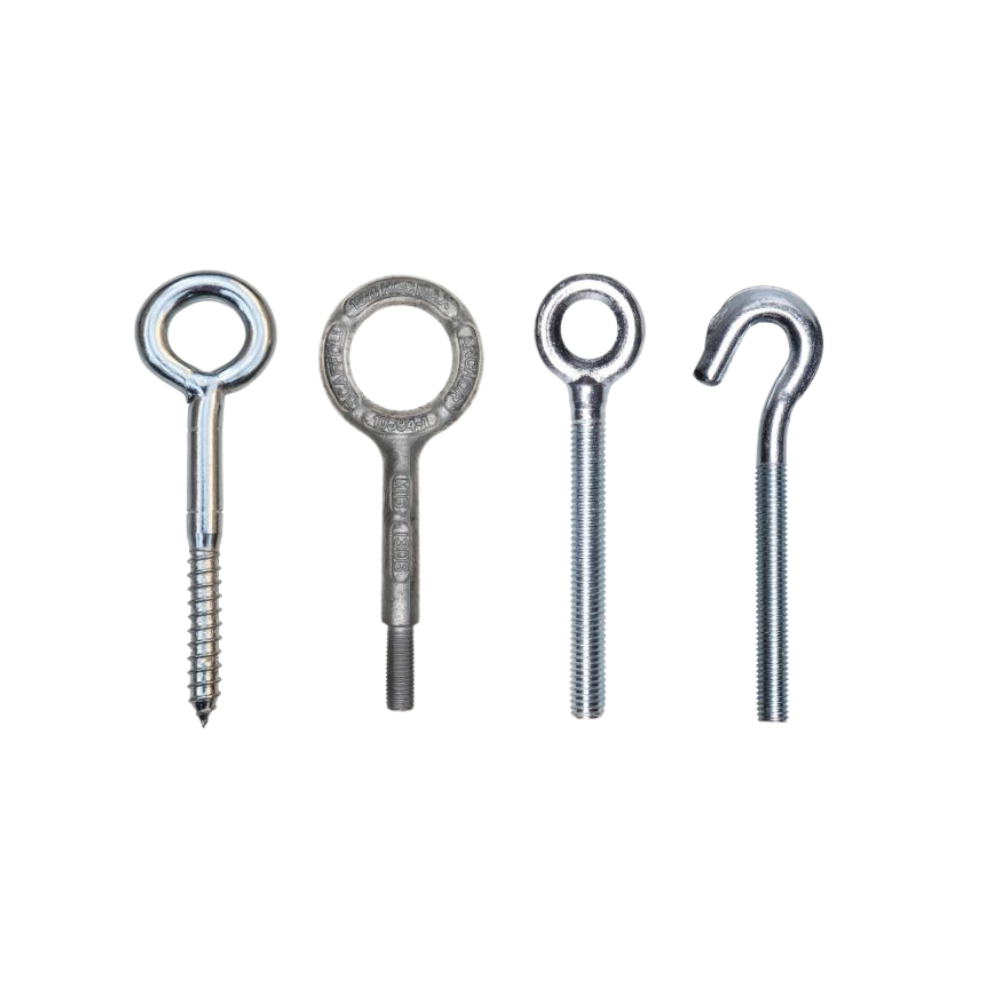
Hook bolts and eye bolts with a wood screw thread for fixing into timber, used for suspension, tensioning wire and rope, hanging cable, and ring fixing applications across construction, fencing, and general site use. Hook bolts have an open hook profile at the head end; eye bolts have a closed ring. Both types provide a reliable fixing point when driven into timber and are available in zinc-plated and galvanised finishes for indoor and outdoor use. Available in a range of shaft diameters and lengths to suit different load and fixing requirements.
Hook and eye head profiles · Wood screw thread · Suspension and tensioning · Zinc and galvanised
Choosing the Right Bolt
Bolt selection depends on the base material, the magnitude and direction of the load, and the exposure environment. For anchoring into concrete, throughbolts and ankerbolts are the correct choice, with throughbolts used for higher-load structural applications and ankerbolts for faster installation in lighter-duty fixing applications. For connecting structural steelwork, hex bolts and socket bolts are the standard solution, selected in a grade appropriate to the design load.
Finish selection is determined by the exposure environment. Zinc-plated bolts are suitable for internal and dry environments only. Hot-dip galvanised bolts are the minimum standard for external and exposed applications in most UK environments. Stainless steel bolts are required for coastal locations, contact with treated timber, or highly corrosive environments. Using zinc-plated bolts in external structural applications is a common error that results in accelerated corrosion and potential connection failure.
Application
Bolt type
Key consideration
High-load anchoring into concrete
Throughbolt
Diameter and embedment to match design load
Fast fixing into concrete, brick or block
Ankerbolt
Head type to suit application: hex, hook, or eye
Structural steel connections
Hex bolt with nut and washer
Grade 8.8 minimum for structural connections
Restricted access or flush head required
Socket cap bolt
High-tensile grade; Allen key installation
Timber-to-timber or timber-to-steel
Cup square bolt
Square shank prevents rotation; galvanised for external
Suspension, tensioning, or ring fixing in timber
Hook or eye bolt
Diameter and length to suit load and timber thickness
Construction Bolts Supplied Across the UK
Bolts play a critical role in construction, civil engineering, and infrastructure projects, where the performance of a structural connection determines the safety and longevity of the finished structure. From anchoring structural steelwork to concrete foundations to connecting timber frames and suspending services from overhead structures, the correct bolt specification is a fundamental requirement of sound construction practice.
CMT Group has been supplying bolts and fixings to UK construction sites for over 20 years. Our range covers the full scope of bolt types needed across structural and site applications, from throughbolts and ankerbolts for concrete anchoring to hex bolts, socket bolts, cup square bolts, and hook and eye bolts for structural and specialist use. We operate our own fleet of 100+ FORS Gold accredited vehicles covering 90% of the UK, with next day delivery standard on orders placed by 5pm by phone or 7pm online, and VIP 2-3 hour delivery on a dedicated vehicle dispatched within 30 minutes for urgent site requirements.
Frequently asked questions
What is the difference between a throughbolt and an ankerbolt?
Both fix into concrete and masonry, but they work differently and are suited to different load levels. A throughbolt is a sleeve anchor type fixing where the bolt is inserted into a hole drilled at the full bolt diameter. As the nut is tightened, a sleeve expands against the walls of the hole to create the fixing. Throughbolts are designed for high-load structural applications and provide a very strong, permanent anchor in solid concrete. An ankerbolt uses a spiral threaded shank that cuts directly into the masonry as it is driven in, similar to a screw anchor. Ankerbolts are faster to install and do not require a hole drilled to the full bolt diameter, but are suited to lighter-duty fixing applications rather than high-load structural connections.
What grade of hex bolt do I need for structural connections?
For structural steel connections, Grade 8.8 hex bolts are the standard minimum specified in UK and European structural design. Grade 8.8 refers to the tensile strength and yield strength of the bolt material, with the first number indicating tensile strength divided by 100 (MPa) and the second indicating the ratio of yield to tensile strength. For higher-load structural bolted connections, Grade 10.9 bolts may be specified by the structural engineer. For non-structural and general construction applications, Grade 4.6 or 4.8 bolts are typically sufficient. Always use the grade specified in the design or connection detail, as substituting a lower grade bolt in a structural connection is a safety risk.
What is the difference between a cup square bolt and a hex bolt?
A cup square bolt, also called a carriage bolt or coach bolt, has a smooth domed head with a square section directly beneath it. The square section beds into the timber or a matching square punched hole in thin steel as the nut is tightened, preventing the bolt from rotating without a tool on the bolt head. This makes cup square bolts ideal for timber connections where access to both sides of the connection is limited or where a smooth external head is required for appearance. A hex bolt has a hexagonal head that requires a spanner or socket wrench on both the head and the nut during installation. Hex bolts are used where higher torque is required and where both sides of the connection are accessible.
What finish do I need for external bolted connections?
For external and exposed bolted connections in the UK climate, hot-dip galvanised bolts are the minimum standard and provide reliable corrosion protection for most construction applications. Zinc-plated bolts are for internal use only and will corrode rapidly in exposed outdoor conditions. Stainless steel bolts are required for coastal environments, contact with treated timber preservatives, and any application where the bolt will be in a particularly aggressive corrosive environment. Where stainless bolts are used, ensure that matching stainless nuts and washers are used to avoid galvanic corrosion between dissimilar metals.
Can I buy bolts in bulk for site procurement?
Yes. CMT Group supplies bolts in bulk box quantities for site procurement and trade accounts. Hex bolts, throughbolts, cup square bolts, and ankerbolts are all available in quantities suited to project-scale purchasing, reducing cost per unit and ensuring site stock availability throughout the project programme. Contact our team to discuss volume pricing, account options, and scheduled delivery arrangements for ongoing site supply requirements.
Throughbolts vs Ankerbolts: Which Do You Need?
Throughbolts and ankerbolts are both used to fix into concrete and masonry, but they are engineered for different load levels and installation situations. A throughbolt requires a hole drilled to the full diameter of the bolt. The sleeve anchor mechanism expands within the concrete as the nut is tightened, distributing the load across a larger contact area and providing a very high pull-out resistance. Throughbolts are the correct choice for structural anchoring applications where the design load is significant, such as fixing structural steel base plates, heavy machinery, and large brackets to concrete.
An ankerbolt uses a masonry screw thread that cuts directly into the concrete or masonry as it is driven in. Installation is faster because the hole diameter is smaller than the bolt diameter and no sleeve mechanism is required. Ankerbolts are well-suited to general fixing applications in concrete, brick, and block where the loads are moderate and installation speed matters, such as fixing conduit supports, cable management, door frames, and general brackets. Where the connection is safety-critical or the design load is high, always use a throughbolt specified against the design requirements rather than an ankerbolt selected by size.
Shop Bolts by Type
Bolts
Bolts are used across construction to create secure, load-bearing connections in concrete, masonry, steel, and timber. CMT Group supplies a comprehensive range of contractor-grade bolts including throughbolts, ankerbolts, socket bolts, hex bolts, cup square bolts, and hook and eye bolts. Whether the application is anchoring into concrete, connecting structural steelwork, or fixing timber frames, our range covers the bolt requirements of site teams, engineers, and procurement professionals across the UK.
Read moreRead less
Selecting the correct bolt for a structural or load-bearing application is critical. Unlike screws, which are primarily used in lighter fixing applications, bolts are engineered to transfer significant forces between materials, and the grade, diameter, embedment depth, and finish of the bolt must all be matched to the requirements of the connection. CMT Group has been supplying bolts and fixings to UK construction sites for over 20 years, with a range that covers the full scope of bolted connection requirements from general site use through to structural and specialist applications.
✓
Throughbolts for high-load anchoring into concrete and solid masonry
✓
Ankerbolts for fast, reliable fixing into concrete and masonry with hook and eye options
✓
Socket bolts for recessed hex key drive in structural and engineering applications
✓
Hex bolts for steel-to-steel and steel-to-timber structural connections
✓
Cup square bolts for timber connections and applications requiring a flush domed head
✓
Hook and eye bolts for suspension, tensioning, and ring fixing applications
✓
Zinc-plated, hot-dip galvanised, and stainless steel grades for all exposure environments
✓
Bulk supply available. Next day delivery standard. VIP 2-3 hour delivery also available
What Are Construction Bolts?
Construction bolts are threaded fasteners designed to create secure, load-bearing connections between structural components and base materials. Unlike screws, which are driven directly into a material to create their own thread, most construction bolts are used in conjunction with a pre-drilled hole and, in many applications, a matching nut and washer assembly. This allows bolted connections to be inspected, tensioned, and where necessary removed and re-made, which is a significant advantage in structural and temporary works applications.
The bolt type required for any given application is determined by the base material being fixed into, the direction and magnitude of the load, and the permanence of the connection. Throughbolts and ankerbolts are anchor-type fixings designed to transfer loads into concrete and masonry. Hex bolts and socket bolts are used in steel and timber structural connections where the bolt passes through both materials and is secured with a nut. Cup square bolts are used in timber connections where the square shank under the domed head prevents rotation during tightening. Hook and eye bolts are specialist products used for suspension, cabling, and ring applications.
Bolts by Type
Our range covers the bolt types required across construction, structural, and general site fixing applications.
Throughbolts
Heavy-duty sleeve anchor throughbolts for high-load fixing into concrete and solid masonry. A throughbolt is inserted into a pre-drilled hole at the full diameter of the bolt, and a sleeve expands behind the concrete surface as the nut is tightened, creating a secure mechanical interlock with the base material. Throughbolts are the standard heavy anchor fixing for structural steel connections to concrete, fixing heavy plant and equipment, and securing structural brackets to concrete slabs and walls. Available in multiple diameters and lengths with zinc-plated and stainless steel options.
Ankerbolts are a combined screw anchor and bolt in a single component, providing fast and reliable fixing into concrete, brick, and block without a separate plug or anchor sleeve. The spiral thread on the shank cuts directly into masonry as the bolt is driven in, providing a strong fixing in a single operation. Available with hook and eye head configurations as well as standard hex head. Widely used for fixing conduit, cable management, brackets, and equipment to masonry substrates where installation speed is important.
Combined screw anchor · Concrete, brick and block · Hook, eye and hex head
Socket Bolt
Socket cap bolts with an internal hexagon (Allen key) drive recess for applications where a flush or low-profile head is required, or where access for a spanner is restricted. Socket bolts are used in structural engineering, machinery installation, and precision assembly applications where a clean finished appearance and high clamping force are both important. Available in high-tensile grades and stainless steel, typically to Grade 8.8 or 10.9, and in a range of metric thread diameters and lengths.
Allen key drive · High-tensile grades · Low-profile head · Metric diameters
Hex Bolts
Partially and fully threaded hex head bolts for structural steel connections, timber connections, and general bolted assembly across construction applications. Hex bolts are driven with a spanner or socket wrench and are used with hex full nuts and flat or spring washers to complete the connection. Available in zinc-plated, hot-dip galvanised, and stainless steel grades and in a full range of metric diameters and lengths to suit different connection requirements and design loads.
Spanner drive · Structural steel and timber · Zinc, galvanised and stainless · With nuts and washers
Cup Square Bolts
Cup square bolts, also known as carriage bolts or coach bolts, have a smooth domed head and a square shank section beneath it. The square shank beds into timber or a square hole in thin steel as the nut is tightened, preventing the bolt from rotating during assembly without requiring a tool on the bolt head. Used for timber-to-timber and timber-to-steel connections in fencing, gates, playground equipment, decking subframes, and structural carpentry. Available in zinc-plated and hot-dip galvanised finishes for internal and external applications.
Domed head · Square anti-rotation shank · Timber connections · Zinc and galvanised
Hook and Eye Bolts
Hook bolts and eye bolts with a wood screw thread for fixing into timber, used for suspension, tensioning wire and rope, hanging cable, and ring fixing applications across construction, fencing, and general site use. Hook bolts have an open hook profile at the head end; eye bolts have a closed ring. Both types provide a reliable fixing point when driven into timber and are available in zinc-plated and galvanised finishes for indoor and outdoor use. Available in a range of shaft diameters and lengths to suit different load and fixing requirements.
Hook and eye head profiles · Wood screw thread · Suspension and tensioning · Zinc and galvanised
Choosing the Right Bolt
Bolt selection depends on the base material, the magnitude and direction of the load, and the exposure environment. For anchoring into concrete, throughbolts and ankerbolts are the correct choice, with throughbolts used for higher-load structural applications and ankerbolts for faster installation in lighter-duty fixing applications. For connecting structural steelwork, hex bolts and socket bolts are the standard solution, selected in a grade appropriate to the design load.
Finish selection is determined by the exposure environment. Zinc-plated bolts are suitable for internal and dry environments only. Hot-dip galvanised bolts are the minimum standard for external and exposed applications in most UK environments. Stainless steel bolts are required for coastal locations, contact with treated timber, or highly corrosive environments. Using zinc-plated bolts in external structural applications is a common error that results in accelerated corrosion and potential connection failure.
Application
Bolt type
Key consideration
High-load anchoring into concrete
Throughbolt
Diameter and embedment to match design load
Fast fixing into concrete, brick or block
Ankerbolt
Head type to suit application: hex, hook, or eye
Structural steel connections
Hex bolt with nut and washer
Grade 8.8 minimum for structural connections
Restricted access or flush head required
Socket cap bolt
High-tensile grade; Allen key installation
Timber-to-timber or timber-to-steel
Cup square bolt
Square shank prevents rotation; galvanised for external
Suspension, tensioning, or ring fixing in timber
Hook or eye bolt
Diameter and length to suit load and timber thickness
Construction Bolts Supplied Across the UK
Bolts play a critical role in construction, civil engineering, and infrastructure projects, where the performance of a structural connection determines the safety and longevity of the finished structure. From anchoring structural steelwork to concrete foundations to connecting timber frames and suspending services from overhead structures, the correct bolt specification is a fundamental requirement of sound construction practice.
CMT Group has been supplying bolts and fixings to UK construction sites for over 20 years. Our range covers the full scope of bolt types needed across structural and site applications, from throughbolts and ankerbolts for concrete anchoring to hex bolts, socket bolts, cup square bolts, and hook and eye bolts for structural and specialist use. We operate our own fleet of 100+ FORS Gold accredited vehicles covering 90% of the UK, with next day delivery standard on orders placed by 5pm by phone or 7pm online, and VIP 2-3 hour delivery on a dedicated vehicle dispatched within 30 minutes for urgent site requirements.
Frequently asked questions
What is the difference between a throughbolt and an ankerbolt?
Both fix into concrete and masonry, but they work differently and are suited to different load levels. A throughbolt is a sleeve anchor type fixing where the bolt is inserted into a hole drilled at the full bolt diameter. As the nut is tightened, a sleeve expands against the walls of the hole to create the fixing. Throughbolts are designed for high-load structural applications and provide a very strong, permanent anchor in solid concrete. An ankerbolt uses a spiral threaded shank that cuts directly into the masonry as it is driven in, similar to a screw anchor. Ankerbolts are faster to install and do not require a hole drilled to the full bolt diameter, but are suited to lighter-duty fixing applications rather than high-load structural connections.
What grade of hex bolt do I need for structural connections?
For structural steel connections, Grade 8.8 hex bolts are the standard minimum specified in UK and European structural design. Grade 8.8 refers to the tensile strength and yield strength of the bolt material, with the first number indicating tensile strength divided by 100 (MPa) and the second indicating the ratio of yield to tensile strength. For higher-load structural bolted connections, Grade 10.9 bolts may be specified by the structural engineer. For non-structural and general construction applications, Grade 4.6 or 4.8 bolts are typically sufficient. Always use the grade specified in the design or connection detail, as substituting a lower grade bolt in a structural connection is a safety risk.
What is the difference between a cup square bolt and a hex bolt?
A cup square bolt, also called a carriage bolt or coach bolt, has a smooth domed head with a square section directly beneath it. The square section beds into the timber or a matching square punched hole in thin steel as the nut is tightened, preventing the bolt from rotating without a tool on the bolt head. This makes cup square bolts ideal for timber connections where access to both sides of the connection is limited or where a smooth external head is required for appearance. A hex bolt has a hexagonal head that requires a spanner or socket wrench on both the head and the nut during installation. Hex bolts are used where higher torque is required and where both sides of the connection are accessible.
What finish do I need for external bolted connections?
For external and exposed bolted connections in the UK climate, hot-dip galvanised bolts are the minimum standard and provide reliable corrosion protection for most construction applications. Zinc-plated bolts are for internal use only and will corrode rapidly in exposed outdoor conditions. Stainless steel bolts are required for coastal environments, contact with treated timber preservatives, and any application where the bolt will be in a particularly aggressive corrosive environment. Where stainless bolts are used, ensure that matching stainless nuts and washers are used to avoid galvanic corrosion between dissimilar metals.
Can I buy bolts in bulk for site procurement?
Yes. CMT Group supplies bolts in bulk box quantities for site procurement and trade accounts. Hex bolts, throughbolts, cup square bolts, and ankerbolts are all available in quantities suited to project-scale purchasing, reducing cost per unit and ensuring site stock availability throughout the project programme. Contact our team to discuss volume pricing, account options, and scheduled delivery arrangements for ongoing site supply requirements.
Throughbolts vs Ankerbolts: Which Do You Need?
Throughbolts and ankerbolts are both used to fix into concrete and masonry, but they are engineered for different load levels and installation situations. A throughbolt requires a hole drilled to the full diameter of the bolt. The sleeve anchor mechanism expands within the concrete as the nut is tightened, distributing the load across a larger contact area and providing a very high pull-out resistance. Throughbolts are the correct choice for structural anchoring applications where the design load is significant, such as fixing structural steel base plates, heavy machinery, and large brackets to concrete.
An ankerbolt uses a masonry screw thread that cuts directly into the concrete or masonry as it is driven in. Installation is faster because the hole diameter is smaller than the bolt diameter and no sleeve mechanism is required. Ankerbolts are well-suited to general fixing applications in concrete, brick, and block where the loads are moderate and installation speed matters, such as fixing conduit supports, cable management, door frames, and general brackets. Where the connection is safety-critical or the design load is high, always use a throughbolt specified against the design requirements rather than an ankerbolt selected by size.