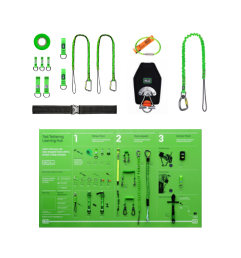
Tool Tethering

Approximately 7,000 injuries occur every year in the construction industry from moving and falling objects. Tool tethering prevents tools from falling when working at height, protecting workers, colleagues, and the public below. CMT Group stocks a comprehensive range of NLG tool tethering equipment including tool lanyards, tool tethers, tool bags, anchor points, and complete tethering kits, covering every situation where tools need to be secured during work at height on construction sites.
Read more Read less
Even a small tool falling from height can cause serious or fatal injury. Taking precautions and then relying on substandard tethering equipment is not an acceptable risk: a breaking tether creates more danger than no tether at all. All NLG tool tethering products supplied by CMT Group are tried, tested, and rated to the necessary standards, so you can be confident the equipment will do its job every time it matters.
- ✓ NLG tool tethering equipment from a trusted specialist brand
- ✓ Prevents dropped tools and falling object injuries on site
- ✓ Covers hand tools, communication equipment, and PPE accessories
- ✓ Tried, tested, and rated to the necessary safety standards
- ✓ Supports compliance with Working at Height Regulations 2005
- ✓ Wide range of styles, lengths, and weight capacities
- ✓ Bulk supply with same-day and next-day UK delivery available
What Is Tool Tethering?
Tool tethering is a dropped object prevention system that secures tools and equipment to the worker or to a fixed anchor point using a rated lanyard or tether. When working at height on scaffolding, elevated work platforms, rooftops, or any location above ground level, any unsecured tool that is dropped or slips from a worker's grip becomes a falling object. The kinetic energy of even a small tool falling from a few metres is enough to cause serious or fatal head injuries to anyone below.
The construction industry sees approximately 7,000 injuries per year from moving and falling objects, making it one of the leading categories of workplace incident on UK sites. Tool tethering directly addresses this risk by ensuring tools cannot fall further than the length of the tether, regardless of whether they are dropped, knocked, or slip from the worker's grip. A complete tethering system consists of three elements: an attachment point on the tool, a rated lanyard or tether, and a secure anchor point on the worker's body or on the structure being worked on. All three elements must be correctly rated and connected for the system to function safely.
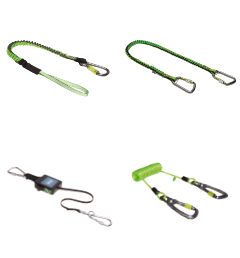
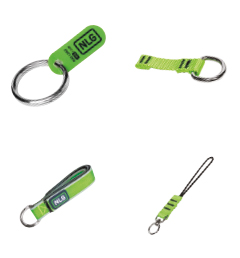
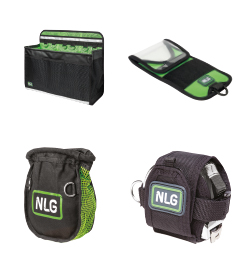
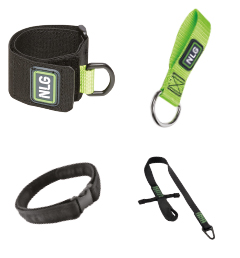
Tool Tethering by Type
Every element of a complete tethering system is available from CMT Group, stocked from the NLG range.
Choosing the Right Tool Tethering System
The correct tethering system depends on three factors: the weight of the tool being secured, the type of work being carried out, and how the worker needs to access the tool during the task. Every lanyard and tether in the NLG range is rated for a specific maximum tool weight. This is a safety rating, not a guideline. Using a lanyard rated below the weight of the tool defeats the purpose of the system and creates a false sense of security.
For tasks where the tool needs to be actively used throughout, an elastic lanyard allows free movement while keeping the tool secured. For tools that are set down between uses, a tool bag or pouch attached to the worker keeps the tool accessible without it resting on a surface where it could be knocked. For complete teams equipping multiple workers, tethering kits provide a matched and pre-selected system that eliminates specification errors between components.
| Situation | Recommended solution | Key requirement |
|---|---|---|
| Single worker, actively using one tool | Elastic lanyard with wrist or belt anchor | Lanyard rated above tool weight |
| Multiple tools used in sequence | Tool bag or pouch on work belt | Bag capacity to suit tool set |
| Team of workers at height | Tool tethering kits (one per worker) | Matched components, correct weight ratings |
| Heavy tool (drill, grinder, heavy hammer) | Fixed structure anchor with rated lanyard | Anchor must support full tool weight |
| New to tethering, first-time setup | Complete tethering kit | Pre-matched system, no compatibility risk |
Tool Tethering for UK Construction and Work at Height
Tool tethering is a critical dropped object prevention measure on any construction site where work is carried out at height. With approximately 7,000 construction injuries per year caused by moving and falling objects, securing tools is not optional. It is a safety requirement under the Working at Height Regulations 2005 and is increasingly mandated as a site standard by main contractors and principal contractors managing construction programmes.
CMT Group supplies the full NLG tool tethering range, covering lanyards, tethers, tool bags, anchor points, and complete kits. NLG is a specialist brand in dropped object prevention, and all products in the range are tried, tested, and rated to the necessary standards. Our team can advise on the correct tethering specification for your tools and working environment, and we hold strong UK stock with same-day and next-day delivery for urgent site requirements.
Frequently asked questions
What is tool tethering and why is it required?
Tool tethering is a dropped object prevention system that secures tools to the worker or to a fixed anchor point using a rated lanyard, preventing tools from falling if dropped during work at height. It is required under the Working at Height Regulations 2005, which places a legal duty on employers and site managers to prevent falling objects from causing injury. With approximately 7,000 injuries per year in UK construction from moving and falling objects, tool tethering is one of the most important site safety measures for any team working at height.
What tools can be tethered?
Most hand tools can be tethered, including hammers, screwdrivers, spanners, pliers, and measuring tools. Communication equipment and PPE accessories such as radios, phones, and safety glasses can also be tethered. The NLG range includes tether types for tools with and without existing attachment holes, covering the full scope of tools used on construction sites. The key requirement is that the lanyard and anchor point must be rated to at least the weight of the item being secured.
How do I choose the right tool lanyard?
Select a lanyard rated above the weight of the tool being secured. For tools that are actively used throughout a task, an elastic lanyard that extends and retracts provides freedom of movement without slack becoming a hazard. For heavier tools, a shorter lanyard attached to a fixed structure anchor prevents the tool from swinging into hazardous areas. If you are equipping a team or setting up tethering for the first time, a complete NLG tethering kit provides pre-matched components that eliminate the risk of compatibility errors between elements.
Why does tethering equipment need to be rated and tested?
A tethering system is only as strong as its weakest component. If a lanyard breaks under the load of a falling tool, the system has failed at the moment it was most needed. Worse, a worker who believed their tools were secured may be less vigilant as a result. All NLG products stocked by CMT Group are rated and tested to the necessary standards, giving you confidence that the equipment will perform as intended. Using unrated or substandard tethering equipment is not an acceptable substitution on a live construction site.
Why buy tool tethering equipment from CMT Group?
CMT Group stocks the full NLG tool tethering range, supplying lanyards, tethers, tool bags, anchor points, and complete kits direct to construction teams across the UK. NLG is a specialist brand in dropped object prevention with a strong reputation on UK construction sites. Our team can advise on the correct specification for your tools and environment, and we offer same-day and next-day delivery with bulk supply pricing for contractors and procurement teams equipping multiple workers.
Tool Tethering vs Tool Lanyards: What is the Difference?
Tool tethering and tool lanyards are closely related terms that are often used interchangeably, but they refer to different components of the same safety system. A tool lanyard is the connecting element: the rated cord, strap, or elastic link that runs between the tool and the anchor point. It absorbs the load if the tool is dropped and limits how far the tool can fall. Lanyards are specified by weight rating and length, and come in elastic, fixed, and retractable versions to suit different working situations.
Tool tethering is the broader term for the complete system: the tether attachment on the tool, the lanyard, and the anchor point on the worker's body or the structure. All three elements must be present and correctly rated for the system to function safely. When people refer to buying "tool tethering" they typically mean the complete system or the components needed to build it. When they refer to "tool lanyards" they are usually specifying the lanyard component specifically. If you are setting up tethering for the first time or equipping a team, a complete NLG tethering kit is the most straightforward approach as it provides all three components pre-matched to work together.
Accreditations and memberships
 CHAS Elite
 SSIP
SSIP
 BSI ISO 9001:2015
 ConstructionOnline Gold
 Achilles Building Confidence
Shop Tool Tethering by Type
Tool Tethering
Approximately 7,000 injuries occur every year in the construction industry from moving and falling objects. Tool tethering prevents tools from falling when working at height, protecting workers, colleagues, and the public below. CMT Group stocks a comprehensive range of NLG tool tethering equipment including tool lanyards, tool tethers, tool bags, anchor points, and complete tethering kits, covering every situation where tools need to be secured during work at height on construction sites.
Read more Read less
Even a small tool falling from height can cause serious or fatal injury. Taking precautions and then relying on substandard tethering equipment is not an acceptable risk: a breaking tether creates more danger than no tether at all. All NLG tool tethering products supplied by CMT Group are tried, tested, and rated to the necessary standards, so you can be confident the equipment will do its job every time it matters.
- ✓ NLG tool tethering equipment from a trusted specialist brand
- ✓ Prevents dropped tools and falling object injuries on site
- ✓ Covers hand tools, communication equipment, and PPE accessories
- ✓ Tried, tested, and rated to the necessary safety standards
- ✓ Supports compliance with Working at Height Regulations 2005
- ✓ Wide range of styles, lengths, and weight capacities
- ✓ Bulk supply with same-day and next-day UK delivery available
What Is Tool Tethering?
Tool tethering is a dropped object prevention system that secures tools and equipment to the worker or to a fixed anchor point using a rated lanyard or tether. When working at height on scaffolding, elevated work platforms, rooftops, or any location above ground level, any unsecured tool that is dropped or slips from a worker's grip becomes a falling object. The kinetic energy of even a small tool falling from a few metres is enough to cause serious or fatal head injuries to anyone below.
The construction industry sees approximately 7,000 injuries per year from moving and falling objects, making it one of the leading categories of workplace incident on UK sites. Tool tethering directly addresses this risk by ensuring tools cannot fall further than the length of the tether, regardless of whether they are dropped, knocked, or slip from the worker's grip. A complete tethering system consists of three elements: an attachment point on the tool, a rated lanyard or tether, and a secure anchor point on the worker's body or on the structure being worked on. All three elements must be correctly rated and connected for the system to function safely.
Tool Tethering by Type
Every element of a complete tethering system is available from CMT Group, stocked from the NLG range.
Choosing the Right Tool Tethering System
The correct tethering system depends on three factors: the weight of the tool being secured, the type of work being carried out, and how the worker needs to access the tool during the task. Every lanyard and tether in the NLG range is rated for a specific maximum tool weight. This is a safety rating, not a guideline. Using a lanyard rated below the weight of the tool defeats the purpose of the system and creates a false sense of security.
For tasks where the tool needs to be actively used throughout, an elastic lanyard allows free movement while keeping the tool secured. For tools that are set down between uses, a tool bag or pouch attached to the worker keeps the tool accessible without it resting on a surface where it could be knocked. For complete teams equipping multiple workers, tethering kits provide a matched and pre-selected system that eliminates specification errors between components.
| Situation | Recommended solution | Key requirement |
|---|---|---|
| Single worker, actively using one tool | Elastic lanyard with wrist or belt anchor | Lanyard rated above tool weight |
| Multiple tools used in sequence | Tool bag or pouch on work belt | Bag capacity to suit tool set |
| Team of workers at height | Tool tethering kits (one per worker) | Matched components, correct weight ratings |
| Heavy tool (drill, grinder, heavy hammer) | Fixed structure anchor with rated lanyard | Anchor must support full tool weight |
| New to tethering, first-time setup | Complete tethering kit | Pre-matched system, no compatibility risk |
Tool Tethering for UK Construction and Work at Height
Tool tethering is a critical dropped object prevention measure on any construction site where work is carried out at height. With approximately 7,000 construction injuries per year caused by moving and falling objects, securing tools is not optional. It is a safety requirement under the Working at Height Regulations 2005 and is increasingly mandated as a site standard by main contractors and principal contractors managing construction programmes.
CMT Group supplies the full NLG tool tethering range, covering lanyards, tethers, tool bags, anchor points, and complete kits. NLG is a specialist brand in dropped object prevention, and all products in the range are tried, tested, and rated to the necessary standards. Our team can advise on the correct tethering specification for your tools and working environment, and we hold strong UK stock with same-day and next-day delivery for urgent site requirements.
Frequently asked questions
What is tool tethering and why is it required?
Tool tethering is a dropped object prevention system that secures tools to the worker or to a fixed anchor point using a rated lanyard, preventing tools from falling if dropped during work at height. It is required under the Working at Height Regulations 2005, which places a legal duty on employers and site managers to prevent falling objects from causing injury. With approximately 7,000 injuries per year in UK construction from moving and falling objects, tool tethering is one of the most important site safety measures for any team working at height.
What tools can be tethered?
Most hand tools can be tethered, including hammers, screwdrivers, spanners, pliers, and measuring tools. Communication equipment and PPE accessories such as radios, phones, and safety glasses can also be tethered. The NLG range includes tether types for tools with and without existing attachment holes, covering the full scope of tools used on construction sites. The key requirement is that the lanyard and anchor point must be rated to at least the weight of the item being secured.
How do I choose the right tool lanyard?
Select a lanyard rated above the weight of the tool being secured. For tools that are actively used throughout a task, an elastic lanyard that extends and retracts provides freedom of movement without slack becoming a hazard. For heavier tools, a shorter lanyard attached to a fixed structure anchor prevents the tool from swinging into hazardous areas. If you are equipping a team or setting up tethering for the first time, a complete NLG tethering kit provides pre-matched components that eliminate the risk of compatibility errors between elements.
Why does tethering equipment need to be rated and tested?
A tethering system is only as strong as its weakest component. If a lanyard breaks under the load of a falling tool, the system has failed at the moment it was most needed. Worse, a worker who believed their tools were secured may be less vigilant as a result. All NLG products stocked by CMT Group are rated and tested to the necessary standards, giving you confidence that the equipment will perform as intended. Using unrated or substandard tethering equipment is not an acceptable substitution on a live construction site.
Why buy tool tethering equipment from CMT Group?
CMT Group stocks the full NLG tool tethering range, supplying lanyards, tethers, tool bags, anchor points, and complete kits direct to construction teams across the UK. NLG is a specialist brand in dropped object prevention with a strong reputation on UK construction sites. Our team can advise on the correct specification for your tools and environment, and we offer same-day and next-day delivery with bulk supply pricing for contractors and procurement teams equipping multiple workers.
Tool Tethering vs Tool Lanyards: What is the Difference?
Tool tethering and tool lanyards are closely related terms that are often used interchangeably, but they refer to different components of the same safety system. A tool lanyard is the connecting element: the rated cord, strap, or elastic link that runs between the tool and the anchor point. It absorbs the load if the tool is dropped and limits how far the tool can fall. Lanyards are specified by weight rating and length, and come in elastic, fixed, and retractable versions to suit different working situations.
Tool tethering is the broader term for the complete system: the tether attachment on the tool, the lanyard, and the anchor point on the worker's body or the structure. All three elements must be present and correctly rated for the system to function safely. When people refer to buying "tool tethering" they typically mean the complete system or the components needed to build it. When they refer to "tool lanyards" they are usually specifying the lanyard component specifically. If you are setting up tethering for the first time or equipping a team, a complete NLG tethering kit is the most straightforward approach as it provides all three components pre-matched to work together.
Accreditations and memberships
CHAS Elite
SSIP
BSI ISO 9001:2015
ConstructionOnline Gold
Achilles Building Confidence