Measuring & Marking

Accurate measurement and marking are fundamental to every stage of a construction project. CMT Group supplies a comprehensive range of measuring and marking tools for construction and groundworks, covering tape measures, road measuring wheels, chalk lines and chalk, string lines, laser levels, line marking paint, thermoplastic line marking, anti-skid sheets, asphalt repair and release agents, and depth gauges. From everyday site measurements to precision layout work and road surface marking, our range has the right tool for every application.
Read more Read less
Measuring and marking with exactitude is key to the success of any project. Even small errors at the measurement and layout stage can cause misalignment, wasted materials, and costly rework further down the programme. Our range covers the full scope of measuring and marking requirements on UK construction and highways sites, from simple tape measures for everyday use to road measuring wheels for large distances, laser levels for precision alignment, and specialised road surface marking products for highways and civils projects.
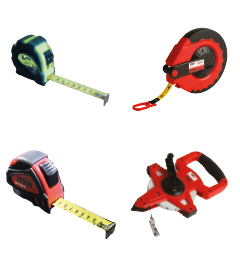
- ✓ Tape measures in a range of lengths for everyday site measurement
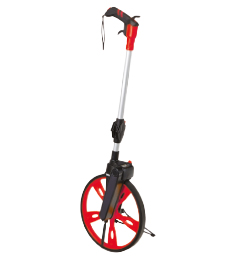
- ✓ Road measuring wheels for accurate large-distance measurement
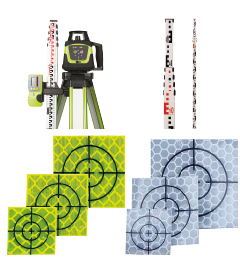
- ✓ Laser levels and accessories for precision alignment and setting out
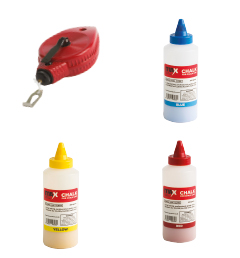
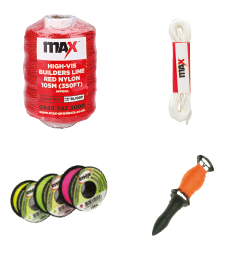
- ✓ Chalk lines, chalk, and string lines for marking surfaces and setting out
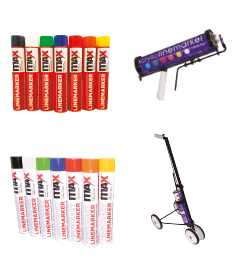
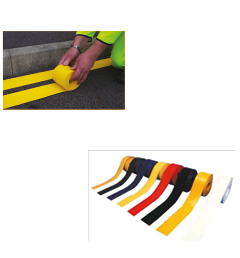
- ✓ Line marking paint and thermoplastic line for road and surface marking
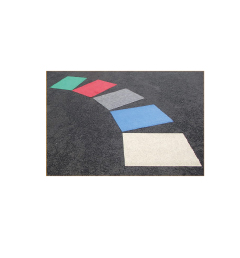
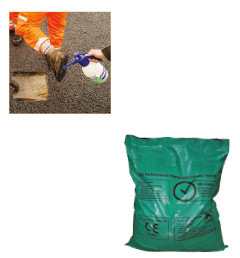
- ✓ Anti-skid sheets, asphalt repair, and release agents for road surfaces
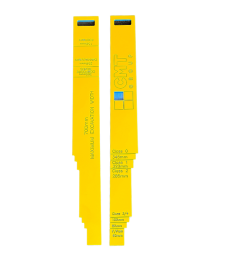
- ✓ Depth gauges for checking excavation depth and cover measurements
- ✓ Next day delivery on orders placed by 5pm (phone) or 7pm (online). VIP 2-3 hour delivery on a dedicated vehicle also available
Why Accuracy in Measurement and Marking Matters
In construction, measurement and marking are the bridge between a drawing and the physical build. A dimension taken inaccurately or a line marked in the wrong position creates an error that propagates through every subsequent stage of work. A foundation set out 20mm off line may not be visible until the superstructure is above ground. A road marking applied in the wrong position requires grinding out and reapplication at significant cost. Getting measurement and marking right at the outset is significantly cheaper than correcting errors later.
Contractor-grade measuring and marking tools are built for the accuracy, durability, and ease of use required on active construction sites. A tape measure that slips in the housing or reads inconsistently, a chalk line that delivers an uneven mark, or a laser level that drifts under temperature change are not acceptable tools on a professional site. Investing in quality measuring and marking equipment is one of the most cost-effective decisions a contractor can make, because the cost of the tools is trivial compared to the cost of rework caused by measurement error.
Measuring and Marking Tools by Type
Our range covers every measuring and marking requirement from everyday site use to specialist road surface applications.
Choosing the Right Measuring and Marking Tools
The right measuring and marking tools depend on the scale of the measurement required, the precision needed, and the surface being marked. For everyday measurements on a construction site, a quality contractor-grade tape measure is the primary tool. For longer distances such as road lengths or large site extents, a road measuring wheel is faster and more accurate. For setting out over large areas where level and alignment are critical, a rotary laser level eliminates cumulative error and significantly speeds up the setting out process.
For marking, the choice between chalk lines, string lines, and line marking paint depends on the surface and how long the mark needs to last. Chalk lines and string lines are the standard for setting out brickwork and structural work where temporary marks are needed. Line marking paint is better for outdoor surfaces and areas where chalk would wash away. For permanent road markings, thermoplastic line marking provides a durable, weather-resistant solution that meets road marking standards.
| Task | Recommended tool | Application |
|---|---|---|
| Everyday site measurement | Contractor tape measure | All construction trades |
| Large distance measurement | Road measuring wheel | Roads, large sites, quantities |
| Setting out levels over large area | Rotary laser level | Floors, foundations, grading |
| Setting out brickwork or kerbs | String line with pins | Bricklaying, blockwork, kerbs |
| Marking excavation or layout lines | Chalk line or marking paint | Setting out, cut lines |
| Permanent road line marking | Thermoplastic line | Roads, car parks, crossings |
| Checking excavation or cover depth | Depth gauge | Utilities, drainage, foundations |
Measuring and Marking Tools for UK Construction and Civil Engineering
Measuring and marking tools play a critical role across every stage of construction, from initial site setting out through foundation work, structural building, and finishing to final road and surface marking on civils and highways projects. Accurate measurement ensures work is completed to specification the first time, reducing rework and improving project outcomes across construction, civil engineering, and infrastructure programmes.
CMT Group supplies contractor-grade measuring and marking tools across all ten categories, with a range extending from everyday tape measures to specialist road marking products. Our team can advise on the right tool for your application. We operate our own fleet of 100+ FORS Silver accredited vehicles covering 90% of the UK, with next day delivery on orders placed by 5pm by phone or 7pm online, and VIP 2-3 hour delivery on a dedicated vehicle dispatched within 30 minutes for urgent requirements.
Frequently asked questions
What is the difference between a chalk line and a string line?
A chalk line is used to snap a straight mark onto a flat surface. The line is coated in chalk powder, stretched taut between two points, and then plucked to snap against the surface, leaving a straight chalk mark. It is used for one-off marks on floors, walls, and cutting lines where a temporary straight guide is needed. A string line is a thin cord stretched between line pins or corner blocks to provide a continuous horizontal or vertical reference line during work, most commonly during bricklaying, kerb laying, or blockwork. The string line stays in place while work proceeds along it, whereas a chalk line creates a mark and is then rewound.
When should I use a laser level instead of a spirit level?
A spirit level is the correct tool for checking the level of individual items over short distances, such as a single course of brickwork, a door frame, or a section of pipework. A laser level is the correct tool when you need a continuous level reference across a large area, when working alone and need a hands-free reference, or when the precision required exceeds what a spirit level can reliably deliver over longer spans. For floor levelling, setting out foundations, or grading large areas, a rotary laser level is significantly faster and more accurate than relying on a spirit level alone.
What is thermoplastic line marking and where is it used?
Thermoplastic line marking is a permanent road surface marking system applied by melting a thermoplastic material onto the road surface using heat. When cooled, it bonds to the surface and is significantly more durable than painted markings, with a typical service life many times longer than conventional road marking paint. It is used for permanent road lines, car park markings, pedestrian crossing lines, cycle lanes, and other markings where long service life, high visibility, and resistance to traffic wear are required.
What are depth gauges used for on a construction site?
Depth gauges are used to measure the depth of excavations, trenches, and utility covers to confirm that they meet the minimum depths specified in design drawings and utility standards. On utility installation projects, the cover depth of buried services must meet the minimum requirements in standards such as the Water Services Regulations and NJUG guidelines. A depth gauge allows the groundworker or site supervisor to verify that the required depth has been achieved before backfilling, providing a measurable record of compliance.
Why buy measuring and marking tools from CMT Group?
CMT Group supplies contractor-grade measuring and marking tools across all ten categories, from everyday tape measures to specialist road marking products. With over 20 years supplying UK construction sites, we understand what tools are needed at each stage of a project and stock accordingly. Next day delivery is available on orders placed by 5pm by phone or 7pm online, with VIP 2-3 hour delivery on a dedicated vehicle dispatched within 30 minutes for the most urgent requirements. Bulk supply pricing is available for contractors and procurement teams managing multiple projects.
Line Marking Paint vs Thermoplastic Line Marking: Which Do You Need?
Line marking paint and thermoplastic line marking both create visible lines on road and hard surfaces, but they are suited to very different applications. Line marking paint is a spray-applied paint available in a range of colours, applied quickly using an aerosol or applicator gun. It is the correct choice for temporary markings, construction site layout, sports pitch marking, and any application where the marking is not intended to be permanent. Paint markings are relatively quick to apply, low cost, and easy to update or change as a project progresses.
Thermoplastic line marking is a heat-applied system that bonds permanently to the road surface and is designed for long-term use under traffic loading. It is the standard for permanent road markings on public highways, car parks, and commercial sites where markings must remain clearly visible under continuous vehicle traffic for years without fading or wearing away. The upfront cost and application time of thermoplastic is higher than paint, but the service life difference makes it significantly more cost-effective for permanent applications. For temporary construction markings, use paint. For permanent road and car park markings, thermoplastic is the correct specification.
Shop Measuring and Marking by Type
Measuring & Marking
Accurate measurement and marking are fundamental to every stage of a construction project. CMT Group supplies a comprehensive range of measuring and marking tools for construction and groundworks, covering tape measures, road measuring wheels, chalk lines and chalk, string lines, laser levels, line marking paint, thermoplastic line marking, anti-skid sheets, asphalt repair and release agents, and depth gauges. From everyday site measurements to precision layout work and road surface marking, our range has the right tool for every application.
Read more Read less
Measuring and marking with exactitude is key to the success of any project. Even small errors at the measurement and layout stage can cause misalignment, wasted materials, and costly rework further down the programme. Our range covers the full scope of measuring and marking requirements on UK construction and highways sites, from simple tape measures for everyday use to road measuring wheels for large distances, laser levels for precision alignment, and specialised road surface marking products for highways and civils projects.
- ✓ Tape measures in a range of lengths for everyday site measurement
- ✓ Road measuring wheels for accurate large-distance measurement
- ✓ Laser levels and accessories for precision alignment and setting out
- ✓ Chalk lines, chalk, and string lines for marking surfaces and setting out
- ✓ Line marking paint and thermoplastic line for road and surface marking
- ✓ Anti-skid sheets, asphalt repair, and release agents for road surfaces
- ✓ Depth gauges for checking excavation depth and cover measurements
- ✓ Next day delivery on orders placed by 5pm (phone) or 7pm (online). VIP 2-3 hour delivery on a dedicated vehicle also available
Why Accuracy in Measurement and Marking Matters
In construction, measurement and marking are the bridge between a drawing and the physical build. A dimension taken inaccurately or a line marked in the wrong position creates an error that propagates through every subsequent stage of work. A foundation set out 20mm off line may not be visible until the superstructure is above ground. A road marking applied in the wrong position requires grinding out and reapplication at significant cost. Getting measurement and marking right at the outset is significantly cheaper than correcting errors later.
Contractor-grade measuring and marking tools are built for the accuracy, durability, and ease of use required on active construction sites. A tape measure that slips in the housing or reads inconsistently, a chalk line that delivers an uneven mark, or a laser level that drifts under temperature change are not acceptable tools on a professional site. Investing in quality measuring and marking equipment is one of the most cost-effective decisions a contractor can make, because the cost of the tools is trivial compared to the cost of rework caused by measurement error.
Measuring and Marking Tools by Type
Our range covers every measuring and marking requirement from everyday site use to specialist road surface applications.
Choosing the Right Measuring and Marking Tools
The right measuring and marking tools depend on the scale of the measurement required, the precision needed, and the surface being marked. For everyday measurements on a construction site, a quality contractor-grade tape measure is the primary tool. For longer distances such as road lengths or large site extents, a road measuring wheel is faster and more accurate. For setting out over large areas where level and alignment are critical, a rotary laser level eliminates cumulative error and significantly speeds up the setting out process.
For marking, the choice between chalk lines, string lines, and line marking paint depends on the surface and how long the mark needs to last. Chalk lines and string lines are the standard for setting out brickwork and structural work where temporary marks are needed. Line marking paint is better for outdoor surfaces and areas where chalk would wash away. For permanent road markings, thermoplastic line marking provides a durable, weather-resistant solution that meets road marking standards.
| Task | Recommended tool | Application |
|---|---|---|
| Everyday site measurement | Contractor tape measure | All construction trades |
| Large distance measurement | Road measuring wheel | Roads, large sites, quantities |
| Setting out levels over large area | Rotary laser level | Floors, foundations, grading |
| Setting out brickwork or kerbs | String line with pins | Bricklaying, blockwork, kerbs |
| Marking excavation or layout lines | Chalk line or marking paint | Setting out, cut lines |
| Permanent road line marking | Thermoplastic line | Roads, car parks, crossings |
| Checking excavation or cover depth | Depth gauge | Utilities, drainage, foundations |
Measuring and Marking Tools for UK Construction and Civil Engineering
Measuring and marking tools play a critical role across every stage of construction, from initial site setting out through foundation work, structural building, and finishing to final road and surface marking on civils and highways projects. Accurate measurement ensures work is completed to specification the first time, reducing rework and improving project outcomes across construction, civil engineering, and infrastructure programmes.
CMT Group supplies contractor-grade measuring and marking tools across all ten categories, with a range extending from everyday tape measures to specialist road marking products. Our team can advise on the right tool for your application. We operate our own fleet of 100+ FORS Silver accredited vehicles covering 90% of the UK, with next day delivery on orders placed by 5pm by phone or 7pm online, and VIP 2-3 hour delivery on a dedicated vehicle dispatched within 30 minutes for urgent requirements.
Frequently asked questions
What is the difference between a chalk line and a string line?
A chalk line is used to snap a straight mark onto a flat surface. The line is coated in chalk powder, stretched taut between two points, and then plucked to snap against the surface, leaving a straight chalk mark. It is used for one-off marks on floors, walls, and cutting lines where a temporary straight guide is needed. A string line is a thin cord stretched between line pins or corner blocks to provide a continuous horizontal or vertical reference line during work, most commonly during bricklaying, kerb laying, or blockwork. The string line stays in place while work proceeds along it, whereas a chalk line creates a mark and is then rewound.
When should I use a laser level instead of a spirit level?
A spirit level is the correct tool for checking the level of individual items over short distances, such as a single course of brickwork, a door frame, or a section of pipework. A laser level is the correct tool when you need a continuous level reference across a large area, when working alone and need a hands-free reference, or when the precision required exceeds what a spirit level can reliably deliver over longer spans. For floor levelling, setting out foundations, or grading large areas, a rotary laser level is significantly faster and more accurate than relying on a spirit level alone.
What is thermoplastic line marking and where is it used?
Thermoplastic line marking is a permanent road surface marking system applied by melting a thermoplastic material onto the road surface using heat. When cooled, it bonds to the surface and is significantly more durable than painted markings, with a typical service life many times longer than conventional road marking paint. It is used for permanent road lines, car park markings, pedestrian crossing lines, cycle lanes, and other markings where long service life, high visibility, and resistance to traffic wear are required.
What are depth gauges used for on a construction site?
Depth gauges are used to measure the depth of excavations, trenches, and utility covers to confirm that they meet the minimum depths specified in design drawings and utility standards. On utility installation projects, the cover depth of buried services must meet the minimum requirements in standards such as the Water Services Regulations and NJUG guidelines. A depth gauge allows the groundworker or site supervisor to verify that the required depth has been achieved before backfilling, providing a measurable record of compliance.
Why buy measuring and marking tools from CMT Group?
CMT Group supplies contractor-grade measuring and marking tools across all ten categories, from everyday tape measures to specialist road marking products. With over 20 years supplying UK construction sites, we understand what tools are needed at each stage of a project and stock accordingly. Next day delivery is available on orders placed by 5pm by phone or 7pm online, with VIP 2-3 hour delivery on a dedicated vehicle dispatched within 30 minutes for the most urgent requirements. Bulk supply pricing is available for contractors and procurement teams managing multiple projects.
Line Marking Paint vs Thermoplastic Line Marking: Which Do You Need?
Line marking paint and thermoplastic line marking both create visible lines on road and hard surfaces, but they are suited to very different applications. Line marking paint is a spray-applied paint available in a range of colours, applied quickly using an aerosol or applicator gun. It is the correct choice for temporary markings, construction site layout, sports pitch marking, and any application where the marking is not intended to be permanent. Paint markings are relatively quick to apply, low cost, and easy to update or change as a project progresses.
Thermoplastic line marking is a heat-applied system that bonds permanently to the road surface and is designed for long-term use under traffic loading. It is the standard for permanent road markings on public highways, car parks, and commercial sites where markings must remain clearly visible under continuous vehicle traffic for years without fading or wearing away. The upfront cost and application time of thermoplastic is higher than paint, but the service life difference makes it significantly more cost-effective for permanent applications. For temporary construction markings, use paint. For permanent road and car park markings, thermoplastic is the correct specification.