Fire & Emergency

Keep fire, spill and emergency supplies organised for site ordering, project stores and depot replenishment. Choose from fire extinguisher products, fire blankets, fire alarms, spill control, drip trays, site safety stations, RAMS boards, flood solutions and snow solutions for construction sites and welfare setups ... Keep fire, spill and emergency supplies organised for site ordering, project stores and depot replenishment. Choose from fire extinguisher products, fire blankets, fire alarms, spill control, drip trays, site safety stations, RAMS boards, flood solutions and snow solutions for construction sites and welfare setups. Before ordering, check product type, size, capacity, storage needs, fixing method and delivery requirements against your site or project setup. For volume orders, repeat replenishment or planned supply, speak to our team. We can help with stock checks, repeat orders and same-day or next-day UK delivery on stocked products, subject to availability. read more...read less
Choose the right fire and emergency product
| Product type | Use when | Buying checks | Typical products |
|---|---|---|---|
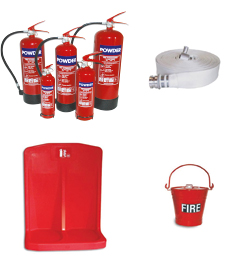
| Fire Extinguishers | For site areas, welfare setups, vehicles, depots or project stores that need fire extinguisher products. | Extinguisher type; size or capacity; mounting needs; storage location; project requirement; product details. | Fire extinguishers and related extinguisher products. |
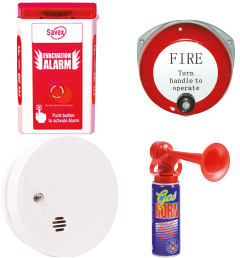
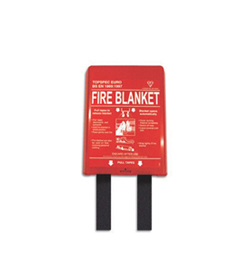
| Fire Blankets & Fire Alarms | For welfare areas, canteens, site offices or temporary setups ordering fire blanket or fire alarm products. | Product type; blanket size or alarm type; mounting or storage needs; product details; order quantity. | Fire blankets, storage cases and fire alarm products. |
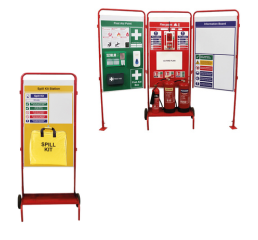
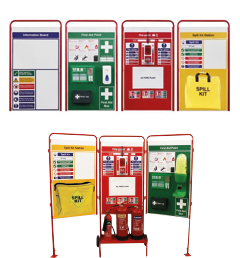
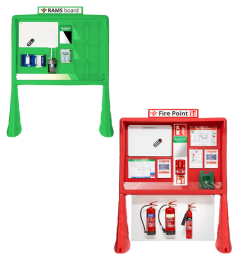
| Site Safety Stations & Fire Safety Stations | For ordering site station products for fire points, welfare areas, project stores or temporary site setups. | Station type; size; contents; location; fixing or storage needs; product details. | Site safety stations and fire safety stations. |
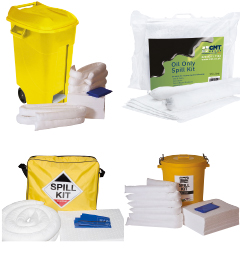
| Spill Kits & Spill Containment | For site areas, stores, depots or vehicles that need spill response or containment products. | Spill type; absorbency; kit size; capacity; storage location; refill needs; product details. | Spill kits, absorbents and spill containment products. |
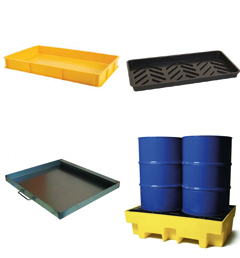
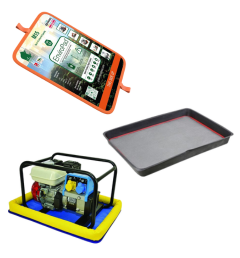
| Drip Trays | For storing plant, fuel containers, liquids or site equipment that needs drip or liquid containment. | Tray size; capacity; material; storage location; product details. | Drip trays and containment products. |
| Sediment & Oil Filters | For ordering drainage, sediment or oil filter products for site areas, plant zones or water management points. | Filter type; size; drainage point; installation location; product details. | Sediment filters, oil filters and drainage management products. |
| RAMS Boards | For displaying RAMS documents, site notices or project information in site offices and work areas. | Board type; size; fixing method; indoor or outdoor use; capacity; product details. | RAMS boards and document display products. |
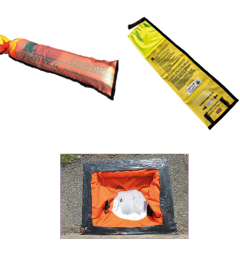
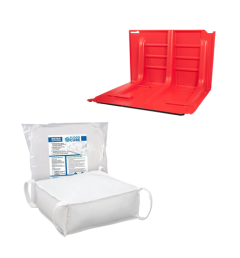
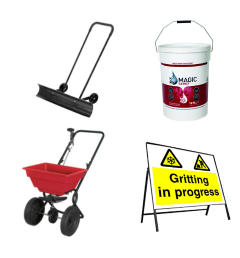
| Flood & Snow Solutions | For ordering seasonal flood, snow or ice response products for sites, depots and welfare areas. | Product type; size or capacity; storage needs; seasonal demand; product details. | Flood defence products, snow solutions and related emergency products. |
Frequently asked questions
What fire and emergency products can I order from CMT Group?
You can order fire extinguisher products, fire blankets, fire alarms, site safety stations, fire safety stations, spill kits, drip trays, spill containment products, sediment and oil filters, RAMS boards, flood solutions and snow solutions for construction sites, welfare areas, vehicles, depots and project stores.
For account enquiries or volume requirements, speak to our team.
What should I check before ordering fire extinguisher products?
Check extinguisher type, size, capacity and mounting requirements before ordering. Check the product listing for storage and fixing details, and confirm the order quantity covers your site areas, vehicles and project stores before placing your order.
For site-specific requirements or project quantities, speak to our team.
Do you supply fire blankets, alarms and fire point products?
Yes. Fire blankets, storage cases and fire alarm products are available. Site safety stations and fire safety stations are also available for fire point setups across welfare areas, site offices and project stores. Check product type, size and mounting needs before ordering.
For project quantities or planned replenishment, speak to our team.
Can I order spill kits, absorbents and drip trays?
Yes. Spill kits, spill containment products and drip trays are available for construction sites, plant areas, depots and site stores. Check spill type, absorbency, kit size and containment capacity before ordering. Sediment and oil filters are also available for drainage and surface water management around site areas and plant zones.
Use the EDGE B2B Portal for trade pricing and easy repeat ordering, or speak to our team for volume and depot requirements.
What should I check before ordering site safety stations or RAMS boards?
For site safety stations and fire safety stations, check station type, contents, size, fixing method and storage location before ordering. For RAMS boards, check board type, size, capacity and whether the product is suitable for indoor or outdoor use. Check the product listing for full product details before placing your order.
For project requirements or large-volume orders, speak to our team.
Can CMT Group support fire and emergency supply across projects or depots?
Yes. Trade account holders and project procurement teams can order fire and emergency products for repeat replenishment, depot restocking and planned project supply. Use the EDGE B2B Portal for repeat orders, order tracking and account management.
For phased project supply or depot-level quantities, speak to our team to discuss stock availability, delivery options and supply arrangements.
Can I order fire and emergency products with other site welfare supplies?
Yes. Fire and emergency products can be ordered alongside first aid, janitorial, catering and canteen, furniture and cleaning supplies through the Facilities, Hygiene and Emergency range. The EDGE B2B Portal supports order tracking and account management across product lines for project accounts.
For planned supply or wider site setup orders, speak to our team.
How quickly can stocked fire and emergency products be delivered?
Stocked fire and emergency products can be supplied with same-day and next-day UK delivery options for trade and project accounts, subject to stock availability. For time-critical orders, check stock availability and confirm lead times before ordering.
Use the EDGE B2B Portal to track orders and manage account purchasing, or visit the delivery information page for details.
Ordering fire and emergency products for site welfare, vehicles, depots, project stores or repeat replenishment? Choose from fire extinguisher products, fire blankets, fire alarms, spill kits, drip trays, spill containment, site safety stations, RAMS boards, flood solutions and snow solutions for your site or project account. For volume orders, repeat replenishment or planned supply, speak to our team or browse the fire and emergency range below.
UK-wide delivery
Same-day and next-day UK delivery options on stocked fire and emergency products for trade and project accounts, subject to availability.Stock availability
Stock availability across fire extinguishers, fire alarms, fire blankets, spill kits, drip trays, spill containment, site safety stations and related emergency products, subject to current stock.EDGE B2B Portal
Self-serve procurement with trade pricing, order tracking and easy repeat ordering for account holders.Project and repeat procurement
Support for project quantities, depot replenishment and repeat fire and emergency supply across sites and accounts.Facilities, Hygiene & Emergency
Order fire and emergency products alongside first aid, janitorial, canteen, furniture and cleaning supplies.Shop Fire and Emergency by Type
Fire & Emergency
Keep fire, spill and emergency supplies organised for site ordering, project stores and depot replenishment. Choose from fire extinguisher products, fire blankets, fire alarms, spill control, drip trays, site safety stations, RAMS boards, flood solutions and snow solutions for construction sites and welfare setups ... Keep fire, spill and emergency supplies organised for site ordering, project stores and depot replenishment. Choose from fire extinguisher products, fire blankets, fire alarms, spill control, drip trays, site safety stations, RAMS boards, flood solutions and snow solutions for construction sites and welfare setups. Before ordering, check product type, size, capacity, storage needs, fixing method and delivery requirements against your site or project setup. For volume orders, repeat replenishment or planned supply, speak to our team. We can help with stock checks, repeat orders and same-day or next-day UK delivery on stocked products, subject to availability. read more...read less
Choose the right fire and emergency product
| Product type | Use when | Buying checks | Typical products |
|---|---|---|---|
| Fire Extinguishers | For site areas, welfare setups, vehicles, depots or project stores that need fire extinguisher products. | Extinguisher type; size or capacity; mounting needs; storage location; project requirement; product details. | Fire extinguishers and related extinguisher products. |
| Fire Blankets & Fire Alarms | For welfare areas, canteens, site offices or temporary setups ordering fire blanket or fire alarm products. | Product type; blanket size or alarm type; mounting or storage needs; product details; order quantity. | Fire blankets, storage cases and fire alarm products. |
| Site Safety Stations & Fire Safety Stations | For ordering site station products for fire points, welfare areas, project stores or temporary site setups. | Station type; size; contents; location; fixing or storage needs; product details. | Site safety stations and fire safety stations. |
| Spill Kits & Spill Containment | For site areas, stores, depots or vehicles that need spill response or containment products. | Spill type; absorbency; kit size; capacity; storage location; refill needs; product details. | Spill kits, absorbents and spill containment products. |
| Drip Trays | For storing plant, fuel containers, liquids or site equipment that needs drip or liquid containment. | Tray size; capacity; material; storage location; product details. | Drip trays and containment products. |
| Sediment & Oil Filters | For ordering drainage, sediment or oil filter products for site areas, plant zones or water management points. | Filter type; size; drainage point; installation location; product details. | Sediment filters, oil filters and drainage management products. |
| RAMS Boards | For displaying RAMS documents, site notices or project information in site offices and work areas. | Board type; size; fixing method; indoor or outdoor use; capacity; product details. | RAMS boards and document display products. |
| Flood & Snow Solutions | For ordering seasonal flood, snow or ice response products for sites, depots and welfare areas. | Product type; size or capacity; storage needs; seasonal demand; product details. | Flood defence products, snow solutions and related emergency products. |
Frequently asked questions
What fire and emergency products can I order from CMT Group?
You can order fire extinguisher products, fire blankets, fire alarms, site safety stations, fire safety stations, spill kits, drip trays, spill containment products, sediment and oil filters, RAMS boards, flood solutions and snow solutions for construction sites, welfare areas, vehicles, depots and project stores.
For account enquiries or volume requirements, speak to our team.
What should I check before ordering fire extinguisher products?
Check extinguisher type, size, capacity and mounting requirements before ordering. Check the product listing for storage and fixing details, and confirm the order quantity covers your site areas, vehicles and project stores before placing your order.
For site-specific requirements or project quantities, speak to our team.
Do you supply fire blankets, alarms and fire point products?
Yes. Fire blankets, storage cases and fire alarm products are available. Site safety stations and fire safety stations are also available for fire point setups across welfare areas, site offices and project stores. Check product type, size and mounting needs before ordering.
For project quantities or planned replenishment, speak to our team.
Can I order spill kits, absorbents and drip trays?
Yes. Spill kits, spill containment products and drip trays are available for construction sites, plant areas, depots and site stores. Check spill type, absorbency, kit size and containment capacity before ordering. Sediment and oil filters are also available for drainage and surface water management around site areas and plant zones.
Use the EDGE B2B Portal for trade pricing and easy repeat ordering, or speak to our team for volume and depot requirements.
What should I check before ordering site safety stations or RAMS boards?
For site safety stations and fire safety stations, check station type, contents, size, fixing method and storage location before ordering. For RAMS boards, check board type, size, capacity and whether the product is suitable for indoor or outdoor use. Check the product listing for full product details before placing your order.
For project requirements or large-volume orders, speak to our team.
Can CMT Group support fire and emergency supply across projects or depots?
Yes. Trade account holders and project procurement teams can order fire and emergency products for repeat replenishment, depot restocking and planned project supply. Use the EDGE B2B Portal for repeat orders, order tracking and account management.
For phased project supply or depot-level quantities, speak to our team to discuss stock availability, delivery options and supply arrangements.
Can I order fire and emergency products with other site welfare supplies?
Yes. Fire and emergency products can be ordered alongside first aid, janitorial, catering and canteen, furniture and cleaning supplies through the Facilities, Hygiene and Emergency range. The EDGE B2B Portal supports order tracking and account management across product lines for project accounts.
For planned supply or wider site setup orders, speak to our team.
How quickly can stocked fire and emergency products be delivered?
Stocked fire and emergency products can be supplied with same-day and next-day UK delivery options for trade and project accounts, subject to stock availability. For time-critical orders, check stock availability and confirm lead times before ordering.
Use the EDGE B2B Portal to track orders and manage account purchasing, or visit the delivery information page for details.
Ordering fire and emergency products for site welfare, vehicles, depots, project stores or repeat replenishment? Choose from fire extinguisher products, fire blankets, fire alarms, spill kits, drip trays, spill containment, site safety stations, RAMS boards, flood solutions and snow solutions for your site or project account. For volume orders, repeat replenishment or planned supply, speak to our team or browse the fire and emergency range below.