Flame Retardant & Arc Flash clothing

Flame Retardant & Arc Flash Clothing for industrial, utilities, welding, rail infrastructure and high-risk site teams working around heat, flame, molten splash, anti-static and electric arc hazards. Order FR coveralls, trousers, salopettes, polo shirts, T-shirts, sweatshirts, vests, waistcoats and wet weather clothing in bulk ... Flame Retardant & Arc Flash Clothing for industrial, utilities, welding, rail infrastructure and high-risk site teams working around heat, flame, molten splash, anti-static and electric arc hazards. Order FR coveralls, trousers, salopettes, polo shirts, T-shirts, sweatshirts, vests, waistcoats and wet weather clothing in bulk for project rollouts, repeat procurement and site-specific protective clothing requirements. The range includes garment-level protection options for EN ISO 11612, EN ISO 11611, IEC 61482-2, EN 1149-5, EN ISO 20471 and EN 343 where certified. CMT Group supplies contractors, procurement teams and facilities managers with stock availability, account-based purchasing and fast nationwide delivery for trade and contract supply. read more...read less
Flame retardant and arc flash clothing types, standards and common use
| Subcategory | Relevant standards | What it means | Common use |
|---|---|---|---|
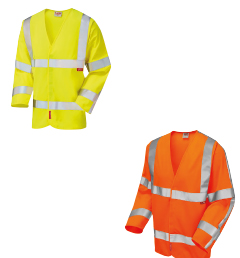
| Vests & Waistcoats | EN ISO 11612 and EN ISO 20471 where certified; other product-specific standards where applicable | FR or multi-norm vests and waistcoats selected for visible outer-layer use on combined visibility and thermal-risk sites. Check garment specification and certification before ordering. | Utilities, rail-adjacent infrastructure, industrial sites, site supervision and lower-exposure outer-layer requirements |
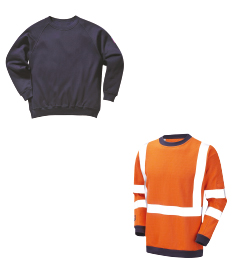
| Sweatshirts | EN ISO 11612 where certified; EN 1149-5 or IEC 61482-2 where applicable | FR sweatshirts providing warmth, comfort and mid-layer protection. Check whether the garment is certified for flame, anti-static or arc flash performance before ordering. | Utilities, industrial sites, rail infrastructure, colder shifts, maintenance and layered FR clothing systems |
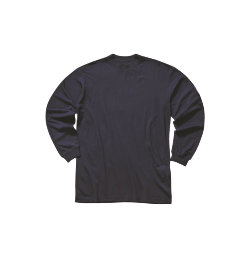
| T-Shirts | EN ISO 11612 where certified; EN 1149-5 or IEC 61482-2 where applicable | FR T-shirts providing lightweight protection for warmer conditions or base-layer systems. Check whether they are intended as standalone or layered protection before ordering. | Utilities, electrical work, manufacturing, maintenance, warm-weather tasks and layered FR systems |
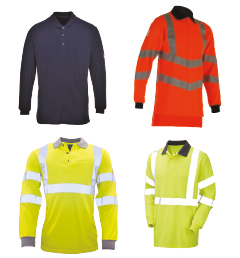
| Polo Shirts | EN ISO 11612 where certified; EN 1149-5 or IEC 61482-2 where applicable | FR polo shirts selected for day-to-day sitewear where flame, anti-static or arc flash performance is required by the task or site. Check garment certification before ordering. | Utilities, industrial operations, electrical maintenance, manufacturing, logistics and branded protective sitewear |
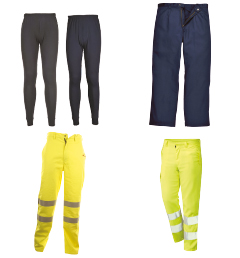
| Trousers & Leggings | EN ISO 11612 where certified; EN ISO 11611, EN 1149-5, IEC 61482-2 or EN ISO 20471 where applicable | FR trousers and leggings providing lower-body protection, freedom of movement and compatibility with jackets, coveralls or layered FR clothing systems. | Welding, utilities, industrial maintenance, oil and gas, rail-adjacent work and combined-hazard sites |
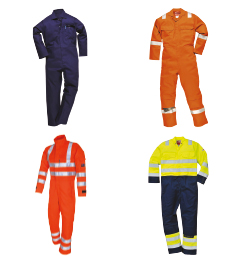
| Coveralls & Boiler Suits | EN ISO 11612 where certified; EN ISO 11611, EN 1149-5, IEC 61482-2 or EN ISO 20471 where applicable | FR coveralls and boiler suits providing full-body coverage in a single garment, reducing gaps between upper and lower protective layers. | Welding, fabrication, utilities, industrial manufacturing, maintenance, oil and gas and multi-norm site environments |
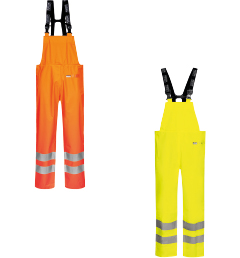
| Salopettes | EN ISO 11612 where certified; EN ISO 11611, EN 1149-5, IEC 61482-2 or EN 343 where applicable | FR salopettes and bib-and-brace garments providing additional lower-body and torso coverage, often paired with compatible FR upper layers. | Welding, utilities, outdoor industrial work, rail infrastructure, exposed conditions and layered FR clothing systems |
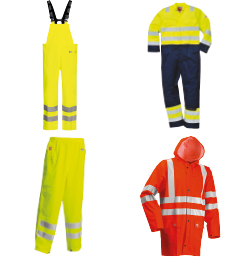
| Wet Weather Clothing | EN ISO 11612 and EN 343 where certified; EN ISO 20471, EN 1149-5 or IEC 61482-2 where applicable | FR wet weather clothing for sites where rain protection must be combined with flame, visibility, anti-static or arc flash performance. Check garment certification before ordering. | Outdoor utilities, rail infrastructure, civils, oil and gas, industrial maintenance and wet high-risk site conditions |
Frequently asked questions
What is flame retardant clothing?
Flame retardant clothing is protective workwear designed to resist ignition, limit flame spread and reduce the effect of heat or flame exposure where the garment is certified for the relevant hazard. FR clothing is commonly used in welding, utilities, industrial manufacturing, oil and gas, rail infrastructure and other environments where thermal and flame hazards are identified by risk assessment.
Product suitability depends on the individual garment. Buyers should check the garment specification, label, relevant standard and declaration of conformity before ordering for a specific task or site.
What does EN ISO 11612 mean on flame retardant clothing?
EN ISO 11612 is a protective clothing standard for garments used against heat and flame hazards. Garments certified to EN ISO 11612 are tested against specific heat risks, which may include limited flame spread, convective heat, radiant heat, molten metal splash and contact heat. Not all garments are tested across every performance code.
The performance codes and levels on the product documentation matter. Procurement teams should match the garment's stated performance to the site-specific risk assessment and task requirement, rather than assuming identical protection from all EN ISO 11612 garments.
Is flame retardant clothing a legal requirement?
Employers must provide suitable PPE where a workplace risk assessment identifies risks that cannot be controlled by other means. Where heat, flame, welding, molten splash, anti-static or electric arc hazards are identified, this may include certified flame retardant, arc flash or multi-norm clothing.
The correct garment depends on the task, hazard assessment, site rules and product certification. Individual garment specifications and declarations of conformity should be checked before ordering for a specific regulated environment.
What is arc flash clothing and when is it required?
Arc flash clothing is protective clothing selected where workers may be exposed to the thermal effects of an electric arc. Where arc flash protection is required, buyers should confirm that the garment is certified to the relevant arc flash standard, such as IEC 61482-2, and that the performance rating matches the site risk assessment.
Not all flame retardant garments are arc flash rated. Arc flash suitability must be verified against the individual product specification, label and declaration of conformity before ordering.
What is multi-norm flame retardant clothing?
Multi-norm flame retardant clothing carries certification to more than one protective standard. Depending on the garment, this may include EN ISO 11612 for heat and flame, EN ISO 11611 for welding, EN 1149-5 for anti-static performance, IEC 61482-2 for arc flash protection, EN ISO 20471 for high visibility and EN 343 for wet weather protection.
Multi-norm clothing can simplify procurement on sites where workers face several identified hazards, but the specific standards and performance levels on each garment must still be verified before ordering.
Which industries use flame retardant and arc flash clothing?
Flame retardant and arc flash clothing is commonly used in welding and metal fabrication, utilities, electrical maintenance, oil and gas, rail infrastructure, industrial manufacturing, heavy engineering and chemical processing.
The correct clothing depends on the hazard profile of the work. Procurement teams should match garment standards and performance ratings to the site-specific risk assessment, client specification and task requirement.
Can CMT Group supply flame retardant and arc flash clothing in bulk for site rollouts?
Yes. CMT Group supplies flame retardant and arc flash clothing for contractors, utilities, industrial operators, infrastructure teams and project-led site requirements, including repeat orders and account-based purchasing.
For larger project quantities, procurement teams can use CMT Group's EDGE B2B Portal or contact the CMT Group team to discuss product availability, repeat supply and ordering requirements.
What supplier assurance supports CMT Group's flame retardant and arc flash clothing supply?
CMT Group holds BSIF Registered Safety Supplier, BSI ISO 9001:2015 Quality Management and CHAS Elite accreditations. As listed on CMT Group's accreditations page, these supplier-level accreditations support buyer confidence in CMT Group's processes and supply standards when sourcing flame retardant and arc flash clothing for contractors, utilities and industrial operators.
Product suitability still depends on the individual garment, including EN ISO 11612, EN ISO 11611, IEC 61482-2, EN 1149-5, EN ISO 20471, EN 343, declarations of conformity and any project-specific requirements.
Ordering flame retardant or arc flash clothing for a project rollout? Many CMT Group product pages include specification tables, size guides and product details to help buyers check garment standards, performance ratings and fit before ordering. For project quantities or product datasheets where available, contact the CMT Group team.
UK-wide delivery
Next-day and VIP same-day delivery on stocked flame retardant and arc flash clothing lines, with nationwide coverage for trade and project accounts.Stock availability
Large stockholding and repeat ordering support for FR clothing buyers, high-risk site teams and industrial operators.EDGE B2B Portal
Self-serve procurement with trade pricing, order tracking and easy repeat ordering for account holders.Brandit
In-house branding for protective sitewear and FR clothing lines, with garment suitability checked before branding is applied.Sustainability
Sustainable supply and compliance-ready products to support responsible procurement and social value commitments.Shop Flame Retardant & Arc Flash Clothing by Subcategory
Flame Retardant & Arc Flash clothing
Flame Retardant & Arc Flash Clothing for industrial, utilities, welding, rail infrastructure and high-risk site teams working around heat, flame, molten splash, anti-static and electric arc hazards. Order FR coveralls, trousers, salopettes, polo shirts, T-shirts, sweatshirts, vests, waistcoats and wet weather clothing in bulk ... Flame Retardant & Arc Flash Clothing for industrial, utilities, welding, rail infrastructure and high-risk site teams working around heat, flame, molten splash, anti-static and electric arc hazards. Order FR coveralls, trousers, salopettes, polo shirts, T-shirts, sweatshirts, vests, waistcoats and wet weather clothing in bulk for project rollouts, repeat procurement and site-specific protective clothing requirements. The range includes garment-level protection options for EN ISO 11612, EN ISO 11611, IEC 61482-2, EN 1149-5, EN ISO 20471 and EN 343 where certified. CMT Group supplies contractors, procurement teams and facilities managers with stock availability, account-based purchasing and fast nationwide delivery for trade and contract supply. read more...read less
Flame retardant and arc flash clothing types, standards and common use
| Subcategory | Relevant standards | What it means | Common use |
|---|---|---|---|
| Vests & Waistcoats | EN ISO 11612 and EN ISO 20471 where certified; other product-specific standards where applicable | FR or multi-norm vests and waistcoats selected for visible outer-layer use on combined visibility and thermal-risk sites. Check garment specification and certification before ordering. | Utilities, rail-adjacent infrastructure, industrial sites, site supervision and lower-exposure outer-layer requirements |
| Sweatshirts | EN ISO 11612 where certified; EN 1149-5 or IEC 61482-2 where applicable | FR sweatshirts providing warmth, comfort and mid-layer protection. Check whether the garment is certified for flame, anti-static or arc flash performance before ordering. | Utilities, industrial sites, rail infrastructure, colder shifts, maintenance and layered FR clothing systems |
| T-Shirts | EN ISO 11612 where certified; EN 1149-5 or IEC 61482-2 where applicable | FR T-shirts providing lightweight protection for warmer conditions or base-layer systems. Check whether they are intended as standalone or layered protection before ordering. | Utilities, electrical work, manufacturing, maintenance, warm-weather tasks and layered FR systems |
| Polo Shirts | EN ISO 11612 where certified; EN 1149-5 or IEC 61482-2 where applicable | FR polo shirts selected for day-to-day sitewear where flame, anti-static or arc flash performance is required by the task or site. Check garment certification before ordering. | Utilities, industrial operations, electrical maintenance, manufacturing, logistics and branded protective sitewear |
| Trousers & Leggings | EN ISO 11612 where certified; EN ISO 11611, EN 1149-5, IEC 61482-2 or EN ISO 20471 where applicable | FR trousers and leggings providing lower-body protection, freedom of movement and compatibility with jackets, coveralls or layered FR clothing systems. | Welding, utilities, industrial maintenance, oil and gas, rail-adjacent work and combined-hazard sites |
| Coveralls & Boiler Suits | EN ISO 11612 where certified; EN ISO 11611, EN 1149-5, IEC 61482-2 or EN ISO 20471 where applicable | FR coveralls and boiler suits providing full-body coverage in a single garment, reducing gaps between upper and lower protective layers. | Welding, fabrication, utilities, industrial manufacturing, maintenance, oil and gas and multi-norm site environments |
| Salopettes | EN ISO 11612 where certified; EN ISO 11611, EN 1149-5, IEC 61482-2 or EN 343 where applicable | FR salopettes and bib-and-brace garments providing additional lower-body and torso coverage, often paired with compatible FR upper layers. | Welding, utilities, outdoor industrial work, rail infrastructure, exposed conditions and layered FR clothing systems |
| Wet Weather Clothing | EN ISO 11612 and EN 343 where certified; EN ISO 20471, EN 1149-5 or IEC 61482-2 where applicable | FR wet weather clothing for sites where rain protection must be combined with flame, visibility, anti-static or arc flash performance. Check garment certification before ordering. | Outdoor utilities, rail infrastructure, civils, oil and gas, industrial maintenance and wet high-risk site conditions |
Frequently asked questions
What is flame retardant clothing?
Flame retardant clothing is protective workwear designed to resist ignition, limit flame spread and reduce the effect of heat or flame exposure where the garment is certified for the relevant hazard. FR clothing is commonly used in welding, utilities, industrial manufacturing, oil and gas, rail infrastructure and other environments where thermal and flame hazards are identified by risk assessment.
Product suitability depends on the individual garment. Buyers should check the garment specification, label, relevant standard and declaration of conformity before ordering for a specific task or site.
What does EN ISO 11612 mean on flame retardant clothing?
EN ISO 11612 is a protective clothing standard for garments used against heat and flame hazards. Garments certified to EN ISO 11612 are tested against specific heat risks, which may include limited flame spread, convective heat, radiant heat, molten metal splash and contact heat. Not all garments are tested across every performance code.
The performance codes and levels on the product documentation matter. Procurement teams should match the garment's stated performance to the site-specific risk assessment and task requirement, rather than assuming identical protection from all EN ISO 11612 garments.
Is flame retardant clothing a legal requirement?
Employers must provide suitable PPE where a workplace risk assessment identifies risks that cannot be controlled by other means. Where heat, flame, welding, molten splash, anti-static or electric arc hazards are identified, this may include certified flame retardant, arc flash or multi-norm clothing.
The correct garment depends on the task, hazard assessment, site rules and product certification. Individual garment specifications and declarations of conformity should be checked before ordering for a specific regulated environment.
What is arc flash clothing and when is it required?
Arc flash clothing is protective clothing selected where workers may be exposed to the thermal effects of an electric arc. Where arc flash protection is required, buyers should confirm that the garment is certified to the relevant arc flash standard, such as IEC 61482-2, and that the performance rating matches the site risk assessment.
Not all flame retardant garments are arc flash rated. Arc flash suitability must be verified against the individual product specification, label and declaration of conformity before ordering.
What is multi-norm flame retardant clothing?
Multi-norm flame retardant clothing carries certification to more than one protective standard. Depending on the garment, this may include EN ISO 11612 for heat and flame, EN ISO 11611 for welding, EN 1149-5 for anti-static performance, IEC 61482-2 for arc flash protection, EN ISO 20471 for high visibility and EN 343 for wet weather protection.
Multi-norm clothing can simplify procurement on sites where workers face several identified hazards, but the specific standards and performance levels on each garment must still be verified before ordering.
Which industries use flame retardant and arc flash clothing?
Flame retardant and arc flash clothing is commonly used in welding and metal fabrication, utilities, electrical maintenance, oil and gas, rail infrastructure, industrial manufacturing, heavy engineering and chemical processing.
The correct clothing depends on the hazard profile of the work. Procurement teams should match garment standards and performance ratings to the site-specific risk assessment, client specification and task requirement.
Can CMT Group supply flame retardant and arc flash clothing in bulk for site rollouts?
Yes. CMT Group supplies flame retardant and arc flash clothing for contractors, utilities, industrial operators, infrastructure teams and project-led site requirements, including repeat orders and account-based purchasing.
For larger project quantities, procurement teams can use CMT Group's EDGE B2B Portal or contact the CMT Group team to discuss product availability, repeat supply and ordering requirements.
What supplier assurance supports CMT Group's flame retardant and arc flash clothing supply?
CMT Group holds BSIF Registered Safety Supplier, BSI ISO 9001:2015 Quality Management and CHAS Elite accreditations. As listed on CMT Group's accreditations page, these supplier-level accreditations support buyer confidence in CMT Group's processes and supply standards when sourcing flame retardant and arc flash clothing for contractors, utilities and industrial operators.
Product suitability still depends on the individual garment, including EN ISO 11612, EN ISO 11611, IEC 61482-2, EN 1149-5, EN ISO 20471, EN 343, declarations of conformity and any project-specific requirements.
Ordering flame retardant or arc flash clothing for a project rollout? Many CMT Group product pages include specification tables, size guides and product details to help buyers check garment standards, performance ratings and fit before ordering. For project quantities or product datasheets where available, contact the CMT Group team.