Traffic Management

Traffic management equipment controls vehicle and pedestrian movement on construction sites and highways works, reducing the risk of collisions and keeping workers and the public safe. CMT Group supplies a comprehensive range of traffic management equipment including warning lights, posts, hazard and warning tapes, mesh fencing and pins, speed humps, ramps, trench covers, setting out pegs, and safety walkways, covering the traffic management requirements of construction sites and highways contractors across the UK.
Read more Read less
Effective traffic management on a construction site requires more than signage alone. Physical equipment that controls vehicle speed, bridges excavations safely, marks hazards visibly, and provides compliant pedestrian access routes is essential for protecting workers and visitors throughout the project. The interaction between vehicles and pedestrians on construction sites is one of the most significant causes of serious and fatal accidents in the UK construction industry, and the correct specification and deployment of traffic management equipment is a fundamental CDM Regulations 2015 requirement for all but the smallest sites.
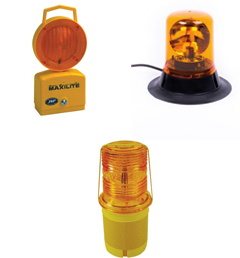
- ✓ Warning lights and cone-top lights for construction site and roadworks conspicuity
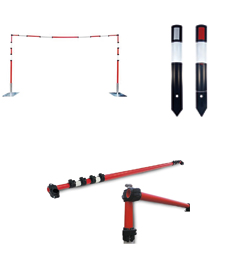
- ✓ Barrier posts, delineator posts, and retractable belt posts for pedestrian route management
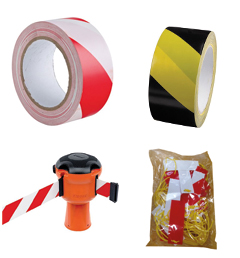
- ✓ Hazard and warning tapes in red and white, yellow and black for site demarcation
- ✓ Plastic mesh fencing and road pins for temporary site boundary and hazard demarcation
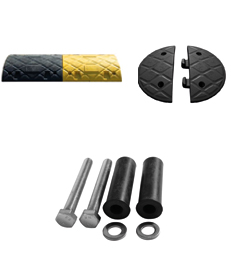
- ✓ Speed humps and speed ramps for vehicle speed control within construction sites
- ✓ Trench covers for bridging excavations and cable runs across vehicle and pedestrian routes
- ✓ Safety walkways and ramps for safe pedestrian crossing over kerbs, cables, and hazards
- ✓ Next day delivery standard. VIP 2-3 hour delivery on a dedicated vehicle also available
Traffic Management and Vehicle-Pedestrian Safety on Construction Sites
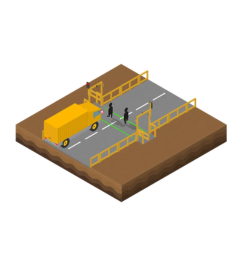
The separation of vehicle and pedestrian routes on construction sites is one of the most important safety measures required under CDM Regulations 2015. Where vehicles and pedestrians share routes or interact at site access points, loading areas, and internal roads, the risk of serious or fatal injury is significantly elevated. The HSE identifies vehicle-pedestrian interaction as one of the most common causes of workplace fatalities in the construction sector.
Traffic management equipment provides the physical measures that support this separation and control: speed humps to slow vehicles to a safe speed within the site, trench covers to bridge excavations without creating trip hazards or vehicle access restrictions, warning lights to maintain the conspicuity of hazards and construction plant in all lighting conditions, and safety walkways to provide pedestrian crossing points over cables, pipework, and level changes that would otherwise create trip and fall risks.
Traffic Management Equipment by Type
Our range covers the traffic management equipment needed for construction site and highways traffic control operations.
Traffic Management Equipment Supplied Across the UK
Traffic management equipment is a safety-critical category where the correct specification and deployment directly affects the safety of workers and the public. An incorrectly specified or poorly positioned speed hump, a trench cover that is not rated for the vehicle loading crossing it, or warning lights that fail during night works can all result in serious accidents. CMT Group supplies traffic management equipment that meets the performance requirements of construction site and highways operations.
CMT Group has been supplying traffic management equipment to UK construction and highways contractors for over 20 years. Our range covers the complete scope of site traffic management from warning lights and hazard tape through to speed humps, trench covers, safety walkways, and setting out pegs. We operate our own fleet of 100+ FORS Gold accredited vehicles covering 90% of the UK, with next day delivery standard on orders placed by 5pm by phone or 7pm online, and VIP 2-3 hour delivery on a dedicated vehicle dispatched within 30 minutes for urgent site requirements.
Frequently asked questions
What is the difference between a speed hump and a speed ramp?
Speed humps and speed ramps are both physical traffic calming measures but differ in their profile and the speed reduction they achieve. A speed hump has a rounded, raised profile that vehicles must slow significantly to cross comfortably, typically reducing speeds to around 5-10mph at the crossing point. Speed humps are placed across the full width of the carriageway or site road. A speed ramp has a flatter, more gradual profile that slows vehicles to around 15-25mph, making it more suitable for roads where vehicles need to reduce speed but not stop completely. For construction site internal roads where pedestrian interaction is high and vehicle speeds must be kept very low, full-width speed humps are the appropriate specification. For site access roads and car parks where a moderate speed reduction is sufficient, a ramp profile may be more practical.
What load rating do I need for a trench cover on a site road?
The load rating required for a trench cover depends on the weight and type of vehicles that will cross it. Pedestrian-rated trench covers are designed for foot traffic only and must never be placed on vehicle routes. For light vehicle traffic such as cars and light vans, a cover rated to D400 or equivalent is the standard minimum. For heavy construction plant including dumpers, excavators, and delivery lorries, a higher load rating matched to the axle weights of the heaviest vehicles expected to cross is required. Using a pedestrian-rated or light-duty trench cover on a vehicle route is a serious safety risk as the cover can fail under vehicle loading, resulting in vehicle and plant falling into the excavation. Always check the load rating of the cover against the heaviest vehicle that could cross it before installation.
When are warning lights required on a construction site?
Warning lights are required in temporary traffic management schemes on the public highway during hours of darkness and in periods of reduced visibility under Traffic Signs Manual Chapter 8 requirements. On the public highway, cone-top lights are required on cones forming the lead-in taper and the longitudinal taper of the traffic management scheme after dark. Amber rotating or flashing beacons are required on construction plant and vehicles operating in or adjacent to traffic flow. On construction sites off the public highway, warning lights are required wherever there is a risk that the conspicuity of a hazard, barrier, or plant movement could be reduced in low-light conditions. All warning lights used in temporary traffic management must meet the photometric requirements specified in Chapter 8 and be maintained in working order throughout the works.
What hazard tape colours mean what on a construction site?
Hazard tape colour coding on construction sites follows the same general principle as safety sign colours. Red and white barrier tape is used to mark exclusion zones, danger areas, and areas where access is prohibited or strictly restricted due to an immediate safety hazard, such as open excavations, unstable structures, or areas where overhead work is in progress. Yellow and black hazard tape is used to mark general caution areas and hazards that require care but do not represent an immediate danger, such as trip hazards, edge markings, and areas where caution is advised. Both tape types are for temporary marking only and are not a substitute for physical barriers where there is a significant risk of a person falling into or entering a hazardous area. Barrier tape alone does not prevent entry and should always be supported by appropriate physical barriers where the hazard is serious.
Why buy traffic management equipment from CMT Group?
CMT Group has been supplying traffic management equipment to UK construction and highways contractors for over 20 years. As a FORS Gold accredited and CLOCS committed organisation, we understand the road safety requirements of the construction and highways sector from the perspective of a fleet operator as well as a product supplier. Our range covers the full scope of site traffic management from warning lights, hazard tape, and mesh fencing through to speed humps, trench covers, safety walkways, and setting out pegs. We operate our own fleet of 100+ FORS Gold accredited vehicles covering 90% of the UK, with next day delivery standard on orders placed by 5pm by phone or 7pm online, and VIP 2-3 hour delivery on a dedicated vehicle dispatched within 30 minutes for urgent site requirements.
Cable Ramps vs Trench Covers: Which Do You Need?
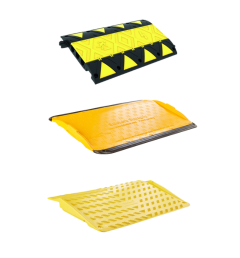
Cable ramps and trench covers are both used to bridge hazards across pedestrian and vehicle routes on construction sites, but they are designed for very different hazards. A cable ramp is a low-profile protective channel designed to be laid over cables, hoses, and pipework that cross a pedestrian or vehicle route. It protects the cable from vehicle wheel damage and eliminates the trip hazard created by cables lying across a walkway or access road. Cable ramps are available in single-channel and multi-channel formats to accommodate different numbers and sizes of cables, and in pedestrian and vehicle-rated grades.
A trench cover bridges an open excavation or trench that cuts across a route. Trench covers must span the full width of the excavation and be rated to carry the loads imposed by pedestrians or vehicles crossing them. The key distinction is depth: a cable ramp bridges a surface-level cable or hose that creates a trip hazard; a trench cover bridges an open void in the ground that presents a fall and entrapment risk significantly more serious than a cable on the surface. Never use a cable ramp over an open excavation, as they are not designed to carry the bridging loads involved. Where cables are also present within or adjacent to the excavation, a correctly specified trench cover should be used to bridge the full hazard.
Shop Traffic Management Equipment by Type
Traffic Management
Traffic management equipment controls vehicle and pedestrian movement on construction sites and highways works, reducing the risk of collisions and keeping workers and the public safe. CMT Group supplies a comprehensive range of traffic management equipment including warning lights, posts, hazard and warning tapes, mesh fencing and pins, speed humps, ramps, trench covers, setting out pegs, and safety walkways, covering the traffic management requirements of construction sites and highways contractors across the UK.
Read more Read less
Effective traffic management on a construction site requires more than signage alone. Physical equipment that controls vehicle speed, bridges excavations safely, marks hazards visibly, and provides compliant pedestrian access routes is essential for protecting workers and visitors throughout the project. The interaction between vehicles and pedestrians on construction sites is one of the most significant causes of serious and fatal accidents in the UK construction industry, and the correct specification and deployment of traffic management equipment is a fundamental CDM Regulations 2015 requirement for all but the smallest sites.
- ✓ Warning lights and cone-top lights for construction site and roadworks conspicuity
- ✓ Barrier posts, delineator posts, and retractable belt posts for pedestrian route management
- ✓ Hazard and warning tapes in red and white, yellow and black for site demarcation
- ✓ Plastic mesh fencing and road pins for temporary site boundary and hazard demarcation
- ✓ Speed humps and speed ramps for vehicle speed control within construction sites
- ✓ Trench covers for bridging excavations and cable runs across vehicle and pedestrian routes
- ✓ Safety walkways and ramps for safe pedestrian crossing over kerbs, cables, and hazards
- ✓ Next day delivery standard. VIP 2-3 hour delivery on a dedicated vehicle also available
Traffic Management and Vehicle-Pedestrian Safety on Construction Sites
The separation of vehicle and pedestrian routes on construction sites is one of the most important safety measures required under CDM Regulations 2015. Where vehicles and pedestrians share routes or interact at site access points, loading areas, and internal roads, the risk of serious or fatal injury is significantly elevated. The HSE identifies vehicle-pedestrian interaction as one of the most common causes of workplace fatalities in the construction sector.
Traffic management equipment provides the physical measures that support this separation and control: speed humps to slow vehicles to a safe speed within the site, trench covers to bridge excavations without creating trip hazards or vehicle access restrictions, warning lights to maintain the conspicuity of hazards and construction plant in all lighting conditions, and safety walkways to provide pedestrian crossing points over cables, pipework, and level changes that would otherwise create trip and fall risks.
Traffic Management Equipment by Type
Our range covers the traffic management equipment needed for construction site and highways traffic control operations.
Traffic Management Equipment Supplied Across the UK
Traffic management equipment is a safety-critical category where the correct specification and deployment directly affects the safety of workers and the public. An incorrectly specified or poorly positioned speed hump, a trench cover that is not rated for the vehicle loading crossing it, or warning lights that fail during night works can all result in serious accidents. CMT Group supplies traffic management equipment that meets the performance requirements of construction site and highways operations.
CMT Group has been supplying traffic management equipment to UK construction and highways contractors for over 20 years. Our range covers the complete scope of site traffic management from warning lights and hazard tape through to speed humps, trench covers, safety walkways, and setting out pegs. We operate our own fleet of 100+ FORS Gold accredited vehicles covering 90% of the UK, with next day delivery standard on orders placed by 5pm by phone or 7pm online, and VIP 2-3 hour delivery on a dedicated vehicle dispatched within 30 minutes for urgent site requirements.
Frequently asked questions
What is the difference between a speed hump and a speed ramp?
Speed humps and speed ramps are both physical traffic calming measures but differ in their profile and the speed reduction they achieve. A speed hump has a rounded, raised profile that vehicles must slow significantly to cross comfortably, typically reducing speeds to around 5-10mph at the crossing point. Speed humps are placed across the full width of the carriageway or site road. A speed ramp has a flatter, more gradual profile that slows vehicles to around 15-25mph, making it more suitable for roads where vehicles need to reduce speed but not stop completely. For construction site internal roads where pedestrian interaction is high and vehicle speeds must be kept very low, full-width speed humps are the appropriate specification. For site access roads and car parks where a moderate speed reduction is sufficient, a ramp profile may be more practical.
What load rating do I need for a trench cover on a site road?
The load rating required for a trench cover depends on the weight and type of vehicles that will cross it. Pedestrian-rated trench covers are designed for foot traffic only and must never be placed on vehicle routes. For light vehicle traffic such as cars and light vans, a cover rated to D400 or equivalent is the standard minimum. For heavy construction plant including dumpers, excavators, and delivery lorries, a higher load rating matched to the axle weights of the heaviest vehicles expected to cross is required. Using a pedestrian-rated or light-duty trench cover on a vehicle route is a serious safety risk as the cover can fail under vehicle loading, resulting in vehicle and plant falling into the excavation. Always check the load rating of the cover against the heaviest vehicle that could cross it before installation.
When are warning lights required on a construction site?
Warning lights are required in temporary traffic management schemes on the public highway during hours of darkness and in periods of reduced visibility under Traffic Signs Manual Chapter 8 requirements. On the public highway, cone-top lights are required on cones forming the lead-in taper and the longitudinal taper of the traffic management scheme after dark. Amber rotating or flashing beacons are required on construction plant and vehicles operating in or adjacent to traffic flow. On construction sites off the public highway, warning lights are required wherever there is a risk that the conspicuity of a hazard, barrier, or plant movement could be reduced in low-light conditions. All warning lights used in temporary traffic management must meet the photometric requirements specified in Chapter 8 and be maintained in working order throughout the works.
What hazard tape colours mean what on a construction site?
Hazard tape colour coding on construction sites follows the same general principle as safety sign colours. Red and white barrier tape is used to mark exclusion zones, danger areas, and areas where access is prohibited or strictly restricted due to an immediate safety hazard, such as open excavations, unstable structures, or areas where overhead work is in progress. Yellow and black hazard tape is used to mark general caution areas and hazards that require care but do not represent an immediate danger, such as trip hazards, edge markings, and areas where caution is advised. Both tape types are for temporary marking only and are not a substitute for physical barriers where there is a significant risk of a person falling into or entering a hazardous area. Barrier tape alone does not prevent entry and should always be supported by appropriate physical barriers where the hazard is serious.
Why buy traffic management equipment from CMT Group?
CMT Group has been supplying traffic management equipment to UK construction and highways contractors for over 20 years. As a FORS Gold accredited and CLOCS committed organisation, we understand the road safety requirements of the construction and highways sector from the perspective of a fleet operator as well as a product supplier. Our range covers the full scope of site traffic management from warning lights, hazard tape, and mesh fencing through to speed humps, trench covers, safety walkways, and setting out pegs. We operate our own fleet of 100+ FORS Gold accredited vehicles covering 90% of the UK, with next day delivery standard on orders placed by 5pm by phone or 7pm online, and VIP 2-3 hour delivery on a dedicated vehicle dispatched within 30 minutes for urgent site requirements.
Cable Ramps vs Trench Covers: Which Do You Need?
Cable ramps and trench covers are both used to bridge hazards across pedestrian and vehicle routes on construction sites, but they are designed for very different hazards. A cable ramp is a low-profile protective channel designed to be laid over cables, hoses, and pipework that cross a pedestrian or vehicle route. It protects the cable from vehicle wheel damage and eliminates the trip hazard created by cables lying across a walkway or access road. Cable ramps are available in single-channel and multi-channel formats to accommodate different numbers and sizes of cables, and in pedestrian and vehicle-rated grades.
A trench cover bridges an open excavation or trench that cuts across a route. Trench covers must span the full width of the excavation and be rated to carry the loads imposed by pedestrians or vehicles crossing them. The key distinction is depth: a cable ramp bridges a surface-level cable or hose that creates a trip hazard; a trench cover bridges an open void in the ground that presents a fall and entrapment risk significantly more serious than a cable on the surface. Never use a cable ramp over an open excavation, as they are not designed to carry the bridging loads involved. Where cables are also present within or adjacent to the excavation, a correctly specified trench cover should be used to bridge the full hazard.