
Screws

Screws

Screws are the most versatile fixing in construction, used across every trade and every material from timber framing and drywall to concrete, masonry, and steel. CMT Group supplies a comprehensive range of contractor-grade screws for construction and site use, including woodscrews, concrete screws, drywall screws, hammer screws, coach screws, self-drilling screws, and hex set screws. Our range covers the screw requirements of groundwork teams, site trades, and procurement professionals across the UK.

Read more Read less

The correct screw for any application depends on the base material, the load the fixing must carry, the exposure environment, and the drive and head type required for the installation method. Using the wrong screw in a structural or load-bearing connection is a common and costly mistake on construction sites. CMT Group has been supplying screws and fixings to UK construction sites for over 20 years, and our range is curated to give site teams and procurement professionals the correct specification for every application without compromise.

  • Woodscrews for timber joinery, framing, and general construction carpentry
  • Concrete screws for direct fixing into concrete and masonry without plugs
  • Drywall screws for securing plasterboard to timber and metal studwork
  • Hammer screws for fast fixing into masonry using a hammer drill
  • Coach screws for heavy-duty timber connections and structural carpentry
  • Self-drilling screws for fixing into steel and metal without pre-drilling
  • Hex set screws for bolted connections requiring a spanner or socket drive
  • Bulk supply available. Next day delivery standard. VIP 2-3 hour delivery also available

What Are Construction Screws?

Construction screws are threaded fasteners used to join and secure materials across building, civil engineering, and groundwork applications. Unlike nails, which rely on friction to hold, screws use a threaded shank that cuts into the base material and provides mechanical engagement, giving screws significantly higher withdrawal resistance and the ability to be removed and re-driven where required.

Different screw types are engineered for different materials and applications. Thread pitch, thread form, point type, head style, drive type, and coating are all determined by what the screw is designed to fix into and the environment it will be used in. A woodscrew thread is designed to pull timber together and resist pullout; a concrete screw thread is hardened and shaped to cut into masonry; a self-drilling screw carries a drill point that eliminates the need to pre-drill into steel. Selecting the correct type, length, and gauge for the application is the most important factor in achieving a reliable and durable fixing.

Screws by Type

Our range covers the screw types required across all construction trades and site operations.

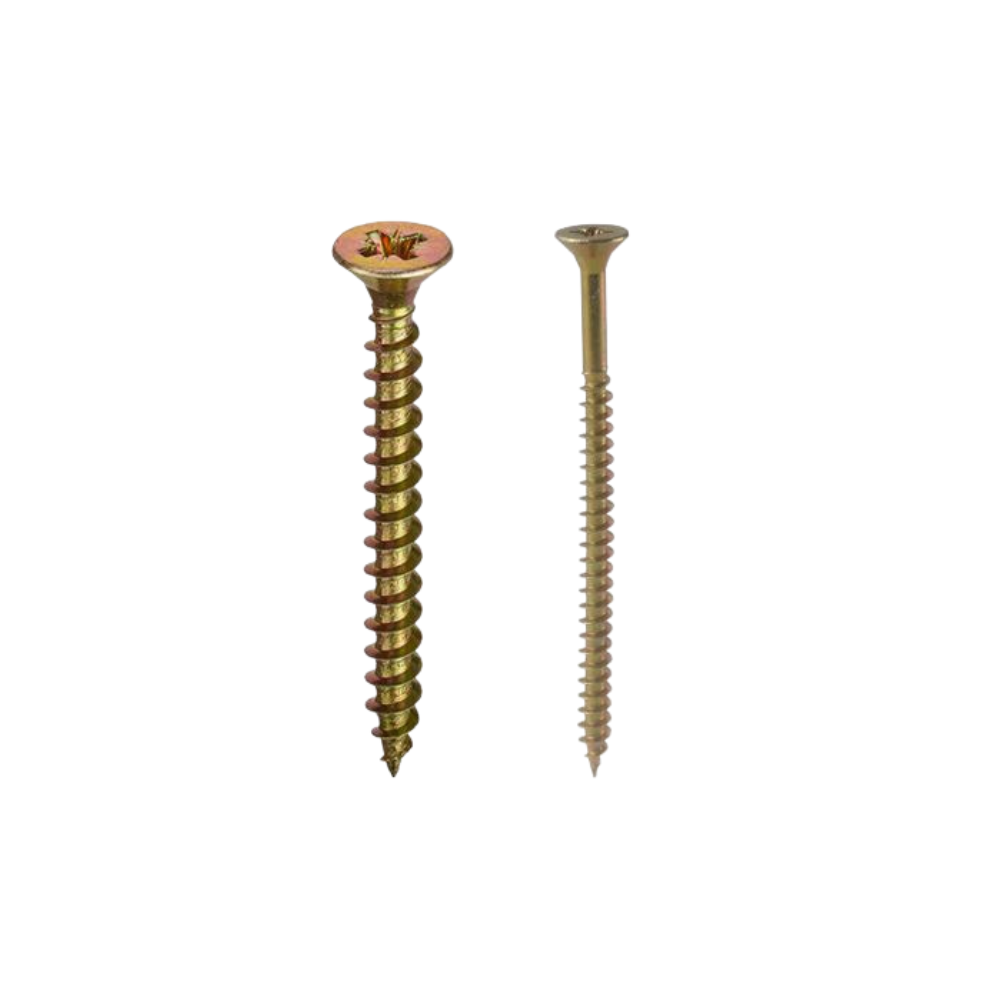
Woodscrews
General-purpose woodscrews for timber joinery, framing, decking, fencing, and construction carpentry. Available in countersunk and raised head profiles, Pozi and Phillips drive, and in zinc-plated, stainless, and galvanised coatings for internal and external applications. The most widely used screw type across construction site trades, woodscrews provide reliable pullout resistance in softwood, hardwood, and MDF-based sheet materials.
Countersunk and raised head · Pozi and Phillips · Zinc, stainless and galvanised
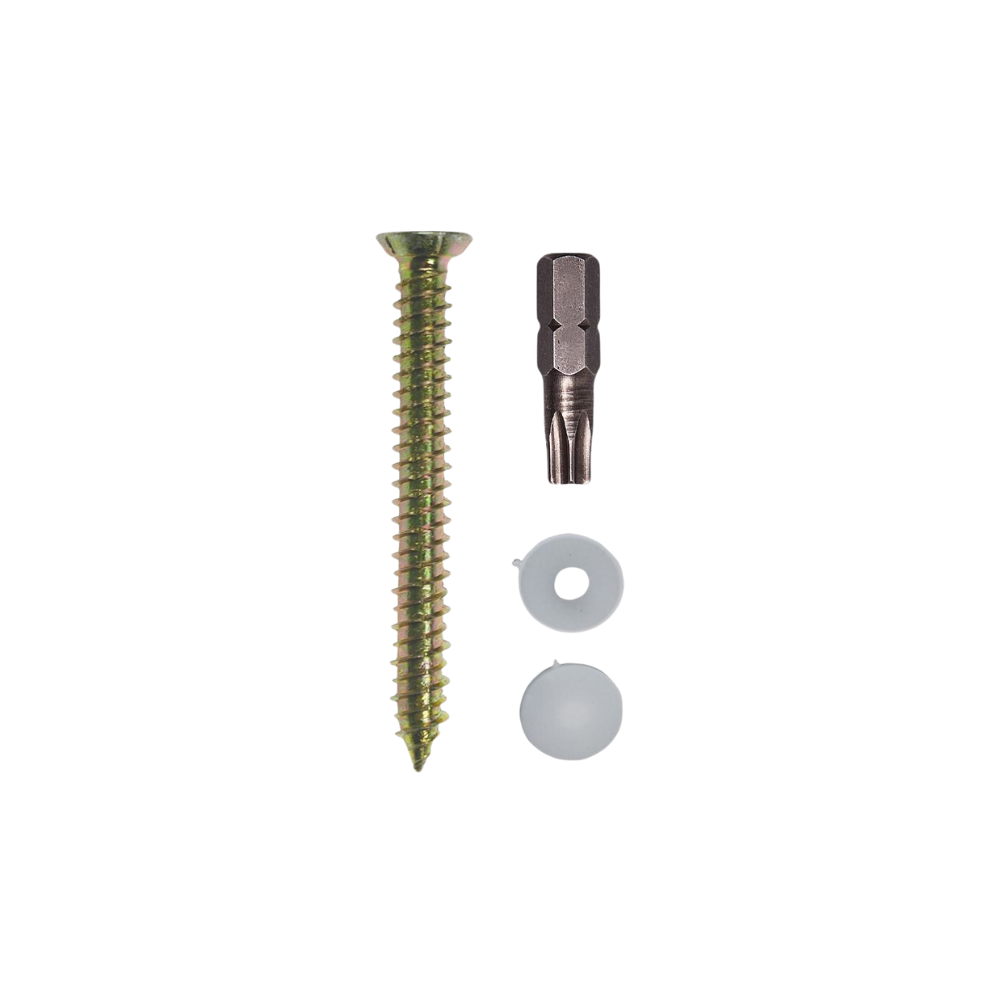
Concrete Screws
Hardened concrete screws for direct fixing into concrete, brick, block, and stone without the need for a plastic plug. Concrete screws are installed into a pre-drilled hole and use a specially hardened thread form that cuts directly into the masonry, providing a secure and removable fixing. Suitable for fixing framing, brackets, conduit, and equipment to masonry substrates on construction sites. Available with hex head and countersunk head options.
No plug required · Concrete, brick and block · Hex and countersunk head
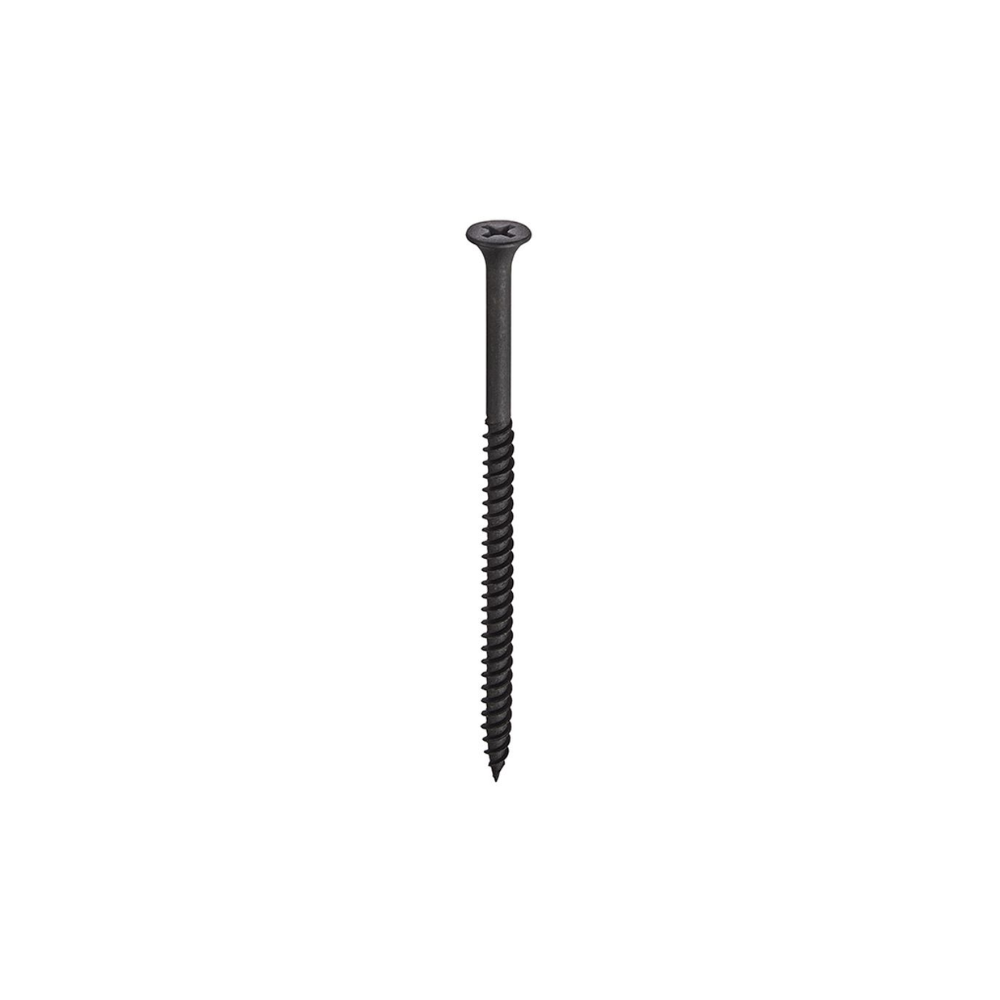
Drywall Screws
Fine-thread and coarse-thread drywall screws for fixing plasterboard to timber and metal studwork. Fine-thread drywall screws are designed for metal stud systems; coarse-thread screws are designed for timber stud and joist systems. Drywall screws have a bugle head profile that countersinks flush into the board surface without tearing the paper face, and a phosphate coating for corrosion resistance in internal dry environments. Available in multiple lengths to suit single and double boarding.
Fine thread for metal stud · Coarse thread for timber · Bugle head · Multiple lengths
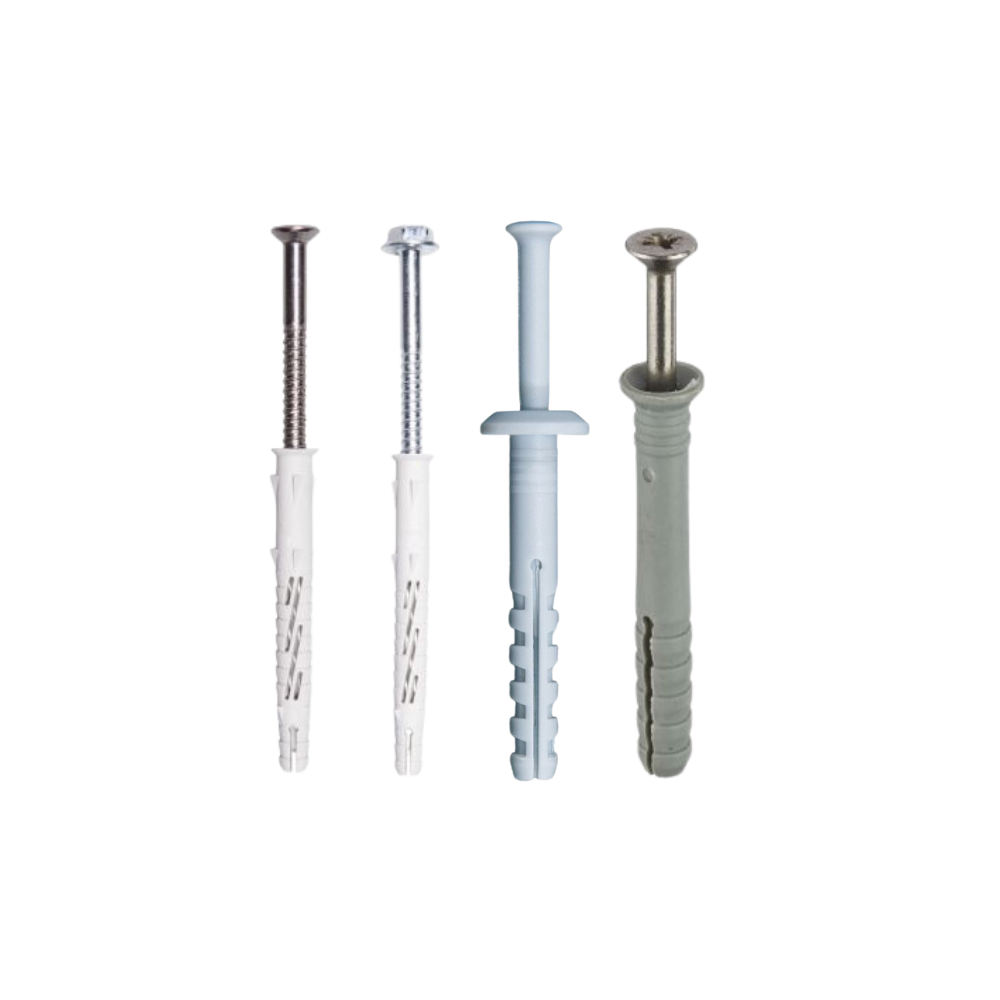
Hammer Screws
Hammer screws, also known as hammer-in plugs or frame fixings, combine a nylon plug and screw in a single component for fast fixing into masonry. The assembly is inserted into a pre-drilled hole and driven home with a hammer, expanding the plug within the masonry as the screw is driven in. Widely used for fixing door and window frames, skirting, and conduit to brick, block, and concrete where speed of installation is important. Suitable for internal and external masonry applications.
Plug and screw in one · Brick, block and concrete · Fast hammer installation
Coach Screws
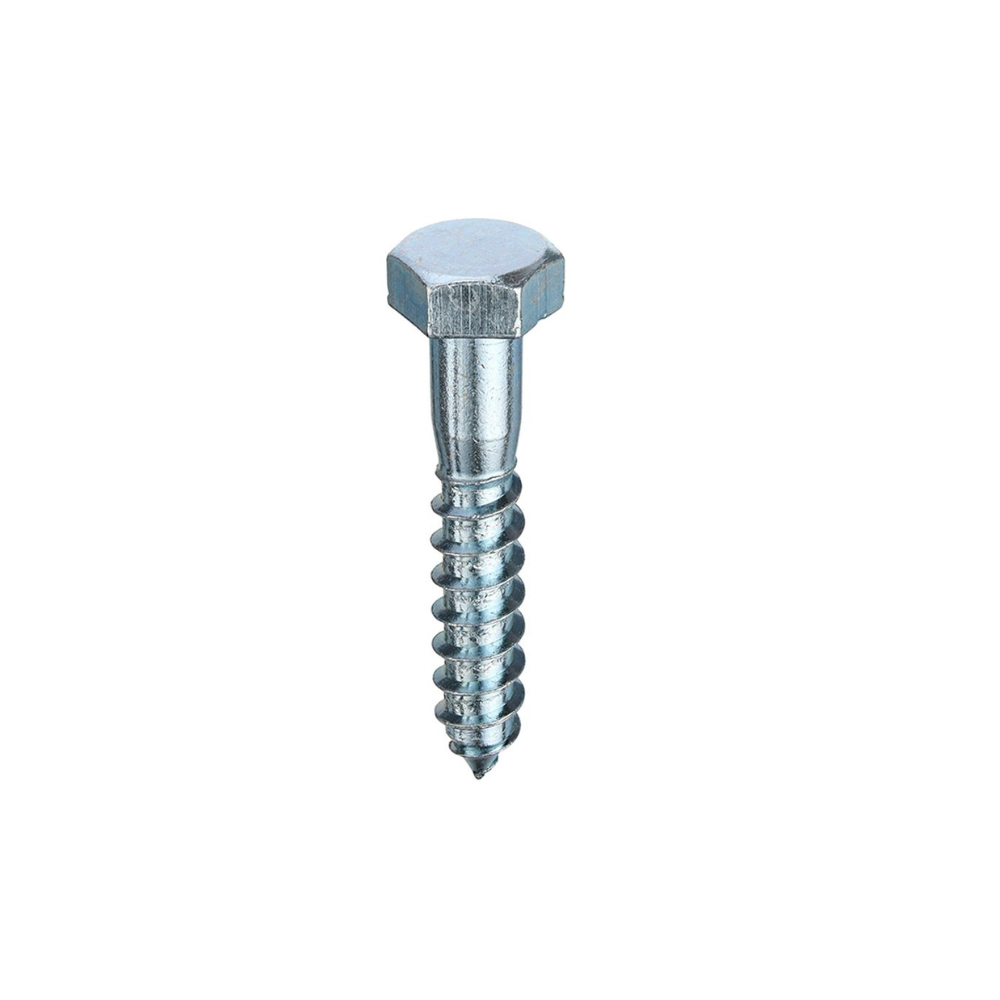
Heavy-duty hex head coach screws for structural timber connections, post fixing, decking subframes, and fencing. Coach screws have a coarse wood thread and a hexagonal head driven with a spanner or socket wrench, providing much higher torque and clamping force than a standard woodscrew driver head. Used where timber connections require a high level of holding power and long-term structural performance. Available in zinc-plated and hot-dip galvanised finishes for internal and external structural timber applications.
Hex head · Structural timber · Spanner drive · Zinc and galvanised
Self Drilling Screws
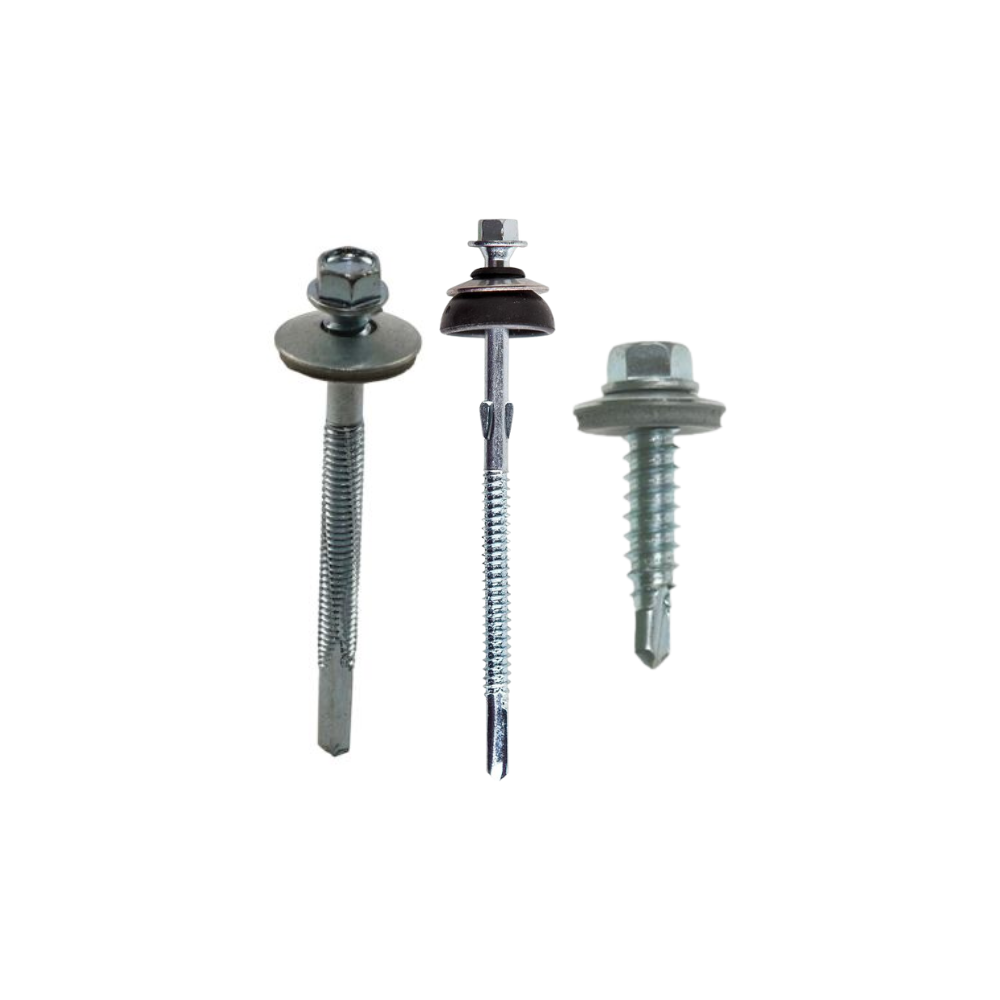
Self-drilling screws with an integrated drill point for fixing into steel sections, steel decking, cladding, and roofing without pre-drilling. The drill point cuts through the steel before the thread engages, eliminating the separate drilling stage and reducing installation time. Available with hex washer head and sealing washer options for weathertight roofing and cladding applications, and in varying point lengths to suit different steel thicknesses. Also suitable for fixing timber to light steel framing.
Drill point tip · Steel and cladding · Hex washer head · No pre-drilling
Hex Set Screws
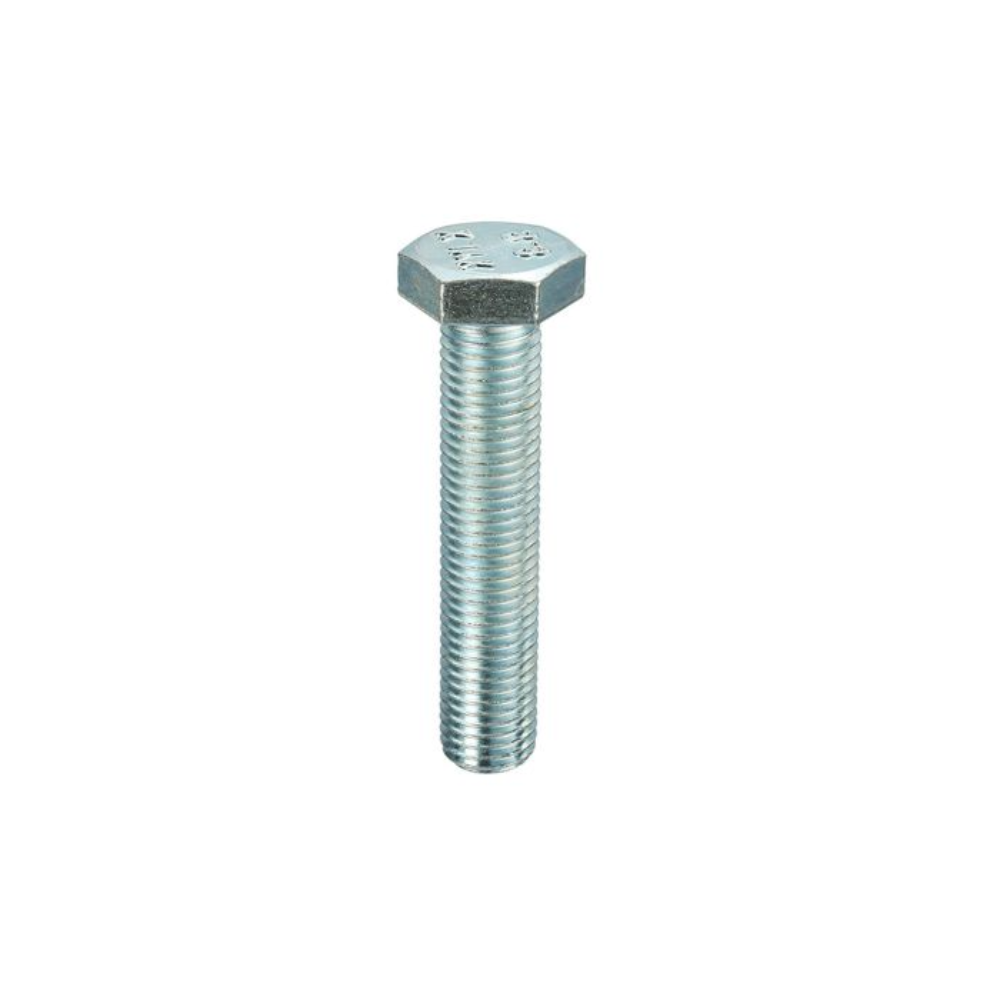
Fully threaded hex head set screws for use with nuts and washers in bolted connections across steel, timber, and general construction applications. Hex set screws are driven with a spanner or socket wrench and are available in multiple metric diameters, grades, and lengths to suit different structural and non-structural connection requirements. Available in zinc-plated and stainless steel grades for internal and external applications. Often used alongside full nuts and flat washers from the fixings accessories range.
Fully threaded · Multiple metric diameters · Zinc and stainless · Use with nuts and washers

Choosing the Right Screw

The correct screw depends on three things: the material being fixed into, the environment the fixing will be exposed to, and the load the connection must carry. Material drives the choice of screw type. Environment drives the choice of coating. Load drives the choice of length, gauge, and whether a screw is the appropriate fixing at all, or whether a bolt or anchor would be more suitable.

For external applications, zinc-plated screws are not suitable and will corrode rapidly. Hot-dip galvanised screws are the minimum standard for most external applications. Stainless steel screws are required in coastal environments or anywhere the screw will be in contact with treated timber, which contains preservatives that accelerate corrosion of zinc coatings.

Application Screw type Key consideration
Timber joinery, framing, and general carpentry Woodscrew Length to suit timber thickness; galvanised for external
Fixing into concrete, brick, or block Concrete screw or hammer screw Correct drill diameter for screw specification
Plasterboard to timber studwork Drywall screw (coarse thread) Length to achieve minimum penetration into stud
Plasterboard to metal stud Drywall screw (fine thread) Fine thread engages metal without stripping
Heavy structural timber connections Coach screw Pre-drill pilot hole; galvanised for external use
Steel decking, cladding, or roofing Self-drilling screw Point length to suit steel thickness
Bolted connections with nut and washer Hex set screw Grade and diameter to match design load

Construction Screws Supplied Across the UK

Screws are used in every construction trade and at every stage of a build, from the structural timber frame through to internal fit-out and external finishing. The range of screw types available reflects the wide variety of materials used in modern construction and the very different demands of each fixing application. Specifying the correct screw is not simply a matter of size: the thread form, point type, head style, drive type, and coating all determine whether the fixing performs as intended over the life of the structure.

CMT Group has been supplying screws and fixings to UK construction sites for over 20 years. Our range covers every screw type needed across site trades, from bulk woodscrews and drywall screws for high-volume site use to concrete screws, self-drilling screws, and coach screws for structural and specialist applications. We operate our own fleet of 100+ FORS Gold accredited vehicles covering 90% of the UK, with next day delivery standard on orders placed by 5pm by phone or 7pm online, and VIP 2-3 hour delivery on a dedicated vehicle dispatched within 30 minutes for urgent site requirements.

Frequently asked questions

What is the difference between a woodscrew and a coach screw?

Both are designed for use in timber, but they are not interchangeable. A woodscrew is driven with a screwdriver or power driver and is used for joinery, carpentry, and general construction timber fixing where moderate holding power is required. A coach screw is a heavy-duty hex head fastener driven with a spanner or socket wrench, providing significantly higher torque and clamping force than a woodscrew. Coach screws are used in structural timber connections where high loads must be transferred through the fixing, such as post bases, beam connections, and external structural carpentry. Where a woodscrew would not provide sufficient holding power or structural integrity for the application, a coach screw is the correct choice.

Do concrete screws need a wall plug?

No. Concrete screws are designed to fix directly into concrete, brick, and block without a wall plug. A pilot hole of the correct diameter for the specific screw must be drilled first, but no plug is inserted. The hardened thread on the concrete screw cuts directly into the masonry as the screw is driven in, providing the fixing through direct thread engagement with the base material rather than through plug expansion. This makes concrete screws faster to install than plug-and-screw systems and also allows the screw to be removed and re-driven if required, unlike expansion anchors which are generally permanent once set.

What is the difference between fine-thread and coarse-thread drywall screws?

Fine-thread drywall screws are designed for fixing plasterboard to metal stud and track systems. The finer thread engages metal without stripping the stud and provides reliable pull-through resistance in thin-gauge steel framing. Coarse-thread drywall screws are designed for fixing plasterboard to timber studs and joists. The coarser thread cuts efficiently into timber and provides higher withdrawal resistance in softwood framing. Using fine-thread screws in timber and coarse-thread in metal are both common errors on site that result in poor fixings. Match the thread type to the studwork material.

What screws should I use for external applications?

For external applications, zinc-plated screws are not suitable and will corrode in exposed UK conditions. Hot-dip galvanised screws are the minimum standard for most external timber and structural applications and provide good protection in most UK environments. Stainless steel screws are required for coastal locations, applications involving treated timber, and anywhere the screw will be in contact with dissimilar metals or in a particularly aggressive corrosive environment. For external decking and cladding fixing into steel, self-drilling screws with sealing washers are the appropriate choice, selected in a grade suitable for the exposure class of the installation.

Can I buy screws in bulk for site use?

Yes. CMT Group supplies screws in bulk quantities for site procurement and trade accounts. Woodscrews, drywall screws, and concrete screws are available in large trade box quantities that reduce cost per unit and ensure sufficient site stock for project programmes. Bulk ordering is particularly cost-effective for high-volume screw types used throughout a build such as drywall screws and woodscrews. Contact our team to discuss volume pricing and account options for ongoing site supply.

Self-Drilling vs Self-Tapping Screws: What Is the Difference?

Self-drilling and self-tapping are terms that are frequently confused on site. A self-drilling screw has an integrated drill point at the tip that drills its own pilot hole through the material before the thread engages. This means no pre-drilling is required at all, making self-drilling screws the fastest fixing option for steel decking, cladding, and roofing where speed of installation matters. Self-drilling screws are identified by their distinctive drill bit shaped tip.

A self-tapping screw can tap its own thread into a pre-drilled pilot hole but does not have the ability to drill its own hole. Self-tapping screws require a pilot hole to be drilled first, after which the screw cuts a mating thread into the material as it is driven in. Self-tapping screws are commonly used in thin sheet metal, plastics, and light gauge steel where the thread-cutting action provides a secure engagement without the need for a nut. The key distinction is that self-drilling eliminates the pilot hole stage entirely, while self-tapping still requires a pre-drilled hole.

Shop Screws by Type

Screws

Screws

Screws are the most versatile fixing in construction, used across every trade and every material from timber framing and drywall to concrete, masonry, and steel. CMT Group supplies a comprehensive range of contractor-grade screws for construction and site use, including woodscrews, concrete screws, drywall screws, hammer screws, coach screws, self-drilling screws, and hex set screws. Our range covers the screw requirements of groundwork teams, site trades, and procurement professionals across the UK.

Read more Read less

The correct screw for any application depends on the base material, the load the fixing must carry, the exposure environment, and the drive and head type required for the installation method. Using the wrong screw in a structural or load-bearing connection is a common and costly mistake on construction sites. CMT Group has been supplying screws and fixings to UK construction sites for over 20 years, and our range is curated to give site teams and procurement professionals the correct specification for every application without compromise.

  • Woodscrews for timber joinery, framing, and general construction carpentry
  • Concrete screws for direct fixing into concrete and masonry without plugs
  • Drywall screws for securing plasterboard to timber and metal studwork
  • Hammer screws for fast fixing into masonry using a hammer drill
  • Coach screws for heavy-duty timber connections and structural carpentry
  • Self-drilling screws for fixing into steel and metal without pre-drilling
  • Hex set screws for bolted connections requiring a spanner or socket drive
  • Bulk supply available. Next day delivery standard. VIP 2-3 hour delivery also available

What Are Construction Screws?

Construction screws are threaded fasteners used to join and secure materials across building, civil engineering, and groundwork applications. Unlike nails, which rely on friction to hold, screws use a threaded shank that cuts into the base material and provides mechanical engagement, giving screws significantly higher withdrawal resistance and the ability to be removed and re-driven where required.

Different screw types are engineered for different materials and applications. Thread pitch, thread form, point type, head style, drive type, and coating are all determined by what the screw is designed to fix into and the environment it will be used in. A woodscrew thread is designed to pull timber together and resist pullout; a concrete screw thread is hardened and shaped to cut into masonry; a self-drilling screw carries a drill point that eliminates the need to pre-drill into steel. Selecting the correct type, length, and gauge for the application is the most important factor in achieving a reliable and durable fixing.

Screws by Type

Our range covers the screw types required across all construction trades and site operations.

Woodscrews
General-purpose woodscrews for timber joinery, framing, decking, fencing, and construction carpentry. Available in countersunk and raised head profiles, Pozi and Phillips drive, and in zinc-plated, stainless, and galvanised coatings for internal and external applications. The most widely used screw type across construction site trades, woodscrews provide reliable pullout resistance in softwood, hardwood, and MDF-based sheet materials.
Countersunk and raised head · Pozi and Phillips · Zinc, stainless and galvanised
Concrete Screws
Hardened concrete screws for direct fixing into concrete, brick, block, and stone without the need for a plastic plug. Concrete screws are installed into a pre-drilled hole and use a specially hardened thread form that cuts directly into the masonry, providing a secure and removable fixing. Suitable for fixing framing, brackets, conduit, and equipment to masonry substrates on construction sites. Available with hex head and countersunk head options.
No plug required · Concrete, brick and block · Hex and countersunk head
Drywall Screws
Fine-thread and coarse-thread drywall screws for fixing plasterboard to timber and metal studwork. Fine-thread drywall screws are designed for metal stud systems; coarse-thread screws are designed for timber stud and joist systems. Drywall screws have a bugle head profile that countersinks flush into the board surface without tearing the paper face, and a phosphate coating for corrosion resistance in internal dry environments. Available in multiple lengths to suit single and double boarding.
Fine thread for metal stud · Coarse thread for timber · Bugle head · Multiple lengths
Hammer Screws
Hammer screws, also known as hammer-in plugs or frame fixings, combine a nylon plug and screw in a single component for fast fixing into masonry. The assembly is inserted into a pre-drilled hole and driven home with a hammer, expanding the plug within the masonry as the screw is driven in. Widely used for fixing door and window frames, skirting, and conduit to brick, block, and concrete where speed of installation is important. Suitable for internal and external masonry applications.
Plug and screw in one · Brick, block and concrete · Fast hammer installation
Coach Screws
Heavy-duty hex head coach screws for structural timber connections, post fixing, decking subframes, and fencing. Coach screws have a coarse wood thread and a hexagonal head driven with a spanner or socket wrench, providing much higher torque and clamping force than a standard woodscrew driver head. Used where timber connections require a high level of holding power and long-term structural performance. Available in zinc-plated and hot-dip galvanised finishes for internal and external structural timber applications.
Hex head · Structural timber · Spanner drive · Zinc and galvanised
Self Drilling Screws
Self-drilling screws with an integrated drill point for fixing into steel sections, steel decking, cladding, and roofing without pre-drilling. The drill point cuts through the steel before the thread engages, eliminating the separate drilling stage and reducing installation time. Available with hex washer head and sealing washer options for weathertight roofing and cladding applications, and in varying point lengths to suit different steel thicknesses. Also suitable for fixing timber to light steel framing.
Drill point tip · Steel and cladding · Hex washer head · No pre-drilling
Hex Set Screws
Fully threaded hex head set screws for use with nuts and washers in bolted connections across steel, timber, and general construction applications. Hex set screws are driven with a spanner or socket wrench and are available in multiple metric diameters, grades, and lengths to suit different structural and non-structural connection requirements. Available in zinc-plated and stainless steel grades for internal and external applications. Often used alongside full nuts and flat washers from the fixings accessories range.
Fully threaded · Multiple metric diameters · Zinc and stainless · Use with nuts and washers

Choosing the Right Screw

The correct screw depends on three things: the material being fixed into, the environment the fixing will be exposed to, and the load the connection must carry. Material drives the choice of screw type. Environment drives the choice of coating. Load drives the choice of length, gauge, and whether a screw is the appropriate fixing at all, or whether a bolt or anchor would be more suitable.

For external applications, zinc-plated screws are not suitable and will corrode rapidly. Hot-dip galvanised screws are the minimum standard for most external applications. Stainless steel screws are required in coastal environments or anywhere the screw will be in contact with treated timber, which contains preservatives that accelerate corrosion of zinc coatings.

Application Screw type Key consideration
Timber joinery, framing, and general carpentry Woodscrew Length to suit timber thickness; galvanised for external
Fixing into concrete, brick, or block Concrete screw or hammer screw Correct drill diameter for screw specification
Plasterboard to timber studwork Drywall screw (coarse thread) Length to achieve minimum penetration into stud
Plasterboard to metal stud Drywall screw (fine thread) Fine thread engages metal without stripping
Heavy structural timber connections Coach screw Pre-drill pilot hole; galvanised for external use
Steel decking, cladding, or roofing Self-drilling screw Point length to suit steel thickness
Bolted connections with nut and washer Hex set screw Grade and diameter to match design load

Construction Screws Supplied Across the UK

Screws are used in every construction trade and at every stage of a build, from the structural timber frame through to internal fit-out and external finishing. The range of screw types available reflects the wide variety of materials used in modern construction and the very different demands of each fixing application. Specifying the correct screw is not simply a matter of size: the thread form, point type, head style, drive type, and coating all determine whether the fixing performs as intended over the life of the structure.

CMT Group has been supplying screws and fixings to UK construction sites for over 20 years. Our range covers every screw type needed across site trades, from bulk woodscrews and drywall screws for high-volume site use to concrete screws, self-drilling screws, and coach screws for structural and specialist applications. We operate our own fleet of 100+ FORS Gold accredited vehicles covering 90% of the UK, with next day delivery standard on orders placed by 5pm by phone or 7pm online, and VIP 2-3 hour delivery on a dedicated vehicle dispatched within 30 minutes for urgent site requirements.

Frequently asked questions

What is the difference between a woodscrew and a coach screw?

Both are designed for use in timber, but they are not interchangeable. A woodscrew is driven with a screwdriver or power driver and is used for joinery, carpentry, and general construction timber fixing where moderate holding power is required. A coach screw is a heavy-duty hex head fastener driven with a spanner or socket wrench, providing significantly higher torque and clamping force than a woodscrew. Coach screws are used in structural timber connections where high loads must be transferred through the fixing, such as post bases, beam connections, and external structural carpentry. Where a woodscrew would not provide sufficient holding power or structural integrity for the application, a coach screw is the correct choice.

Do concrete screws need a wall plug?

No. Concrete screws are designed to fix directly into concrete, brick, and block without a wall plug. A pilot hole of the correct diameter for the specific screw must be drilled first, but no plug is inserted. The hardened thread on the concrete screw cuts directly into the masonry as the screw is driven in, providing the fixing through direct thread engagement with the base material rather than through plug expansion. This makes concrete screws faster to install than plug-and-screw systems and also allows the screw to be removed and re-driven if required, unlike expansion anchors which are generally permanent once set.

What is the difference between fine-thread and coarse-thread drywall screws?

Fine-thread drywall screws are designed for fixing plasterboard to metal stud and track systems. The finer thread engages metal without stripping the stud and provides reliable pull-through resistance in thin-gauge steel framing. Coarse-thread drywall screws are designed for fixing plasterboard to timber studs and joists. The coarser thread cuts efficiently into timber and provides higher withdrawal resistance in softwood framing. Using fine-thread screws in timber and coarse-thread in metal are both common errors on site that result in poor fixings. Match the thread type to the studwork material.

What screws should I use for external applications?

For external applications, zinc-plated screws are not suitable and will corrode in exposed UK conditions. Hot-dip galvanised screws are the minimum standard for most external timber and structural applications and provide good protection in most UK environments. Stainless steel screws are required for coastal locations, applications involving treated timber, and anywhere the screw will be in contact with dissimilar metals or in a particularly aggressive corrosive environment. For external decking and cladding fixing into steel, self-drilling screws with sealing washers are the appropriate choice, selected in a grade suitable for the exposure class of the installation.

Can I buy screws in bulk for site use?

Yes. CMT Group supplies screws in bulk quantities for site procurement and trade accounts. Woodscrews, drywall screws, and concrete screws are available in large trade box quantities that reduce cost per unit and ensure sufficient site stock for project programmes. Bulk ordering is particularly cost-effective for high-volume screw types used throughout a build such as drywall screws and woodscrews. Contact our team to discuss volume pricing and account options for ongoing site supply.

Self-Drilling vs Self-Tapping Screws: What Is the Difference?

Self-drilling and self-tapping are terms that are frequently confused on site. A self-drilling screw has an integrated drill point at the tip that drills its own pilot hole through the material before the thread engages. This means no pre-drilling is required at all, making self-drilling screws the fastest fixing option for steel decking, cladding, and roofing where speed of installation matters. Self-drilling screws are identified by their distinctive drill bit shaped tip.

A self-tapping screw can tap its own thread into a pre-drilled pilot hole but does not have the ability to drill its own hole. Self-tapping screws require a pilot hole to be drilled first, after which the screw cuts a mating thread into the material as it is driven in. Self-tapping screws are commonly used in thin sheet metal, plastics, and light gauge steel where the thread-cutting action provides a secure engagement without the need for a nut. The key distinction is that self-drilling eliminates the pilot hole stage entirely, while self-tapping still requires a pre-drilled hole.

Shop Screws by Type

Filter
CMT Equipment Ltd