Hand Tools

On construction, civils and maintenance sites, hand tools need to be easy to issue, replace and reorder across vans, depots and project teams. CMT Group supplies contractor-grade hammers, mallets, trowels, saws, knives, levels, sockets, spanners, screwdrivers, pliers, gas torches, grease guns and insulated hand tools ... On construction, civils and maintenance sites, hand tools need to be easy to issue, replace and reorder across vans, depots and project teams. CMT Group supplies contractor-grade hammers, mallets, trowels, saws, knives, levels, sockets, spanners, screwdrivers, pliers, gas torches, grease guns and insulated hand tools for daily site work, project setup and repeat replenishment. Buyers can manage trade essentials and contract supply through stock availability, account-based purchasing and fast nationwide delivery. read more...read less
Hand tool types, site use and buying considerations
| Tool type | Common site use | Buying considerations |
|---|---|---|
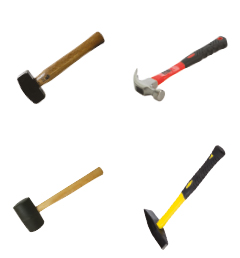
| Hammers & Mallets | Driving nails, pins and stakes, striking bolsters, chisels and breaking tools, demolition, formwork and general striking work on construction and groundworks sites | Head weight, material (club, lump, joiner's, rubber mallet), handle design, shaft material and specific striking task |
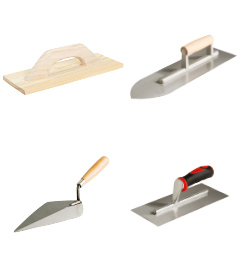
| Floats & Trowels | Concrete finishing, screeding, bricklaying, pointing, plastering, rendering and general surface levelling and finishing on building and civils sites | Blade size, profile (pointed, bucket, pool, margin), blade material (stainless or carbon), handle type and specific trade finish required |
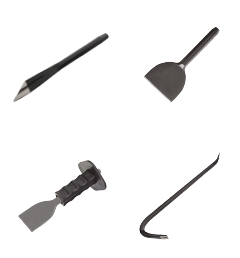
| Striking Tools & Bars | Prying, breaking, demolition, levering, lifting inspection covers, splitting materials and accessing structures during groundworks and civils work | Bar type (wrecking, pinch, digging, podger), length, head weight, steel grade and specific prying, breaking or levering task |
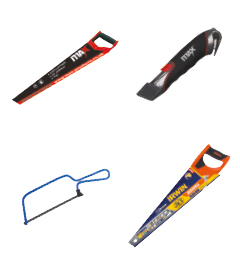
| Saws & Knives | Cutting timber, board, conduit, pipe, insulation and cable, and general cutting tasks across construction, fit-out and site maintenance work | Saw type (hand saw, hacksaw, jab saw), blade length, tooth count per inch (TPI), blade material and whether blades are user-replaceable |
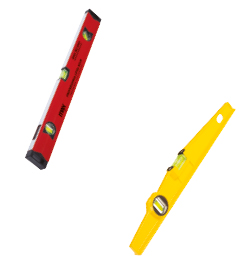
| Spirit Levels | Setting out, levelling masonry courses, checking plumb on posts, frames and shutters, and aligning drainage runs and kerb lines | Level length, vial count and type, accuracy rating, body material (aluminium box or I-beam), IP rating and whether a magnetic base is needed |
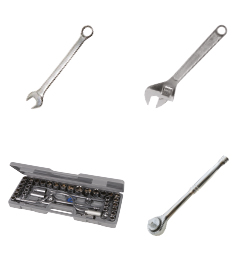
| Sockets & Spanners | Assembly, tightening, maintenance, fitting and adjusting structural fixings, brackets, ironwork, plant and site equipment | Drive size (1/4", 3/8", 1/2"), socket type (hex or bi-hex), spanner size range, ratchet mechanism, set format (loose or cased) and insulated versions where required |
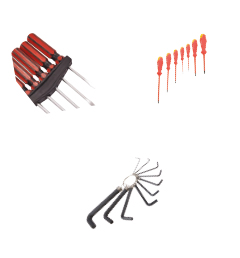
| Screwdrivers & Allen Keys | Fixing, assembly, formwork, fitting site hoardings, installing fittings and general trade tasks across construction, utilities and maintenance work | Bit type (slotted, Phillips, Pozidriv, Torx, hex), blade length, handle grip, set format, insulated versions and compatibility with power driver bits |
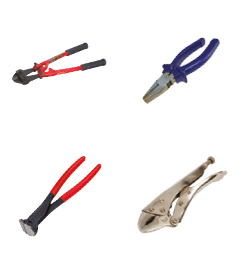
| Pliers, Grips & Bolt Croppers | Gripping, bending, cutting wire, removing fixings, cropping reinforcement bar and chain, and general materials handling on construction and groundworks sites | Jaw type (combination, long-nose, water pump, locking), jaw capacity, cutting rating, overall length and bolt cropper blade size and cutting diameter |
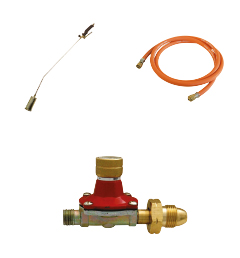
| Gas Torches & Accessories | Pipe work, lead flashing, flat-roof membrane laying, burning off paint and adhesive, soldering and heat application on building and civil engineering sites | Torch type (hand, hose, heavy-duty), gas type compatibility (butane, propane), heat output, regulator type, safety features and site task suitability |
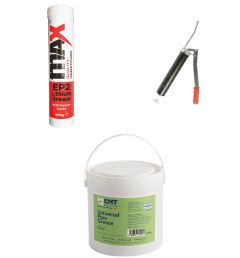
| Grease & Grease Guns | Lubrication of plant bearings, site machinery, vehicle components, equipment fittings and tools requiring regular maintenance on or near site | Gun type (lever, pistol, pneumatic, battery), cartridge size compatibility, grease type (multi-purpose, EP, high-temperature) and refill format |
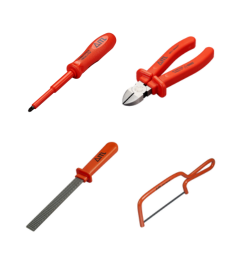
| Insulated Hand Tools | Electrical installation, maintenance, utilities, rail and working environments where contact with live electrical systems is a risk | Check voltage rating, product standard (IEC 60900 is common in the UK), tool type and size, task suitability, site rules and manufacturer instructions before specifying |
Frequently asked questions
Which hand tools are most commonly ordered for construction site teams?
Common orders include hammers, bolsters, trowels, floats, spirit levels, screwdrivers, sockets and spanners, saws, pliers and utility knives. The right selection depends on the trade, task type, site phase and whether tools are being issued to individual operatives, stocked in a site store or ordered for van replenishment.
Buyers ordering for a team or project rollout should confirm tool types, handle preferences and quantities against site requirements before placing an order, and check product specifications for durability and trade suitability.
What should buyers consider when ordering hammers, mallets and striking tools?
Hammers and striking tools are available in a range of head weights, materials and handle types. Club hammers and lump hammers are common for general construction and groundworks. Rubber mallets are used where a non-marking or softer strike is needed, and sledgehammers for heavier demolition and breaking tasks.
Head weight affects impact force, and the right choice depends on the task and site phase. Buyers should check head material, handle design, overall tool weight and any site rules about handle type before ordering, particularly for tools that will be in sustained daily use.
Which floats and trowels should buyers consider for site finishing work?
Floats and trowels are used for finishing, levelling and working surface materials including concrete, mortar, render, plaster and screed. Common types include pool trowels for concrete finishing, brick trowels for bricklaying and pointing, and floats for screeding and plastering.
Blade size, profile and material affect the finish produced. Buyers should check the blade type and finish standard required against product specifications before ordering, particularly where surface quality is part of a project specification.
When should insulated hand tools be specified and what should buyers check before ordering?
Insulated hand tools are used where electrical hazard is present, typically in electrical installation, maintenance, utilities and rail environments. Product standards such as IEC 60900 may be relevant where stated by the manufacturer, but buyers should always check the product specification, voltage rating and site requirements before ordering.
Buyers should check the voltage rating, product standard, tool type and site or task requirements before specifying insulated tools. Insulated tools must be inspected before use and must not be relied upon as the sole means of protection. Site rules, risk assessments and relevant guidance should always be followed. If in doubt, consult a competent person before ordering.
What saws and cutting tools are commonly ordered for site and trade use?
Common site cutting tools include hand saws for timber and structural board, hacksaws for metal, conduit and pipe, jab saws for board and plasterboard work, and utility knives for general cutting tasks. Blade length, tooth count and material affect cutting speed and suitability for the material being cut.
Buyers should check blade type and TPI (teeth per inch) against the material being cut, and confirm whether blades are replaceable or fixed. For site orders, it is also worth confirming whether any project specification requires a particular blade standard.
How should procurement teams choose between socket sets, spanners and combination wrench sets?
Socket sets offer versatility across a range of fastener sizes with a ratchet mechanism, making them useful for assembly, fitting and maintenance work where fastener access allows. Spanners and combination sets are better suited to confined or awkward fixings where a socket cannot be used.
Drive size (1/4", 3/8" or 1/2") determines the torque capacity and fastener range covered. Buyers ordering for site teams should consider the primary task, the range of fastener sizes needed and whether a cased set or loose tools are more practical for site storage and transport.
Can CMT Group supply hand tools in bulk for project rollouts or depot replenishment?
Yes. CMT Group supplies contractor hand tools including hammers, trowels, spirit levels, sockets, saws, screwdrivers, pliers, striking tools and insulated tools for construction, utilities and infrastructure projects.
For project quantities, depot stock or repeat site supply, procurement teams can use the EDGE B2B Portal or speak to the team about stock availability, account-based ordering and delivery options.
The wider supply service is supported by supplier-level accreditations including BSIF Registered Safety Supplier, BSI ISO 9001:2015 Quality Management and CHAS Elite. Product suitability depends on the individual item, task, site conditions, manufacturer guidance and any project-specific requirements.
How can site managers and procurement teams manage repeat hand tool orders?
Repeat hand tool ordering can be managed through CMT Group's EDGE B2B Portal, which allows account holders to view order history and reorder frequently used products across projects, sites and depots.
For trade accounts or procurement across multiple locations, contact the CMT Group team to discuss account-based supply, repeat replenishment and delivery arrangements.
What should buyers check when ordering pliers, grips and bolt croppers for site use?
Common types include combination pliers for general gripping and wire cutting, long-nose pliers for precision work and tight spaces, water pump pliers for adjustable grip on pipework and fittings, and bolt croppers for cutting chain, wire rope, reinforcement bar and padlocks.
Jaw size, cutting capacity and overall length vary across the range. Buyers should check the cutting capacity rating and jaw size against the specific task and material before ordering, particularly for bolt croppers used on larger-gauge wire or structural bar. Not all bolt croppers are rated for every material or gauge.
Managing hand tool supply across vans, depots or live projects? Buyers can source practical hand tools, insulated options, trade essentials and repeat-use site kit for daily work and planned replenishment. For project quantities or specialist tool requirements, speak to the team.
UK-wide delivery
Next-day and VIP same-day delivery on stocked hand tool lines, with nationwide coverage for trade and project accounts.Stock availability
Large stockholding and repeat ordering support for hammers, trowels, spirit levels, sockets, saws, screwdrivers and insulated tools.EDGE B2B Portal
Self-serve procurement with trade pricing, order tracking and easy repeat ordering for account holders.Wider site range
Order hand tools alongside tool tethering, measuring and marking products, groundwork tools, groundworks equipment and site machinery from the wider Hand & Groundworking Tools range.Sustainable procurement
Supply support for responsible procurement, project planning and social value commitments across construction and infrastructure.Shop Hand Tools by Type
Hand Tools
On construction, civils and maintenance sites, hand tools need to be easy to issue, replace and reorder across vans, depots and project teams. CMT Group supplies contractor-grade hammers, mallets, trowels, saws, knives, levels, sockets, spanners, screwdrivers, pliers, gas torches, grease guns and insulated hand tools ... On construction, civils and maintenance sites, hand tools need to be easy to issue, replace and reorder across vans, depots and project teams. CMT Group supplies contractor-grade hammers, mallets, trowels, saws, knives, levels, sockets, spanners, screwdrivers, pliers, gas torches, grease guns and insulated hand tools for daily site work, project setup and repeat replenishment. Buyers can manage trade essentials and contract supply through stock availability, account-based purchasing and fast nationwide delivery. read more...read less
Hand tool types, site use and buying considerations
| Tool type | Common site use | Buying considerations |
|---|---|---|
| Hammers & Mallets | Driving nails, pins and stakes, striking bolsters, chisels and breaking tools, demolition, formwork and general striking work on construction and groundworks sites | Head weight, material (club, lump, joiner's, rubber mallet), handle design, shaft material and specific striking task |
| Floats & Trowels | Concrete finishing, screeding, bricklaying, pointing, plastering, rendering and general surface levelling and finishing on building and civils sites | Blade size, profile (pointed, bucket, pool, margin), blade material (stainless or carbon), handle type and specific trade finish required |
| Striking Tools & Bars | Prying, breaking, demolition, levering, lifting inspection covers, splitting materials and accessing structures during groundworks and civils work | Bar type (wrecking, pinch, digging, podger), length, head weight, steel grade and specific prying, breaking or levering task |
| Saws & Knives | Cutting timber, board, conduit, pipe, insulation and cable, and general cutting tasks across construction, fit-out and site maintenance work | Saw type (hand saw, hacksaw, jab saw), blade length, tooth count per inch (TPI), blade material and whether blades are user-replaceable |
| Spirit Levels | Setting out, levelling masonry courses, checking plumb on posts, frames and shutters, and aligning drainage runs and kerb lines | Level length, vial count and type, accuracy rating, body material (aluminium box or I-beam), IP rating and whether a magnetic base is needed |
| Sockets & Spanners | Assembly, tightening, maintenance, fitting and adjusting structural fixings, brackets, ironwork, plant and site equipment | Drive size (1/4", 3/8", 1/2"), socket type (hex or bi-hex), spanner size range, ratchet mechanism, set format (loose or cased) and insulated versions where required |
| Screwdrivers & Allen Keys | Fixing, assembly, formwork, fitting site hoardings, installing fittings and general trade tasks across construction, utilities and maintenance work | Bit type (slotted, Phillips, Pozidriv, Torx, hex), blade length, handle grip, set format, insulated versions and compatibility with power driver bits |
| Pliers, Grips & Bolt Croppers | Gripping, bending, cutting wire, removing fixings, cropping reinforcement bar and chain, and general materials handling on construction and groundworks sites | Jaw type (combination, long-nose, water pump, locking), jaw capacity, cutting rating, overall length and bolt cropper blade size and cutting diameter |
| Gas Torches & Accessories | Pipe work, lead flashing, flat-roof membrane laying, burning off paint and adhesive, soldering and heat application on building and civil engineering sites | Torch type (hand, hose, heavy-duty), gas type compatibility (butane, propane), heat output, regulator type, safety features and site task suitability |
| Grease & Grease Guns | Lubrication of plant bearings, site machinery, vehicle components, equipment fittings and tools requiring regular maintenance on or near site | Gun type (lever, pistol, pneumatic, battery), cartridge size compatibility, grease type (multi-purpose, EP, high-temperature) and refill format |
| Insulated Hand Tools | Electrical installation, maintenance, utilities, rail and working environments where contact with live electrical systems is a risk | Check voltage rating, product standard (IEC 60900 is common in the UK), tool type and size, task suitability, site rules and manufacturer instructions before specifying |
Frequently asked questions
Which hand tools are most commonly ordered for construction site teams?
Common orders include hammers, bolsters, trowels, floats, spirit levels, screwdrivers, sockets and spanners, saws, pliers and utility knives. The right selection depends on the trade, task type, site phase and whether tools are being issued to individual operatives, stocked in a site store or ordered for van replenishment.
Buyers ordering for a team or project rollout should confirm tool types, handle preferences and quantities against site requirements before placing an order, and check product specifications for durability and trade suitability.
What should buyers consider when ordering hammers, mallets and striking tools?
Hammers and striking tools are available in a range of head weights, materials and handle types. Club hammers and lump hammers are common for general construction and groundworks. Rubber mallets are used where a non-marking or softer strike is needed, and sledgehammers for heavier demolition and breaking tasks.
Head weight affects impact force, and the right choice depends on the task and site phase. Buyers should check head material, handle design, overall tool weight and any site rules about handle type before ordering, particularly for tools that will be in sustained daily use.
Which floats and trowels should buyers consider for site finishing work?
Floats and trowels are used for finishing, levelling and working surface materials including concrete, mortar, render, plaster and screed. Common types include pool trowels for concrete finishing, brick trowels for bricklaying and pointing, and floats for screeding and plastering.
Blade size, profile and material affect the finish produced. Buyers should check the blade type and finish standard required against product specifications before ordering, particularly where surface quality is part of a project specification.
When should insulated hand tools be specified and what should buyers check before ordering?
Insulated hand tools are used where electrical hazard is present, typically in electrical installation, maintenance, utilities and rail environments. Product standards such as IEC 60900 may be relevant where stated by the manufacturer, but buyers should always check the product specification, voltage rating and site requirements before ordering.
Buyers should check the voltage rating, product standard, tool type and site or task requirements before specifying insulated tools. Insulated tools must be inspected before use and must not be relied upon as the sole means of protection. Site rules, risk assessments and relevant guidance should always be followed. If in doubt, consult a competent person before ordering.
What saws and cutting tools are commonly ordered for site and trade use?
Common site cutting tools include hand saws for timber and structural board, hacksaws for metal, conduit and pipe, jab saws for board and plasterboard work, and utility knives for general cutting tasks. Blade length, tooth count and material affect cutting speed and suitability for the material being cut.
Buyers should check blade type and TPI (teeth per inch) against the material being cut, and confirm whether blades are replaceable or fixed. For site orders, it is also worth confirming whether any project specification requires a particular blade standard.
How should procurement teams choose between socket sets, spanners and combination wrench sets?
Socket sets offer versatility across a range of fastener sizes with a ratchet mechanism, making them useful for assembly, fitting and maintenance work where fastener access allows. Spanners and combination sets are better suited to confined or awkward fixings where a socket cannot be used.
Drive size (1/4", 3/8" or 1/2") determines the torque capacity and fastener range covered. Buyers ordering for site teams should consider the primary task, the range of fastener sizes needed and whether a cased set or loose tools are more practical for site storage and transport.
Can CMT Group supply hand tools in bulk for project rollouts or depot replenishment?
Yes. CMT Group supplies contractor hand tools including hammers, trowels, spirit levels, sockets, saws, screwdrivers, pliers, striking tools and insulated tools for construction, utilities and infrastructure projects.
For project quantities, depot stock or repeat site supply, procurement teams can use the EDGE B2B Portal or speak to the team about stock availability, account-based ordering and delivery options.
The wider supply service is supported by supplier-level accreditations including BSIF Registered Safety Supplier, BSI ISO 9001:2015 Quality Management and CHAS Elite. Product suitability depends on the individual item, task, site conditions, manufacturer guidance and any project-specific requirements.
How can site managers and procurement teams manage repeat hand tool orders?
Repeat hand tool ordering can be managed through CMT Group's EDGE B2B Portal, which allows account holders to view order history and reorder frequently used products across projects, sites and depots.
For trade accounts or procurement across multiple locations, contact the CMT Group team to discuss account-based supply, repeat replenishment and delivery arrangements.
What should buyers check when ordering pliers, grips and bolt croppers for site use?
Common types include combination pliers for general gripping and wire cutting, long-nose pliers for precision work and tight spaces, water pump pliers for adjustable grip on pipework and fittings, and bolt croppers for cutting chain, wire rope, reinforcement bar and padlocks.
Jaw size, cutting capacity and overall length vary across the range. Buyers should check the cutting capacity rating and jaw size against the specific task and material before ordering, particularly for bolt croppers used on larger-gauge wire or structural bar. Not all bolt croppers are rated for every material or gauge.
Managing hand tool supply across vans, depots or live projects? Buyers can source practical hand tools, insulated options, trade essentials and repeat-use site kit for daily work and planned replenishment. For project quantities or specialist tool requirements, speak to the team.