Road Signs

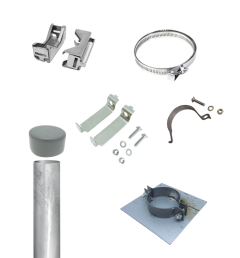
Road signs for roadworks and traffic management control the flow of vehicles around construction sites, communicate hazards, enforce temporary restrictions, and guide drivers and pedestrians safely through and around works. CMT Group supplies a comprehensive range of road signs including metal road signs, quick-fit signs, Q signs, cone signs, and sign posts and accessories, covering the full range of Chapter 8 compliant temporary traffic management signage used across UK highways and construction operations.
Read more Read less
Road signs used in temporary traffic management on the public highway must comply with the Traffic Signs Regulations and General Directions 2016 and Traffic Signs Manual Chapter 8. These regulations specify the design, dimensions, colours, symbols, and retroreflectivity of all signs used in roadworks and temporary traffic management schemes in the UK. Using non-compliant signs on the public highway creates a liability risk for the contractor and the highway authority, and can be challenged by road users or enforcement authorities. CMT Group has been supplying road signs and traffic management equipment to UK highways contractors for over 20 years.
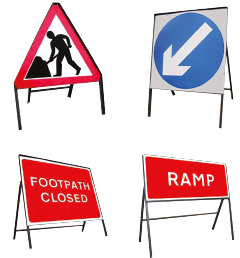
- ✓ Metal road signs for permanent and long-duration temporary traffic management
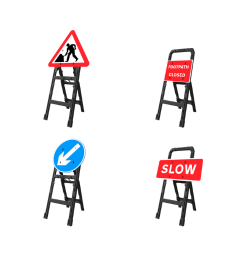
- ✓ Quick-fit signs for rapid deployment and repositioning on short-duration works
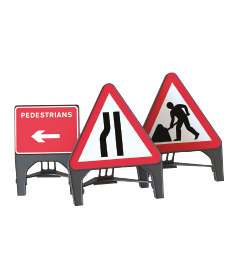
- ✓ Q signs for complex multi-sign installations requiring sign combinations on a single frame
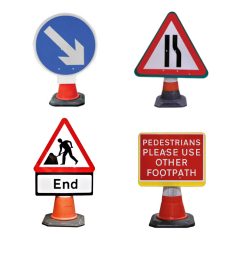
- ✓ Cone signs for mounting warning and information signs directly on road cones
- ✓ Sign posts, sign frames, and accessories for mounting and displaying all road sign types
- ✓ Road closure signs, footway closed signs, ramp signs, and pedestrian diversion signs
- ✓ Bulk supply for traffic management contractors and project procurement
- ✓ Next day delivery standard. VIP 2-3 hour delivery on a dedicated vehicle also available
Road Signs, Chapter 8, and UK Traffic Sign Regulations
Road signs used in temporary traffic management on UK public roads are regulated by the Traffic Signs Regulations and General Directions 2016 (TSRGD 2016), which defines the design, dimensions, colours, symbols, and border specifications for every sign that can be legally used on the public highway. Traffic Signs Manual Chapter 8 provides operational guidance on how temporary traffic management schemes should be designed and implemented, including the specific signs required for different types of works, their placement distances and positions, and the signing layouts for common roadworks scenarios.
Signs used in roadworks must be manufactured to the specification set out in TSRGD 2016, which includes requirements for sign dimensions by sign type and road speed, the retroreflective grade of the sign face material, and the permitted variations in symbol and border dimensions. Using a sign that does not meet the TSRGD specification on a public road is a legal non-compliance. All road signs supplied by CMT Group for highway use are manufactured to the appropriate TSRGD 2016 specification.
Road Signs by Type
Our range covers the road sign types used across UK temporary traffic management and roadworks operations.
Choosing the Right Road Signs for Your Works
Road sign selection for temporary traffic management must be based on the Traffic Management Plan approved by the highway authority, which will specify the exact signs, their positions, mounting heights, and the distances at which they must be placed from the works. Signs must be of the correct type and dimensions for the road speed limit and the type of works being undertaken.
For short-duration daily works, quick-fit signs and cone signs provide the fastest deployment and striking time, reducing the time traffic management operatives spend in the live carriageway during set-up and removal. For longer-duration works, metal road signs on post and base provide a more permanent and weather-resistant installation. Q signs are used wherever Chapter 8 specifies a sign combination that must be displayed as a unit.
| Works type | Recommended sign format | Key reason |
|---|---|---|
| Short-duration daily works (utility, patching) | Quick-fit signs | Fastest daily set-up and strike time |
| Longer-duration roadworks | Metal road signs on posts and bases | Robust, stable, and weather-resistant installation |
| Chapter 8 sign combinations | Q signs | Deploys multi-sign combination as single unit |
| End signs and cone line information | Cone signs | No separate post required; mounts on existing cone |
| Road closure or footway closed | Metal road signs with sign posts | TSRGD 2016 compliant sign at correct mounting height |
Road Signs for UK Roadworks and Construction
Road signs are a legal requirement for temporary traffic management on the public highway in the UK, and must comply with the specifications set out in TSRGD 2016 and the operational guidance in Traffic Signs Manual Chapter 8. The highway authority can require non-compliant signs to be removed and replaced before the works proceed, and using non-standard signs can invalidate the Traffic Management Plan approval and create liability for accidents that occur within the scheme.
CMT Group has been supplying road signs to UK highways and construction contractors for over 20 years. Our range covers the full scope of temporary traffic management signage from metal road signs and quick-fit signs through to Q signs, cone signs, and sign posts and accessories. We operate our own fleet of 100+ FORS Gold accredited vehicles covering 90% of the UK, with next day delivery standard on orders placed by 5pm by phone or 7pm online, and VIP 2-3 hour delivery on a dedicated vehicle dispatched within 30 minutes for urgent site requirements.
Frequently asked questions
What road signs do I need to close a road for construction works?
A road closure for construction works on the public highway requires a Traffic Management Plan approved by the highway authority before the closure can be implemented. The signing required for a road closure scheme is specified in that plan and in Traffic Signs Manual Chapter 8. At a minimum, a road closure requires advance warning signs alerting drivers to the upcoming closure, a road closed sign at the closure point, and appropriate diversion signage guiding drivers through the approved alternative route. The specific signs, their positions, and distances from the closure point are detailed in the Traffic Management Plan and must be installed exactly as approved. Closure signs must meet the TSRGD 2016 specification for the sign type and road speed.
What is a Q sign and when do I need one?
A Q sign is a folding frame system designed to hold two or more signs simultaneously in the specific combination and spacing required by Traffic Signs Manual Chapter 8. Chapter 8 frequently specifies that particular sign combinations must be displayed together at the same point in a traffic management scheme, such as a warning triangle above a "Road Works Ahead" supplementary plate, or a direction sign combined with a distance plate. Displaying these combinations on separate posts creates the wrong spacing and could be challenged as non-compliant with the Traffic Management Plan. A Q sign ensures that the combination is always displayed in the correct configuration, reduces the number of separate installations, and can be deployed and struck as a single unit for faster daily operations.
What height should road signs be mounted at roadworks?
Traffic Signs Manual Chapter 8 specifies the mounting heights for signs used in temporary traffic management. For signs mounted on the verge or footway adjacent to the carriageway, the bottom of the sign should be at a minimum height of 900mm above the carriageway level. For signs mounted in the carriageway, carriageway-level sign frames are used which position the sign at a lower height suitable for the carriageway mounting position. Quick-fit signs typically position the bottom of the sign at approximately 500mm above ground level when deployed on the footway. The exact mounting height specified in the Traffic Management Plan takes precedence over general guidance where there is a site-specific requirement.
Can I use road signs on private land without TSRGD compliance?
TSRGD 2016 applies specifically to signs used on or visible from the public highway. Signs used on private land, construction sites, and areas not accessible to public road traffic are not required to meet the TSRGD specification, though they must still be appropriate and effective for their purpose under health and safety legislation. However, using TSRGD-compliant signs on private sites provides significant advantages: the signs are immediately recognisable to all drivers who have passed a UK driving test, their meaning is unambiguous, and their standardised colour coding and symbols reduce the risk of misunderstanding. For most construction site traffic management applications, using highway-standard signs is best practice even where it is not legally required.
Why buy road signs from CMT Group?
CMT Group has been supplying road signs to UK highways and construction contractors for over 20 years. As a FORS Gold accredited and CLOCS committed organisation, we understand the compliance requirements and operational demands of the traffic management sector from a fleet operator's perspective as well as a product supplier's. Our range covers the full scope of Chapter 8 temporary traffic management signage from metal road signs, quick-fit signs, and Q signs through to cone signs, sign posts, and accessories. We supply in bulk quantities for traffic management fleet replenishment and project procurement. We operate our own fleet of 100+ FORS Gold accredited vehicles covering 90% of the UK, with next day delivery standard on orders placed by 5pm by phone or 7pm online, and VIP 2-3 hour delivery on a dedicated vehicle dispatched within 30 minutes for urgent requirements.
Quick-Fit Signs vs Metal Road Signs on Posts: Which Do You Need?
Quick-fit signs and metal road signs on post and base are both Chapter 8 compliant sign formats, but they are suited to different works durations and operational requirements. Quick-fit signs are the preferred format for short-duration and daily deployments. A traffic management operative can open and position a quick-fit sign in seconds without the need for separate posts, bases, or tools, and the same sign can be struck and loaded equally quickly at the end of the shift. For utility works, patching, inspections, and other works that are set up and removed each working day, the speed of deployment and striking that quick-fit signs provide directly reduces the time that operatives spend in the live carriageway during these operations.
Metal road signs on posts and bases are better suited to longer-duration roadworks where the signing scheme will remain in place for days or weeks. The post-mounted installation is more stable in wind and adverse weather, more resistant to being moved or knocked over by vehicles, and creates a more professional and permanent-looking scheme appearance that is appropriate for longer-duration works. The disadvantage is the longer installation and striking time compared to quick-fit signs, and the additional components to transport and manage on site. For most traffic management contractors operating regular daily deployments, a fleet of quick-fit signs for operational use and a stock of metal road signs for longer-duration schemes provides the most operationally efficient approach to sign fleet management.
Shop Road Signs by Type
Road Signs
Road signs for roadworks and traffic management control the flow of vehicles around construction sites, communicate hazards, enforce temporary restrictions, and guide drivers and pedestrians safely through and around works. CMT Group supplies a comprehensive range of road signs including metal road signs, quick-fit signs, Q signs, cone signs, and sign posts and accessories, covering the full range of Chapter 8 compliant temporary traffic management signage used across UK highways and construction operations.
Read more Read less
Road signs used in temporary traffic management on the public highway must comply with the Traffic Signs Regulations and General Directions 2016 and Traffic Signs Manual Chapter 8. These regulations specify the design, dimensions, colours, symbols, and retroreflectivity of all signs used in roadworks and temporary traffic management schemes in the UK. Using non-compliant signs on the public highway creates a liability risk for the contractor and the highway authority, and can be challenged by road users or enforcement authorities. CMT Group has been supplying road signs and traffic management equipment to UK highways contractors for over 20 years.
- ✓ Metal road signs for permanent and long-duration temporary traffic management
- ✓ Quick-fit signs for rapid deployment and repositioning on short-duration works
- ✓ Q signs for complex multi-sign installations requiring sign combinations on a single frame
- ✓ Cone signs for mounting warning and information signs directly on road cones
- ✓ Sign posts, sign frames, and accessories for mounting and displaying all road sign types
- ✓ Road closure signs, footway closed signs, ramp signs, and pedestrian diversion signs
- ✓ Bulk supply for traffic management contractors and project procurement
- ✓ Next day delivery standard. VIP 2-3 hour delivery on a dedicated vehicle also available
Road Signs, Chapter 8, and UK Traffic Sign Regulations
Road signs used in temporary traffic management on UK public roads are regulated by the Traffic Signs Regulations and General Directions 2016 (TSRGD 2016), which defines the design, dimensions, colours, symbols, and border specifications for every sign that can be legally used on the public highway. Traffic Signs Manual Chapter 8 provides operational guidance on how temporary traffic management schemes should be designed and implemented, including the specific signs required for different types of works, their placement distances and positions, and the signing layouts for common roadworks scenarios.
Signs used in roadworks must be manufactured to the specification set out in TSRGD 2016, which includes requirements for sign dimensions by sign type and road speed, the retroreflective grade of the sign face material, and the permitted variations in symbol and border dimensions. Using a sign that does not meet the TSRGD specification on a public road is a legal non-compliance. All road signs supplied by CMT Group for highway use are manufactured to the appropriate TSRGD 2016 specification.
Road Signs by Type
Our range covers the road sign types used across UK temporary traffic management and roadworks operations.
Choosing the Right Road Signs for Your Works
Road sign selection for temporary traffic management must be based on the Traffic Management Plan approved by the highway authority, which will specify the exact signs, their positions, mounting heights, and the distances at which they must be placed from the works. Signs must be of the correct type and dimensions for the road speed limit and the type of works being undertaken.
For short-duration daily works, quick-fit signs and cone signs provide the fastest deployment and striking time, reducing the time traffic management operatives spend in the live carriageway during set-up and removal. For longer-duration works, metal road signs on post and base provide a more permanent and weather-resistant installation. Q signs are used wherever Chapter 8 specifies a sign combination that must be displayed as a unit.
| Works type | Recommended sign format | Key reason |
|---|---|---|
| Short-duration daily works (utility, patching) | Quick-fit signs | Fastest daily set-up and strike time |
| Longer-duration roadworks | Metal road signs on posts and bases | Robust, stable, and weather-resistant installation |
| Chapter 8 sign combinations | Q signs | Deploys multi-sign combination as single unit |
| End signs and cone line information | Cone signs | No separate post required; mounts on existing cone |
| Road closure or footway closed | Metal road signs with sign posts | TSRGD 2016 compliant sign at correct mounting height |
Road Signs for UK Roadworks and Construction
Road signs are a legal requirement for temporary traffic management on the public highway in the UK, and must comply with the specifications set out in TSRGD 2016 and the operational guidance in Traffic Signs Manual Chapter 8. The highway authority can require non-compliant signs to be removed and replaced before the works proceed, and using non-standard signs can invalidate the Traffic Management Plan approval and create liability for accidents that occur within the scheme.
CMT Group has been supplying road signs to UK highways and construction contractors for over 20 years. Our range covers the full scope of temporary traffic management signage from metal road signs and quick-fit signs through to Q signs, cone signs, and sign posts and accessories. We operate our own fleet of 100+ FORS Gold accredited vehicles covering 90% of the UK, with next day delivery standard on orders placed by 5pm by phone or 7pm online, and VIP 2-3 hour delivery on a dedicated vehicle dispatched within 30 minutes for urgent site requirements.
Frequently asked questions
What road signs do I need to close a road for construction works?
A road closure for construction works on the public highway requires a Traffic Management Plan approved by the highway authority before the closure can be implemented. The signing required for a road closure scheme is specified in that plan and in Traffic Signs Manual Chapter 8. At a minimum, a road closure requires advance warning signs alerting drivers to the upcoming closure, a road closed sign at the closure point, and appropriate diversion signage guiding drivers through the approved alternative route. The specific signs, their positions, and distances from the closure point are detailed in the Traffic Management Plan and must be installed exactly as approved. Closure signs must meet the TSRGD 2016 specification for the sign type and road speed.
What is a Q sign and when do I need one?
A Q sign is a folding frame system designed to hold two or more signs simultaneously in the specific combination and spacing required by Traffic Signs Manual Chapter 8. Chapter 8 frequently specifies that particular sign combinations must be displayed together at the same point in a traffic management scheme, such as a warning triangle above a "Road Works Ahead" supplementary plate, or a direction sign combined with a distance plate. Displaying these combinations on separate posts creates the wrong spacing and could be challenged as non-compliant with the Traffic Management Plan. A Q sign ensures that the combination is always displayed in the correct configuration, reduces the number of separate installations, and can be deployed and struck as a single unit for faster daily operations.
What height should road signs be mounted at roadworks?
Traffic Signs Manual Chapter 8 specifies the mounting heights for signs used in temporary traffic management. For signs mounted on the verge or footway adjacent to the carriageway, the bottom of the sign should be at a minimum height of 900mm above the carriageway level. For signs mounted in the carriageway, carriageway-level sign frames are used which position the sign at a lower height suitable for the carriageway mounting position. Quick-fit signs typically position the bottom of the sign at approximately 500mm above ground level when deployed on the footway. The exact mounting height specified in the Traffic Management Plan takes precedence over general guidance where there is a site-specific requirement.
Can I use road signs on private land without TSRGD compliance?
TSRGD 2016 applies specifically to signs used on or visible from the public highway. Signs used on private land, construction sites, and areas not accessible to public road traffic are not required to meet the TSRGD specification, though they must still be appropriate and effective for their purpose under health and safety legislation. However, using TSRGD-compliant signs on private sites provides significant advantages: the signs are immediately recognisable to all drivers who have passed a UK driving test, their meaning is unambiguous, and their standardised colour coding and symbols reduce the risk of misunderstanding. For most construction site traffic management applications, using highway-standard signs is best practice even where it is not legally required.
Why buy road signs from CMT Group?
CMT Group has been supplying road signs to UK highways and construction contractors for over 20 years. As a FORS Gold accredited and CLOCS committed organisation, we understand the compliance requirements and operational demands of the traffic management sector from a fleet operator's perspective as well as a product supplier's. Our range covers the full scope of Chapter 8 temporary traffic management signage from metal road signs, quick-fit signs, and Q signs through to cone signs, sign posts, and accessories. We supply in bulk quantities for traffic management fleet replenishment and project procurement. We operate our own fleet of 100+ FORS Gold accredited vehicles covering 90% of the UK, with next day delivery standard on orders placed by 5pm by phone or 7pm online, and VIP 2-3 hour delivery on a dedicated vehicle dispatched within 30 minutes for urgent requirements.
Quick-Fit Signs vs Metal Road Signs on Posts: Which Do You Need?
Quick-fit signs and metal road signs on post and base are both Chapter 8 compliant sign formats, but they are suited to different works durations and operational requirements. Quick-fit signs are the preferred format for short-duration and daily deployments. A traffic management operative can open and position a quick-fit sign in seconds without the need for separate posts, bases, or tools, and the same sign can be struck and loaded equally quickly at the end of the shift. For utility works, patching, inspections, and other works that are set up and removed each working day, the speed of deployment and striking that quick-fit signs provide directly reduces the time that operatives spend in the live carriageway during these operations.
Metal road signs on posts and bases are better suited to longer-duration roadworks where the signing scheme will remain in place for days or weeks. The post-mounted installation is more stable in wind and adverse weather, more resistant to being moved or knocked over by vehicles, and creates a more professional and permanent-looking scheme appearance that is appropriate for longer-duration works. The disadvantage is the longer installation and striking time compared to quick-fit signs, and the additional components to transport and manage on site. For most traffic management contractors operating regular daily deployments, a fleet of quick-fit signs for operational use and a stock of metal road signs for longer-duration schemes provides the most operationally efficient approach to sign fleet management.