
First Aid

First Aid

First aid supplies are a legal requirement on every UK construction site and must be available, adequate, and accessible from the first day of site operations. CMT Group supplies a comprehensive range of first aid products for construction sites including first aid kits, eye irrigation stations, defibrillators, plasters and wound dressings, antiseptic wipes, armbands, sharps disposal units, disposable gloves, and COVID test kits, covering the full first aid compliance requirements of construction sites across the UK.

Read more Read less

Construction sites carry a higher risk of injury than most working environments. Working at height, operating heavy plant and machinery, handling hazardous materials, and working in confined spaces all create risks that must be addressed through both preventative safety measures and an adequate and ready first aid capability. The Health and Safety (First-Aid) Regulations 1981 require employers to ensure suitable and sufficient first aid equipment and facilities are always available. CMT Group is a BSIF Registered Safety Supplier, meaning every first aid product in our range meets the strict safety and compliance standards required for professional and workplace use.

  • First aid kits for construction sites including burns kits and workplace emergency kits
  • Eye irrigation stations and eyewash solutions for chemical and dust eye exposure
  • Defibrillators for cardiac emergency response on construction sites
  • Plasters, wound dressings, and assorted wound protection for everyday site injuries
  • Antiseptic wipes and cleansing wipes for wound cleaning and infection prevention
  • Armbands and arm bandages for identification and immobilisation of arm injuries
  • Sharps disposal units for safe collection and disposal of needles and sharp medical waste
  • Disposable gloves and COVID test kits for infection control and testing compliance

First Aid Requirements on Construction Sites

Under the Health and Safety (First-Aid) Regulations 1981, all employers including those operating construction sites must ensure adequate and appropriate first aid equipment, facilities, and personnel are available at all times. Construction is classified as a high-hazard environment, which means the first aid provision required is more extensive than for a standard office or retail environment.

The minimum requirements for a construction site include a suitably stocked first aid kit, a designated appointed person or trained first aider depending on site size and risk level, and clear information displayed for all workers about where first aid equipment is located and who the first aider or appointed person is. For sites with higher numbers of workers or more complex hazards, additional first aiders and more comprehensive equipment including eyewash stations and defibrillators are expected.

First aid kits must be regularly inspected and restocked. A kit that is not properly maintained is not compliant with the regulations even if it was correctly stocked at the start of the project. Assigning responsibility for weekly first aid kit inspection to a named person on site is the most effective way to ensure continuous compliance throughout the project duration.

First Aid Supplies by Type

Our range covers the first aid products required for construction site compliance and emergency response.

First Aid Kits
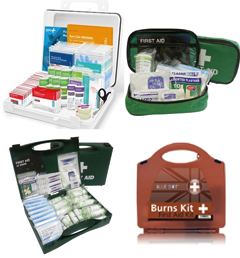
Workplace first aid kits and burns kits for construction sites. First aid kits contain the dressings, bandages, gloves, and wound care products needed to treat the most common site injuries until professional medical attention is available. Burns kits contain specialist burns dressings and cooling gel for treating thermal burns from hot surfaces, liquids, and flame contact on site. Available in a range of sizes from small portable kits for lone workers through to large kits for fixed first aid points in welfare units and site offices. All kits should be checked and restocked regularly throughout the project.
Workplace and burns kits · Multiple sizes · Portable and fixed · Regular restock required
Eye Irrigation
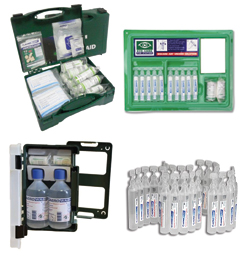
Eye wash stations, eye irrigation bottles, and eye bath units for flushing chemical splashes, dust, and debris from the eyes on construction sites. Eye irrigation is required wherever workers are exposed to materials that could cause eye contamination, including concrete dust, cement, chemical products, cutting and grinding dust, and airborne particles. The eye wash station must be positioned close to the point of risk so that a worker can reach it immediately after eye exposure without needing to ask for assistance. Eye wash stations must be accessible immediately at the point of risk and clearly signed throughout the site.
Eye wash stations · Irrigation bottles · Eye bath units · Position near hazard point
Plasters and Wipes
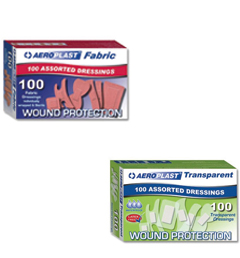
Assorted fabric and transparent plasters, wound dressings, and wound protection products for treating cuts and abrasions on construction sites. Plasters are the most frequently used first aid consumable on construction sites, where cuts and skin abrasions from tools, materials, and sharp edges are among the most common injuries. Fabric plasters are preferred for site use as they conform to skin contours and are more resistant to moisture and dirt than transparent alternatives. Available in assorted size packs suited to workplace first aid kit restocking.
Fabric and transparent plasters · Wound dressings · Assorted size packs · Kit restocking
Antiseptic Wipes
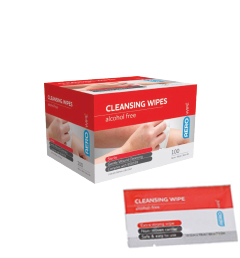
Individually wrapped antiseptic cleansing wipes and alcohol-free cleansing wipes for cleaning wounds and surrounding skin before applying dressings on construction sites. Antiseptic wipes are an essential first aid consumable for cleaning cuts and abrasions sustained in dirty construction site environments where contamination of an open wound significantly increases the risk of infection. Available in individually wrapped sterile sachets for inclusion in first aid kits and for use at first aid points throughout the site.
Antiseptic and alcohol-free · Individually wrapped · Sterile sachets · Kit restocking
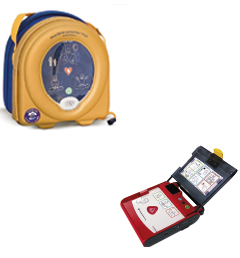
Defibrillators
Automated External Defibrillators (AEDs) for cardiac emergency response on construction sites. Cardiac arrest can affect any worker at any time regardless of age or perceived fitness, and the survival rate for cardiac arrest falls by approximately 10% for every minute without defibrillation. An AED on site can be the difference between life and death while waiting for emergency services. Modern AEDs are designed for use by untrained bystanders and provide audio and visual instructions guiding the user through the defibrillation process. Positioning an AED within two minutes reach of all workers on site is the HSE recommendation for high-risk environments.
Automated External Defibrillators · Untrained bystander use · Audio and visual guidance · HSE guidance
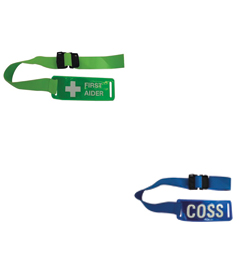
Armbands
First aider identification armbands and arm bandages for construction site first aid use. First aider armbands identify trained first aiders on site, making it immediately clear to all workers who to call in an emergency. Arm bandages and triangular bandages are used for supporting and immobilising arm injuries including sprains, fractures, and dislocations pending emergency medical attendance. Triangular bandages are a standard component of workplace first aid kits and must be restocked promptly after use to maintain kit compliance.
First aider identification · Arm bandages · Triangular bandages · Injury support
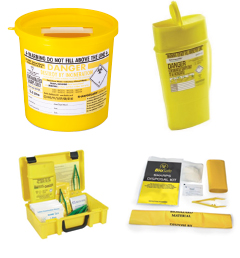
Sharps Disposal
Sharps bins and sharps disposal kits for the safe collection and disposal of hypodermic needles, syringes, and other sharp medical waste encountered on construction sites. Ground workers and groundwork teams working on brownfield sites, near welfare facilities, or in urban environments frequently encounter discarded needles and sharps that present a serious needlestick injury risk. Sharps bins allow safe collection and disposal of found sharps without direct handling, and sharps disposal kits provide the equipment needed to manage a needlestick incident on site including instruction cards for post-exposure procedures.
Sharps bins · Needlestick risk · Brownfield and urban sites · Post-exposure procedure kits
Disposable Gloves
Nitrile and latex-free disposable gloves for first aid use and infection control on construction sites. Disposable gloves must be worn by anyone providing first aid to protect both the casualty and the first aider from cross-contamination and blood-borne infection risk. Nitrile gloves are preferred for first aid use as they provide chemical resistance and are suitable for individuals with latex sensitivity. Disposable gloves are also widely used across construction site operations for handling chemicals, sealants, resins, and cleaning products. Available in multiple sizes in bulk box quantities for high-volume site use.
Nitrile latex-free · First aid and infection control · Chemical handling · Bulk boxes
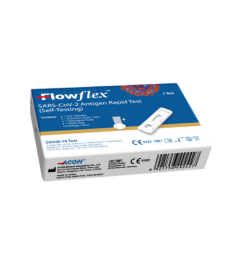
COVID Test Kits
Lateral flow COVID-19 antigen rapid test kits for workplace testing on construction sites. Rapid antigen tests provide a result within 15-30 minutes and allow site managers to identify symptomatic or positive cases quickly and take appropriate action to prevent spread among the workforce. Suitable for use where a site policy requires regular testing or for use when a worker presents with COVID-19 symptoms on site. Available in individual test and multi-pack formats to suit different site testing requirements.
Lateral flow antigen tests · 15-30 minute results · Individual and multi-pack · Site testing policy

First Aid Provision for Your Site: What Do You Need?

The first aid provision required on a construction site depends on the number of workers, the nature of the hazards, and the proximity to emergency medical services. The HSE's guidance on first aid at work, which supplements the Health and Safety (First-Aid) Regulations 1981, provides a risk assessment approach to determining the correct level of provision. The table below summarises the minimum requirements for different site sizes and situations.

All first aid arrangements must be reassessed if the site size, workforce, or hazard profile changes significantly during the project. Positions of first aid kits and eyewash stations must be clearly signed and communicated to all workers on site induction.

Site situation Minimum first aid provision Products required
Small site, low hazard, fewer than 5 workers Appointed person and travel first aid kit Small first aid kit, plasters, antiseptic wipes, gloves
Medium construction site, 5-50 workers At least one trained first aider and full kit Workplace first aid kit, eyewash, armbands, gloves
Large construction site, 50+ workers Multiple first aiders, first aid room where practical Multiple kits, eye irrigation station, defibrillator
Any site using chemicals or producing dust Eye wash station at point of risk Eye irrigation station or eye wash bottles
Brownfield, urban or demolition site Sharps disposal as standard Sharps bins and needlestick injury procedure kits
Any site with hot works or burning risk Burns kit in addition to standard first aid kit Burns kit with burns dressings and cooling gel

First Aid Supplies for UK Construction Sites

Construction sites have a higher rate of workplace injury than most other industries, making adequate first aid provision both a legal requirement and a practical necessity. Cuts, abrasions, eye injuries from dust and debris, and musculoskeletal injuries from manual handling are the most common injury types on UK construction sites. Having the correct first aid equipment positioned correctly, maintained regularly, and supported by a trained first aider or appointed person is the most effective way to minimise the severity of these injuries when they occur.

CMT Group is a BSIF Registered Safety Supplier and has been supplying first aid products to UK construction sites for over 20 years. As a BSIF member, every first aid product in our range meets strict safety and compliance standards. We operate our own fleet of 100+ FORS Gold accredited vehicles covering 90% of the UK, with next day delivery standard on orders placed by 5pm by phone or 7pm online, and VIP 2-3 hour delivery on a dedicated vehicle dispatched within 30 minutes for urgent requirements.

Frequently asked questions

What is the difference between a first aider and an appointed person?

An appointed person is someone designated to take charge of first aid arrangements on site, including calling emergency services and maintaining first aid equipment. An appointed person does not need to hold a first aid qualification and is the minimum requirement for low-hazard workplaces and very small sites. A trained first aider holds a valid First Aid at Work or Emergency First Aid at Work qualification from an HSE-approved training provider and is able to administer a range of first aid treatments. Construction sites are classified as high-hazard environments and the HSE guidance is clear that appointed persons alone are not appropriate for most construction sites. At least one trained first aider should be available during working hours on all but the smallest and lowest-risk construction projects.

Where should eye wash stations be positioned on a construction site?

Eye wash stations must be positioned at or very close to the point of risk, not in a central welfare area. A worker who has just received a chemical or dust splash to the eye cannot safely walk across a site to a welfare unit without assistance, and the delay in reaching an eye wash significantly worsens the outcome of an eye exposure injury. The eye wash station should be within 10 seconds walking distance of any area where chemicals, cement, concrete dust, cutting dust, or other eye hazards are being used or generated. Where multiple work areas present eye hazards, a fixed eye wash station should be installed at each one. Portable eye wash bottles can be carried by workers in high-risk tasks as a secondary measure but are not a substitute for a fixed station at a permanent work area.

Do I need a defibrillator on my construction site?

A defibrillator is not a legal requirement on construction sites under current UK legislation, but it is strongly recommended by the British Heart Foundation and the HSE for high-risk environments including construction. Cardiac arrest can affect anyone at any time, and the survival rate falls by approximately 10% for every minute that passes without defibrillation. On a large construction site where the ambulance response time may be 8-12 minutes or longer, having an AED on site significantly increases the chance of survival for a cardiac arrest victim. Most larger principal contractors now include an AED as a standard requirement in their site safety plans regardless of legal obligation, and many construction clients are beginning to include AED provision in their pre-qualification requirements.

How often should first aid kits be checked and restocked?

First aid kits must be checked regularly and restocked after every use. On an active construction site, a weekly inspection of all first aid kits is the standard practice, with restocking carried out immediately after any item is used or found to be missing, damaged, or past its expiry date. An out-of-date or depleted first aid kit is not compliant with the Health and Safety (First-Aid) Regulations 1981 regardless of how well stocked it was at the start of the project. Assigning the weekly inspection to a named person, recording the inspection on a kit log, and maintaining a stock of replacement items on site is the most reliable approach to continuous compliance throughout the project duration.

Why buy first aid supplies from CMT Group?

CMT Group is a BSIF Registered Safety Supplier, which means every first aid product in our range meets the strict safety and compliance standards set by the British Safety Industry Federation. We have been supplying first aid products to UK construction sites for over 20 years and understand the specific requirements of construction site first aid compliance under the Health and Safety (First-Aid) Regulations 1981. Our range covers the complete scope of construction site first aid requirements from kits and eye irrigation stations through to defibrillators, armbands, sharps disposal, and disposable gloves. We operate our own fleet of 100+ FORS Gold accredited vehicles covering 90% of the UK, with next day delivery standard on orders placed by 5pm by phone or 7pm online, and VIP 2-3 hour delivery on a dedicated vehicle dispatched within 30 minutes for urgent requirements.

First Aider vs Appointed Person: What Does Your Construction Site Need?

The distinction between a trained first aider and an appointed person is one of the most commonly misunderstood aspects of first aid compliance on construction sites. An appointed person is the minimum legal requirement for any workplace. They do not hold a first aid qualification and are responsible only for calling emergency services and maintaining first aid equipment. On a very small, low-hazard site with fewer than five workers, an appointed person may be sufficient.

A trained first aider holds a valid First Aid at Work (FAW) or Emergency First Aid at Work (EFAW) certificate from an HSE-approved training provider. An FAW first aider can administer a comprehensive range of treatments including CPR, management of unconsciousness, treatment of wounds and burns, and recognition of medical emergencies. An EFAW first aider is trained to a shorter syllabus covering the most critical emergency responses. For the vast majority of construction sites, where hazards including working at height, power tools, heavy plant, and chemical substances are present, the HSE guidance indicates that a trained first aider rather than an appointed person is required. Where multiple work areas are spread across a large site, enough first aiders must be available to ensure one is always accessible during working hours.

Shop First Aid by Type

First Aid

First Aid

First aid supplies are a legal requirement on every UK construction site and must be available, adequate, and accessible from the first day of site operations. CMT Group supplies a comprehensive range of first aid products for construction sites including first aid kits, eye irrigation stations, defibrillators, plasters and wound dressings, antiseptic wipes, armbands, sharps disposal units, disposable gloves, and COVID test kits, covering the full first aid compliance requirements of construction sites across the UK.

Read more Read less

Construction sites carry a higher risk of injury than most working environments. Working at height, operating heavy plant and machinery, handling hazardous materials, and working in confined spaces all create risks that must be addressed through both preventative safety measures and an adequate and ready first aid capability. The Health and Safety (First-Aid) Regulations 1981 require employers to ensure suitable and sufficient first aid equipment and facilities are always available. CMT Group is a BSIF Registered Safety Supplier, meaning every first aid product in our range meets the strict safety and compliance standards required for professional and workplace use.

  • First aid kits for construction sites including burns kits and workplace emergency kits
  • Eye irrigation stations and eyewash solutions for chemical and dust eye exposure
  • Defibrillators for cardiac emergency response on construction sites
  • Plasters, wound dressings, and assorted wound protection for everyday site injuries
  • Antiseptic wipes and cleansing wipes for wound cleaning and infection prevention
  • Armbands and arm bandages for identification and immobilisation of arm injuries
  • Sharps disposal units for safe collection and disposal of needles and sharp medical waste
  • Disposable gloves and COVID test kits for infection control and testing compliance

First Aid Requirements on Construction Sites

Under the Health and Safety (First-Aid) Regulations 1981, all employers including those operating construction sites must ensure adequate and appropriate first aid equipment, facilities, and personnel are available at all times. Construction is classified as a high-hazard environment, which means the first aid provision required is more extensive than for a standard office or retail environment.

The minimum requirements for a construction site include a suitably stocked first aid kit, a designated appointed person or trained first aider depending on site size and risk level, and clear information displayed for all workers about where first aid equipment is located and who the first aider or appointed person is. For sites with higher numbers of workers or more complex hazards, additional first aiders and more comprehensive equipment including eyewash stations and defibrillators are expected.

First aid kits must be regularly inspected and restocked. A kit that is not properly maintained is not compliant with the regulations even if it was correctly stocked at the start of the project. Assigning responsibility for weekly first aid kit inspection to a named person on site is the most effective way to ensure continuous compliance throughout the project duration.

First Aid Supplies by Type

Our range covers the first aid products required for construction site compliance and emergency response.

First Aid Kits
Workplace first aid kits and burns kits for construction sites. First aid kits contain the dressings, bandages, gloves, and wound care products needed to treat the most common site injuries until professional medical attention is available. Burns kits contain specialist burns dressings and cooling gel for treating thermal burns from hot surfaces, liquids, and flame contact on site. Available in a range of sizes from small portable kits for lone workers through to large kits for fixed first aid points in welfare units and site offices. All kits should be checked and restocked regularly throughout the project.
Workplace and burns kits · Multiple sizes · Portable and fixed · Regular restock required
Eye Irrigation
Eye wash stations, eye irrigation bottles, and eye bath units for flushing chemical splashes, dust, and debris from the eyes on construction sites. Eye irrigation is required wherever workers are exposed to materials that could cause eye contamination, including concrete dust, cement, chemical products, cutting and grinding dust, and airborne particles. The eye wash station must be positioned close to the point of risk so that a worker can reach it immediately after eye exposure without needing to ask for assistance. Eye wash stations must be accessible immediately at the point of risk and clearly signed throughout the site.
Eye wash stations · Irrigation bottles · Eye bath units · Position near hazard point
Plasters and Wipes
Assorted fabric and transparent plasters, wound dressings, and wound protection products for treating cuts and abrasions on construction sites. Plasters are the most frequently used first aid consumable on construction sites, where cuts and skin abrasions from tools, materials, and sharp edges are among the most common injuries. Fabric plasters are preferred for site use as they conform to skin contours and are more resistant to moisture and dirt than transparent alternatives. Available in assorted size packs suited to workplace first aid kit restocking.
Fabric and transparent plasters · Wound dressings · Assorted size packs · Kit restocking
Antiseptic Wipes
Individually wrapped antiseptic cleansing wipes and alcohol-free cleansing wipes for cleaning wounds and surrounding skin before applying dressings on construction sites. Antiseptic wipes are an essential first aid consumable for cleaning cuts and abrasions sustained in dirty construction site environments where contamination of an open wound significantly increases the risk of infection. Available in individually wrapped sterile sachets for inclusion in first aid kits and for use at first aid points throughout the site.
Antiseptic and alcohol-free · Individually wrapped · Sterile sachets · Kit restocking
Defibrillators
Automated External Defibrillators (AEDs) for cardiac emergency response on construction sites. Cardiac arrest can affect any worker at any time regardless of age or perceived fitness, and the survival rate for cardiac arrest falls by approximately 10% for every minute without defibrillation. An AED on site can be the difference between life and death while waiting for emergency services. Modern AEDs are designed for use by untrained bystanders and provide audio and visual instructions guiding the user through the defibrillation process. Positioning an AED within two minutes reach of all workers on site is the HSE recommendation for high-risk environments.
Automated External Defibrillators · Untrained bystander use · Audio and visual guidance · HSE guidance
Armbands
First aider identification armbands and arm bandages for construction site first aid use. First aider armbands identify trained first aiders on site, making it immediately clear to all workers who to call in an emergency. Arm bandages and triangular bandages are used for supporting and immobilising arm injuries including sprains, fractures, and dislocations pending emergency medical attendance. Triangular bandages are a standard component of workplace first aid kits and must be restocked promptly after use to maintain kit compliance.
First aider identification · Arm bandages · Triangular bandages · Injury support
Sharps Disposal
Sharps bins and sharps disposal kits for the safe collection and disposal of hypodermic needles, syringes, and other sharp medical waste encountered on construction sites. Ground workers and groundwork teams working on brownfield sites, near welfare facilities, or in urban environments frequently encounter discarded needles and sharps that present a serious needlestick injury risk. Sharps bins allow safe collection and disposal of found sharps without direct handling, and sharps disposal kits provide the equipment needed to manage a needlestick incident on site including instruction cards for post-exposure procedures.
Sharps bins · Needlestick risk · Brownfield and urban sites · Post-exposure procedure kits
Disposable Gloves
Nitrile and latex-free disposable gloves for first aid use and infection control on construction sites. Disposable gloves must be worn by anyone providing first aid to protect both the casualty and the first aider from cross-contamination and blood-borne infection risk. Nitrile gloves are preferred for first aid use as they provide chemical resistance and are suitable for individuals with latex sensitivity. Disposable gloves are also widely used across construction site operations for handling chemicals, sealants, resins, and cleaning products. Available in multiple sizes in bulk box quantities for high-volume site use.
Nitrile latex-free · First aid and infection control · Chemical handling · Bulk boxes
COVID Test Kits
Lateral flow COVID-19 antigen rapid test kits for workplace testing on construction sites. Rapid antigen tests provide a result within 15-30 minutes and allow site managers to identify symptomatic or positive cases quickly and take appropriate action to prevent spread among the workforce. Suitable for use where a site policy requires regular testing or for use when a worker presents with COVID-19 symptoms on site. Available in individual test and multi-pack formats to suit different site testing requirements.
Lateral flow antigen tests · 15-30 minute results · Individual and multi-pack · Site testing policy

First Aid Provision for Your Site: What Do You Need?

The first aid provision required on a construction site depends on the number of workers, the nature of the hazards, and the proximity to emergency medical services. The HSE's guidance on first aid at work, which supplements the Health and Safety (First-Aid) Regulations 1981, provides a risk assessment approach to determining the correct level of provision. The table below summarises the minimum requirements for different site sizes and situations.

All first aid arrangements must be reassessed if the site size, workforce, or hazard profile changes significantly during the project. Positions of first aid kits and eyewash stations must be clearly signed and communicated to all workers on site induction.

Site situation Minimum first aid provision Products required
Small site, low hazard, fewer than 5 workers Appointed person and travel first aid kit Small first aid kit, plasters, antiseptic wipes, gloves
Medium construction site, 5-50 workers At least one trained first aider and full kit Workplace first aid kit, eyewash, armbands, gloves
Large construction site, 50+ workers Multiple first aiders, first aid room where practical Multiple kits, eye irrigation station, defibrillator
Any site using chemicals or producing dust Eye wash station at point of risk Eye irrigation station or eye wash bottles
Brownfield, urban or demolition site Sharps disposal as standard Sharps bins and needlestick injury procedure kits
Any site with hot works or burning risk Burns kit in addition to standard first aid kit Burns kit with burns dressings and cooling gel

First Aid Supplies for UK Construction Sites

Construction sites have a higher rate of workplace injury than most other industries, making adequate first aid provision both a legal requirement and a practical necessity. Cuts, abrasions, eye injuries from dust and debris, and musculoskeletal injuries from manual handling are the most common injury types on UK construction sites. Having the correct first aid equipment positioned correctly, maintained regularly, and supported by a trained first aider or appointed person is the most effective way to minimise the severity of these injuries when they occur.

CMT Group is a BSIF Registered Safety Supplier and has been supplying first aid products to UK construction sites for over 20 years. As a BSIF member, every first aid product in our range meets strict safety and compliance standards. We operate our own fleet of 100+ FORS Gold accredited vehicles covering 90% of the UK, with next day delivery standard on orders placed by 5pm by phone or 7pm online, and VIP 2-3 hour delivery on a dedicated vehicle dispatched within 30 minutes for urgent requirements.

Frequently asked questions

What is the difference between a first aider and an appointed person?

An appointed person is someone designated to take charge of first aid arrangements on site, including calling emergency services and maintaining first aid equipment. An appointed person does not need to hold a first aid qualification and is the minimum requirement for low-hazard workplaces and very small sites. A trained first aider holds a valid First Aid at Work or Emergency First Aid at Work qualification from an HSE-approved training provider and is able to administer a range of first aid treatments. Construction sites are classified as high-hazard environments and the HSE guidance is clear that appointed persons alone are not appropriate for most construction sites. At least one trained first aider should be available during working hours on all but the smallest and lowest-risk construction projects.

Where should eye wash stations be positioned on a construction site?

Eye wash stations must be positioned at or very close to the point of risk, not in a central welfare area. A worker who has just received a chemical or dust splash to the eye cannot safely walk across a site to a welfare unit without assistance, and the delay in reaching an eye wash significantly worsens the outcome of an eye exposure injury. The eye wash station should be within 10 seconds walking distance of any area where chemicals, cement, concrete dust, cutting dust, or other eye hazards are being used or generated. Where multiple work areas present eye hazards, a fixed eye wash station should be installed at each one. Portable eye wash bottles can be carried by workers in high-risk tasks as a secondary measure but are not a substitute for a fixed station at a permanent work area.

Do I need a defibrillator on my construction site?

A defibrillator is not a legal requirement on construction sites under current UK legislation, but it is strongly recommended by the British Heart Foundation and the HSE for high-risk environments including construction. Cardiac arrest can affect anyone at any time, and the survival rate falls by approximately 10% for every minute that passes without defibrillation. On a large construction site where the ambulance response time may be 8-12 minutes or longer, having an AED on site significantly increases the chance of survival for a cardiac arrest victim. Most larger principal contractors now include an AED as a standard requirement in their site safety plans regardless of legal obligation, and many construction clients are beginning to include AED provision in their pre-qualification requirements.

How often should first aid kits be checked and restocked?

First aid kits must be checked regularly and restocked after every use. On an active construction site, a weekly inspection of all first aid kits is the standard practice, with restocking carried out immediately after any item is used or found to be missing, damaged, or past its expiry date. An out-of-date or depleted first aid kit is not compliant with the Health and Safety (First-Aid) Regulations 1981 regardless of how well stocked it was at the start of the project. Assigning the weekly inspection to a named person, recording the inspection on a kit log, and maintaining a stock of replacement items on site is the most reliable approach to continuous compliance throughout the project duration.

Why buy first aid supplies from CMT Group?

CMT Group is a BSIF Registered Safety Supplier, which means every first aid product in our range meets the strict safety and compliance standards set by the British Safety Industry Federation. We have been supplying first aid products to UK construction sites for over 20 years and understand the specific requirements of construction site first aid compliance under the Health and Safety (First-Aid) Regulations 1981. Our range covers the complete scope of construction site first aid requirements from kits and eye irrigation stations through to defibrillators, armbands, sharps disposal, and disposable gloves. We operate our own fleet of 100+ FORS Gold accredited vehicles covering 90% of the UK, with next day delivery standard on orders placed by 5pm by phone or 7pm online, and VIP 2-3 hour delivery on a dedicated vehicle dispatched within 30 minutes for urgent requirements.

First Aider vs Appointed Person: What Does Your Construction Site Need?

The distinction between a trained first aider and an appointed person is one of the most commonly misunderstood aspects of first aid compliance on construction sites. An appointed person is the minimum legal requirement for any workplace. They do not hold a first aid qualification and are responsible only for calling emergency services and maintaining first aid equipment. On a very small, low-hazard site with fewer than five workers, an appointed person may be sufficient.

A trained first aider holds a valid First Aid at Work (FAW) or Emergency First Aid at Work (EFAW) certificate from an HSE-approved training provider. An FAW first aider can administer a comprehensive range of treatments including CPR, management of unconsciousness, treatment of wounds and burns, and recognition of medical emergencies. An EFAW first aider is trained to a shorter syllabus covering the most critical emergency responses. For the vast majority of construction sites, where hazards including working at height, power tools, heavy plant, and chemical substances are present, the HSE guidance indicates that a trained first aider rather than an appointed person is required. Where multiple work areas are spread across a large site, enough first aiders must be available to ensure one is always accessible during working hours.

Shop First Aid by Type

Filter
CMT Equipment Ltd