Anchors

Anchors are the specialist fixings used to create secure, load-bearing connections into concrete and masonry where standard screws and bolts are not suitable. CMT Group supplies a comprehensive range of contractor-grade anchors including drop-in anchors, heavy duty anchors, chemical anchors, sleeve anchors, and nail-in anchors, covering the full scope of concrete and masonry fixing requirements for construction, civil engineering, and groundwork applications across the UK.
Read more Read less
Anchor selection is one of the most technically important fixing decisions on a construction project. The anchor type, diameter, embedment depth, and material grade must all be matched to the base material condition, the design load, the load direction, and the exposure environment. An under-specified anchor in a structural or safety-critical connection is a serious risk. CMT Group has been supplying anchors and fixing systems to UK construction sites for over 20 years, and our range covers the full spectrum from simple nail-in anchors for light bracket fixing through to heavy duty and chemical anchor systems for structural post-installed anchor applications.
- ✓ Drop-in anchors for internal thread fixing into concrete slabs and ceilings
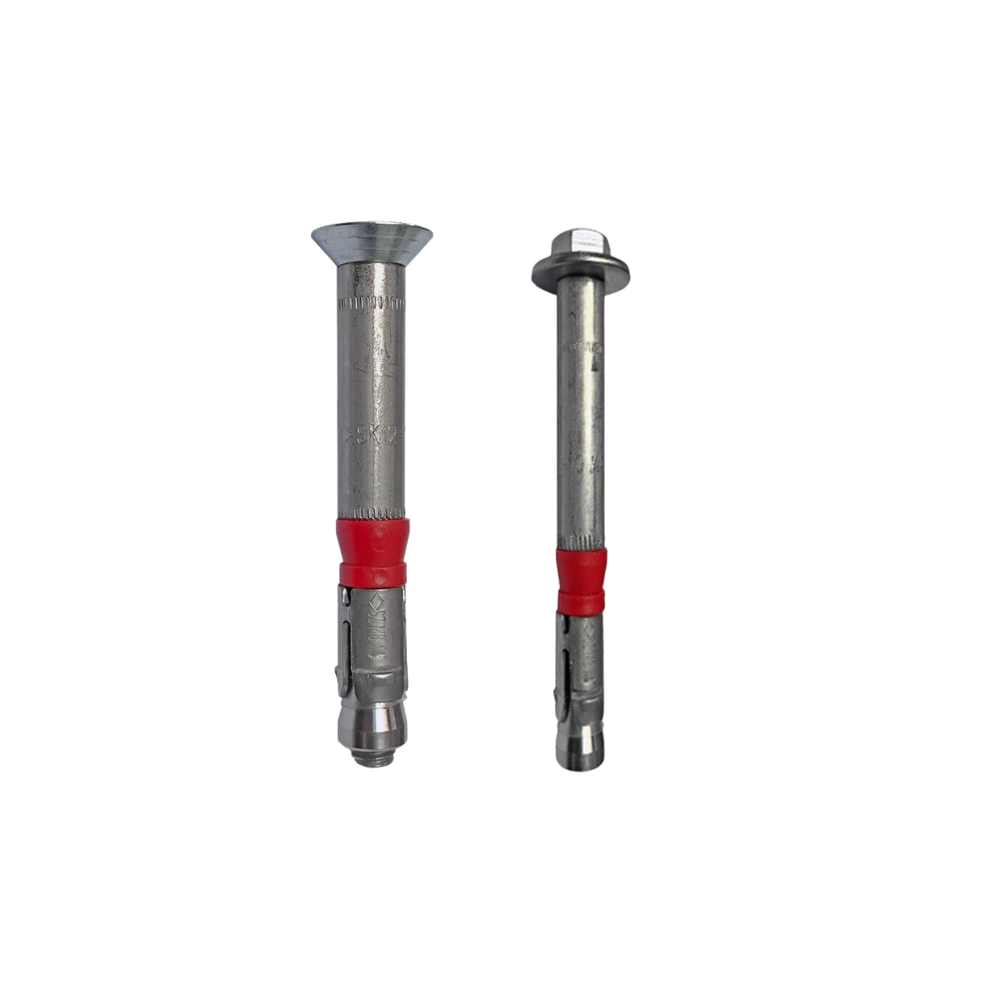
- ✓ Heavy duty anchors for high-load structural fixing into concrete and masonry
- ✓ Chemical anchors for structural post-installed applications in cracked and uncracked concrete
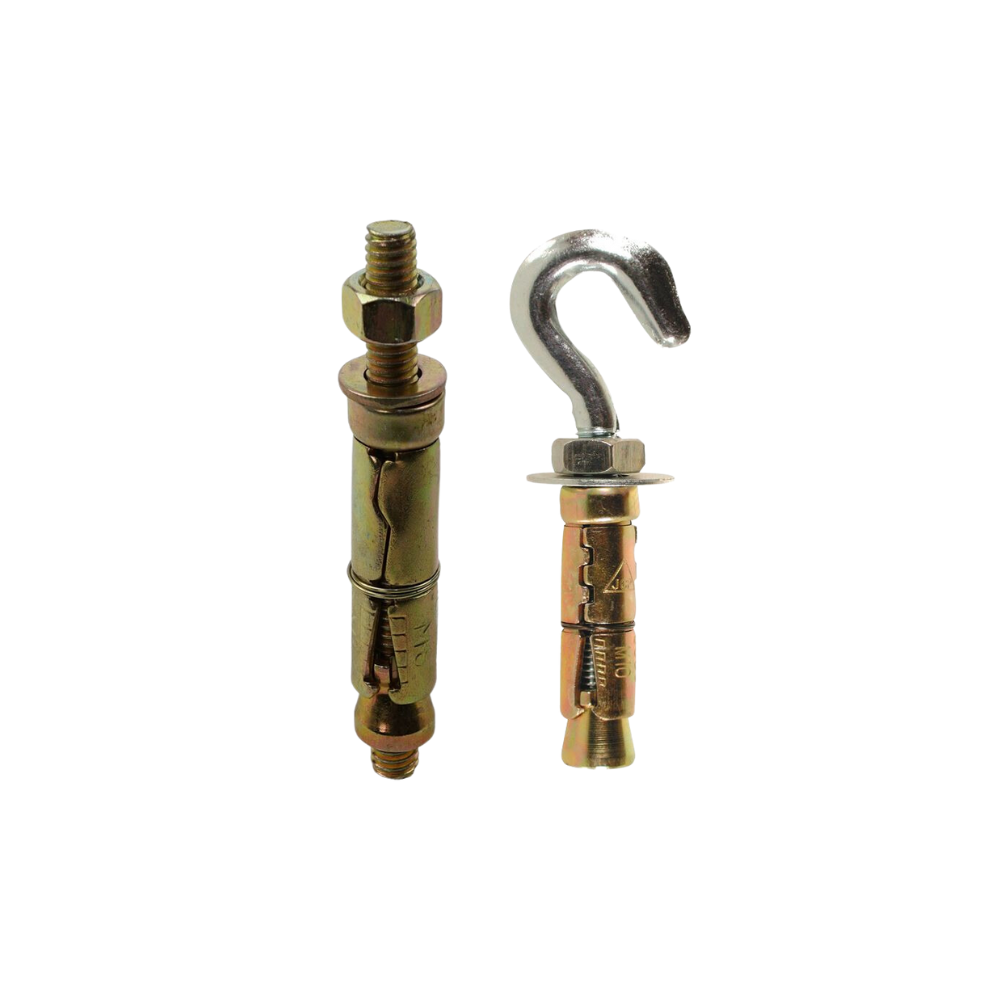
- ✓ Sleeve anchors for medium-duty fixing into concrete and masonry with hook and eye options
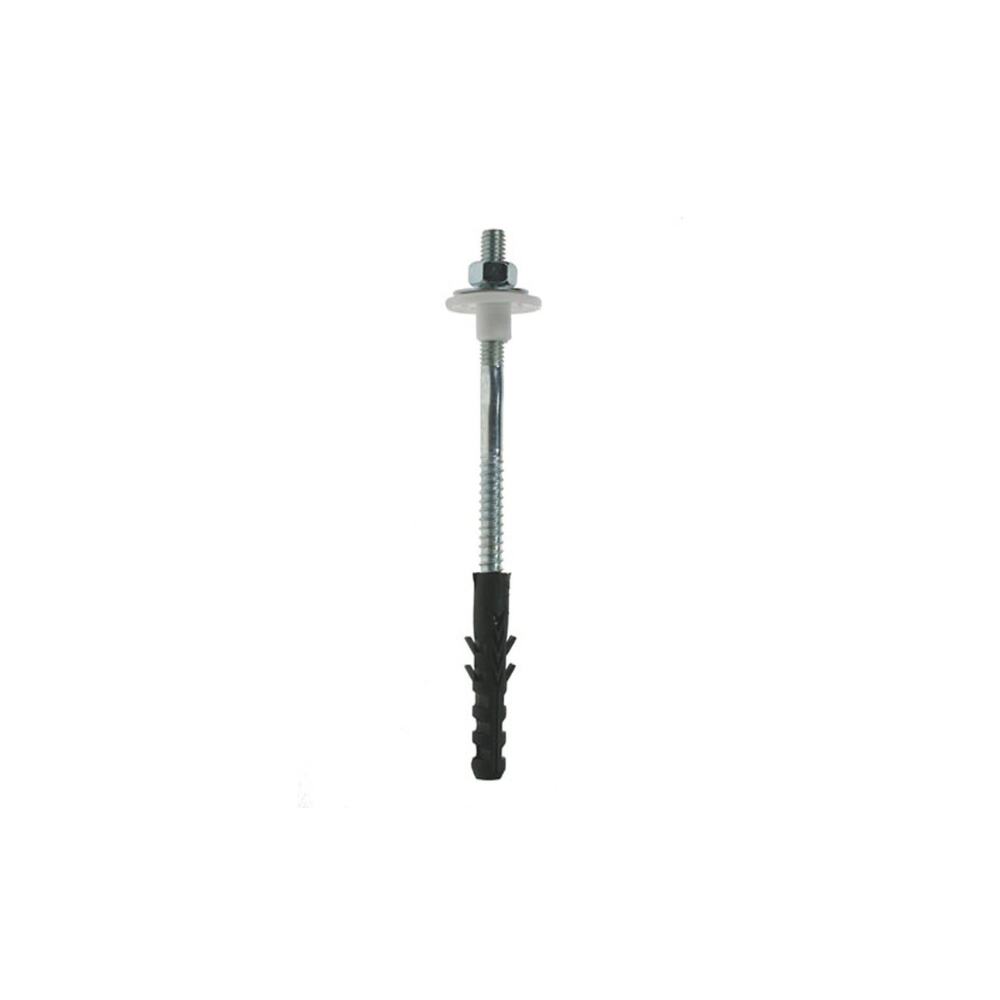
- ✓ Nail-in anchors for fast, light-duty fixing into concrete, brick, and block
- ✓ Zinc-plated and stainless steel options for internal and external environments
- ✓ Bulk supply available for site procurement and trade accounts
- ✓ Next day delivery standard. VIP 2-3 hour delivery on a dedicated vehicle also available
What Are Construction Anchors?
Construction anchors are specialist fasteners designed to create a secure, load-bearing fixing into solid base materials such as concrete, brick, block, and stone. Unlike screws and bolts used in timber and steel connections, anchors work by expanding mechanically within a drilled hole or by bonding chemically to the base material, transferring the applied load into the concrete or masonry substrate.
Anchors must resist both tensile loads, which pull the anchor away from the base material, and shear loads, which act across the face of the material. The design of the anchor and its embedment depth determine how effectively it can resist these loads. Mechanical anchors such as drop-in, sleeve, and heavy duty anchors transfer load through expansion pressure against the walls of the drilled hole. Chemical anchors bond the threaded bar or bolt rod to the concrete using a two-component resin, distributing the load over a larger surface area and achieving higher capacities in cracked concrete and close to edges where mechanical anchors would be limited.
Anchors by Type
Our range covers the anchor types required across light-duty site fixing through to structural post-installed anchor applications.
Choosing the Right Anchor
Anchor selection depends on four factors: the base material and its condition, the magnitude and direction of the design load, the edge distance and spacing available, and the exposure environment. For light-duty fixing of cable management and conduit clips, nail-in anchors and sleeve anchors provide fast, cost-effective solutions. For medium-duty bracket and equipment fixing, sleeve anchors and heavy duty anchors are appropriate. For structural post-installed anchors where the engineer has specified a load-rated system, heavy duty mechanical anchors or chemical anchors are required.
Base material condition is particularly important for anchor selection. Mechanical expansion anchors rely on the concrete or masonry being sound and uncracked to achieve their rated pull-out resistance. In cracked concrete or at reduced edge distances and spacings, mechanical anchors perform below their catalogue values and a chemical anchor system should be used instead. Always refer to the anchor manufacturer's load tables and, for structural applications, ensure the anchor is specified by a structural engineer against the design loads.
| Application | Anchor type | Key consideration |
|---|---|---|
| Cable clips, conduit saddles, light brackets | Nail-in anchor | Fastest installation; light-duty loads only |
| Conduit, cable tray, handrails, shelving | Sleeve anchor | Head type to suit: hex, hook, or eye |
| Suspended services and overhead equipment to soffit | Drop-in anchor | Flush setting; requires setting tool for installation |
| Structural steel base plates, heavy machinery | Heavy duty anchor | Diameter and embedment to match design load |
| Structural fixing in cracked concrete or close to edges | Chemical anchor with ETA-approved resin | Engineer specification required; observe cure time |
Construction Anchors Supplied Across the UK
Anchors are a critical component in construction, civil engineering, and infrastructure projects where connections must be made into existing concrete and masonry. From the installation of suspended ceiling systems and MEP services to the anchoring of structural steelwork and heavy plant, the correct anchor specification is essential for the safety and long-term performance of the connection.
CMT Group has been supplying anchors and fixing systems to UK construction sites for over 20 years. Our range covers the full scope of anchor requirements from light-duty nail-in anchors for cable management through to heavy duty mechanical anchors and chemical anchor systems for structural post-installed applications. We operate our own fleet of 100+ FORS Gold accredited vehicles covering 90% of the UK, with next day delivery standard on orders placed by 5pm by phone or 7pm online, and VIP 2-3 hour delivery on a dedicated vehicle dispatched within 30 minutes for urgent site requirements.
Frequently asked questions
What is the difference between a drop-in anchor and a sleeve anchor?
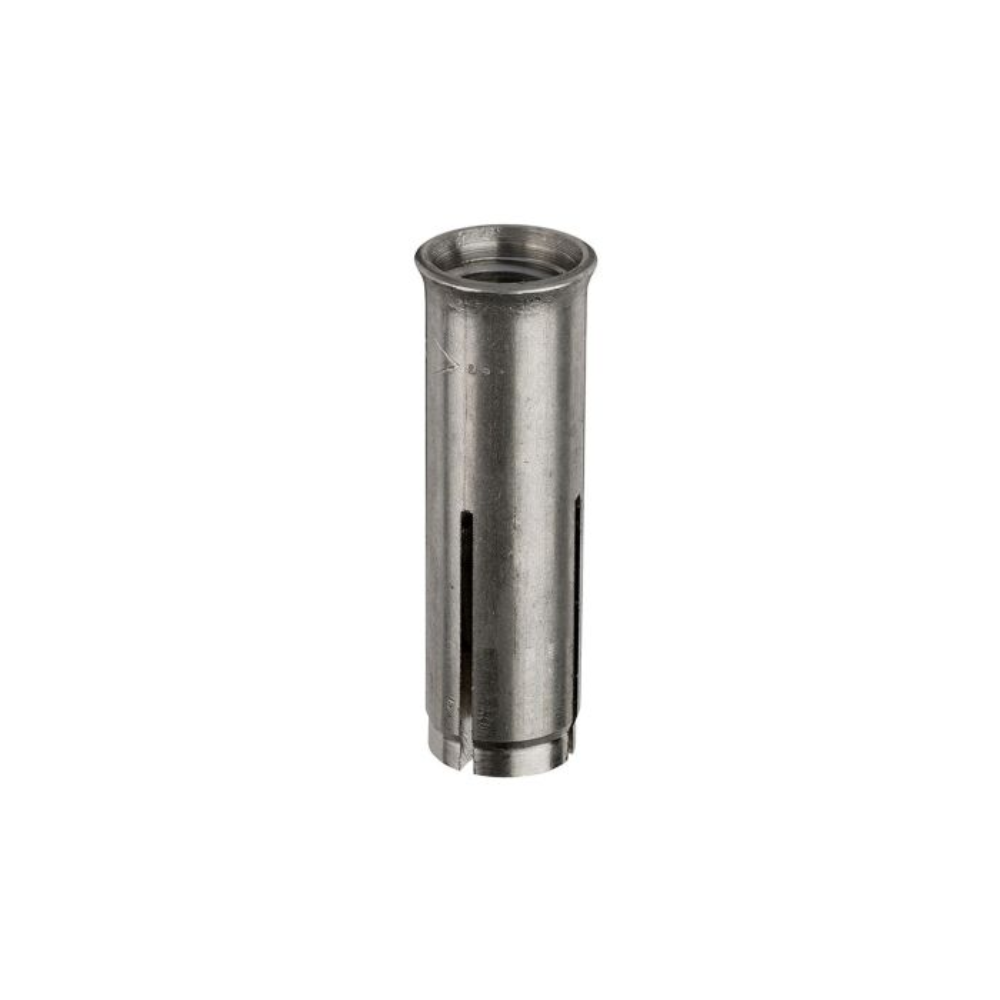
A drop-in anchor is an internally threaded sleeve anchor that is set flush with the surface of the concrete, after which a bolt or threaded stud is screwed into it. Drop-in anchors are used where a flush, permanent anchor point is required, typically in concrete soffits for suspended services or in floor slabs. A setting tool is required to expand the anchor before use. A sleeve anchor is an externally threaded bolt with an expanding sleeve that grips the concrete as the nut is tightened. Sleeve anchors project above the concrete surface and are used for fixing brackets, cable tray, handrails, and equipment to concrete walls, columns, and floors. The two types are not interchangeable: drop-in anchors are used where a flush internal thread is required; sleeve anchors are used where a projecting bolt fixing is acceptable and preferred.
Can anchors be used in hollow block or brick?
Mechanical expansion anchors are designed for use in solid concrete and solid masonry only. In hollow block, perforated brick, and cellular substrates, expansion anchors cannot develop their rated pull-out resistance because the expansion sleeve has no solid material to expand against. For fixing into hollow substrates, a chemical anchor system using an appropriate resin is the correct solution. The resin fills the void around the threaded bar and bonds to the inner surfaces of the hollow material, providing a reliable fixing even where mechanical anchors would fail. Always check the base material is solid before installing a mechanical expansion anchor.
What is the minimum edge distance for anchors in concrete?
Minimum edge distances vary by anchor type, diameter, and the design load being applied. As a general principle, mechanical expansion anchors require a minimum edge distance of at least five to ten times the anchor diameter from a free edge of the concrete to achieve their full rated load capacity, though the specific value depends on the anchor and load table. Placing a mechanical anchor closer to an edge than the minimum required distance will result in a reduced and unpredictable pull-out capacity. Where edge distances cannot meet the minimum required for a mechanical anchor, a chemical anchor system specified against the reduced edge distance load table values is the correct solution. For structural applications, the anchor placement should always be confirmed by the structural engineer.
How long do chemical anchors take to cure before loading?
The cure time for a chemical anchor resin depends on the resin type and the ambient temperature at the time of installation. As a general guide, polyester resins cure faster than epoxy resins at normal temperatures. At 20 degrees Celsius, a polyester resin may achieve full cure in as little as 30 to 60 minutes, while an epoxy resin may require 4 to 24 hours. In cold conditions below 5 degrees Celsius, cure times are significantly extended and some resins cannot be used below their minimum working temperature. Always refer to the cure time table on the specific resin cartridge for the ambient temperature at the time of installation, and do not load the anchor until the full cure time has elapsed.
Why buy anchors from CMT Group?
CMT Group has been supplying anchors and fixing systems to UK construction sites for over 20 years. Our range covers the full scope of anchor requirements from light-duty nail-in anchors to structural heavy duty and chemical anchor systems. We hold CHAS Elite accreditation, ConstructionOnline Gold membership, and BSI ISO 9001:2015 certification. We operate our own fleet of 100+ FORS Gold accredited vehicles covering 90% of the UK, with next day delivery standard on orders placed by 5pm by phone or 7pm online, and VIP 2-3 hour delivery on a dedicated vehicle dispatched within 30 minutes for urgent site requirements.
Drop-in Anchors vs Nail-in Anchors: Which Do You Need?
Drop-in anchors and nail-in anchors are both quick-install concrete fixing options, but they are designed for entirely different applications and load levels. A drop-in anchor is a precision internally threaded sleeve set flush into a concrete soffit or slab using a setting tool. Once set, a bolt or threaded rod is screwed into the internal thread to make the connection. Drop-in anchors are used for permanent, flush anchor points in concrete ceilings and floors, typically for hanging services, installing suspended ceiling systems, and fixing equipment overhead. They require a setting tool, careful hole preparation, and the correct depth of drilling.
A nail-in anchor is a simple plug and nail assembly that is inserted into a pre-drilled hole and set by hammering the nail through the centre of the plug, expanding it against the walls of the hole. Nail-in anchors require no setting tool and are the fastest concrete anchor to install on site. They are suited to light-duty applications only, such as fixing cable clips, conduit saddles, and lightweight brackets to concrete, brick, and block walls. They are not appropriate for overhead, structural, or high-load applications. If in any doubt about the load the anchor will be subject to, use a heavier-rated fixing such as a sleeve anchor or heavy duty anchor.