Not sure whether your workplace needs a defibrillator? This guide explains what an AED does, compares fully and semi-automatic models, and covers placement, maintenance and The Circuit.
Loading...
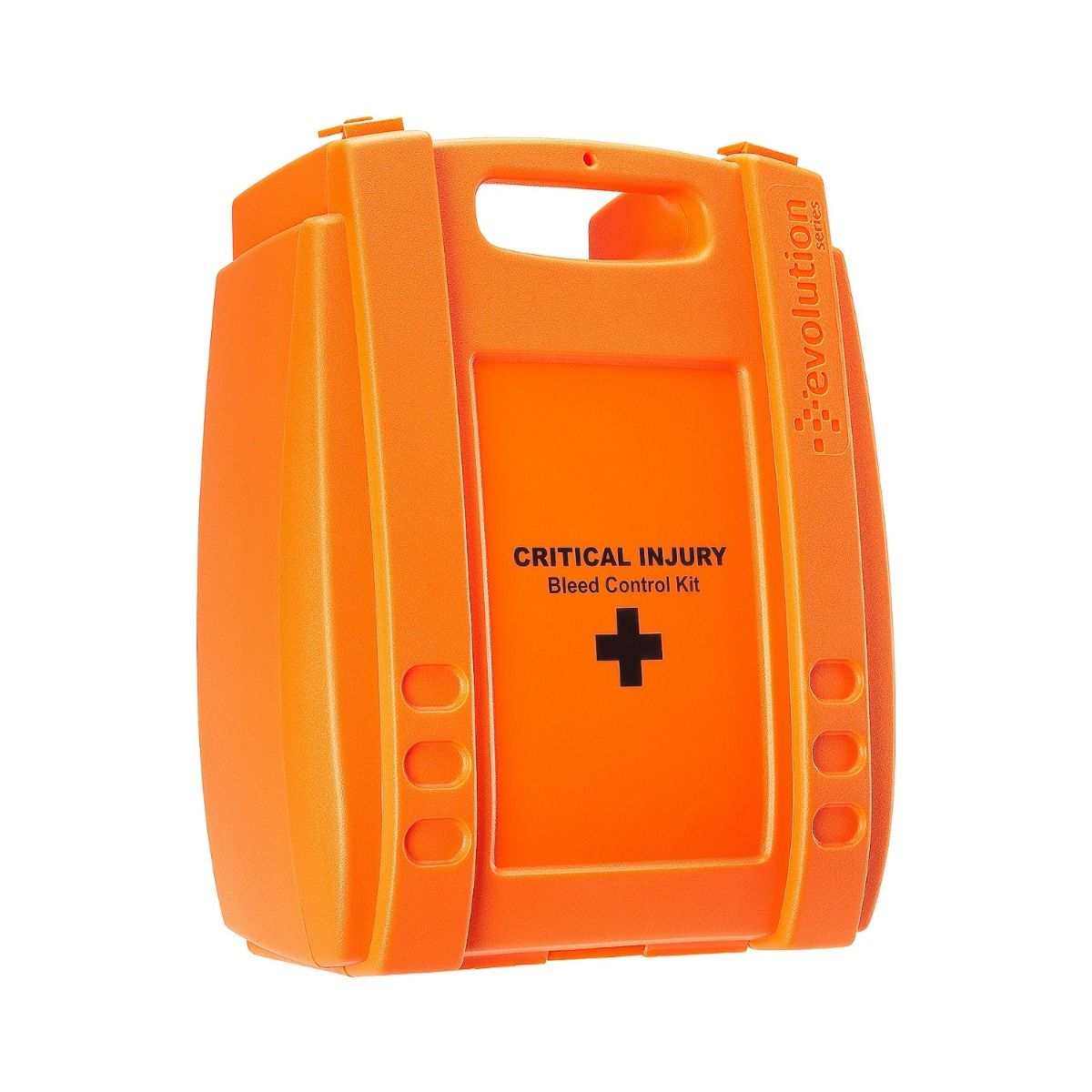
Critical injury bleed control kit to BS 8599-1 for treating life-threatening bleeding on construction sites, industrial workplaces and public venues.
Critical injury bleed control kit to BS 8599-1 for treating life-threatening bleeding on construction sites, industrial workplaces and public venues.
| BULK DISCOUNT | 5 | 10 |
|---|---|---|
| Price | £80.78 £96.94 | £75.11 £90.13 |
Order 1x to earn 85 FASTPoints
Order to earn 85 FASTPoints
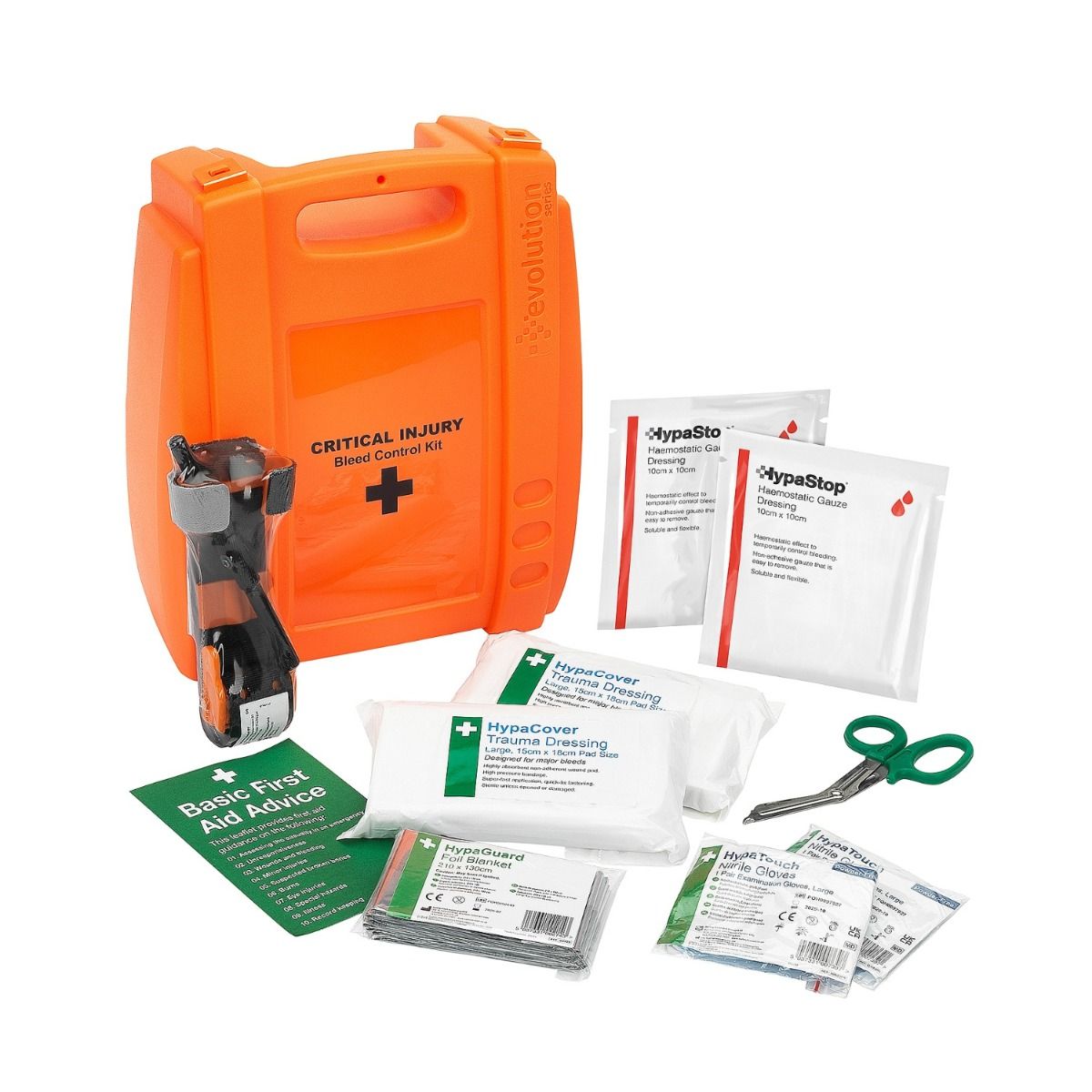
Log in to access trade discountsA critical injury bleed control kit for treating life-threatening bleeding until the emergency services arrive. It holds an emergency tourniquet, haemostatic gauze dressings, large trauma dressings, a foil blanket and clothing cutters in a bright orange hinged case. The supplier states it complies with BS 8599-1:2019+A1:2026 as a critical injury pack.
Standard workplace kits are built for cuts, burns and everyday injuries. A crush, amputation or deep wound from machinery can cause bleeding that ordinary dressings cannot stop. This kit adds a tourniquet for limb bleeds and haemostatic gauze that helps blood clot, so a trained first aider can control the bleeding while help is on the way.
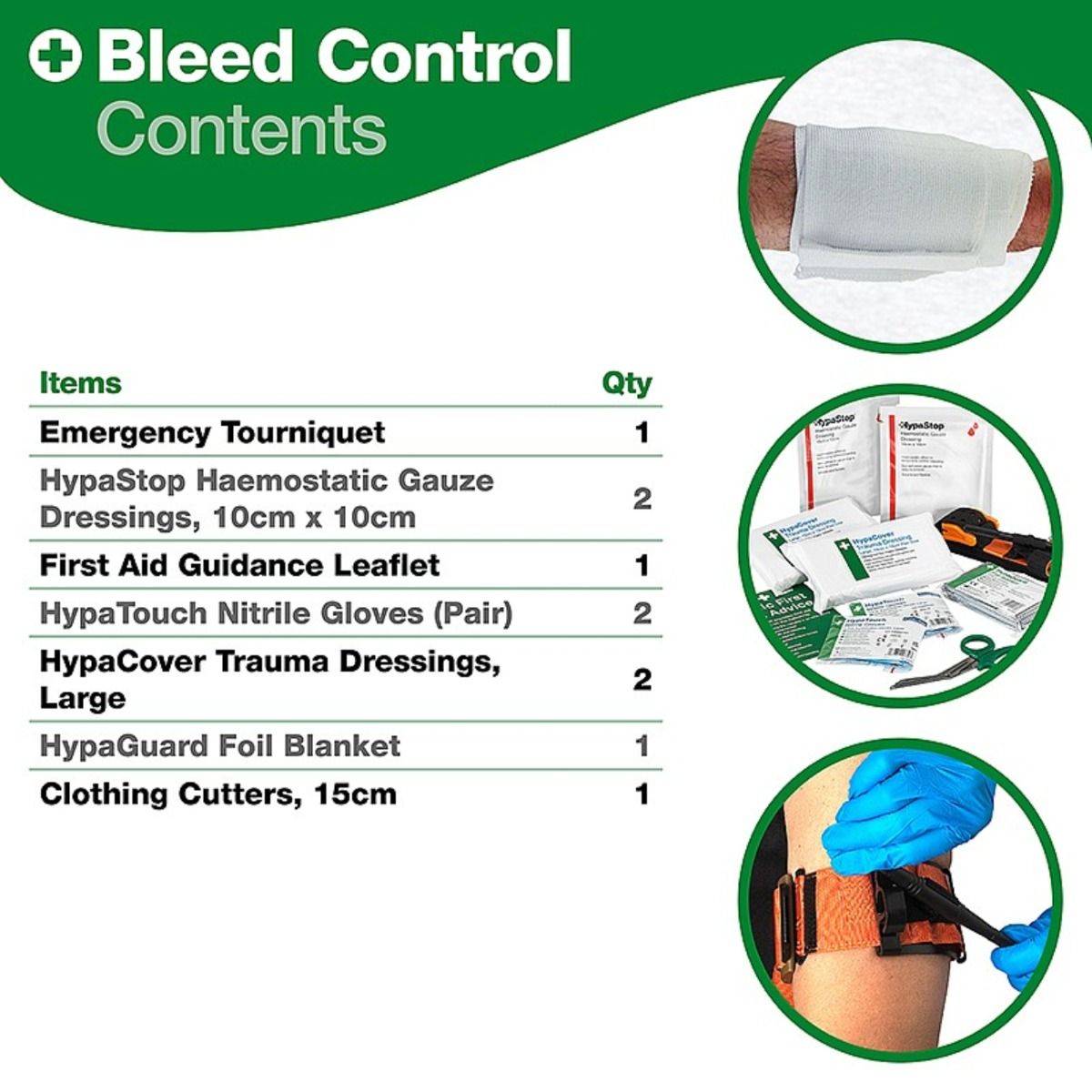
Emergency tourniquet: stops life-threatening bleeding from an arm or leg when pressure alone is not enough.
Two haemostatic gauze dressings, 10cm x 10cm: treated to speed up clotting when packed into or pressed onto a wound.
Two large trauma dressings: hold firm pressure on heavy bleeding and absorb more than a standard dressing.
Foil blanket: helps keep a casualty warm while they wait for an ambulance.
15cm clothing cutters: cut through workwear to reach the wound quickly.
Bright orange hinged case: stands out from green first aid kits, so people can find it fast in an emergency.
Trades and roles
First aiders
Site managers
Health and safety managers
Plant and machinery supervisors
Venue and security managers
Facilities managers
Industries
Construction and civil engineering
Manufacturing and engineering
Agriculture and forestry
Utilities and rail
Venues, events and public buildings
| Specification | Detail |
|---|---|
| Product name | Critical Injury Bleed Control Kit - BS 8599-1 Compliant |
| Product code | HSCIJKIT |
| Product type | Critical injury bleed control kit |
| Standard | BS 8599-1:2019+A1:2026 Workplace first aid kits - Specification for the contents of workplace first aid kits |
| Kit type | Critical injury pack |
| Item types | 7 |
| Bleed control items | Emergency tourniquet, haemostatic gauze dressings, large trauma dressings |
| Case | Orange hinged hard case, marked Critical Injury Bleed Control Kit |
| Mounting | Wall-mountable |
| Colour | Orange |
| Item | Quantity |
|---|---|
| Emergency Tourniquet | 1 |
| HypaStop Haemostatic Gauze Dressings, 10cm x 10cm | 2 |
| First Aid Guidance Leaflet | 1 |
| HypaTouch Nitrile Gloves (Pair) | 2 |
| HypaCover Trauma Dressings, Large | 2 |
| HypaGuard Foil Blanket | 1 |
| Clothing Cutters, 15cm | 1 |
| Total | 10 pieces (If each glove counts separately, it’s 12.) |
| Workplace or condition | Suitability |
|---|---|
| Construction sites, plant and heavy machinery | Suitable, beside the main first aid kit |
| Industrial, manufacturing and agricultural work | Suitable |
| Remote sites far from emergency services | Suitable |
| Public venues planning for serious incidents | Suitable, as part of emergency preparedness |
| Everyday cuts, burns and minor injuries | Not recommended, use a workplace first aid kit |
| Use by staff with no bleed control training | Not recommended, train first aiders in tourniquet and haemostatic dressing use |
| Replacing a workplace first aid kit | Not recommended, it adds to a workplace kit |
Employers add a critical injury kit where machinery, sharp materials or remote locations raise the risk of serious bleeding. It is common on construction sites, in factories, on farms and in venues planning for serious incidents. It is used by first aiders trained in catastrophic bleed control.
Keeping bleed control equipment beside the main first aid kit on a construction site.
Covering plant, saw and machinery areas where crush and cutting injuries can happen.
Providing bleed control on remote sites where an ambulance may take longer to arrive.
Equipping venues, stadiums and public buildings as part of their emergency planning.
Adding a critical injury pack to a BS 8599-1 first aid provision after a needs assessment.
Step 1: Call 999, make the area safe and put on the nitrile gloves.
Step 2: Cut away clothing with the clothing cutters to find the source of the bleeding.
Step 3: Press firmly on the wound, using a haemostatic gauze dressing packed into or pressed onto it, following the pack instructions.
Step 4: Cover with a large trauma dressing and keep firm pressure on it.
Step 5: If a limb bleed does not stop with pressure, apply the tourniquet above the wound and tighten it until the bleeding stops. Note the time it was applied.
Step 6: Keep the casualty warm with the foil blanket, stay with them and tell paramedics what was used.
Waiting too long to apply the tourniquet when bleeding from a limb will not stop.
Loosening or removing a tourniquet once applied, which should be left to paramedics.
Keeping the kit locked away or far from the high risk area.
Issuing the kit without training first aiders in bleed control.
Not replacing items after use, leaving the kit incomplete.
Call 999 at once for any life-threatening bleed. The kit should be used by first aiders trained in catastrophic bleed control, including tourniquet use. Wear gloves and dispose of used items as clinical waste. Employers should decide where critical injury kits are needed through their first aid needs assessment under the Health and Safety (First Aid) Regulations 1981.
Check the kit monthly and after any use. Replace used items and anything past its expiry date or with damaged packaging. Keep the case mounted where it can be reached quickly.
Q: What is a critical injury bleed control kit for?
A: It is for life-threatening bleeding, such as injuries from machinery, glass or sharp tools. The tourniquet, haemostatic gauze and trauma dressings help a trained first aider control the bleeding until paramedics arrive. It adds to a standard workplace first aid kit.
Q: What is a critical injury pack under BS 8599-1?
A: BS 8599-1 sets out supplementary kits for specific risks, alongside small, medium and large workplace kits. The critical injury pack covers catastrophic bleeding, with items such as a tourniquet and haemostatic dressings. Your first aid needs assessment decides whether you need one.
Q: What does BS 8599-1:2019+A1:2026 mean?
A: BS 8599-1 is the British Standard for workplace first aid kit contents. 2019 is the year of the current edition. A1:2026 is the first amendment to it, published by BSI in April 2026.
Q: What is this kit not suitable for?
A: It is not for everyday cuts, burns or minor injuries, which a workplace first aid kit covers. It does not replace a workplace kit. It should not be used by staff with no bleed control training.
Q: How is this different from a trauma kit?
A: This kit focuses on catastrophic bleeding. A larger trauma kit may also cover airway, chest and other injuries for trained responders. Choose by your risks and the training your first aiders hold.
Q: Does Martyn’s Law require a bleed control kit?
A: The Terrorism (Protection of Premises) Act 2025, known as Martyn’s Law, focuses on procedures such as evacuation, invacuation and lockdown. It does not list first aid equipment. Many venues still add bleed control kits as part of their wider emergency preparedness.
Q: Do staff need training to use it?
A: First aiders should be trained in catastrophic bleed control, including tourniquet use, before the kit is issued. The guidance leaflet supports trained users in an emergency. Check that your first aid training covers bleed control.