In this article
Your holesaw spins loose mid-cut. The pilot drill squeals and wanders across the plasterboard. Or the 68 mm downlight saw you just bought will not thread onto the arbor already in your kit bag. These are not random failures. They are the predictable result of ordering the wrong arbor, ignoring the thread specification, or running a blunt pilot drill until it causes a problem that costs real time and money to fix.
The holesaw arbor is the most overlooked component in a holesaw setup. Tradespeople spend time selecting the right holesaw diameter and material specification, then grab the first arbor they find without checking whether the thread size, shank type, or pilot drill diameter actually matches their equipment. The result is a holesaw that will not fit, a cut that will not centre, or an arbor that fails under torque because the locking collar was never engaged.
This guide covers everything a UK trade professional needs to specify holesaw arbors correctly first time: what each component does, which thread and shank to match to your drill and holesaw combination, how to select by trade application, and the maintenance habits that extend the service life of both the arbor and every holesaw fitted to it.
What Is a Holesaw Arbor?
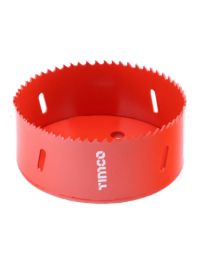
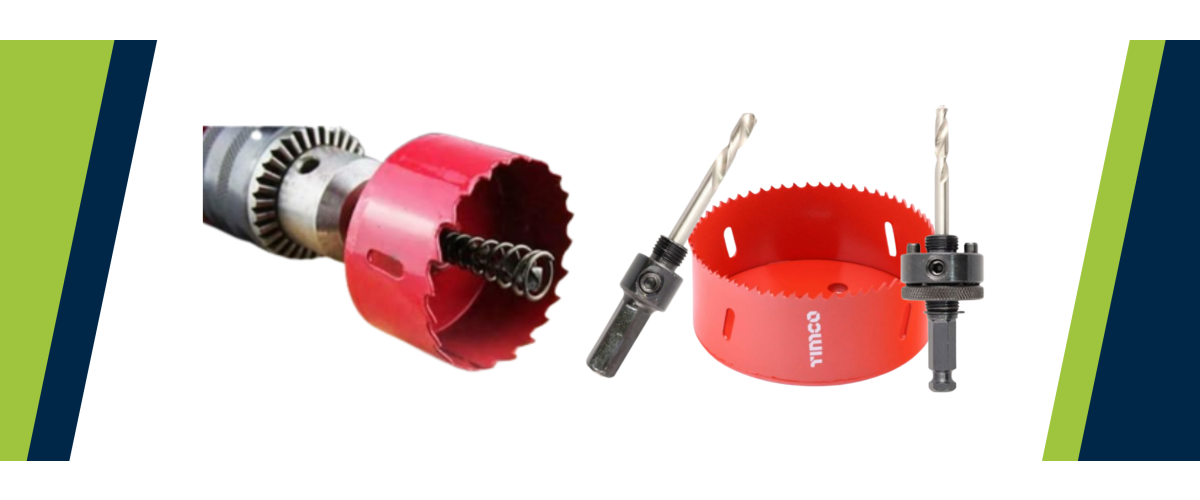
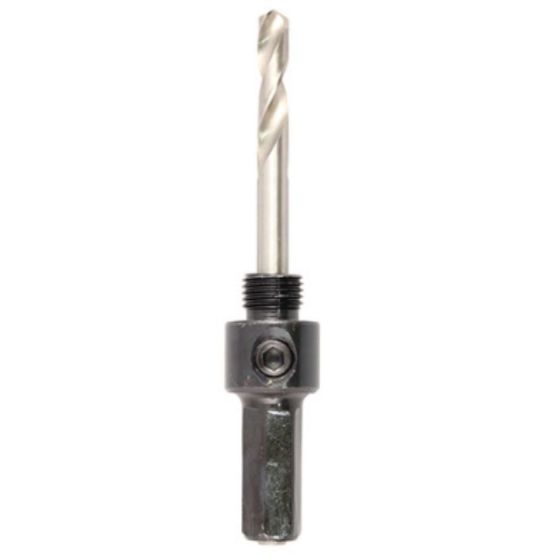
A holesaw arbor (sometimes called a holesaw mandrel) is the connecting component between your drill and your holesaw. It performs three functions simultaneously: it transfers rotational drive from the drill to the holesaw, it provides the threaded mount onto which the holesaw body screws, and it holds the pilot drill that centres the cut before the holesaw teeth contact the workpiece surface.
Without a correctly specified arbor, none of these three functions work reliably. An arbor with the wrong thread size will not accept the holesaw. An arbor with the wrong shank type will not fit the drill. An arbor with a worn or missing pilot drill will produce off-centre holes and accelerate holesaw tooth wear across every cut.
Understanding arbor specification is not complicated, but it requires knowing three things before you buy: your drill's chuck or shank type, your holesaw's thread size, and the diameter range of the holesaws you intend to fit.
A holesaw without the correct arbor is useless. Yet the arbor is consistently the most overlooked component in the setup: ordered as an afterthought, specified incorrectly, and replaced far less often than it should be.
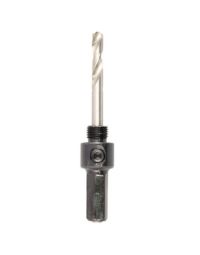
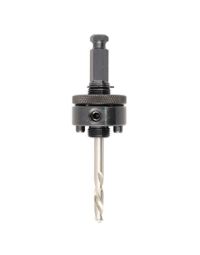
Anatomy of a Hex Shank Holesaw Arbor
Understanding each component helps with both correct selection and effective maintenance. Here is what you are actually buying:
The Hex Shank
The drill end of the arbor. The standard 11 mm hexagonal profile fits keyless chucks, dedicated hex chuck systems, and cordless impact drivers. The hex profile provides a positive, non-slip connection that round shank arbors cannot match at the torque levels generated by larger diameter holesaws, especially on breakthrough, where torque spikes are highest.
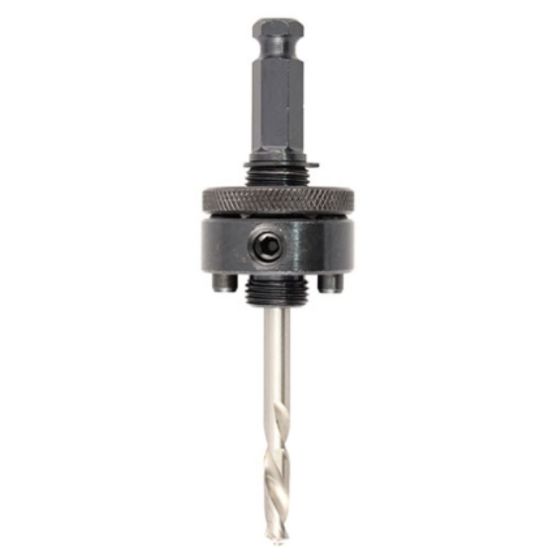
The Thread
The holesaw end of the arbor. This is where the holesaw body screws on, and it is the specification that causes the most purchasing errors in practice. Two thread sizes cover the full UK trade market: ½″ x 20 TPI for 14–30 mm holesaws and ⅝″ x 18 TPI for 32–210 mm holesaws. They are not interchangeable.
The Locking Collar
Secures the holesaw onto the arbor thread once fitted. On larger arbors (32–210 mm), a knurled locking collar provides additional mechanical retention under the higher torque loads of large diameter cutting. On smaller arbors (14–30 mm), thread engagement alone is generally sufficient. Always confirm the collar is fully engaged before starting a cut.
The Pilot Drill
The HSS twist drill that protrudes through the centre of the holesaw body. It penetrates the workpiece first, centres the cut, and guides the holesaw teeth into accurate position. The pilot drill is a consumable. It wears independently of the arbor body and should be replaced when blunt, not ignored until it causes off-centre holes.
Thread Sizes: The Number One Purchasing Error
Thread size is the specification that causes the most purchasing errors on holesaw arbors. The two standard thread sizes in the UK trade market are clearly differentiated by holesaw diameter range, but the distinction is not always obvious on product listings or packaging. Getting this wrong means the holesaw physically will not fit, or worse, attempting to force the connection damages both components.
½ inch x 20 TPI
The correct thread for holesaws in the 14 mm to 30 mm diameter range. The finer 20 TPI thread suits the lower torque loads of small diameter cutting. This is the thread used for cable entry holes, small pipe penetrations, conduit knockouts, and similar small diameter applications. Electricians cutting back box and conduit apertures work predominantly in this range.
⅝ inch x 18 TPI
The correct thread for holesaws from 32 mm diameter upwards, covering the full large diameter range to 210 mm and beyond. The coarser 18 TPI thread provides greater engagement under the higher torque loads of large diameter cutting. This is the thread used for downlight apertures, extract fan cutouts, consumer unit penetrations, large pipe penetrations, and all mechanical and HVAC duct work.
Critical rule: Always check the thread specification stamped on the holesaw body before purchasing an arbor. Do not assume thread size from diameter alone. Whilst the ½″ and ⅝″ thread ranges broadly correspond to the small and large diameter categories, there are exceptions in some manufacturer ranges. A ⅝″ holesaw will not thread onto a ½″ arbor, and attempting to force the connection will damage the threads on both components.
Shank Types: Matching the Arbor to Your Drill
The shank type determines which drill the arbor fits. Three shank types cover the full range of drills used in UK trade and construction work:
Do not cross-fit: Never fit a hex shank arbor into an SDS chuck without a dedicated adaptor. The connection will not be secure under holesaw torque loads. If you use both a standard drill and an SDS drill on site, specify a hex shank arbor for the standard drill and a separate SDS arbor for the rotary hammer. Arbors are not transferable between chuck types without adaptors.
The Right Arbor by Trade Application
Different trades work across different holesaw diameter ranges. Here is what to specify for each:
Full Diameter Range: 16 mm to 68 mm+
Electricians work across the widest holesaw diameter range of any trade, from 16 mm cable entry points to 68 mm consumer unit knockouts and larger back box apertures. A two-arbor setup is the standard professional specification: a 14–30 mm arbor for small cable penetrations and a 32–210 mm arbor for back boxes, consumer units, and larger installations. Both run on a standard 18V cordless drill with hex chuck.
Wide Range: 15 mm to 160 mm
Pipe penetrations span from 15 mm and 22 mm copper pipe holes through joists to 35 mm, 42 mm, and larger penetrations for soil pipes, boiler flues and MVHR duct apertures at 125–160 mm diameter. Both arbor sizes are working tools for a heating engineer, not alternatives. Carry both on every job.
Mid Range: 25 mm to 68 mm
Joiners primarily work in the 25–68 mm range for door furniture, lock cylinders, cable grommets and service penetrations through timber. A single 32–210 mm hex shank arbor covers the majority of joinery holesaw work, with the small diameter arbor needed only for the smallest cable entry holes.
Mid-High Range: 68 mm to 100 mm
Downlight apertures, extract fan openings, access panel cutouts and service penetrations through plasterboard and MDF. The 68–100 mm range covers the majority of these applications, all served by a 32–210 mm arbor on a standard cordless drill.
Large Range: 100 mm to 210 mm
Large duct and pipe penetrations through timber, plasterboard and composite panels. The 32–210 mm hex shank arbor is the primary tool, fitted to a high-torque cordless drill with speed reduced significantly for larger diameter saws. SDS arbors may be required for dense substrates.
A two-arbor hex shank kit (one for 14–30 mm and one for 32–210 mm) covers every diameter an electrician, plumber, heating engineer or joiner will encounter on site. It is the practical minimum specification for any tradesperson who uses holesaws regularly.
The CMT Holesaw & Arbor Range
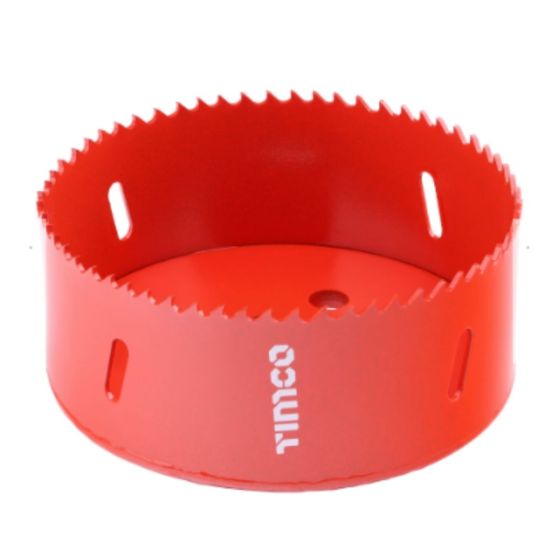
The right holesaw setup starts with the right components specified together. The CMT range covers both arbor sizes and the bi-metal holesaws they fit: one supplier, correct specification, no compatibility guesswork.
Browse all holesaws, arbors and drilling accessories: View Full Range →
Pilot Drill Maintenance: The Most Overlooked Aspect of Arbor Care
The pilot drill is the component that degrades first in any holesaw setup, and it is the component most frequently ignored until failure causes a visible problem. A blunt pilot drill has three direct consequences: it produces off-centre holes, it increases the force required to start each cut, and it accelerates wear on the holesaw teeth because the saw is not properly guided into the workpiece.
Replacing the pilot drill when worn is a low-cost maintenance action that has a disproportionately positive effect on holesaw performance, hole accuracy, and overall setup life. Most professional arbors accept standard pilot drill diameters that are widely available as individual replacements.
Signs It Needs Replacing
How to Replace Correctly
Six Common Arbor Mistakes (and How to Avoid Them)
Every one of these mistakes is seen regularly on UK construction sites. Every one is avoidable with correct specification and basic maintenance.
Quick Selection Reference
Match your application to the correct arbor specification at a glance:
| Application | Holesaw Diameter | Correct Thread | Recommended Shank | Typical Trades |
|---|---|---|---|---|
| Cable entry, conduit, small pipe penetrations | 14–30 mm | ½″ x 20 TPI | Hex shank | Electricians, plumbers |
| Back boxes, downlights, pipe penetrations | 32–68 mm | ⅝″ x 18 TPI | Hex shank | Electricians, plumbers, joiners |
| Extract fans, consumer units, duct penetrations | 68–125 mm | ⅝″ x 18 TPI | Hex shank | Electricians, HVAC, drylining |
| Large duct and mechanical penetrations | 125–210 mm | ⅝″ x 18 TPI | Hex or SDS | Mechanical, HVAC contractors |
Three Steps to Specify the Correct Arbor
Before purchasing, confirm these three things. Get any one wrong and the setup will not work.
Quick Match: Task to Product
Not sure which arbor and holesaw to order? Match your task:
Arbor Specification Checklist: Get It Right First Time
Run through these before placing an order. If any answer is unclear, check the specification on the holesaw body and drill before purchasing.
Frequently Asked Questions
What is a holesaw arbor and what does it do?
A holesaw arbor (also called a mandrel) is the connecting component between your drill and your holesaw. It transfers rotational drive from the drill, provides the threaded mount for the holesaw body, and holds the pilot drill that centres the cut. Without a correctly specified arbor, the holesaw either will not fit, will not cut accurately, or will spin loose mid-job.
What is the difference between ½ inch and ⅝ inch holesaw arbor threads?
The ½″ x 20 TPI thread is for holesaws in the 14–30 mm diameter range, covering cable entry, small pipe penetrations, conduit knockouts. The ⅝″ x 18 TPI thread is for holesaws from 32 mm upwards, covering downlights, extract fans, consumer units, large pipe and duct work to 210 mm. These threads are not interchangeable. Always check the specification stamped on the holesaw body before purchasing an arbor.
Which holesaw arbor shank type do I need?
For standard cordless drills with keyless or hex chucks, use a hex shank arbor with an 11 mm hex profile. This is the most versatile option and also works with cordless impact drivers. For SDS Plus rotary hammer drills, use an SDS Plus arbor. For SDS Max rotary hammers, use an SDS Max arbor. Do not fit a hex shank arbor into an SDS chuck without a dedicated adaptor.
How many arbors does a tradesperson actually need?
For most UK trade professionals, a two-arbor kit is the practical minimum: one hex shank arbor covering 14–30 mm with a ½″ x 20 TPI thread, and one covering 32–210 mm with a ⅝″ x 18 TPI thread. This combination covers every holesaw diameter encountered across electrical, plumbing, heating, joinery, and general construction work from a single 18V cordless drill.
When should I replace the pilot drill?
Replace the pilot drill at the first sign of blunting. Warning signs: the drill squeals or burns on contact, the entry hole is ragged or oversized, the holesaw wanders on initial contact, or the pilot tip shows visible rounding or heat bluing. A blunt pilot drill causes off-centre holes and accelerates holesaw tooth wear. Replacement drills are low-cost and widely available in standard diameters.
Can I use an impact driver with a holesaw arbor?
Impact drivers suit occasional small diameter holesaw use on plasterboard and softwood. However, the impact mechanism is not designed for sustained large diameter cutting. For holesaws above 32 mm on timber, board or composite materials, use a standard cordless drill with torque control to manage breakthrough torque safely and protect both the arbor and the holesaw.
Why does my holesaw keep coming loose on the arbor?
The most common causes are: wrong thread size (½″ and ⅝″ are not interchangeable), a locking collar that is not fully engaged, or thread damage from over-tightening. On arbors with a knurled locking collar, always confirm the collar is fully engaged before starting. Hand-tight plus a quarter turn is sufficient. Over-tightening damages threads and makes the holesaw difficult to remove after cutting.