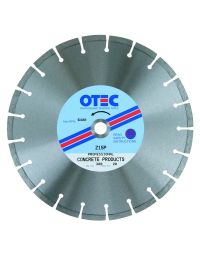

How to Choose the Right Diamond Blade for Concrete Cutting (UK Guide)
Cutting concrete efficiently depends far more on blade selection than most buyers realise. Using the wrong diamond blade leads to slow cuts, excessive wear, overheating, and unnecessary downtime.
This practical UK-focused guide helps construction professionals, site managers, and bulk buyers choose the right diamond blade for concrete cutting—quickly, correctly, and cost-effectively.
If you remember nothing else, remember this:
- Identify the type of concrete (cured, reinforced, green)
- Match the blade bond to concrete hardness
- Choose wet cutting for heavy or continuous work
- Select blade quality tier based on workload, not price
- Always check machine type and safe speed rating
Step 1: Identify the type of concrete you are cutting
Concrete is not a single material. Blade performance changes dramatically depending on concrete type.
Concrete type → blade requirement
| Concrete Type | Typical Characteristics | Blade Requirement |
|---|---|---|
| Green concrete | Newly poured, abrasive | Harder bond |
| Cured concrete | Fully set, harder | Softer bond |
| Reinforced concrete | Contains steel rebar | Steel-capable segments |
| Precast concrete | Dense aggregates | High-stability blade |
Step 2: Match the blade to your cutting setup
Before buying, confirm these six non-negotiables:
- Concrete hardness and abrasiveness
- Presence of reinforcement (rebar or mesh)
- Wet or dry cutting method
- Machine type (cut-off saw, floor saw, bench saw)
- Required cutting depth and blade diameter
- Expected daily or weekly usage
This checklist alone prevents most wrong purchases.
Step 3: Choose the correct blade quality tier
Blade quality tiers exist for a reason. Over-specifying wastes money; under-specifying costs time.
Blade quality tiers explained
| Tier | Best For | Typical Use |
|---|---|---|
| Standard | Occasional use | Light workloads |
| Premium | Regular site work | Balanced value |
| Super Premium | Frequent cutting | Faster cutting, longer life |
| Professional | Continuous heavy-duty | Maximum performance |
Step 4: Wet cutting vs dry cutting
Choosing the correct cutting method improves both performance and blade life.
Wet cutting
Use when:
- Cutting reinforced or very hard concrete
- Running long, continuous cuts
- Using floor saws or bench saws
Benefits:
- Reduced heat build-up
- Longer blade life
- Cleaner, more stable cuts
Dry cutting
Use when:
- Making short, intermittent cuts
- Water access is limited
- Using handheld cut-off saws
Step 5: Blade cutting vs diamond core drilling
Not every concrete job should be done with a blade.
Use a diamond blade if:
- You need straight or linear cuts
- You are cutting slabs, walls, or expansion joints
Use a diamond core drill if:
- You need circular openings
- You want minimal breakout and clean finishes
- You are installing pipes, cables, or ventilation
Choosing correctly reduces finishing time and material damage.
Common buyer mistakes to avoid
- Using general-purpose blades on reinforced concrete
- Choosing based on unit price only
- Ignoring safe operating speed ratings
- Using light-duty blades for continuous cutting
- Mixing blade types across machines without checking compatibility
Avoiding these mistakes saves both time and budget.
What professional-grade blade solutions usually offer (example)
Professional blade ranges typically share these characteristics:
- Designed for modern high-speed saws
- Separate blades for different materials
- Multiple quality tiers for different workloads
- Clear safety and compliance references (e.g. EN 13236)
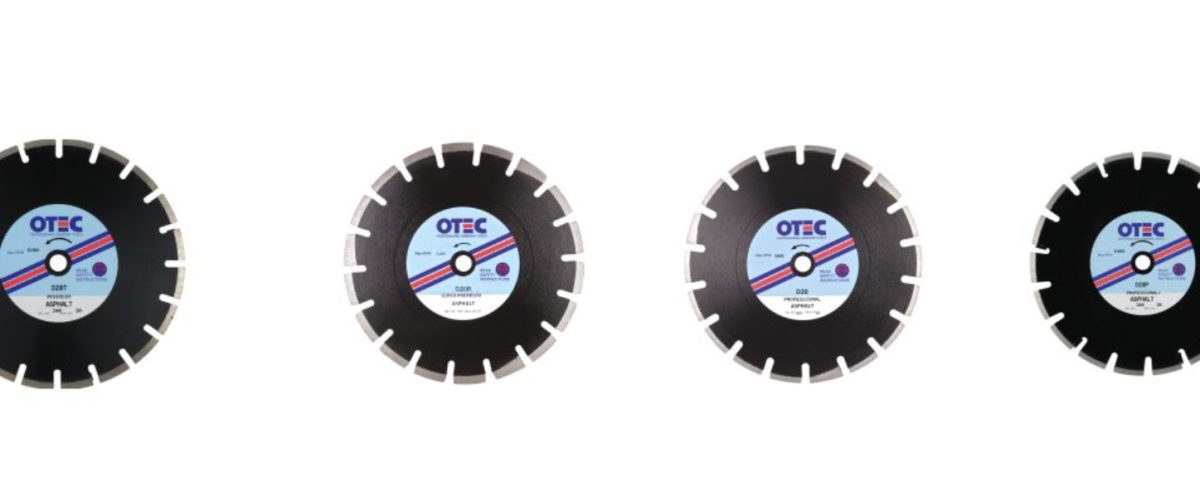
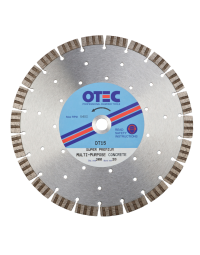
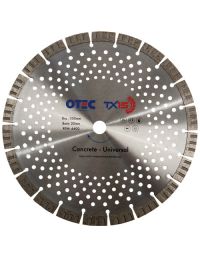
OTEC diamond blades by CMT Group are one example of this structured, professional approach, offering material-specific designs, tiered performance levels, and compatibility with modern site equipment—without relying on one-size-fits-all solutions.
Final decision checklist (save this)
Before ordering, confirm:
- Concrete type identified
- Reinforcement accounted for
- Correct blade diameter and bore
- Machine type and RPM matched
- Wet or dry method chosen
- Correct quality tier selected
If all six boxes are ticked, your blade choice is almost always correct.
FAQ – Concrete Cutting Blades (UK)
Q: What blade is best for reinforced concrete?
A: A blade designed specifically for reinforced concrete, not a general-purpose blade.
Q: Is a more expensive blade always better?
A: No. The correct tier for the workload matters more than price.
Q: Are all diamond blades safe for modern saws?
A: No. Always check the blade’s maximum safe operating speed.
Q: How can I extend blade life on site?
A: Match the blade to the material, avoid forcing the cut, and use wet cutting where possible.
Next steps
To standardise cutting performance and reduce downtime, start by browsing blades by application and machine type, not just price.
Explore relevant ranges:
- Diamond blades: https://www.cmt.co.uk/diamond-blades
- OTEC diamond blades: https://www.cmt.co.uk/diamond-blades/otec-diamond-blades
- Floor saw blades: https://www.cmt.co.uk/diamond-blades/floorsaw-blades
- Bench saw blades: https://www.cmt.co.uk/diamond-blades/benchsaw-blades
- Diamond core drilling: https://www.cmt.co.uk/diamond-blades/diamond-core-drilling