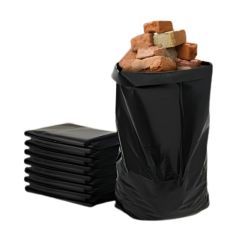


Heavy-duty blue polythene rubble sacks for site clearance, building waste, and demolition debris on UK construction sites.
- Heavy-duty polythene, tear-resistant under rubble and masonry
- 50L capacity, 500 x 750mm (approx 20 x 30")
- Blue, standard trade colour distinguishing building waste from general site rubbish
- Loose-packed
- Pack of 100
Heavy Duty Blue Polythene Rubble Sacks 50L - Site Clearance and Building Waste
Heavy-duty blue polythene rubble sacks for site clearance, building waste, and demolition debris on UK construction sites.
- Heavy-duty polythene, tear-resistant under rubble and masonry
- 50L capacity, 500 x 750mm (approx 20 x 30")
- Blue, standard trade colour distinguishing building waste from general site rubbish
- Loose-packed
- Pack of 100
Order 1x to earn 19 FASTPoints
Order to earn 19 FASTPoints
Log in to access trade discountsHeavy Duty Blue Polythene Rubble Sacks 50L
Heavy-duty blue polythene rubble sacks for groundworkers, site managers, demolition contractors, and civils operatives managing building waste, rubble, and site clearance debris on UK construction projects. The 50L capacity at 500 x 750mm is the established trade standard for site clearance and skip loading, handling bricks, masonry, plaster, timber, and mixed building debris without double-bagging. Blue is the recognised trade convention for distinguishing building waste from general black site rubbish on multi-trade construction sites.
How heavy-duty polythene construction prevents bag failure under site load
Standard domestic bin bags and thin polythene sacks split at the base when filled with rubble, masonry fragments, or wet plaster, creating both a waste management problem and a manual handling hazard on site. When a bag fails under load, operatives face contaminated ground, repeat bagging, and the time cost of clearing spilled debris mid-shift. Heavy-duty polythene rubble sacks are constructed to a thicker gauge specifically to resist tearing and puncture under the weight and abrasion of site debris throughout a full day of clearance work.
Key Features
-
Blue polythene construction: The standard trade colour separating building waste from general black site rubbish, reducing misdisposal and waste segregation errors on multi-trade construction projects.
-
50L capacity: Sized for the most common site clearance and skip loading tasks. Large enough for a full barrow load of mixed demolition debris without overfilling, and manageable enough for one or two operatives to load and transport without mechanical handling.
-
500 x 750mm (approx 20 x 30") dimensions: The established trade-standard size, compatible with standard skip loading, site waste management workflows, and waste transfer station requirements.
-
Heavy-duty polythene construction: Resists tearing and puncture under bricks, masonry, plasterboard, and mixed building debris when filled within recommended limits for the material density.
-
Loose-packed: Individual sacks are dispensed directly from the box without unrolling or tearing from a roll, keeping workflow uninterrupted on busy sites where multiple operatives are bagging simultaneously.
Who is this for
Trades and roles:
-
Site managers
-
Groundworkers
-
Demolition and strip-out operatives
-
Builders and general contractors
-
Landscapers
Industries:
-
Construction
-
Civil engineering
-
Demolition and property refurbishment
-
Landscaping
-
Facilities management
Specifications
| Specification | Detail |
| Product Name | Heavy Duty Blue Polythene Rubble Sacks 50L - Site Clearance and Building Waste |
| SKU | JLRUBLUE |
| Material | Polythene |
| Construction | Heavy-duty polythene [Gauge/mu rating: confirm before publishing] |
| Capacity | 50L |
| Dimensions | 500 x 750mm (approx 20 x 30") |
| Packing | Loose (individual sacks, not on a roll) |
| Colour | Blue |
| Pack Quantity | 100 |
| Min. Nett Box Weight | 5.3kg |
Compatibility
| Application or condition | Status |
| Bricks, masonry, and concrete rubble | ✓ Compatible |
| Plaster and plasterboard | ✓ Compatible |
| Timber offcuts and wood waste | ✓ Compatible |
| Soil, turf, and aggregate | ✓ Compatible |
| Mixed building debris and general site waste | ✓ Compatible |
| Dry landscaping waste | ✓ Compatible |
| Liquid or chemical waste | ✗ Not recommended |
| Hazardous materials (requires specialist disposal) | ✗ Not recommended |
| Asbestos or COSHH-controlled substances | ✗ Not recommended |
| Loose rebar or unprotected sheet metal | ✗ Not recommended |
| Hot or burning material | ✗ Not recommended |
Who is this for
These rubble sacks are used primarily by site managers, groundworkers, demolition operatives, and general contractors on UK construction and civils sites carrying out site clearance, strip-out, and building waste management. They are equally suited to landscaping and property refurbishment projects where mixed waste including masonry, timber, plasterboard, and soil requires bagging for skip loading or licensed waste collection. Procurement teams managing multiple active sites typically order in bulk to ensure continuous availability across concurrent projects without re-ordering delays.
Typical applications
-
Bagging bricks, masonry, and concrete fragments during demolition and strip-out on construction and refurbishment sites.
-
Collecting and transporting plaster, plasterboard, and dry building waste during internal renovation and fit-out.
-
Site clearance of mixed building debris before skip loading on groundwork and civils projects.
-
Disposing of soil, aggregate, and concrete fragments from excavation, drainage, and foundation work.
-
Landscaping waste management including turf, roots, spoil, and aggregate from hard landscaping and earthwork projects.
-
General building waste segregation on multi-trade construction sites, separating building waste streams from general site rubbish.
-
Collecting timber offcuts and wood waste from carpentry and joinery operations during build-out and fit-out.
How to use
Step 1: Open the sack fully, shaking it to separate the sides before loading begins.
Step 2: Position the open sack on flat ground, or rest it against a solid surface, before loading heavy materials.
Step 3: For dense materials such as bricks and concrete rubble, fill to no more than one-third of capacity. For lighter materials such as plasterboard and timber offcuts, fill to two-thirds maximum. Overfilling substantially increases the risk of tearing at the base when the sack is lifted.
Step 4: Gather the neck of the sack and tie securely before moving.
Step 5: Lift using correct manual handling technique in accordance with site risk assessment requirements. Do not drag filled sacks across rough ground, sharp aggregate, or broken concrete surfaces.
Step 6: Dispose of in accordance with the site waste management plan and applicable environmental legislation in your region.
Common mistakes
-
Overfilling with dense materials: Bricks and concrete are far heavier than their volume suggests. A 50L sack filled with rubble will exceed a safe manual handling weight well before it is visually full. Adjust fill level to material density before lifting.
-
Dragging across rough surfaces: Polythene tears on sharp aggregate, broken concrete edges, and rough ground. Use a site barrow or carry filled sacks rather than dragging them to the skip or waste area.
-
Using for liquid or chemical waste: Polythene rubble sacks are not designed for liquid containment or chemical waste. Liquid and chemical waste requires specialist containment and licensed disposal.
-
Mixing hazardous waste with general rubble: Asbestos, COSHH-controlled materials, and hazardous waste must never be placed in standard polythene rubble sacks. Mixing hazardous and non-hazardous waste is a serious legal compliance risk under duty of care legislation.
-
Storing unused sacks in direct sunlight: Prolonged UV exposure degrades polythene. Keep bulk stock in a dry, shaded location rather than in an open site compound.
Safety
Filled rubble sacks must be managed in compliance with the Manual Handling Operations Regulations 1992. For dense materials such as bricks, masonry, and concrete, fill level must be reduced to keep the sack within a safe lifting weight: never fill beyond one-third with heavy rubble. Asbestos, COSHH-controlled substances, and hazardous waste must not be disposed of in standard polythene rubble sacks under any circumstances. Site waste disposal must comply with applicable environmental legislation and the duty of care requirements for controlled waste in your region, including registration as a waste carrier before transporting waste off-site.
Maintenance
These sacks are designed for single or limited use. Inspect for visible damage before reusing a sack for lighter materials. Store unused sacks in a cool, dry location away from direct sunlight and heat sources. Bulk stocks stored outdoors in open site compounds should be kept in their original box or covered to prevent UV degradation of the polythene.
Frequently Asked Questions
Q: What weight of rubble can these sacks safely hold?
A: No fixed safe working load is published for polythene rubble sacks, because the appropriate fill weight depends on the density of the material being bagged. For dense materials such as bricks, masonry, and concrete, fill to no more than one-third of the 50L capacity to keep the sack within a safe manual handling weight. For lighter materials such as plasterboard, timber, and dry mixed waste, fill to two-thirds maximum. The Manual Handling Operations Regulations 1992 require employers to assess and control manual handling risks on site: fill levels should reflect a task-specific risk assessment appropriate to the materials and the operatives involved.
Q: What are these sacks NOT suitable for?
A: These polythene rubble sacks are not suitable for liquid waste, chemical waste, or wet slurry, as polythene is not designed for liquid containment and will not prevent leakage under sustained pressure. They must not be used for asbestos, COSHH-controlled materials, or any hazardous waste, all of which require specialist containment, appropriate labelling, and disposal via a licensed waste contractor. Loose rebar and unprotected sheet metal should not be placed in rubble sacks without inner wrapping, as sharp edges puncture polythene during loading and handling.
Q: What is the difference between polythene rubble sacks and woven polypropylene sacks?
A: Polythene rubble sacks are manufactured from plastic sheet and are designed for single or limited use, making them well suited to high-volume site clearance and skip loading where the sack is disposed of with the waste it contains. Woven polypropylene sacks are manufactured from interlocked fibres, giving significantly higher tear resistance and the ability to withstand repeated heavy use across many loads. Polythene is the more economical choice for high-volume operations where each sack is filled once and removed with the waste. Woven alternatives carry a higher unit cost but offer substantially greater durability for operations requiring regular reuse.
Q: Can these sacks be reused?
A: Polythene rubble sacks can be reused for lighter materials if they are undamaged after the first use, but they are primarily designed for single-use disposal alongside the waste they contain. Inspect the base and sides before reusing. For operations requiring reliable reuse under heavy loads on a regular basis, woven polypropylene alternatives provide significantly greater durability.
Q: How should filled sacks be stored on site before skip loading or collection?
A: Store filled and tied sacks in the designated waste area, away from foot traffic routes and plant movement. Do not stack filled sacks more than two high, as stacking increases the risk of bag failure at the base under combined weight. Protect the waste area from rain where wet or absorbent materials are present, to prevent water ingress through the tied neck adding unexpected weight to the sacks below.
Q: Do we need a waste carrier licence to transport site waste in rubble sacks?
A: Anyone transporting controlled waste in the course of their business must hold a valid waste carrier registration or an applicable exemption. In England and Wales this means registration with the Environment Agency. In Scotland, registration is with SEPA. In Northern Ireland, registration is with the NIEA. This requirement applies to site operatives transporting bagged building waste to a tip, transfer station, or licensed facility. Confirm your registration status before transporting bagged site waste off-site, as carrying waste without registration is a criminal offence.
Q: How quickly can I get these rubble sacks delivered to a construction site?
A: Order by 7pm for next-day delivery nationwide. CMT Group operates its own fleet of vehicles covering over 95% of the UK mainland, with live order tracking, real-time ETAs, and What3Words integration for precise delivery to a specific compound gate or site entrance without a postcode. VIP 2-hour delivery from any CMT depot is also available for time-critical requirements.
Q: Can CMT Group supply rubble sacks in bulk for large clearance projects or multiple sites?
A: CMT Group holds large stock across its UK fulfilment centres with no backorders on core consumable lines. For procurement teams managing multiple active sites, the EDGE portal provides contract pricing, role-based spending controls, per-project budget assignment, and full delivery tracking from dispatch to drop-off. Orders can be placed 24/7 online or via the CMT EDGE App across 8,000-plus stocked lines.