
- Category
PPE & Workwear

CMT Group UK supplies PPE and workwear for construction, utilities, rail, and industrial environments. Our range covers personal protection equipment, workwear, and hi-vis clothing through to women's safety clothing, rail clothing, and flame retardant and arc flash clothing, with next day UK delivery as standard and VIP same-day delivery available.
Supplied by CMT Group, BSIF Registered Safety Supplier and CHAS Elite accredited.
Read moreRead less
PPE and Workwear for UK Construction
The Personal Protective Equipment at Work Regulations 1992 place a legal duty on employers to provide suitable PPE for every risk that cannot be adequately controlled by other means. On construction sites this covers head, hand, eye, ear, foot, respiratory, and fall protection as a minimum. Providing PPE is not the end of the obligation: it must fit correctly, be maintained in good condition, and be replaced when worn or at end of service life.
CMT Group is a BSIF Registered Safety Supplier, the primary UK industry credential for PPE suppliers confirming that every product sold has been independently verified to meet the relevant EN standard. Contact our team for bulk supply, trade accounts, or advice on PPE specification.
Brands supplied include armourU and MAX alongside Kratos Safety, JSP Safety, Portwest, and LEO Workwear: all verified to the relevant EN standards as part of our BSIF Registered Safety Supplier commitment.
Shop PPE and Workwear by Subcategory
Hover to explore. Click to view all products.
Personal Protection Equipment
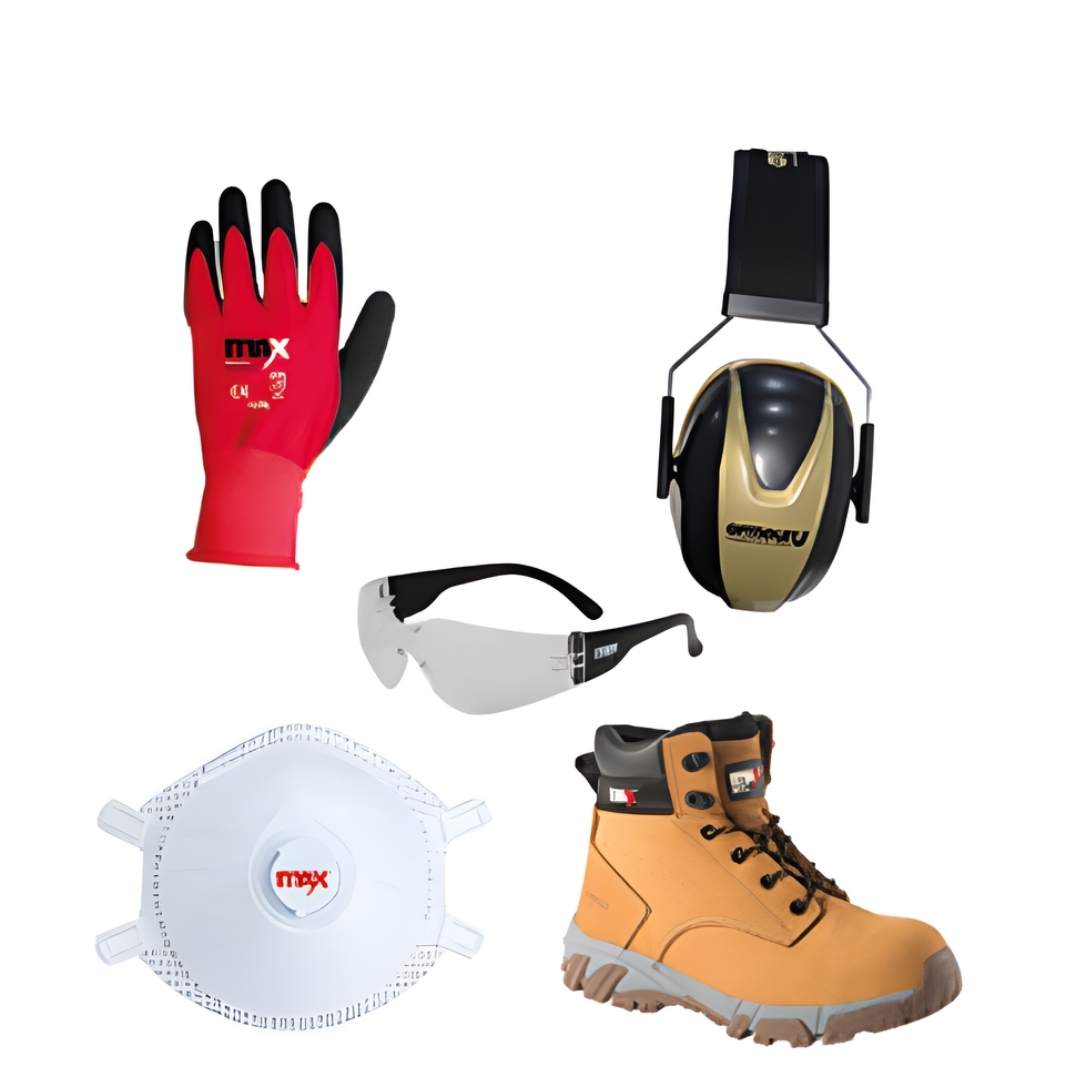
Hand protection, head protection, eye protection, hearing protection, respiratory equipment, footwear, fall arrest and restraint, and helmet accessories for construction. All products from a BSIF Registered Safety Supplier.
Workwear
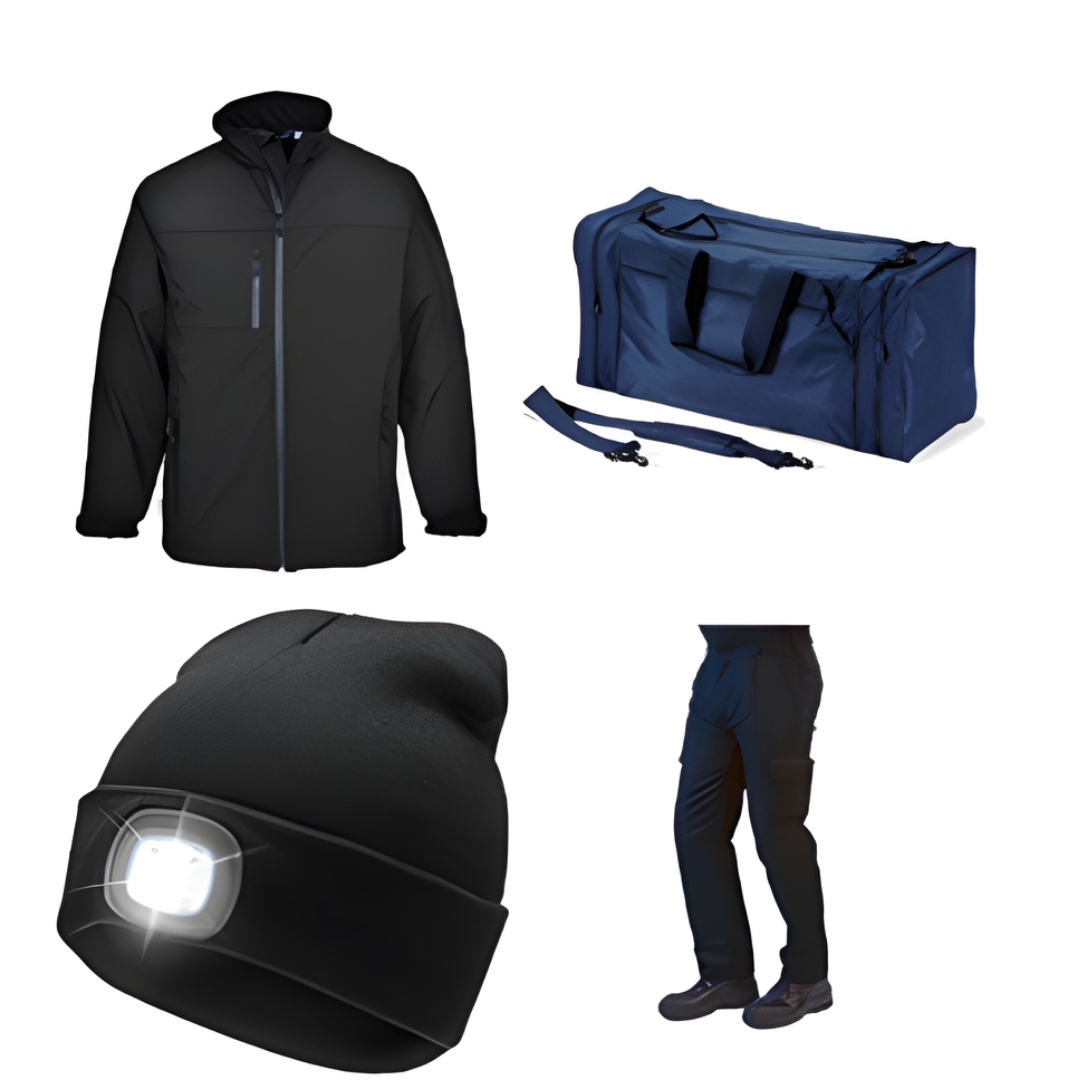
Work trousers, boiler suits, disposable coveralls, jackets and fleeces, polo shirts, sweatshirts, headwear, knee protection, and bags and accessories for construction and industrial environments.
Hi-Vis Clothing
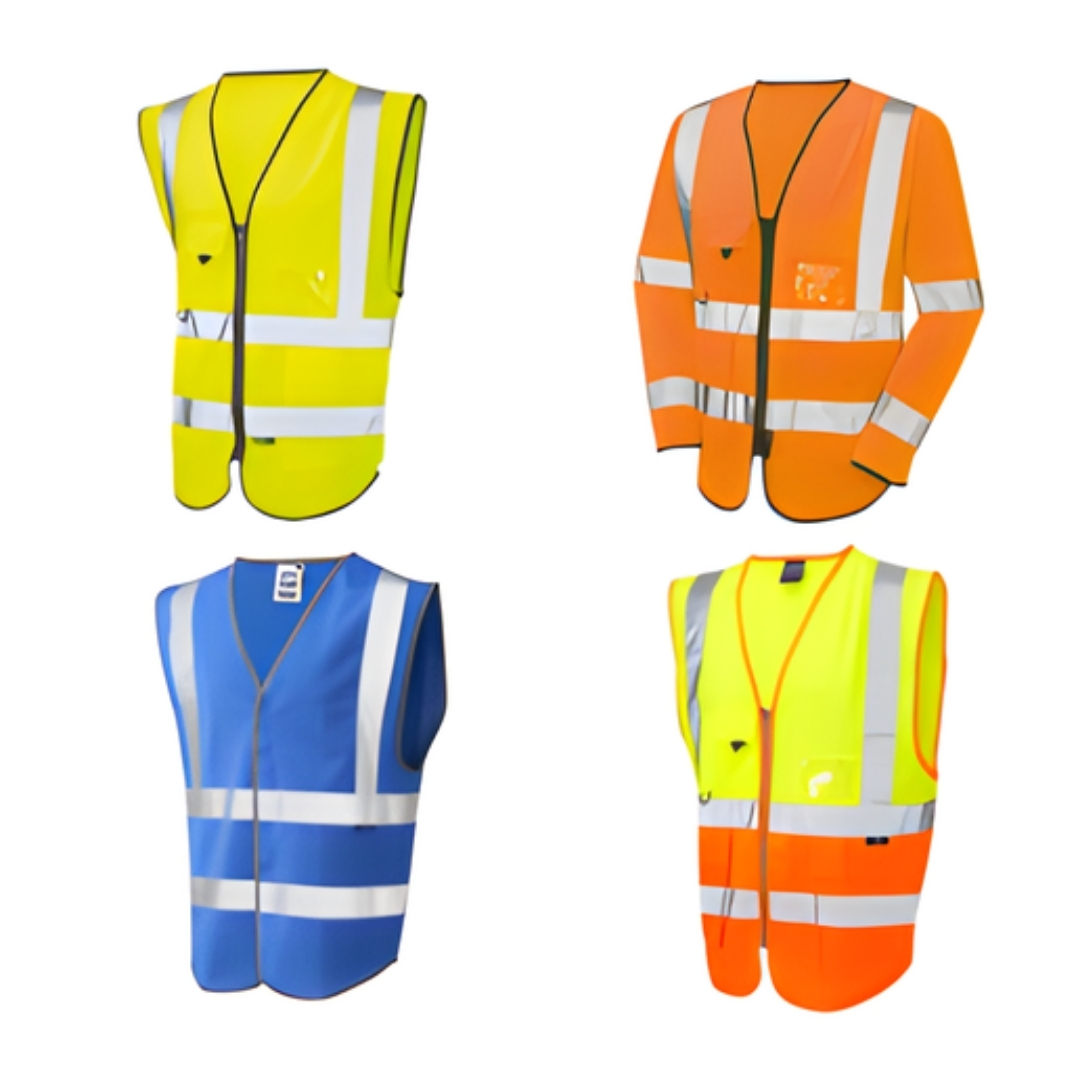
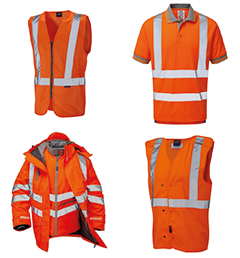
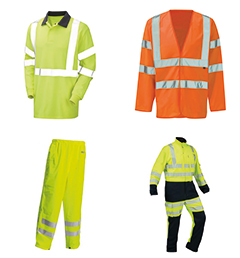
Vests, jackets, trousers, polo shirts, sweatshirts, hoodies, bodywarmers, wet weather clothing, and bibs and braces in Class 2 and Class 3 to EN ISO 20471 for construction and live carriageway environments.
Women's Safety Clothing
Hi-vis jackets, vests, trousers, polo shirts, sweatshirts, bodywarmers, and wet weather clothing designed and cut specifically for female workers in construction, rail, and utilities.
Rail Clothing
RIS-3279-TOM compliant orange and yellow hi-vis clothing for trackside workers. Standard EN ISO 20471 Class 3 construction hi-vis is not compliant for use on the operational railway. Rail-specific garments required.
Flame Retardant & Arc Flash Clothing
EN ISO 11612 flame retardant and EN IEC 61482 arc flash clothing for welding, hot works, oil and gas, and electrical switchgear environments. Standard workwear provides no protection against heat and flame hazards.
PPE and Workwear Standards Reference
| Category | Standard | Key requirement |
|---|---|---|
| Head protection | EN 397 | Mandatory on all sites with overhead hazards |
| Hand protection | EN 388 / EN 374 | Mechanical or chemical, specify by hazard |
| Eye protection | EN 166 | Impact class matched to the specific hazard |
| Hearing protection | EN 352 | SNR value must reduce exposure below 85dB(A) |
| Footwear | EN ISO 20345 | S1P or S3 depending on wet and outdoor conditions |
| Hi-vis clothing | EN ISO 20471 | Class 2 for sites; Class 3 for live carriageways |
| Rail clothing | RIS-3279-TOM | Orange hi-vis, EN ISO 20471 Class 3 not sufficient |
| Flame retardant | EN ISO 11612 | Required for welding, hot works, and industrial flame risk |
Frequently asked questions
Do employers have to provide PPE free of charge?
Yes, always. Employers must provide all required PPE free of charge under the PPE at Work Regulations 1992. Charging workers for PPE, deducting PPE costs from wages, or requiring workers to fund their own replacements is unlawful regardless of employment type. This applies to permanent employees, temporary workers, and agency labour equally. Principal contractors bear responsibility for ensuring all workers on their sites have compliant PPE regardless of who employed them.
What is a BSIF Registered Safety Supplier and why does it matter?
A BSIF Registered Safety Supplier is independently audited by the British Safety Industry Federation to confirm that every product sold meets the applicable EN standard. It matters because the UK market contains significant volumes of counterfeit PPE with fraudulent CE or UKCA markings. Buying from a registered supplier gives procurement teams a defensible audit trail for CHAS, Constructionline, and HSE inspections. CMT Group holds BSIF Registered Safety Supplier status alongside CHAS Elite, SSIP, BSI ISO 9001:2015, and ConstructionOnline Gold.
What is the difference between S1P and S3 safety footwear?
S3 adds a waterproof upper and profiled cleated outsole to the S1P base specification. Both include a 200-joule toecap, anti-penetration midsole, antistatic properties, and heel energy absorption. In practice: S1P for dry indoor environments only; S3 for any outdoor construction site with wet or uneven ground. Specifying S1P on an outdoor site is the most common safety footwear compliance error HSE inspectors identify. View our S3 safety footwear range.
What PPE is required for working at height in the UK?
Where collective protection (guardrails, platforms) cannot be provided, fall arrest equipment is required under the Work at Height Regulations 2005. This means a full-body harness, lanyard, and suitable anchor. Head protection to EN 397 is mandatory where any overhead hazard exists. Hi-vis to EN ISO 20471 is required where proximity to plant or vehicles creates a visibility risk. All fall arrest equipment must be formally inspected by a competent person every six months. View our fall arrest range.
How often should PPE be inspected and replaced on site?
There is no single legal interval; replacement is triggered by condition, not a fixed schedule. Hard hats must be replaced after any impact and have a shell life of 3-5 years from first use. Hi-vis must be replaced when fluorescent material fades or on reaching the wash cycle limit (typically 25-50 washes). Fall arrest equipment requires a competent person inspection every six months. FR clothing must be replaced when contaminated with flammable substances or on reaching its wash cycle limit. The practical requirement for CHAS and HSE compliance is a documented per-worker PPE issue, inspection, and replacement register.
Is there a difference between a hard hat and a safety helmet?
In UK construction, the terms are used interchangeably, but technically they describe different types. A hard hat refers to the traditional brim or peak style; a safety helmet is a broader category including vented and lightweight models. Both must meet EN 397, which specifies 200-joule top impact resistance, penetration resistance, and electrical insulation where specified. What matters for compliance is the EN 397 certification, not what the product is called. View our head protection range.
Does CE marking still apply to PPE in the UK after Brexit?
CE marking is no longer legally recognised for PPE sold in Great Britain. Since 1 January 2022, PPE placed on the Great Britain market must carry UKCA (UK Conformity Assessed) marking under the UK PPE Regulations 2018. CE-marked PPE manufactured before 1 January 2023 can continue to be used, but new stock must carry UKCA or a transitional marking as applicable. Northern Ireland retains CE marking under the Windsor Framework. All PPE supplied by CMT Group meets current UK marking requirements as part of our BSIF Registered Safety Supplier obligations.
Can the same PPE equipment be shared between multiple workers on site?
For most PPE, no. The PPE at Work Regulations 1992 require that PPE is suitable for the individual wearer, which implies personal issue. Safety boots, hard hats, harnesses, and respiratory equipment must be individually fitted. Items with hygiene implications (ear defenders, respirators, safety glasses) must not be shared without proper decontamination between users. Where shared use is unavoidable for cost reasons (such as visitor hard hats), a documented inspection and cleaning procedure for each use is the minimum control measure.
What happens if a worker is injured on site while not wearing required PPE?
Liability depends on where the failure occurred. If the employer provided PPE and the worker refused to wear it, the employer has a partial defence but must demonstrate they took all reasonable steps to enforce compliance, including documented warnings. If the employer failed to provide, maintain, or enforce PPE, the employer bears primary liability under the PPE at Work Regulations 1992 and potentially CDM 2015. A worker who knowingly refuses PPE may share contributory liability, but this rarely removes employer liability entirely. The HSE can issue enforcement notices and prosecute for PPE failures regardless of whether an injury has occurred.
What is the difference between PPE legislation in England, Scotland, and Wales?
The PPE at Work Regulations 1992 and Work at Height Regulations 2005 apply uniformly across England, Scotland, and Wales. Health and safety legislation is not devolved; the Health and Safety Executive (HSE) enforces the same standards across all three nations. Northern Ireland has equivalent legislation (the Health and Safety at Work (Northern Ireland) Order 1978) with parallel regulations. There is no practical difference in PPE specification or employer duties based on location within Great Britain.
What PPE Is Legally Required on a UK Construction Site?
The PPE at Work Regulations 1992 require employers to provide PPE for all risks that cannot be controlled by other means. The CDM Regulations 2015 set additional duties for construction specifically. As a minimum, most construction sites require hard hats (EN 397), safety footwear (EN ISO 20345), hi-vis clothing (EN ISO 20471), and hand protection matched to the task hazard (EN 388 or EN 374).
Additional PPE is required for specific environments: Class 3 hi-vis for live carriageway work, RIS-3279-TOM orange hi-vis for rail trackside work, EN ISO 11612 flame retardant clothing for welding and hot works, and fall arrest equipment for work at height where collective protection is not practicable. Buying from a BSIF Registered Safety Supplier provides the assurance that all products meet the relevant standard before being offered for sale.
Accreditations and memberships


Shop PPE and Workwear by Subcategory
PPE & Workwear
CMT Group UK supplies PPE and workwear for construction, utilities, rail, and industrial environments. Our range covers personal protection equipment, workwear, and hi-vis clothing through to women's safety clothing, rail clothing, and flame retardant and arc flash clothing, with next day UK delivery as standard and VIP same-day delivery available.
Supplied by CMT Group, BSIF Registered Safety Supplier and CHAS Elite accredited.
Read moreRead less
PPE and Workwear for UK Construction
The Personal Protective Equipment at Work Regulations 1992 place a legal duty on employers to provide suitable PPE for every risk that cannot be adequately controlled by other means. On construction sites this covers head, hand, eye, ear, foot, respiratory, and fall protection as a minimum. Providing PPE is not the end of the obligation: it must fit correctly, be maintained in good condition, and be replaced when worn or at end of service life.
CMT Group is a BSIF Registered Safety Supplier, the primary UK industry credential for PPE suppliers confirming that every product sold has been independently verified to meet the relevant EN standard. Contact our team for bulk supply, trade accounts, or advice on PPE specification.
Brands supplied include armourU and MAX alongside Kratos Safety, JSP Safety, Portwest, and LEO Workwear: all verified to the relevant EN standards as part of our BSIF Registered Safety Supplier commitment.
Shop PPE and Workwear by Subcategory
Hover to explore. Click to view all products.
Personal Protection Equipment
Hand protection, head protection, eye protection, hearing protection, respiratory equipment, footwear, fall arrest and restraint, and helmet accessories for construction. All products from a BSIF Registered Safety Supplier.
Workwear
Work trousers, boiler suits, disposable coveralls, jackets and fleeces, polo shirts, sweatshirts, headwear, knee protection, and bags and accessories for construction and industrial environments.
Hi-Vis Clothing
Vests, jackets, trousers, polo shirts, sweatshirts, hoodies, bodywarmers, wet weather clothing, and bibs and braces in Class 2 and Class 3 to EN ISO 20471 for construction and live carriageway environments.
Women's Safety Clothing
Hi-vis jackets, vests, trousers, polo shirts, sweatshirts, bodywarmers, and wet weather clothing designed and cut specifically for female workers in construction, rail, and utilities.
Rail Clothing
RIS-3279-TOM compliant orange and yellow hi-vis clothing for trackside workers. Standard EN ISO 20471 Class 3 construction hi-vis is not compliant for use on the operational railway. Rail-specific garments required.
Flame Retardant & Arc Flash Clothing
EN ISO 11612 flame retardant and EN IEC 61482 arc flash clothing for welding, hot works, oil and gas, and electrical switchgear environments. Standard workwear provides no protection against heat and flame hazards.
PPE and Workwear Standards Reference
| Category | Standard | Key requirement |
|---|---|---|
| Head protection | EN 397 | Mandatory on all sites with overhead hazards |
| Hand protection | EN 388 / EN 374 | Mechanical or chemical, specify by hazard |
| Eye protection | EN 166 | Impact class matched to the specific hazard |
| Hearing protection | EN 352 | SNR value must reduce exposure below 85dB(A) |
| Footwear | EN ISO 20345 | S1P or S3 depending on wet and outdoor conditions |
| Hi-vis clothing | EN ISO 20471 | Class 2 for sites; Class 3 for live carriageways |
| Rail clothing | RIS-3279-TOM | Orange hi-vis, EN ISO 20471 Class 3 not sufficient |
| Flame retardant | EN ISO 11612 | Required for welding, hot works, and industrial flame risk |
Frequently asked questions
Do employers have to provide PPE free of charge?
Yes, always. Employers must provide all required PPE free of charge under the PPE at Work Regulations 1992. Charging workers for PPE, deducting PPE costs from wages, or requiring workers to fund their own replacements is unlawful regardless of employment type. This applies to permanent employees, temporary workers, and agency labour equally. Principal contractors bear responsibility for ensuring all workers on their sites have compliant PPE regardless of who employed them.
What is a BSIF Registered Safety Supplier and why does it matter?
A BSIF Registered Safety Supplier is independently audited by the British Safety Industry Federation to confirm that every product sold meets the applicable EN standard. It matters because the UK market contains significant volumes of counterfeit PPE with fraudulent CE or UKCA markings. Buying from a registered supplier gives procurement teams a defensible audit trail for CHAS, Constructionline, and HSE inspections. CMT Group holds BSIF Registered Safety Supplier status alongside CHAS Elite, SSIP, BSI ISO 9001:2015, and ConstructionOnline Gold.
What is the difference between S1P and S3 safety footwear?
S3 adds a waterproof upper and profiled cleated outsole to the S1P base specification. Both include a 200-joule toecap, anti-penetration midsole, antistatic properties, and heel energy absorption. In practice: S1P for dry indoor environments only; S3 for any outdoor construction site with wet or uneven ground. Specifying S1P on an outdoor site is the most common safety footwear compliance error HSE inspectors identify. View our S3 safety footwear range.
What PPE is required for working at height in the UK?
Where collective protection (guardrails, platforms) cannot be provided, fall arrest equipment is required under the Work at Height Regulations 2005. This means a full-body harness, lanyard, and suitable anchor. Head protection to EN 397 is mandatory where any overhead hazard exists. Hi-vis to EN ISO 20471 is required where proximity to plant or vehicles creates a visibility risk. All fall arrest equipment must be formally inspected by a competent person every six months. View our fall arrest range.
How often should PPE be inspected and replaced on site?
There is no single legal interval; replacement is triggered by condition, not a fixed schedule. Hard hats must be replaced after any impact and have a shell life of 3-5 years from first use. Hi-vis must be replaced when fluorescent material fades or on reaching the wash cycle limit (typically 25-50 washes). Fall arrest equipment requires a competent person inspection every six months. FR clothing must be replaced when contaminated with flammable substances or on reaching its wash cycle limit. The practical requirement for CHAS and HSE compliance is a documented per-worker PPE issue, inspection, and replacement register.
Is there a difference between a hard hat and a safety helmet?
In UK construction, the terms are used interchangeably, but technically they describe different types. A hard hat refers to the traditional brim or peak style; a safety helmet is a broader category including vented and lightweight models. Both must meet EN 397, which specifies 200-joule top impact resistance, penetration resistance, and electrical insulation where specified. What matters for compliance is the EN 397 certification, not what the product is called. View our head protection range.
Does CE marking still apply to PPE in the UK after Brexit?
CE marking is no longer legally recognised for PPE sold in Great Britain. Since 1 January 2022, PPE placed on the Great Britain market must carry UKCA (UK Conformity Assessed) marking under the UK PPE Regulations 2018. CE-marked PPE manufactured before 1 January 2023 can continue to be used, but new stock must carry UKCA or a transitional marking as applicable. Northern Ireland retains CE marking under the Windsor Framework. All PPE supplied by CMT Group meets current UK marking requirements as part of our BSIF Registered Safety Supplier obligations.
Can the same PPE equipment be shared between multiple workers on site?
For most PPE, no. The PPE at Work Regulations 1992 require that PPE is suitable for the individual wearer, which implies personal issue. Safety boots, hard hats, harnesses, and respiratory equipment must be individually fitted. Items with hygiene implications (ear defenders, respirators, safety glasses) must not be shared without proper decontamination between users. Where shared use is unavoidable for cost reasons (such as visitor hard hats), a documented inspection and cleaning procedure for each use is the minimum control measure.
What happens if a worker is injured on site while not wearing required PPE?
Liability depends on where the failure occurred. If the employer provided PPE and the worker refused to wear it, the employer has a partial defence but must demonstrate they took all reasonable steps to enforce compliance, including documented warnings. If the employer failed to provide, maintain, or enforce PPE, the employer bears primary liability under the PPE at Work Regulations 1992 and potentially CDM 2015. A worker who knowingly refuses PPE may share contributory liability, but this rarely removes employer liability entirely. The HSE can issue enforcement notices and prosecute for PPE failures regardless of whether an injury has occurred.
What is the difference between PPE legislation in England, Scotland, and Wales?
The PPE at Work Regulations 1992 and Work at Height Regulations 2005 apply uniformly across England, Scotland, and Wales. Health and safety legislation is not devolved; the Health and Safety Executive (HSE) enforces the same standards across all three nations. Northern Ireland has equivalent legislation (the Health and Safety at Work (Northern Ireland) Order 1978) with parallel regulations. There is no practical difference in PPE specification or employer duties based on location within Great Britain.
What PPE Is Legally Required on a UK Construction Site?
The PPE at Work Regulations 1992 require employers to provide PPE for all risks that cannot be controlled by other means. The CDM Regulations 2015 set additional duties for construction specifically. As a minimum, most construction sites require hard hats (EN 397), safety footwear (EN ISO 20345), hi-vis clothing (EN ISO 20471), and hand protection matched to the task hazard (EN 388 or EN 374).
Additional PPE is required for specific environments: Class 3 hi-vis for live carriageway work, RIS-3279-TOM orange hi-vis for rail trackside work, EN ISO 11612 flame retardant clothing for welding and hot works, and fall arrest equipment for work at height where collective protection is not practicable. Buying from a BSIF Registered Safety Supplier provides the assurance that all products meet the relevant standard before being offered for sale.
Accreditations and memberships
