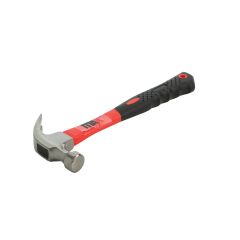
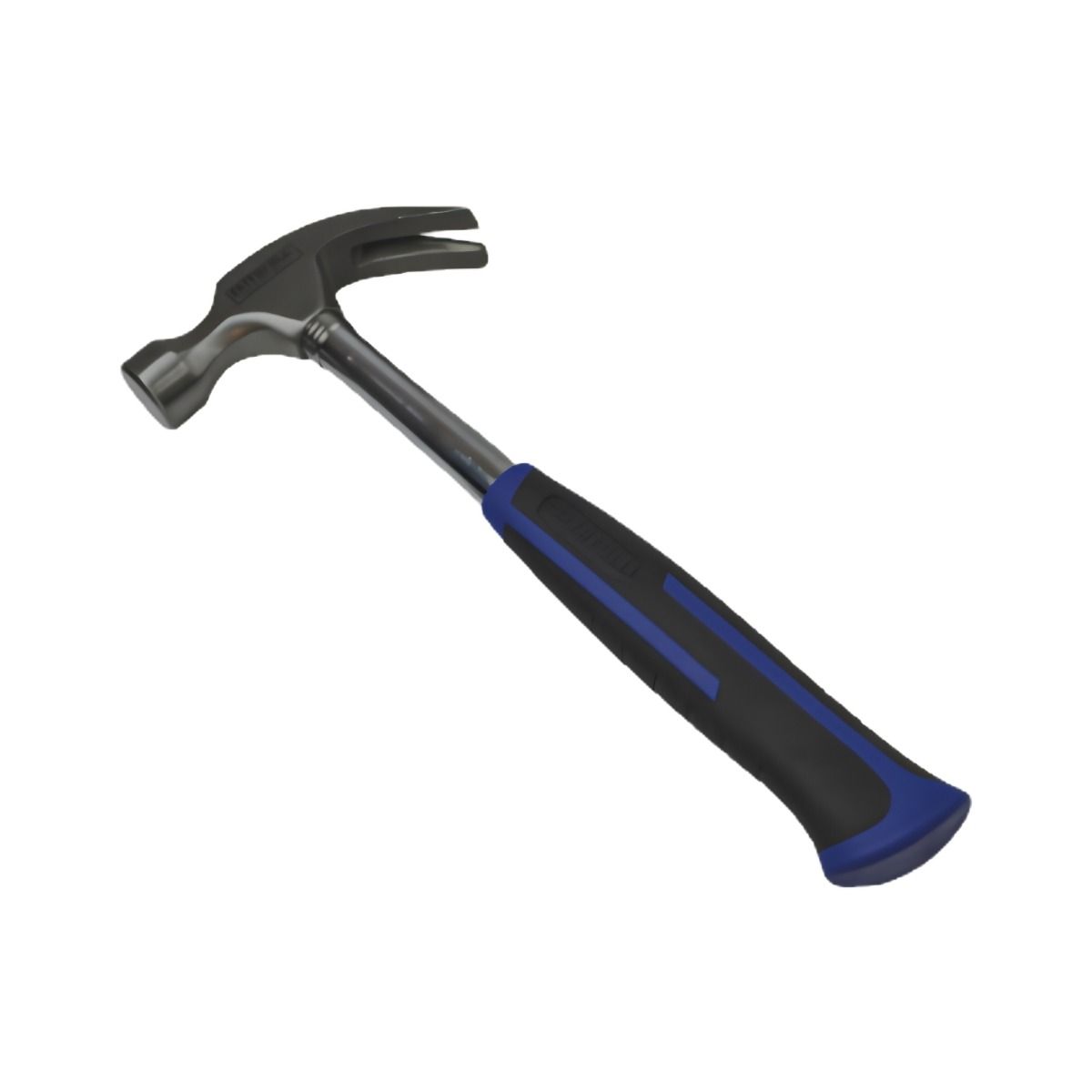
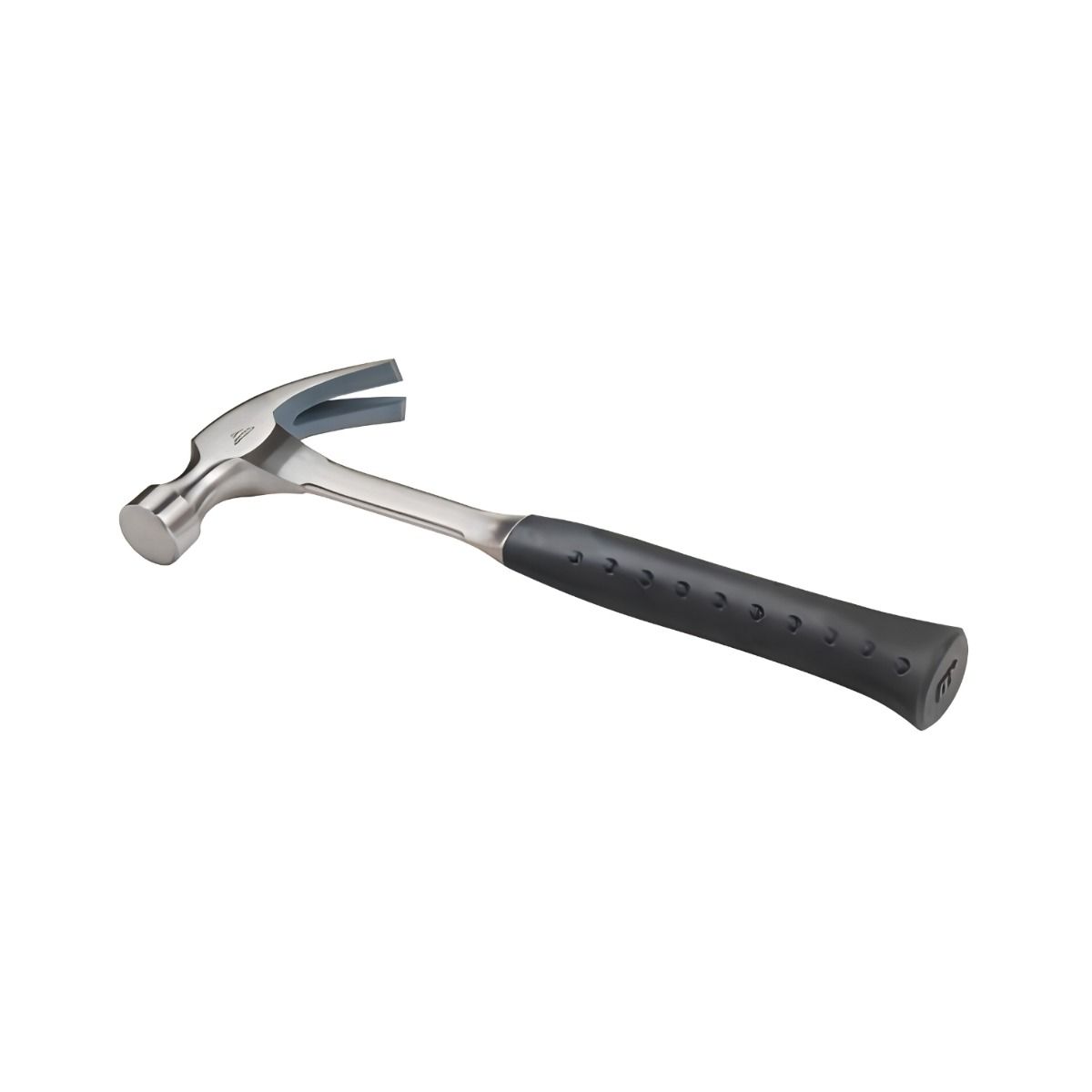
A hardened curved claw hammer with tubular steel shaft and rubber grip, individually tested and available in 16oz (454g) and 20oz (567g) for carpentry and general construction.
- Hardened and heat-treated head with precision ground smooth striking face
- Precision ground curved claw for nail pulling and lever removal
- Tubular steel shaft for direct force transfer and maximum leverage
- Rubber non-slip grip for secure hold through work gloves
- Individually tested for weight, hardness, crack resistance, and dimensions
- Available in 16oz (454g) for general carpentry or 20oz (567g) for heavy framing
Professional Claw Hammer - Curved Claw Steel Shaft Rubber Grip
A hardened curved claw hammer with tubular steel shaft and rubber grip, individually tested and available in 16oz (454g) and 20oz (567g) for carpentry and general construction.
- Hardened and heat-treated head with precision ground smooth striking face
- Precision ground curved claw for nail pulling and lever removal
- Tubular steel shaft for direct force transfer and maximum leverage
- Rubber non-slip grip for secure hold through work gloves
- Individually tested for weight, hardness, crack resistance, and dimensions
- Available in 16oz (454g) for general carpentry or 20oz (567g) for heavy framing
Professional Claw Hammer
A curved claw hammer for professional trade and construction use, available in 16oz (454g) for standard carpentry and joinery, and 20oz (567g) for heavy framing and structural nailing. The hardened and heat-treated head carries a precision ground smooth striking face. The curved claw is precision ground and hardened for nail pulling and sustained lever loads. The tubular steel shaft transfers force directly without the flex or fatigue risk of wood. Every hammer is individually tested before it leaves the factory.
What Individual Testing Means for a Professional Hammer
Budget hammers are batch-sampled. A percentage of a production run is checked and the rest is assumed to conform. Each hammer in this range is tested individually: weight tolerance, steel ingredient verification, crack testing, hardness measurement, manufacturing process compliance, heat treatment verification, and dimensional inspection. For a hand tool that takes daily impact loads across a full working shift, individual testing is the standard that matters.
Key Features
-
Hardened and heat-treated head: Through-hardened and heat treated for consistent hardness across the striking face and claw. This prevents chipping or deforming under sustained impact load.
-
Precision ground striking face: Ground to a consistent smooth profile for accurate contact on nail heads and reduced risk of glancing blows.
-
Precision ground curved claw: The curved geometry creates mechanical advantage for nail removal. Precision ground to grip nail shafts cleanly and maintain the claw profile under repeated lever loads.
-
Tubular steel shaft: Transmits force from the grip directly to the head without the compliance or fatigue failure modes of wood or fibreglass. The tubular construction gives a weight-to-strength ratio suited to all-day trade use.
-
Rubber non-slip grip: Absorbs vibration at the handle and maintains grip through work gloves and in wet or damp site conditions.
-
Individual testing: Every hammer is individually tested for weight tolerance, steel ingredients, crack resistance, hardness, heat treatment, and dimensional accuracy.
-
Two weights: 16oz (454g) for standard carpentry, joinery, and site work. 20oz (567g) for heavy framing, structural nailing, and applications where more force per strike reduces effort over a shift.
Who Is This For
Trades and roles:
-
Carpenters and joiners
-
General builders
-
Site operatives
-
Groundworkers
-
Maintenance and refurbishment contractors
Industries:
-
Construction
-
Carpentry and joinery
-
Groundworks
-
Maintenance and refurbishment
Specifications
| Specification | Detail |
| Product Name | Professional Claw Hammer - Curved Claw Steel Shaft Rubber Grip |
| Parent SKU | CLHP |
| Hammer Type | Curved claw |
| Head Treatment | Hardened and heat-treated |
| Striking Face | Smooth, precision ground |
| Claw Type | Curved, precision ground and hardened |
| Shaft Material | Tubular steel |
| Grip Type | Rubber, non-slip |
| Testing Standard | Individually tested: weight tolerance, steel ingredients, crack testing, hardness, manufacturing processes, heat treatment, overall dimensions |
| Variants Available | 16oz (454g), 20oz (567g) |
Variant comparison
| Specification |
CLHP1616oz / 454g
|
CLHP2020oz / 567g
|
|---|---|---|
| SKU | CLHP16 | CLHP20 |
| Head Weight | 16oz (454g) | 20oz (567g) |
| Best For | Carpentry, joinery, first and second fix, general site nailing | Heavy framing, structural nailing, harder timber, large nail sizes |
| Strike Force | Standard | Higher per blow |
| All-Day Use | Lower fatigue over extended shifts | More force per strike, fewer blows needed for heavy nails |
Compatibility
| Application or condition | Status |
| Driving wire, round head, and oval nails | ✓ Compatible |
| Timber framing and structural nailing | ✓ Compatible |
| Nail pulling using the curved claw | ✓ Compatible |
| First and second fix carpentry | ✓ Compatible |
| General site assembly and disassembly | ✓ Compatible |
| Formwork and shuttering assembly | ✓ Compatible |
| Striking cold chisels or bolsters | ✗ Not suitable (use a club hammer) |
| Using the side face as a striking surface | ✗ Not suitable |
| Use with a loose head or damaged shaft | ✗ Do not use |
Who Is This For
This curved claw hammer is a daily-use professional hand tool for carpenters, joiners, general builders, and site operatives who drive and pull nails as a core part of their working day. The 16oz (454g) is the standard choice for first and second fix carpentry, joinery, and general site nailing where speed and accuracy over repeated strikes matter. The 20oz (567g) suits heavier framing, structural nailing, and work with larger gauge nails where more force per strike reduces the number of blows needed and effort over a full shift.
Typical Applications
-
Driving wire nails, round head nails, and oval nails during first and second fix carpentry on residential and commercial construction sites.
-
Framing stud walls, roof rafters, joists, and floor structures where structural nailing requires consistent force across a session.
-
Pulling nails from timber during demolition, strip-out, and refurbishment work using the precision ground curved claw.
-
Formwork and shuttering assembly and striking during concrete construction.
-
General site assembly and disassembly tasks involving nail driving and removal.
-
Setting and driving cut nails into existing timber or soft masonry during maintenance and refurbishment.
How to Use
Driving nails:
Step 1: Hold the hammer firmly at the base of the handle. Grip at the end of the handle, not the middle. The further down the handle the grip, the greater the lever arm and the more force per strike without additional effort.
Step 2: Start the nail with two or three light controlled taps to set it square and straight in the timber.
Step 3: Increase the swing, using the full arc of the arm to let the weight of the head do the work rather than muscular force from the wrist alone.
Step 4: Stop when the nail head is flush or at the required depth. Do not overdrive.
Pulling nails:
Step 1: Position the curved claw over the nail head and seat the nail shaft into the claw groove.
Step 2: Apply controlled lever pressure. For nails set deeply or into hard timber, place a timber offcut under the hammer head to increase purchase and protect the surface beneath.
Step 3: If the nail head is flush or below the surface, use the claw tip to lever it proud before seating the claw fully for extraction.
Common Mistakes
-
Gripping too high up the handle: a grip near the head shortens the lever arm, increases effort, and reduces striking accuracy. Always grip at the base.
-
Using 16oz for heavy structural framing: for large nails and dense timber, the 20oz variant reduces the number of strikes required and significantly reduces hand fatigue over a long shift.
-
Pulling nails without a fulcrum block: without a block under the head, the lever load concentrates at the shaft contact point and can mark finished timber surfaces. Always use an offcut when pulling from visible or finished work.
-
Striking at an angle: off-axis strikes bend nails, reduce efficiency, and over time can damage the precision ground face. Keep the striking face parallel to the nail head at the moment of contact.
-
Using a hammer with any movement in the head: a loose head is a projectile hazard. Remove from service immediately and do not attempt to re-fix on site.
Safety
Wear appropriate eye protection when driving nails, particularly in confined spaces or where fragments may ricochet. Inspect the head-to-shaft joint before each use. Any movement in the head or cracks in the shaft mean the tool must be taken out of service immediately. Do not use the side face of the head as a striking surface. Do not use this hammer to strike cold chisels, bolsters, or other hardened implements. Store safely when not in use, away from other tools that can damage the striking face or claw geometry.
Maintenance
Inspect the head-to-shaft connection before each shift. Any movement in the head takes the tool out of service immediately. Wipe the head with a clean dry cloth after use to remove moisture and prevent surface rust. Light surface rust can be removed with fine sandpaper or a wire brush. Apply a light oil film to the head if storing in damp conditions or over a prolonged period. Check the rubber grip regularly for cracking or deterioration. Do not store in direct sunlight for extended periods, as UV degrades rubber grips over time.
Frequently Asked Questions
Q: What is the practical difference between the 16oz and 20oz variants?
A: Weight determines striking force and fatigue profile. The 16oz (454g) is the standard carpenter's hammer for first and second fix joinery, general site nailing, and work where speed and accuracy across many lighter strikes matter more than maximum force. The 20oz (567g) delivers more energy per blow, which drives large nails into dense or structural timber in fewer strikes. For all-day lighter carpentry work, 16oz is the more common choice. For framing and structural nailing, 20oz reduces cumulative effort over a shift.
Q: What does individually tested mean in practice?
A: Each hammer is tested individually before leaving the factory, not batch-sampled. Testing covers seven parameters: weight tolerance, steel ingredient verification, crack testing, hardness measurement, manufacturing process compliance, heat treatment verification, and dimensional inspection. Batch sampling checks a percentage of a production run and assumes the rest conforms. Individual testing confirms each unit directly.
Q: What is the difference between a curved claw and a straight rip claw?
A: A curved claw creates a rolling lever action that efficiently pulls nails from timber without requiring as much applied force. The curved geometry suits carpentry and joinery where nail pulling is the secondary function. A straight rip claw is used more for prying, splitting, and demolition work. This hammer carries a curved claw, making it the correct choice for standard carpentry applications.
Q: Is a steel shaft stronger than a wood handle?
A: Steel does not flex under load the way wood does, and does not carry the fracture or loosening risk of a wooden handle that has dried out or absorbed moisture on site. Wood absorbs vibration slightly better in theory, but the consistent force transfer of a steel shaft is the practical advantage for professional daily use. The tubular construction also keeps overall weight manageable without sacrificing strength.
Q: What is this hammer NOT suitable for?
A: Do not use to strike cold chisels, bolsters, or other hardened implements. A claw hammer is not rated for that application and the striking face geometry is different from a club hammer. Do not use the side of the head as a striking surface. Do not use if the head shows any movement on the shaft or if the shaft is cracked or damaged.
Q: How do I prevent the head from rusting on site?
A: Wipe the head dry after use, particularly after working outdoors in wet conditions. Apply a light oil film before extended storage. Light surface rust that develops over inactivity does not affect structural integrity and can be removed with fine sandpaper. Deep pitting on the striking face should be inspected carefully, as it affects the precision ground face geometry.
Q: Which variant should I specify for a general site tool kit?
A: The 16oz (454g) is the standard specification for a general-purpose carpenter's claw hammer in a site tool kit. It covers first and second fix, general nailing, and nail removal across most residential and light commercial construction tasks. The 20oz (567g) is the additional or dedicated specification where heavy framing or structural nailing forms a regular part of the workload.