Plant & Machinery

Some site tasks need powered equipment rather than manual tools. CMT Group supplies mixers, power tools, cut-off saws, pressure washers, sub pumps, breaker steels, dapple bars, rollers, rammers and compactors for construction, civils, groundworks, road repair and infrastructure teams ... Some site tasks need powered equipment rather than manual tools. CMT Group supplies mixers, power tools, cut-off saws, pressure washers, sub pumps, breaker steels, dapple bars, rollers, rammers and compactors for construction, civils, groundworks, road repair and infrastructure teams. The range supports concrete and mortar mixing, hard-material cutting, site cleaning, water removal, breaking, finishing, compaction and reinstatement work. Buyers can manage project quantities, depot stock and repeat supply through account-based ordering, stock availability and fast UK delivery. read more...read less
Plant and machinery types, site use and buying considerations
| Equipment type | Typical site use | Buying considerations |
|---|---|---|
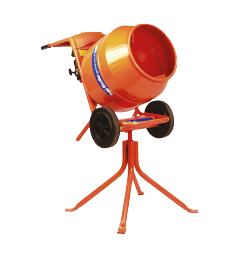
| Mixers | Mixing concrete, mortar, screed and render for foundations, drainage surrounds, paving, repairs and general concreting tasks. | Check drum capacity, power source, batch output, handling weight, portability, site access and material compatibility. |
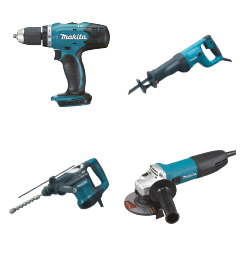
| Power Tools | Drilling, driving, grinding, cutting and mechanical fixing tasks across construction, civils and site maintenance work. | Check power source, tool type, accessory compatibility, torque or speed requirements, guard availability and site conditions. |
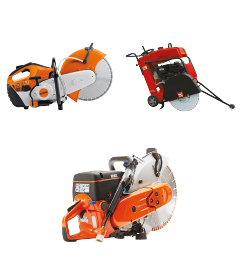
| Cut-off Saws | Cutting asphalt, concrete, masonry, kerbs, slabs and pipes during groundworks, road repair, drainage and utilities work. | Check saw type, blade diameter, cutting depth, blade compatibility, power source, dust or water-control needs, site rules and manufacturer guidance. |
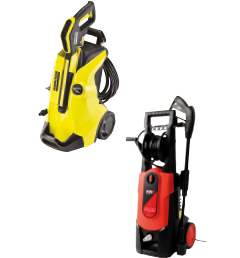
| Pressure Washers | Cleaning plant, vehicles, hard standings, tools and site surfaces after groundworks, concreting or road repair tasks. | Check pressure rating, flow rate, power source, hose length, nozzle type, surface suitability and water supply requirements. |
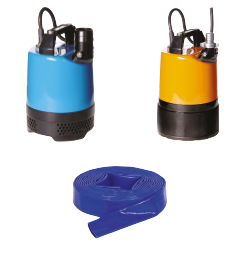
| Sub Pumps | Removing water from excavations, trenches, pits, sumps, low spots and temporary groundworks areas. | Check voltage, flow rate, outlet size, pump type, hose compatibility, float switch, water depth and site power requirements. |
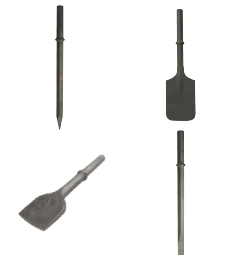
| Breaker Steels | Breaking concrete, tarmac, compacted ground and hard materials with compatible breakers during demolition or reinstatement tasks. | Check steel profile, shank type, steel length, breaker compatibility, task type and material being broken. |
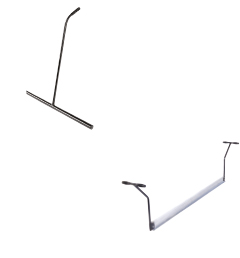
| Dapple Bars | Levelling and finishing wet concrete or screed surfaces during slab, paving, road repair and surface work. | Check bar width, handle type, material, working area size, surface finish requirement and cleaning needs after use. |
| Rollers, Rammers & Compactors | Compacting sub-base, backfill, reinstatement areas, asphalt, hardcore and prepared ground. | Check compaction type, plate or drum size, engine type, transport needs, ground conditions, working area and project specification. |
Frequently asked questions
What should procurement teams consider when specifying concrete mixers for construction and groundworks site use?
Concrete mixers for site use are selected primarily around drum capacity and the volume of material needed per batch cycle. Buyers should confirm whether the volume and frequency of concrete, mortar or screed required suits a small batch mixer or a larger drum, and whether a petrol or electric power source is appropriate given the site's power availability and access.
Key buying factors include drum capacity, mixing method (drum rotation or forced action), motor type, handling weight and base stability during operation. Buyers should also confirm material compatibility, particularly if admixtures or specialist mix specifications are in use. Delivery access and the need to move the mixer between locations on site may also influence the choice between wheeled and static units.
What should buyers check before ordering cut-off saws for construction and civils work?
Cut-off saws should be selected around the material being cut, cutting depth, blade diameter, power source, blade compatibility and site conditions. Buyers should check whether the saw is intended for asphalt, concrete, masonry, kerbs, slabs or pipe work, and confirm the correct blade type before ordering for site teams or depots.
Procurement teams should also consider dust or water-control needs, fuel or battery requirements, storage, transport and manufacturer guidance. Site rules, training or competence requirements and task-specific risk assessments should be checked before use. Do not assume one saw or blade setup is suitable for every cutting task.
How do sub pumps and pressure washers serve different tasks on construction and groundworks sites?
Sub pumps (submersible pumps) are used to remove groundwater, surface water and pumped drainage from trenches, excavations, basements, sumps and waterlogged areas. They are submerged during use and pump water up and away from the work area. Key buying factors include flow rate, total head height, power supply (mains or generator), particle handling capacity and the type of solids or debris the pump may encounter.
Pressure washers are surface cleaning equipment used to clean plant, vehicles, hard standings, tools and site surfaces. They operate above the water source and deliver high-pressure water to remove dirt, concrete splatter, bitumen or other site residue. Both product types sit within the Plant & Machinery range at CMT Group but serve distinct purposes, and buyers should not use pressure washers in place of a submersible pump for site water removal.
What types of compaction equipment are available and when is each suited to groundworks and road repair?
Rollers, rammers and compactors are used for different compaction tasks across groundworks, reinstatement and road repair. Buyers should select equipment around the material, working area, depth, site access and project specification.
Plate compactors are commonly chosen for sub-base and prepared granular areas, rammers are often selected for narrower trench or backfill tasks, and rollers may be used where a wider surface area needs compaction. Final selection should follow manufacturer guidance, site conditions and the project specification.
When are dapple bars used on construction and groundworks sites, and what should buyers check before ordering?
Dapple bars are used around wet concrete and screed finishing tasks where a bar is needed to help level or work the surface before later finishing stages. They are typically relevant for slab, paving, road repair and surface work where the working width and finish requirement need to be considered before ordering.
Buyers should check bar width, handle type, material, working area size, surface finish requirement, cleaning needs and whether the product suits the concrete or screed work being planned. Dapple bars are specialist finishing tools and should be selected against the site task and manufacturer guidance.
What are the differences between the breaker steels available, and how should buyers choose between them?
CMT Group stocks three breaker steel profiles for use with demolition and rotary breakers: narrow chisels, moil points and tarmac cutters. Each profile is designed for a different breaking task.
Narrow chisels are used for straight-line breaking along joints or edges, chasing channels and splitting concrete or masonry in a controlled line. Moil points deliver a concentrated point impact for breaking up concrete slabs, hard rock, paving and dense material where a broader break line is not needed. Tarmac cutters are designed specifically for cutting through asphalt and flexible road surfaces, delivering a clean cut profile. Buyers should check shank size and shank standard compatibility with the breaker in use before ordering, as specifications vary between breaker models.
What power tools are available through CMT Group for construction and groundworking teams?
The Power Tools range at CMT Group covers drill and driver types, grinders, circular saws, reciprocating saws and similar powered hand tools for construction, groundworking, civils and site maintenance tasks. The range supports common site activities including drilling, mechanical fixing, grinding, cutting and surface preparation work.
Buyers should confirm the power source (mains or battery), tool type, torque, speed settings and guard availability before ordering. CMT Group also supplies cutting and grinding discs and drill bits separately within the Diamond Blades, Cores & Drills range for buyers sourcing blade or bit replacements alongside their power tool supply.
How does Plant & Machinery differ from Groundwork Equipment and Groundwork Tools in the CMT Group range?
Plant & Machinery covers powered site plant used for active construction and groundworks tasks: mixers, cut-off saws, pressure washers, sub pumps, rollers, rammers, compactors, power tools, dapple bars and breaker steels. These are typically engine-driven or motor-driven items used for mixing, cutting, compacting, pumping, breaking and mechanical fixing.
Groundwork Equipment covers non-powered site support items such as wheelbarrows, sprayers, brooms, buckets, mortar tubs, fuel cans, water containers and winter essentials. Groundwork Tools covers operative manual tools including spades, shovels, forks, crowbars, pickaxes and lutes. CMT Group also has a separate Heavy Plant & Equipment section under Site Equipment & Consumables, which covers larger site items and should not be confused with this Hand & Groundworking Tools subcategory.
Can CMT Group supply plant and machinery in volume for project teams, depot replenishment or ongoing site supply?
Yes. CMT Equipment supplies plant and machinery for construction contractors, civils teams, drainage and utilities crews and groundworking businesses, including mixers, cut-off saws, pressure washers, sub pumps, rollers, rammers, compactors, power tools, dapple bars and breaker steels. The range supports procurement across van kits, site replenishment, depot stocking and project-based supply.
Account-based ordering is available through the EDGE B2B Portal, with trade pricing, full order history and repeat purchasing to support ongoing supply. For larger project quantities or planned supply schedules, speak to the team about lead times, delivery scheduling and stock availability.
The wider supply service is supported by supplier-level accreditations including CHAS Elite, BSI ISO 9001:2015 Quality Management and ConstructionOnline Gold. These accreditations support procurement confidence around safety management, quality processes and supplier assurance. Product suitability still depends on the individual item, task, site conditions, manufacturer guidance and any project-specific requirements.
Sourcing plant and machinery for construction, groundworks or civils projects? CMT Group supplies mixers, power tools, cut-off saws, pressure washers, sub pumps, breaker steels, dapple bars, rollers, rammers and compactors for trade and project accounts across the UK. For volume requirements, depot replenishment or planned supply, speak to the team.
UK-wide delivery
Next-day and VIP same-day delivery on stocked plant and machinery lines, with nationwide coverage for trade and project accounts.Stock availability
Stockholding across mixers, power tools, cut-off saws, pressure washers, sub pumps, breaker steels and compaction equipment, with support for repeat site supply and project replenishment.EDGE B2B Portal
Self-serve procurement with trade pricing, order tracking and easy repeat ordering for account holders.Wider site range
Order plant and machinery alongside hand tools, groundwork tools, groundwork equipment, tool tethering and measuring and marking products from the Hand & Groundworking Tools range.Sustainable procurement
Supply support for responsible procurement, project planning and social value commitments across construction and infrastructure work.Shop Plant and Machinery by Type
Plant & Machinery
Some site tasks need powered equipment rather than manual tools. CMT Group supplies mixers, power tools, cut-off saws, pressure washers, sub pumps, breaker steels, dapple bars, rollers, rammers and compactors for construction, civils, groundworks, road repair and infrastructure teams ... Some site tasks need powered equipment rather than manual tools. CMT Group supplies mixers, power tools, cut-off saws, pressure washers, sub pumps, breaker steels, dapple bars, rollers, rammers and compactors for construction, civils, groundworks, road repair and infrastructure teams. The range supports concrete and mortar mixing, hard-material cutting, site cleaning, water removal, breaking, finishing, compaction and reinstatement work. Buyers can manage project quantities, depot stock and repeat supply through account-based ordering, stock availability and fast UK delivery. read more...read less
Plant and machinery types, site use and buying considerations
| Equipment type | Typical site use | Buying considerations |
|---|---|---|
| Mixers | Mixing concrete, mortar, screed and render for foundations, drainage surrounds, paving, repairs and general concreting tasks. | Check drum capacity, power source, batch output, handling weight, portability, site access and material compatibility. |
| Power Tools | Drilling, driving, grinding, cutting and mechanical fixing tasks across construction, civils and site maintenance work. | Check power source, tool type, accessory compatibility, torque or speed requirements, guard availability and site conditions. |
| Cut-off Saws | Cutting asphalt, concrete, masonry, kerbs, slabs and pipes during groundworks, road repair, drainage and utilities work. | Check saw type, blade diameter, cutting depth, blade compatibility, power source, dust or water-control needs, site rules and manufacturer guidance. |
| Pressure Washers | Cleaning plant, vehicles, hard standings, tools and site surfaces after groundworks, concreting or road repair tasks. | Check pressure rating, flow rate, power source, hose length, nozzle type, surface suitability and water supply requirements. |
| Sub Pumps | Removing water from excavations, trenches, pits, sumps, low spots and temporary groundworks areas. | Check voltage, flow rate, outlet size, pump type, hose compatibility, float switch, water depth and site power requirements. |
| Breaker Steels | Breaking concrete, tarmac, compacted ground and hard materials with compatible breakers during demolition or reinstatement tasks. | Check steel profile, shank type, steel length, breaker compatibility, task type and material being broken. |
| Dapple Bars | Levelling and finishing wet concrete or screed surfaces during slab, paving, road repair and surface work. | Check bar width, handle type, material, working area size, surface finish requirement and cleaning needs after use. |
| Rollers, Rammers & Compactors | Compacting sub-base, backfill, reinstatement areas, asphalt, hardcore and prepared ground. | Check compaction type, plate or drum size, engine type, transport needs, ground conditions, working area and project specification. |
Frequently asked questions
What should procurement teams consider when specifying concrete mixers for construction and groundworks site use?
Concrete mixers for site use are selected primarily around drum capacity and the volume of material needed per batch cycle. Buyers should confirm whether the volume and frequency of concrete, mortar or screed required suits a small batch mixer or a larger drum, and whether a petrol or electric power source is appropriate given the site's power availability and access.
Key buying factors include drum capacity, mixing method (drum rotation or forced action), motor type, handling weight and base stability during operation. Buyers should also confirm material compatibility, particularly if admixtures or specialist mix specifications are in use. Delivery access and the need to move the mixer between locations on site may also influence the choice between wheeled and static units.
What should buyers check before ordering cut-off saws for construction and civils work?
Cut-off saws should be selected around the material being cut, cutting depth, blade diameter, power source, blade compatibility and site conditions. Buyers should check whether the saw is intended for asphalt, concrete, masonry, kerbs, slabs or pipe work, and confirm the correct blade type before ordering for site teams or depots.
Procurement teams should also consider dust or water-control needs, fuel or battery requirements, storage, transport and manufacturer guidance. Site rules, training or competence requirements and task-specific risk assessments should be checked before use. Do not assume one saw or blade setup is suitable for every cutting task.
How do sub pumps and pressure washers serve different tasks on construction and groundworks sites?
Sub pumps (submersible pumps) are used to remove groundwater, surface water and pumped drainage from trenches, excavations, basements, sumps and waterlogged areas. They are submerged during use and pump water up and away from the work area. Key buying factors include flow rate, total head height, power supply (mains or generator), particle handling capacity and the type of solids or debris the pump may encounter.
Pressure washers are surface cleaning equipment used to clean plant, vehicles, hard standings, tools and site surfaces. They operate above the water source and deliver high-pressure water to remove dirt, concrete splatter, bitumen or other site residue. Both product types sit within the Plant & Machinery range at CMT Group but serve distinct purposes, and buyers should not use pressure washers in place of a submersible pump for site water removal.
What types of compaction equipment are available and when is each suited to groundworks and road repair?
Rollers, rammers and compactors are used for different compaction tasks across groundworks, reinstatement and road repair. Buyers should select equipment around the material, working area, depth, site access and project specification.
Plate compactors are commonly chosen for sub-base and prepared granular areas, rammers are often selected for narrower trench or backfill tasks, and rollers may be used where a wider surface area needs compaction. Final selection should follow manufacturer guidance, site conditions and the project specification.
When are dapple bars used on construction and groundworks sites, and what should buyers check before ordering?
Dapple bars are used around wet concrete and screed finishing tasks where a bar is needed to help level or work the surface before later finishing stages. They are typically relevant for slab, paving, road repair and surface work where the working width and finish requirement need to be considered before ordering.
Buyers should check bar width, handle type, material, working area size, surface finish requirement, cleaning needs and whether the product suits the concrete or screed work being planned. Dapple bars are specialist finishing tools and should be selected against the site task and manufacturer guidance.
What are the differences between the breaker steels available, and how should buyers choose between them?
CMT Group stocks three breaker steel profiles for use with demolition and rotary breakers: narrow chisels, moil points and tarmac cutters. Each profile is designed for a different breaking task.
Narrow chisels are used for straight-line breaking along joints or edges, chasing channels and splitting concrete or masonry in a controlled line. Moil points deliver a concentrated point impact for breaking up concrete slabs, hard rock, paving and dense material where a broader break line is not needed. Tarmac cutters are designed specifically for cutting through asphalt and flexible road surfaces, delivering a clean cut profile. Buyers should check shank size and shank standard compatibility with the breaker in use before ordering, as specifications vary between breaker models.
What power tools are available through CMT Group for construction and groundworking teams?
The Power Tools range at CMT Group covers drill and driver types, grinders, circular saws, reciprocating saws and similar powered hand tools for construction, groundworking, civils and site maintenance tasks. The range supports common site activities including drilling, mechanical fixing, grinding, cutting and surface preparation work.
Buyers should confirm the power source (mains or battery), tool type, torque, speed settings and guard availability before ordering. CMT Group also supplies cutting and grinding discs and drill bits separately within the Diamond Blades, Cores & Drills range for buyers sourcing blade or bit replacements alongside their power tool supply.
How does Plant & Machinery differ from Groundwork Equipment and Groundwork Tools in the CMT Group range?
Plant & Machinery covers powered site plant used for active construction and groundworks tasks: mixers, cut-off saws, pressure washers, sub pumps, rollers, rammers, compactors, power tools, dapple bars and breaker steels. These are typically engine-driven or motor-driven items used for mixing, cutting, compacting, pumping, breaking and mechanical fixing.
Groundwork Equipment covers non-powered site support items such as wheelbarrows, sprayers, brooms, buckets, mortar tubs, fuel cans, water containers and winter essentials. Groundwork Tools covers operative manual tools including spades, shovels, forks, crowbars, pickaxes and lutes. CMT Group also has a separate Heavy Plant & Equipment section under Site Equipment & Consumables, which covers larger site items and should not be confused with this Hand & Groundworking Tools subcategory.
Can CMT Group supply plant and machinery in volume for project teams, depot replenishment or ongoing site supply?
Yes. CMT Equipment supplies plant and machinery for construction contractors, civils teams, drainage and utilities crews and groundworking businesses, including mixers, cut-off saws, pressure washers, sub pumps, rollers, rammers, compactors, power tools, dapple bars and breaker steels. The range supports procurement across van kits, site replenishment, depot stocking and project-based supply.
Account-based ordering is available through the EDGE B2B Portal, with trade pricing, full order history and repeat purchasing to support ongoing supply. For larger project quantities or planned supply schedules, speak to the team about lead times, delivery scheduling and stock availability.
The wider supply service is supported by supplier-level accreditations including CHAS Elite, BSI ISO 9001:2015 Quality Management and ConstructionOnline Gold. These accreditations support procurement confidence around safety management, quality processes and supplier assurance. Product suitability still depends on the individual item, task, site conditions, manufacturer guidance and any project-specific requirements.
Sourcing plant and machinery for construction, groundworks or civils projects? CMT Group supplies mixers, power tools, cut-off saws, pressure washers, sub pumps, breaker steels, dapple bars, rollers, rammers and compactors for trade and project accounts across the UK. For volume requirements, depot replenishment or planned supply, speak to the team.