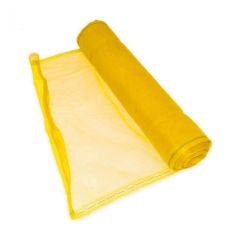
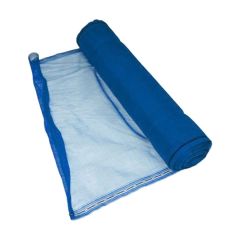
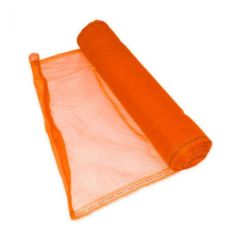
The definitive guide to debris netting for UK construction sites. Covers colour selection and hazard conventions, CDM compliance, step-by-step installation, scaffold wind loading, flame-retardant requirements, and maintenance. Written for site managers, scaffolding contractors, and principal contractors.
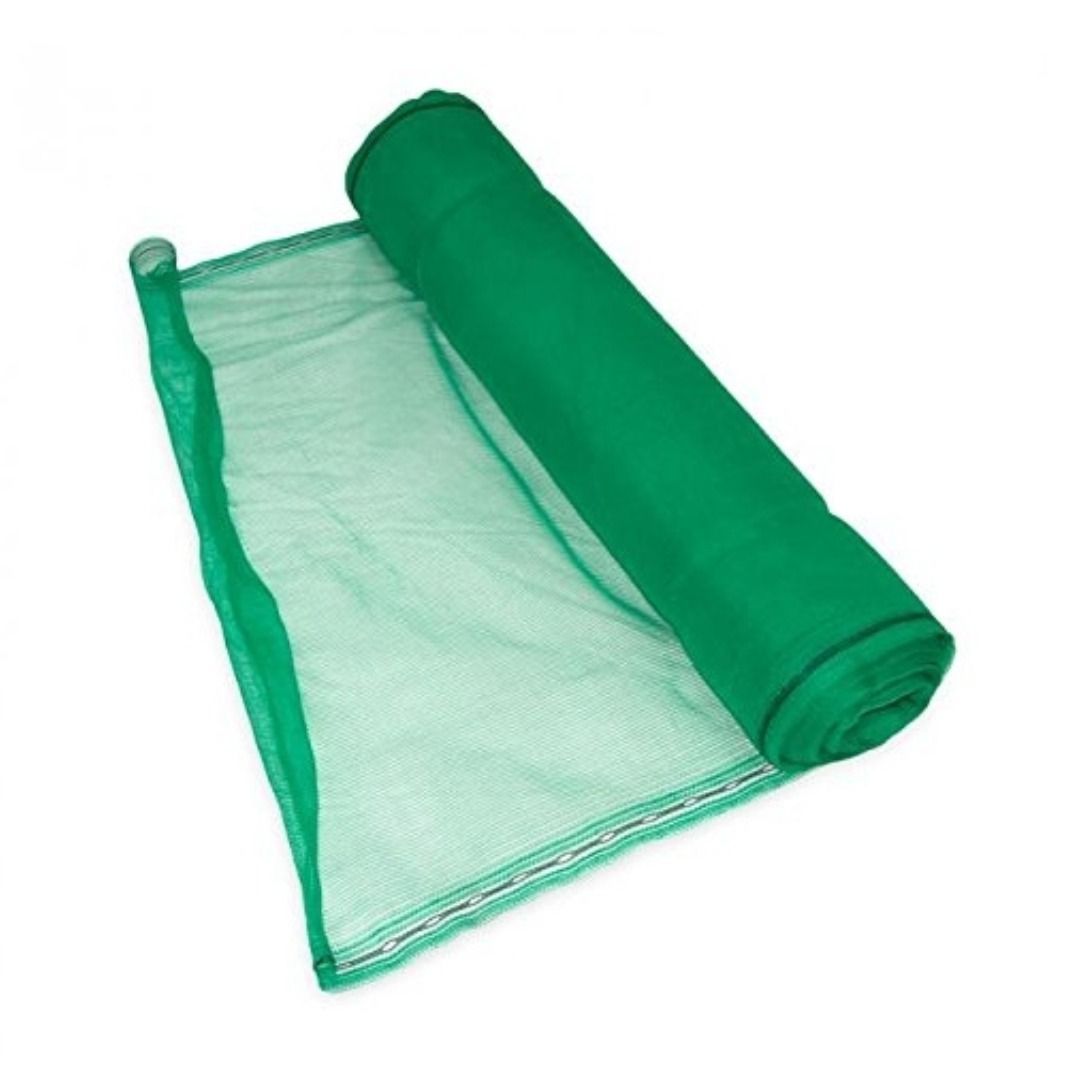
Green eyeletted debris netting supplied in a 2 metre x 50 metre roll for scaffolding, heras fencing, site partitioning, gardening, and allotment use on construction and civil engineering sites.
- Eyeletted construction with buttonhole eyelets along edges and centre section for fast, secure fixing
- 50gsm knitted HDPE construction for debris containment and wind reduction
- Suitable for scaffolding, heras fencing, site partitioning, gardening, and allotments
- Not flame retardant: do not use where fire-rated netting is specified
- Supplied as a single 2m x 50m roll
- Green
Green Debris Netting Roll 2m x 50m - Eyeletted 50gsm
Green eyeletted debris netting supplied in a 2 metre x 50 metre roll for scaffolding, heras fencing, site partitioning, gardening, and allotment use on construction and civil engineering sites.
- Eyeletted construction with buttonhole eyelets along edges and centre section for fast, secure fixing
- 50gsm knitted HDPE construction for debris containment and wind reduction
- Suitable for scaffolding, heras fencing, site partitioning, gardening, and allotments
- Not flame retardant: do not use where fire-rated netting is specified
- Supplied as a single 2m x 50m roll
- Green
- Buy 5 for £46.98 £39.15 each and save 5%
- Buy 10 for £42.98 £35.82 each and save 13%
| BULK DISCOUNT | 5 | 10 |
|---|---|---|
| Price | £39.15 £46.98 | £35.82 £42.98 |
Order 1x to earn 41 FASTPoints
Order to earn 41 FASTPoints
Log in to access trade discountsGreen Debris Netting Roll
Green debris netting supplied in a 2 metre x 50 metre roll for construction sites, scaffolding contractors, and site managers requiring reliable debris containment, dust suppression, and wind reduction across scaffolding faces, heras fencing perimeters, and internal site partitioning. Manufactured to approximately 50gsm from knitted HDPE with buttonhole eyelets along both edges and through the centre section, allowing fast and secure fixing to scaffold tube, heras fencing panels, timber hoarding, and post systems without additional drilling or fixings. Supplied as a single roll in green, the standard colour for UK construction site netting. Not flame retardant: where fire-rated debris netting is required by a fire risk assessment or site specification, a flame-retardant variant must be used instead.
How eyeletted construction reduces installation time on site
Debris netting without eyelets requires cable ties to be threaded through the mesh weave itself, which is slow, creates uneven tension across the face, and concentrates load stress on individual mesh strands rather than reinforced fixing points. Buttonhole eyelets distributed along both edges and through the centre section provide defined, reinforced fixing points at regular intervals, allowing operatives to work along the face systematically with cable ties or scaffold clips at each eyelet rather than hunting for a suitable mesh opening. On a scaffolded façade or heras perimeter covering fifty metres, the time difference between eyeletted and non-eyeletted netting across a full installation is significant.
Key Features
Buttonhole eyelets along edges and centre section: Reinforced fixing points distributed along both long edges and through the mid-section of the roll allow systematic installation with cable ties or scaffold clips at defined intervals. Reduces installation time and distributes fixing load across reinforced points rather than raw mesh strands.
50gsm knitted HDPE construction: Knitted construction allows the netting to absorb movement and wind load without tearing at fixing points, unlike woven alternatives which resist flex and fail at the weft. The 50gsm weight provides debris containment and measurable wind reduction without adding significant load to the scaffold structure or heras fencing system.
2 metre working height: The 2 metre width matches standard scaffold bay and heras panel heights, reducing the need for overlapping or trimming on most applications. Covers 100 square metres per roll.
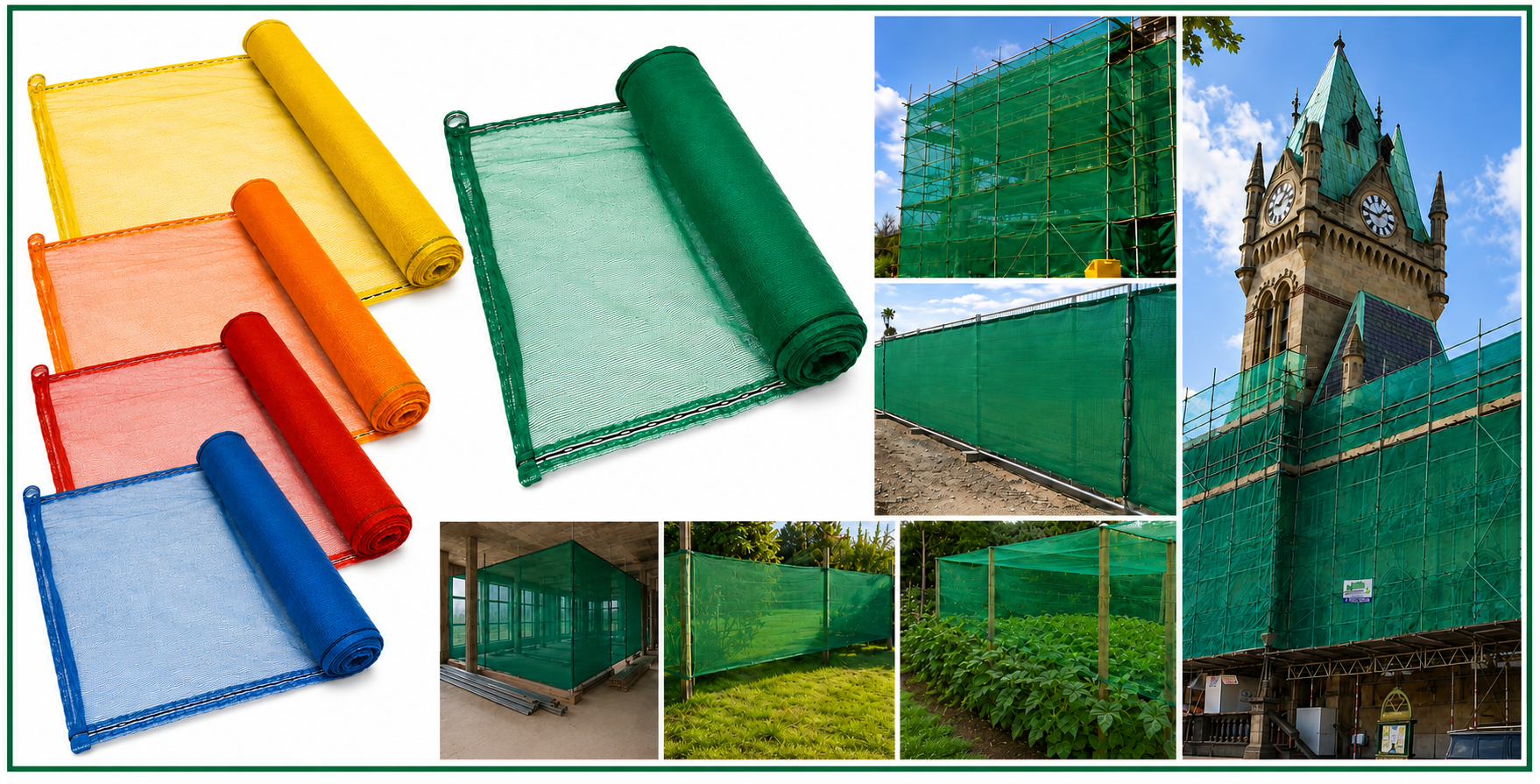
Broad application range: Suitable for scaffolding faces, heras fencing perimeters, internal site partitioning, temporary windbreaks, garden windbreaks, and allotment crop protection. One product covers multiple site and off-site uses.
Not flame retardant: This product does not carry a flame-retardant rating. Where a fire risk assessment or site fire safety specification requires flame-retardant netting, a certified FR variant must be specified. This is clearly stated to protect sites from inadvertent non-compliance.
Supplied as a single roll: Each order is fulfilled as one complete 2m x 50m roll. No minimum multi-roll requirement on standard orders.
Who is this for
Trades and roles:
-
Scaffolding contractors
-
Site managers and principal contractors
-
Groundworkers and civils contractors
-
Facilities managers
-
Gardeners and allotment holders
Industries:
-
Construction and civil engineering
-
Demolition and refurbishment
-
Utilities and infrastructure
-
Facilities management
-
Horticulture and agriculture

Specifications
| Specification | Detail |
|---|---|
| Product Name | Green Debris Netting Roll 2m x 50m - Eyeletted 50gsm |
| SKU / Product Code | DN200GRE |
| Product Type | Knitted HDPE debris containment netting |
| Primary Function | Debris containment, dust suppression, wind reduction |
| Material | HDPE (high-density polyethylene), knitted construction |
| Weight (gsm) | Approximately 50gsm |
| Eyelet Construction | Buttonhole eyelets along both edges and centre section |
| Roll Dimensions | 2 metres x 50 metres |
| Coverage per Roll | 100 square metres |
| Flame Retardant | No — not flame retardant |
| Colour | Green |
Compatibility
| Application / Condition | Status |
|---|---|
| Scaffold face debris containment | ✓ Compatible |
| Heras fencing perimeter screening | ✓ Compatible |
| Internal site partitioning | ✓ Compatible |
| Temporary windbreak on construction sites | ✓ Compatible |
| Garden and allotment windbreak | ✓ Compatible |
| Crop and plant protection in horticulture | ✓ Compatible |
| Sites requiring flame-retardant netting | ✗ Not suitable — not flame retardant |
| Fall arrest or personnel safety netting | ✗ Not suitable — debris netting only |
| Full weatherproof sheeting replacement | ✗ Not suitable — open mesh construction |
Who is this for
Green debris netting at this specification is used primarily by scaffolding contractors, principal contractors, and site managers on UK construction and refurbishment sites where debris containment, dust suppression, and wind reduction are required across scaffolded façades and temporary perimeter fencing. The 2 metre working width matches standard scaffold bay heights and heras panel dimensions, making it a practical fit for both applications without cutting or overlapping. Site managers specifying netting for CDM 2015 public protection duties, where falling objects must be prevented from leaving the site boundary, will find this product suitable for standard debris and dust containment on external scaffold faces. It is equally used by groundworkers and civils contractors for internal site partitioning, by facilities managers for temporary screening, and by gardeners and allotment holders for windbreaks and crop protection where the same knitted HDPE construction and dimensions are directly applicable.
Typical applications
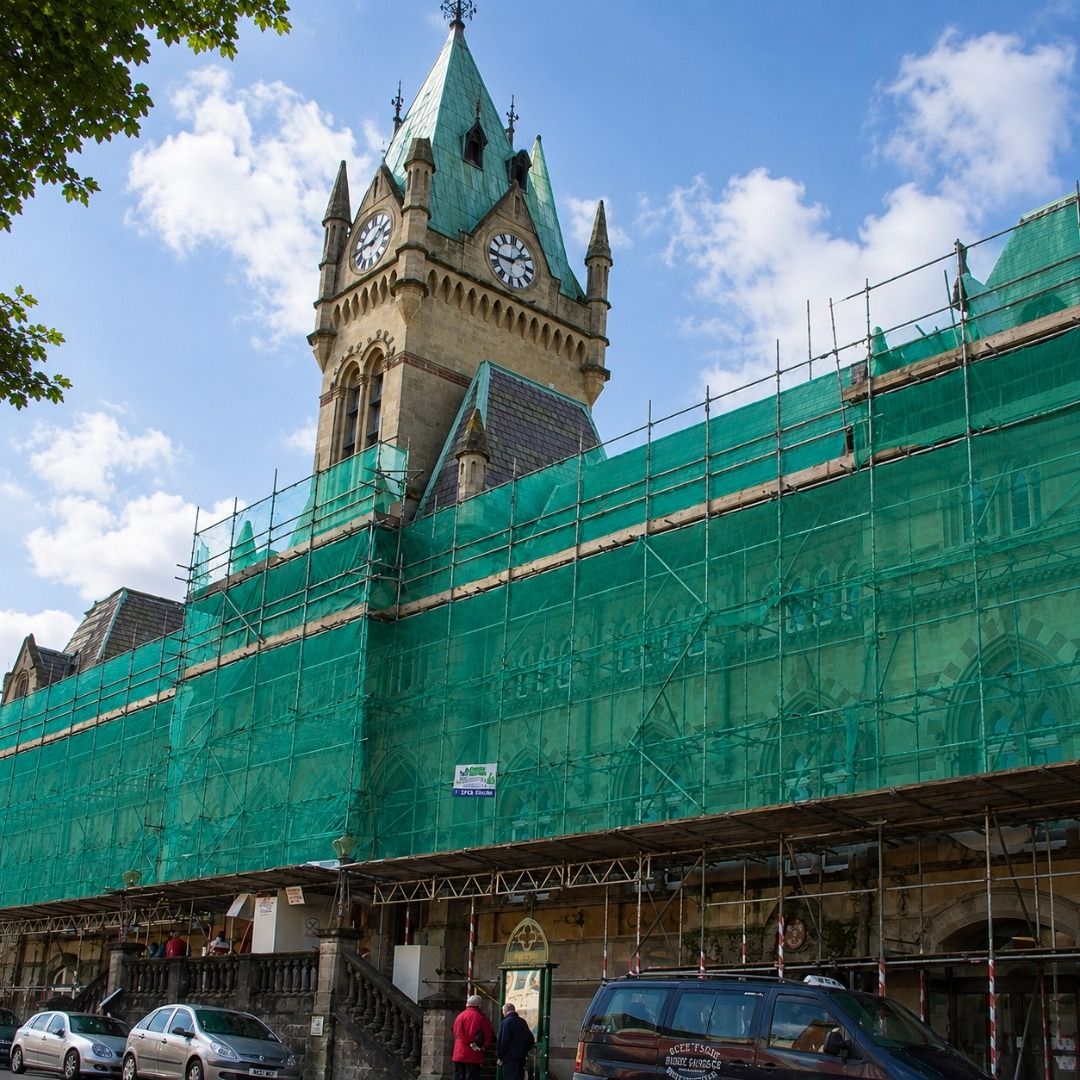
Wrapping external scaffold faces on construction, refurbishment, and demolition sites to contain falling debris and reduce dust migration to public areas, footpaths, and roads below.
Attaching to heras fencing panels around construction site perimeters to increase visual screening, reduce windblown dust and debris leaving the site boundary, and improve the appearance of the site enclosure in public-facing locations.
Creating temporary internal site partitions on construction projects where a lightweight, quickly installed screen is required to separate active work areas from pedestrian routes or completed zones.
Installing as a temporary windbreak on exposed construction sites, civil engineering projects, or infrastructure works where wind reduction at ground level improves working conditions for operatives.
Protecting vegetable beds, seedlings, and crops on allotments and market gardens from wind, pests, and light frost where the knitted mesh construction allows air circulation whilst reducing wind velocity across the growing area.
Supporting temporary screening around groundwork excavations, drainage works, and utility installations in residential or commercial areas where dust suppression and visual screening from the public are both required.
How to use
Step 1: Before attaching debris netting to any scaffold structure, inform the scaffold designer and erector so they can confirm the scaffold is designed to carry the additional wind load. The HSE advises that netting must never be attached to a scaffold without this step.
Step 2: Unroll the netting along the face to be covered, starting from one end and working to the other. Keep the roll supported during unrolling to avoid the netting dragging on the ground and accumulating debris or damage.
Step 3: Secure the netting at the top edge first, using cable ties or scaffold clips at each buttonhole eyelet along the upper edge. Work along the full length before moving to the lower edge.
Step 4: Tension the netting across the face and secure the lower edge at each eyelet, maintaining even tension to prevent the netting from billowing or collecting wind load unevenly between fixing points.
Step 5: Secure through the centre eyelets where the span between top and bottom fixing points creates mid-span movement. On scaffold faces above two metres, mid-section fixing is important for wind load distribution.
Step 6: Inspect fixings regularly during the installation period. Cable ties can degrade in prolonged UV exposure. Replace any fixing that shows cracking, discolouration, or failure before it releases the netting.
Common mistakes
Attaching netting to scaffold without notifying the scaffold contractor: The HSE is explicit that debris netting increases wind loading on the scaffold structure. Attaching netting to a scaffold that has not been designed for it creates a structural risk. Always confirm with the scaffold contractor before installation.
Using this netting where flame-retardant netting is specified: This product is not flame retardant. Where a fire risk assessment, CDM fire plan, or site specification requires FR-rated netting, this product must not be used as a substitute. Check the site fire safety requirements before ordering.
Under-fixing at the centre section: Fixing only at the top and bottom edges on a tall or wide span allows the netting to billow in wind, increasing dynamic load at the fixing points and risking release. Use the centre eyelets on any span where mid-section movement is visible.
Overlapping rolls without securing the overlap: Where two rolls are joined to cover a wider or taller area, the overlap must be cable-tied at regular intervals. An unsecured overlap creates a gap that defeats the debris containment purpose of the netting.
Storing netting in direct sunlight for extended periods: Prolonged UV exposure degrades HDPE over time. Store unused rolls under cover when not in use to preserve material integrity for future deployments.
Safety
This product is debris containment netting designed to reduce falling debris and dust migration from scaffolding, heras fencing, and site perimeters. It is not a fall arrest system, safety net, or personnel protection net and must not be used or relied upon for those purposes. It is not flame retardant: where a fire risk assessment or site fire safety plan specifies flame-retardant netting, this product must not be used. Before attaching to any scaffold structure, inform the scaffold designer and erector in accordance with HSE guidance. The Working at Height Regulations 2005 and CDM Regulations 2015 govern debris and public protection requirements on UK construction sites. Reference the HSE's guidance on protecting the public at hse.gov.uk for the applicable duties.
Maintenance
Inspect fixing points regularly during use, particularly after periods of high wind. Replace any cable ties or scaffold clips showing signs of UV degradation, cracking, or loosening before they fail. Remove netting carefully to avoid tearing at the eyelets. Shake out debris before rolling for storage. Store rolled and under cover away from direct sunlight and heat. Inspect the netting material for tears, perforations, or degraded areas before redeployment. Replace sections where the mesh has been torn or where eyelets have pulled through the reinforced border.

Frequently Asked Questions
Q: What is debris netting used for on a UK construction site?
A: Debris netting is used to contain falling materials, reduce dust migration, and provide a degree of wind reduction on scaffolded façades and temporary site perimeters. Under CDM Regulations 2015, principal contractors have a duty to ensure that objects cannot fall outside the site boundary where scaffolding is adjacent to public areas, roads, or footpaths. Debris netting on external scaffold faces, in combination with toe-boards and brick guards, is the standard method for meeting this duty on UK construction sites. The HSE specifically names netting as one of the required measures for protecting the public from falling objects on scaffolded structures.
Q: Is this debris netting flame retardant?
A: No. This product is not flame retardant. Where a site fire risk assessment, CDM fire safety plan, or principal contractor specification requires flame-retardant debris netting, a certified FR-rated product must be used instead. Do not substitute this product for FR-rated netting on any site where fire performance is specified. If you are unsure whether your site requires FR-rated netting, consult the site fire risk assessment or your principal contractor before ordering.
Q: What does 50gsm mean and why does it matter for debris netting?
A: GSM stands for grams per square metre and describes the weight of the netting material. A 50gsm knitted HDPE netting provides reliable debris containment and measurable wind reduction whilst remaining lightweight enough to limit additional wind load on the scaffold structure. Heavier gsm products provide greater opacity and wind resistance but add more load to the scaffold framework. At 50gsm, this netting is suitable for standard construction site debris containment and is compatible with most scaffold designs without requiring structural upgrade, provided the scaffold contractor is informed before attachment as the HSE advises.
Q: What is the difference between debris netting and scaffold sheeting?
A: Debris netting is an open-mesh knitted product that allows air to pass through whilst containing debris and dust. Scaffold sheeting is a solid or near-solid PVC or polyethylene sheet that blocks wind and weather entirely. Debris netting reduces wind loading on the scaffold structure compared with solid sheeting, which creates a significantly higher wind pressure load that requires the scaffold to be designed and certificated accordingly. For most standard debris containment and public protection applications on UK construction sites, debris netting is the correct and more practical specification. Where full weather protection for the works below is required, scaffold sheeting is the appropriate product.
Q: Can this netting be used on heras fencing as well as scaffolding?
A: Yes. The 2 metre width matches the standard height of heras fencing panels, and the buttonhole eyelets along both edges allow the netting to be cable-tied directly to the fencing mesh at regular intervals. It is commonly used on heras perimeters in public-facing locations to increase visual screening, reduce windblown dust and debris leaving the site boundary, and improve the appearance of the site enclosure. The same roll can be used across both scaffold faces and heras fencing on the same site without any modification.
Q: Why does this netting have eyelets along the centre section as well as the edges?
A: On a 2 metre high netting panel, the mid-point between the top and bottom fixing edges is 1 metre from each securing line. In moderate to strong wind, a panel fixed only at the edges billows significantly at the centre, creating dynamic load that concentrates stress at the top and bottom eyelet fixings. The centre-section eyelets allow an additional line of fixing through the mid-height of the panel, reducing billowing and distributing wind load more evenly across all three fixing lines rather than concentrating it at the two edges.
Q: How much netting do I need for a typical scaffold or heras perimeter?
A: Each roll covers 100 square metres at 2 metres high and 50 metres long. For a straight scaffold face, measure the total linear metres of the face and multiply by the height to confirm coverage. Where the face height exceeds 2 metres, rolls will need to be overlapped vertically, with the overlap secured at regular intervals. For heras fencing perimeters, each roll covers 50 linear metres of standard panel at the correct height. Order one roll per 50 linear metres of perimeter plus a contingency allowance for corners, overlaps, and waste.
Q: How quickly can I get this debris netting delivered to site?
A: Order by 7pm for next-day delivery nationwide at no extra cost on stocked lines. CMT Group operates its own fleet of vehicles covering over 95% of the UK mainland, with live order tracking, real-time ETAs, and What3Words integration for precise delivery to any site entrance, compound gate, or specific location without needing a full postcode. VIP 2-hour delivery is available from any CMT depot across the UK. Call the sales team for pricing and availability on time-critical site requirements.
Q: Why order debris netting from CMT Group?
A: CMT Group holds large stock positions on core site equipment lines with no backorders, so procurement teams can order with confidence for immediate project requirements without the delays common at general merchants with shallower stock. The EDGE procurement portal gives contract customers agreed pricing, role-based spending controls, live stock visibility, and full delivery tracking from dispatch to drop-off, making it straightforward to manage recurring site consumable orders across multiple projects. CMT Group holds ISO 9001:2015 accreditation, CHAS Elite approval, and Crown Commercial Service Supplier status, and is rated Excellent on Trustpilot with over 400 verified Reviews.io reviews.