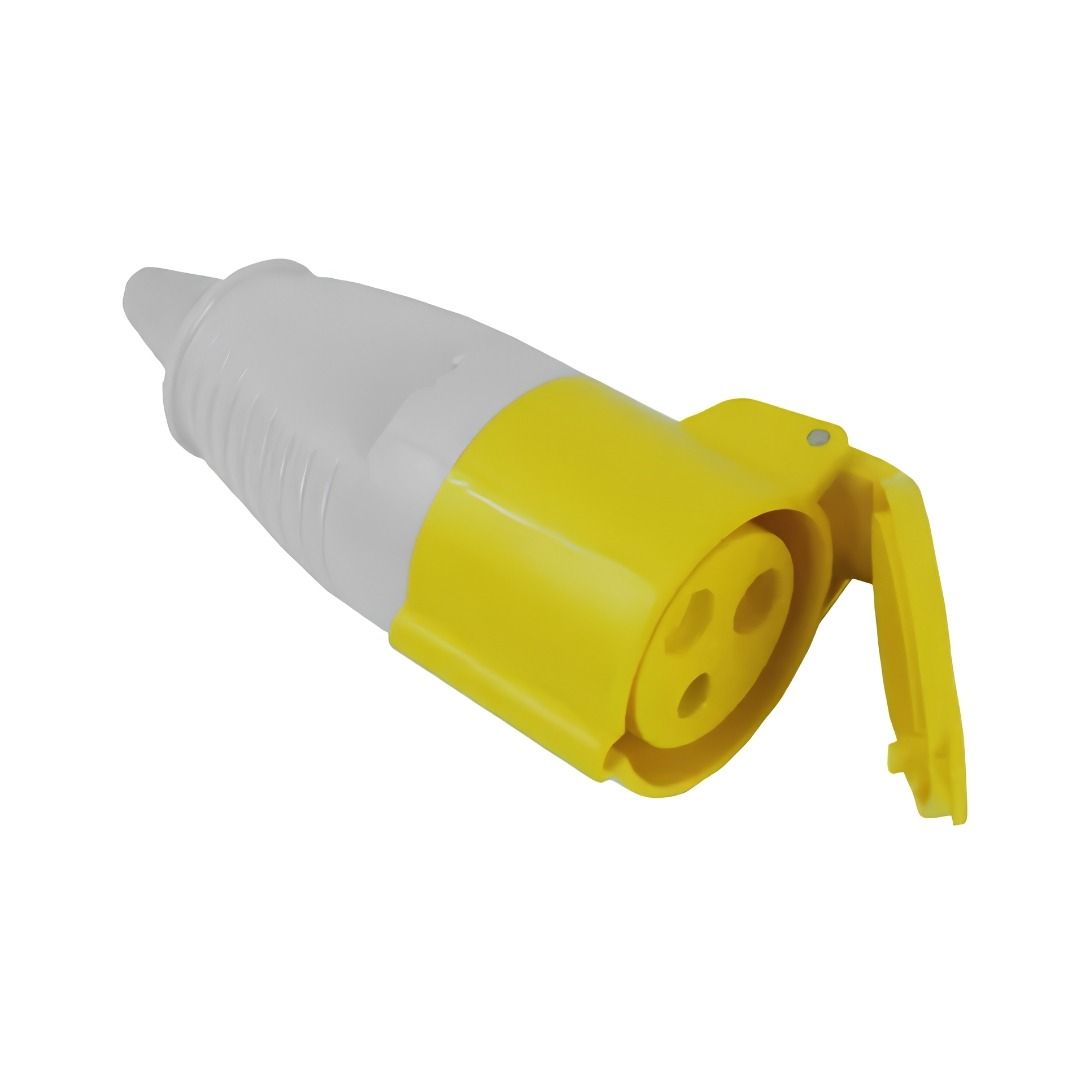
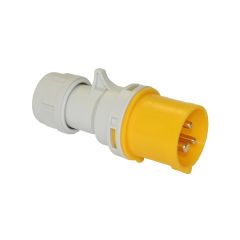
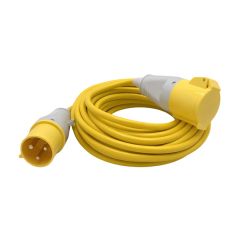
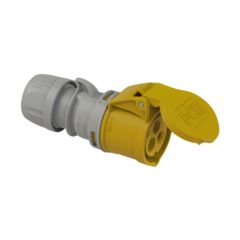
A yellow 32A IEC 60309 socket for terminating 110V CTE site cables. Features a hinged weatherproof flap and brass connectors. IP44 rated for outdoor site use.
32A current rating, 110V AC (CTE)
2P+E pin configuration
BS EN 60309 standard, yellow colour
Hinged weatherproof protection flap
Brass connectors
IP44 rated
For 110V CTE systems only
110V 32A Socket - 2P+E
Code
ELS11032
2 In Stock
A yellow 32A IEC 60309 socket for terminating 110V CTE site cables. Features a hinged weatherproof flap and brass connectors. IP44 rated for outdoor site use.
A yellow 32A IEC 60309 socket for fitting to the tool end of 32A 110V CTE site cables. It is the female end of the connection. The 32A plug inserts and locks in place. A hinged weatherproof flap covers the contact face when no plug is connected, keeping the brass contacts clean and dry between uses. IP44 rated and manufactured to BS EN 60309.
Why a hinged flap matters on site
An uncovered socket face collects site debris. Cement dust, mud, and water get into the contacts during transit and storage. That causes poor connections, arcing, and premature corrosion of the contact surfaces. The hinged weatherproof flap solves this. It closes automatically when the plug is withdrawn. The contacts stay clean and the IP44 seal is maintained even when the socket is not in use.
Key Features
Hinged weatherproof protection flap: Closes over the contact face when not in use. Keeps contacts clean and dry between connections. Maintains IP44 protection during transit and storage, not just during active use.
Brass connectors: The internal terminal connections are brass. Brass resists corrosion and provides a firm, low-resistance connection for the cable conductors. It also holds terminal screws more reliably than cheaper alloy alternatives under the vibration and movement of site use.
BS EN 60309 standard: The UK and European standard for industrial plugs and sockets, equivalent to IEC 60309. The 32A yellow configuration is physically different from the 16A version. A 16A plug cannot fit this socket. This prevents accidentally connecting 16A equipment to a 32A circuit.
IP44 rated: Protected against solid objects larger than 1mm and water splashes from all directions. Suitable for outdoor construction site conditions.
Who is this for
Trades and roles:
Electricians terminating 32A 110V site cables
Site managers replacing damaged connectors on 32A leads
Anyone building custom 32A 110V leads for site use
Industries:
Construction and new build
Civil engineering and groundworks
Specifications
Specification
Detail
Product Name
110V 32A Socket - 2P+E
SKU
ELS11032
Type
Female socket (coupler), in-line cable end fitting
Voltage
110V AC (CTE)
Current Rating
32A
Pin Configuration
2P+E (2 poles + earth, 3-pin)
Standard
BS EN 60309 (IEC 60309)
IP Rating
IP44
Protection Flap
Hinged weatherproof flap
Connectors
Brass
Colour
Yellow (110V CTE standard)
Use
110V CTE systems only. Do not connect to 240V.
Compatibility
Application or condition
Status
Terminating cable ends for 32A 110V CTE site leads
✓ Suitable
Replacing damaged sockets on 32A 110V site leads
✓ Suitable
Building custom 32A 110V extension leads
✓ Suitable
IP44, outdoor construction site conditions
✓ Suitable
32A 110V CTE transformer outputs and cable reels
✓ Suitable
Connection to a 240V supply
✗ Not suitable
16A plugs (physically incompatible)
✗ Not compatible
Use as a standalone power point without cable
✗ Not suitable
Who is this for
Electricians and site operatives fitting or replacing the socket end of 32A 110V CTE site leads. This is a component. It pairs with a matching 32A IEC 60309 plug at the supply end to complete a cable assembly. The 32A rating makes it suitable for higher-capacity transformer outputs and larger site equipment.
Typical applications
Fitting a new socket to a 32A 110V cable to terminate it for site use.
Replacing a damaged or worn socket on an existing 32A site lead.
Building a custom-length 32A extension lead for a specific site layout.
Fitting to the output end of a 32A cable reel or distribution lead.
How to use
Step 1: Strip the cable end to the correct length for the terminal connections inside the socket body.
Step 2: Connect earth (green/yellow), neutral (blue), and line (brown) to the correct terminals. Tighten all terminal screws fully. Brass terminals accept the screws firmly — do not overtighten.
Step 3: Secure the cable clamp onto the cable outer sheath. This provides strain relief and maintains the IP44 seal at the cable entry point.
Step 4: Assemble the socket body completely. Test with an approved instrument before the lead goes into service.
Common mistakes
Using 16A plugs: this is a 32A socket. The physical size and keyway are different from the 16A version. A 16A plug will not fit correctly.
Not closing the flap after disconnecting: the flap protects the contacts when not in use. It should be closed after every disconnection, especially on site where debris is present.
Not tightening the cable clamp: the clamp secures strain relief and the IP44 seal. A loose clamp allows the cable to pull on the terminals.
Safety
This socket is for 110V CTE systems only. Do not connect to a 240V supply. Maximum rating 32A. Wiring must be carried out by a competent person. Test after wiring before use. Tighten the cable clamp fully. Close the weatherproof flap when not in use.
Maintenance
Inspect the contact face, flap hinge, and cable entry before each use. Clean contact faces with a dry cloth after site use. Check the flap closes fully and the hinge moves freely. Replace if the body is cracked, the flap is broken, or any contact shows significant corrosion.
Frequently Asked Questions
Q: What is the difference between this 32A socket and the 16A version? A: The 32A socket is physically larger than the 16A version. The pin layout and keyway are different, which means a 16A plug cannot fit the 32A socket and vice versa. This physical incompatibility is a deliberate safety feature that prevents 16A equipment from being connected to a 32A circuit by mistake.
Q: Why does this socket have a hinged flap? A: The flap covers the contact face when no plug is connected. On a construction site, dust, mud, and moisture reach exposed sockets quickly. The flap keeps the brass contacts clean and dry and maintains the IP44 protection rating even when the socket is not in use. It closes automatically when the plug is withdrawn.
Q: What are brass connectors and why do they matter? A: The internal terminals — where the cable conductors are clamped, are brass. Brass has good electrical conductivity, resists corrosion better than cheaper alloy materials, and holds terminal screws reliably under the vibration and movement of daily site use. Over time, poor-quality terminal materials corrode or deform, leading to loose connections and heat generation.
Q: Can this socket be used on a 16A circuit? A: The socket is rated 32A and will work on any circuit up to 32A. However, a 16A plug will not physically fit the 32A socket due to the different pin size. If your circuit is 16A, you need the 16A socket (ELS11016) rather than this product.
Q: Do I need an electrician to wire this socket? A: Yes. All electrical connector wiring should be carried out by a competent person who understands terminal configurations, cable preparation, and safe testing. An incorrectly wired socket is a shock hazard.
Every construction site in the UK that uses power tools needs a safe way to distribute electricity. 110V CTE is the standard. But setting it up correctly, from the transformer to the tool, involves selecting the right components and understanding how they work together. This guide covers everything.