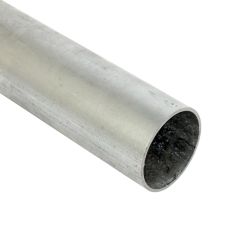
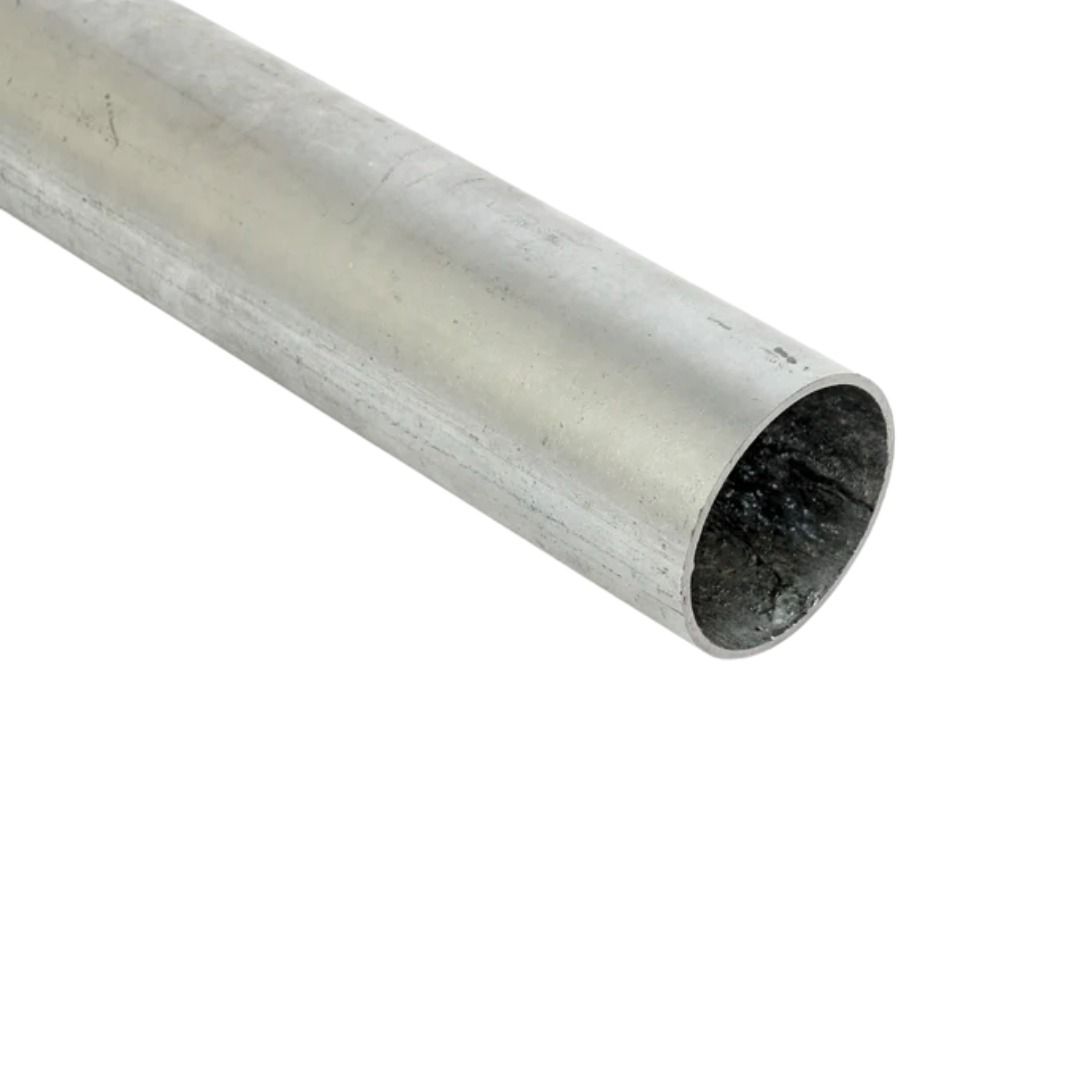
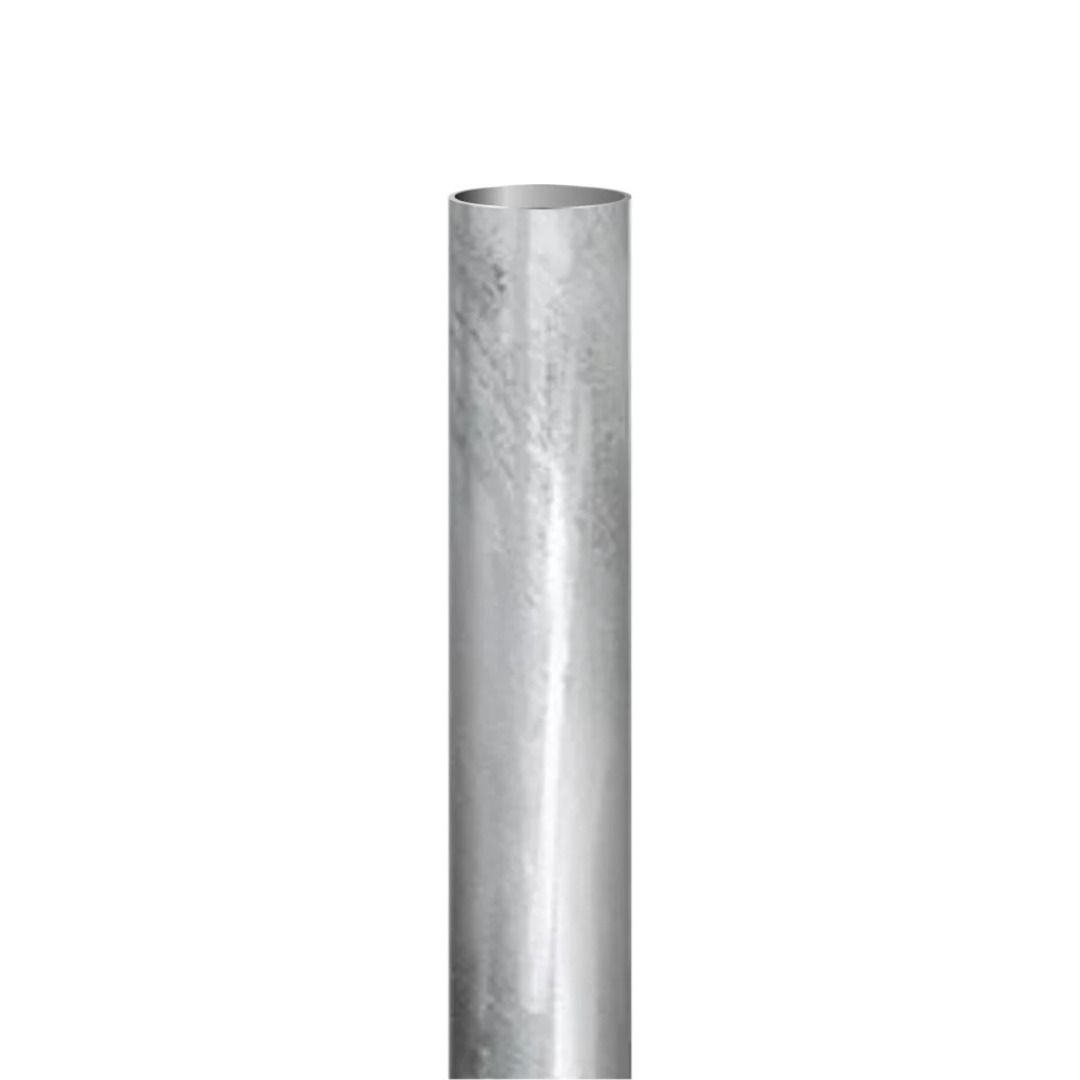
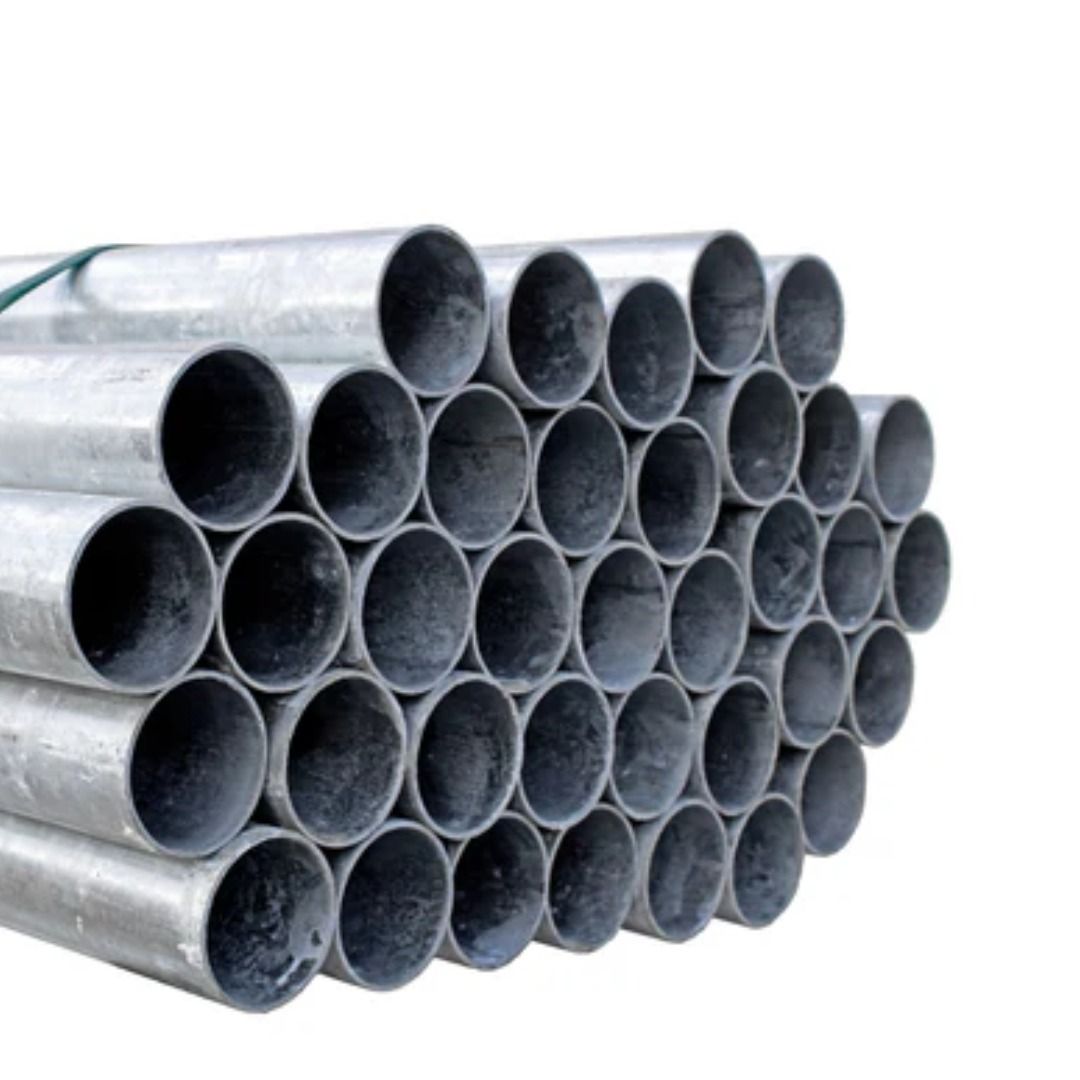
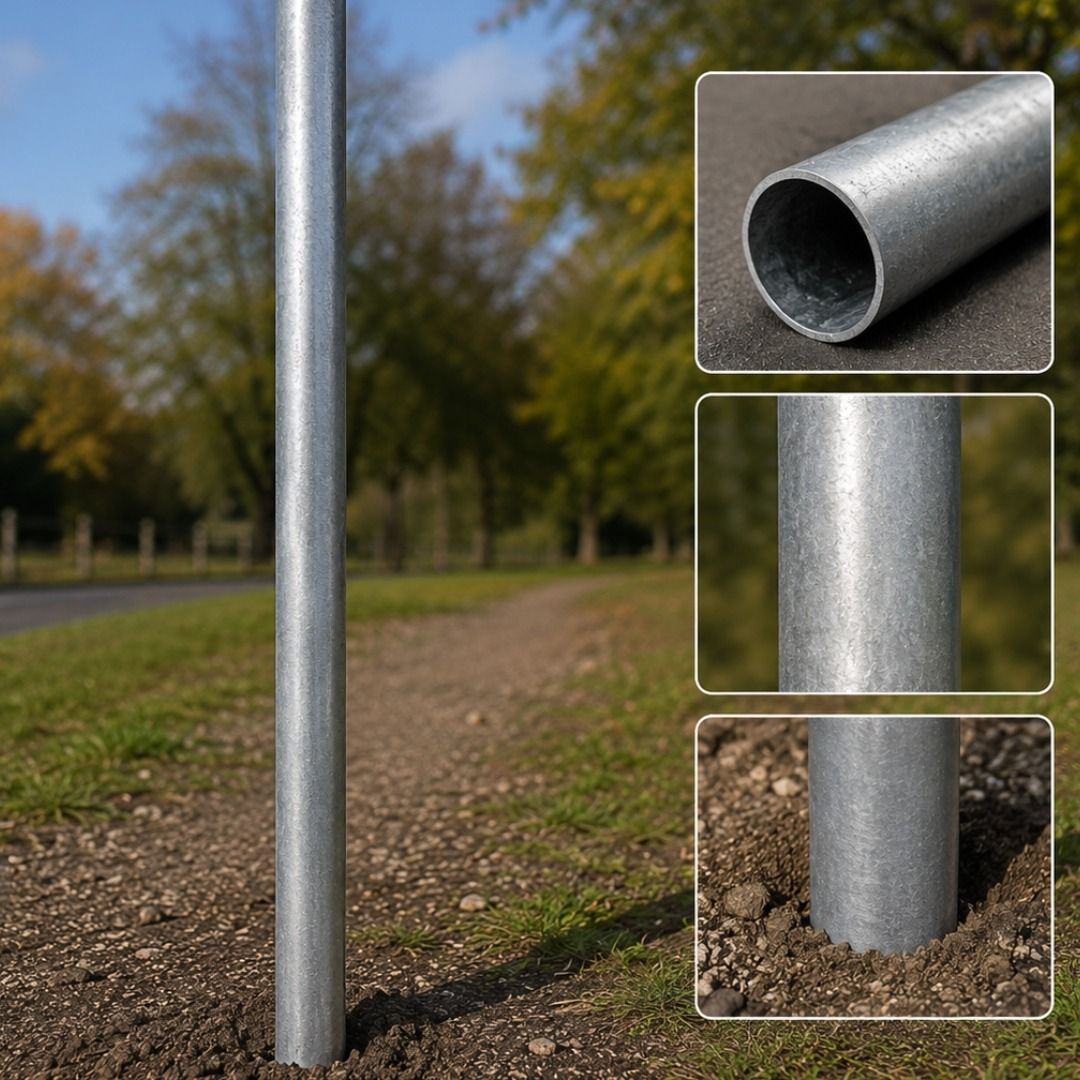
A solid, galvanised steel sign post for anyone who needs reliable, long-lasting support for road, construction, car park, or infrastructure signage.
- Hot-dip galvanised for long-term corrosion resistance
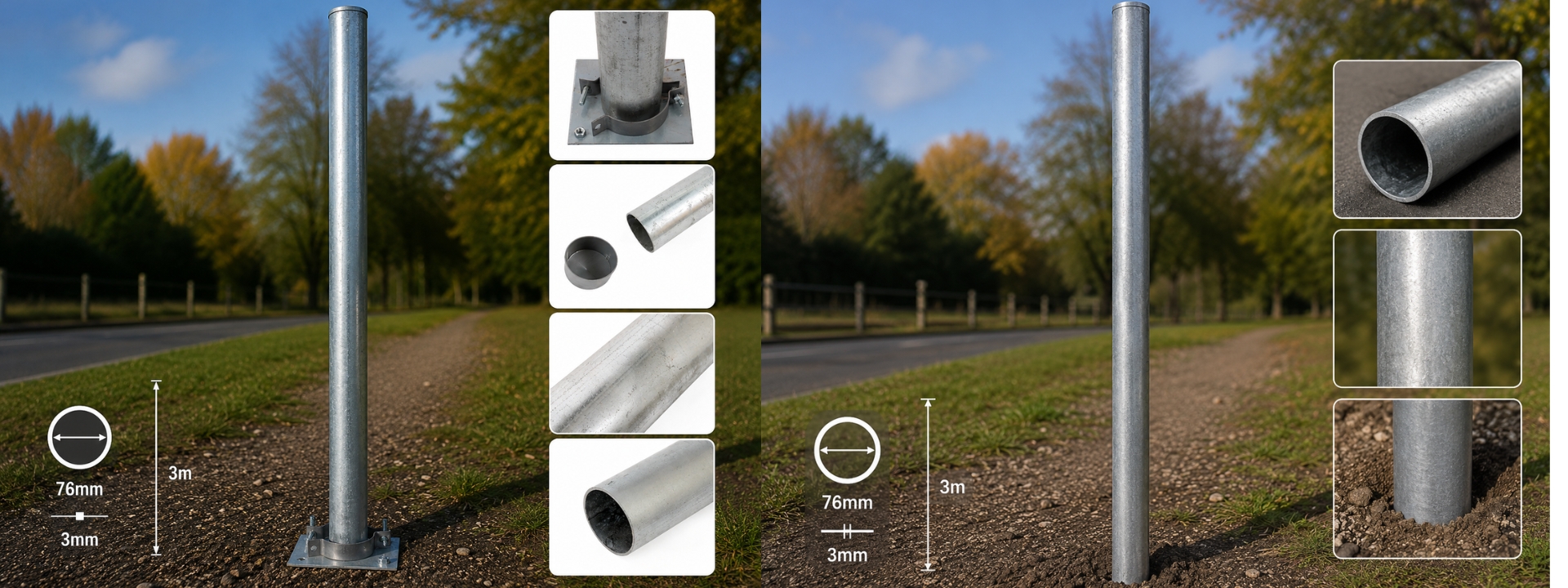
- 76mm diameter, 3mm wall thickness, industry standard for road and site signage
- Available in four lengths: 2m, 3m, 3.6m, and 4m
- Compatible with standard 76mm sign clamps and base plates
- Can be powder coated to any RAL colour on request
- Suitable for permanent and temporary outdoor installations
- Strong, low-maintenance, and built for demanding outdoor environments
76mm Galvanised Steel Sign Post (2m, 3m, 3.6m, 4m) - 3mm Wall Thickness
A solid, galvanised steel sign post for anyone who needs reliable, long-lasting support for road, construction, car park, or infrastructure signage.
- Hot-dip galvanised for long-term corrosion resistance
- 76mm diameter, 3mm wall thickness, industry standard for road and site signage
- Available in four lengths: 2m, 3m, 3.6m, and 4m
- Compatible with standard 76mm sign clamps and base plates
- Can be powder coated to any RAL colour on request
- Suitable for permanent and temporary outdoor installations
- Strong, low-maintenance, and built for demanding outdoor environments
76mm Galvanised Steel Sign Post
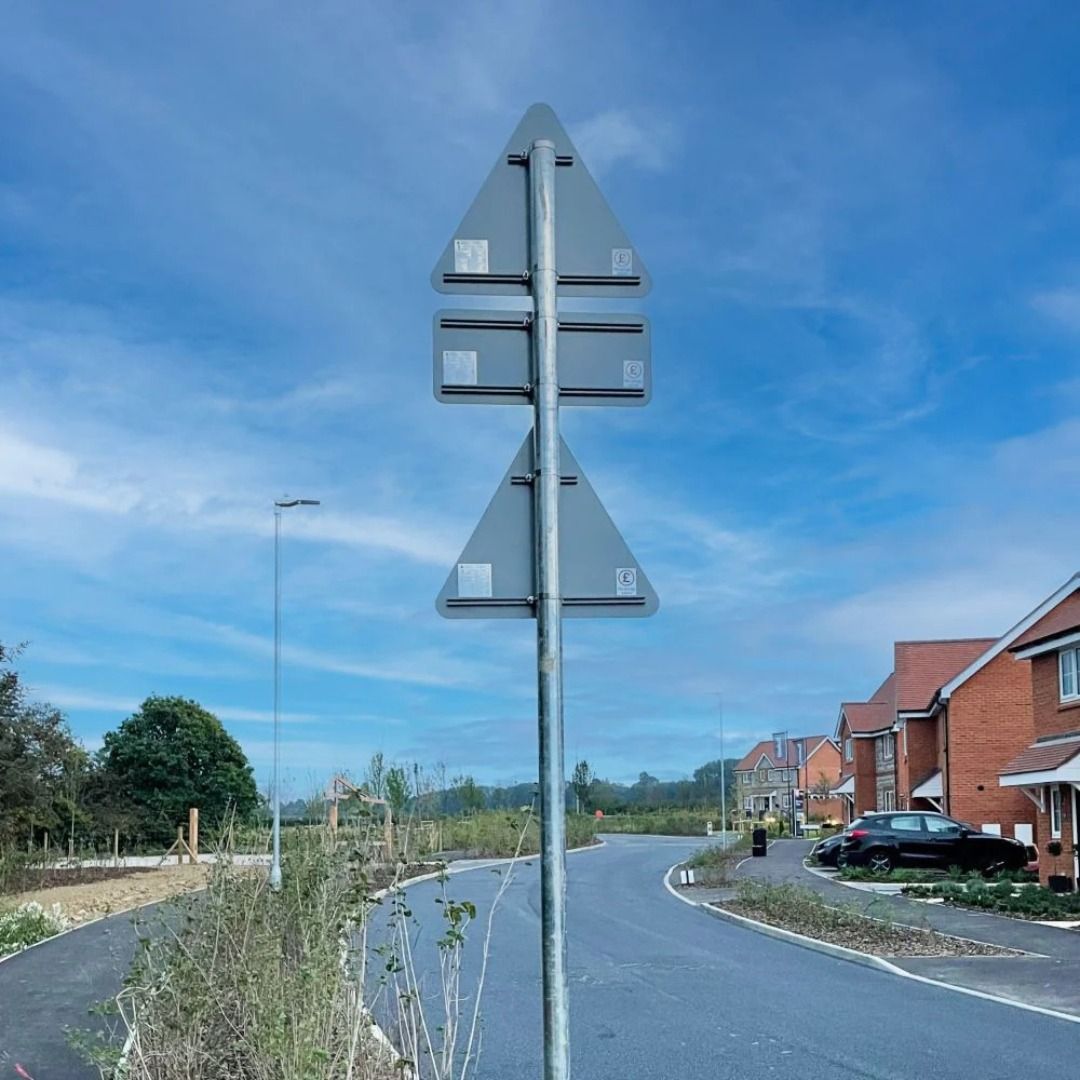
If you have ever driven past a road sign, walked through a car park, or navigated a construction site using directional signage, there is a very good chance the post holding that sign up was a 76mm galvanised steel post just like this one. It is the industry standard size for small to medium signage across UK highways, construction sites, rail infrastructure, and commercial premises, and there is a good reason it has stayed that way.
The 76mm diameter gives you enough structural rigidity to hold a sign securely without the post becoming unnecessarily heavy or difficult to handle on site. The 3mm wall thickness takes that rigidity further, this is not lightweight tubing that flexes in the wind. It is a robust steel post that stays upright and keeps your signage exactly where you put it, year after year.
Hot-dip galvanised to BS EN ISO 1461, the finish penetrates the steel surface rather than sitting on top of it, giving you genuine long-term corrosion resistance rather than a coating that chips and fails within a few seasons. If you need a specific colour to match a corporate scheme or site requirement, the post can be powder coated to any RAL colour on request.
Why 76mm is the size specifiers reach for
The 76mm diameter sits in a sweet spot that most UK signage specifications call for. It is strong enough for standard road and highway signage installations, compatible with the vast majority of sign clamps and base plates already in use on UK sites, and light enough to be handled and installed by two people without mechanical assistance. The 3-inch designation you will sometimes see on older drawings refers to the same size, 76mm and 3-inch are used interchangeably in the UK signage and highways sector.
Key Features
- Hot-dip galvanised to BS EN ISO 1461: Hot-dip galvanising is not the same as zinc plating or paint. The steel is immersed in molten zinc, which metallurgically bonds to the surface and protects it from corrosion from the inside out. BS EN ISO 1461 is the UK and European standard that governs this process, so when you see that certification you know exactly what you are getting.
- 76mm diameter, 3mm wall thickness: This combination gives the post its structural backbone. The 76mm external diameter is the recognised industry standard for small to medium road and site signage. The 3mm wall thickness means it resists bending and lateral load from wind pressure on mounted signs without requiring additional bracing.
- Four length options: Available in 2m, 3m, 3.6m, and 4m to suit different installation requirements. Shorter lengths are ideal for low-mounted car park and pedestrian signage. Longer lengths give the clearance needed for highway and construction site signs where visibility at distance is important.
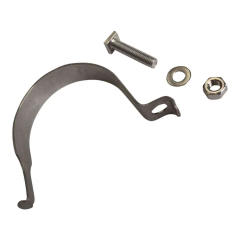
- Compatible with standard fittings: Works with 76mm sign clamps and base plates, keeping your installation straightforward and your hardware consistent across the site.
- Powder coating available on request: If the standard galvanised finish does not suit your project, the post can be powder coated to any RAL colour. Useful for branded environments, colour-coded site management schemes, or installations where the post needs to blend with or complement surrounding structures.
- Low maintenance: Once it is in the ground, it largely looks after itself. The galvanised finish does not need painting or treating, and the 3mm wall thickness means the post maintains its structural integrity even as it ages in outdoor conditions.
Who is this for
Trades and roles:
- Highways and traffic management contractors
- Construction site managers and principal contractors
- Local authorities and public sector facilities teams
- Car park and commercial premises managers
- Rail and infrastructure contractors
- Signage installers and fabricators
Industries:
- Highways and road construction
- Construction and civil engineering
- Rail and transport infrastructure
- Local authority and public sector
- Commercial and industrial facilities
- Car parks and retail parks
Specifications
| Specification | Detail |
| Product name | 76mm Galvanised Steel Sign Post - 3mm Wall Thickness |
| Parent SKU | SPGLV76 |
| Material | Galvanised steel tube |
| External diameter | 76mm (3") |
| Wall thickness | 3mm |
| Galvanising standard | Hot-dip galvanised to BS EN ISO 1461 |
| Finish | Hot-dip galvanised as standard |
| Powder coating | Available in any RAL colour on request |
| Compatible fittings | 76mm sign clamps and base plates |
| Installation type | Permanent or temporary outdoor installation |
| Suitable applications | Road signage, construction site signage, rail signage, car park signage, wayfinding, directional signage |
Compatibility
| Application or condition | Status |
| Road and highway signage mounting | ✓ Compatible |
| Construction site directional and regulatory signage | ✓ Compatible |
| Rail and infrastructure signage installations | ✓ Compatible |
| Car park and commercial premises signage | ✓ Compatible |
| Wayfinding and pedestrian directional signage | ✓ Compatible |
| 76mm sign clamps and D-type clamps | ✓ Compatible |
| Standard 76mm sign post base plates | ✓ Compatible |
| Motorway and high-speed road signage (requires larger diameter) | ✗ Not suitable |
| Overhead gantry signage | ✗ Not suitable |
Who is this for
This sign post is used by anyone who needs to put a sign up and keep it there reliably. That covers a wider range of people than you might expect. Highways contractors installing permanent road signage along a new carriageway. Construction site managers putting up directional, regulatory, and safety signage across a live site. Local authority teams managing wayfinding in public spaces. Car park operators mounting height restriction, directional, and parking regulation signs. Rail and infrastructure contractors installing lineside and platform signage.
What they all have in common is that they need a post that does not wobble, does not rust out after a couple of winters, and does not require a maintenance visit every season. The 76mm galvanised steel post delivers all three without much fuss.
Typical applications
-
Mounting road and highway signage along new and existing carriageways, including give way, speed limit, directional, and regulatory signs in compliance with Chapter 8 and the Traffic Signs Regulations and General Directions.
-
Installing construction site safety and directional signage on active build sites, including mandatory PPE signs, one-way system boards, and site entrance and exit markers.
-
Supporting car park signs including height restriction bars, directional arrows, bay markings, and parking regulation notices in commercial and public car park environments.
-
Erecting wayfinding and pedestrian directional signage in public spaces, town centres, retail parks, and transport hubs.
-
Installing rail infrastructure signage on lineside, platform, and depot environments where a robust, corrosion-resistant post is required for long-term outdoor installation.
-
Mounting temporary outdoor event signage where a reusable, free-standing post installation is needed across a venue or public space for a defined period.
How to install
Step 1: Select the correct post length for your application. As a general guide, allow a minimum of 600mm below ground for a 2m post and 900mm to 1,000mm for posts of 3m and above, depending on ground conditions and sign loading.
Step 2: Prepare the foundation. For permanent installations, a concrete foundation is recommended. Dig the hole to the required depth, place the post, check it is vertical using a spirit level, and pour concrete around the base. Allow the concrete to cure fully before mounting the sign.
Step 3: For surface-mounted installations where ground penetration is not possible, fit a 76mm compatible base plate to the post before positioning. Bolt the base plate to the surface using appropriate fixings for the substrate.
Step 4: Mount the sign to the post using 76mm compatible sign clamps at the appropriate height. Ensure the sign face is positioned at the correct height for the application, refer to the Traffic Signs Manual or the relevant site signage specification for height requirements.
Step 5: Check the post and sign for vertical alignment and tighten all fixings before opening the installation to traffic or public access.
Common mistakes
Undersizing the foundation depth: The most common cause of sign post failure is an insufficient foundation. A post that has been set too shallow will lean over time as ground movement, frost heave, and wind loading work on it. Always check the relevant specification for minimum embedment depth before installation.
Using the wrong size clamps: The 76mm post requires 76mm compatible sign clamps. Using clamps rated for a different diameter post results in a loose, unstable sign mounting that can slip or rotate in high winds.
Assuming the galvanised finish needs no maintenance: The galvanised finish is long-lasting but not completely maintenance-free. Inspect posts periodically for signs of white rust or zinc corrosion at cut ends and mechanical damage points. Any bare steel exposed by cutting or drilling during installation should be treated with a cold galvanising compound before the post goes in the ground.
Cutting the post without treating the cut end: When cutting the post to length on site, the cut end exposes raw steel that is not protected by the galvanised finish. Always apply a cold galvanising compound or zinc-rich paint to cut ends before installation to maintain corrosion protection at that point.
Safety
Sign posts installed on public highways must comply with the Traffic Signs Regulations and General Directions 2016 and the relevant requirements of the Traffic Signs Manual. For construction site signage, installations should comply with the relevant requirements of the Health and Safety (Safety Signs and Signals) Regulations 1996. Post installation in highway verges and public land requires appropriate permits and approvals from the relevant highway authority. Always ensure the post and sign installation does not create a hazard to road users, pedestrians, or site operatives.
Maintenance
Inspect the post and its fixings at least annually, or after any significant weather event that may have subjected the installation to unusual wind loading. Check for corrosion at the base of the post where it enters the ground, this is where moisture sits and where zinc depletion first becomes visible. Inspect clamp fixings for tightness and replace any corroded bolts or nuts. Posts showing significant structural corrosion or mechanical damage should be replaced rather than repaired.
Frequently Asked Questions
Q: What does hot-dip galvanised to BS EN ISO 1461 actually mean and why does it matter?
A: Hot-dip galvanising is the process of immersing the steel post in a bath of molten zinc at around 450 degrees Celsius. The zinc bonds metallurgically with the steel surface rather than just coating it, which means it protects the steel from the inside out rather than relying on a surface coating that can chip, crack, or peel. BS EN ISO 1461 is the UK and European standard that sets the minimum zinc coating thickness and quality requirements for this process. When you see BS EN ISO 1461 on a product, you know the galvanising has been done properly and to a documented standard rather than a vague commercial specification.
Q: Why is 76mm the standard size for road and site signage posts?
A: The 76mm diameter became the industry standard for small to medium road and site signage because it hits a practical sweet spot. It is strong enough to hold standard sign panels securely under the wind loads they generate, it is compatible with the vast majority of standard sign clamps, base plates, and sign furniture used across UK highways and construction sites, and it is light enough to be handled and installed without mechanical assistance. The 76mm size is specified in a wide range of UK highway and signage standards, which means procurement teams, designers, and contractors all default to it as the go-to diameter for non-motorway applications.
Q: What is the difference between the four available lengths and which should I choose?
A: The four lengths cover the range of typical signage height requirements. The 2m post suits low-mounted signs such as car park bay markers, pedestrian directional signs, and ground-level regulatory notices where a short installation above the base is required. The 3m post is the most common general-purpose length for road and construction site signage, providing enough height for standard sign visibility whilst remaining practical to handle on site. The 3.6m post gives additional clearance for higher-mounted signs or for installations where a longer section needs to be below ground. The 4m post is used where maximum sign height is required, typically for higher-mounted highway signs or for sites where the ground level varies significantly from the road or footway level.
Q: Can this post be used on an active construction site?
A: Yes, and it is well suited to it. Construction sites regularly use 76mm galvanised sign posts for a wide range of signage applications including site entrance and exit markers, one-way system boards, mandatory PPE signs, speed limit signs within the site boundary, and directional signage for deliveries and personnel. The galvanised finish stands up well to the conditions on a typical construction site, and the 3mm wall thickness means the post is not easily damaged by incidental contact with plant or equipment.
Q: Can the post be powder coated and does that affect the structural performance?
A: Yes, the post can be powder coated to any RAL colour on request. Powder coating does not affect the structural performance of the post. The galvanised finish remains beneath the powder coat and continues to protect the steel. Powder coating is worth considering if you need the post to match a corporate colour scheme, a branded site environment, or a specific colour-coded signage system.
Q: Is this post compatible with standard sign clamps and base plates?
A: Yes. The 76mm external diameter is the standard size that the vast majority of UK sign clamps, D-type clamps, and sign post base plates are designed to fit. Always confirm the internal diameter of your clamps and base plates matches the 76mm external diameter of the post before ordering.
Q: What should I do when I cut the post to length on site?
A: When you cut the post, the cut end exposes raw steel that is not protected by the hot-dip galvanised coating. You should treat the cut end immediately with a cold galvanising compound or zinc-rich paint before the post goes in the ground. This maintains corrosion protection at the cut point and prevents premature rusting from developing at the base of the post.