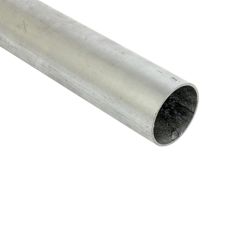
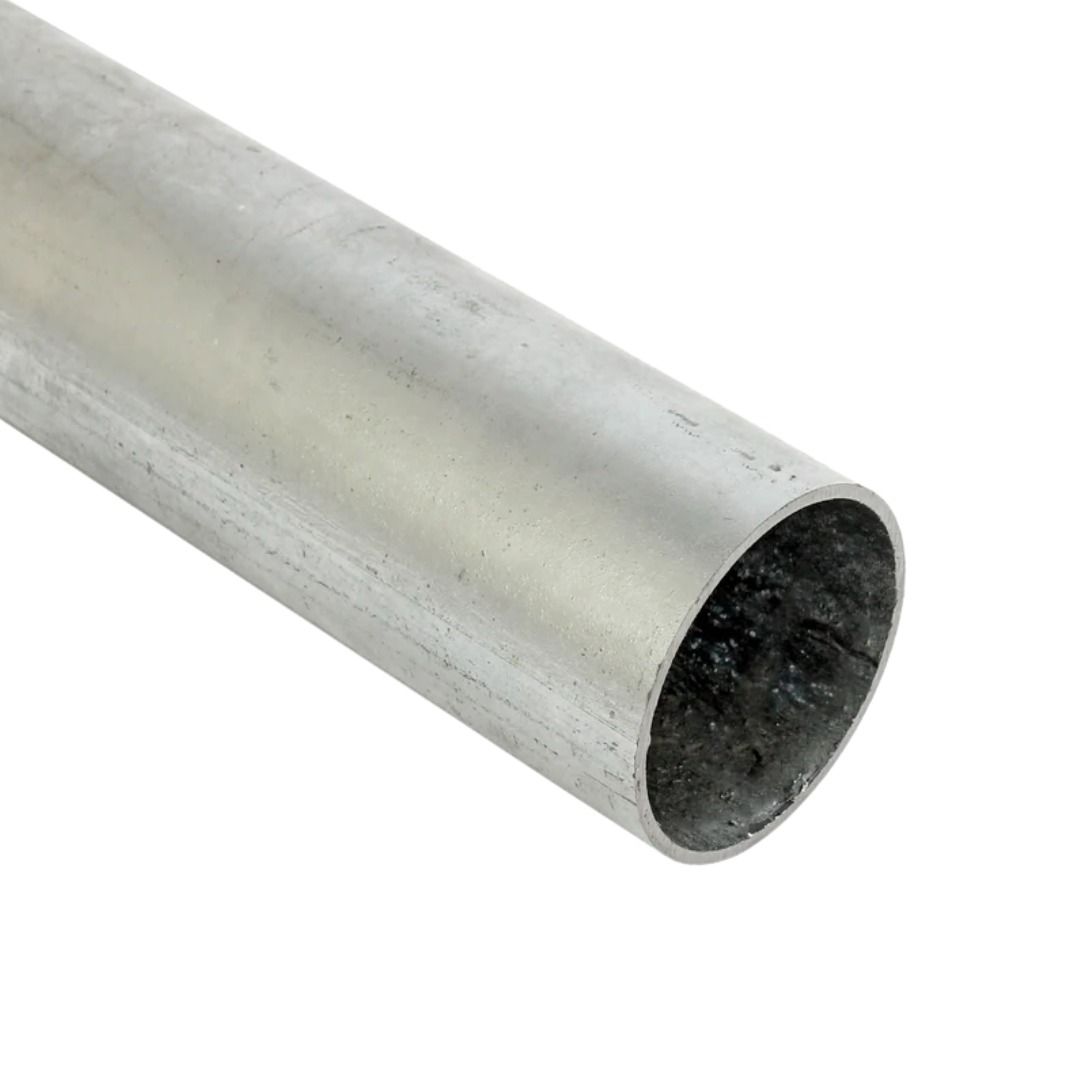
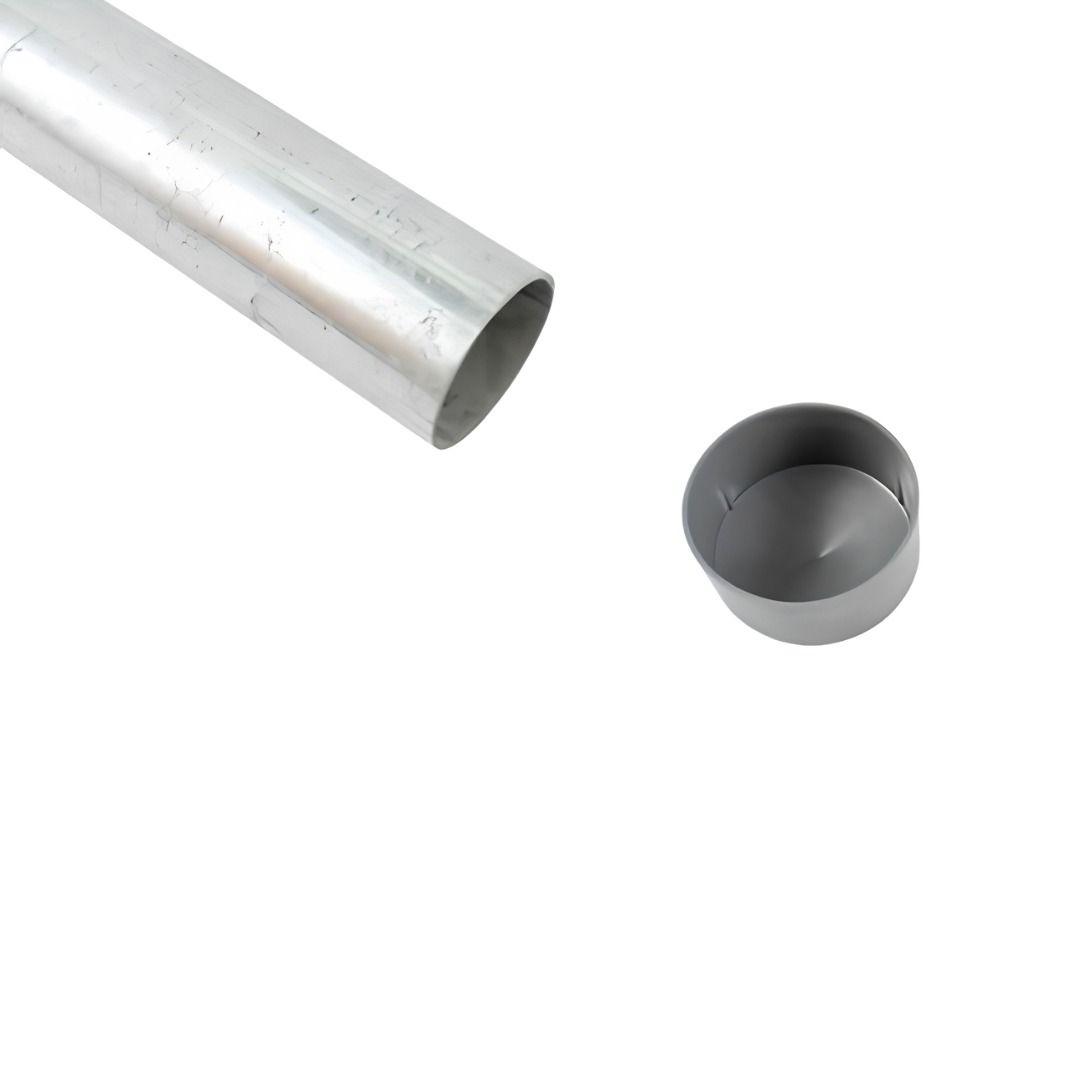
A heavier, larger-diameter galvanised steel sign post for applications where the standard 76mm post simply is not enough. If you are mounting bigger sign panels, dealing with exposed locations, or working on a highway scheme that demands a more substantial post, the 89mm is the one to reach for.
- Manufactured from S275 or S355 steel, hot-dip galvanised to BS EN ISO 1461
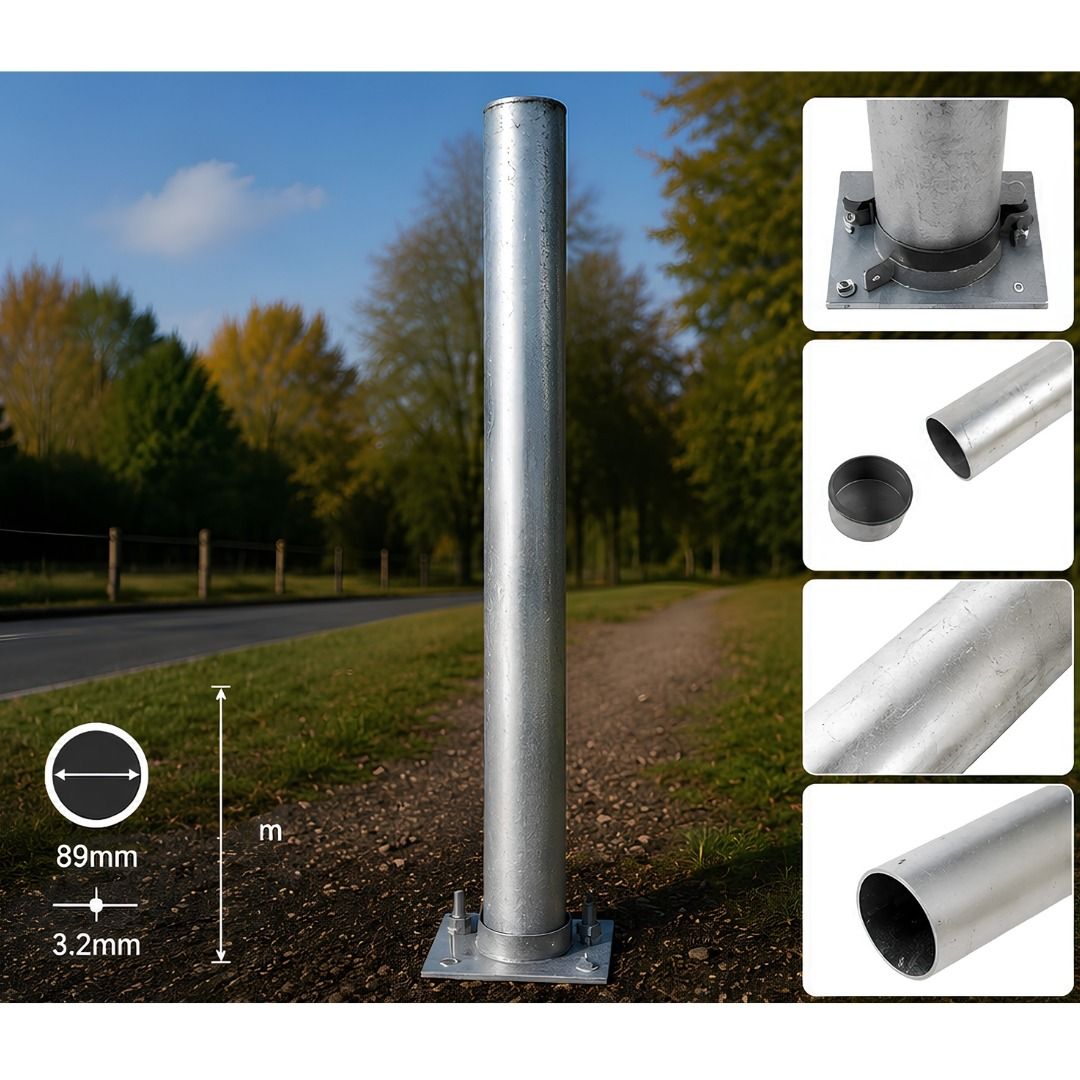
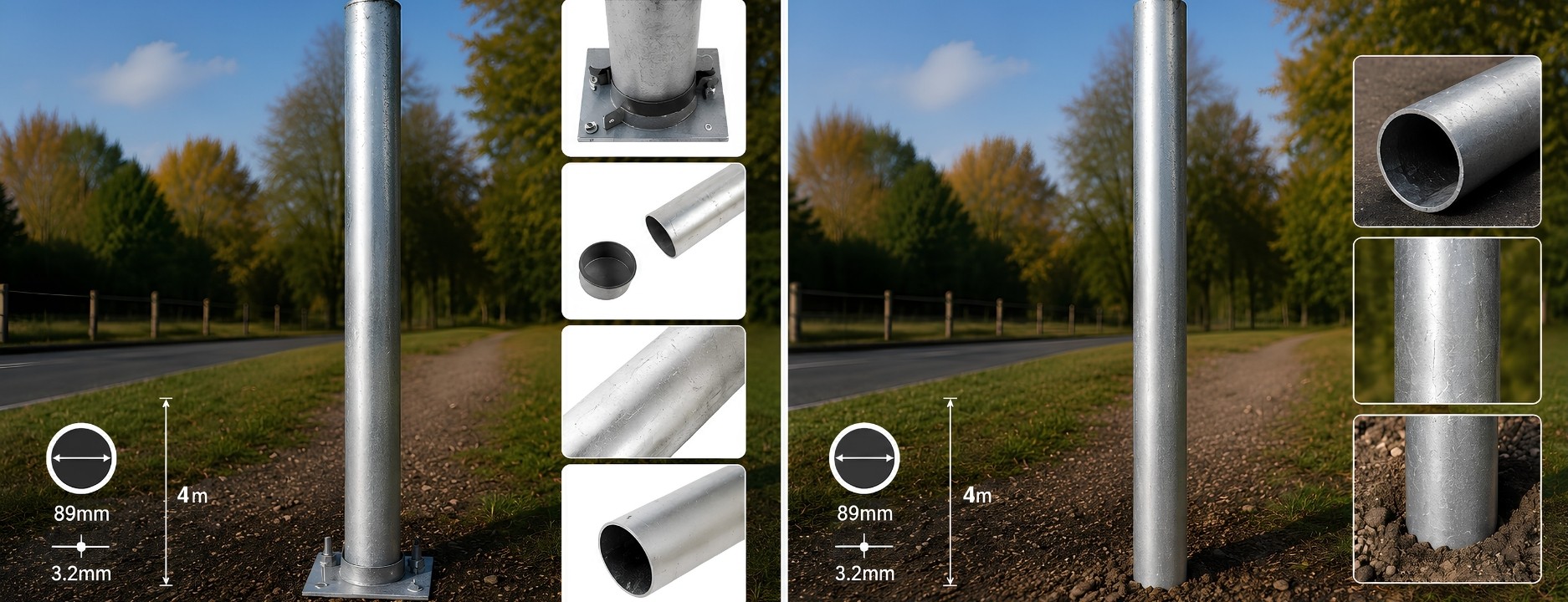
- 89mm external diameter, 3.2mm wall thickness for greater structural rigidity
- Built to BS EN 12899 and ISO 9001 quality standards
- Available in 4m and 5m lengths
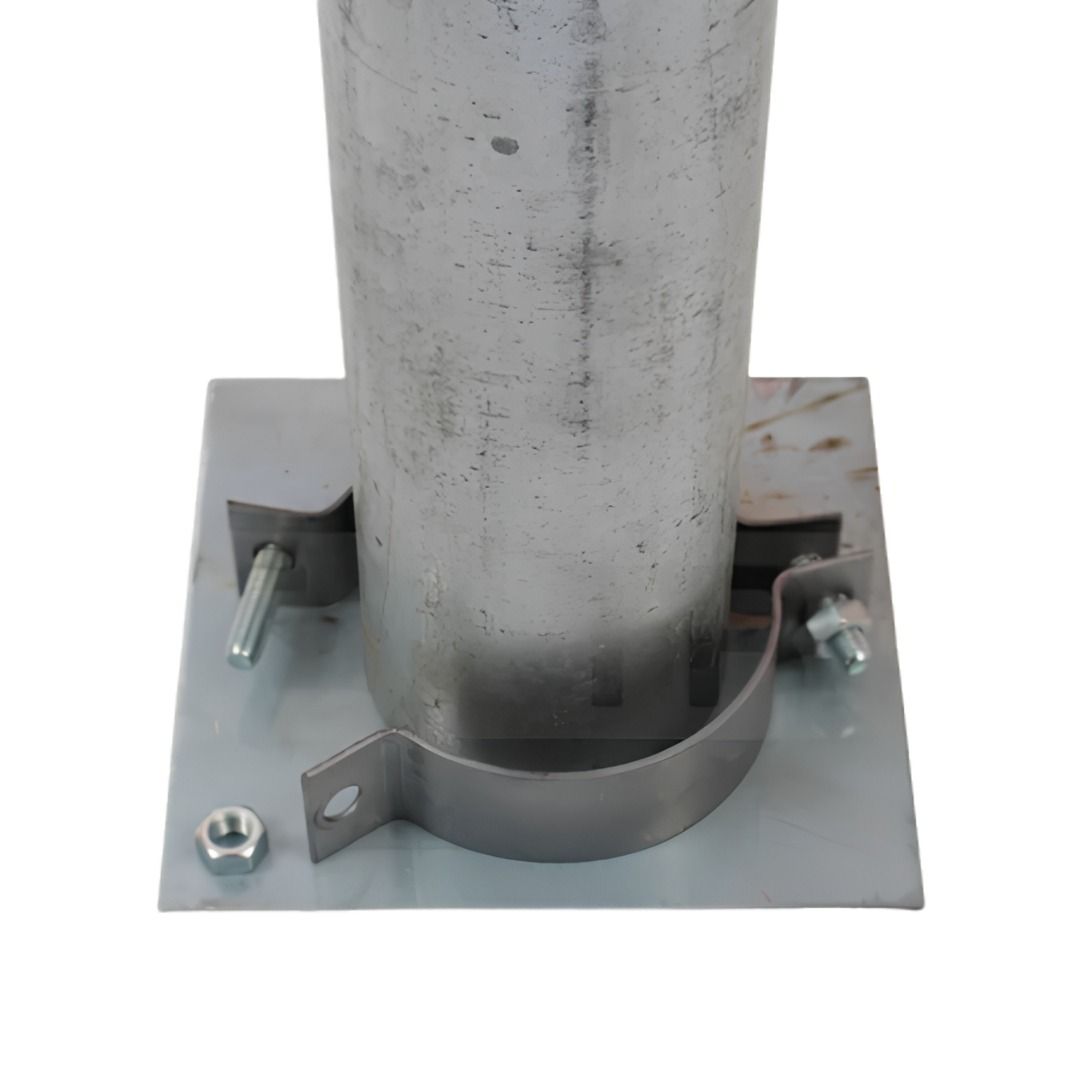
- Compatible with 89mm sign clamps, base plates, and end caps
- Bitumen and glass flake root protection available on request
- Can be powder coated to any RAL colour on request
89mm Galvanised Steel Sign Post (4m, 5m) - 3.2mm Wall Thickness
A heavier, larger-diameter galvanised steel sign post for applications where the standard 76mm post simply is not enough. If you are mounting bigger sign panels, dealing with exposed locations, or working on a highway scheme that demands a more substantial post, the 89mm is the one to reach for.
- Manufactured from S275 or S355 steel, hot-dip galvanised to BS EN ISO 1461
- 89mm external diameter, 3.2mm wall thickness for greater structural rigidity
- Built to BS EN 12899 and ISO 9001 quality standards
- Available in 4m and 5m lengths
- Compatible with 89mm sign clamps, base plates, and end caps
- Bitumen and glass flake root protection available on request
- Can be powder coated to any RAL colour on request
89mm Galvanised Steel Sign Post
When a sign post needs to do more than the standard 76mm can comfortably handle, this is what you reach for. The 89mm galvanised steel sign post is a step up in diameter, strength, and presence, designed for larger sign panels, more exposed locations, and applications where the post is going to be asked to perform in demanding conditions for a long time.
It is manufactured from S275 or S355 steel, which gives you a high-grade structural steel foundation rather than a basic commercial tube. Hot-dip galvanised to BS EN ISO 1461 and built to BS EN 12899, the British Standard for permanent vertical road traffic signs, it is a post that has been specified and manufactured with the requirements of UK highways and infrastructure signage firmly in mind.
The 3.2mm wall thickness across both the 4m and 5m lengths keeps the post rigid under the lateral loads that larger sign panels generate in high winds. And because it is compatible with standard 89mm sign clamps, base plates, and end caps, fitting out the installation is straightforward once the post is in the ground.
When to choose 89mm over 76mm
The 76mm post is the right choice for the majority of small to medium signage applications. But there are situations where 89mm is the correct specification. Larger sign panels generate more wind load, and a bigger post handles that load with more stability and less flex. Installations in exposed locations, coastal sites, open motorway service areas, elevated construction sites, benefit from the additional rigidity the 89mm diameter provides. And some highway schemes and local authority specifications call specifically for 89mm posts as the minimum diameter for certain sign types, regardless of sign size.
Key Features
-
S275 or S355 steel construction: Both grades are structural steels with well-understood mechanical properties used widely across UK infrastructure. S275 is the standard structural steel grade. S355 offers higher yield strength for applications where additional structural performance is needed. The post is available in S275 or S355 depending on your project specification.
-
Hot-dip galvanised to BS EN ISO 1461: The steel is immersed in molten zinc, which metallurgically bonds to the surface and protects it from corrosion from the inside out. BS EN ISO 1461 is the certified standard for this process, so you know exactly what level of corrosion protection you are getting rather than relying on a vague commercial finish claim.
-
Built to BS EN 12899: BS EN 12899 is the British and European Standard for permanent vertical road traffic signs. A post manufactured to this standard has been produced to the dimensional and material requirements that UK highway authorities and signage specifiers recognise and accept.
-
ISO 9001 quality management: The manufacturing process is carried out under ISO 9001 quality management certification, which means there is a documented quality system behind the product rather than ad-hoc production.
-
3.2mm wall thickness: Across both the 4m and 5m lengths, the 3.2mm wall gives the post the rigidity to handle the lateral loads generated by larger sign panels in high winds without flexing or distorting over time.
-
Compatible with standard 89mm fittings: Works with 89mm sign clamps, base plates, and end caps, keeping your hardware consistent and your installation straightforward.
-
Bitumen and glass flake root protection available: For installations in particularly aggressive ground conditions, bitumen and glass flake root protection can be applied to the below-ground section of the post for additional long-term protection at the most vulnerable point of the installation.
-
Powder coating available on request: The post can be powder coated to any RAL colour if the standard galvanised finish does not meet the visual requirements of your project.
Who is this for
Trades and roles:
-
Highways and traffic management contractors
-
Local authority highways and street lighting teams
-
Construction site managers on larger sites
-
Rail and transport infrastructure contractors
-
Signage fabricators and installers
-
Commercial and industrial facilities managers
Industries:
-
Highways and road construction
-
Local authority and public sector
-
Rail and transport infrastructure
-
Construction and civil engineering
-
Commercial and industrial signage
-
Car parks and retail parks
Specifications
| Specification | Detail |
| Product name | 89mm Galvanised Steel Sign Post - 3.2mm Wall Thickness |
| Parent SKU | SPGLV89 |
| Material | S275 or S355 galvanised steel |
| External diameter | 89mm |
| Wall thickness | 3.2mm |
| Galvanising standard | Hot-dip galvanised to BS EN ISO 1461 |
| Manufacturing standard | BS EN 12899 |
| Quality standard | ISO 9001 |
| Finish | Hot-dip galvanised as standard |
| Root protection | Bitumen and glass flake root protection available on request |
| Powder coating | Available in any RAL colour on request |
| Compatible fittings | 89mm sign clamps, base plates, and end caps |
| Installation type | Permanent or temporary outdoor installation |
Compatibility
| Application or condition | Status |
| Road and highway signage mounting, including larger sign panels | ✓ Compatible |
| Construction site directional and regulatory signage | ✓ Compatible |
| Rail and transport infrastructure signage | ✓ Compatible |
| Car park and commercial premises signage | ✓ Compatible |
| Exposed and coastal outdoor locations | ✓ Compatible |
| 89mm sign clamps, D-type clamps, and end caps | ✓ Compatible |
| Standard 89mm sign post base plates | ✓ Compatible |
| Motorway and high-speed road signage (requires larger diameter) | ✗ Not suitable |
| Overhead gantry signage | ✗ Not suitable |
| 76mm sign clamps and fittings | ✗ Not compatible |
Who is this for
The 89mm galvanised sign post is used by highways contractors, local authority engineers, construction site managers, rail contractors, and signage installers who need a step up from the standard 76mm post. The extra diameter makes a real difference when you are mounting larger sign panels, working in exposed outdoor locations, or specifying to a highway standard that calls for 89mm as the minimum acceptable diameter. It is also the more considered choice for permanent installations where the post is expected to stay in the ground for many years without being revisited.
Procurement teams working to BS EN 12899 highway signage specifications will find this post already meets the standard, and the ISO 9001 manufacturing certification provides the quality documentation that public sector and principal contractor procurement frameworks increasingly require at the supply chain level.
Typical applications
-
Mounting larger road and highway sign panels on A-roads, distributor roads, and junction approaches where the sign size and wind load require a more substantial post than 76mm provides.
-
Installing construction site entrance, directional, and regulatory signage on larger sites where sign panels are bigger and the post needs to handle greater lateral loads from wind on the sign face.
-
Supporting car park height restriction, directional, and entry and exit signage in commercial and public car parks where a more robust post is preferred for a permanent installation.
-
Erecting signage in exposed coastal, upland, or open countryside locations where higher wind speeds require additional post rigidity and root protection is worth specifying.
-
Rail and transport infrastructure lineside and platform signage where BS EN 12899 compliance and ISO 9001 manufacturing are part of the procurement specification.
-
Industrial and warehouse site perimeter, directional, and regulatory signage where a permanent, low-maintenance post installation is required in a demanding outdoor environment.
How to install
Step 1: Select the correct post length for your application. For a 4m post, plan for a minimum embedment depth of 900mm to 1,000mm below ground level depending on ground conditions and sign loading. For a 5m post, allow a minimum of 1,000mm to 1,200mm below ground.
Step 2: If root protection has been specified, apply the bitumen and glass flake coating to the below-ground section of the post before installation. This provides additional protection at the point where ground moisture concentration is highest.
Step 3: For in-ground installations, excavate or bore the hole to the required depth, position the post vertically using a spirit level, and pour concrete around the base. Use a concrete mix appropriate for the ground conditions and allow full curing before loading the post with a sign.
Step 4: For surface-mounted installations, fit a compatible 89mm base plate to the post and bolt it to the substrate using fixings appropriate for the surface material.
Step 5: Treat all cut ends with a cold galvanising compound or zinc-rich paint immediately after cutting to maintain corrosion protection at the exposed steel.
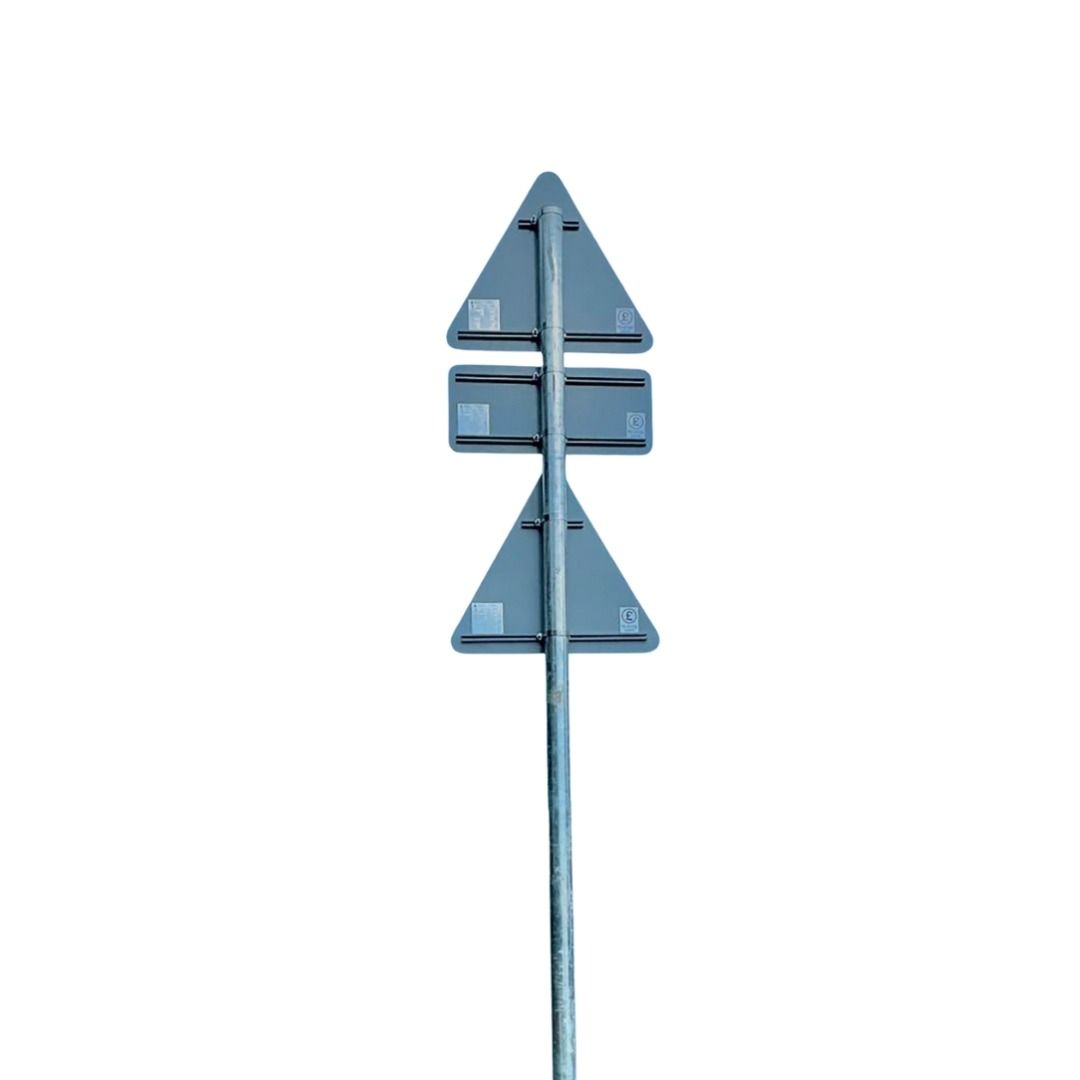
Step 6: Mount sign panels using 89mm compatible sign clamps at the height required by the relevant specification. Tighten all fixings and check the post and sign for vertical alignment before the installation goes live.
Common mistakes
Using 76mm clamps on an 89mm post: The external diameters are different and the clamps are not interchangeable. Always confirm you have 89mm compatible sign clamps, base plates, and end caps before the installation crew arrives on site.
Underestimating embedment depth for larger sign panels: A bigger sign panel generates more wind load on the post than a smaller one. If you are mounting a large sign, err on the side of deeper embedment rather than the minimum specified. The extra depth costs very little and significantly improves long-term post stability.
Not treating cut ends: When you cut the post to length, the cut end is raw steel with no galvanised protection. Treating it with cold galvanising compound takes two minutes and prevents the premature base corrosion that is the most common reason sign posts fail early.
Skipping root protection in aggressive ground conditions: In heavy clay soils, waterlogged ground, or coastal locations where soil salinity is higher, the below-ground section of the post is under sustained moisture attack. Bitumen and glass flake root protection is worth specifying in these conditions rather than finding out several years later that the post has corroded at the base.
Safety
Sign posts installed on public highways must comply with the Traffic Signs Regulations and General Directions 2016 and the requirements of the Traffic Signs Manual for the sign type being installed. Posts used for permanent road traffic signage on the highway network should be installed by competent persons familiar with the relevant standards. For construction site applications, signage installations should comply with the Health and Safety (Safety Signs and Signals) Regulations 1996. Highway authority approval is required before any post is installed in a highway verge, footway, or public land. The post must not be installed in a position where it creates a hazard to road users, cyclists, or pedestrians.
Maintenance
Inspect the post annually at minimum, or after any significant wind event that may have subjected the installation to unusual loading. Pay particular attention to the base of the post where it enters the ground, this is where corrosion develops first if zinc protection has been depleted or damaged. Check all clamp fixings for tightness and replace corroded bolts. Inspect the sign panel for security and replace any cracked or faded panels that no longer comply with the relevant specification. A post showing structural corrosion or significant mechanical damage should be replaced rather than repaired.
Frequently Asked Questions
Q: What is the difference between the 89mm and 76mm galvanised sign post and when should I choose each?
A: The main differences are diameter, length options, and the applications each is designed for. The 76mm post is the industry standard for small to medium signage and covers the majority of road, construction site, and car park applications. The 89mm post is the right choice when you are mounting larger sign panels that generate more wind load, when you are working in exposed locations where additional rigidity matters, or when your highway or infrastructure specification calls specifically for 89mm as the minimum diameter. The 89mm also comes in longer lengths, 4m and 5m compared to a maximum of 4m for the 76mm, giving more above-ground height for taller sign installations.
Q: What do S275 and S355 steel grades mean in practice?
A: Both are structural steel grades with well-understood mechanical properties used widely across UK construction and infrastructure. S275 is the standard structural steel grade, suitable for the vast majority of sign post applications. S355 has a higher yield strength, meaning it resists deformation under load more effectively, and is the appropriate choice for applications where higher structural performance is specified. The post is available in S275 or S355 depending on your project specification.
Q: What does BS EN 12899 compliance mean for a sign post?
A: BS EN 12899 is the British and European Standard for permanent vertical road traffic signs. It covers the structural and material requirements that sign posts and sign supports must meet for use in highway signage applications. A post manufactured to BS EN 12899 has been produced to the dimensional tolerances, material specifications, and performance requirements that UK highway authorities and signage specifiers recognise and accept. If your project specification or local authority procurement requirement references BS EN 12899, this post meets it.
Q: What is bitumen and glass flake root protection and when do I need it?
A: Root protection is an additional coating applied to the below-ground section of the post before installation. Bitumen provides a waterproof barrier that keeps ground moisture away from the steel, and glass flake reinforces that barrier against mechanical damage during installation. It is worth specifying in aggressive ground conditions — heavy clay soils, waterlogged or poorly drained ground, coastal locations with elevated soil salinity, or any environment where the post is expected to remain in the ground for a long time without the opportunity for inspection. For standard ground conditions and normal service life expectations, the hot-dip galvanised finish alone provides adequate protection.
Q: Is this post compatible with the same clamps and base plates as the 76mm post?
A: No. The 89mm and 76mm posts have different external diameters, so their compatible clamps, base plates, and end caps are also different. Always specify 89mm compatible sign clamps and base plates for this post. Using 76mm fittings on an 89mm post will not produce a secure installation.
Q: Can this post be used on an active construction site?
A: Yes. The 89mm galvanised sign post is well suited to construction site signage where a more substantial post is required for larger sign panels or higher wind exposure. It handles the demanding conditions of an active construction site well, and the galvanised finish is robust enough to withstand the contact and environmental conditions typical of a large construction project.
Q: Why buy these sign posts from CMT Group?
A: CMT Group has fast delivery. Order by 7pm for next-day delivery nationwide, with live tracking, real-time ETAs, and What3Words integration for precise delivery to any site entrance or compound. For contractors and local authorities managing ongoing signage programmes, the EDGE portal provides contract pricing, bulk ordering, and full delivery visibility from a single account.