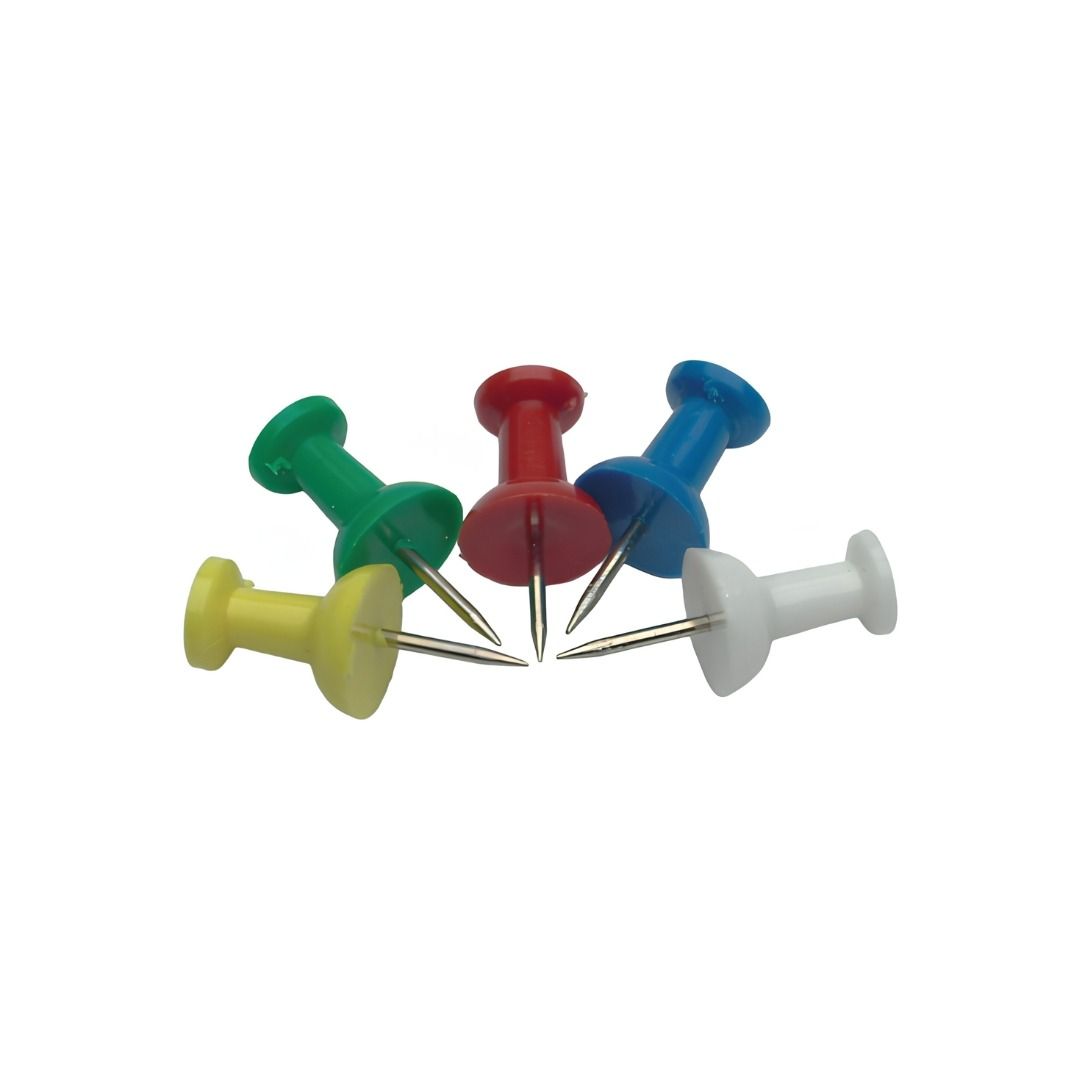
Assorted Push Pins for site office notice boards, project planning walls, and document pinning, supplied in bulk packs.
- 250 pins in 10 hanging boxes of 25
- Assorted colours, green, red, blue, yellow, and white
- Durable plastic head, easy to press in and remove by hand
- Steel pin for secure hold in cork and soft boards
- Hanging box doubles as a resealable storage pack
- Recyclable packaging
Assorted Push Pins - Coloured Drawing Pins for Notice Boards
Assorted Push Pins for site office notice boards, project planning walls, and document pinning, supplied in bulk packs.
- 250 pins in 10 hanging boxes of 25
- Assorted colours, green, red, blue, yellow, and white
- Durable plastic head, easy to press in and remove by hand
- Steel pin for secure hold in cork and soft boards
- Hanging box doubles as a resealable storage pack
- Recyclable packaging
- Buy 5 for £19.08 £15.90 each and save 6%
- Buy 10 for £17.40 £14.50 each and save 15%
| BULK DISCOUNT | 5 | 10 |
|---|---|---|
| Price | £15.90 £19.08 | £14.50 £17.40 |
Order 1x to earn 16 FASTPoints
Order to earn 16 FASTPoints
Log in to access trade discountsAssorted Push Pins - Drawing Pins for Notice Boards
Drawing and map push pins are a daily-use consumable in any site office, drawing room, or project cabin with a notice board or planning wall. This pack contains 250 pins across 10 individual hanging boxes of 25, in five assorted colours. Each box is a resealable storage unit in its own right, keeping pins contained and accessible between uses.
How the hanging storage box keeps pins organised and fingers safe
Loose push pins in a desk drawer are a consistent problem. They mix with other stationery, are difficult to pick up individually, and catch fingers when someone reaches in without looking. Standard bulk packs compound this by delivering all pins loose in a single container. Each box in this pack has a euro-hook hanging hole and a transparent front panel, so pins stay visible, organised, and easy to dispense one at a time. When the box is not in active use, the front flap closes and the pins stay put.
Key Features
-
Durable plastic head: Larger than a flat drawing pin head, which means easier grip when pressing in and pulling out. Reduces the finger pressure needed for repeated pinning tasks.
-
Steel pin: Penetrates cork, foam, and fabric board surfaces cleanly without bending. Holds lightweight documents, plans, and notices securely.
-
Five assorted colours: Green, red, blue, yellow, and white. Useful for colour-coded notice board organisation, project status tracking, and map route planning.
-
10 hanging storage boxes of 25: Each individual box is a self-contained dispenser. Distribute one box per location, keep the rest in the outer pack, or use colours to assign a box to each category on a planning wall.
-
Recyclable kraft packaging: The individual boxes are made from recyclable kraft card with a transparent front window.
Who is this for
Trades and roles:
-
Site managers
-
Project coordinators
-
Document controllers
-
Office administrators
-
Drawing office staff
Industries:
-
Construction
-
Civil engineering
-
Facilities management
-
Architecture and design
-
Professional services
Specifications
| Specification | Detail |
| Product Name | Assorted Push Pins - Coloured Drawing Pins for Notice Boards |
| SKU | KF02029Q |
| Type | Drawing and map push pins |
| Head | Durable plastic |
| Pin | Steel |
| Colours | Assorted: green, red, blue, yellow, white |
| Pack Structure | 10 hanging boxes of 25 pins |
| Total Quantity | 250 pins |
| Packaging | Hanging kraft box with transparent front panel, doubles as storage |
| Box Dimensions | 210mm (H) x 95mm (W) |
| Pack Weight | 285g (0.2851kg) |
| Recyclable | Yes |
Compatibility
| Application or condition | Status |
| Cork notice boards | ✓ Compatible |
| Soft foam planning boards | ✓ Compatible |
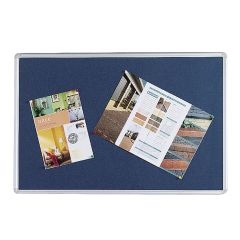
| Fabric-covered notice boards | ✓ Compatible |
| Map pinning and route planning | ✓ Compatible |
| Project planning walls with soft backing | ✓ Compatible |
| Lightweight paper and card documents | ✓ Compatible |
| Hard surfaces (plaster, tile, wood, metal) | ✗ Not suitable |
| Magnetic whiteboards | ✗ Not suitable |
| Thin paper without a backing board | ✗ Not suitable |
Who is this for
These pins are used by site managers, drawing office staff, and project coordinators who maintain notice boards, project planning walls, and map displays in site cabins, drawing rooms, and project offices. They suit any role that regularly pins documents, notices, or drawings to a cork or soft board and needs a reliable bulk supply to hand.
Typical applications
-
Pinning site notices, method statements, and safety briefings to a welfare unit or site cabin notice board.
-
Marking routes, survey points, and site boundaries on a printed project map.
-
Colour-coding a project planning wall by task status, trade, or deadline.
-
Displaying drawings and site plans on a drawing office corkboard for daily reference.
-
Attaching inspection records, delivery schedules, and programme updates to a site office board.
-
Organising permit-to-work documents and daily task sheets on a visible site board.
How to use
Step 1: Select the colour to use. For planning boards, assign a consistent meaning to each colour before starting. For example, red for outstanding tasks, green for completed, blue for in progress.
Step 2: Hold the plastic head between thumb and forefinger. Position the pin tip against the document and board surface at a slight inward angle.
Step 3: Press firmly and steadily until the pin is seated securely in the board. Do not push so far that the head sits flush with the document surface.
Step 4: To remove, grip the plastic head and pull directly outward without twisting. The larger head makes this straightforward compared to flat drawing pins.
Step 5: Return unused pins to the hanging box and close the front flap before putting away.
Common mistakes
-
Pinning into hard surfaces: Push pins are designed for cork, foam, and fabric boards only. Pressing into plaster, tile, or wood will bend the pin and risk snapping it.
-
Pushing the pin in too far: If the head is flush with the document, the pin is difficult to remove without tearing the paper. Leave enough of the head proud of the surface to grip easily.
-
Mixing colours without a system: The five assorted colours are most useful when each colour has a defined meaning. Using them randomly wastes the organisational advantage they offer.
-
Leaving pins loose after opening a box: The hanging box closes and stores pins securely. Tipping them into a drawer loses the storage benefit the packaging provides.
Safety
Pin tips are sharp. Take care when reaching into the box and when pressing pins into boards. Do not leave loose pins on desks or worksurfaces. Keep out of reach of children. When removing pins from a board, place them directly back into the storage box rather than setting them down on a surface.
Maintenance
No maintenance required. Store in the hanging box between uses. Discard bent or deformed pins. Pins that have been bent during use cannot be straightened reliably and will not seat correctly in a board.
Frequently Asked Questions
Q: What is the difference between push pins and flat drawing pins?
A: Flat drawing pins have a small, round metal head and a short pin, designed to be pressed in with a thumb. Push pins have a larger plastic barrel or mushroom-shaped head and a longer steel pin. The plastic head is easier to grip and requires less finger pressure to insert and remove. For notice boards and planning walls where pins are frequently repositioned, push pins are more comfortable for regular use.
Q: Are push pins and map pins the same thing?
A: Yes, for all practical purposes. The terms are used interchangeably in the UK. Both refer to pins with a larger plastic head and a steel pin, suitable for cork boards, soft planning boards, and printed maps. The term "map pins" is common in architectural, planning, and surveying contexts where the pins are used to mark locations on printed maps.
Q: What surfaces do these pins work on?
A: These pins are designed for cork notice boards, soft foam planning boards, and fabric-covered boards. They seat cleanly and hold securely in all three. They are not suitable for hard surfaces including plasterboard, tile, wood, or metal, where the steel pin cannot penetrate and will bend under pressure.
Q: What is this NOT suitable for?
A: Not suitable for hard wall surfaces, magnetic whiteboards, or thin paper without a soft board backing. Do not use to pin into plaster, masonry, or timber. For surfaces where pinning is not possible, adhesive putty is a better alternative.
Q: How does the hanging box work for storage?
A: Each individual box of 25 holds a euro-hook hanging hole at the top and a transparent front panel showing the pins inside. The front flap closes to keep pins contained when not in use. The boxes can be hung from a hook, stored in a drawer, or placed on a desk. The outer pack holds all 10 boxes together for transit and storage before distribution.
Q: Can push pins be reused?
A: Yes. The plastic head makes them significantly easier to remove cleanly from a board than flat drawing pins. As long as the pin is straight and undamaged, it can be removed and reinserted multiple times. Discard any pin where the steel has bent, as a deformed pin will not seat correctly in the board surface.