In this article
Your sprayer just leaked formwork oil across a freshly prepared slab. Or the seals failed halfway through a dust suppression run. Or the nozzle clogged again and your operative wasted twenty minutes stripping it down. Sound familiar?
These are not freak incidents — they are the predictable result of specifying sprayers by price and capacity instead of by application. The wrong seal material, the wrong pressure output, the wrong tank construction. This guide explains what actually causes sprayer failure on UK construction sites, which specifications prevent it, and how to match every common site task to the correct tool from the CMT Group sprayer range.
The Real Problem with Site Sprayers
Most sprayers bought for UK construction sites fail within weeks — not because they are badly made, but because they are badly specified. A sprayer purchased for price alone will work fine with water. The moment it meets formwork oil, release agent, fuel or cleaning chemical, the failure sequence begins:
The real cost is never the sprayer. It is the labour time lost, the material wasted, the finish quality compromised, and the replacement cycle that repeats every few weeks until someone finally specifies the right tool.
A £15 sprayer that fails three times costs more than a £90 sprayer that lasts the entire project. Procurement teams that understand this stop buying on price and start buying on specification.
What Actually Matters When Specifying a Sprayer
Forget capacity for a moment. These are the four specifications that determine whether a sprayer survives site conditions — or ends up in a skip:
Seal Material
Standard rubber seals disintegrate in oils, fuels and solvents. Viton seals are chemically resistant and maintain pressure integrity across a wide range of liquids. If the sprayer handles anything beyond water, Viton is not optional — it is essential.
Tank Construction
Plastic tanks are lighter but crack under site impact. Polyester-coated steel tanks withstand daily abuse and maintain higher operating pressures. Match tank material to how hard the sprayer's life will be.
Pressure Output
Low pressure = pooling, dripping, waste. Higher pressure = better atomisation, more consistent coverage. For viscous liquids like formwork oils, 3–6 bar minimum is the professional standard.
Application Match
A 2L handheld cannot do a knapsack's job. A knapsack is wasteful for a spot application. Matching the tool to the task — not buying one sprayer for everything — is the foundation of correct specification.
The Right Sprayer for Every Job
Every professional spraying task on a UK site falls into one of four categories. Here is what to use, when, and why:
Handheld Pressure Sprayers
Use for: Spot applications, cleaning tools, applying oils or solvents in controlled areas.
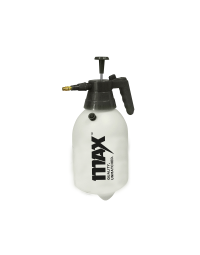
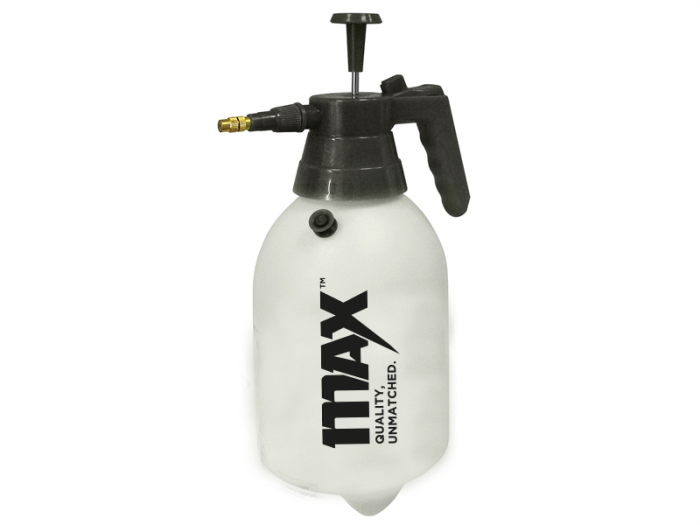
Why it works: Portable, precise, fast to deploy. The MAX 2L adds Viton seals and a solid brass nozzle with pressure gauge — handling chemicals that destroy standard units.
Professional Pressure Sprayers
Use for: Formwork oil, release agents, repetitive daily site tasks, surface preparation.
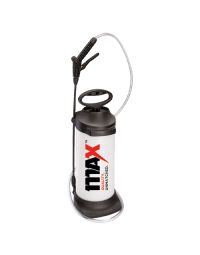
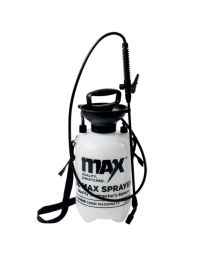
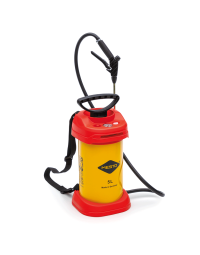
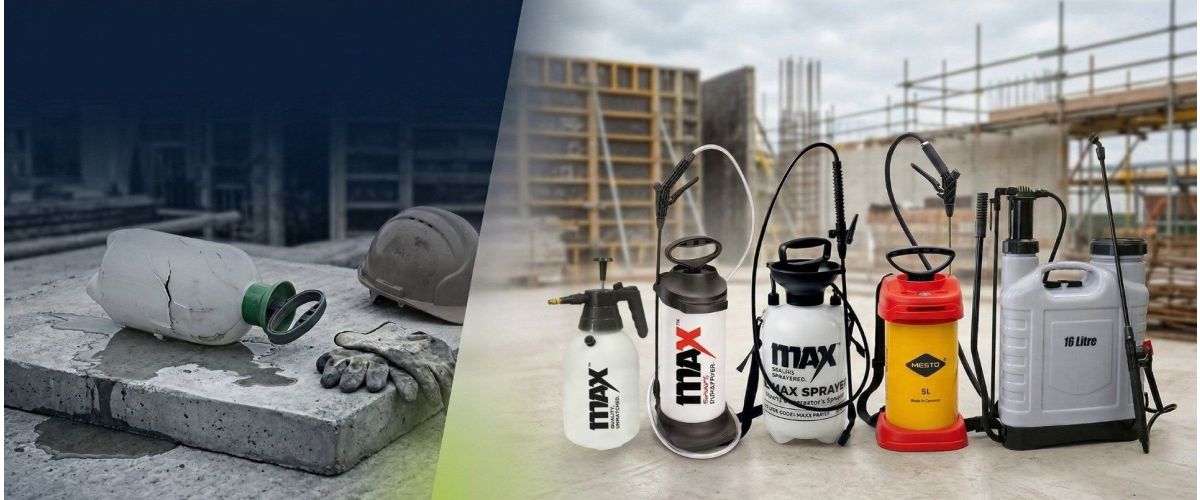
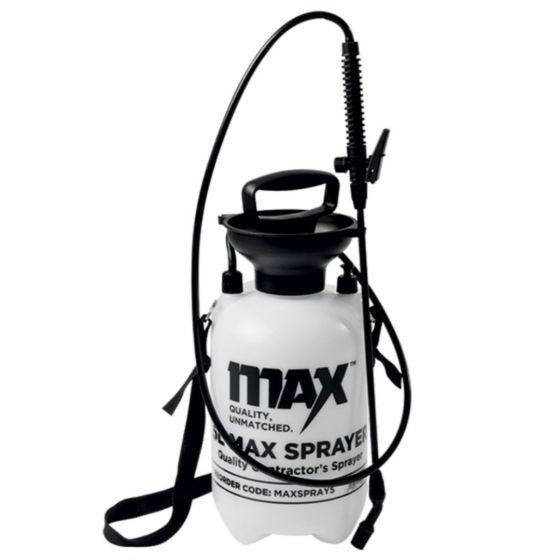
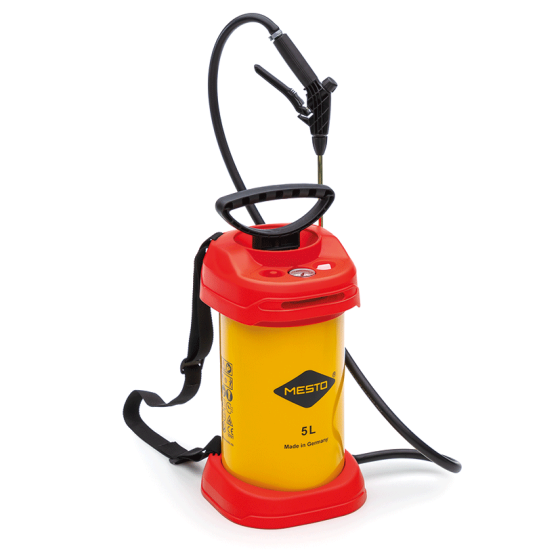
Why it works: Higher capacity stops constant refilling. CMT offers three 5L options: the MAX Professional 5L with Viton seals and oil-resistant hose, the MAX 5L Premium with professional lance for general wetting, and the MESTO 5L Steel at 6 bar for heavy formwork use.
Knapsack Backpack Sprayers
Use for: Large area coverage, dust suppression, grounds and perimeter spraying.
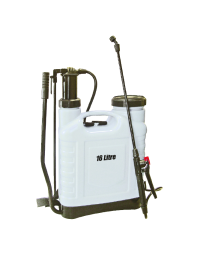
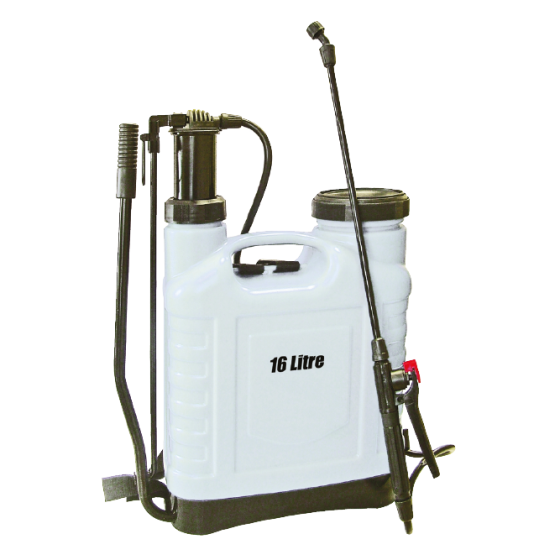
Why it works: 16-litre capacity means far fewer refills. Ergonomic backpack design reduces fatigue. The MAX 16L Knapsack has a high-efficiency pump that maintains pressure with less physical effort.
Trigger Spray Bottles
Use for: Cleaning, disinfection, facilities hygiene tasks.
Key warning: Standard bottles degrade under bleach and chlorine — always confirm chemical compatibility. For chemical applications requiring pressure, the MAX 2L with Viton seals is the trade-grade alternative.
The CMT Range: 5 Sprayers, Zero Gaps
Every sprayer in the CMT range is specified for real site conditions — not showroom demos. Viton seals where chemicals are involved, steel tanks where durability matters, professional pressure output where coverage quality counts. One supplier, five products, every application covered.

Browse all sprayers and water containers: View Full Range →
Quick Decision Guide
Not sure which sprayer to buy? Match your task to the product:
Frequently Asked Questions
Why do cheap sprayers fail on construction sites?
Low-cost sprayers typically fail due to seal degradation when exposed to oils, fuels or cleaning chemicals, inconsistent pressure output leading to uneven coverage, weak trigger mechanisms that break under repeated daily use, and tank cracking from site impact. The hidden cost is not the replacement sprayer itself — it is the wasted labour time, material waste and job rework caused by the failure.
What are Viton seals and why do they matter?
Viton is a high-performance fluoroelastomer that resists degradation from oils, fuels, solvents and aggressive cleaning chemicals. Standard rubber seals swell, crack or disintegrate when exposed to these substances, causing leaks and pressure loss. Sprayers with Viton seals — such as the MAX 2L and MAX Professional 5L — maintain their integrity across a much wider range of liquids, making them essential for any site where sprayers handle more than just water.
Which sprayer should I use for formwork oil?
For formwork oil application, use either the MAX Professional 5L Sprayer with Viton seals and oil-resistant hose for plastic-tank versatility, or the MESTO 5L Formwork Oil Sprayer with its polyester-coated steel tank and 6 bar operating pressure for maximum durability. Both handle oils without seal failure — the choice depends on whether you prioritise portability or heavy-duty steel construction.
What is the best sprayer for large area coverage on site?
The MAX 16L Knapsack Backpack Sprayer is designed for large area tasks including dust suppression, perimeter treatment and grounds maintenance. The 16-litre capacity reduces refill frequency, while the ergonomic backpack design and high-efficiency pump reduce operator fatigue over long spraying periods.
What is the difference between the MAX 5L Premium and the MESTO 5L Steel?
The MAX 5L Premium is a general-purpose unit with a professional lance, pressure gauge and safety valve — ideal for site wetting, surface preparation and non-chemical tasks. The MESTO 5L has a polyester-coated steel tank, 6 bar operating pressure and is purpose-built for formwork oils and heavy-duty daily use. If you need oil resistance and maximum durability, specify the MESTO. For general water and surface prep, the MAX Premium offers excellent value.
How do I choose between a 2L and 5L pressure sprayer?
The MAX 2L is for spot applications, controlled wetting and applying small quantities of oils or solvents in precise areas. The 5L range is for repetitive daily tasks where refilling a 2L unit repeatedly would waste time. Within the 5L range, the MAX Premium suits general water and surface prep, the MAX Professional handles oils and chemicals with Viton seals, and the MESTO Steel provides maximum durability at 6 bar. If the task is targeted and localised, the 2L is the better tool. If it involves walking a surface and spraying continuously, move to 5L.