In this article
The operative arrives on site with a gym bag. It splits under the weight of safety boots and a winter jacket by week three. The tools inside got wet when he put it down on a puddled welfare floor. His hi-vis jacket is invisible from behind because the backpack covers every reflective panel. None of this is unusual — it is what happens when site equipment is specified correctly and carry bags are not.
On UK construction sites, infrastructure projects and industrial environments, carrying equipment safely and efficiently is a daily operational need. The bag an operative uses affects their visibility around plant, the condition of their PPE and tools, and how quickly a welfare area becomes chaotic. Yet procurement teams regularly let operatives source their own bags, or bulk-buy on price from non-specialist suppliers.
This guide covers the three bag types built for site use, what separates them, and how to match each to role, environment and daily load across a workforce.
Why Standard Bags Fail on Construction Sites
Most bag failures on site are not random. They follow a predictable pattern that starts the moment a non-site-specific bag is put into daily site use:
A backpack that covers a worker's hi-vis panels is not a bag problem — it is a visibility problem. On a site with moving plant, that distinction matters every shift.
The Three Bag Types Built for Site Use
Each of the three bag types solves a specific problem. Tap each card to expand the full specification and use case:
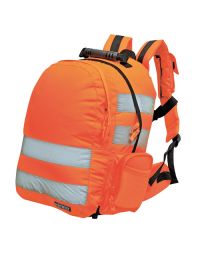
Hi-vis rucksacks are designed for operatives who are constantly moving across site, particularly where visibility around plant, vehicles or in low-light conditions is a daily safety requirement. Standard backpacks worn over hi-vis clothing cover the reflective panels on the back of the jacket, negating the protection those panels provide. A hi-vis rucksack replaces that lost coverage with its own high-visibility construction, ensuring the worker remains visible from all angles even when fully loaded.
The waterproof 600D polyester construction handles the typical moisture exposure of a UK site environment. At 25 litres, the capacity covers PPE, small tools and daily essentials without the bulk of a kit bag, making it practical for workers moving between locations, working from vehicle cabs or accessing restricted-access areas.
Best for: Construction operatives working around heavy machinery, rail and infrastructure workers, engineers and site supervisors, workers moving between multiple locations.
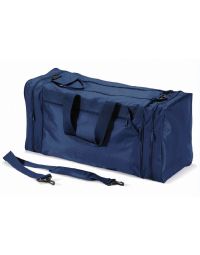
Jumbo kit bags are built for high-capacity storage, designed for operatives who need to transport large volumes of PPE, tools or clothing to and from site daily. At 750mm length, the jumbo kit bag accommodates items that a standard holdall simply cannot fit: winter PPE jackets, full workwear changes, safety boots, hard hats and larger tools, all in a single bag with room to spare.
The heavy-duty construction handles the kind of daily abuse that compact bags cannot sustain. For groundwork teams, plant operators and offshore or utilities workers carrying complete equipment sets, this is the bag that does not require decisions about what to leave behind.
Best for: Construction and groundwork teams, plant operators and mechanics, offshore and utilities workers, teams carrying full daily equipment loads.
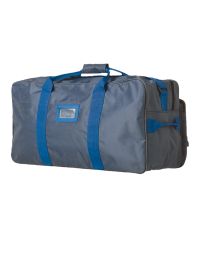
Professional PVC-coated holdalls provide a balance between organisation, durability and weather protection that general-purpose bags cannot match. The 520gsm PVC coating prevents moisture from penetrating the bag material when placed on wet, muddy or contaminated surfaces, which is a daily occurrence in welfare areas, changing rooms and site compound storage. The wipe-clean exterior makes maintenance practical in environments where cleanliness standards matter.
The addition of an ID holder supports clear identification in shared storage environments, reducing the confusion that arises when multiple operatives use a communal changing area. Multiple internal compartments allow clean and dirty items to be separated, protecting clothing and tools from cross-contamination between shifts.
Best for: Engineers and maintenance teams, site personnel using shared storage areas, operatives working in wet or muddy conditions, contractors needing organised daily carry solutions.
Side-by-Side Comparison
Hover any row to highlight it across all three bag types:
| Feature | 25L Hi-Vis Rucksack | Jumbo Kit Bag | PVC Holdall |
|---|---|---|---|
| Product code | HVRK | KITBAG | BKITBAG |
| Primary purpose | Visibility and mobility | Maximum capacity | Organisation and weather resistance |
| Capacity / size | 25L · 280x210x430mm | 750x350x300mm | 520gsm PVC coated |
| Hi-vis construction | Yes | No | No |
| Worn on back | Yes, rucksack | Carry only | Carry only |
| Waterproof / moisture resistant | 600D polyester | Heavy duty | PVC coated |
| Bulky PPE capacity | Moderate | Maximum | Standard |
| ID holder | No | No | Yes |
| Wipe-clean surface | No | No | Yes |
| Plant / vehicle environments | Recommended | Suitable | Suitable |
| Shared welfare / changing rooms | Suitable | Suitable | Recommended |
Shop the CMT Group Work Bag Range
All three bags available with reliable UK stock, scalable supply and procurement support for Tier 1 contractors, facilities managers and public sector operators.
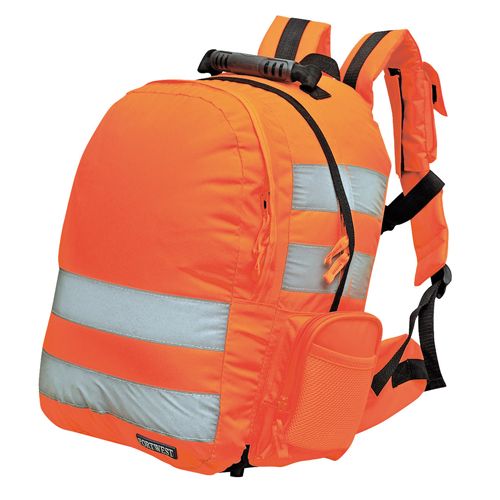
- High-visibility construction
- Waterproof 600D polyester
- 25L capacity · 280 x 210 x 430mm
- Suitable over hi-vis workwear
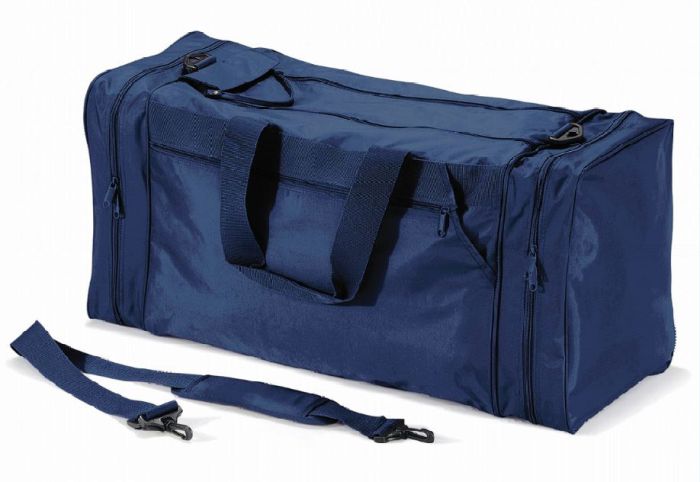
- Maximum capacity for bulky PPE
- Heavy-duty construction
- 750 x 350 x 300mm
- Full daily equipment load
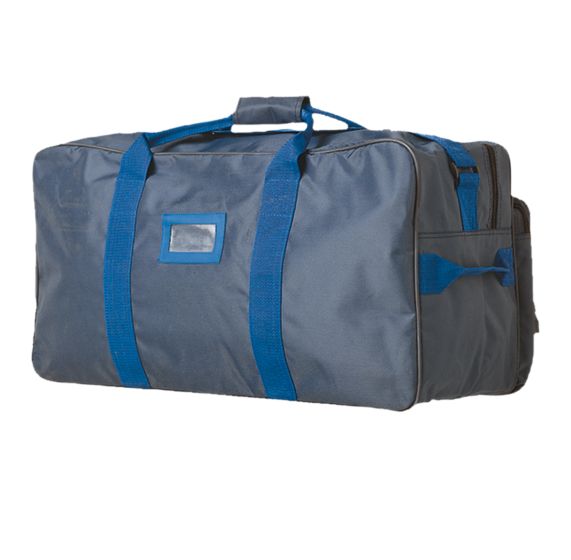
- 520gsm PVC coated, moisture resistant
- Wipe-clean exterior
- ID holder for shared environments
- Multiple compartments
Match Bag to Role: Three Questions
The right bag follows from the role and environment, not from price or personal preference. Click each question to expand:
Quick Reference: Match Role to Bag
Standardising Work Bags Across a Workforce
For contractors and procurement teams supplying equipment across large workforces, letting operatives source their own bags creates a mix of non-compliant, non-visible and non-durable carry solutions. Standardising across the three bag types by role solves this at scale:
Hi-Vis Rucksack
Issued to all operatives working around plant, vehicles or in multi-location roles. Eliminates visibility gaps caused by standard bags worn over hi-vis workwear. Consistent across a workforce, so site managers can identify correctly-equipped operatives at a glance.
Jumbo Kit Bag
Issued to groundwork, plant and utilities teams carrying full daily equipment loads. Eliminates the under-specification problem where operatives leave PPE behind because their bag cannot carry it. Consistent sizing simplifies storage in welfare and site compound areas.
PVC Holdall
Issued to maintenance, engineering and fixed-facility roles where shared welfare areas and wet conditions are the norm. The ID holder supports site access and accountability. The PVC coating and wipe-clean surface reduce the hygiene burden in shared changing and storage facilities.
CMT Group supplies all three with scalable procurement support, reliable UK stock and the compliance documentation Tier 1 contractors, facilities managers and public sector operators require alongside the product itself.