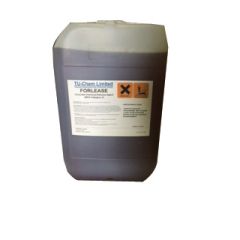
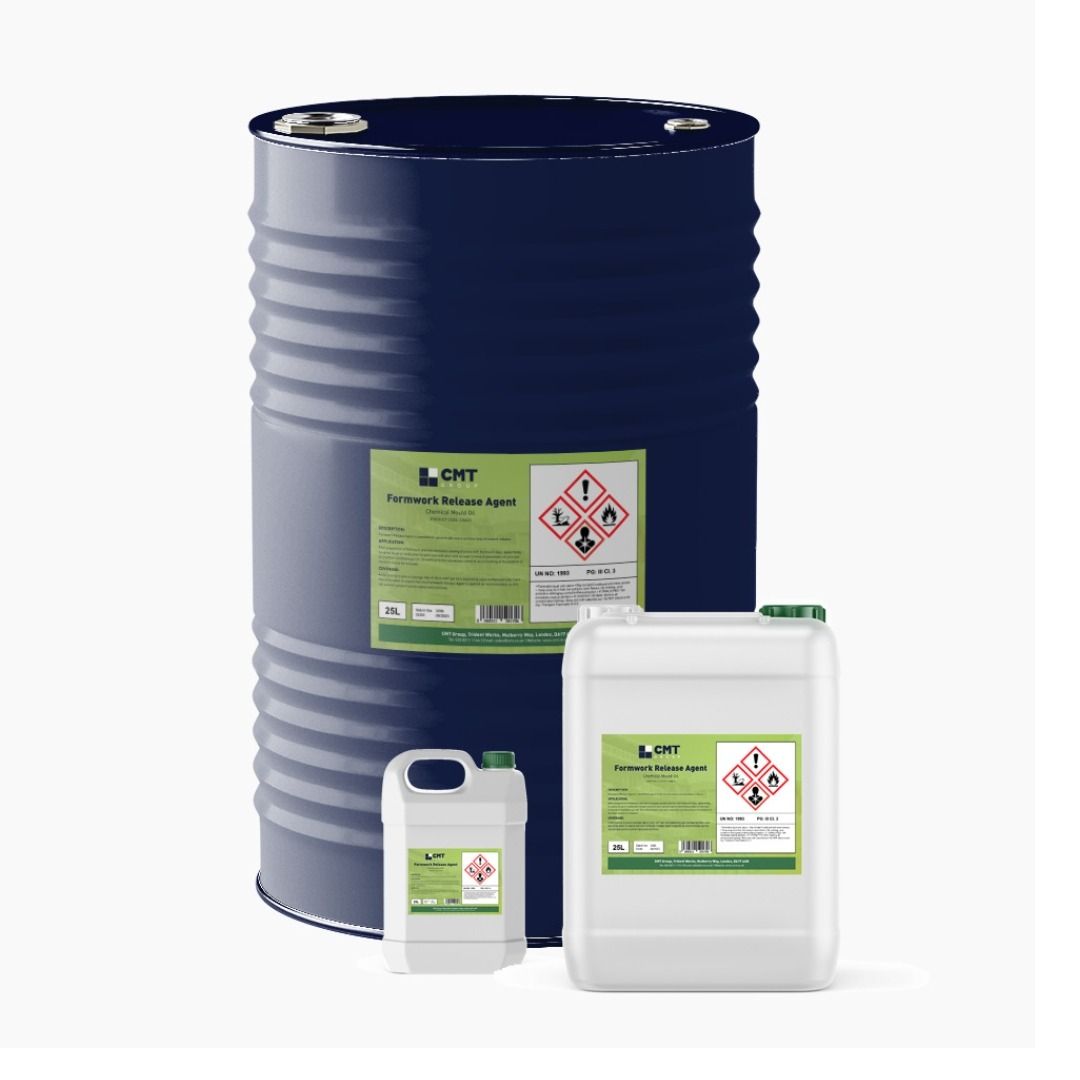
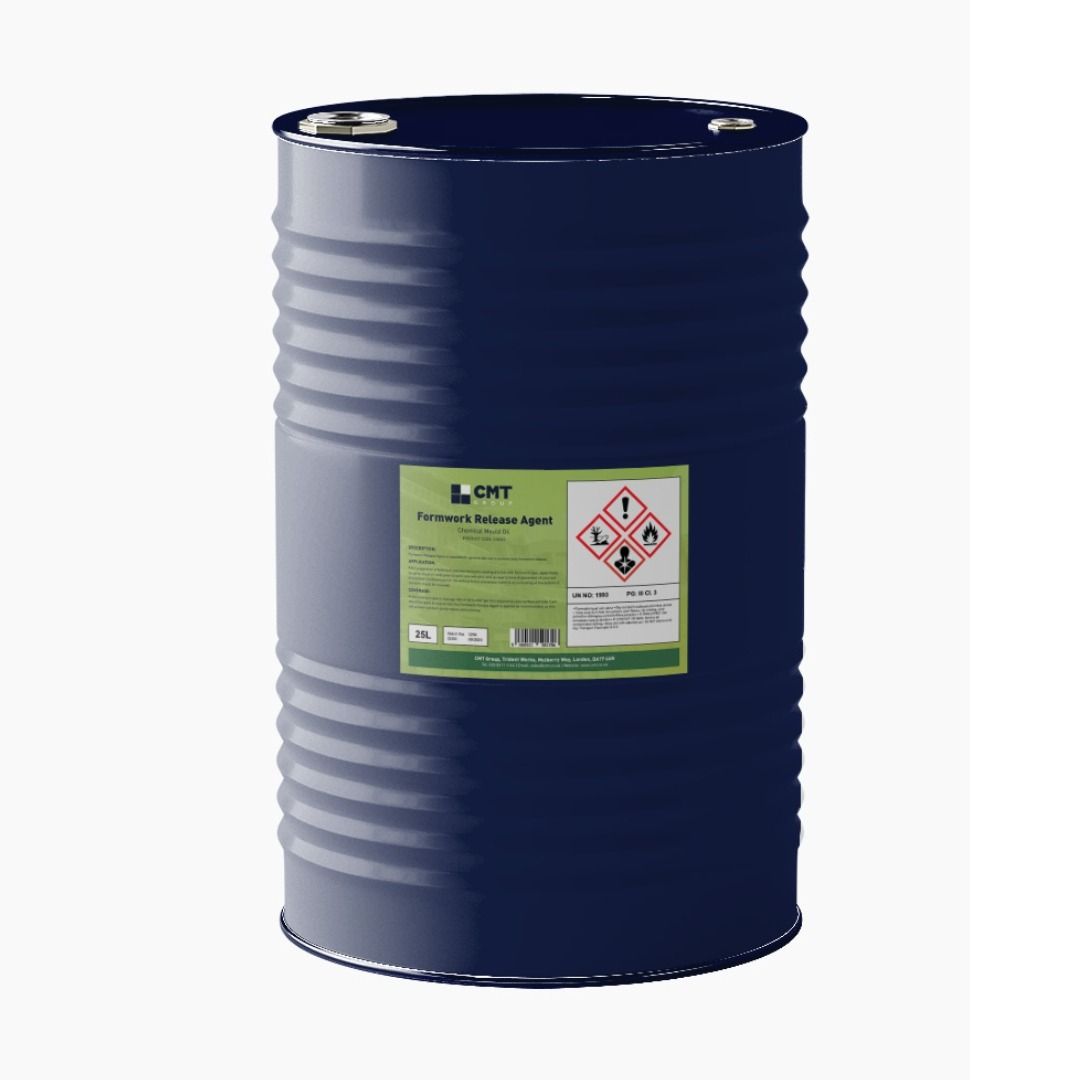
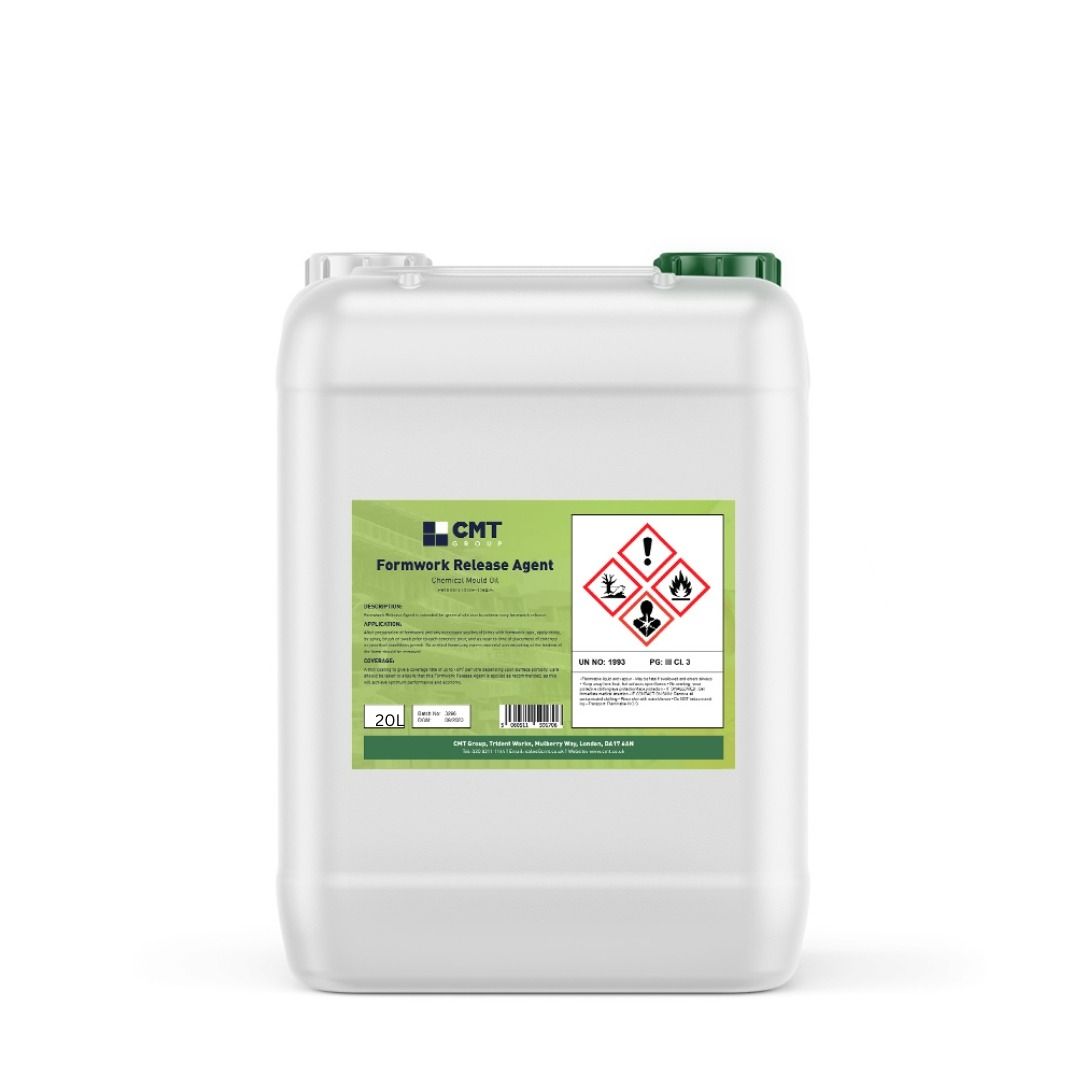
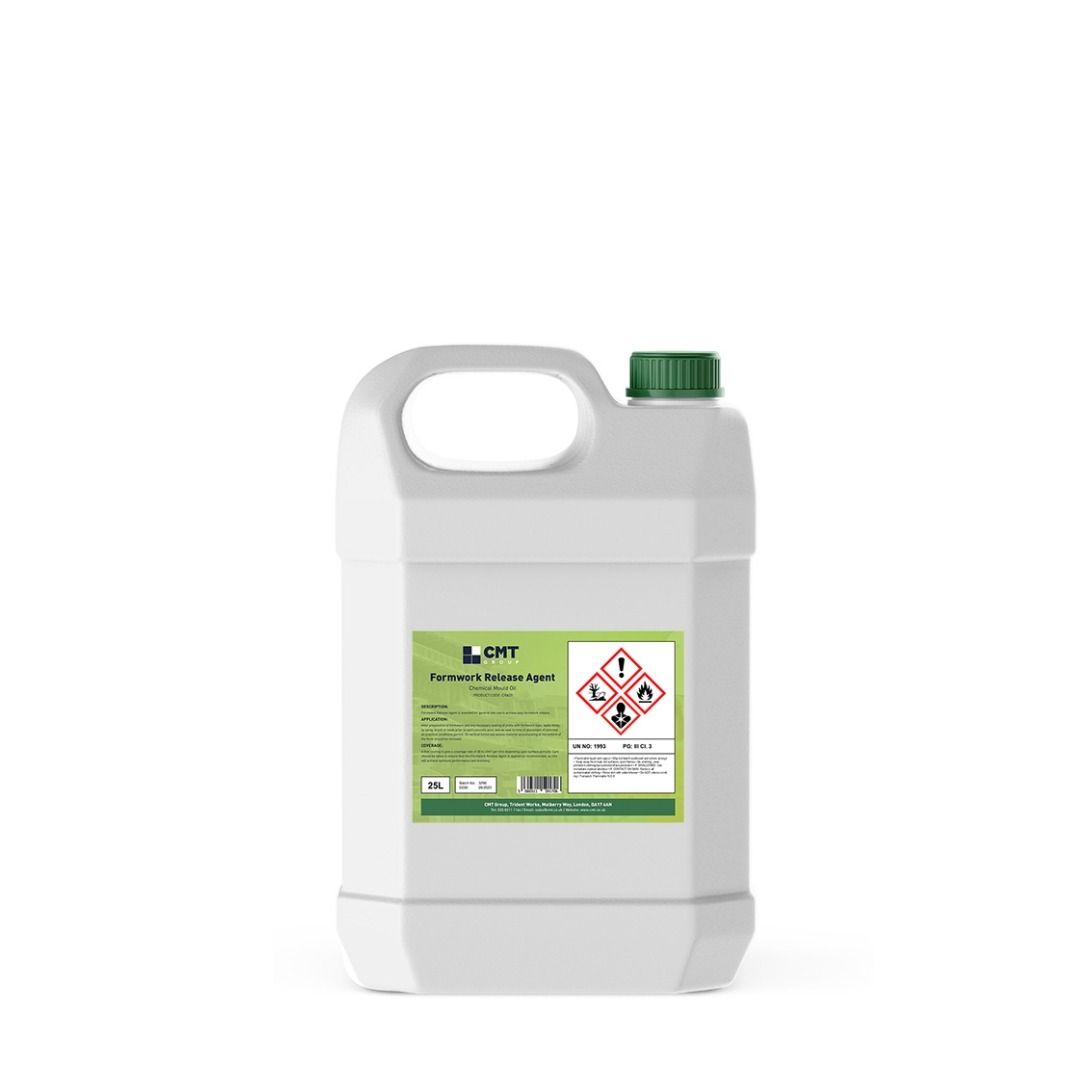
Kerosene-based dual action concrete mould oil for groundworkers, concreters, and civils operatives applying release agent to steel and timber formwork before every pour.
- Dual action physical barrier and chemical release at the concrete interface
- Kerosene-based carrier deposits reactive film, then evaporates before the pour
- Apply by spray, brush, or mop to all standard formwork surfaces
- Reduces blowholes and surface defects for a cleaner concrete finish
- Extends formwork service life by preventing concrete build-up on form faces
- Available in 5L, 20L, and 200L to suit single pours through bulk site supply
Concrete Mould Oil - Dual Action Formwork Release Agent
Kerosene-based dual action concrete mould oil for groundworkers, concreters, and civils operatives applying release agent to steel and timber formwork before every pour.
- Dual action physical barrier and chemical release at the concrete interface
- Kerosene-based carrier deposits reactive film, then evaporates before the pour
- Apply by spray, brush, or mop to all standard formwork surfaces
- Reduces blowholes and surface defects for a cleaner concrete finish
- Extends formwork service life by preventing concrete build-up on form faces
- Available in 5L, 20L, and 200L to suit single pours through bulk site supply
Concrete Mould Oil
Kerosene-based concrete mould oil for site operatives, groundworkers, and civils contractors applying formwork release agent to steel and timber shuttering before every concrete pour. Unlike single-action mineral oil alternatives, this product combines a physical barrier with a reactive chemical release mechanism at the concrete interface, producing a cleaner strike, reduced blowholes, and a sharper concrete surface finish across standard site formwork. Available in 5L, 20L, and 200L to suit small pours through large civils and precast operations.
How dual action release outperforms standard mould oil
A standard mineral oil mould oil deposits a film across the formwork face and relies solely on that physical layer to prevent the concrete bonding during cure. On porous timber or rough steel, that film thins at high points and breaks down under the weight and alkali chemistry of fresh concrete, leaving patches where the concrete bonds directly to the form. Stripping in those conditions tears the concrete face and damages the formwork surface. Dual action kerosene-based mould oil addresses both failure modes: the kerosene carrier deposits the reactive chemicals evenly across the form face and then evaporates, leaving a film that reacts with the alkali compounds in curing concrete to generate a soap-like release layer. That chemical layer breaks the bond cleanly at the interface regardless of formwork surface condition, producing a consistent strike every time.
Key Features
-
Dual action mechanism: Physical barrier and chemical reaction work simultaneously at the formwork-concrete interface, producing a cleaner release than single-action mineral oil alternatives on both steel and timber form faces.
-
Kerosene-based carrier: Thins the product for even spray, brush, or mop application across vertical and horizontal form faces, then evaporates before the pour to leave the reactive release film in place.
-
Blowhole reduction: The soap-layer release mechanism reduces the incidence of surface voids and blowholes that occur when concrete bonds unevenly to inadequately treated formwork.
-
Formwork protection: Prevents concrete build-up on steel road forms and timber shuttering panels, reducing cleaning time between pours and extending the working life of the formwork.
-
Three pack sizes: 5L for small pours and top-up supply, 20L for ongoing site use, 200L drum for bulk civils, precast, and large groundworks operations.
-
Multiple application methods: Spray, brush, or mop application to suit site access, formwork configuration, and operative preference.
Who is this for
Trades and roles:
-
Groundworkers
-
Concreters
-
Civils operatives
-
Formwork carpenters
-
Precast operatives
-
Site managers
Industries:
-
Construction
-
Civil engineering
-
Groundworks
-
Precast concrete manufacturing
-
Infrastructure and utilities
-
Road and highway construction
Specifications
| Specification | Detail |
|---|---|
| Product Name | Concrete Mould Oil - Dual Action Formwork Release Agent |
| SKU | CRA05L (5L) / CRA25L (20L) / CRA200L (200L) |
| Product Type | Kerosene-based chemical formwork release agent |
| Action Mechanism | Dual action: physical barrier and chemical release at concrete interface |
| Base Fluid | Kerosene (40-60%) and light naphthenic oil (40-60%) |
| Physical State | Liquid |
| Appearance | Clear to slightly hazy amber liquid |
| Density | approx. 0.84 specific gravity at 15.6 degrees C |
| Viscosity | approx. 2.8 mm2/s at 40 degrees C |
| Flash Point | above 45 degrees C |
| pH | approx. 5 |
| Application Method | Spray, brush, or mop |
| Flammability Classification | H226 Flammable liquid and vapour (Category 3) |
| UN Transport Number | UN 1993 Flammable Liquid N.O.S. Class 3 Packing Group III |
| Safety Data Sheet | Available on request. Revision date: 13/09/2023. Version 15.1 |
| Supplied by | CMT Group Ltd, Dartford DA2 6SL |
| Sizes Available | 5L, 20L, 200L |
| Colour | Amber |
Compatibility
| Surface or Application | Status |
|---|---|
| Steel formwork and road forms | ✓ Compatible |
| Timber shuttering | ✓ Compatible |
| Plywood-faced formwork | ✓ Compatible |
| GRP (glass reinforced plastic) moulds | ✓ Compatible |
| Polypropylene and plastic formwork systems | ✓ Compatible |
| Precast concrete moulds | ✓ Compatible |
| Concrete mixer drum lining | ✓ Compatible |
| Use near open flame or ignition sources | ✗ Not recommended |
| Confined spaces without ventilation | ✗ Not recommended |
| Contact with skin without PPE | ✗ Not recommended |
| Disposal to drain or watercourse | ✗ Not recommended |
| Use on surfaces intended for food contact | ✗ Not recommended |
Who is this for
Concrete mould oil is used by groundworkers, concreters, formwork carpenters, and civils operatives on UK construction sites where concrete is poured against steel or timber formwork on a regular basis. It is equally suited to precast concrete operations where moulds are reused across multiple production runs and clean, consistent release is critical to surface finish quality. Site managers and procurement teams on large civils, infrastructure, and road construction projects typically specify the 200L drum to maintain continuous supply across the full duration of a pour programme.
Typical applications
-
Treating steel road forms and kerb formwork before poured concrete kerbs, channels, and edging on highway and civils projects.
-
Applying to plywood-faced shuttering panels before in-situ concrete wall and column pours on commercial and residential construction sites.
-
Treating timber formwork for strip foundations, pile caps, and ground beams before concrete placement on groundwork and drainage projects.
-
Coating precast concrete moulds in polypropylene, GRP, or steel before casting fence posts, pipes, lintels, and structural units in precast yards.
-
Lining concrete mixer drums to prevent concrete build-up and reduce cleaning time between batches on site.
-
Treating formwork for in-situ concrete slabs and suspended decks before placement on civil engineering and infrastructure projects.
-
Applying to column and beam formwork on multi-storey construction projects where clean fair-faced concrete finish is specified.
-
Treating road form panels before slip-form or fixed-form paving operations on road and airfield construction contracts.
How to use
Step 1: Ensure the formwork surface is clean and free from concrete residue, rust, and debris before application. Any existing concrete build-up on steel forms must be removed before treating.
Step 2: Stir or agitate the product if it has been in storage. Apply a thin, even film to the entire formwork face using a spray, brush, or mop. Do not over-apply. A thin even film performs better than a heavy coat.
Step 3: On new or unsealed timber formwork, apply an additional coat before the first pour to saturate the surface and establish an effective release film.
Step 4: Allow the kerosene carrier to evaporate before placing concrete. In warm conditions this takes a short time. Do not pour concrete onto a visibly wet application.
Step 5: Once formwork is struck after the pour, clean the form face promptly to remove any concrete residue before it hardens. Reapply mould oil before the next pour.
Step 6: For steel formwork stored between pours, a light coat of mould oil also provides a degree of corrosion inhibition on the steel face during storage.
Common mistakes
-
Over-applying the product: A heavy coat does not improve release performance and can cause staining on the concrete face. A thin, even film is correct. Excess product running down the formwork face and pooling at the base can cause discolouration and surface defects on the finished concrete.
-
Applying to dirty or contaminated formwork: Mould oil applied over concrete residue, dust, or rust does not produce a continuous release film. The formwork surface must be clean before every application.
-
Pouring before the carrier has evaporated: Placing fresh concrete onto a wet application dilutes the reactive chemicals and reduces release performance. Allow the kerosene carrier to fully evaporate before the pour.
-
Skipping the additional coat on new timber: Unsealed timber absorbs the first coat before a surface film forms. New or unsealed timber formwork requires an additional coat to establish an effective release layer before the first pour.
-
Storing near ignition sources: This product is classified H226 flammable liquid. Drums and cans must be stored in a cool, well-ventilated location away from heat sources, sparks, and open flame. Do not store in direct sunlight.
Safety
This product is classified as a flammable liquid (H226) and an aspiration hazard (H304). Keep away from heat, sparks, open flames, and all ignition sources. Use only in well-ventilated areas or outdoors. Do not breathe vapours or spray mist. Wear appropriate PPE during application: protective gloves, protective clothing, and safety glasses as a minimum. Do not eat, drink, or smoke during use. If swallowed, do not induce vomiting and seek immediate medical attention. The product is toxic to aquatic life with long-lasting effects: prevent any spillage from entering drains, watercourses, or the environment. Full precautionary guidance is provided in the Safety Data Sheet.
Maintenance
Clean formwork faces promptly after striking to prevent concrete hardening on the surface. Store product in the original container, tightly closed, in a cool and well-ventilated location. Keep away from solvents, oxidising agents, and ignition sources. Do not transfer to unlabelled containers. Check container integrity before use. Dispose of empty containers and any unused product through a licensed waste contractor in accordance with local authority guidance.
Frequently Asked Questions
Q: What is the difference between this mould oil and a standard mineral oil release agent?
A: Standard mineral oil release agents work through a single physical mechanism: a film of oil deposited on the formwork face that prevents direct contact between the concrete and the form surface. This product uses a dual action mechanism: the kerosene carrier deposits reactive chemicals evenly across the formwork face and then evaporates, leaving a film that reacts with the alkali compounds in curing concrete to generate a soap-like release layer at the interface. That chemical layer breaks the bond cleanly and consistently, producing a more reliable strike and a sharper concrete surface finish than physical-only alternatives, particularly on porous or rough formwork surfaces.
Q: What formwork surfaces is this product suitable for?
A: This mould oil is suitable for all standard formwork surfaces used on UK construction sites: steel road forms, plywood-faced shuttering panels, bare timber formwork, GRP moulds, polypropylene and plastic formwork systems, and precast concrete moulds. It can also be used to line concrete mixer drums. New or unsealed timber formwork requires an additional coat before the first pour to establish an effective release film, as the initial application is partially absorbed into the timber surface.
Q: What is this product NOT suitable for?
A: This product must not be used near open flames, sparks, or ignition sources: it is classified H226 flammable liquid. It must not be used in confined spaces without adequate ventilation. It is not suitable for surfaces intended for food contact. It must not be disposed of to drain, surface water, or watercourse as it is toxic to aquatic life with long-lasting effects. It is not a substitute for PPE: direct skin contact should be avoided and appropriate gloves and clothing worn during application.
Q: Why does the formwork need to be clean before applying mould oil?
A: Mould oil applied over concrete residue, dust, or surface contamination cannot form a continuous release film across the formwork face. Any gap in the film is a point where fresh concrete makes direct contact with the form surface and bonds during cure. Stripping at those points tears the concrete face and can damage the formwork. A clean surface before every application is the single most important factor in consistent release performance across the life of the formwork.
Q: How do I apply this product correctly?
A: Apply a thin, even film to the entire clean formwork face using a spray, brush, or mop. Do not over-apply: a heavy coat does not improve release and can cause concrete staining. Allow the kerosene carrier to evaporate fully before placing concrete. On new or unsealed timber, apply a second coat before the first pour. For stored steel formwork, a light coat also provides corrosion inhibition between pours.
Q: Is this product flammable and how should it be stored on site?
A: Yes. This product carries the H226 classification as a flammable liquid with a flash point above 45 degrees C. Store in the original container, tightly closed, in a cool and well-ventilated location away from all heat sources, sparks, and open flames. Do not store in direct sunlight or near solvents and oxidising agents. Follow the full storage guidance in the Safety Data Sheet, available on request from CMT Group.
Q: Which pack size is right for my project?
A: The 5L is suited to small pours, top-up supply, and site situations where a large drum is impractical to handle or store. The 20L is the standard working size for ongoing site use across a typical groundworks or construction project. The 200L drum suits bulk civils, precast yard operations, road construction, and large projects where a continuous supply of release agent is needed across an extended pour programme. All three sizes contain the same product.