Crane Boom Fall Arrest Kit - Forked Kernmantle Lanyard and Harness with Backpack | CMT Group UK
Crane Boom Fall Arrest Kit - Forked Kernmantle Lanyard and Harness with Backpack | CMT Group UK Usage diagram showing operative on steel beam using forked lanyard continuous connection system | CMT Group UK

A complete, ready-to-use fall arrest kit for crane boom and steel construction operatives, supplied with a full body harness, 1.5m forked energy absorbing kernmantle rope lanyard, and backpack.

  • Forked twin-tail lanyard: Maintains 100% continuous connection when moving between anchor points
  • Energy absorber integrated: Reduces peak arrest force to safe levels on both tails
  • Kernmantle rope construction: Abrasion-resistant, designed for steel and structural environments
  • Lanyard length: 1.5m per tail, forked energy absorbing kernmantle rope
  • Harness: Full body harness, compatible with forked lanyard system
  • Storage: Backpack included for organised, portable kit carry
  • Certification: CE marked to EN361:2002 and EN355:2002

Kratos Crane Boom Fall Arrest Kit - Forked Kernmantle Lanyard and Harness with Backpack

Code
PP080030
5 In Stock

A complete, ready-to-use fall arrest kit for crane boom and steel construction operatives, supplied with a full body harness, 1.5m forked energy absorbing kernmantle rope lanyard, and backpack.

  • Forked twin-tail lanyard: Maintains 100% continuous connection when moving between anchor points
  • Energy absorber integrated: Reduces peak arrest force to safe levels on both tails
  • Kernmantle rope construction: Abrasion-resistant, designed for steel and structural environments
  • Lanyard length: 1.5m per tail, forked energy absorbing kernmantle rope
  • Harness: Full body harness, compatible with forked lanyard system
  • Storage: Backpack included for organised, portable kit carry
  • Certification: CE marked to EN361:2002 and EN355:2002
£133.81 £111.51
  • Buy 20 for £123.78 £103.15 each and save 7%
  • Buy 50 for £113.74 £94.78 each and save 15%
  • BULK DISCOUNT 20 50
    Price £103.15 £123.78 £94.78 £113.74

Order 1x to earn 111 FASTPoints

Order to earn 111 FASTPoints

Log in to access trade discounts
5 In Stock

Kratos Crane Boom Fall Arrest Kit

For steel erectors and operatives working on crane booms and structural steel frameworks, disconnecting from an anchor point at height is not an option. The forked kernmantle lanyard in this kit provides 100% continuous connection: one tail remains clipped to an anchor while the other transfers to the next, so the operative is never unprotected during movement. The complete kit, harness, lanyard, and backpack, arrives certified and ready to deploy on site.

Why choose the Crane Boom Fall Arrest Kit

  • 100% continuous connection: The forked twin-tail design means one tail is always connected during anchor transfers. This is the fundamental requirement for steel construction and crane boom work where any period of disconnection at height is unacceptable.

  • Forked energy absorbing kernmantle lanyard: Both tails incorporate an energy absorber, reducing peak arrest force on the body regardless of which tail arrests the fall. The kernmantle rope construction resists abrasion against steel edges and structural surfaces.

  • 1.5m tail length: Shorter than a standard 1.8m lanyard, keeping the operative closer to the anchor and reducing free-fall distance on steel structures where clearance below is often limited.

  • Full body harness: Distributes arrest forces correctly across the body. Compatible with the forked lanyard and certified as a matched system under EN365.

  • Backpack carry bag: Unlike a jute bag, the backpack allows the operative to carry the kit hands-free to the work position at height, which matters on steel structures where both hands are needed during access.

  • Certified matched system: All components carry CE marking and are certified compatible, satisfying the EN365 requirement for a complete, compliant fall protection system.

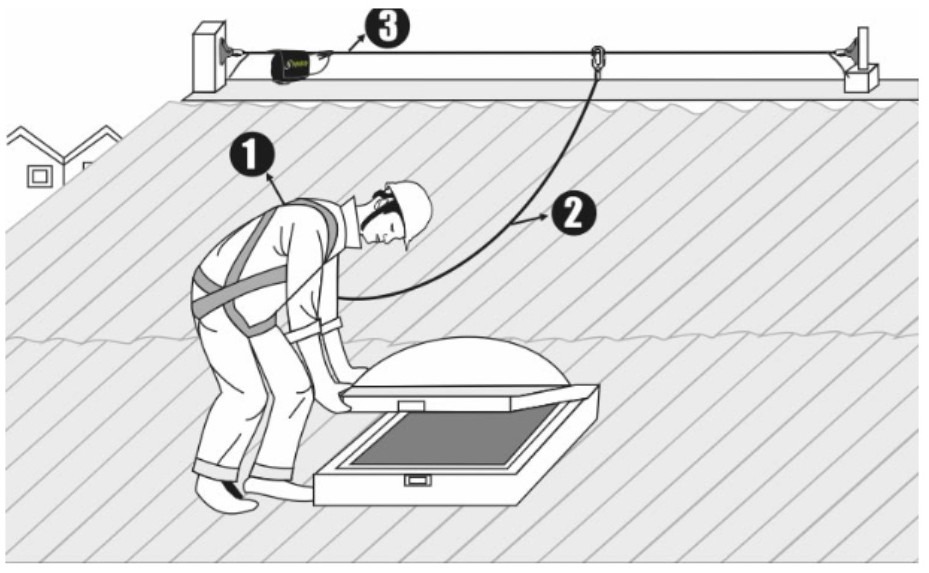
A fall protection system must include at least three components:

1: The gripping system of the body: harness, belt.

2: The fall arrest system: fall arrest on anchor line, retractable fall arrest, energy absorbing lanyard.

3: The anchoring system: anchor lanyard lifeline, tripod...

The user security can be guaranteed only if:

  • These three components have the CE marking ;
  • These three components are compatible together ;
  • The user has been trained in the usage of these three components.

A fall arrest system can be complete only if a rescue plan has been established in advance in order to cope with any emergency that may arise during work.

What's in the box?

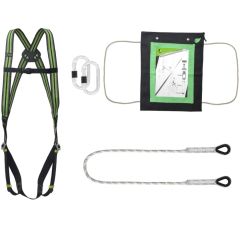
  • Full body harness

  • 1.5m forked energy absorbing kernmantle rope lanyard

  • Backpack carry bag

  • User instruction leaflet

 Specifications

Specification Detail
Product Name Crane Boom Fall Arrest Kit - Forked Kernmantle Lanyard and Harness with Backpack
Product Code PP080030
Harness Type Full Body Harness
Lanyard Type Forked Energy Absorbing Kernmantle Rope Lanyard
Lanyard Configuration Twin-Tail (Forked)
Lanyard Length 1.5m per Tail
Energy Absorber Integrated (Both Tails)
Rope Construction Kernmantle
Continuous Connection Yes (100% via Twin-Tail Configuration)
Storage Backpack
CE Marked Yes
Standards EN361:2002, EN355:2002
HS Code 63079098

 Compatibility

Compatible With Status
Structural Steel Anchor Points & Beams ✓ Compatible
Fixed Eyebolts & Anchor Plates ✓ Compatible
Horizontal Lifeline Systems ✓ Compatible
Crane Boom Structures (Continuous Connection Required) ✓ Compatible
Use without Rated Anchor Point ✗ Not Recommended
Confined Space Entry or Rescue Applications ✗ Not Recommended
Use as Work Restraint System ✗ Not Recommended


Who is this for?

This kit is for trained steel erectors, ironworkers, and operatives working on crane booms, structural steel frameworks, and elevated steel structures where frequent anchor transfers are required. It suits contractors on commercial, industrial, and infrastructure projects where the method statement specifies 100% continuous connection at height. The user must be trained in the use of forked lanyard systems before using this kit on site.

Typical applications

  • Steel erection on commercial and industrial building frames

  • Crane boom maintenance and inspection at height

  • Structural steelwork on bridges, gantries, and elevated platforms

  • Column and beam connection work requiring frequent movement between anchor points

  • Tower and mast construction where continuous connection is specified

  • Any steel construction task where the RAMS document requires 100% connection at all times

How to use

  1. Inspect all components before use. Check both tails of the lanyard for cuts, abrasion, or contamination. Check both energy absorber covers for signs of deployment. Check all connectors open and close correctly. Do not use any component that fails inspection.

  2. Don the harness and adjust all straps: chest first, then thighs, then shoulders. No more than two finger widths of slack at any strap.

  3. Before ascending to the work position, clip one tail of the forked lanyard to a rated anchor point. The second tail should be stored safely on the harness or lanyard keeper, not left to trail.

  4. When transferring to a new anchor point, clip the free tail to the new anchor first. Confirm it is fully locked before unclipping the first tail. At no point should both tails be unclipped simultaneously.

  5. Keep the free tail controlled at all times. A trailing lanyard tail at height is a snag and trip hazard.

  6. Work within the rated range of the lanyard. Do not extend, knot, or modify either tail.

  7. On completion, unclip from the anchor before descending. Stow both tails and the harness in the backpack for transport and storage.

Safety and maintenance

Safety during use:

  • This is a fall arrest system. Collective protection such as guardrails should remain the primary control where practicable.

  • Never unclip both tails simultaneously. The entire purpose of the forked configuration is continuous connection: unclipping both tails defeats the system entirely.

  • Anchor points on structural steel must be assessed and rated for fall arrest loading by a competent person before use.

  • Wear a hard hat to EN397, safety footwear to EN ISO 20345, and gloves appropriate to steel handling. Structural steel presents additional hazards beyond the fall arrest risk.

  • A rescue plan must be in place before work begins, as required under EN365. Suspension trauma can develop rapidly in an arrested worker at height.

After use and maintenance:

  • Wipe down the harness, both lanyard tails, and all connectors after each use. Remove metal swarf, grease, and abrasive contamination common in steel construction environments.

  • Inspect the kernmantle rope along its full length at each pre-use check. Stiffness, core exposure, or abrasion through the outer sheath means immediate withdrawal.

  • Formally inspect all components by a competent person at intervals not exceeding 12 months. Keep written inspection records per PUWER.

  • Withdraw the entire kit from service immediately after any fall arrest event. Both energy absorbers are single-use.

Frequently Asked Questions

Q: What does forked or twin-tail mean and why does it matter for crane boom work?

A: A forked lanyard has two tails, each with its own connector, both attached to a single energy absorber unit on the harness end. When transferring between anchor points, the operative clips the free tail to the new anchor before releasing the first, ensuring they are always connected to at least one anchor. On crane booms and structural steel where there is no continuous guardrail system, any period of disconnection is a potentially fatal risk. The forked configuration eliminates that gap entirely.

Q: What do EN361:2002 and EN355:2002 mean for this product?

 A: EN361:2002 is the standard for full body harnesses, specifying how arrest forces must be distributed across the body to reduce injury. EN355:2002 covers energy absorbers, setting the maximum force that can be transmitted to the wearer during an arrest event. Both standards are required under the Personal Protective Equipment at Work Regulations 1992 and Working at Height Regulations 2005 for fall arrest PPE on UK sites. CE marking to both confirms this kit meets those legal requirements.

Q: Why is the lanyard 1.5m rather than the standard 1.8m?

A: The shorter 1.5m tail length reduces free-fall distance on steel structures where clearance below the work position is often limited. A shorter lanyard keeps the operative closer to the anchor point and reduces the total arrest distance, which is critical where structural members, platforms, or other steelwork are present below.

Q: Can this kit be used for roofing or scaffolding work?

 A: The kit can physically be used in those environments, but it is not the optimal choice. The Scaffolder Fall Arrest Kit uses scaffold-specific hooks for direct connection to scaffold tubes. The Roofer Fall Arrest Kit uses a guided arrester on a rope line for vertical movement on pitched surfaces. This kit is configured specifically for frequent anchor transfers on steel structures. Using the right kit for the application reduces misuse risk and simplifies compliance documentation.

Q: Does the backpack have any special features for working at height?

 A: The backpack allows the operative to carry the kit hands-free during access to the work position, which matters on steel structures where both hands are needed on ladders or climbing routes. It also protects the kernmantle rope and harness webbing from the abrasive and contaminating environment of a steel construction site during transport and storage.

Q: What happens after a fall arrest event involving this kit?

 A: Withdraw all components immediately. Both energy absorbers are single-use and cannot be reset or reused. The harness webbing and rope may also have sustained damage not visible externally. Label all items as withdrawn, quarantine them, and have a competent person assess before any decision on disposal. The operative must also be assessed by a first aider: suspension trauma symptoms can be delayed after an arrest.

Q: How often must this kit be formally inspected?

 A: Pre-use inspection by the wearer before every session, and formal inspection by a competent person at least every 12 months with written records. Check the manufacturer's label for the specific service life applicable to this kit, typically between five and ten years from first use.

Q: Where can I order this kit and how quickly can I get it to site?

 A: CMT Group supplies this kit from stock with next working day delivery on orders placed by 7pm online or 5pm by phone. Same-day delivery is available: call the team to confirm stock and arrange despatch. CMT operates its own fleet of over 100 FORS Silver accredited vehicles covering 90% of the UK, with live tracking and SMS notification 15 minutes before arrival. For contractors managing multiple projects, the EDGE portal provides agreed pricing, spending controls, and full delivery visibility in one place.

CMT Equipment Ltd