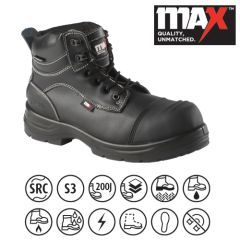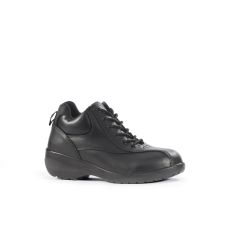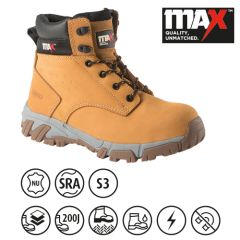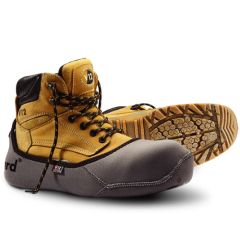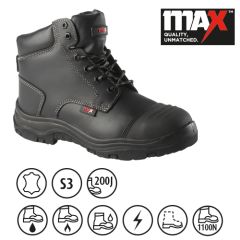



Electrical hazard safety boots with a metal-free insulating sole, for electricians and engineers working near cables and electrical systems.
- Sole tested at 20,000V, ASTM F2413-24 EH
- EN ISO 20345:2022 SB FO E PS CI HI WPA WR HRO SR
- Completely metal free
- 200J composite toe cap and non-metallic puncture-resistant midsole
- Cold insulated to -17°C, hot contact to 300°C
- Water-resistant breathable membrane
- Available in multiple sizes
Tesla Electrical Hazard Safety Boots - Metal Free
Electrical hazard safety boots with a metal-free insulating sole, for electricians and engineers working near cables and electrical systems.
- Sole tested at 20,000V, ASTM F2413-24 EH
- EN ISO 20345:2022 SB FO E PS CI HI WPA WR HRO SR
- Completely metal free
- 200J composite toe cap and non-metallic puncture-resistant midsole
- Cold insulated to -17°C, hot contact to 300°C
- Water-resistant breathable membrane
- Available in multiple sizes
Tesla Electrical Hazard Safety Boots
An electrical hazard safety boot has an insulating sole that gives secondary protection against electric shock through the feet. This ankle boot is completely metal free, with a composite toe cap, a non-metallic puncture-resistant midsole and a nitrile rubber outsole. It is certified to EN ISO 20345:2022 SB and complies with ASTM F2413-24 EH.
How a Metal-Free Insulating Sole Reduces the Risk of Electric Shock
A standard safety boot has no tested resistance to electric current, and many have a steel toe cap or midsole. If the wearer steps on a live part, current can pass through the body to earth. This boot uses insulating materials through the outsole, midsole, insert and footbed, and the sole has been tested at 20,000V.
Key Features
-
Electrical hazard sole: tested at 20,000V for 1 minute with leakage below 1.0mA, to the ASTM F2413-24 EH method.
-
Completely metal free: no metal parts to conduct current, or to set off metal detectors.
-
200J composite toe cap: protects the toes from impact and does not conduct heat or cold.
-
Non-metallic puncture-resistant midsole: stops sharp objects such as nails passing through the sole.
-
Cold and heat insulated sole: tested for cold down to -17°C, and the outsole resists hot contact up to 300°C.
-
Scratch-resistant leather upper: a polyurethane finish protects the leather from scuffs and wear.
-
Water-resistant breathable membrane: keeps water out while letting sweat escape on long shifts.
Who is this for
Trades and roles
-
Electricians
-
Electrical engineers and technicians
-
Maintenance engineers
-
Cable jointers and installers
-
Facilities and building services teams
Industries
-
Electrical contracting
-
Utilities and energy
-
Construction and building services
-
Manufacturing and industrial maintenance
-
Cold storage and logistics
Specifications
| Specification | Detail |
|---|---|
| Product name | Tesla Electrical Hazard Safety Boots - Metal Free |
| Product code | PP090002 |
| Product type | Ankle safety boot, completely metal free |
| European standard | EN ISO 20345:2022 SB FO E PS CI HI WPA WR HRO SR |
| US standard | ASTM F2413-24: I, C, PR, EH, SRO |
| Electrical hazard test | 20,000V at 60Hz for 1 minute, leakage current below 1.0mA (method analogous to ASTM F2413-24 EH and CSA Z195-14) |
| Outsole insulation | Up to 1,000V, outsole only, without moisture (method analogous to EN ISO 20345:2022) |
| Toe cap | 200J polymeric composite, non-thermal, to EN ISO 22568 |
| Midsole | Flexible non-metallic puncture-resistant insert, PS (3.0mm nail) |
| Outsole | Dual-density polyurethane and insulating nitrile rubber, resistant to hydrocarbons and abrasion |
| Cold insulation | Sole tested to -17°C |
| Hot contact | Outsole resistant to hot contact up to 300°C |
| Upper | Scratch-resistant polyurethane-finished leather, 1.8mm to 2.0mm |
| Lining | Breathable water-resistant membrane, abrasion-resistant fabric lining |
| Insole | Removable, anatomical, insulating, with activated carbon |
| Other features | Padded tongue, reflective fabric insert |
| Weight | 625g in EU size 42, excluding laces and insoles |
| Brand | Giasco |
| Sizes | UK 7 to UK 12 |
| Colour | Black with grey and orange detailing |
Size Selection
| Product code | UK size | EU |
|---|---|---|
| PP090002-07 | UK 7 | EU 41 |
| PP090002-08 | UK 8 | EU 42 |
| PP090002-09 | UK 9 | EU 43 |
| PP090002-10 | UK 10 | EU 44 |
| PP090002-11 | UK 11 | EU 45 |
| PP090002-12 | UK 12 | EU 46 |
Compatibility
| Use, site or condition | Suitability |
|---|---|
| Electrical work near low voltage cables and systems, in dry conditions | Suitable, secondary protection against electric shock through the sole |
| Electrical work in wet conditions | Not recommended, the sole insulation is tested without moisture |
| Live working that requires insulating footwear to EN 50321 | Not recommended, use class-rated dielectric boots |
| ESD protected areas or where antistatic footwear is required | Not recommended, the boot is insulating, not antistatic |
| Cold environments down to -17°C | Suitable |
| Hot surfaces, contact up to 300°C | Suitable |
| Sites with metal detectors or security screening | Suitable, the boot is completely metal free |
Typical Users and Projects
Electrical hazard boots are worn by electricians and engineers who work near cables and electrical systems. Typical jobs include installation, testing, maintenance and fault-finding on construction sites, in plant rooms and in industrial buildings. They suit trained electrical workers who also follow safe isolation procedures.
Typical applications
-
Installing and terminating cables on construction and fit-out projects.
-
Maintaining switchgear, distribution boards and plant room equipment.
-
Working on sites with metal detectors or security screening.
-
Carrying out electrical maintenance in cold stores and unheated buildings.
-
Working on sites with sharp debris, where puncture resistance is needed.
How to use
Step 1: Choose your usual UK size, and check the fit with your work socks before use.
Step 2: Before each shift, check the soles for cuts, wear, embedded objects or damage.
Step 3: Keep the soles clean and dry when doing electrical work.
Step 4: Lace the boots firmly so the ankle is supported.
Step 5: Follow safe isolation procedures. The boots are a secondary layer of protection only.
Common mistakes
-
Relying on the boots instead of isolating the supply.
-
Wearing them for arc flash work, which they are not rated for.
-
Wearing them in ESD areas, where antistatic footwear is required.
-
Carrying on with electrical work in wet conditions or with wet soles.
-
Wearing boots with cut, worn or punctured soles, which reduces the insulation.
Safety
The Electricity at Work Regulations 1989 require safe systems of work, so never work live because you are wearing insulating boots. For live working that needs insulating footwear to EN 50321, use class-rated dielectric boots. For arc flash risks, use arc-rated PPE.
Maintenance
Wipe off dirt after use, and dry the boots naturally away from direct heat. Remove the insole to air it. Replace the boots if the sole is cut, worn through or punctured.
Frequently Asked Questions
Q: What does Electrical Hazard (EH) mean on a safety boot?
A: EH is a rating in ASTM F2413-24, the US standard for protective footwear. It means the sole has been tested to resist electric shock if the wearer steps on a live part. This boot was tested at 20,000V for 1 minute, with leakage current below 1.0mA. It also meets ASTM ratings I and C for toe impact and compression, PR for puncture and SRO for slip resistance.
Q: What sizes are available?
A: The boot is available in UK sizes 7 to 12. Giasco makes it in EU sizes 39 to 47, so contact our team if you need help matching a size.
Q: What does EN ISO 20345:2022 SB FO E PS CI HI WPA WR HRO SR mean?
A: SB means basic safety footwear with a 200J toe cap. FO, HRO and SR cover the outsole: resistance to fuel oil, hot contact up to 300°C and slipping. E is energy absorption in the heel, and PS is puncture resistance from a non-metal insert tested with a 3.0mm nail. CI and HI mean the sole is insulated against cold and heat. WPA means the upper resists water, and WR means the whole boot is water resistant.
Q: Why is this boot rated SB and not S3?
A: An S3 boot must be antistatic, which means it lets a small amount of static drain through the sole. An insulating sole is built to stop current passing through, so it cannot be antistatic at the same time. That is why electrical hazard boots carry an SB rating with extra codes, rather than S3.
Q: Can I wear these boots in wet conditions?
A: The leather upper and membrane resist water, so the boots keep feet dry in rain and puddles. The electrical insulation of the sole is tested without moisture, though. Keep the soles dry for any electrical work.
Q: Are the boots completely metal free?
A: They contain no metal at all, including the toe cap and midsole. That means no metal parts to conduct current, and no metal to set off airport-style detectors on secure sites.
Q: How should I look after electrical hazard boots?
A: Check the soles before each shift for cuts, wear and embedded objects, as damage reduces insulation. Clean and dry the boots naturally away from direct heat. Replace them when the sole is cut, worn through or punctured.