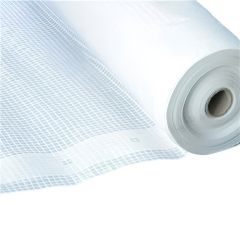
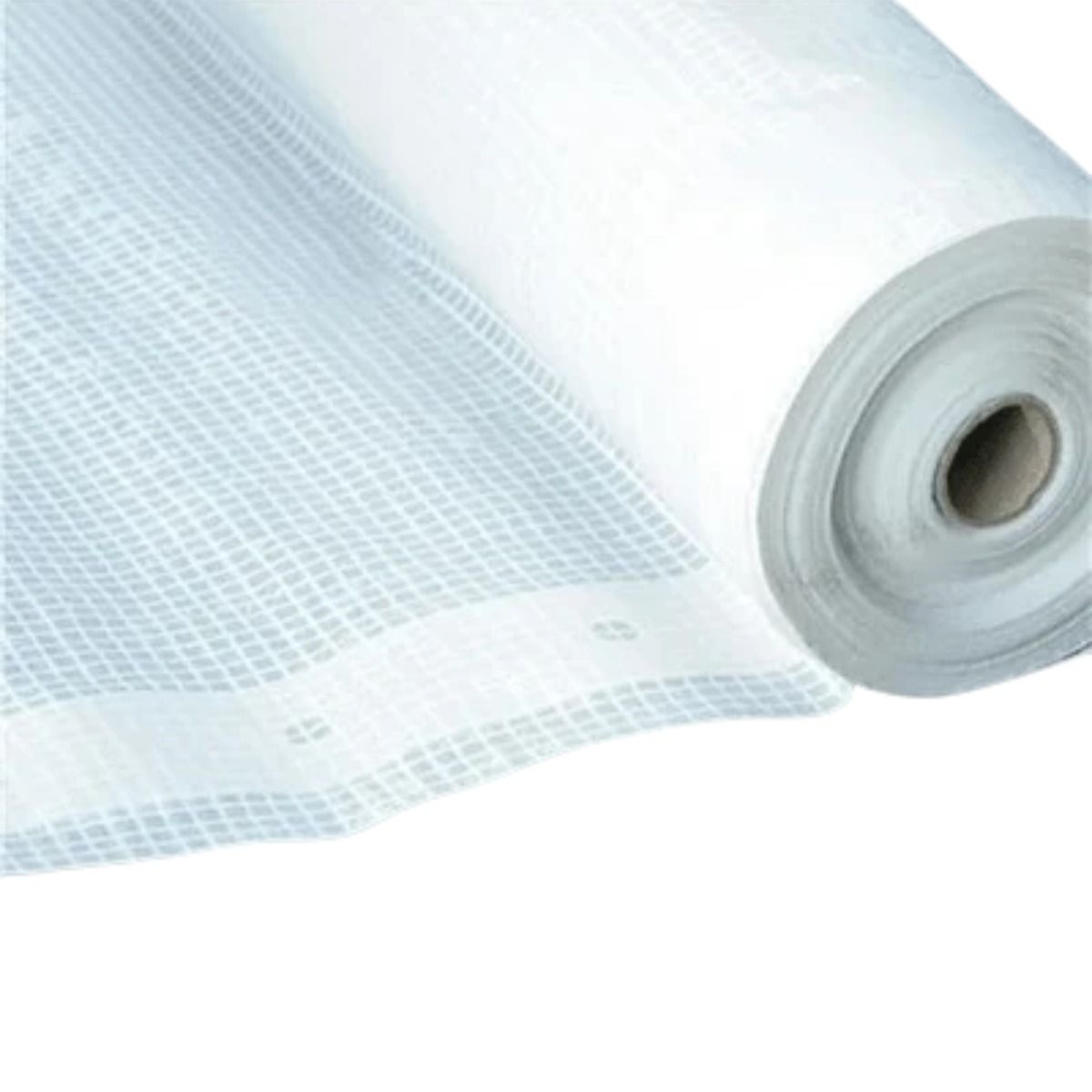
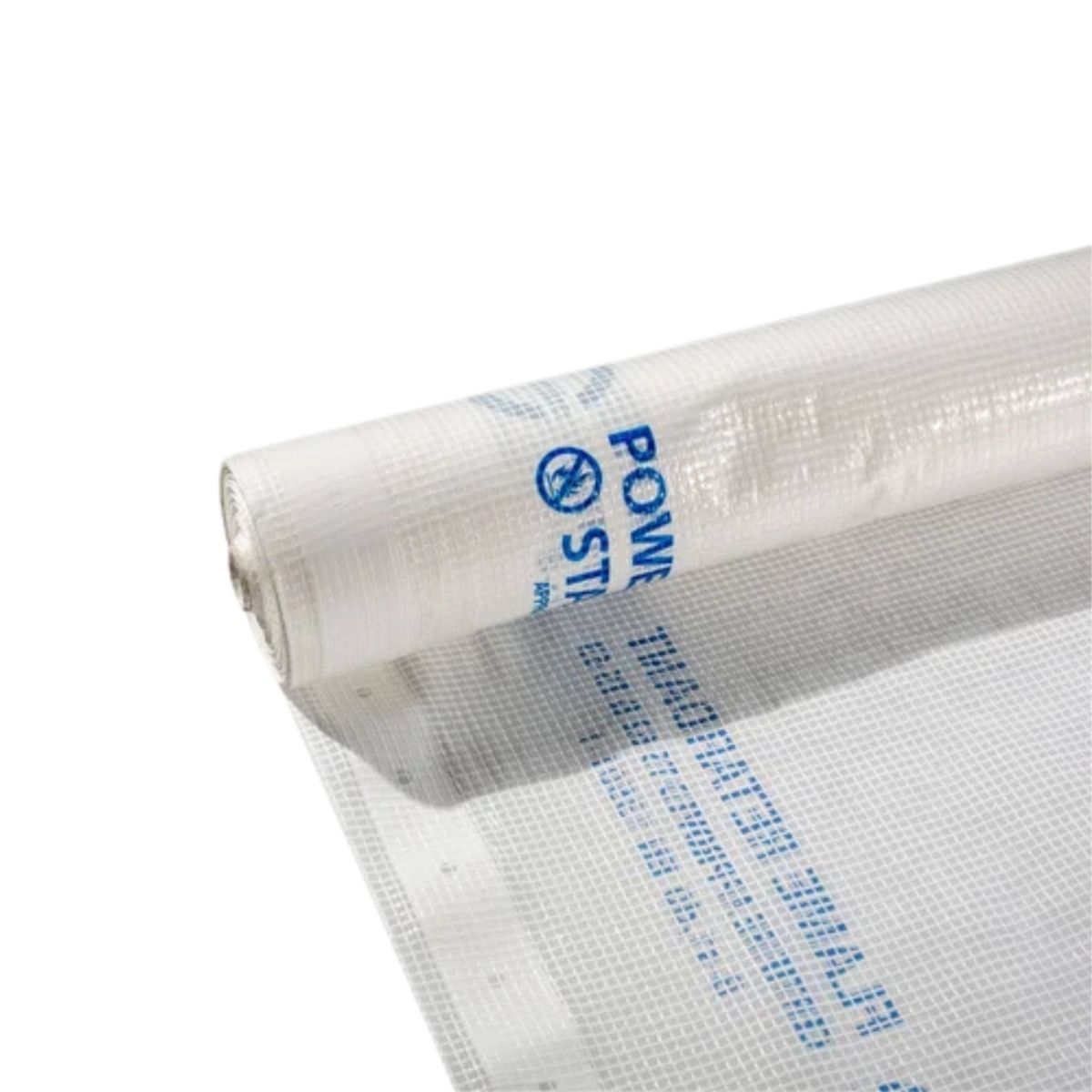

Heavy-duty fire retardant scaffold sheeting for use on tube and clamp and modular scaffolding to protect pedestrians and traffic from falling debris and to protect the building and workers from the elements.
- Fire retardant to CPAI 84 Section 3.2
- White, heavy-duty construction
- 2m wide x 45m roll, 90m² coverage
- Suitable for tube and clamp and modular scaffolding
- Specified for occupied buildings, petrochemical, and offshore sites where FR sheeting is required
Fire Retardant Scaffold Sheeting - 2m x 45m
Heavy-duty fire retardant scaffold sheeting for use on tube and clamp and modular scaffolding to protect pedestrians and traffic from falling debris and to protect the building and workers from the elements.
- Fire retardant to CPAI 84 Section 3.2
- White, heavy-duty construction
- 2m wide x 45m roll, 90m² coverage
- Suitable for tube and clamp and modular scaffolding
- Specified for occupied buildings, petrochemical, and offshore sites where FR sheeting is required
- Buy 5 for £249.96 £208.30 each and save 5%
- Buy 10 for £227.88 £189.90 each and save 14%
| BULK DISCOUNT | 5 | 10 |
|---|---|---|
| Price | £208.30 £249.96 | £189.90 £227.88 |
Order 1x to earn 219 FASTPoints
Order to earn 219 FASTPoints
Log in to access trade discountsFire Retardant Scaffold Sheeting - 2m x 45m White
Heavy-duty fire retardant scaffold sheeting for use on tube and clamp and modular scaffolding, providing weather protection and debris containment for pedestrians, traffic, the building, and site workers. Fire retardant to CPAI 84 Section 3.2, this sheeting is specified for safety-critical installations including occupied buildings under refurbishment, petrochemical sites, and offshore scaffolding where standard non-FR sheeting is not acceptable. Supplied in a 2m x 45m white roll covering 90m² per roll.
Why Fire Retardant Scaffold Sheeting Is Specified for Safety-Critical Sites
Standard scaffold sheeting provides containment and weather protection but offers no resistance to ignition. On occupied buildings, petrochemical installations, and offshore environments where hot works are conducted in proximity to the scaffold enclosure, or where the building's fire safety plan mandates FR materials in temporary structures, standard sheeting does not meet the specification. Fire retardant sheeting does not readily propagate flame when exposed to an ignition source, reducing the risk of fire spreading across a temporary scaffold enclosure on a live or occupied site.
Key Features
-
Fire retardant to CPAI 84 Section 3.2: Flame resistance standard covering industrial fabric applications.
-
White colour: High reflectivity and good visibility. Suitable for most planning and client appearance requirements on occupied and public-facing sites.
-
Heavy-duty construction: Durable reinforced sheeting designed to withstand the physical demands of construction scaffolding, including attachment, wind loading, and re-use across multiple lifts where permitted.
-
90m² per roll: The 2m x 45m format provides efficient coverage of standard scaffold bays and minimises cutting waste on typical bay configurations.
-
Compatible with tube and clamp and modular scaffolding: Attaches using standard scaffold ties, bungee clips, or proprietary fastening systems at eyelet points.
Who Is This For
Trades and roles:
-
Scaffold contractors
-
Construction site managers and principal contractors
-
Project managers specifying temporary works materials
-
Health and safety managers and temporary works coordinators
Industries:
-
Construction and refurbishment
-
Petrochemical and offshore
-
Civil engineering and infrastructure
-
Commercial and industrial building maintenance
Specifications
| Specification | Detail |
| Product Name | Fire Retardant Scaffold Sheeting - 2m x 45m |
| SKU | MNFFR245 |
| Width | 2m (2000mm) |
| Roll Length | 45m |
| Coverage per Roll | 90m² |
| Colour | White |
| Fire Retardant | Yes |
| Flame Retardancy Standard | CPAI 84 Section 3.2 |
| Scaffold Compatibility | Tube and clamp, modular scaffold |
| Application | Weather protection, debris containment, FR enclosure |
Compatibility
| Application or condition | Status |
| Tube and clamp scaffolding | ✓ Compatible |
| Modular scaffolding | ✓ Compatible |
| Occupied buildings (FR specification required) | ✓ Compatible (CPAI 84 Section 3.2) |
| Pedestrian and traffic debris protection | ✓ Compatible |
| Weather protection for buildings and workers | ✓ Compatible |
| Petrochemical and offshore (FR specified) | ✓ Compatible (confirm standard with project) |
| Scaffold not checked for solid sheeting wind load | ✗ Do not use (structural check mandatory first) |
| Fall protection or safety net use | ✗ Not suitable |
| Permanent weatherproofing | ✗ Temporary use only |
Who Is This For
Fire retardant scaffold sheeting is specified by scaffold contractors, principal contractors, and construction managers on projects where the site fire safety plan, client specification, or the nature of the building requires FR-rated materials in the scaffold enclosure. It is the correct specification for occupied buildings under external refurbishment, petrochemical and offshore sites, and any project where hot works are carried out in proximity to the scaffold enclosure. Confirm the required FR standard with the project specifier before ordering.
Typical Applications
-
Enclosing scaffolding on occupied residential or commercial buildings during external refurbishment to provide weather protection and contain falling debris.
-
Temporary FR enclosures on petrochemical and offshore installations where non-FR sheeting is not acceptable.
-
Protection of pedestrians and traffic from falling debris on scaffolding over public areas and high streets.
-
Weather protection for the building fabric and workers during external facade works in exposed locations.
-
Containment of dust and debris from demolition, strip-out, or masonry works on scaffolding.
How to Use
Step 1: Confirm the scaffold has been designed and checked for the additional wind loading of solid scaffold sheeting. Do not clad any scaffold without this structural confirmation. TG20 (NASC) provides guidance for standard configurations.
Step 2: Confirm the FR standard required by the project specification. CPAI 84 Section 3.2 is an American standard. If the project specifies BS 5867, BS 476, or a European equivalent, confirm suitability before ordering.
Step 3: Cut the roll to the required lengths for each bay or lift. The 2m width suits 2m bay pitch configurations. Allow for overlaps at joins.
Step 4: Attach the sheeting to the scaffold tubes at regular intervals using appropriate scaffold ties or bungee clips at the eyelet points. Follow the scaffold design specification for tie density.
Step 5: Overlap adjacent panels in the direction that sheds wind rather than catches it. Ensure all joins are secure before completing each lift.
Step 6: Inspect sheeting at the start of each working week and after any high-wind event. Replace damaged sections immediately.
Common Mistakes
-
Cladding a scaffold without a structural check: full solid sheeting dramatically increases wind loading. A scaffold that has not been designed or checked for this load is a serious structural risk. This is the most common and most dangerous mistake in scaffold sheeting installation.
-
Specifying standard sheeting where FR is required: if the project requires FR-rated sheeting and standard sheeting is installed, the scaffold enclosure is non-compliant. Confirm the specification requirement before ordering.
-
Under-tying the sheeting: sheeting attached at insufficient density can detach in high winds, creating a hazard to pedestrians and traffic below. Follow the scaffold design for tie intervals precisely.
-
Overlapping joins against the wind: joins that present an open edge to the prevailing wind will fill with air, stress the sheeting and ties, and fail. Always lap in the direction that the wind cannot get under.
Safety
Full solid scaffold sheeting significantly increases the wind load on the scaffold structure. A structural design check confirming the scaffold is designed and built for the additional load is mandatory before cladding. Never attach sheeting to an unchecked scaffold. Fire retardant sheeting reduces the risk of flame propagation but does not make the scaffold or its contents non-combustible. A site fire safety plan remains mandatory for all occupied-building sites. Inspect sheeting after any storm or high-wind event before resuming work.
Maintenance
Inspect all sheeting at the start of each working week and after any high-wind event. Look for tears, detachment at tie points, and damage at overlap joins. Replace damaged sections immediately, loose or detached sheeting over a public area or traffic route is a serious hazard. Remove sheeting in controlled sections when dismantling the scaffold to prevent large panels catching wind during dismantling operations.
Frequently Asked Questions
Q: Is this sheeting suitable for use on occupied buildings?
A: Fire retardant scaffold sheeting is the specified grade for occupied buildings where the fire safety plan or client requirements mandate FR materials. Confirm the specific FR standard required by the project before ordering.
Q: Do I need a structural check before fitting solid scaffold sheeting?
A: Yes, without exception. Full solid scaffold sheeting significantly increases the wind loading on the scaffold structure compared with open scaffolding. A scaffold that has not been designed and checked for the additional wind load is a structural risk. TG20 (NASC) provides worked guidance for standard configurations. Always confirm the scaffold design accommodates solid sheeting before cladding begins.
Q: How much does one roll cover and how many rolls do I need?
A: Each roll is 2m wide by 45m long, giving 90m² of coverage per roll. To estimate rolls needed: calculate the total surface area of the scaffold faces to be clad (height x width of each face), add 10-15% for overlaps and waste, then divide by 90m².
Q: Can this sheeting be used on both tube and clamp and system (modular) scaffolds?
A: Yes. It is compatible with both scaffold system types, attached using scaffold ties, bungee clips, or proprietary fastening systems at the eyelet points on the sheeting.
Q: What is this sheeting NOT suitable for?
A: Do not use on any scaffold that has not been structurally checked for solid sheeting wind loads. Do not use as fall protection, safety netting, or a lifting sling. Do not use as a permanent weatherproofing solution. For projects requiring fire retardant standards other than CPAI 84 Section 3.2, confirm compliance before ordering.
Q: How should I dispose of scaffold sheeting after a project?
A: Used scaffold sheeting should be assessed for reuse. If it is undamaged and not contaminated, it can be cleaned and reused on subsequent projects. Contaminated or torn sheeting should be disposed of in accordance with the site waste management plan.