
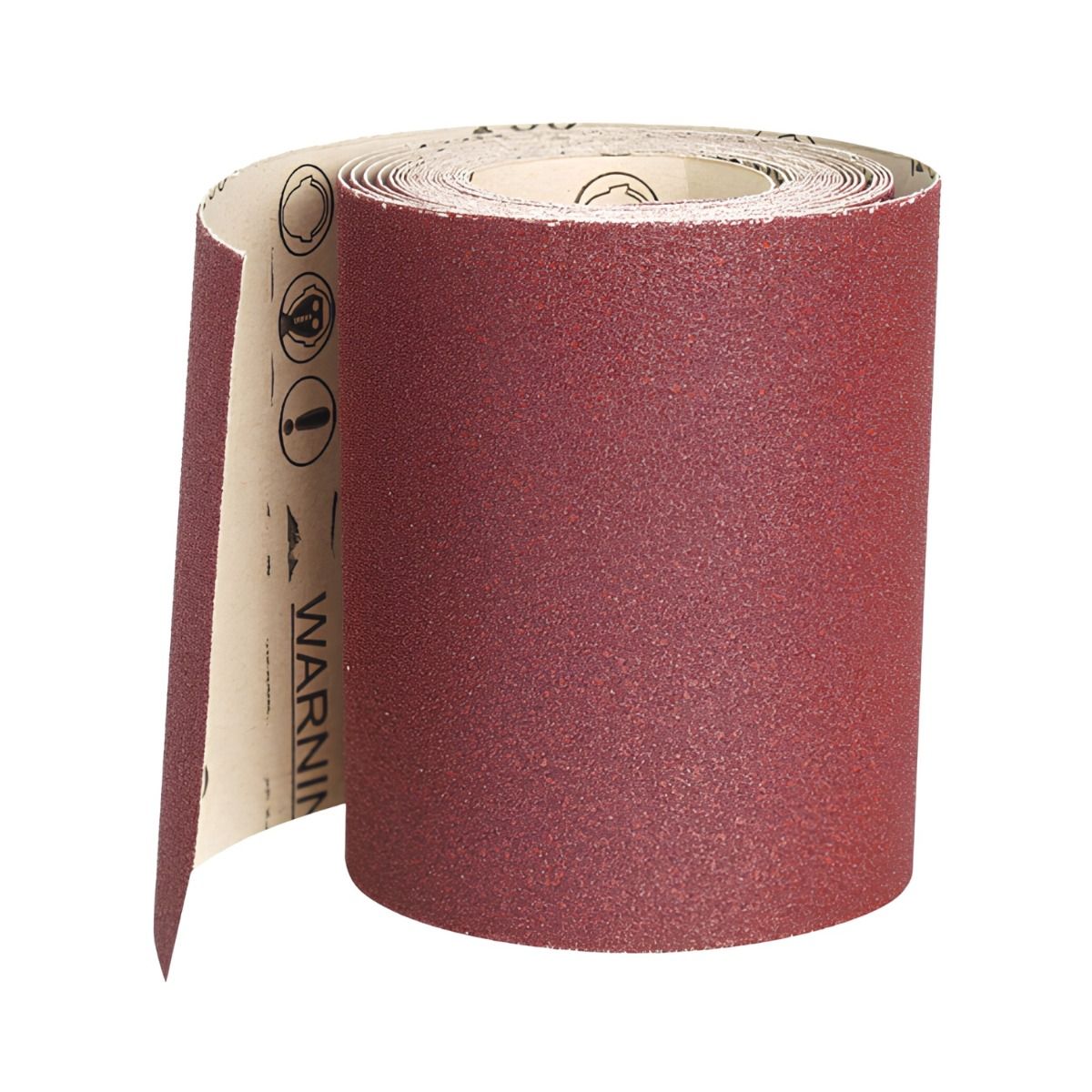
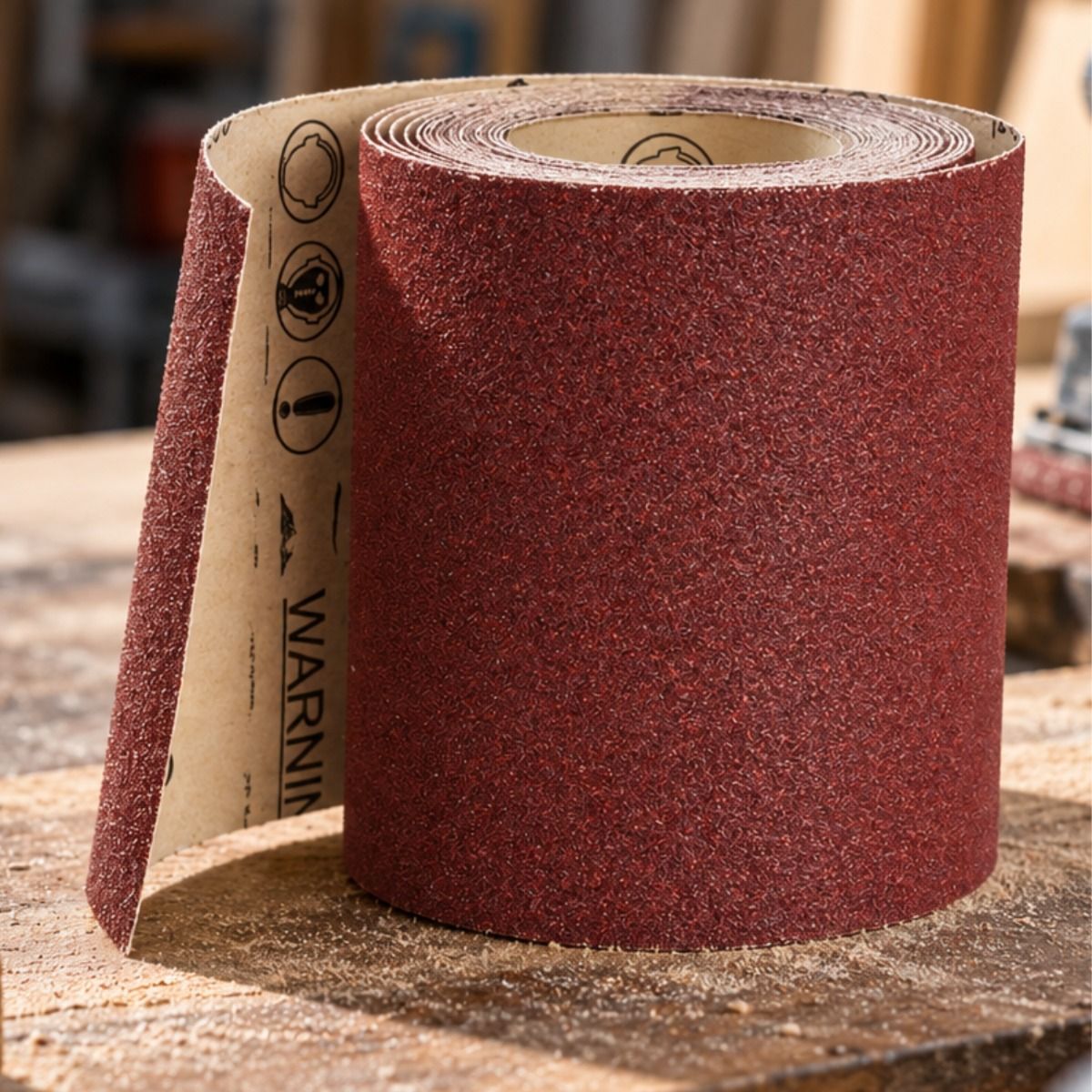
Industrial quality sandpaper roll built for palm sanders, half sheet sanders and hand use across a range of grits.
- Long life, high performance industrial grade
- 115mm width, ideal for machine or hand use
- 10m roll, cut to length as needed
- Suitable for wood, paint and general surface prep
- Available in 40, 60, 80, 120, 180 and 240 grit
- See grit variations table for the right choice
Sandpaper Roll - Industrial Quality 115mm x 10m
Industrial quality sandpaper roll built for palm sanders, half sheet sanders and hand use across a range of grits.
- Long life, high performance industrial grade
- 115mm width, ideal for machine or hand use
- 10m roll, cut to length as needed
- Suitable for wood, paint and general surface prep
- Available in 40, 60, 80, 120, 180 and 240 grit
- See grit variations table for the right choice
Sandpaper Roll - 115mm x 10m
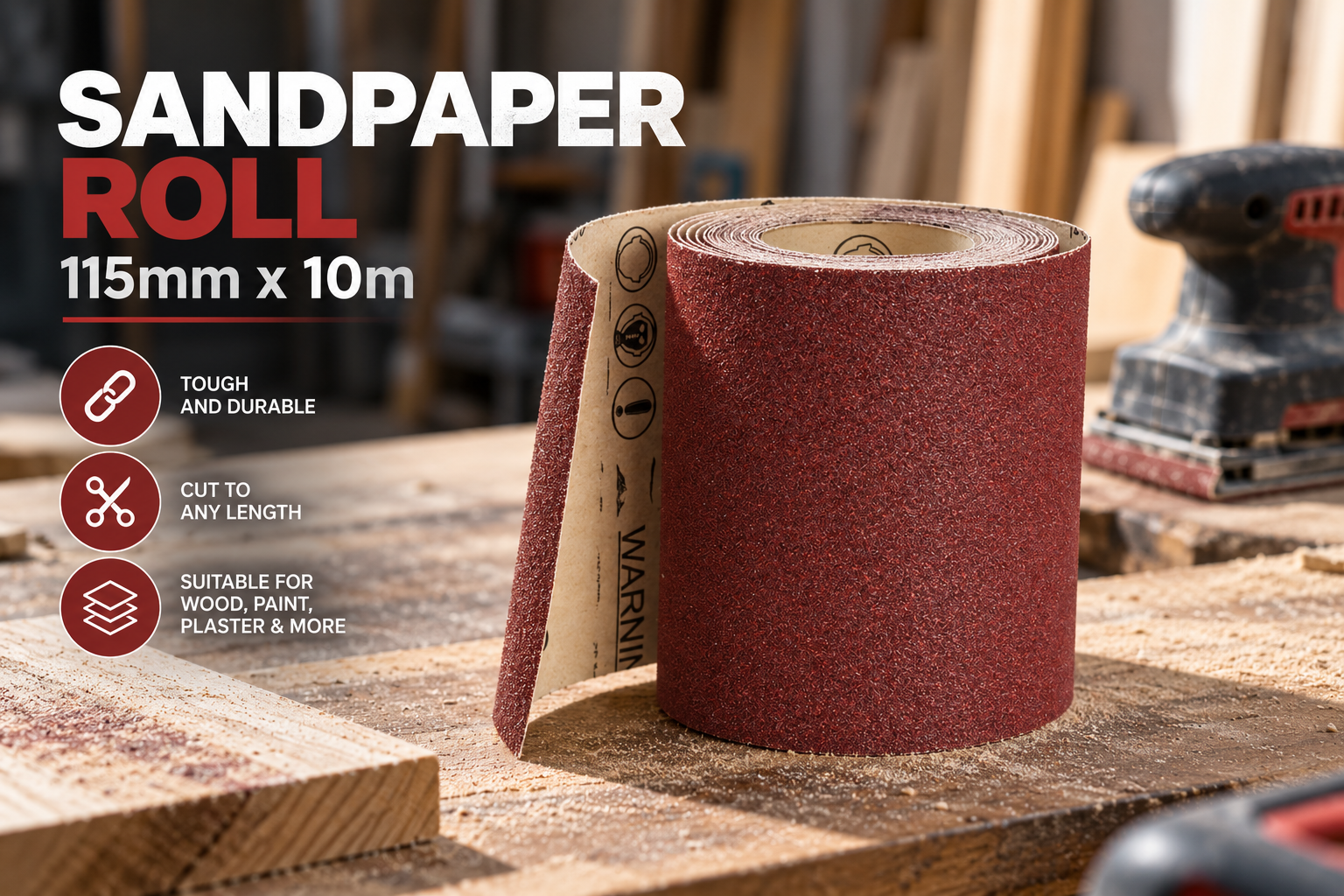
Industrial quality sandpaper roll built for palm sanders, half sheet sanders and general hand use across a wide range of tasks. The 115mm width fits standard machine sanders directly, while the 10m roll length means it can be cut to whatever size a job needs rather than working from fixed pre-cut sheets. Long life, high performance construction holds up to repeated use across a full range of grits, from heavy material removal through to fine finishing.
How the right grit changes the result
Using the wrong grit for the stage of a job either wastes time or damages the surface, too coarse for finishing work leaves visible scratch marks, too fine for heavy removal barely makes a dent. That mismatch means more passes, more material used, and a worse final finish than the job should need. Working through the correct grit sequence, coarse first to remove material, progressively finer to smooth and finish, gets a clean result in fewer passes and less material.
Key Features
-
Industrial grade construction: Long life and high performance abrasive built to withstand repeated use across machine and hand sanding tasks.
-
115mm width: Fits standard palm sanders and half sheet sanders directly, with no trimming required.
-
10m roll length: Cuts to whatever length a job needs, rather than working from fixed pre-cut sheets.
-
Full grit range: Available from 40 grit for heavy removal through to 240 grit for fine finishing, covering every stage of a sanding job.
-
Suitable for hand use: Works as well torn to size for hand sanding as it does loaded into a machine sander.
-
Versatile application: Suited to wood, paint, plaster and general surface preparation tasks.
Who is this for
Trades and roles:
-
Decorators and painters
-
Carpenters and joiners
-
General site operatives
-
DIY and maintenance teams
-
Fabricators
Industries:
-
Construction and renovation
-
Joinery and woodworking
-
Facilities maintenance
-
Decorating and finishing trades
Specifications
| Specification | Detail |
| Product Name | Sandpaper Roll - Industrial Quality 115mm x 10m |
| Parent Code | SANDROLL |
| Product Type | Abrasive sandpaper roll |
| Width | 115mm |
| Length | 10m |
| Suitable For | Palm sanders, half sheet sanders, hand use |
| Application | Wood, paint, plaster and general surface preparation |
Grit variations
| SKU | Grit | Best Used For |
|---|---|---|
| SANDROLL-001 | 40 | Heavy material removal, stripping old paint or varnish |
| SANDROLL-002 | 60 | Coarse shaping and smoothing after heavy removal |
| SANDROLL-003 | 80 | Coarse shaping and smoothing after heavy removal |
| SANDROLL-004 | 120 | General purpose sanding before finishing |
| SANDROLL-005 | 180 | Fine smoothing between coats of paint or varnish |
| SANDROLL-006 | 240 | Fine finishing for a smooth, paint ready surface |
Who is this for
This roll is used by decorators, carpenters and general site operatives across a wide range of surface preparation tasks, from stripping old paint back to bare wood through to final finishing before a coat goes on. Facilities maintenance teams keep a range of grits on hand for repair and touch-up work, while fabricators use coarser grits for shaping and material removal. It suits anyone who needs a reliable abrasive for both machine and hand sanding.
Typical applications
-
Stripping old paint or varnish back to bare wood using coarse grits.
-
General shaping and smoothing of wood surfaces before finishing.
-
Preparing painted or plastered surfaces before applying a new coat.
-
Smoothing between coats of paint or varnish for a level finish.
-
Final fine finishing to prepare a surface for painting.
-
Hand sanding in tight spaces or areas a machine sander can't reach.
How to use
Step 1: Select the correct grit for the stage of the job, coarse for removal, fine for finishing.
Step 2: Cut the roll to the length needed for the sander or hand sanding block being used.
Step 3: Fit the paper to the sander or wrap it around a sanding block for hand use.
Step 4: Work through progressively finer grits as the surface improves, rather than jumping straight to a fine grit.
Step 5: Clear dust between passes to check progress and avoid clogging the paper.
Common mistakes
-
Starting with too fine a grit, which barely removes material and wastes time.
-
Skipping grit stages, leaving visible scratch marks a middle grit would have smoothed out.
-
Applying too much pressure, which clogs the paper faster and can damage the surface.
-
Not clearing dust build-up, reducing the paper's cutting performance before it needs replacing.
Safety
Wear eye protection when machine sanding, since dust and fine particles are thrown off during use. A dust mask is recommended for extended sanding sessions, particularly when working with old paint that may contain lead on pre-1960s properties. Keep the work area ventilated where possible to reduce dust build-up.
Maintenance
Store rolls flat or loosely coiled in a dry place to prevent the paper from creasing or cracking. Clear dust from the paper surface periodically during use to maintain cutting performance. Replace sections once the abrasive visibly wears smooth or the paper begins to tear.
Frequently Asked Questions
Q: Which grit should I use for stripping old paint?
A: Start with a coarse grit, 40 or 60, to remove old paint or varnish quickly. Once the surface is back to bare material, move to 80 or 120 grit to smooth out the marks the coarse grit leaves behind, then finish with 180 or 240 grit for a paint-ready surface.
Q: Is there a UK standard this sandpaper is tested to?
A: There's no specific EN standard covering general-purpose sandpaper of this type, since it's an abrasive consumable rather than certified equipment. Grit number (measured under the FEPA grading system) is the main specification to check, along with roll width and length for compatibility with your sander.
Q: What is this sandpaper roll NOT suitable for?
A: This roll is designed for dry sanding of wood, paint, plaster and similar general surfaces, not for wet sanding or use on metal requiring a specific metalworking abrasive. It also isn't intended for use with power tools outside standard palm and half sheet sanders without checking fit first.
Q: Why choose a roll over pre-cut sanding sheets?
A: A roll lets you cut exactly the length needed for each job, rather than being limited to fixed sheet sizes that may waste material or run short. It also means one product covers both machine sanding and hand use, since offcuts work equally well wrapped around a sanding block.
Q: How do I know when it's time to move to the next grit?
A: Once the surface feels even and any visible marks from the previous stage have been sanded out, it's time to move to the next finer grit. Working through each stage in sequence, rather than skipping ahead, gives a smoother final result with less rework.
Q: How long does a roll typically last?
A: This depends on the material being sanded and how much pressure is applied, since heavier use wears the abrasive faster. Clearing dust regularly and avoiding excessive pressure both help extend how far a roll goes before it needs replacing.
