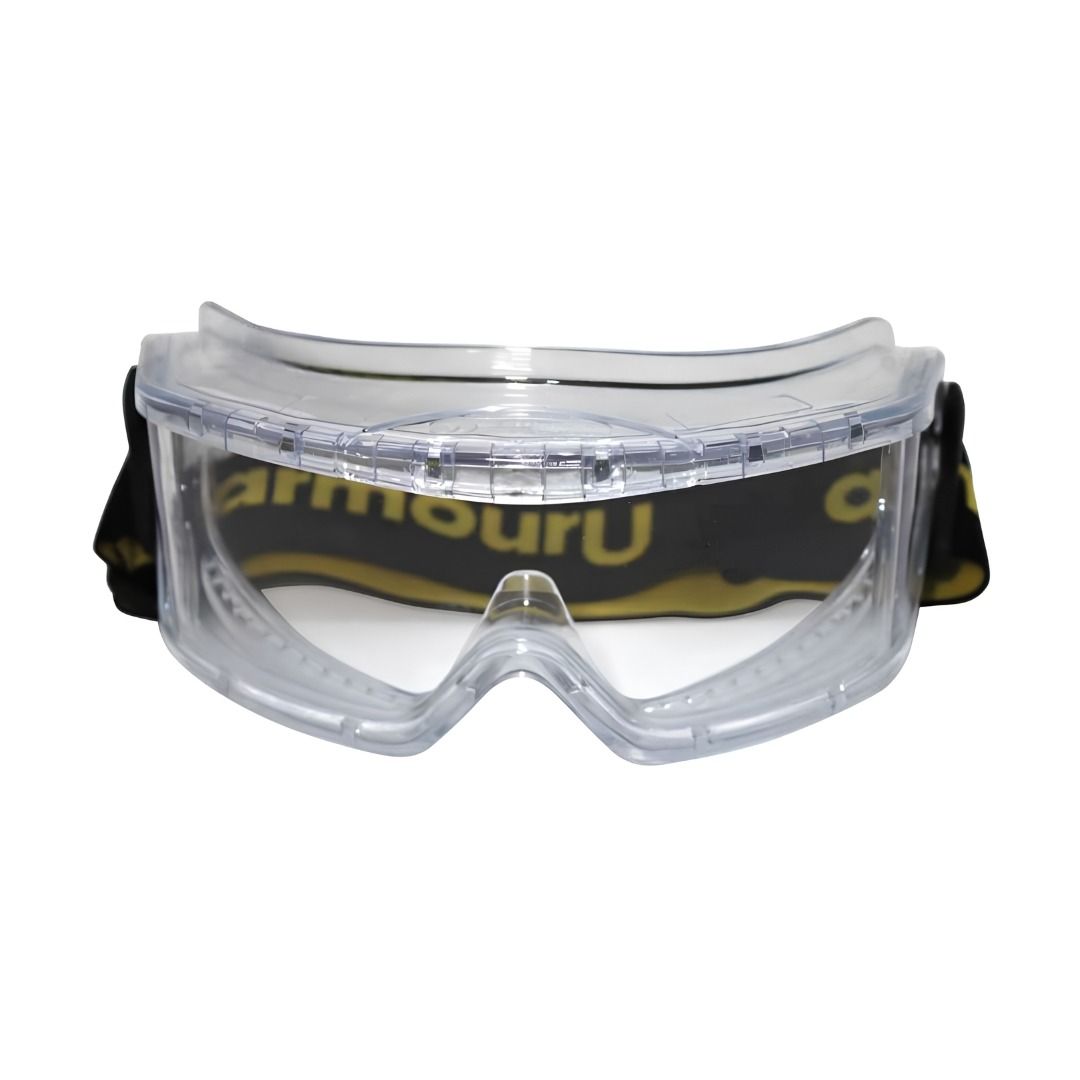
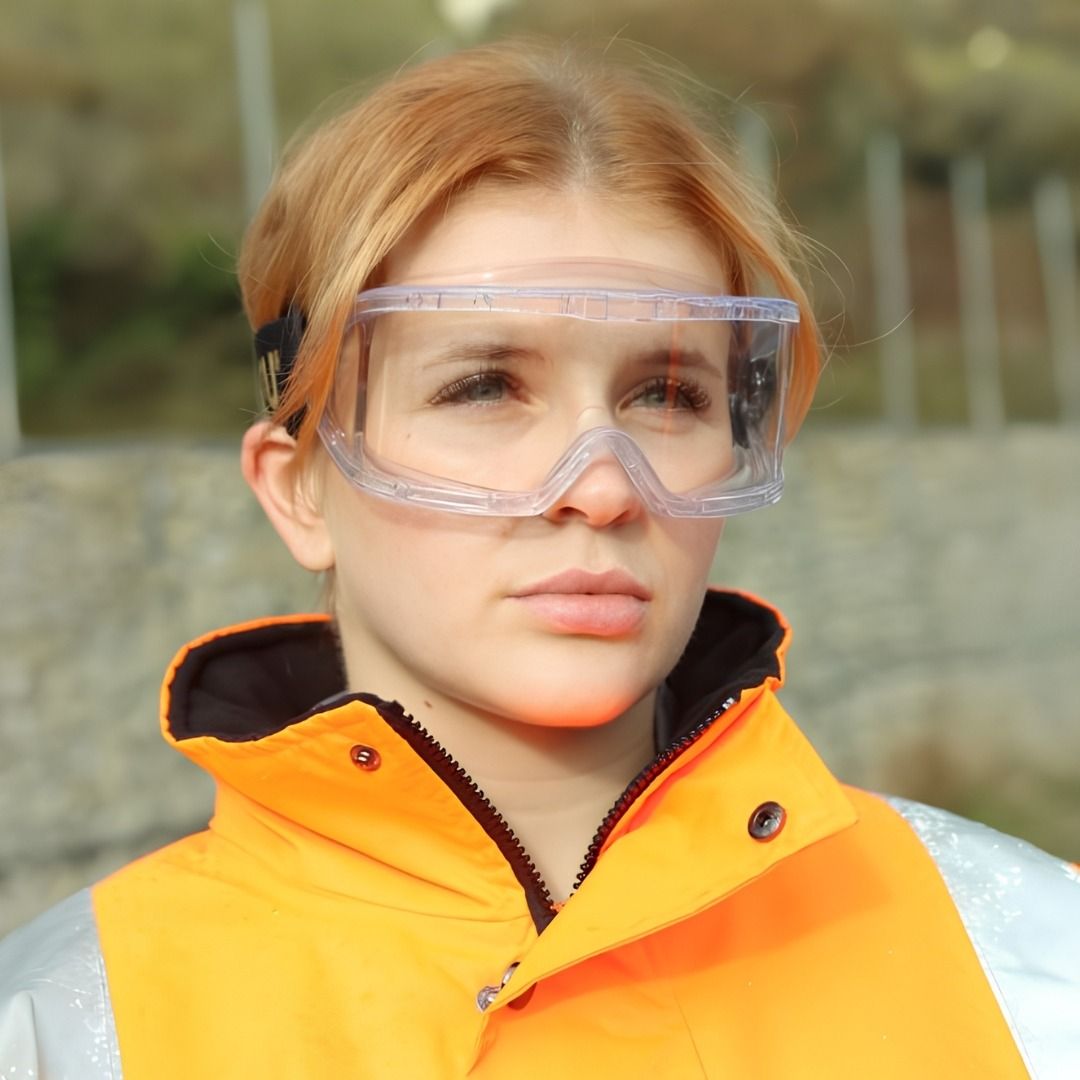
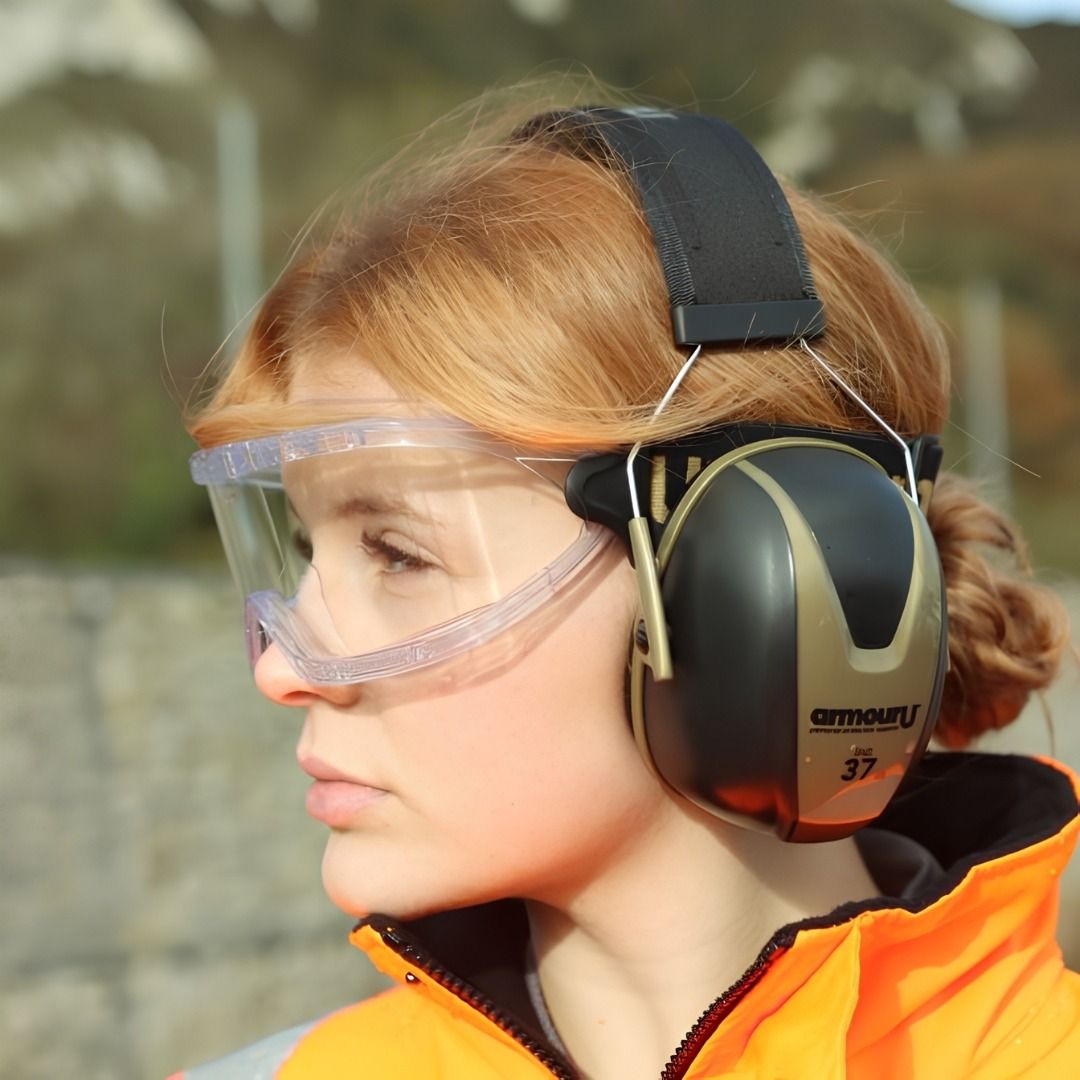
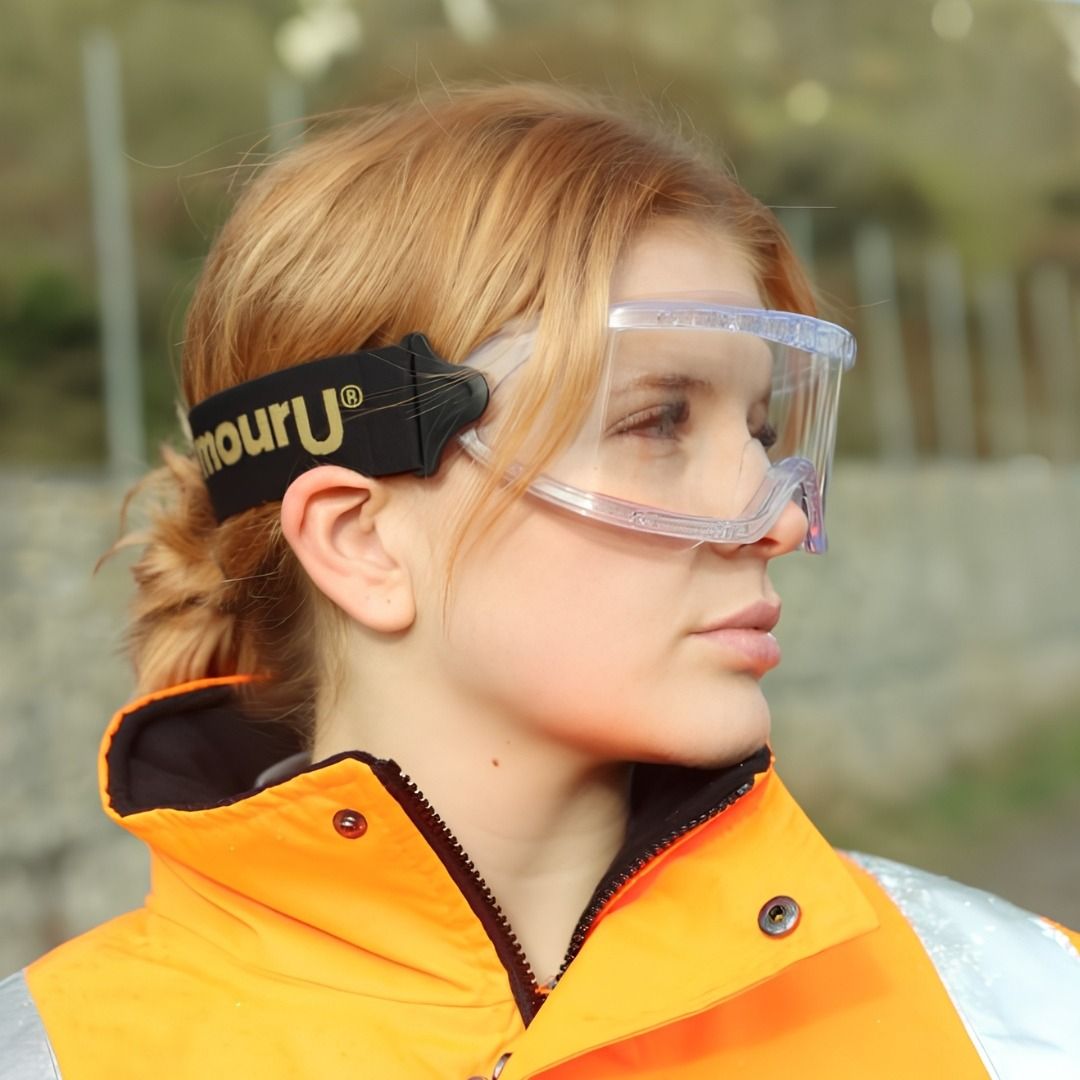
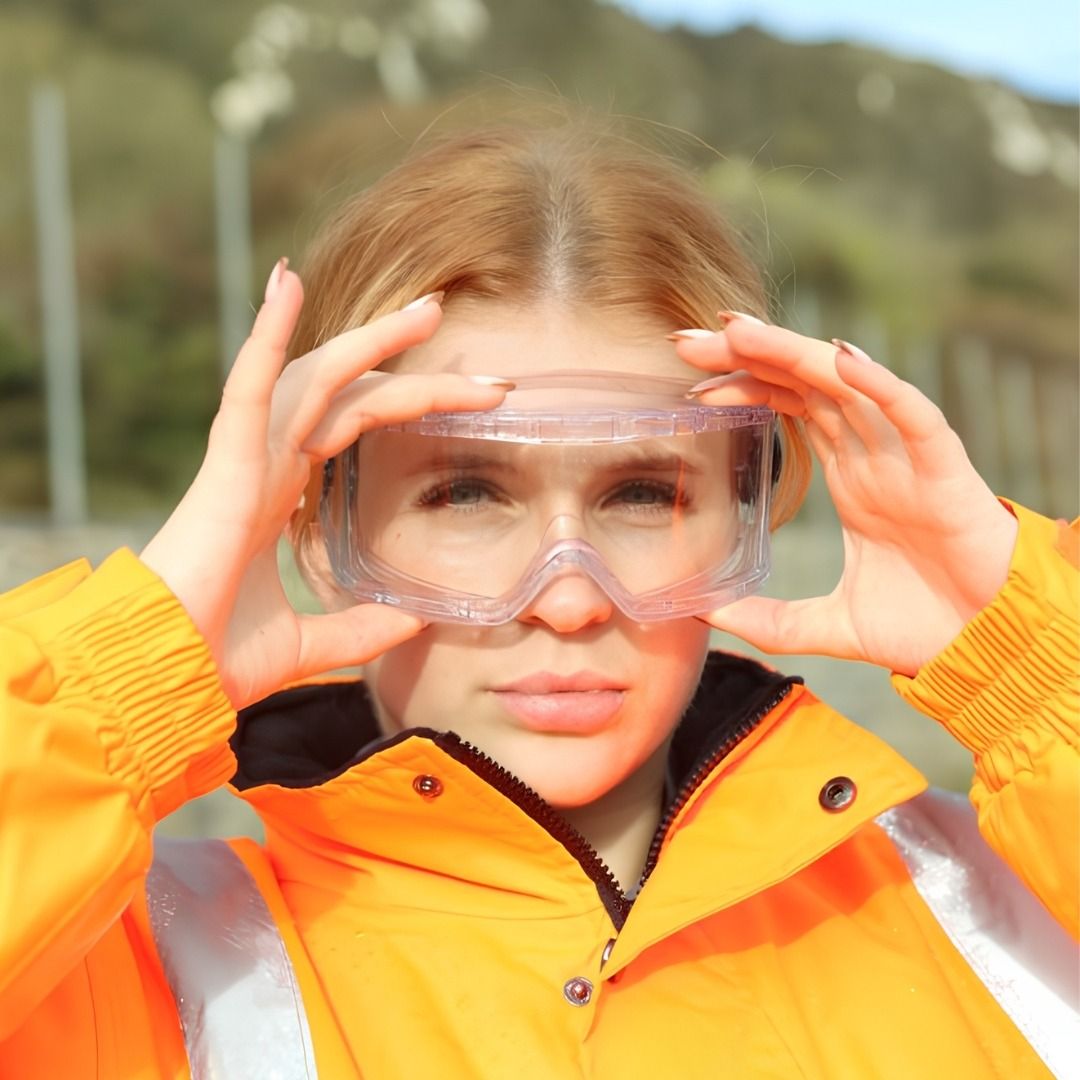
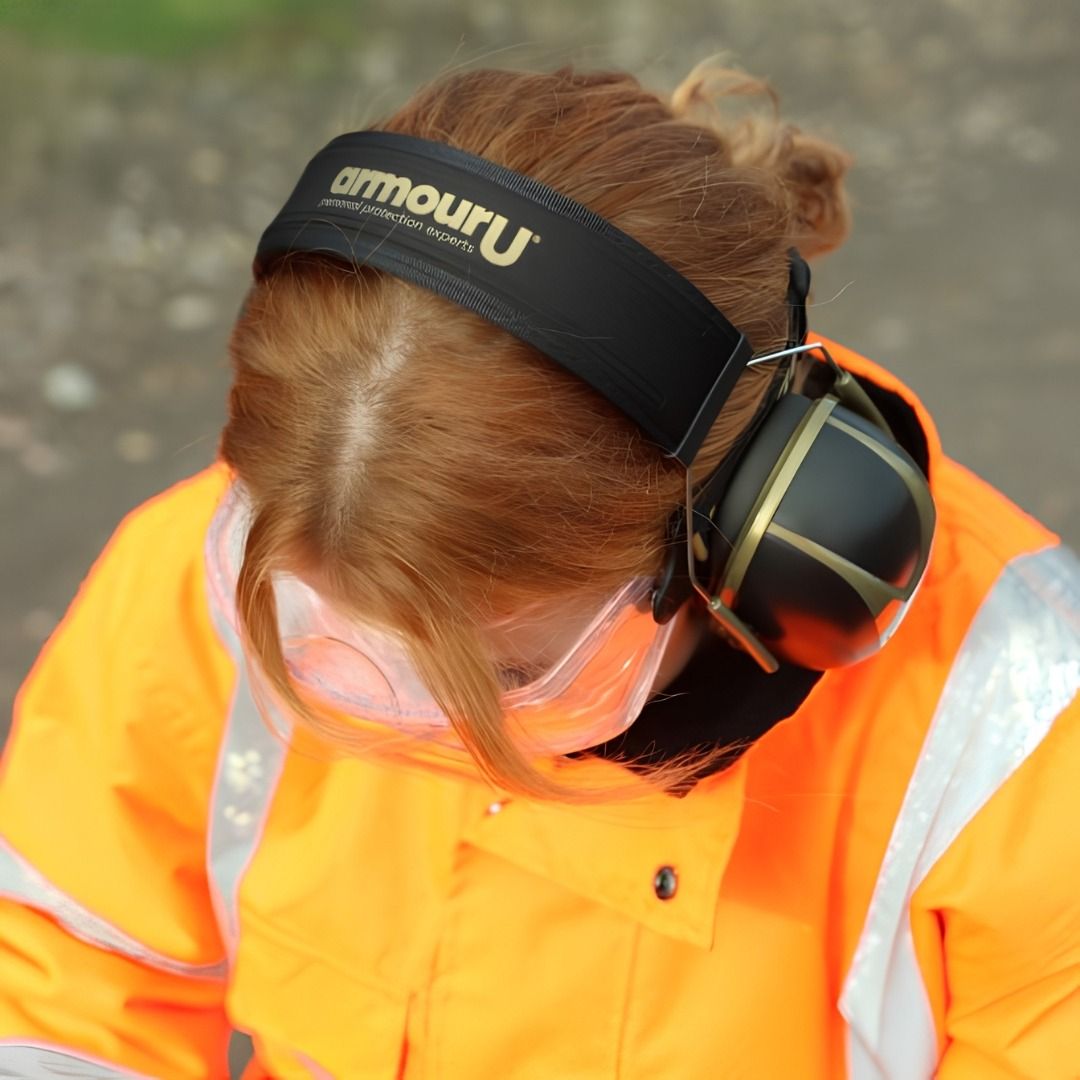
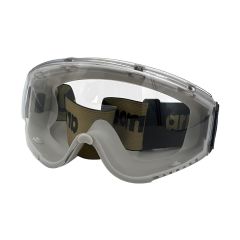
Anti-fog panoramic safety goggles for construction, laboratory, and industrial operatives requiring EN166 certified protection with maximum field of vision during extended periods of wear.
- EN166 3 4 5 BTKN certified, EN170 2C-1.2 UV protection
- CE and UKCA marked
- Panoramic clear polycarbonate lens, optical class 1, wide field of vision
- Permanent anti-fog and scratch-resistant coatings
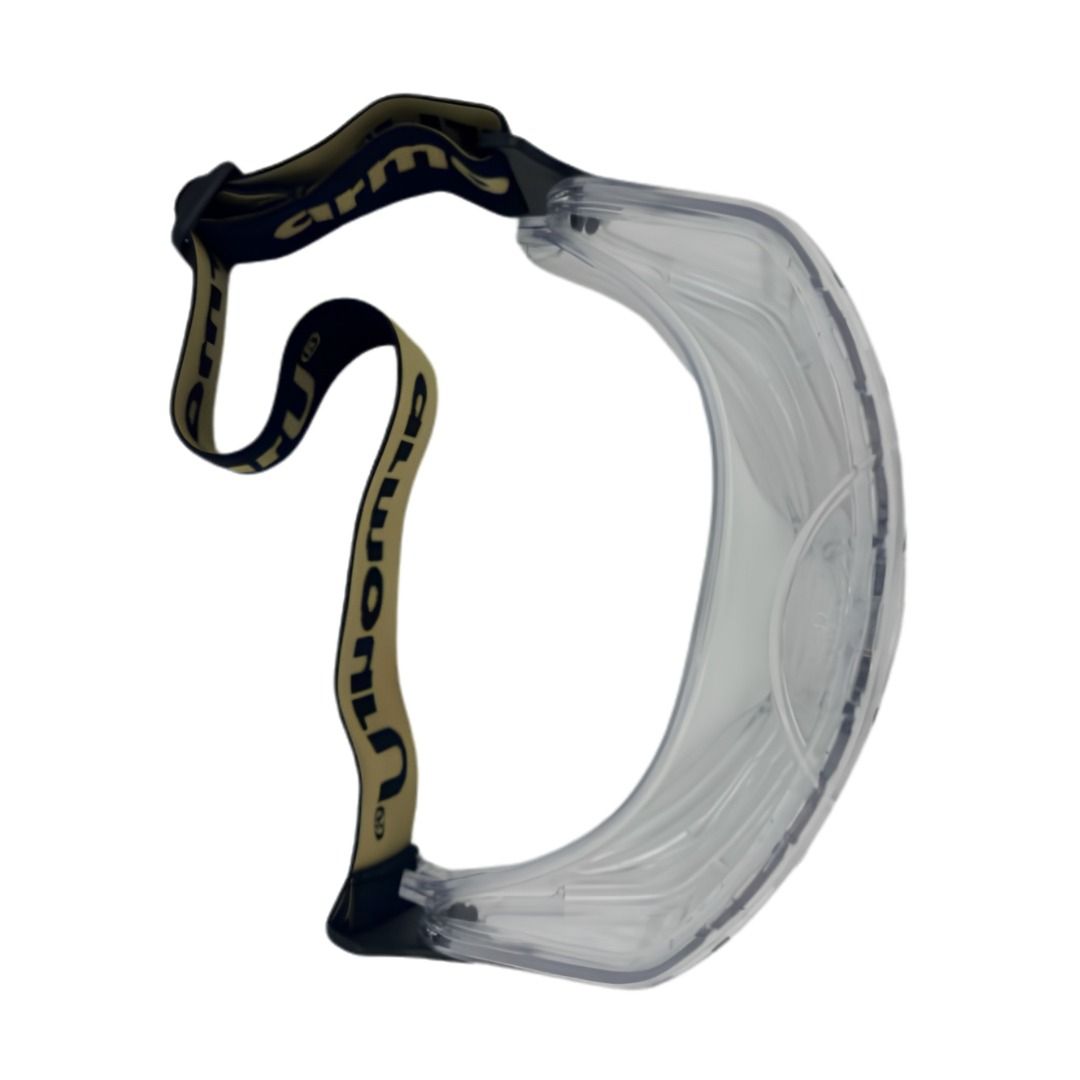
- Tilt-hinge headband mechanism for improved comfort
- Polycarbonate frame and PVC seal, metal-free construction
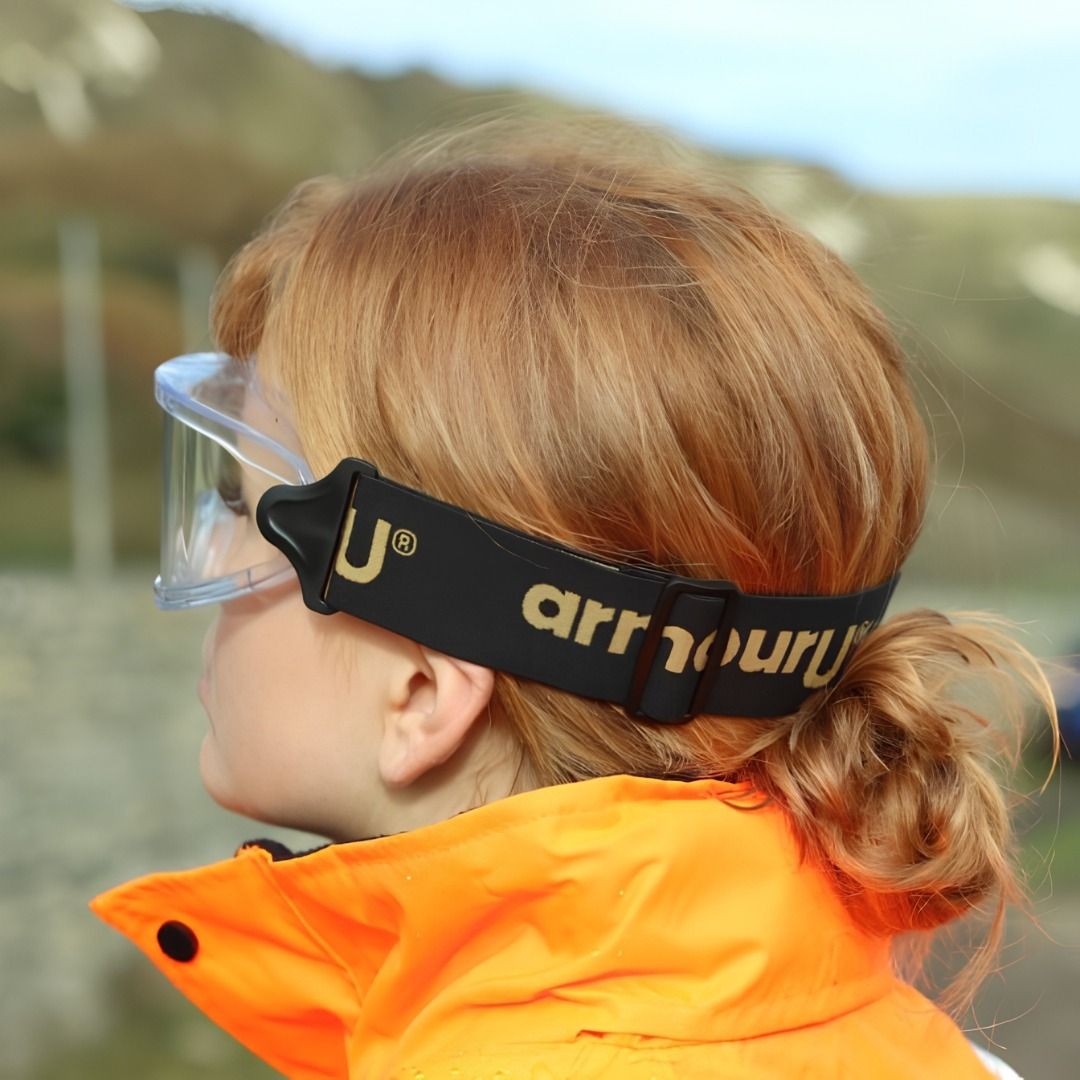
- Adjustable polyester and spandex wide headband
- Approximately 101g
- Recycled polyester pouch and recycled paper box
Anti-fog panoramic safety goggles for construction, laboratory, and industrial operatives requiring EN166 certified protection with maximum field of vision during extended periods of wear.
- EN166 3 4 5 BTKN certified, EN170 2C-1.2 UV protection
- CE and UKCA marked
- Panoramic clear polycarbonate lens, optical class 1, wide field of vision
- Permanent anti-fog and scratch-resistant coatings
- Tilt-hinge headband mechanism for improved comfort
- Polycarbonate frame and PVC seal, metal-free construction
- Adjustable polyester and spandex wide headband
- Approximately 101g
- Recycled polyester pouch and recycled paper box
- Buy 10 for £9.04 £7.53 each and save 4%
- Buy 20 for £8.60 £7.17 each and save 9%
| BULK DISCOUNT | 10 | 20 |
|---|---|---|
| Price | £7.53 £9.04 | £7.17 £8.60 |
Order 1x to earn 7 FASTPoints
Order to earn 7 FASTPoints
Log in to access trade discountsarmourU Matterhorn Safety Goggles - Panoramic Lens
Anti-fog panoramic safety goggles providing EN166 certified protection against liquid splash, large dust, and gas for operatives in construction, laboratory, and industrial environments who require the widest possible field of vision alongside full EN166 3, 4, and 5 coverage during extended shifts. The panoramic polycarbonate lens extends the visible field beyond a standard goggle aperture, and the tilt-hinge headband mechanism allows the strap to pivot independently of the goggle frame, directly reducing the seal-lifting and comfort-driven removal that creates protection gaps in prolonged-wear environments. Certified to EN166 3 4 5 BTKN and EN170 2C-1.2, CE and UKCA marked, fully metal-free, and supplied in recycled packaging as part of the CMT ThinkGreen range.
How tilt-hinge design reduces wearing compliance failures in extended-wear environments
Standard safety goggle headbands apply pressure in a fixed plane, when the frame is shifted by head movement, bending, or physical activity, the headband and frame move as a single rigid unit, requiring constant manual adjustment to maintain the orbital seal. Over a full shift, repeated adjustments create fatigue, and the goggle is removed rather than readjusted. The tilt-hinge mechanism allows the headband attachment points to pivot independently of the goggle frame, accommodating changes in head position and physical activity without transferring that movement to the lens seal. The result is a goggle that stays correctly positioned across extended wear periods without the operative having to intervene, maintaining continuous EN166 3, 4, and 5 protection throughout the shift.
Key Features
-
Panoramic polycarbonate lens: The panoramic lens design extends the field of vision laterally beyond a standard goggle aperture, reducing peripheral blind spots in active environments where awareness of surrounding plant, moving loads, and other operatives is a safety consideration alongside the direct hazard being protected against.
-
Tilt-hinge headband mechanism: The headband attachment points pivot independently of the goggle frame, accommodating head position changes and physical activity without lifting the PVC orbital seal. Directly reduces comfort-driven removal in environments requiring prolonged goggle use.
-
EN166 3 4 5 protection scope: Certified protection against liquid droplets and splashes (3), large dust particles of 5 microns and above (4), and gas and fine dust below 5 microns (5), the full multi-hazard protection scope in a panoramic lens construction suited to environments requiring maximum field of vision.
-
B-rated medium energy impact (120 m/s): EN166 B confirms the lens and frame withstand a 6mm steel ball at 120 m/s without failure, providing higher impact protection than F-rated safety spectacles.
-
Permanent anti-fog and scratch-resistant coatings, both sides: Applied permanently to both inner and outer panoramic lens surfaces, providing fogging resistance from body heat on the inner surface and environmental condensation on the outer surface during temperature transitions.
-
PVC seal: The PVC orbital seal provides the continuous facial contact required for EN166 codes 3, 4, and 5 protection, conforming to the face and maintaining the seal during head movement and physical activity.
-
Metal-free construction: No metal components anywhere. Satisfies metal-free PPE requirements for food production, pharmaceutical, and other environments where metal contamination is a site specification concern.
-
Recycled packaging, ThinkGreen range: Recycled polyester pouch made from two reclaimed 1-litre plastic water bottles, supplied in a recycled paper box.
Who is this for
Trades and roles:
-
Construction and demolition operatives requiring all-day goggle wear
-
Laboratory and chemical processing workers
-
Woodworking and manufacturing operatives
-
Food production and pharmaceutical workers on metal-free sites
-
Site managers and supervisors needing sustained full-shift goggle use
Industries:
-
Construction and demolition
-
Chemical and pharmaceutical processing
-
Woodworking and manufacturing
-
Food production (metal-free environments)
-
Utilities and infrastructure
Specifications
| Specification | Detail |
|---|---|
| Product Name | armourU Matterhorn Safety Goggles - Anti-Fog Panoramic Lens EN166 |
| SKU | AEYMAT |
| Product Type | Safety goggles — panoramic lens, indirect ventilation |
| EN Standard | EN166:2001 and EN170:2002 |
| EN166 Marking | 3 4 5 BTKN |
| EN166 Field Code 3 | Protection against liquid droplets and splashes |
| EN166 Field Code 4 | Protection against large dust particles (≥5 microns) |
| EN166 Field Code 5 | Protection against gas and fine dust particles (<5 microns) |
| EN166 B | Medium energy impact resistance — 120 m/s steel ball |
| EN166 T | Resistance to hot particles and extreme temperatures |
| EN166 K | Resistance to surface damage by fine particles (anti-scratch) |
| EN166 N | Not susceptible to fogging (anti-fog) |
| EN170 Marking | 2C-1.2 |
| UV Protection | Filter code 2C — full UV-A and UV-B protection |
| Optical Class | Class 1 — highest optical quality, minimum distortion |
| Style | Panoramic lens, indirect ventilation |
| Lens Material | Clear polycarbonate (PC) — panoramic |
| Lens Colour | Clear |
| Lens Treatment | Permanent anti-fog and scratch-resistant coatings — both sides |
| Frame | Polycarbonate (PC) |
| Seal | PVC |
| Headband | Adjustable polyester and spandex wide headband with tilt hinges |
| Metal-Free | Yes — no metal components |
| Weight | Approximately 101g |
| Compliance Markings | CE and UKCA |
| Companion Product | armourU Weisshorn Safety Goggles (AEYWEI) — wide vision alternative |
| Pouch | Recycled polyester (made from two reclaimed 1-litre plastic water bottles) |
| Packaging | Recycled paper box |
Compatibility
| Application or Condition | Detail |
|---|---|
| Liquid droplets and splash protection | ✓ Compatible |
| Large dust particle environments (≥5 microns) | ✓ Compatible |
| Gas and fine dust environments (<5 microns) | ✓ Compatible |
| Medium energy impact tasks (B-rated, 120 m/s) | ✓ Compatible |
| Hot particle environments — grinding, cutting | ✓ Compatible |
| UV protection — outdoor use | ✓ Compatible |
| Metal detection environments — food and pharmaceutical | ✓ Compatible |
| Extended all-day wear with tilt-hinge headband | ✓ Compatible |
| Use over prescription glasses | ✓ Compatible |
| High energy impact tasks (A-rated) | ✗ Not recommended — rated B (medium energy) only |
| Welding arc protection | ✗ Not recommended — no welding filter |
| Laser protection | ✗ Not recommended — no laser filter |
| Respiratory protection against gas | ✗ Not recommended — not a respiratory device |
Who is this for
Anti-fog panoramic safety goggles used by construction operatives, laboratory workers, and industrial professionals who require EN166 certified multi-hazard protection during extended periods of goggle wear where field of vision and comfort across a full shift are as important as the protection scope. The panoramic lens suits environments where peripheral awareness of surrounding plant, moving loads, and other operatives is a direct safety factor, and the tilt-hinge headband is specified by H&S leads and procurement teams managing PPE programmes where goggle removal due to discomfort is an identified compliance problem.
Typical applications
-
Construction and demolition work requiring sustained goggle use across a full shift in environments where peripheral awareness of plant and traffic is a safety requirement alongside dust and debris protection.
-
Woodworking, routing, and sawing tasks generating fine dust and flying debris where the panoramic lens reduces the peripheral blind spots that create hazard awareness gaps.
-
Chemical laboratory and processing work involving splash risk and airborne vapours requiring EN166 codes 3, 4, and 5 certification in a goggle comfortable for extended laboratory shifts.
-
Spray painting and coating with liquid droplets and aerosol mist where sustained goggle wear across the task duration makes comfort and vision quality equally important.
-
Grinding and cutting producing hot particles and sparks in environments where wide peripheral awareness supports safe operation of surrounding machinery.
-
Food production and pharmaceutical environments on metal-free sites where all-day goggle use is mandated alongside the metal-free site specification.
-
Site management and inspection roles requiring sustained goggle wear across extended outdoor site visits in variable conditions.
How to use
Step 1: Position the panoramic goggle over both eyes and ensure the PVC seal contacts the face evenly around the full orbital area with no gaps before adjusting the headband.
Step 2: Adjust the wide headband using the tilt-hinge mechanism, the hinge allows the strap to pivot independently so the headband can be tightened or loosened without disturbing the goggle frame position or the PVC seal.
Step 3: Check the PVC seal is continuous around the face before beginning work in splash, dust, or gas environments, any gap in the seal removes the EN166 3, 4, and 5 protection the goggle is certified to provide.
Step 4: Do not touch the inner lens surface with fingers. Clean only with dedicated lens wipes or a clean soft cloth to protect the permanent anti-fog coating.
Step 5: Store in the supplied recycled polyester pouch when not in use to protect the panoramic lens surface.
Common mistakes
-
Adjusting the headband without using the tilt-hinge pivot: tightening or loosening the strap without allowing the hinge to accommodate the movement transfers tension to the goggle frame, which can lift the PVC seal and temporarily break the orbital seal that EN166 codes 3, 4, and 5 depend on.
-
Assuming EN166 gas protection (code 5) means respiratory protection: the goggle seals the eyes against gas ingress, it does not protect the airway. Respiratory PPE must be specified and worn separately wherever airborne hazardous substances are present.
-
Cleaning with solvent-based products: acetone, alcohol sprays, and solvent cleaners damage polycarbonate and degrade both the anti-fog and anti-scratch coatings permanently. Use water or a dedicated lens cleaning solution only.
-
Storing without the pouch: the panoramic lens surface accumulates scratches from contact with hard surfaces in bags and storage boxes. The pouch is protective PPE maintenance, not packaging.
-
Wearing with gaps in the PVC seal: the panoramic frame must contact the face evenly around the full orbital perimeter for EN166 3, 4, and 5 to apply. If the seal gaps at the nose bridge or temples, the goggle must be adjusted or replaced.
Safety
These goggles are certified to EN166 3 4 5 BTKN (liquid splash, large dust, gas and fine dust, medium energy impact, hot particles, anti-scratch, anti-fog) and EN170 2C-1.2 (UV protection, optical class 1). They do not provide respiratory protection, appropriate respiratory PPE must be used alongside these goggles wherever airborne hazardous substances are present. They are rated B (medium energy impact, 120 m/s) and are not suitable for high energy impact tasks, welding arc exposure, or laser protection. Specify in accordance with the Personal Protective Equipment at Work Regulations 1992 (as amended) and the findings of a suitable workplace risk assessment. EN166 is being superseded by EN ISO 16321, this product's existing certification remains valid during the current transition period.
Maintenance
Clean the panoramic lens only with dedicated lens wipes or a clean soft cloth and water or water-based cleaning solution, never paper tissue, rough fabric, or solvent-based cleaners. Pat dry to reduce scratch risk on the large lens surface. Clean the PVC seal with a damp cloth after each use to remove chemical residue and dust. Inspect the full panoramic lens surface before each use and replace if cracking, impact damage, or heavy scratching is visible. Inspect the PVC seal and tilt-hinge mechanism for deterioration. Store in the supplied recycled polyester pouch.
Frequently Asked Questions
Q: What is a panoramic lens and why does it matter for safety goggles?
A: A panoramic lens extends the polycarbonate across a wider aperture than a standard goggle lens, reducing the peripheral visual obstruction created by the frame edges of narrower goggle designs. In active environments, construction sites, demolition, woodworking, peripheral awareness of surrounding plant, moving loads, vehicles, and other operatives is a direct safety factor alongside the hazard the goggle is protecting against. A panoramic lens maintains EN166 certified protection across the full aperture whilst delivering a field of vision closer to natural unobstructed sight than a standard goggle design.
Q: What do the tilt hinges do that a standard fixed headband does not?
A: A standard goggle headband is fixed to the frame, when the strap is adjusted or when head movement shifts the goggle, the frame and headband move together, which can lift the orbital seal from the face and require manual repositioning to restore protection. The tilt-hinge mechanism allows the headband attachment points to pivot independently of the goggle frame, accommodating head movement and headband adjustment without transferring that force to the lens or seal. In practice, the goggle maintains correct position across extended wear periods with fewer manual interventions, which directly supports wearing compliance in environments where goggle removal is a recurring PPE problem.
Q: What does EN166 3 4 5 BTKN mean?
A: Field codes 3, 4, and 5 confirm the hazard categories the goggle is certified to protect against: 3 for liquid droplets and splashes, 4 for large dust particles of 5 microns and above, and 5 for gas and fine dust below 5 microns. BTKN describes the performance characteristics: B confirms medium energy impact resistance at 120 m/s, T confirms resistance to hot particles and extreme temperatures, K confirms the anti-scratch coating meets EN166 requirements, and N confirms the anti-fog coating meets EN166 requirements. CE and UKCA markings confirm independent assessment under UK PPE Regulations.
Q: What are these goggles not suitable for?
A: EN166 field code 5 confirms eye protection against gas ingress, these goggles do not protect the respiratory system, and respiratory PPE must be specified separately for environments with airborne hazardous substances. They are rated B (120 m/s) and are not suitable for high energy impact tasks requiring A-rated protection. They carry no welding filter or laser filter rating and must not be used for welding arc or laser exposure.
Q: What is the difference between the Matterhorn and the Weisshorn?
A: Both goggles carry identical EN166 3 4 5 BTKN and EN170 2C-1.2 certification and both are fully metal-free with adjustable wide headbands. The key differences are the lens design and headband mechanism. The Matterhorn has a panoramic polycarbonate lens for a wider field of vision and a tilt-hinge headband mechanism that allows the strap to pivot independently of the frame, suited to environments where extended all-day wear and maximum peripheral awareness are primary requirements. The Weisshorn has a standard wide vision lens with a flexible TPE seal and a conventional adjustable headband, lighter at 86g versus the Matterhorn's 101g, and suited to environments where the TPE seal is preferred over PVC.
Q: Can these be worn over prescription glasses?
A: The panoramic polycarbonate frame and PVC seal are designed to accommodate a range of facial profiles, and the wide panoramic aperture provides sufficient internal clearance for most standard prescription spectacle frames. The tilt-hinge adjustable headband allows the fit to be tailored without disturbing the frame position. For operatives with prescription eyewear, these goggles provide full EN166 3, 4, and 5 protection without requiring prescription inserts or separate prescription safety goggles.
Q: How do I clean and maintain a panoramic polycarbonate lens?
A: Clean only with dedicated lens wipes or a clean soft cloth moistened with water or a water-based cleaning solution. Never use paper tissue, rough fabric, or solvent-based cleaners, these scratch the polycarbonate surface and permanently degrade both the anti-fog and anti-scratch coatings. The larger surface area of the panoramic lens accumulates scratches more visibly than a standard goggle lens when improperly cleaned or stored without the pouch. Pat dry rather than wiping to reduce scratch risk. Store in the supplied pouch after every use.