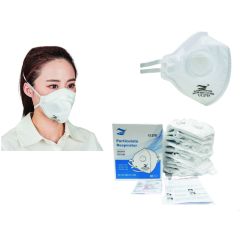
FFP3 dust mask with exhalation valve, moulded cup and adjustable head straps | CMT Group UK
FFP3 dust mask with exhalation valve, moulded cup and adjustable head straps | CMT Group UK Box of FFP3 NR D dust masks with stacked moulded respirators | CMT Group UK

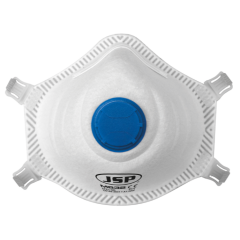
FFP3 dust masks with an exhalation valve and moulded cup, for high-level protection against silica, wood and fine building dust on site.

  • FFP3 NR D, the highest disposable dust mask class
  • Conforms to EN 149:2001+A1:2009, UKCA and CE marked
  • Dolomite tested, resists clogging in heavy dust
  • Exhalation valve keeps the mask cooler and reduces fogging
  • 360-degree foam face seal with metal nose strip
  • 4-point adjustable elasticated head straps
  • Single shift use, one size

MAX FFP3 NR D Dust Masks - Valved Moulded

Code
FFP3VMAX-10
3890+ In Stock

FFP3 dust masks with an exhalation valve and moulded cup, for high-level protection against silica, wood and fine building dust on site.

  • FFP3 NR D, the highest disposable dust mask class
  • Conforms to EN 149:2001+A1:2009, UKCA and CE marked
  • Dolomite tested, resists clogging in heavy dust
  • Exhalation valve keeps the mask cooler and reduces fogging
  • 360-degree foam face seal with metal nose strip
  • 4-point adjustable elasticated head straps
  • Single shift use, one size
£31.52 £26.27
  • Buy 20 for £25.76 £21.47 each and save 18%
  • Buy 100 for £25.15 £20.96 each and save 20%
  • BULK DISCOUNT 20 100
    Price £21.47 £25.76 £20.96 £25.15

Order 1x to earn 26 FASTPoints

Order to earn 26 FASTPoints

Log in to access trade discounts
3890+ In Stock

MAX FFP3 NR D Dust Masks - Valved Moulded

FFP3 dust masks are disposable respirators that filter at least 99% of airborne particles, the highest class under EN 149. These have a moulded cup with electrostatic filter media, an exhalation valve, a 360-degree foam face seal and adjustable head straps. They protect against fine dusts on site, including silica from cutting concrete and stone, and hardwood dust.

How a Valve and Foam Seal Keep FFP3 Masks Wearable All Shift

An unvalved FFP3 mask traps warm, moist breath, so it gets hot, uncomfortable and fogs up safety glasses. On site, that leads workers to pull the mask down or adjust it, and every gap lets dust past the seal. The exhalation valve here lets warm air out, and the foam seal and adjustable straps hold the mask snugly, so it is easier to keep on correctly.

Key Features

  • FFP3 filtration: filters at least 99% of airborne particles, the highest disposable mask class under EN 149.

  • Dolomite tested (D): passed the clogging test, so breathing stays easier in heavy dust.

  • Exhalation valve: lets out warm, moist air, keeping the mask cooler in hot, humid work and reducing fogging of safety glasses.

  • Electrostatic filter media: high-efficiency media that captures fine particles while keeping breathing resistance low.

  • 360-degree foam face seal: cushions the face and helps the mask seal all the way around.

  • Mouldable nose bridge: foam padding with a metal strip shapes to the nose for a closer fit.

  • 4-point adjustable straps: two elasticated head straps hold the mask firmly in place.

Who is this for

Trades and roles

  • Groundworkers

  • Bricklayers and stonemasons

  • Concrete cutters and drillers

  • Carpenters and joiners

  • Plasterers and drylining teams

  • Demolition operatives

Industries

  • Construction

  • Demolition

  • Stone and masonry

  • Joinery and woodworking

  • Refurbishment and fit-out

  • Manufacturing

 Specifications

Specification Detail
Product name MAX FFP3 NR D Dust Masks - Valved Moulded
Product code FFP3VMAX-10
Product type Disposable valved moulded filtering half mask
Standard EN 149:2001+A1:2009
Classification FFP3 NR D
Filter efficiency At least 99% of airborne particles (EN 149 FFP3 requirement)
Assigned protection factor 20 (HSE HSG53, for FFP3)
Use Single shift, up to 8 hours (NR, non-reusable)
Clogging test Passed dolomite clogging test (D)
Filter media High-efficiency electrostatic media
Valve Exhalation valve
Face seal 360-degree foam seal inside the mask
Nose fit Mouldable foam-padded nose bridge with metal nose strip
Straps 2 elasticated head straps, 4-point adjustable
Storage -20 to +40 degrees C, below 75% humidity
Marking UKCA and CE
Brand MAX
Size One size
Colour White

Compatibility

Base material, tool or condition Suitability
Silica dust from cutting, drilling and grinding concrete, stone and brick Suitable, FFP3 is the class HSE expects for high silica exposure
Hardwood and MDF dust Suitable
Plaster, cement and fine building dust Suitable
Mineral wool and fibreglass insulation Suitable
Heavy dust over a full shift Suitable, the D rating means it resists clogging
Hot and humid working conditions Suitable, the valve releases warm, moist air
Wearing with safety glasses Suitable, the valve helps reduce fogging
Gases, vapours and solvent fumes Not recommended, particle filter only, use a respirator with a gas or vapour filter
Oxygen-deficient atmospheres and confined spaces Not recommended, use breathing apparatus
Licensed asbestos removal Not recommended, follow the Control of Asbestos Regulations and licensed contractor RPE
Wearers with beards or stubble Not recommended, facial hair breaks the face seal, use a powered hood
Protecting others from the wearer’s breath Not recommended, the valve releases unfiltered exhaled air
Reuse over more than one shift Not recommended, NR masks are single shift only


Typical Users and Projects

Groundworkers, masons, joiners and demolition crews wear FFP3 dust masks for tasks that create high levels of fine dust. Typical projects include cutting and chasing concrete and brick, breaking out, sanding hardwood and installing insulation. Wearers must be clean-shaven and face fit tested, as the law requires for tight-fitting respirators.

Typical applications

  • Cutting kerbs, blocks and paving with a cut-off saw.

  • Chasing walls and drilling concrete for services.

  • Breaking out and demolishing concrete and masonry.

  • Sanding and machining hardwood and MDF.

  • Installing mineral wool and fibreglass insulation.

  • Sweeping up and clearing fine dust after cutting work.

How to use

Step 1: Make sure you have passed a face fit test for this mask, and are clean-shaven where the seal sits.
Step 2: Shape the nose strip into a gentle curve before putting the mask on.
Step 3: Hold the mask against your face and pull the straps over your head, one high and one below the ears.
Step 4: Adjust the straps so the mask sits firmly, then press the nose strip around your nose with both hands.
Step 5: Do a seal check: cover the mask, breathe in sharply and make sure the mask pulls in slightly without leaking.
Step 6: Dispose of the mask at the end of the shift, or sooner if it is damaged, dirty or hard to breathe through.

Common mistakes

  • Wearing the mask without a face fit test, or over stubble or a beard.

  • Pinching the nose strip into a sharp point, which leaves gaps at the sides.

  • Pulling the mask down to talk, then refitting it without a seal check.

  • Reusing a single shift (NR) mask the next day.

  • Using it for paint spraying or solvent fumes, which need a gas and vapour filter.

Safety

The Control of Substances Hazardous to Health Regulations 2002 require tight-fitting respirators to be face fit tested for each wearer. HSE expects dust control at source, such as water suppression or on-tool extraction, with RPE alongside it. For silica, see HSE’s guidance on construction dust.

Maintenance

Store unused masks in their box between -20 and +40 degrees C, below 75% humidity and away from dust and sunlight. Use them before the shelf life date on the pack. Masks are single shift only and can’t be cleaned or reused.

Frequently Asked Questions

Q: What does FFP3 NR D mean?
A: FFP3 is the highest class of disposable dust mask under EN 149, filtering at least 99% of airborne particles. NR means non-reusable, so the mask is for a single shift. D means it passed the dolomite clogging test, so it stays easier to breathe through in heavy dust.

Q: Will a one size FFP3 mask fit me?
A: It fits many face shapes, but the only way to know is a face fit test. UK law requires each wearer of a tight-fitting respirator to pass one for the exact model they use.

Q: What does an assigned protection factor of 20 mean?
A: It means a correctly fitted FFP3 mask can be expected to reduce the dust you breathe in to a twentieth of the level in the air. HSE uses it, in HSG53, to check whether a mask gives enough protection for the dust levels on the job.

Q: What are these masks not suitable for?
A: They filter particles only, so they don’t protect against gases, vapours or solvent fumes. They’re also not for oxygen-deficient air, confined spaces, licensed asbestos removal or wearers with facial hair.

Q: Should I choose a valved or unvalved FFP3 mask?
A: Both filter the air you breathe in to the same standard. A valved mask is cooler and fogs glasses less, which suits heavy work, hot conditions and long shifts. An unvalved mask is better where exhaled breath must also be filtered.

Q: Can I wear safety glasses with this mask?
A: Yes. The valve lets warm, moist air out, which helps reduce fogging. Fit the mask first, then the glasses, and check the glasses don’t push the mask out of place.

Q: How long does an FFP3 NR mask last?
A: One shift, up to 8 hours. Replace it sooner if it becomes damaged, wet, dirty or harder to breathe through.

Q: Do I need to be clean-shaven to wear an FFP3 mask?
A: Yes. Beards and stubble stop the mask sealing against the skin, so dust leaks in around the edges. Wearers with facial hair need a loose-fitting powered hood instead.

File Icon Instructions (573.99 kB)
File Icon Data Sheet (210.19 kB)
CMT Equipment Ltd