
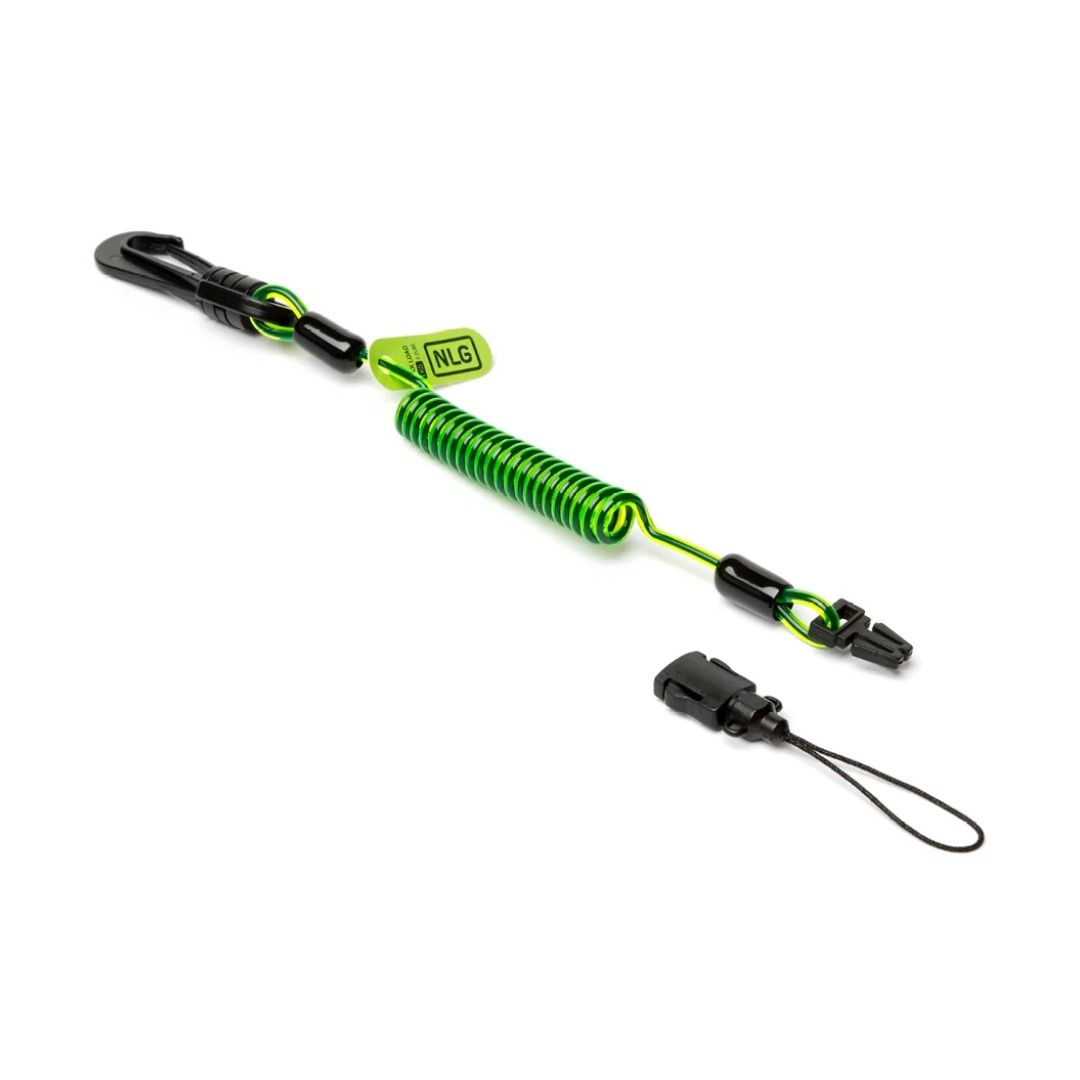
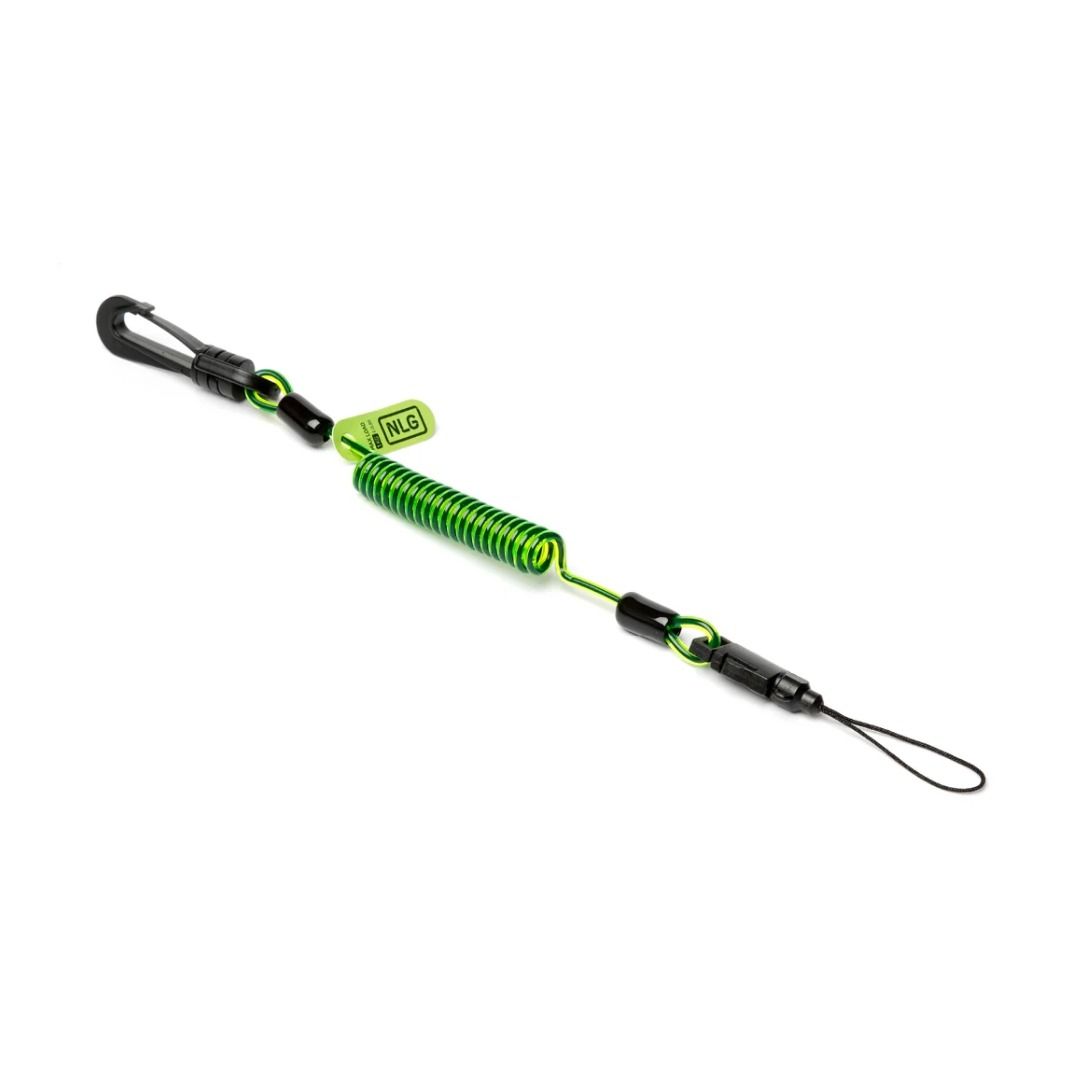
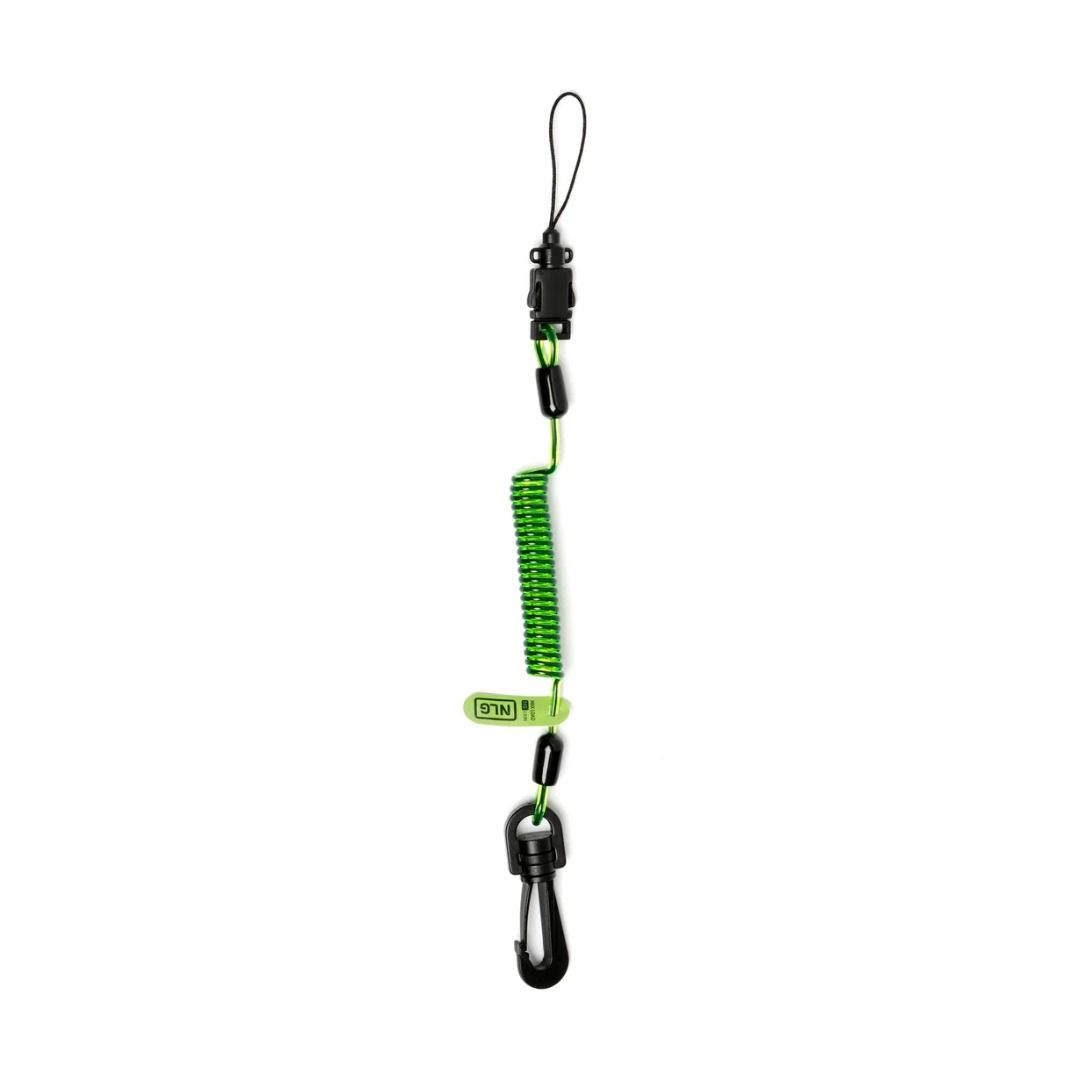
Metal-free mini coil lanyard rated to 1kg for tethering mobile phones, two-way radios, cameras, and small electronics at height.
- Max load 1kg (2.2lbs), dynamic load tested at 2:1 safety factor
- CE and UKCA marked, NS 9611:2022 compliant
- serial numbered
- Metal-free, non-conductive construction, plastic rotating connectors
- Detachable clicklock micro loop for quick device switching
- Coil extends 30cm to 95cm with break-out snag release
- 15g
- NLG ID scan tag included
NLG Mini Coil Tool Lanyard - 1kg Metal-Free Electronics Tethering

Metal-free mini coil lanyard rated to 1kg for tethering mobile phones, two-way radios, cameras, and small electronics at height.
- Max load 1kg (2.2lbs), dynamic load tested at 2:1 safety factor
- CE and UKCA marked, NS 9611:2022 compliant
- serial numbered
- Metal-free, non-conductive construction, plastic rotating connectors
- Detachable clicklock micro loop for quick device switching
- Coil extends 30cm to 95cm with break-out snag release
- 15g
- NLG ID scan tag included
- Buy 10 for £20.28 £16.90 each and save 10%
- Buy 20 for £14.35 £11.96 each and save 36%
| BULK DISCOUNT | 10 | 20 |
|---|---|---|
| Price | £16.90 £20.28 | £11.96 £14.35 |
Order 1x to earn 18 FASTPoints
Order to earn 18 FASTPoints
Log in to access trade discountsNLG Mini Coil Tool Lanyard
Metal-free mini coil lanyard rated to 1kg for tethering mobile phones, two-way radios, cameras, and small electronics at height and in confined spaces. At 15g, the coil extends from 30cm to 95cm, stays clear of the working area when retracted, and keeps devices within arm's reach if dropped. The non-conductive construction uses plastic rotating connectors throughout , no metal anywhere in the load path, making it suitable for electrical work environments, nuclear facilities, and any site where metal-free equipment is required. The detachable clicklock micro loop at the device end removes from the coil body with a press of the wings, allowing the loop to be moved quickly to a different device.
Why Metal-Free Construction Matters for Electronics Tethering
Standard tool lanyards use metal carabiners and connector rings that create a conductive pathway between the anchor and the device. For a mobile phone or two-way radio being used near energised electrical equipment or in a nuclear facility, that metal pathway is a compliance issue that site safety cases and method statements specifically exclude. In hygiene-sensitive environments where metal detection systems are in use, a metal connector attached to a handheld radio or phone fails the zone entry check. The fully plastic connectors and non-conductive core on this lanyard remove that issue entirely, allowing electronics tethering compliance in environments where a standard lanyard cannot be used.
Key Features
-
Metal-free non-conductive construction: Plastic rotating connectors at both ends with a reinforced non-conductive core. No metal in the load path from the anchor to the device. Suitable for electrical environments, nuclear facilities, hygiene areas, and any zone where metal-free equipment is required.
-
Detachable clicklock micro loop: The micro loop at the device end connects to the coil via a clicklock buckle. Press the two wings to release it from the coil body. Attach it to a different device, or fit additional connectors (available separately as a 5-pack, code 101547) to run multiple devices from the same coil simultaneously.
-
Break-out mechanism: Built into the lanyard to release under a snag load rather than holding firm and pulling the operative or the device. Reduces the risk of the lanyard catching on doorframes, equipment, or fittings in confined spaces during movement.
-
360° rotating springhook connector: The anchor-end connector rotates freely, preventing the coil from twisting during normal movement with a radio or phone.
-
Ultra-compact coil: Extends from 30cm to 95cm. At 15g, the lanyard adds negligible weight to a device pouch, belt clip, or wristband anchor and stays neatly out of the way when not under extension.
-
Anti-puncture wipe-clean sleeve: PU coating resists heat, abrasion, and surface contact. Wipes clean in hygiene environments that require clean-down between tasks or zones.
Who Is This For
Trades and roles:
-
Operatives using mobile phones or two-way radios at height
-
Nuclear and utilities maintenance engineers
-
Electricians and M and E trades in live working environments
-
Inspection technicians using cameras and instruments at height
-
Safety officers specifying electronics tethering for site-wide programmes
Industries:
-
Nuclear
-
Utilities and power
-
Electrical and M and E
-
Oil and gas
-
Construction and building maintenance
Specifications
| Specification | Detail |
|---|---|
| Product Name | NLG Mini Coil Tool Lanyard - 1kg Metal-Free Electronics Tethering |
| SKU | 101371 |
| Product Category | Metal-Free Mini Coil Lanyard, Electronics Tethering |
| Max Load | 1kg (2.2lbs) |
| Construction | Non-conductive reinforced core, no metal in load path |
| Anchor Connector | 360° rotating springhook, plastic |
| Tool Attachment | Detachable clicklock micro loop, plastic |
| Loop Mechanism | Clicklock buckle, press wings to release, audible click to reconnect |
| Breakout Feature | Yes, releases under snag load to reduce snagging hazards |
| Sleeve | Anti-puncture PU wipe-clean coating |
| Compatible Accessories | Mini Adhesive D Ring, Phone Holster, Radio Holster, Additional Connectors 5-pack (101547) |
| Safety Standards | CE, UKCA, NS 9611:2022+AC |
| Testing | Dynamic load tested, 2:1 safety factor, third-party certified |
| Inspection System | NLG ID serialised scan tag |
| Serial Numbering | Unique serial number per unit |
| Extended Length | 30cm to 95cm |
| Colour | Hi-vis green |
| Unit Weight | 15g |
Compatibility
| Application or Condition | Status |
|---|---|
| Mobile phones and two-way radios up to 1kg at height | ✓ Compatible |
| Cameras, small instruments, and electronic equipment up to 1kg | ✓ Compatible |
| Nuclear, electrical, and metal-free required environments | ✓ Compatible |
| Confined spaces and restricted access working positions | ✓ Compatible |
| Belt, harness, or wristband anchor configurations | ✓ Compatible |
| Multiple devices simultaneously with additional connectors (101547) | ✓ Compatible |
| Any equipment exceeding 1kg (2.2lbs) | ✗ Not suitable |
| High-voltage rated insulation applications | Confirm voltage spec with site safety officer |
| Fall arrest or personal safety applications | ✗ Not suitable |
| Replacement for EN354 or EN355 personal safety lanyard | ✗ Not suitable |
Who Is This For
Nuclear operatives, utilities engineers, electricians, and maintenance technicians who carry mobile phones or two-way radios in environments where metal-free equipment is a site requirement. It is equally suited to any site operative working at height who needs to tether a handheld device, phone, radio, or camera, and wants a compact, lightweight solution that stays out of the way in confined spaces and does not snag during movement through restricted access areas.
Typical Applications
-
Tethering a two-way radio to a harness D-ring or belt clip during working at height in nuclear or utilities facilities where metal-free tool control applies to all equipment including communications devices.
-
Keeping a smartphone tethered to a belt or harness when working on elevated plant and structures where a dropped phone presents a dropped object hazard and a risk of equipment damage.
-
Securing a compact camera or inspection device to a wristband or belt during aerial inspection and photographic survey work at height.
-
Using in confined spaces such as access voids and inspection chambers where a full-length lanyard would trail and snag, and the 95cm maximum extension is sufficient for the working reach required.
-
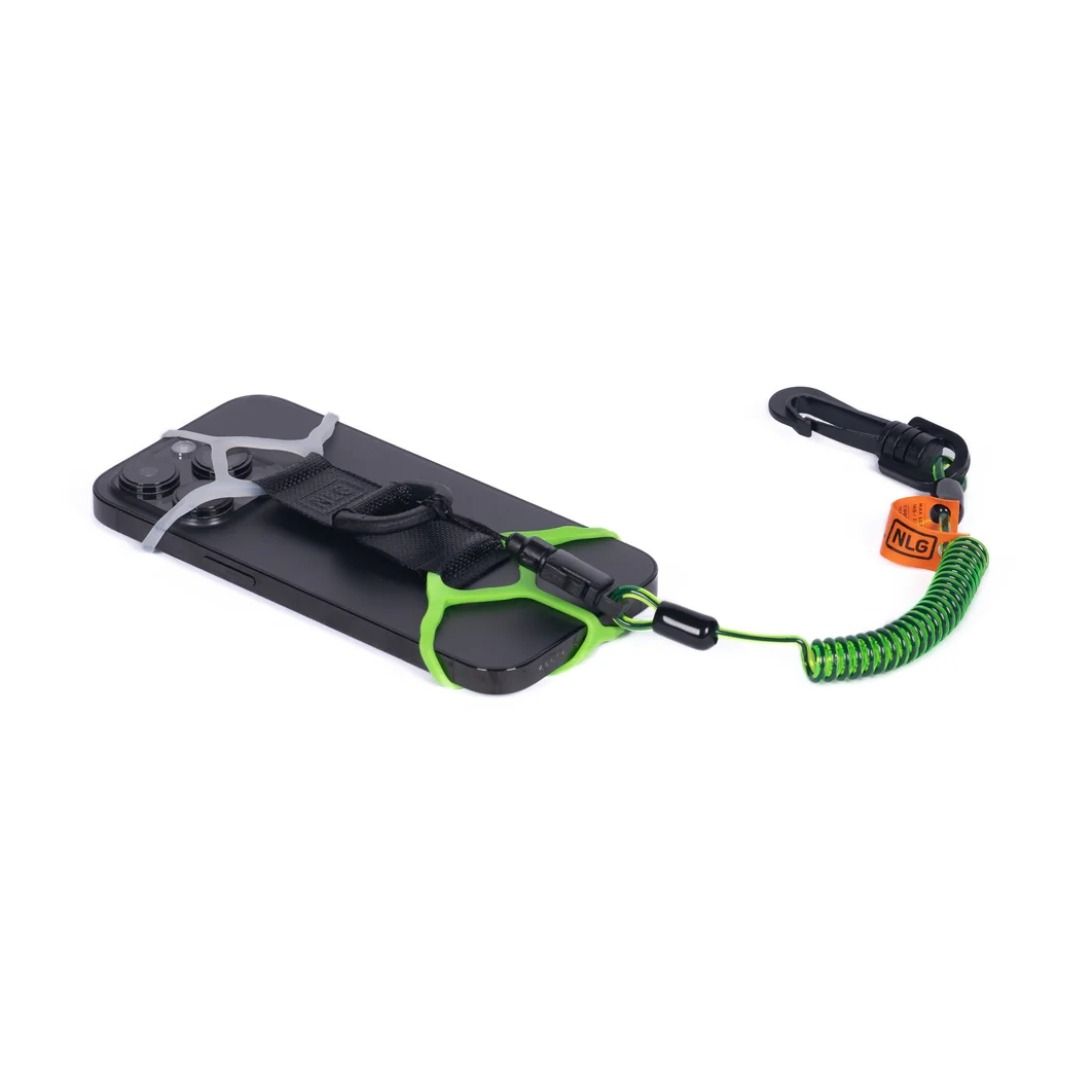
Attaching to a Radio Holster or Phone Holster alongside the Mini Adhesive D Ring to create a complete hands-free electronics tethering system for a construction site or facilities management operative.
-
Running two devices from one operative's kit by using additional clicklock connectors (101547) so both a phone and a radio can be tethered from the same coil simultaneously.
How to Use
Connecting the micro loop to the device:
Step 1: Press the two wings on the clicklock buckle to disconnect the micro loop from the coil body.
Step 2: Pass the micro loop through the device's captive hole, D-ring, or attachment point. Thread the buckle through the loop to create a cinch.
Step 3: Push the buckle back onto the corresponding end of the mini coil until an audible click confirms it is locked.
Anchor connection:
Step 4: Connect the springhook carabiner at the anchor end to the belt clip, harness D-ring, or wristband anchor. Confirm it is securely fastened with a gentle tug.
Step 5: Check both ends are firm before beginning work.
Note: The mini coil can be used with multiple tools simultaneously by fitting additional clicklock connectors. Additional connectors are available in a 5-pack (101547).
Common Mistakes
-
Applying to devices over 1kg: Weigh the device before attaching. A two-way radio with extended battery pack or a camera with lens attached may exceed 1kg. Confirm the weight of the device fully equipped before tethering.
-
Forcing the clicklock buckle: The clicklock releases by pressing both wings simultaneously, not by pulling. Pulling without pressing will stress the connector. Press the wings firmly and the buckle releases cleanly.
-
Not checking the clicklock is fully seated: After reconnecting the micro loop to the coil body, confirm the audible click has sounded. A partially connected buckle will not hold under load.
-
Using in place of a rated electrical insulation device: The metal-free construction removes metal from the tether load path but does not provide rated electrical insulation to a specific voltage class. Confirm suitability for high-voltage working with the site safety officer.
-
Continuing to use after a drop event: Quarantine and inspect after any drop before returning to service.
Safety
This lanyard is rated to a maximum working load of 1kg (2.2lbs). It is not for fall arrest and must not be used in any personal safety application. The metal-free construction removes metal from the load path but is not a rated electrical insulation class, confirm voltage suitability with your site safety officer before specifying for high-voltage environments. The break-out mechanism releases under a snag load, this is a safety feature, not a failure. After any break-out event, inspect the lanyard before returning to service. Retire from service if any component is cracked, deformed, or damaged. Quarantine after any drop event.
Maintenance
Wipe the PU sleeve with a damp cloth after use in hygiene environments. Inspect the coil body for kinking and surface damage along its full length. Check the clicklock buckle opens and closes cleanly with an audible click and that both wings operate correctly. Inspect the springhook connector for deformation and confirm it rotates freely. Store away from direct sunlight, heat, and chemical contact. Log inspections via the NLG ID scan tag. Retire when any component shows deterioration.
Frequently Asked Questions
Q: What devices can I tether with this lanyard?
A: Any device or tool weighing 1kg or less that has a captive hole, D-ring, or attachment loop for the micro loop to thread through. Mobile phones and two-way radios are the primary use case, NLG developed this lanyard specifically for those devices. Cameras, small instruments, compact meters, and any other electronics or hand tools under 1kg are also suitable. The clicklock micro loop can be moved between devices quickly, so the same coil can serve multiple devices across a shift.
Q: What does the detachable clicklock micro loop allow me to do?
A: It allows the micro loop at the device end to be removed from the coil body by pressing the two wings simultaneously, moved to a different device, and clicked back into the coil. This means one coil can serve multiple devices across a shift without taking the whole lanyard off the anchor. Additional clicklock connectors are available in a 5-pack (code 101547), allowing multiple devices to be connected to the same coil at the same time.
Q: What does metal-free mean for this lanyard?
A: There is no metal anywhere in the load path from the anchor springhook to the device. The rotating connectors at both ends are plastic, the core is a reinforced non-conductive material, and the sleeve is a PU coating. This makes the lanyard suitable for environments where metal-free equipment is required: nuclear facilities, electrical work environments, hygiene areas, and any site where the presence of metal components in a tethered device's accessories creates a compliance issue.
Q: What is this lanyard not suitable for?
A: It must not be used with devices or tools exceeding 1kg (2.2lbs). It is not for fall arrest and must never replace a rated personal safety lanyard. The metal-free construction does not provide rated electrical insulation to a specific voltage class, confirm high-voltage suitability with your site safety officer. The micro loop clicklock mechanism is not designed for use with tools that put continuous rotational load on the connector.
Q: How does the break-out mechanism work?
A: The break-out mechanism is designed to release if the lanyard is caught on a fitting, doorframe, or structure during movement, rather than holding firm and dragging the operative or the device. In confined spaces where snagging is a realistic risk during entry, exit, and repositioning, this prevents the lanyard from becoming a secondary hazard. After any break-out event, inspect the lanyard fully before returning to service.
Q: How does this pair with NLG's holster and D-ring accessories?
A: The Mini Adhesive D Ring sticks to the back of a phone or device case and provides the D-ring for the micro loop to cinch onto. The Radio Holster and Phone Holster are belt or harness pouches with built-in attachment points that the coil connects to. These accessories are available separately from CMT Group and extend the usefulness of this lanyard across different device configurations and working environments.
Q: How do I inspect this lanyard before use?
A: Check the coil body for kinking and surface damage along its full length. Inspect the PU sleeve for splits or areas where the core is exposed. Check the clicklock buckle opens with a press of both wings and closes with an audible click. Inspect the springhook for deformation and confirm it rotates freely. If any component fails the check or shows signs of damage, retire from service. Log the inspection via the NLG ID scan tag.
Q: What certifications does this carry?
A: CE and UKCA marking, and NS 9611:2022+AC compliance. Dynamically load tested at a 2:1 safety factor by an independent third-party laboratory. Each unit carries a unique serial number and NLG ID scan tag for inspection traceability.
