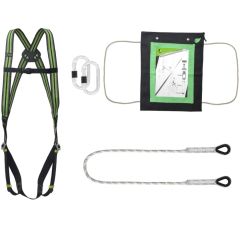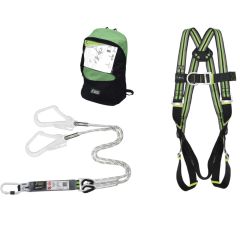
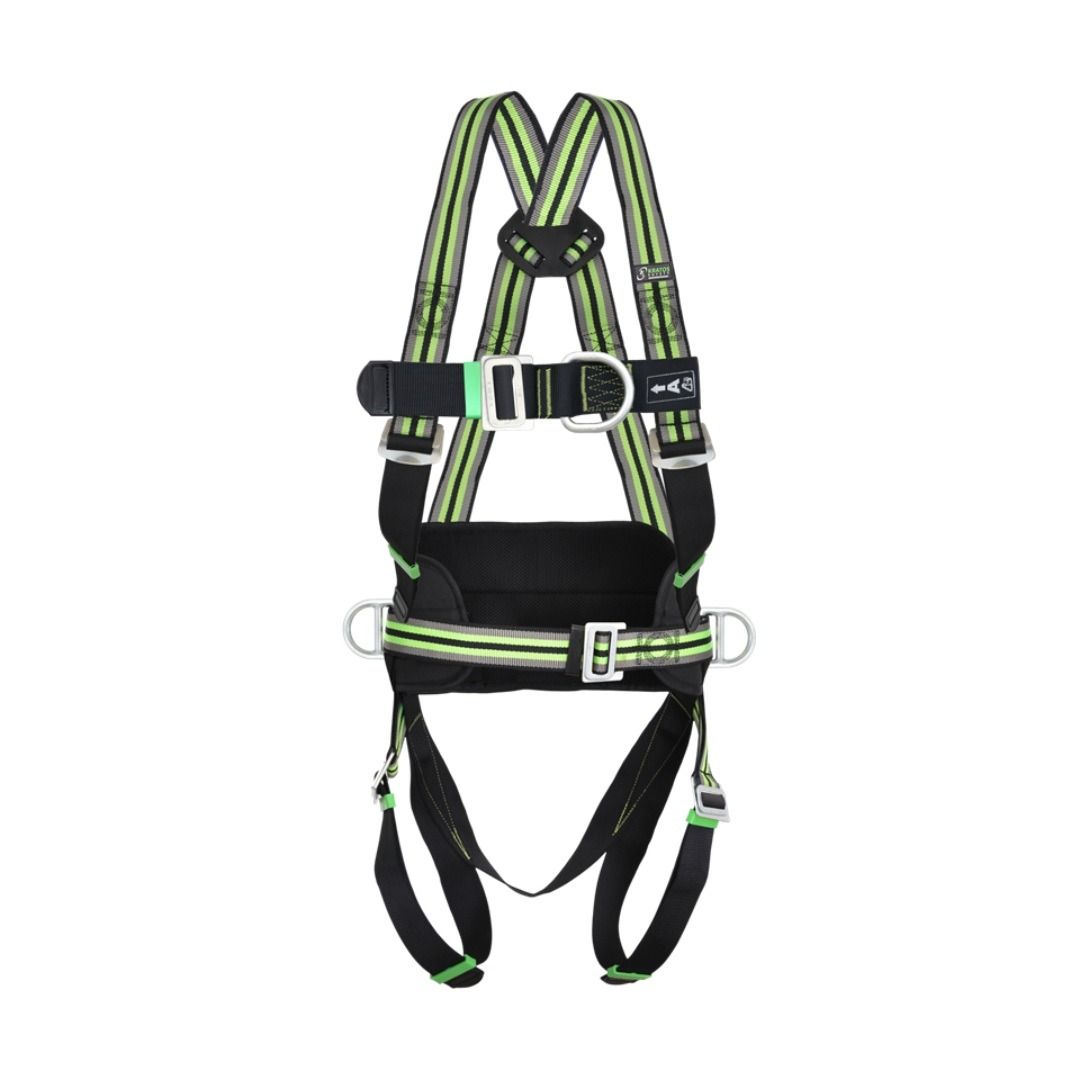



A full body harness with 2-point fall arrest attachment and integrated work positioning belt, designed for operatives who need hands-free positioning and fall arrest protection from a single piece of equipment.
- Dual function: Fall arrest and work positioning in one harness
- 4 D-rings total: Dorsal and sternal for fall arrest, 2 lateral for work positioning
- Integrated work positioning belt: Holds the operative hands-free at the work station
- Size: Universal, adjustable to fit a wide range of builds
- Maximum user weight: 140kg
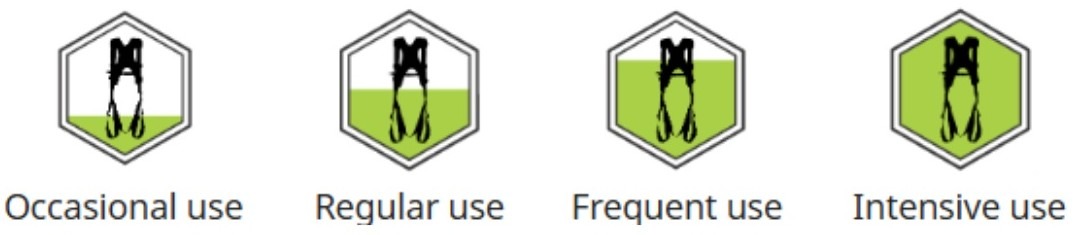
- Usage rating: Regular use
- Certification: CE marked to EN361:2002 and EN358:2018
Kratos Mune 5 Body Harness 2-Point Attachment - Lateral D-rings and Work Positioning Belt

A full body harness with 2-point fall arrest attachment and integrated work positioning belt, designed for operatives who need hands-free positioning and fall arrest protection from a single piece of equipment.
- Dual function: Fall arrest and work positioning in one harness
- 4 D-rings total: Dorsal and sternal for fall arrest, 2 lateral for work positioning
- Integrated work positioning belt: Holds the operative hands-free at the work station
- Size: Universal, adjustable to fit a wide range of builds
- Maximum user weight: 140kg
- Usage rating: Regular use
- Certification: CE marked to EN361:2002 and EN358:2018
- Buy 20 for £84.98 £70.82 each and save 8%
- Buy 50 for £78.11 £65.09 each and save 15%
| BULK DISCOUNT | 20 | 50 |
|---|---|---|
| Price | £70.82 £84.98 | £65.09 £78.11 |
Order 1x to earn 76 FASTPoints
Order to earn 76 FASTPoints
Log in to access trade discountsKratos Mune 5 Body Harness 2-Point Attachment
For operatives who need both fall arrest protection and hands-free work positioning from a single harness, the Mune 5 removes the need to carry or combine two separate pieces of equipment on site. The two fall arrest attachment points, dorsal D-ring and sternal D-ring, are certified to EN361:2002. The two lateral D-rings and integrated work positioning belt are certified to EN358:2018, allowing the operative to lean into a structure and work with both hands free. All four attachment points are on one harness, universal sized, and rated to 140kg.
Why Choose the Mune 5 Body Harness 2-Point Attachment
-
Two fall arrest points: The rear dorsal D-ring and front sternal D-ring are both rated for fall arrest under EN361:2002, giving the operative a choice of connection point depending on their working position and anchor configuration.
-
Two lateral D-rings for work positioning: Positioned at the hips, the lateral D-rings allow a work positioning lanyard to support the operative against a structure, keeping both hands free for the task. These points are EN358:2018 rated and must not be used for fall arrest.
-
Integrated work positioning belt: Built into the harness rather than added as a separate accessory, the belt sits at the correct position for comfort during extended periods of supported work. A separately purchased belt can shift or interfere with the harness; the integrated design prevents this.
-
Dual colour strap scheme: Shoulder and thigh straps are colour differentiated, making correct donning faster and reducing the risk of misrouting straps when working in PPE gloves or under time pressure.
-
Ideally positioned sit-strap: The ergonomic sit-strap design distributes weight correctly during suspension, reducing discomfort and the onset of suspension trauma during extended periods of supported work.
-
Universal sizing: Adjustable shoulder and thigh straps accommodate a wide range of builds without separate size variants, simplifying procurement and stock management for site buyers.
-
140kg maximum user weight: Rated for heavier operatives including the weight of tools and equipment, covering most professional applications without needing a specialist high-capacity harness.
What's Included
- Mune 5 full body harness with integrated work positioning belt
Specifications
| Specification | Details |
|---|---|
| Product Name | Mune 5 Body Harness 2-Point Attachment – Lateral D-Rings & Work Positioning Belt |
| Product Code | PP080003 |
| Harness Type | Full body harness with integrated work positioning belt |
| Usage Rating | Regular use |
| Maximum User Weight | 140kg |
| Size | Universal |
| Fall Arrest Attachment Points | 2 (Dorsal D-ring rear, Sternal D-ring front) |
| Work Positioning Points | 2 (Lateral D-rings at hip level) |
| Total D-Rings | 4 |
| Work Positioning Belt | Integrated |
| Strap Adjustment | Adjustable shoulder & thigh straps |
| Strap Differentiation | Dual colour scheme for correct donning |
| Certification | CE Marked |
| Standards | EN361:2002, EN358:2018 |
| Range | Essential |
| HS Code | 63079098 |
Compatibility
| Equipment / Application | Compatibility |
|---|---|
| Energy Absorbing Lanyards (Fall Arrest) | ✓ Compatible |
| Guided Type Fall Arresters (Dorsal/Sternal) | ✓ Compatible |
| Work Positioning Lanyards (Lateral D-rings) | ✓ Compatible |
| Retractable Fall Arresters (Dorsal) | ✓ Compatible |
| Fall Arrest Connection to Lateral D-Rings | ✗ Not recommended |
| Work Positioning Lanyard on Dorsal or Sternal D-Ring | ✗ Not recommended |
| Confined Space Rescue Applications | ✗ Not recommended |
Who Is This For?
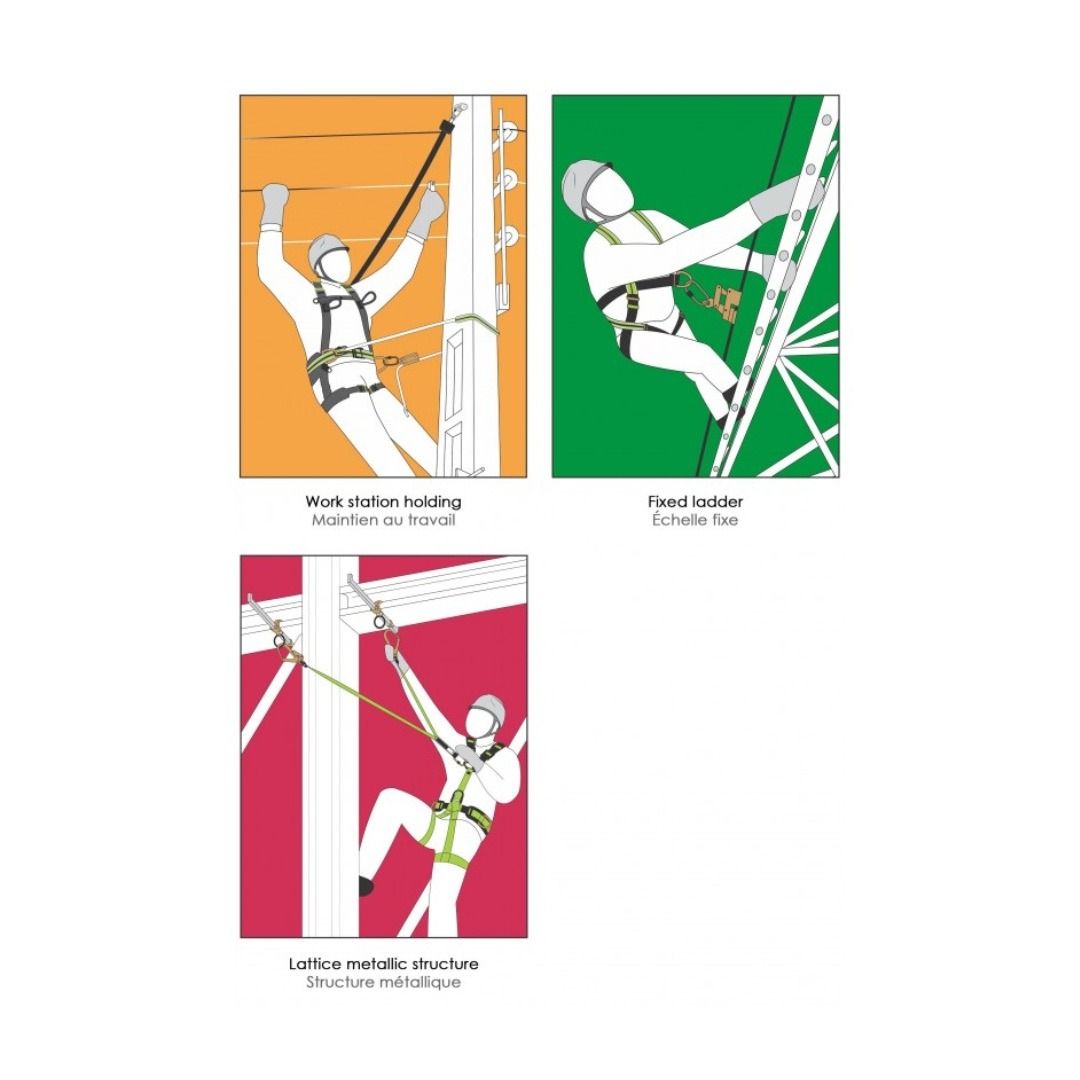
This harness is for trained operatives who require both fall arrest protection and hands-free work positioning capability from a single piece of equipment. Typical users include steel erectors working at fixed positions on structural frames, telecommunications engineers on masts and towers, operatives on lattice structures, and maintenance workers who need to lean into a work position and use both hands while remaining connected to a fall arrest anchor. It is rated for regular use and suits contractors on commercial, industrial, and infrastructure projects.
Typical Applications
-
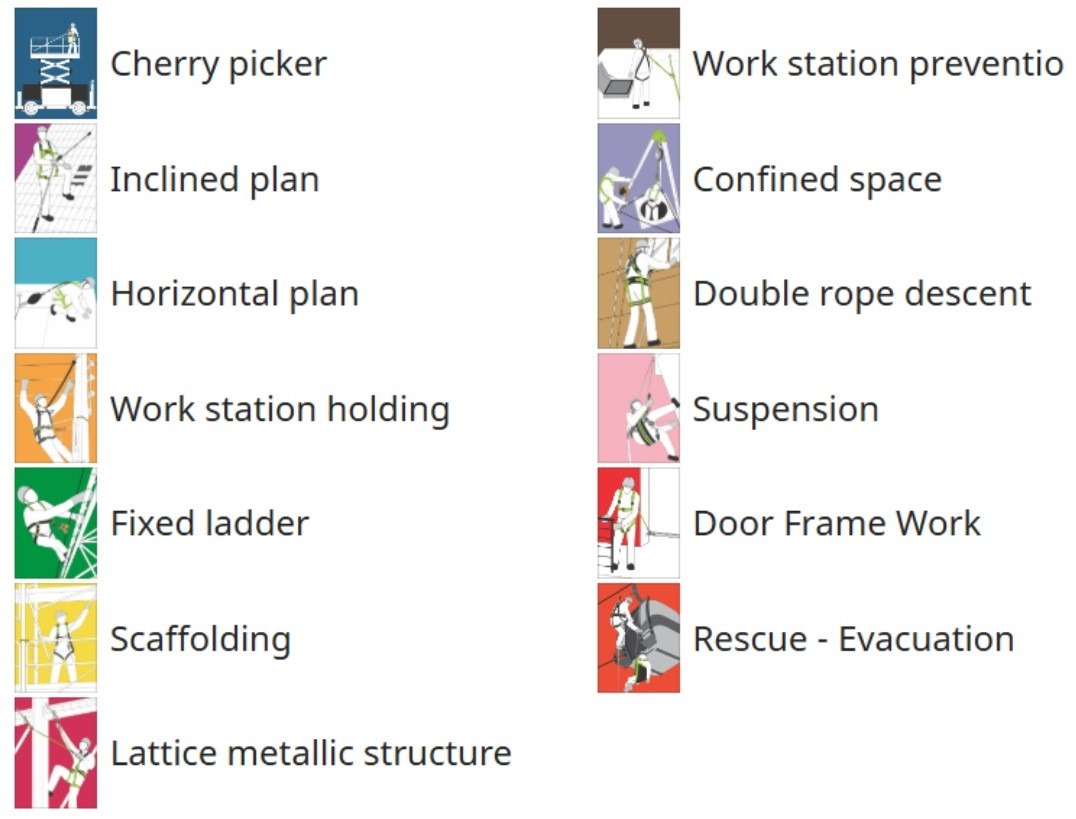
Work station holding on steel frames and lattice structures where the operative leans into the structure and works hands-free
-
Fixed ladder work where the operative needs to stop and work at a position on the ladder
-
Mast and tower maintenance where both fall arrest and work positioning are required simultaneously
-
Cherry picker and MEWP operations where the operative is tethered to the platform anchor
-
Inclined plane work where a positioning lanyard supports the operative against the slope
-
Any task where the method statement specifies both fall arrest and work positioning controls
How frequently do I use my harness?
How to Use
-
Inspect the harness before each use. Check all webbing for cuts, abrasion, discolouration, or contamination. Check all buckles and D-rings for damage or deformation. Do not use any component that fails inspection.
-
Hold the harness by the dorsal D-ring and allow it to hang freely to confirm correct orientation before donning.
-
Step into the leg loops and pull the shoulder straps up over both shoulders. The dorsal D-ring should sit centrally between the shoulder blades. The sternal D-ring should sit on the chest.
-
Fasten and adjust all buckles: chest strap first, then thigh straps, then shoulder straps. The harness should be snug with no more than two finger widths of slack in any strap.
-
Confirm the integrated work positioning belt is correctly seated at hip level and is not twisted or misrouted.
-
Connect the fall arrest lanyard or arrester to the dorsal or sternal D-ring as specified in the method statement. Never connect a fall arrest device to a lateral D-ring.
-
Where work positioning is required, connect the work positioning lanyard to both lateral D-rings and to the anchor point or structure at the appropriate tension to support the operative in the working position.
-
On completion, disconnect the fall arrest connection first, then the positioning lanyard. Remove the harness and stow for storage.
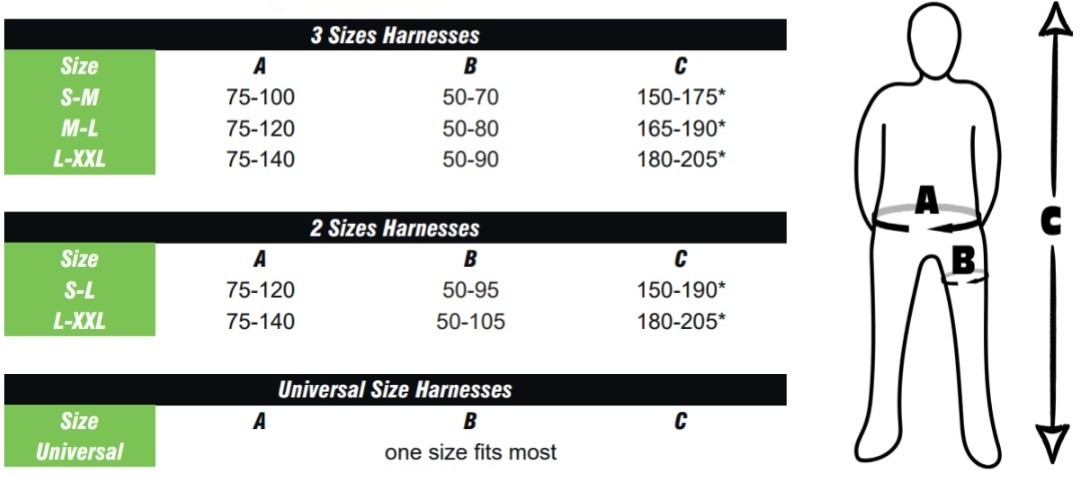
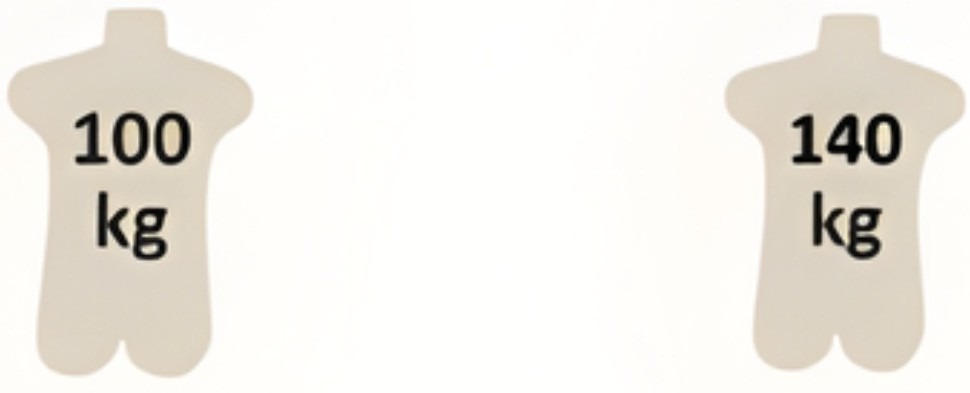
Which size do I need? How heavy am I?
The chart hereunder indicates the body s measures. For the wearing of a harness over clothing, the harness adjustments allow to obtain the right size.
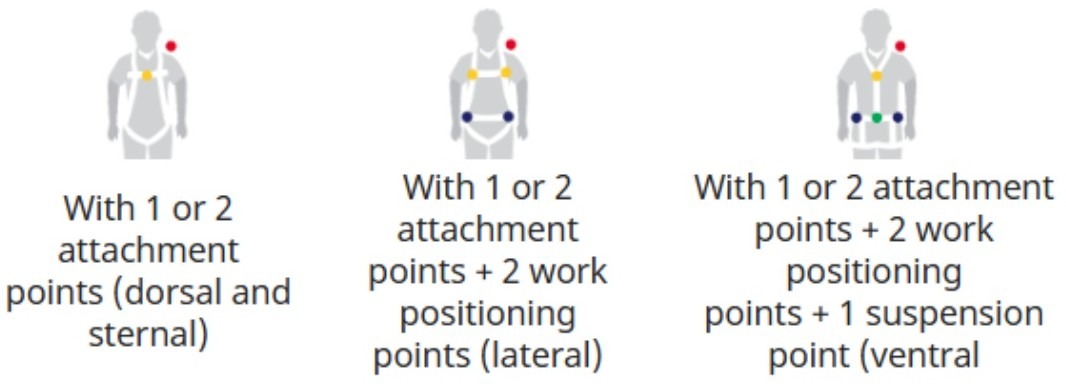
Which attachments do I need?
Attachments points:
Safety
This harness provides fall arrest protection when connected via the dorsal or sternal D-ring to a rated fall arrest anchor. The lateral D-rings are for work positioning only under EN358:2018 and must never be connected to a fall arrest system. A work positioning system holds the operative in position but will not arrest a fall if the positioning lanyard fails or the operative moves outside the supported zone: a separate fall arrest connection must always be maintained when working at height. Wear a hard hat to EN397 and safety footwear to EN ISO 20345. A rescue plan must be in place before any work at height begins, as required under EN365.
Maintenance
After each use, wipe down all webbing and hardware with a clean damp cloth. Remove dirt, sweat, and any chemical contamination before storage. Dry naturally away from direct heat. Store away from UV light, sharp edges, and chemical exposure, all of which degrade polyester webbing over time. Formally inspect the harness by a competent person at intervals not exceeding 12 months, with written records kept per PUWER. Check the manufacturer's label for the applicable service life and retire the harness at that point regardless of visible condition. Withdraw the harness from service immediately if it has been involved in a fall arrest event.
Frequently Asked Questions
Q: What is the difference between the fall arrest D-rings and the lateral D-rings on this harness?
A: The dorsal D-ring at the rear and the sternal D-ring at the front are both certified for fall arrest under EN361:2002. They are the connection points for energy absorbing lanyards, guided fall arresters, and retractable devices. The two lateral D-rings at hip level are certified for work positioning only under EN358:2018. They hold the operative in a supported working position via a positioning lanyard but are not rated to withstand the dynamic loads generated by a fall arrest event. Connecting a fall arrest device to a lateral D-ring is a serious misuse of the equipment.
Q: What do EN361:2002 and EN358:2018 mean and why do both matter for this harness?
A: EN361:2002 is the standard for full body harnesses used in fall arrest, specifying how arrest forces must be distributed across the body. EN358:2018 is the standard for work positioning and restraint belts, covering the strength and performance requirements for positioning attachment points. Both standards are required under the Personal Protective Equipment at Work Regulations 1992 for equipment used on UK sites. This harness carries CE marking to both, confirming the fall arrest points meet EN361 and the positioning points and belt meet EN358.
Q: Can I use this harness for work positioning without connecting a fall arrest system at the same time?
A: No. A work positioning system under EN358 is designed to support the operative in a working position, not to arrest a fall. If the positioning lanyard were to fail, or if the operative moved outside the supported zone, a fall would occur with no arrest system in place. The correct approach is always to maintain a separate fall arrest connection via the dorsal or sternal D-ring whilst using the lateral D-rings for positioning. The two systems work together: positioning keeps the operative comfortable and hands-free, fall arrest protects them if positioning fails.
Q: What is the maximum weight this harness is rated for?
A: 140kg, including the weight of the operative, their clothing, and any tools or equipment carried. If the total weight exceeds 140kg, this harness must not be used and a higher-capacity product should be specified.
Q: Is this harness suitable for suspension work such as rope access?
A: The Mune 5 is rated for regular use and is not designed or certified for rope access or prolonged suspension applications. Rope access work requires a suspension harness with a ventral attachment point rated for suspension loading. If suspension is a requirement, a different harness must be specified.
Q: How does the dual colour strap scheme help on site?
A: Shoulder and thigh straps are colour differentiated so the operative can immediately identify which strap goes where during donning, even when wearing gloves or working under time pressure. A misrouted strap in a fall arrest event can cause the harness to fail to distribute forces correctly, with serious consequences. The colour scheme reduces that risk without requiring additional training or checks.
Q: How often must this harness be formally inspected?
A: Pre-use inspection by the wearer before every session, and formal inspection by a competent person at intervals not exceeding 12 months. Written records must be kept per PUWER. Check the manufacturer's label for the specific service life applicable to this harness.
Q: Where can I order this harness and how quickly can I get it to site?
A: CMT Group supplies the Mune 5 from stock with next working day delivery on orders placed by 7pm online or 5pm by phone. Same-day delivery is available. CMT operates its own fleet of over 100 FORS Silver accredited vehicles covering 90% of the UK, with live tracking and SMS notification 15 minutes before arrival. For contractors managing multiple projects, the EDGE portal provides agreed contract pricing, role-based spending controls, and full delivery visibility in one place.