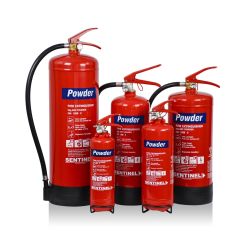
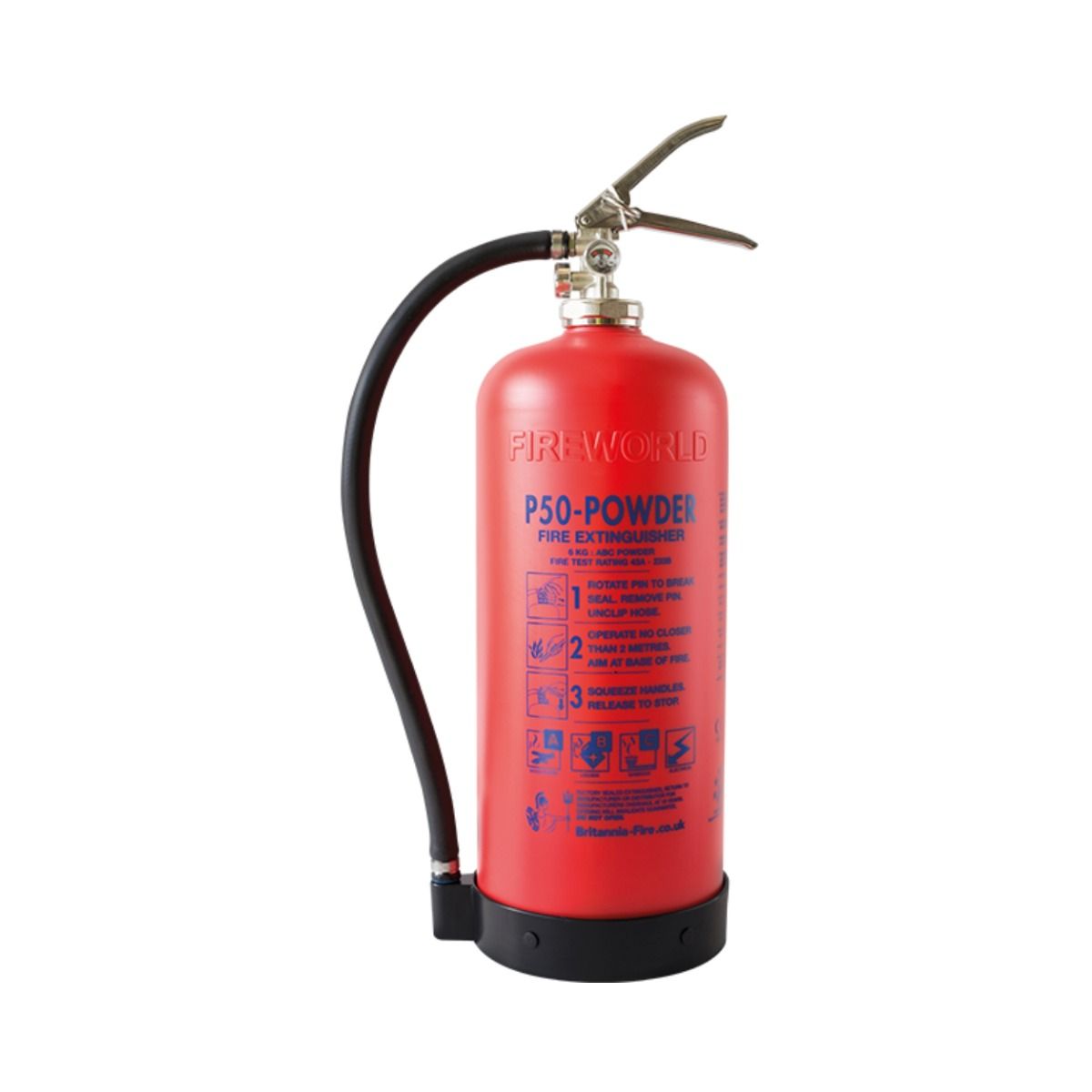
6kg ABC powder fire extinguisher with a corrosion-proof composite cylinder and no engineer service, for construction sites, workshops and outdoor fire points.
- Service-free, no external engineer service
- BSI Kitemark, UKCA, BS EN 3 and PED
- Fire rating 43A/233B, plus Class C
- Composite cylinder, cannot rust
- Double pressure gauges
- Works from -20°C to +60°C
- Capacity - 6kg ABC powder
P50 6kg ABC Powder Fire Extinguisher
6kg ABC powder fire extinguisher with a corrosion-proof composite cylinder and no engineer service, for construction sites, workshops and outdoor fire points.
- Service-free, no external engineer service
- BSI Kitemark, UKCA, BS EN 3 and PED
- Fire rating 43A/233B, plus Class C
- Composite cylinder, cannot rust
- Double pressure gauges
- Works from -20°C to +60°C
- Capacity - 6kg ABC powder
- Buy 5 for £203.93 £169.94 each and save 7%
- Buy 10 for £194.53 £162.11 each and save 12%
| BULK DISCOUNT | 5 | 10 |
|---|---|---|
| Price | £169.94 £203.93 | £162.11 £194.53 |
Order 1x to earn 183 FASTPoints
Order to earn 183 FASTPoints
Log in to access trade discountsP50 ABC Powder Fire Extinguisher 6kg
This 6kg ABC powder fire extinguisher has a composite cylinder made of high-density polyethylene wound with aramid fibre, so it cannot rust. It puts out Class A, B and C fires with a 20 second discharge over 5 metres or more. Two pressure gauges and a simple annual inspection replace the yearly engineer service a steel extinguisher needs.
How a Composite Cylinder Removes the Annual Engineer Service
A steel extinguisher can corrode inside and out, so an engineer has to service it every year and discharge and refill it at five years. On a wet, dusty site, corrosion and missed service visits leave fire points with units that may not work. This extinguisher cannot rust, and your own trained staff check it once a year with a magnet, with one manufacturer overhaul at 10 years.
Key Features
-
No external engineer service: a trained member of your team carries out the annual visual inspection.
-
Composite aramid-wound cylinder: cannot corrode, so it holds up outdoors and in damp site conditions.
-
43A/233B fire rating: tackles larger solid-fuel and flammable liquid fires than many standard 6kg powders.
-
Double pressure gauges: the two gauges cross-check each other, so a faulty gauge is easy to spot.
-
UV protected casing: resists sunlight damage at outdoor fire points.
-
-20°C to +60°C operating range: works in winter compounds and hot plant rooms.
Who is this for
Trades and roles
-
Site managers
-
Fire marshals
-
Health and safety managers
-
Facilities managers
-
Workshop and yard supervisors
-
Procurement teams
Industries
-
Construction
-
Civil engineering
-
Plant hire
-
Manufacturing and engineering
-
Warehousing and logistics
-
Agriculture
Specifications
| Specification | Detail |
|---|---|
| Product name | P50 6kg ABC Powder Fire Extinguisher |
| Product code | HS030001 |
| Product type | Service-free portable fire extinguisher, stored pressure |
| Extinguishing agent | 6kg ABC dry powder (mono-ammonium phosphate and ammonium sulphate) |
| Fire rating | 43A/233B |
| Fire classes | Class A, Class B, Class C |
| Standards and approvals | BSI Kitemark, UKCA, BS EN 3 (portable fire extinguishers), PED |
| Maintenance | Annual visual inspection by a trained person, no external engineer service |
| Life cycle | 20 years, with one manufacturer overhaul at 10 years |
| Guarantee | 10 year operational corrosion guarantee, 10 year quality assurance on material defects and workmanship |
| Discharge duration | 20 seconds |
| Discharge range | 5m+ |
| Operating temperature | -20°C to +60°C |
| Operating pressure | 12 bar at 20°C |
| Test pressure (PT) | 22 bar |
| Maximum allowable pressure (PS) | 15.38 bar |
| Minimum burst pressure | 55 bar |
| Cylinder | HDPE with aramid fibre winding, UV protected outer casing |
| Pressure gauges | Double gauges for cross-calibration, checked with a magnet |
| Operating head | Nickel plated brass (C3771) |
| Hose | EPDM synthetic rubber |
| Full weight | 8.5kg |
| Empty weight | 2.5kg |
| Dimensions | 178mm diameter x 570mm high |
| Identification | QA laser serial number, colour coded stud in base shows year of manufacture |
| Country of manufacture | Great Britain |
| End of life | Recyclable, manufacturer ensures safe disposal of contents when required |
| Brand | Britannia Fire (P50 range, model P50P6) |
| Colour | Red |
Compatibility
| Fire type, location or condition | Suitability |
|---|---|
| Class A fires (wood, paper, textiles) | Suitable, rated 43A |
| Class B fires (flammable liquids) | Suitable, rated 233B |
| Class C fires (flammable gases) | Suitable, isolate the gas supply first |
| Construction sites, yards and outdoor fire points | Suitable, the composite cylinder cannot rust and the casing is UV protected |
| Workshops, plant rooms and garages | Suitable |
| Temperatures from -20°C to +60°C | Suitable |
| Class F fires (cooking oil and fat) | Not recommended, use a wet chemical extinguisher |
| Class D fires (burning metals) | Not recommended, use a specialist Class D extinguisher |
| Offices and small enclosed rooms | Not recommended, powder cuts visibility and breathing, use water mist, foam or CO2 as your risk assessment advises |
| Temperatures below -20°C or above +60°C | Not recommended, outside the operating range |
Typical Users and Projects
Contractors and facilities teams use this extinguisher at outdoor and mixed-risk fire points, where solid materials, fuels and gas cylinders sit together. It suits long construction programmes and multi-site estates, where cutting engineer visits saves the most. Users need fire extinguisher training, and one trained person per site can carry out the annual inspection.
Typical applications
-
Equipping a construction site fire point beside fuel stores and timber stacks.
-
Covering a compound where LPG cylinders for heaters or roofing torches are kept.
-
Protecting a plant yard, refuelling area or workshop with mixed solid and liquid fire risks.
-
Replacing corroded steel extinguishers at exposed outdoor fire points.
-
Standardising fire points across several sites to remove annual service contracts.
-
Covering farm buildings, barns and machinery stores.
How to use
Step 1: Raise the alarm and make sure you have a clear escape route behind you.
Step 2: Rotate the pin to break the seal, remove the pin and unclip the hose.
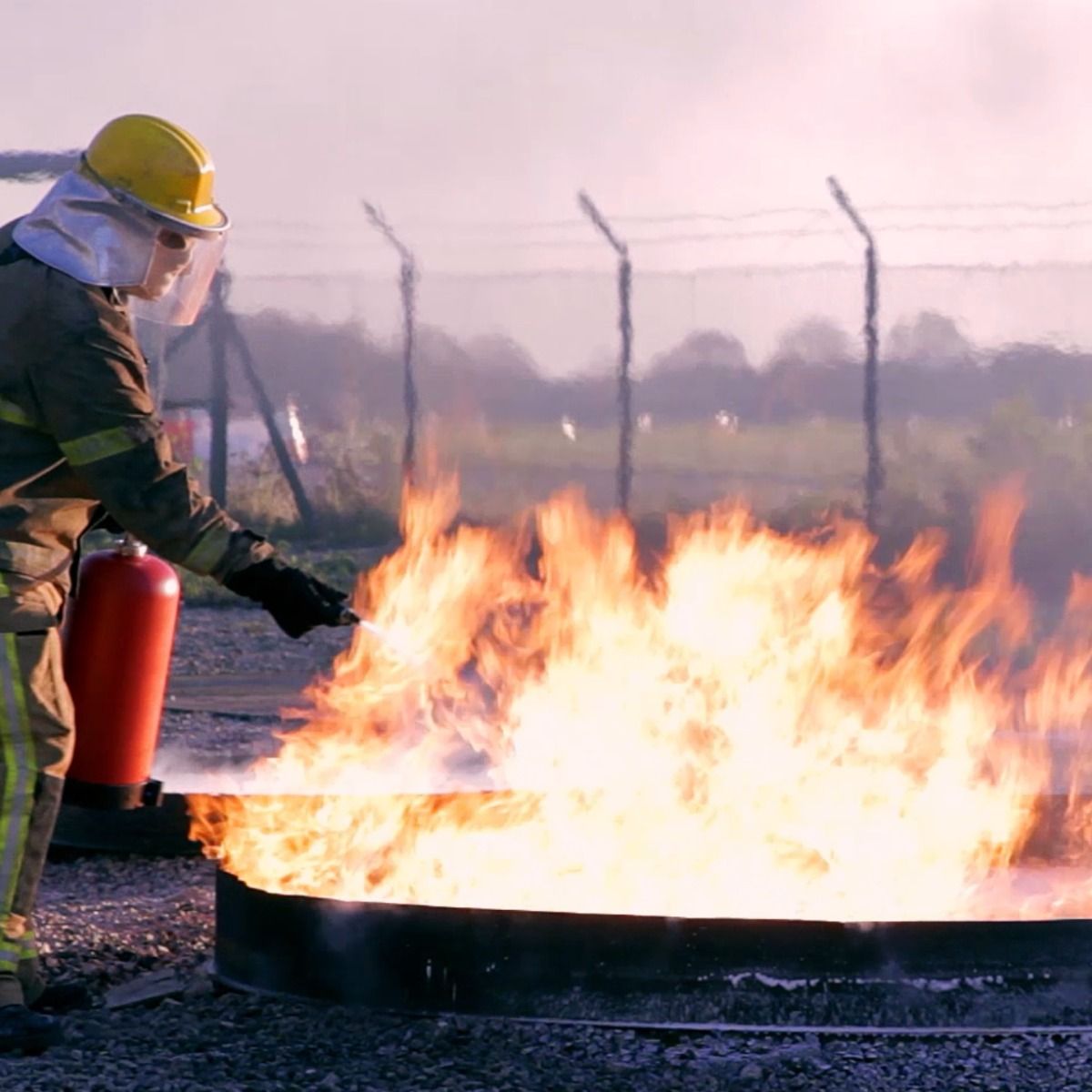
Step 3: Stand no closer than 2 metres and aim the hose at the base of the fire.
Step 4: Squeeze the handles and sweep the powder across the base of the fire. Release the handles to stop.
Step 5: After any use, even a short burst, take the extinguisher out of service and arrange a refill or replacement.
Common mistakes
-
Aiming at the flames rather than the base of the fire.
-
Fighting a gas fire before the gas supply has been isolated, which can lead to a build-up of unburnt gas.
-
Using a powder extinguisher in a small enclosed room, where the powder cloud blocks vision.
-
Returning a part-used extinguisher to its fire point.
-
Skipping the annual inspection because the unit is service-free.
Safety
Only tackle a fire if you are trained, the fire is small and your escape route is clear. The powder cloud reduces visibility and can irritate the airways, so leave and ventilate the area after use. If powder gets in the eyes, rinse with water for at least 15 minutes. The number and type of extinguishers on site should follow your fire risk assessment, as required by the Regulatory Reform (Fire Safety) Order 2005 in England and Wales.
Maintenance
Once a year, check that the tamper seal is in place and wipe off any dust. Take the magnet from the base and pass it across both gauges: each needle should move, then return to green. Check the year of manufacture on the colour coded stud and record the inspection in your logbook and on the extinguisher body. If a needle sits in the red or the seal is missing, return the unit to the manufacturer or distributor.
Frequently Asked Questions
Q: What fires can a 6kg ABC powder fire extinguisher put out?
A: It puts out Class A fires involving solid materials such as wood, paper and textiles. It also puts out Class B flammable liquid fires and Class C flammable gas fires. On solid materials the powder melts and forms a crust that keeps oxygen out and stops the fire reigniting.
Q: What does 6kg mean on a powder fire extinguisher?
A: 6kg is the weight of extinguishing powder inside. The extinguisher weighs 8.5kg when full and 2.5kg empty. A larger charge gives a longer discharge, here 20 seconds.
Q: What does the 43A/233B fire rating mean?
A: The ratings come from standard test fires under BS EN 3. 43A means the extinguisher put out a test fire of stacked timber 4.3 metres long. 233B means it put out a tray fire containing 233 litres of liquid. Class C has no number, as it only confirms the extinguisher can be used on gas fires.
Q: What is this extinguisher not suitable for?
A: It is not suitable for Class F cooking oil fires or Class D metal fires. It is not recommended for offices and small enclosed rooms, because the powder cloud reduces visibility and makes breathing difficult. Your fire risk assessment should set the extinguisher type for each area.
Q: Why choose this over a standard steel 6kg powder extinguisher?
A: A steel extinguisher needs an engineer service every year and a discharge and refill at five years. This one needs only an in-house annual visual inspection and one manufacturer overhaul at 10 years. It also carries a higher 43A/233B rating than many standard 6kg powders, which are often rated around 27A/183B.
Q: What does service-free mean?
A: It means no external engineer service is needed. A trained member of your team checks the extinguisher once a year and records the result. It does not mean maintenance-free, so the annual inspection must still be done.
Q: How long does this extinguisher last?
A: It has a 20 year life cycle. At 10 years it goes back to the manufacturer for an overhaul. The coloured stud in the base shows the year of manufacture, so you can check where it is in its life.
Q: Can the inspection be done by anyone?
A: The inspection should be done by someone trained to follow the manufacturer’s instructions. It takes a few minutes and needs only the magnet stored in the base. Keep a record of each inspection for your fire safety logbook.