
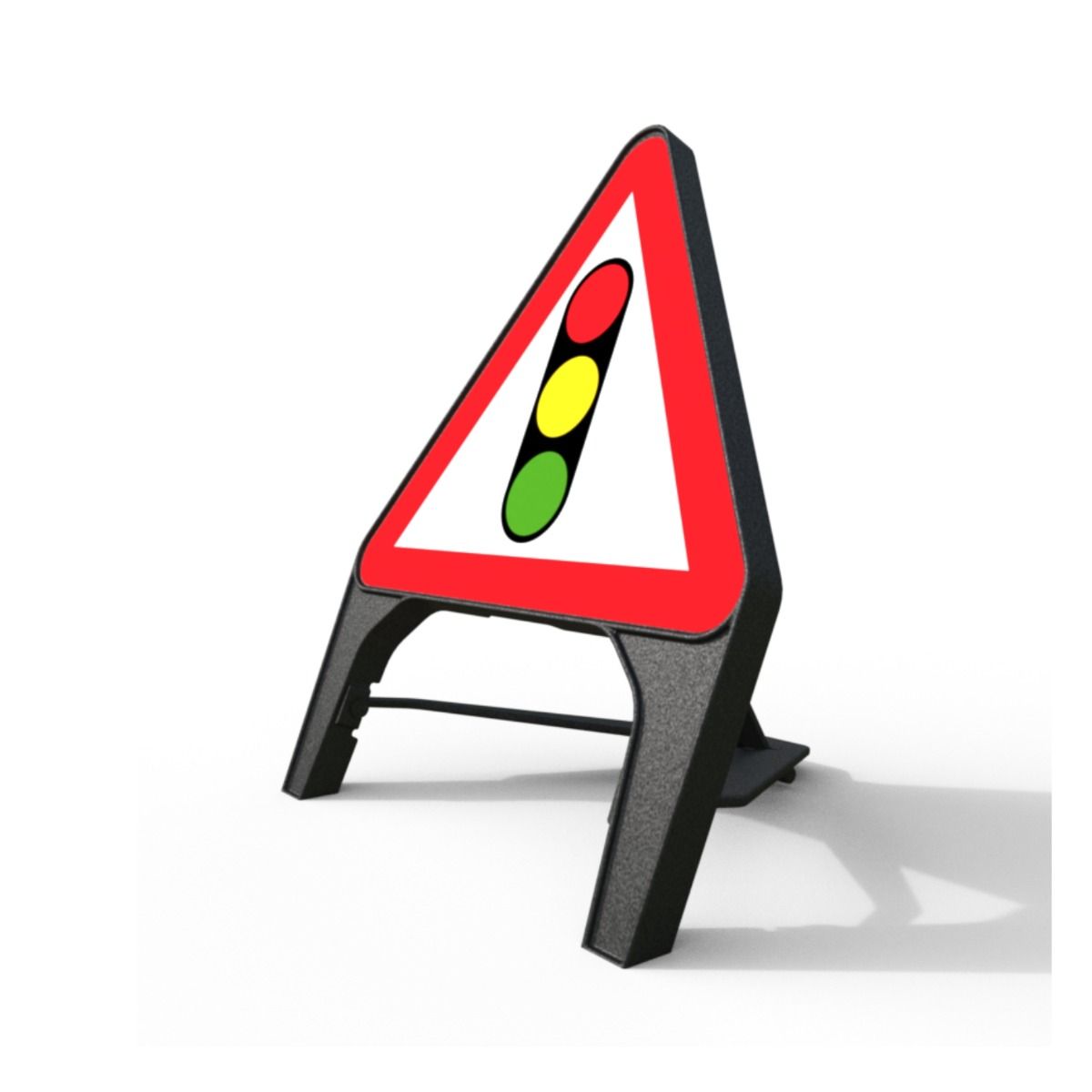

Self-supporting plastic triangle road sign warning drivers of traffic signals ahead, built for street works and road works site use.
- Self-supporting design, no separate frame or stand needed
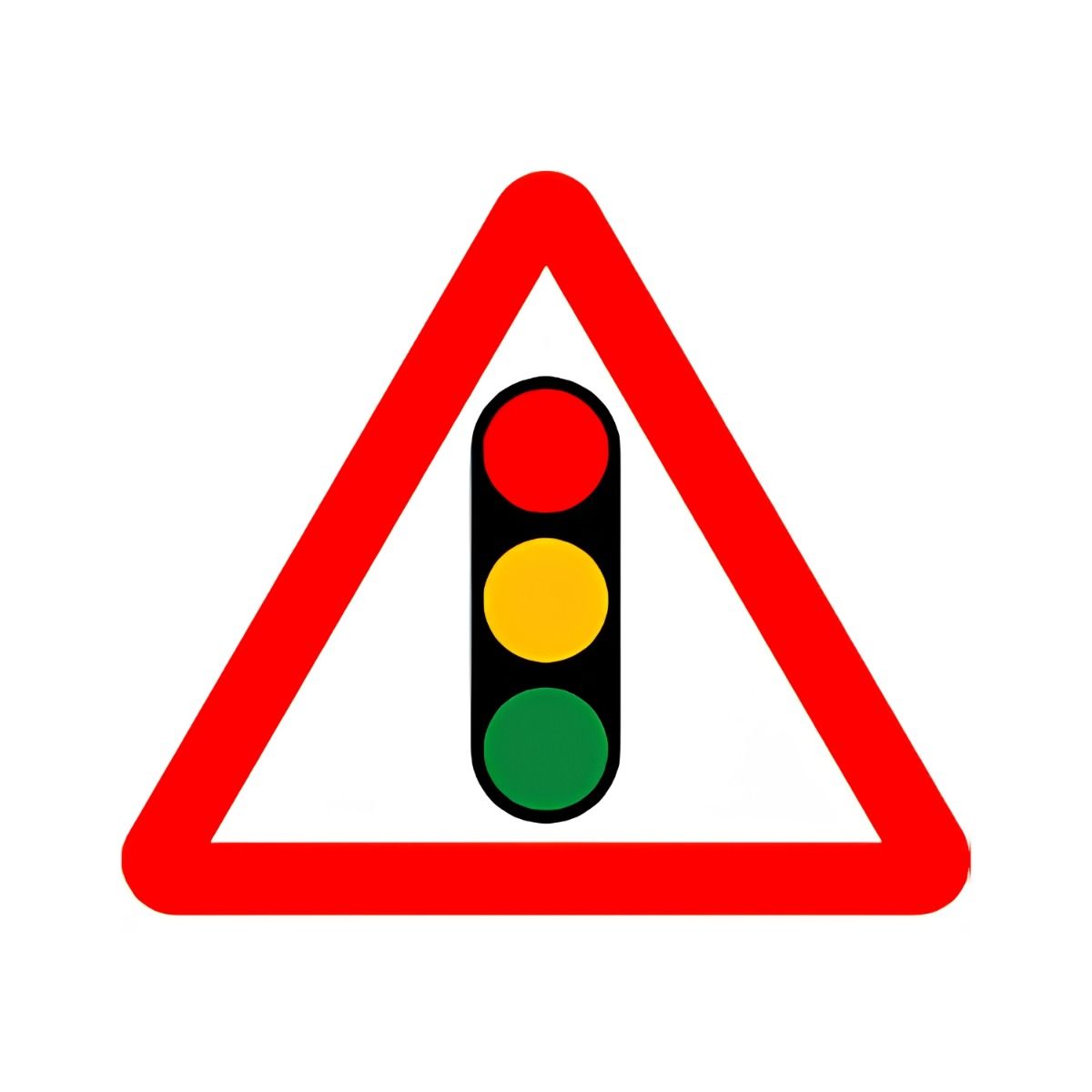
- Chapter 8 compliant Traffic Signals Ahead symbol
- Manufactured from recycled polypropylene, no metal parts
- Non-flammable and rust-free construction
- No sharp edges, easy and safe to handle
- Stackable for storage and transport
- 750mm triangular sign face
Traffic Signals Ahead Sign - 750mm Triangle Self-Supporting Plastic Road Sign

Self-supporting plastic triangle road sign warning drivers of traffic signals ahead, built for street works and road works site use.
- Self-supporting design, no separate frame or stand needed
- Chapter 8 compliant Traffic Signals Ahead symbol
- Manufactured from recycled polypropylene, no metal parts
- Non-flammable and rust-free construction
- No sharp edges, easy and safe to handle
- Stackable for storage and transport
- 750mm triangular sign face
Order 1x to earn 20 FASTPoints
Order to earn 20 FASTPoints
Log in to access trade discountsTraffic Signals Ahead Sign - 750mm Triangle Road Traffic Sign
Self-supporting triangle road sign warning drivers of traffic signals ahead, built for street works and road works where speed of setup matters. Unlike a metal sign face that needs a separate frame, this sign's angled legs are moulded into the plate itself, so it stands on its own straight out of the van. Manufactured from recycled polypropylene, it won't rust, dent, or bend out of shape the way a metal sign does after repeated site use.
How a self-supporting design speeds up sign placement on site
A metal sign face needs a separate frame, and setting one up on a live carriageway means fitting the face, checking the frame is stable, and often adding sandbags before the sign is safely in place. Every extra step on a live road is extra time exposed to passing traffic. This sign's integrated legs let an operative lift it straight off the stack and stand it in position in one motion, with the angled design already built to resist wind without needing to be weighted down first.
Key Features
-
Self-supporting integrated legs: No separate frame to fit or carry, the sign stands on its own straight from the stack.
-
Recycled polypropylene construction: No metal parts, so it won't rust or corrode after repeated outdoor use.
-
Wind-resistant angled design: The angled profile is built to hold its position in windy conditions despite the lightweight build.
-
Chapter 8 compliant sign face: Displays the standard Traffic Signals Ahead symbol used across UK street works and road works.
-
Stackable construction: Multiple signs stack together for efficient storage and transport between sites.
-
No sharp edges: Designed for safe handling when loading, unloading, and positioning on site.
Who is this for
Trades and roles:
-
Street works operatives
-
Road works contractors
-
Utility engineers
-
Traffic management teams
-
Highways maintenance crews
Industries:
-
Highways and road maintenance
-
Utilities and street works
-
Construction and civil engineering
-
Traffic management
-
Local authority works
Specifications
| Specification | Detail |
| Product Name | Traffic Signals Ahead Sign - 750mm Triangle Self-Supporting Plastic Road Sign |
| SKU | RSQS-TS |
| Sign Message | Traffic Signals Ahead |
| Sign Shape | Triangular |
| Plate Size | 750mm |
| Material | Recycled polypropylene, no metal parts |
| Support Type | Self-supporting, integrated legs |
| Compliance | Chapter 8 of the Traffic Signs Manual, Traffic Signs Regulations and General Directions |
| Flammability | Non-flammable |
| Corrosion Resistance | Rust-free, no metal parts |
| Handling | No sharp edges, easy and safe to handle |
| Storage | Stackable for storage and transport |
| Colour | Grey frame, red and white triangular sign face |
Compatibility
| Application or condition | Status |
| Street works and road works sites | Compatible |
| Temporary daytime and short-term site use | Compatible |
| Free-standing placement without a separate frame | Compatible |
| Permanent or fixed roadside installation | Not suitable, temporary sign only |
| High-speed dual carriageway without additional ballast | Check wind rating before use without ballast |
Who is this for
This sign suits street works operatives, utility engineers, and road works contractors who need to set up and strike temporary warning signs quickly and repeatedly through a shift. It's built for teams moving between multiple work sites in a day, where a sign that stacks easily, sets up without tools, and survives being loaded and unloaded from a van repeatedly matters more than a sign designed for one long-term installation.
Typical applications
-
Warning approaching traffic of signals ahead during street works and utility works.
-
Signalling upcoming traffic light installations or temporary signal control on live roads.
-
Supporting short-term road works where signs are set up and struck within the same shift.
-
Providing advance warning on rural or urban roads approaching temporary signal control.
-
Use alongside other Chapter 8 compliant signage as part of a full traffic management setup.
-
Repeated daily use across multiple street works locations from the same works van.
How to use
Step 1: Check the site's traffic management plan to confirm the correct sign position and distance from the signals.
Step 2: Lift the sign from the stack and stand it upright using the integrated legs, no separate frame required.
Step 3: Position the sign facing approaching traffic at the distance specified in the traffic management plan.
Step 4: Add ballast if wind conditions or site guidance require additional stability.
Step 5: Check the sign remains upright and clearly visible throughout the working period, and stack it away when the works are complete.
Common mistakes
-
Skipping the traffic management plan check: sign placement distance is set by the plan, not guesswork, incorrect positioning reduces warning time for approaching drivers.
-
Assuming no ballast is ever needed: the angled design resists wind well, but exposed or high-speed locations may still need ballast, check site conditions before relying on the sign alone.
-
Leaving a damaged sign in use: a cracked or faded sign face reduces visibility and should be replaced rather than left in position.
-
Stacking signs incorrectly for transport: signs are designed to stack, but overloading a stack or transporting them insecurely risks damage to the sign face.
Safety
This sign is designed for temporary use during street works and road works, in line with Chapter 8 of the Traffic Signs Manual and the Traffic Signs Regulations and General Directions. It is not a substitute for a full traffic management plan, and correct positioning, spacing, and any required ballast should always follow site-specific guidance. The sign should be removed or replaced if damaged, since a cracked or faded sign face reduces driver visibility.
Maintenance
Wipe down the sign face periodically to keep the symbol clearly visible, dirt and road grime reduce visibility over time. Store stacked signs in a dry area when not in use to protect the sign face from damage. Inspect before each use for cracks, fading, or damage to the legs that could affect stability.
Frequently Asked Questions
Q: Does this sign need a separate frame or stand?
A: No. The legs are moulded into the sign plate itself, so it's fully self-supporting straight out of the stack. This removes a step competitors' metal sign systems need, where the face and frame are bought and assembled separately.
Q: What does Chapter 8 compliance actually mean for this sign?
A: Chapter 8 is the section of the Traffic Signs Manual covering safety at street works and road works, and it sets out which signs, symbols, and layouts are required for different site situations. This sign displays the standard Traffic Signals Ahead symbol specified for warning drivers approaching temporary or affected traffic signals. Compliance means the sign meets the recognised design for this warning, which matters for both driver recognition and site inspection.
Q: What is this sign NOT suitable for?
A: It's a temporary sign, not designed for permanent or fixed roadside installation. It's built for street works and road works use rather than long-term traffic management, and like any lightweight self-supporting sign, very exposed or high-speed locations may need additional ballast, check site-specific guidance before relying on it unweighted.
Q: Why choose a plastic self-supporting sign over a traditional metal sign and frame?
A: A metal sign needs a separate frame purchased and carried alongside it, and it can rust, dent, or bend out of shape after repeated site use. This sign's recycled polypropylene construction has no metal parts, so it won't rust, and the integrated legs mean there's nothing extra to fit or lose between sites.
Q: Can this sign be used with other supplementary plates?
A: This particular sign is supplied as the standard Traffic Signals Ahead symbol only. If your site needs a supplementary plate, such as a distance indication or part-time signal notice, check with CMT for compatible plate options for this sign range.
Q: How many of these signs can be transported and stored together?
A: The signs are designed to stack, making them efficient to carry multiple at once in a works van and store between jobs. Exact stacking capacity depends on your storage and transport setup, but the stackable design is built specifically to reduce the space signs take up compared with framed metal alternatives.
Q: How quickly can I get more of these signs delivered when a job needs extra stock?
A: Order by 7pm for next-day delivery nationwide on stocked lines. CMT Group runs its own fleet covering over 95% of the UK mainland, so street works and traffic management teams can top up sign stock without a gap between jobs.
Q: How do I know CMT Group supplies signs that actually meet UK traffic sign requirements?
A: CMT Group holds ISO 9001:2015 accreditation and a dedicated compliance team checking products against their stated UK standards before listing. For traffic signage specifically, that matters because a non-compliant sign on a live road is a genuine liability risk, not just a quality issue.


