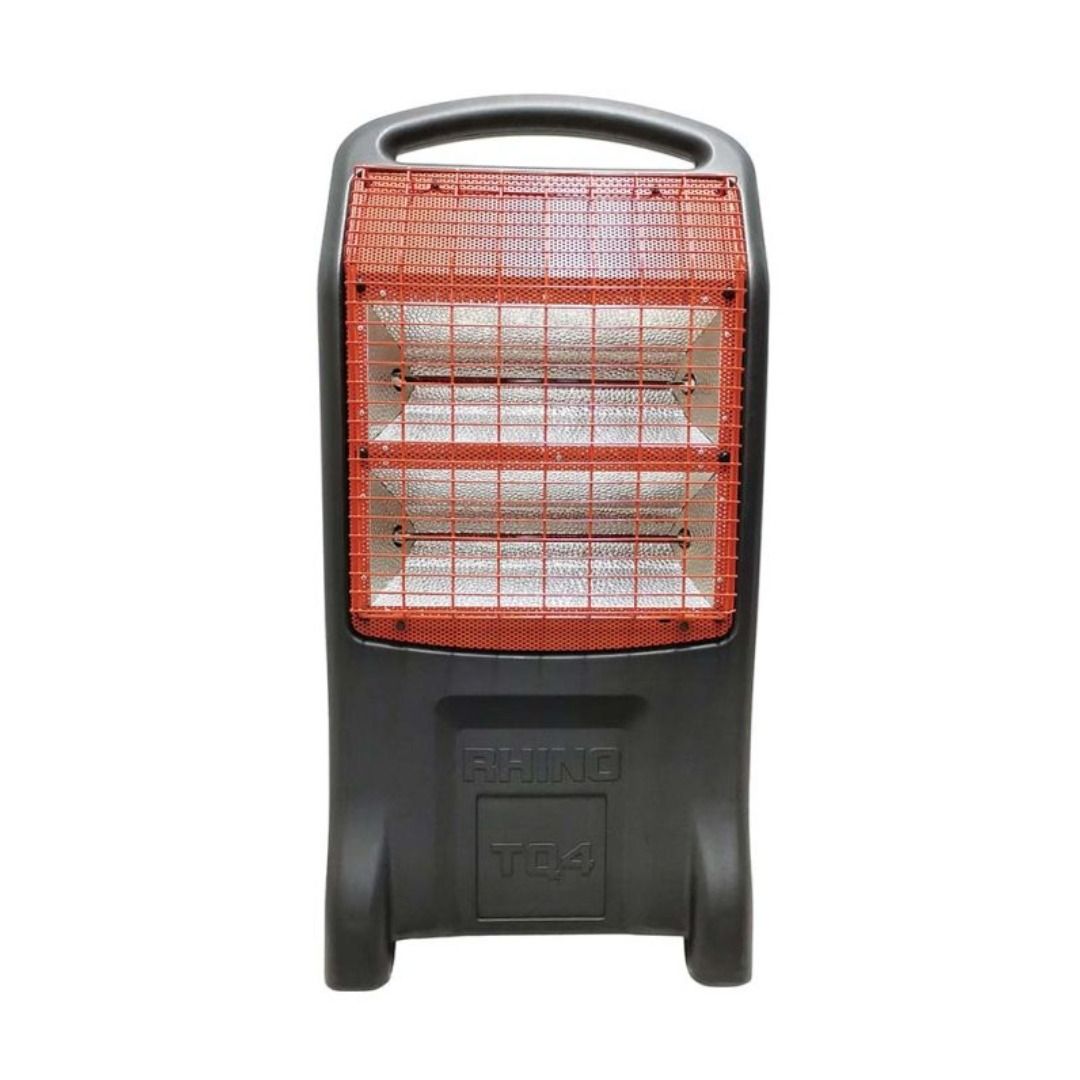
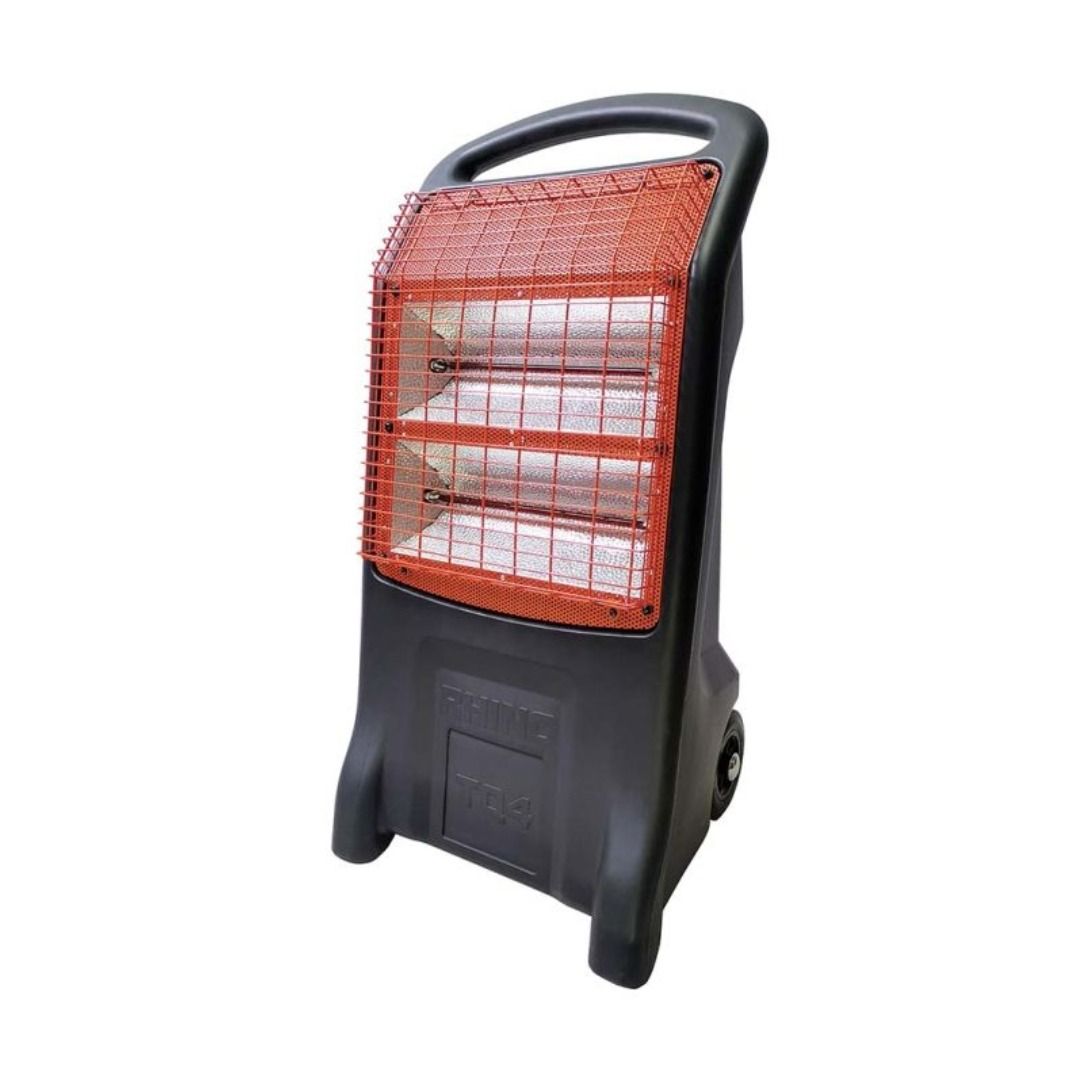
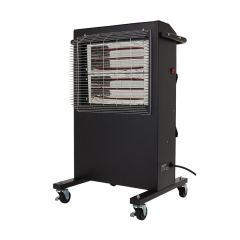
An infrared cabinet heater delivering 2,200W of direct radiant heat from twin ruby quartz halogen elements, for construction sites, open warehouses, and trade applications including drying paintwork and plaster.
- Twin 1,100W ruby quartz halogen elements, switchable individually, 9,554 BTU maximum output
- 95% of input electricity converts directly to radiant heat
- Soft-touch LED control panel with 7-day programmable timer and thermostat
- Tilt cut-out switch and open window detection
- HDPE impact-resistant moulded body with integrated rear wheels and handle
- 230V
- 13A standard UK plug, 1.9m power cord
- 1-year warranty
- Size: 500x460x1000mm( LxWxH)
- Useful for drying paint work and plaster
Rhino TQ4 230V Electric Infrared Cabinet Heater 2200w - 7-Day Timer
An infrared cabinet heater delivering 2,200W of direct radiant heat from twin ruby quartz halogen elements, for construction sites, open warehouses, and trade applications including drying paintwork and plaster.
- Twin 1,100W ruby quartz halogen elements, switchable individually, 9,554 BTU maximum output
- 95% of input electricity converts directly to radiant heat
- Soft-touch LED control panel with 7-day programmable timer and thermostat
- Tilt cut-out switch and open window detection
- HDPE impact-resistant moulded body with integrated rear wheels and handle
- 230V
- 13A standard UK plug, 1.9m power cord
- 1-year warranty
- Size: 500x460x1000mm( LxWxH)
- Useful for drying paint work and plaster
- Buy 3 for £404.62 £337.18 each and save 3%
- Buy 6 for £392.42 £327.02 each and save 6%
| BULK DISCOUNT | 3 | 6 |
|---|---|---|
| Price | £337.18 £404.62 | £327.02 £392.42 |
Order 1x to earn 347 FASTPoints
Order to earn 347 FASTPoints
Log in to access trade discountsRhino TQ4 230V Electric Infrared Cabinet Heater 2200w
The Rhino TQ4 is a 230V infrared cabinet heater delivering 2,200W of direct radiant heat from twin ruby quartz halogen elements, built for construction sites, open warehouses, workshops, and trade applications where warming the ambient air is impractical but heating people and objects directly is effective. It connects via a standard 13A plug, has a soft-touch LED control panel, a 7-day programmable timer, thermostat, tilt cut-out switch, and open window detection, in an impact-resistant HDPE moulded body with integrated rear wheels for repositioning on site.
How infrared heat works where convection heating fails
In an open warehouse, a building under construction, or any environment with high ceilings, frequent door openings, or persistent draughts, convection heating is largely wasted. Warm air rises immediately to the ceiling or escapes through openings, and the worker at ground level never benefits. Infrared radiant heat bypasses the air entirely, the twin ruby quartz elements emit wavelengths that warm objects and people directly in front of the heater, regardless of what is happening to the air around them. That is why the TQ4 is used by plasterers and decorators for drying work: the radiant heat reaches the wall surface directly, accelerating cure without needing to raise the ambient temperature of the whole room first.
Key Features
-
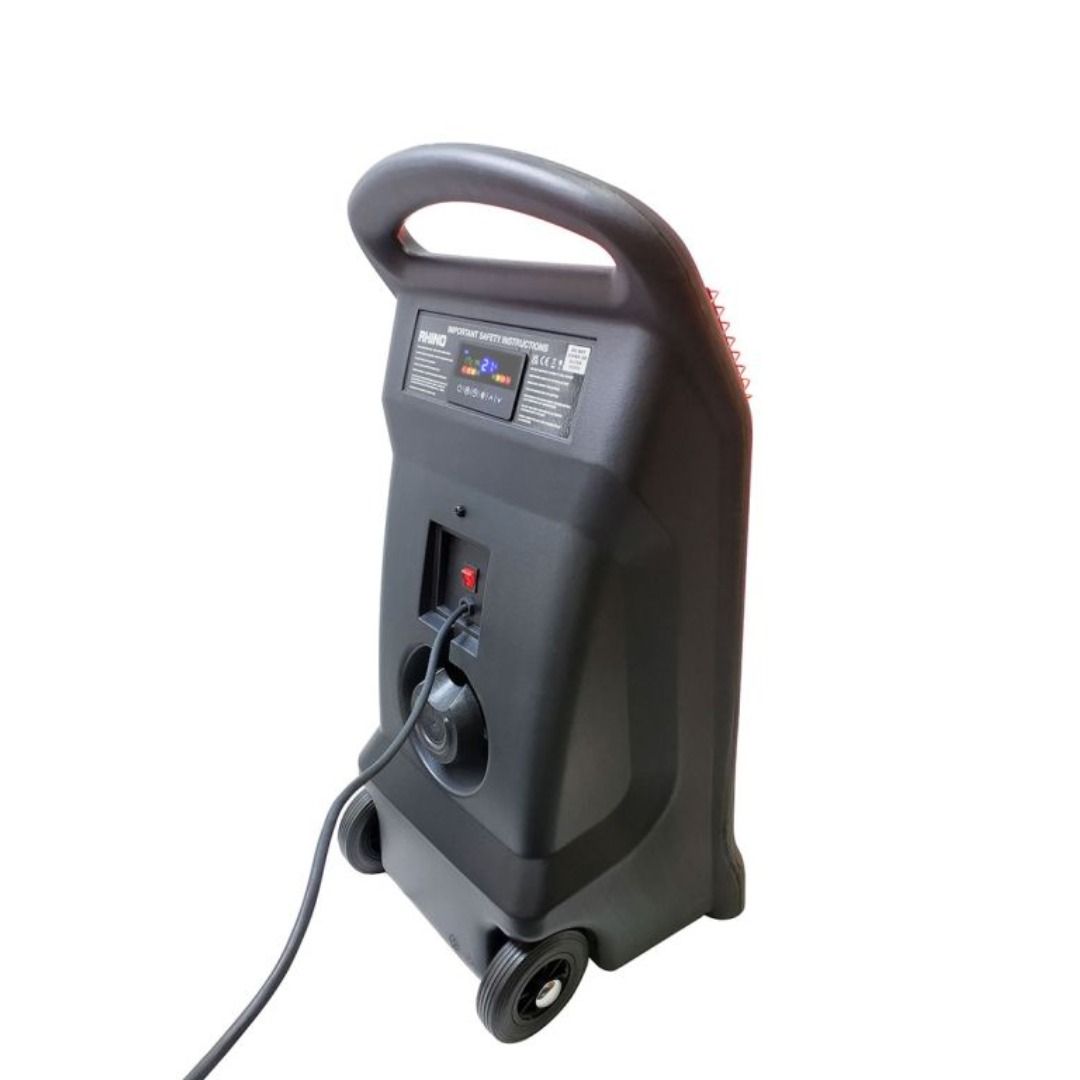
Twin 1,100W ruby quartz halogen elements: Two individually switchable elements allow operation at 1,100W or 2,200W. The elements are switched from the rear of the heater, allowing the output to be adjusted to suit the working area. Ruby quartz provides very fast thermal response, similar to a light bulb, delivering heat almost instantly on switch-on.
-
7-day programmable timer: The built-in 7-day timer allows the heating cycle to be programmed in advance across the full week. Site managers can set overnight or early morning heating cycles to bring a welfare unit or workshop to temperature before operatives arrive, without manual intervention.
-
Soft-touch LED control panel: Simple, clear control panel with LED display for thermostat setting, timer programming, and mode selection. No physical knobs or switches to break or clog with site dust.
-
Thermostat with automatic temperature maintenance: Set the target temperature and the thermostat cycles the elements on and off to maintain it, reducing energy use once the space or surface reaches the required level.
-
Tilt cut-out switch and open window detection: The tilt switch activates if the heater falls or tilts significantly, cutting power to the elements immediately. Open window detection enters the heater into a standby mode if the ambient temperature drops sharply, conserving energy when doors or windows have been left open.
-
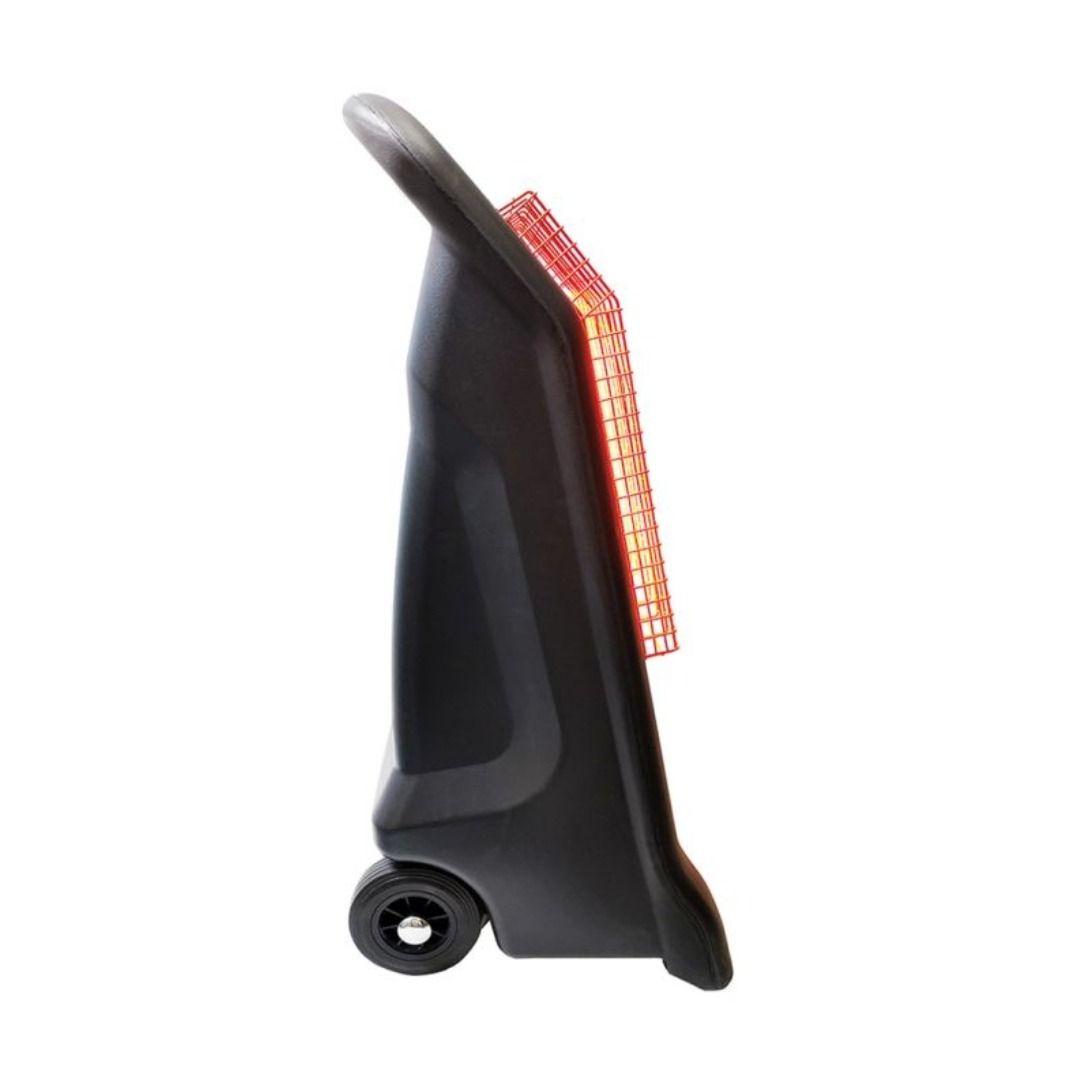
HDPE moulded body with integrated wheels: The high-density polyethylene body is impact-resistant and handles the rough treatment of daily site use. Integrated rear wheels and a carry handle make the 12kg unit genuinely portable for one person.
Who Is This For
Trades and roles:
-
Plasterers and renderers
-
Painters and decorators
-
Builders and general construction operatives
-
Site managers and welfare officers
-
Warehouse and facilities operatives
Industries:
-
Construction and fit-out
-
Painting and decorating
-
Plastering and drylining
-
Warehousing and distribution
-
Site welfare and facilities
Specifications
| Specification | Detail |
|---|---|
| Product name | Rhino TQ4 230V Electric Infrared Cabinet Heater 2200w - 7-Day Timer |
| SKU | H029400 |
| Brand | Rhino |
| Model | TQ4 |
| Product type | 230V electric infrared cabinet heater |
| Heating technology | Direct infrared radiant heat, twin ruby quartz halogen lamps |
| Elements | 2x 1,100W slim line ruby quartz halogen, switchable individually from rear |
| Voltage | 230V |
| Plug | 13A standard UK plug |
| Frequency | 50Hz |
| Power, high heat | 2,200W (both elements) |
| Power, low heat | 1,100W (one element) |
| Heat output | 2.2kW, 9,554 BTU |
| Energy conversion | 95% of input electricity to heat output |
| Controls | Soft-touch control panel with LED display |
| Timer | 7-day programmable timer |
| Thermostat | Yes |
| Safety, tilt cut-out | Yes |
| Safety, open window detection | Yes |
| Body material | HDPE (High-Density Polyethylene), impact-resistant moulded |
| Mobility | Integrated rear wheels and carry handle |
| Power cord | 1.9m, 3G 1.5mm², H07 RNF |
| Warranty | 1 year |
| Dimensions | W 500 x D 460 x H 1,020mm |
| Weight | 12kg |
Compatibility
| Application or condition | Status |
| Open warehouses and distribution spaces with high ceilings or draughts | ✓ Suitable |
| Construction sites and workshops on 230V mains supply | ✓ Suitable |
| Drying paintwork, plaster, and render | ✓ Suitable |
| Welfare units and temporary site accommodation | ✓ Suitable |
| Timed overnight or early morning heating cycles via 7-day timer | ✓ Suitable |
| Trade environments for builders, plasterers, painters, and decorators | ✓ Suitable |
| Outdoor use | ✗ Not suitable |
| Explosive or flammable atmospheres | ✗ Not suitable |
| Near flammable liquids, gases, or compressed gas cylinders | ✗ Not suitable |
| Areas of high condensation or wet environments | ✗ Not suitable |
Who Is This For
The Rhino TQ4 is used primarily by plasterers, painters, decorators, and general construction operatives who need directed radiant heat for drying work or personal warming on site. It is equally suited to site managers and facilities teams in open warehouses and distribution centres where conventional convection heating fails to keep pace with heat loss through high ceilings and frequent door movement. The 7-day programmable timer makes it a practical choice for any site or facility where the heater needs to run on a set schedule without manual operation each day.
Typical Applications
-
Drying freshly plastered or rendered walls by directing radiant heat at the surface, accelerating cure time without needing to raise the ambient temperature of the whole room.
-
Warming painters and decorators working in partially heated buildings during cold weather, using directed radiant heat at the working zone rather than attempting to heat the full space.
-
Providing localised warmth for construction operatives working in open warehouses, partially enclosed structures, or buildings with frequent door openings where convection heat dissipates rapidly.
-
Running overnight or early morning heating cycles in workshops and welfare units using the 7-day programmable timer, bringing the space up to temperature before operatives arrive without manual intervention.
-
Supplementary heating in large distribution centres and warehouses where central heating cannot maintain adequate temperature at ground level workstations.
-
Site welfare unit heating during autumn and winter working periods, where a portable, self-contained heater with timed operation simplifies the welfare setup.
How to Use
Step 1: Position the heater on a firm, level surface, directed at the area or surface to be heated. Keep flammable materials clear of the heater at all times.
Step 2: Connect the 13A plug directly to a 230V mains supply. Do not use extension leads unless rated to handle the full load.
Step 3: Use the soft-touch LED control panel to select the heat setting. To operate on one element only, switch the second element off at the rear of the heater. To use both elements, leave both rear switches in the on position.
Step 4: Set the thermostat to the required temperature level. The thermostat maintains that level automatically by cycling the elements on and off once the target is reached.
Step 5: To programme the 7-day timer, use the control panel to set the days and times for heating to start and stop. The timer activates the heater automatically at the programmed times without manual intervention.
Step 6: When finished, switch off via the control panel and disconnect from the mains. Allow the heater to cool before covering, moving, or storing. Use the integrated wheels and carry handle for repositioning.
Common Mistakes
-
Positioning too far from the target surface for drying work: infrared heat follows the inverse square law, the intensity drops sharply with distance. For drying plaster or paintwork, position the heater close enough for the surface to feel warm to the back of the hand at a safe distance. Move it along the wall as sections dry.
-
Leaving the open window detection to do all the energy management: open window detection enters the heater into standby if the temperature drops sharply, but it is not a substitute for switching off when the space is genuinely unoccupied for extended periods.
-
Using the heater near freshly applied solvent-based paint without adequate ventilation: infrared heat can accelerate the release of solvent vapours from paint and coatings. Ensure adequate ventilation when using this heater for drying solvent-based materials.
-
Allowing the fireguard to become blocked: the fireguard must remain clear. Do not hang materials over it or allow tools or debris to rest against it during use.
-
Moving the heater without allowing it to cool: the elements and surrounding surfaces reach very high temperatures during operation. Always switch off and allow adequate cooling time before repositioning using the wheels and handle.
Safety
This heater produces direct infrared radiant heat and reaches very high surface temperatures during operation. Keep all flammable materials, textiles, and combustible objects away from the heater during use. Do not use in explosive or flammable atmospheres. Do not use near flammable liquids, gases, or compressed gas cylinders. Do not use outdoors or in high-condensation environments. The tilt cut-out switch activates if the heater is knocked over or tilts significantly, cutting power to the elements. Open window detection enters the heater into standby if the ambient temperature drops sharply, indicating a door or window has been left open. Both safety features protect against unattended operation risks but do not substitute for switching the heater off when the space is vacated for extended periods.
Maintenance
Wipe the body with a damp cloth after use. Do not use solvents or abrasive materials on the HDPE body or the fireguard. Keep the fireguard clear of dust and debris. The elements are not user-serviceable, do not attempt to open the heater or access the elements. If an element fails, contact the Rhino service team or the CMT sales team for replacement options. Store in a clean, dry location when not in use. The HDPE body is impact-resistant but should not be stored under heavy loads that could distort the moulded housing.

Frequently Asked Questions
Q: How does infrared radiant heat work differently from a fan heater?
A: A fan heater warms the air in a room by blowing it over a heating element. In open, draughty, or high-ceilinged spaces, that warm air rises or escapes before it reaches the person working at ground level. Infrared radiant heat works on a completely different principle: the ruby quartz elements emit infrared wavelengths that warm objects and people directly in their path, without heating the air in between. That means the warmth reaches a plasterer working on a wall, a decorator working on a ceiling, or an operative standing in a draughty warehouse regardless of what the surrounding air temperature is doing.
Q: What are the two heat settings and how do I switch between them?
A: The two 1,100W elements are switched individually from the rear of the heater. With one element on, the output is 1,100W. With both on, the output is 2,200W at 9,554 BTU. For lighter tasks or smaller areas, running one element reduces energy consumption while still providing useful directed heat. The thermostat on the control panel works alongside whichever element configuration is selected.
Q: How does the 7-day programmable timer work?
A: The built-in 7-day timer allows you to programme heating start and stop times for each day of the week independently using the soft-touch LED control panel. This means a welfare unit can be set to warm up at 6am Monday to Friday without anyone needing to switch the heater on manually each morning. The timer operates within the thermostat setting, so the heater cycles the elements on and off to maintain the target temperature throughout the programmed period.
Q: Can this heater be used for drying plaster and paintwork?
A: Yes. Infrared radiant heat is particularly effective for drying freshly plastered walls, new render, and paintwork because it warms the surface directly rather than relying on ambient air temperature. Position the heater facing the surface at a practical working distance and monitor the drying progress. When using for drying solvent-based coatings, ensure adequate ventilation in the working area as infrared heat accelerates solvent vapour release.
Q: What does open window detection do?
A: Open window detection monitors the ambient temperature. If the temperature drops more than a set amount within a short period, typically indicating a door or window has been left open, the heater enters standby mode automatically. This prevents the heater from running continuously at full output against cold air ingress from an open opening, conserving energy until the temperature stabilises or the heater is manually reactivated.
Q: What is this heater NOT suitable for?
A: This heater is for indoor use only and must not be used outdoors. It must not be used in explosive or flammable atmospheres, near flammable liquids, gases, or compressed gas cylinders. It should not be used in areas of high condensation or where it may be exposed to water. It is not suitable for drying clothes or laundry.