Site Heater Buying Guide for UK Sites | CMT Group UK
Site & Workplace Heating Guide
Which Site Heater Do You Actually Need?
Getting the wrong heater for a space costs more than money. This guide walks through every type of site and workplace heater, what each one is built for, and which CMT product fits your specific situation.
Why the right heater is more than a comfort decision
Specifying the wrong heater costs more than a returns process. It can stall a project, create a compliance failure, or in the case of a fuel-burning heater in a poorly ventilated space, put lives at risk.
!
Your legal obligation
Under the Workplace (Health, Safety and Welfare) Regulations 1992, employers must maintain a reasonable temperature in workplaces during working hours. The Approved Code of Practice (ACOP L24) sets a minimum of 16°C for sedentary work and 13°C for physically active work. On construction sites, CDM 2015 requires principal contractors to provide heated welfare facilities. Failure to meet either standard is an HSE enforcement matter.
2
Process and material requirements
Cold affects more than people. Concrete, mortar, plaster, and screed all have minimum temperature thresholds for proper curing. Concrete poured at ambient temperatures below 5°C risks frost damage and structural weakness. Screeds and renders lose adhesion below the same threshold. Maintaining the correct ambient temperature during and after application is a specification requirement, not a comfort consideration.
3
Productivity and safety
Prolonged exposure to cold working environments reduces manual dexterity, slows cognitive response, and increases accident risk. A site operative working at 5°C handles materials less precisely and reacts more slowly than the same person at 15°C. The cost of an under-heated site shows up in error rates, rework frequency, and near-miss incidents, not just welfare complaints.
Before you choose
Three questions that narrow it down
Every wrong heater purchase starts with one of these three being overlooked. Answer them first and the right product follows logically.
1
What power supply do you have?
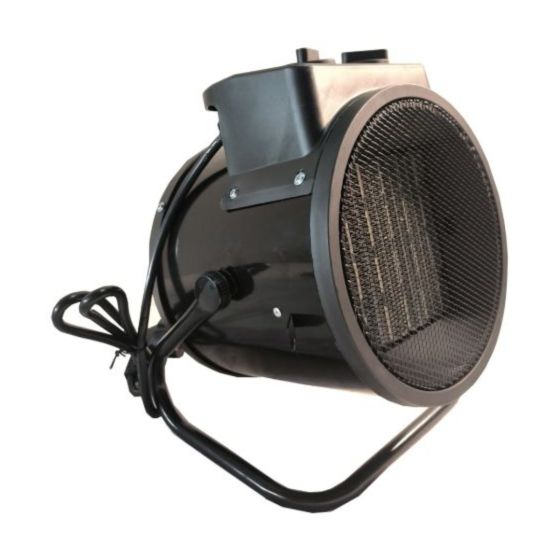
Standard 240V mains covers all electric heaters and oil-filled radiators. 400V 3-phase is needed for the 5kW industrial fan heater. 110V site transformer supply is required for the infrared cabinet heater rated at 110V. If you only have access to diesel or kerosene fuel with no mains supply, a diesel space heater is the starting point.
2
Is the space enclosed or ventilated?
Oil-filled radiators, fan heaters, infrared heaters, and convector heaters are all safe in enclosed spaces, they produce no combustion gases. Direct-fired diesel and kerosene space heaters produce carbon monoxide and must only be used in open or continuously ventilated spaces. Using a direct-fired heater in an enclosed space is a potentially fatal mistake.
3
How large is the space?
A 2kW electric heater suits spaces up to approximately 20 square metres. A 3kW industrial fan heater extends that range. A 20kW direct-fired diesel heater covers up to 180 square metres of ventilated space. A 30kW unit covers up to 310 square metres. Matching output to the actual heat loss of the space, not just the floor area, is what determines whether a heater will reach and hold a working temperature.
Heater types explained
How each type works and where each one belongs
Five distinct heating technologies. Each is the right answer in a specific context and the wrong answer in others.
Electric
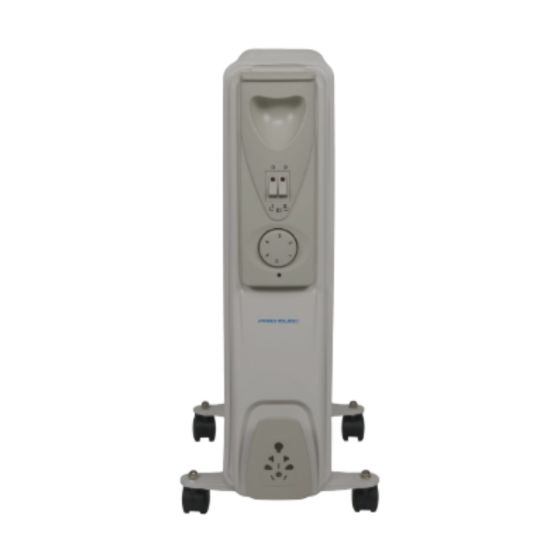
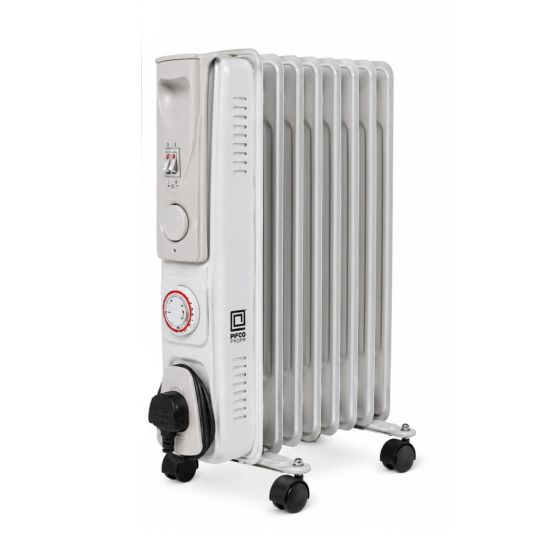
Oil-Filled Radiator
Heats sealed thermal oil inside the fins. The oil radiates warmth slowly and evenly across the room. No fan, no noise, no airborne dust. Retains heat after the thermostat cycles the element off, so the space stays warm without continuous power draw.
Best for
✓Welfare cabins and portakabins
✓Site offices occupied for full shifts
✓Drying rooms and mess facilities
✓Security cabins requiring overnight heat
Not suitable for
✗Large workshops where 2kW is insufficient
✗Spaces needing rapid heat-up above 20m²
Electric
Electric Fan Heater
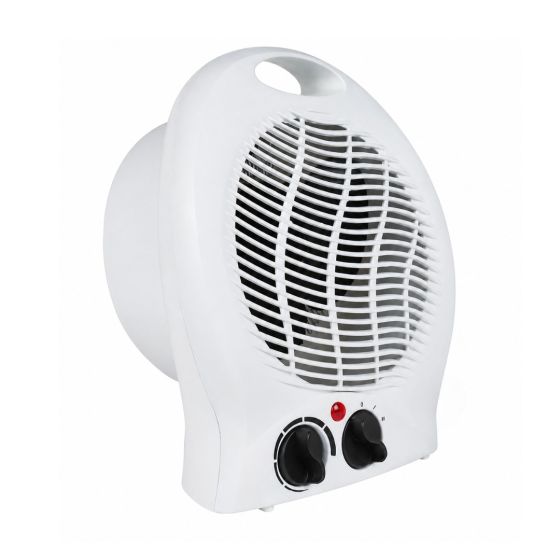
Draws cold air over a heating element and blows warm air into the room. Fast warm-up, directed heat output from a compact housing. Makes noise while operating. Stops providing warmth immediately when switched off.
Best for
✓Workshops and garages on 240V supply
✓Site offices needing fast warm-up at shift start
✓Directed heat at a specific workstation
✓Spaces used for shorter periods
Not suitable for
✗Spaces where fan noise disrupts rest periods
✗Primary heating for large industrial buildings
Electric
Convector Heater
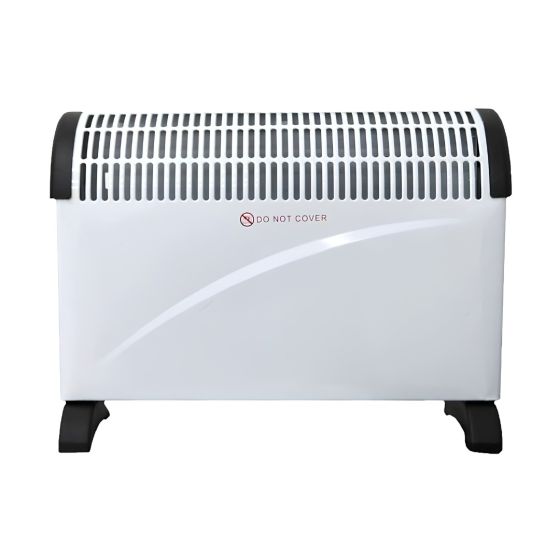
Heats air by passing it over an element using natural convection, no fan required. Silent operation. Slower heat-up than a fan heater but quieter and with no dust circulation. Suited to offices and welfare areas where noise levels matter.
Best for
✓Site offices and welfare cabins
✓Small rooms requiring silent background heat
✓Supplementary heating alongside other sources
Not suitable for
✗Large spaces where air needs to be forced across the area
✗Rapid warm-up requirements
Electric
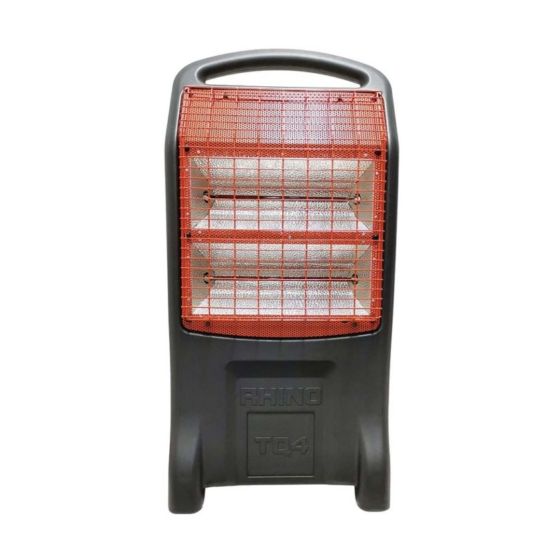
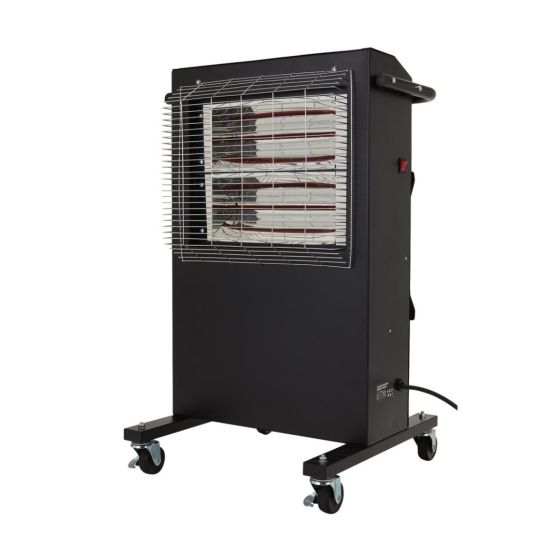
Infrared Cabinet Heater
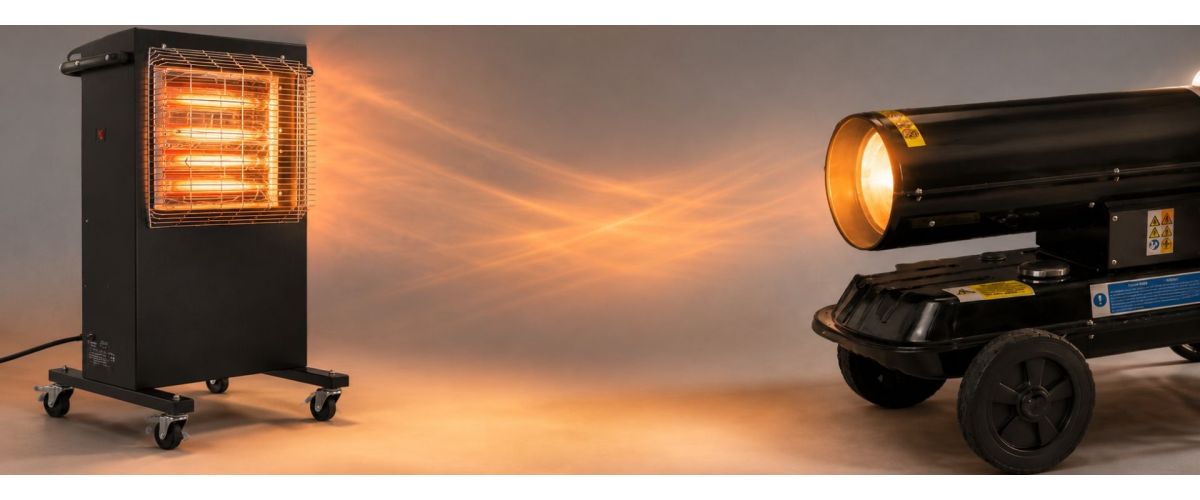
Radiates heat directly at people and objects in the line of sight, without warming the air in between. Instant warmth at the point of use. Effective in draughty or partially open spaces where heating the air is inefficient. Available in 110V for site transformer supply.
Best for
✓Draughty workshops and garages
✓Fixed overhead or wall-mounted installation
✓110V site transformer supply (H029300)
✓Spot heating at a specific workstation
Not suitable for
✗Evenly warming an enclosed room
✗Portable daily repositioning
Diesel/Kerosene
Direct-Fired Space Heater
Burns diesel or kerosene and delivers high-output heat rapidly across large open spaces. Output levels that no electric alternative can match at a comparable cost. Combustion gases enter the heated space directly, making continuous ventilation a safety requirement, not a preference.
Best for
✓Workshops and garages with continuous ventilation
✓Warehouses and factories (open plan, ventilated)
✓Construction sites and semi-open structures
✓Agricultural buildings with fresh air supply
Never use in
✗Enclosed spaces without continuous ventilation
✗Residential or sleeping areas
✗Welfare cabins (use an oil-filled radiator instead)
Carbon monoxide warning: Direct-fired diesel and kerosene heaters produce CO during normal operation. CO is colourless, odourless, and fatal at elevated concentrations. These heaters must only be used in open or continuously ventilated spaces.
Compliance
What UK regulations say about site and workplace heating
Four pieces of legislation are directly relevant to anyone specifying or operating a heater on a UK site or commercial premises. Knowing each one removes the guesswork from compliance.
Workplace (Health, Safety and Welfare) Regulations 1992
Regulation 7 requires employers to maintain a reasonable temperature in indoor workplaces. The Approved Code of Practice ACOP L24 sets a minimum of 16°C for sedentary work and 13°C for work involving physical activity. There is no statutory maximum, but employers must take all reasonably practicable steps to achieve a comfortable temperature. This covers site offices, welfare cabins, and enclosed temporary work areas, but not open construction sites.
Construction (Design and Management) Regulations 2015
Schedule 2 of CDM 2015 specifies welfare facilities that principal contractors must provide on construction sites. These include rest facilities that are heated where necessary, facilities to change into protective clothing, and shelter for workers to eat and warm up. Adequate welfare heating is a CDM duty, not guidance. HSE inspectors assess welfare provision as part of standard site inspections.
Electricity at Work Regulations 1989
All portable electrical equipment, including electric heaters, used in a workplace is covered by these regulations. Employers must ensure equipment is appropriate for the environment, maintained in a safe condition, and operated within rated limits. This is the regulatory basis for not using undersized extension leads with high-draw heaters, and for ensuring portable appliance testing (PAT) is carried out on site-used electrical heaters.
Control of Substances Hazardous to Health Regulations 2002
COSHH applies to diesel and kerosene space heaters through the combustion gases they produce, particularly carbon monoxide. Employers using direct-fired heaters must assess the risk of CO exposure, implement adequate ventilation controls, and monitor air quality where accumulation is a realistic possibility. Placing a heater near an open door does not automatically satisfy a COSHH assessment.
How to calculate the output you need
A working heat load calculation for a site space uses volume and a heat loss factor based on insulation quality.
kW required = Volume (m³) × heat loss factorHeat loss factor: 0.025 for well insulated. 0.04 for average insulation. 0.06 for open, draughty, or poorly insulated.
Example: a workshop measuring 20m × 15m × 4m gives 1,200m³. At a heat loss factor of 0.04, the required output is approximately 48kW. Two 20kW direct-fired diesel heaters with continuous ventilation would meet this load. A single 3kW electric fan heater would not.
This is a starting point. High rooflines, roller shutter doors opened regularly, uninsulated concrete floors, and thin external walls all increase real heat loss. When the calculation is borderline, specify one output class higher. The cost of under-specifying is always greater than the running cost of a slightly oversized unit.
Quick reference
All 11 heaters compared
Every product in the CMT range in one table. Sorted by output, low to high. Scroll horizontally on small screens.
⚠ Direct-fired diesel and kerosene heaters produce carbon monoxide during normal operation and must only be used in open or continuously ventilated spaces.
Safety guide
Site heating hazards and how to avoid them
Every heater type carries a specific set of risks. Most incidents are preventable with correct specification, positioning, and use. These are the five hazard categories relevant to site and workplace heating in the UK.
☠
Carbon monoxide poisoning
Critical risk
Carbon monoxide is produced by incomplete combustion of diesel and kerosene. It is colourless and odourless. At 50ppm it causes headaches after several hours. At 400ppm it becomes immediately dangerous. CO accumulates in enclosed or poorly ventilated spaces without visible or olfactory warning, making it the most serious risk associated with any fuel-burning heater.
Applies to: direct-fired diesel and kerosene space heaters only
Use direct-fired heaters only in open or continuously ventilated spaces
Never operate in welfare cabins, enclosed workshops with doors shut, or any residential area
Install a fixed CO detector in any space adjacent to or sharing air with a combustion heater
Ensure ventilation openings are not blocked or reduced at any point during operation
Train all operatives to recognise CO symptoms and evacuate immediately if any appear
♨
Fire from combustible materials
High risk
All heater types can ignite combustible materials if positioned too close. Direct-fired heaters and infrared units present the highest radiant heat risk. Fan heaters and oil-filled radiators carry fire risk if covered or if materials fall against them during operation. Construction sites carry a higher-than-average density of combustible materials in close proximity to heat sources.
Applies to: all heater types
Maintain a minimum 1 metre clearance from all combustible materials on all sides
Direct-fired heaters require a minimum 2.5 metre clearance at the front outlet and rear
Never dry workwear, PPE, or clothing on or directly over any heater
Do not position heaters below or near storage of flammable liquids, aerosols, or gases
Keep a CO2 or dry powder extinguisher accessible in any space using a combustion heater
⚡
Electrical hazards
Moderate risk
A 3kW fan heater draws 12.5A at 240V. A 5kW three-phase unit draws considerably more. Coiled or undersized extension leads generate heat under this load and present a fire and shock risk. Damaged plugs and cords aggravate risk in damp or wet environments. PAT testing is required under the Electricity at Work Regulations 1989 for all portable electrical equipment on commercial sites.
Applies to: all electric heaters
Always plug directly into a mains socket rated to handle the heater's full load
Never use a coiled or undersized extension lead with any heater above 1kW
Inspect the mains cord before each seasonal deployment and remove from service if damaged
Ensure all portable electric heaters on commercial sites are PAT tested and records kept
Do not use electric heaters in wet or damp environments unless specifically rated for wet locations
⛽
Fuel handling and storage
Moderate risk
Diesel and kerosene are flammable liquids. Spillage during refuelling near a hot or recently running heater creates immediate ignition risk. Storing fuel in unsuitable containers, in living areas, or near ignition sources creates a compounding risk. Contaminated or incorrect fuel also causes poor combustion and excess CO output.
Applies to: diesel and kerosene space heaters
Only refuel with the heater switched off and fully cooled, at least 20 minutes after shut-down
Refuel outdoors or in a well-ventilated area only, never inside any building
Use only approved fuel-rated containers for transport and storage
Store fuel away from ignition sources, direct sunlight, and living or sleeping areas
Never use petrol, used oil, paint thinners, or any other substitute as fuel
Clean up spillages immediately and dispose of fuel-soaked materials in line with local authority guidance
◈
Burns and hot surfaces
Managed risk
External metal surfaces on fan heaters, direct-fired units, and infrared heaters reach temperatures that cause contact burns in seconds. Oil-filled radiators reach lower surface temperatures but still burn with sustained contact. The risk is elevated in spaces with children, vulnerable people, or workers in heavy PPE who may have reduced sensation or awareness of proximity.
Applies to: all heater types, highest risk with direct-fired and infrared units
Do not touch any metal surface other than handles and control panels during or after use
Allow a minimum 20 minutes cooling time before moving, repositioning, or storing any heater
Keep children and vulnerable people away from heaters during operation at all times
Post hot surface warning signage near direct-fired and infrared heaters in mixed-occupancy spaces
Shop the range
Browse and buy
All eleven heaters with images, key specs, and direct links to trade pricing on cmt.co.uk.
Electric fan heater
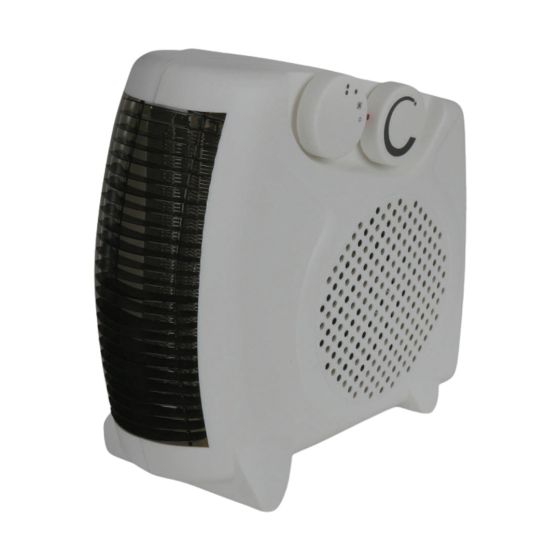
Portable Office Fan Heater 2kW - Flat and Upright Use
2kW, 240V mains
Flat or upright positioning
Lightweight and portable
Best for
Site offices, welfare facilities, and desk-adjacent heating in small enclosed spaces.
Convector heater
240V Electric Convector Heater 2kW - 3 Heat Settings
2kW, 240V mains
3 heat settings, silent convection
No fan, no circulated air
Best for
Site offices and welfare cabins where silent, fan-free background heat is required.
Slimline fan heater
240V Portable Fan Heater 2kW - 3 Heat Settings Slimline
2kW, 240V, 3 heat settings
Adjustable thermostat, tip-over protection
Overheat protection, carry handle
11.5cm depth, H260 x W220mm
Best for
Offices, welfare cabins, and space-constrained environments where a slimline profile is needed. Tip-over protection makes it practical in busy areas with foot traffic.
Oil filled radiator
240V Portable Oil Filled Radiator 2kW - Site Office and Welfare Cabin
2kW, 240V, 9 fin
3 heat settings, mechanical thermostat
Castor wheels, carry handle
Overheat protection
Best for
Welfare cabins and portakabins requiring silent, fume-free heat throughout the working day.
Best for
Workshops and garages requiring programmed spot radiant heat on a 230V supply, including permanent or semi-permanent installations.
Direct-fired diesel/kerosene
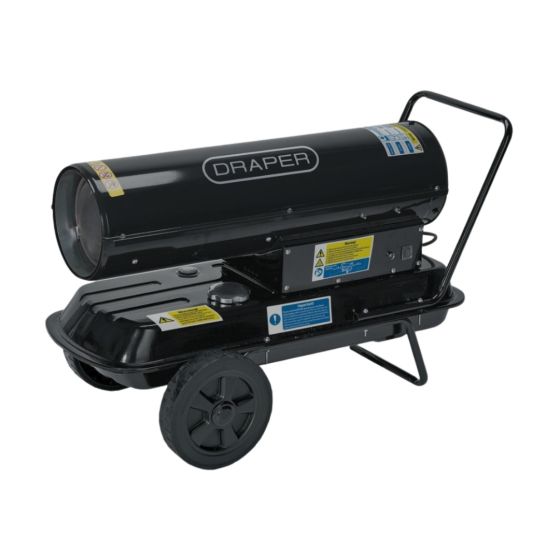
Draper 230V Diesel and Kerosene Space Heater 20kW - Direct-Fired
20kW, 230V, 19L tank
~12 hours per full tank
450m³/h airflow, up to 180m² coverage
Compressor pump, CE and UKCA marked
Best for
Workshops, garages, and construction sites up to 180m² with continuous ventilation. Well-ventilated spaces only.
Direct-fired diesel/kerosene
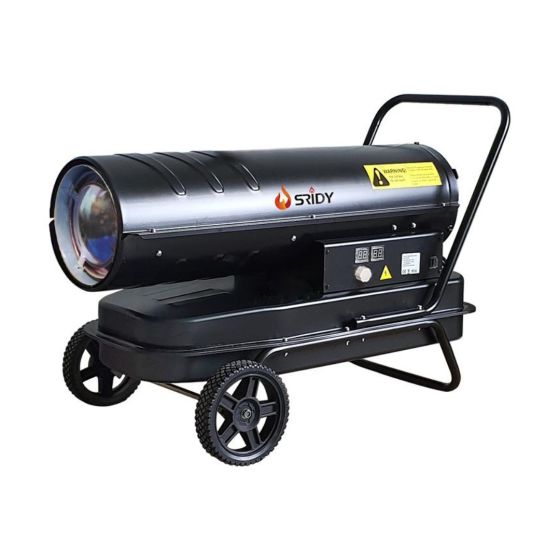
220V Diesel and Kerosene Space Heater 30kW - Direct-Fired 38L Tank
30kW, 220-240V, 38L tank
~17.7 hours per full tank at 2.15kg/hr
720m³/h airflow, up to 310m² coverage
Thermostat control, overheat protection
Best for
Warehouses, large workshops, and construction sites up to 310m² where full-shift heating without refuelling stops is required.
Questions answered
Frequently asked questions
The questions site managers and facilities buyers ask most often before specifying a heater.
What is the best heater for a site welfare cabin?
An oil-filled radiator is the most practical heater for a welfare cabin or portakabin. It provides silent, fume-free radiant heat on a standard 240V mains supply, retains heat after the thermostat cycles off, and does not circulate dust or noise during rest and meal breaks. A 2kW unit covers spaces up to approximately 20 square metres. For welfare cabins where heating needs to follow a shift pattern without manual daily adjustment, the SOFR20T with its 24-hour mechanical timer removes the need for operatives to switch the heater on and off each day.
What is the difference between a direct-fired and indirect diesel space heater?
A direct-fired diesel or kerosene space heater burns fuel and exhausts the combustion gases directly into the heated space. It must only be used in open or continuously ventilated areas because it produces carbon monoxide during normal operation. An indirect heater uses a heat exchanger to separate combustion gases from the warm air delivered to the space, venting exhaust externally via a flue. Indirect heaters can be used in more enclosed environments; direct-fired heaters cannot. Both CMT diesel heaters (ELDSHT20 and ELHE0005) are direct-fired units.
What size diesel heater do I need for my workshop or warehouse?
A 20kW direct-fired diesel heater (ELDSHT20) is suited to workshops up to approximately 180 square metres with continuous ventilation. A 30kW unit (ELHE0005) covers spaces up to approximately 310 square metres. The floor area is only a starting point. A well-insulated, low-ceiling workshop retains heat effectively at a given output; a large warehouse with high rooflines, uninsulated walls, and roller shutter doors that open regularly loses heat much faster and may need a higher output than the floor area alone suggests.
Can I use an electric heater on a 110V site transformer supply?
The 110V Infrared Cabinet Heater (H029300) is specifically rated for 110V site transformer supply and is the correct choice for construction sites running 110V. The MAX Electric Fan Heaters (ELHE0001, ELHE0002), the oil-filled radiators, the convector heater, the office fan heater, and the Rhino TQ4 infrared heater all require 230V or 240V standard mains supply. Always confirm available voltage on site before ordering a heater.
Is a fan heater or an oil-filled radiator better for a site office?
For a site office occupied for a full working day, an oil-filled radiator is generally the more comfortable choice. It operates silently, retains heat after the thermostat cycles the element off, and does not create air movement that disturbs documents or creates draughts. A fan heater reaches temperature faster and tends to be less expensive, but produces fan noise throughout the working day and stops providing warmth immediately when switched off. For short-use spaces where rapid warm-up matters more than sustained comfort, a fan heater is more practical.
How long does a full tank last on the diesel space heaters?
The Draper 20kW heater (ELDSHT20) has a 19L tank and runs for approximately 12 hours per full tank at rated consumption of 1.87L/hr. The 30kW heater (ELHE0005) has a 38L tank and runs for approximately 17.7 hours at 2.15kg/hr rated consumption. In practice, thermostat-controlled operation reduces actual consumption below the rated maximum because the burner cycles off once the set temperature is reached. Real-world run times in well-insulated spaces with the thermostat set correctly typically exceed the rated figures.
What is the legal minimum temperature for a site welfare cabin in the UK?
The Workplace (Health, Safety and Welfare) Regulations 1992 require a reasonable temperature in indoor workplaces, with ACOP L24 setting a minimum of 16°C for sedentary work such as resting and eating, and 13°C for physically active work. Welfare cabins on construction sites fall under CDM 2015 Schedule 2, which requires heated welfare facilities as part of the principal contractor's obligations. A welfare cabin that cannot reach or hold 16°C during winter working hours is a compliance failure, not a comfort issue. A 2kW oil-filled radiator is typically sufficient for a standard welfare cabin up to approximately 20 square metres on a 240V mains supply.
Do portable electric heaters on construction sites need to be PAT tested?
Yes. Under the Electricity at Work Regulations 1989, all portable electrical equipment used on commercial premises, including temporary construction sites, must be maintained in a safe condition. Portable appliance testing (PAT) is the recognised method of demonstrating that maintenance. There is no fixed statutory interval, but HSE guidance recommends more frequent testing for equipment used in harsh environments, which construction sites typically qualify as. Records of testing should be kept and made available during site inspections. Any heater showing visible damage to its cord or plug must be removed from service immediately regardless of its last test date.
Do I need a carbon monoxide detector if I am using a diesel space heater on site?
Under COSHH Regulations 2002, employers must assess and control the risk of exposure to hazardous substances, which includes carbon monoxide from combustion heaters. A fixed CO detector in or adjacent to any space where a direct-fired diesel or kerosene heater is operating provides an early warning layer that supports that risk control obligation. CO detectors do not replace the requirement for continuous ventilation, they supplement it. The detector should be positioned at breathing height, checked regularly, and any alarm treated as an immediate evacuation signal. CO detectors rated to EN 50291 are the appropriate standard for fixed site installations.
Browse the full CMT heater range
All ten heaters in one place, with live stock levels, trade pricing, and next-day delivery on all stocked lines. Order by 7pm for delivery tomorrow.