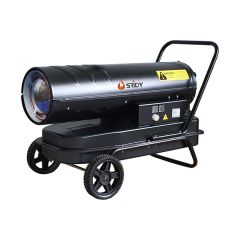
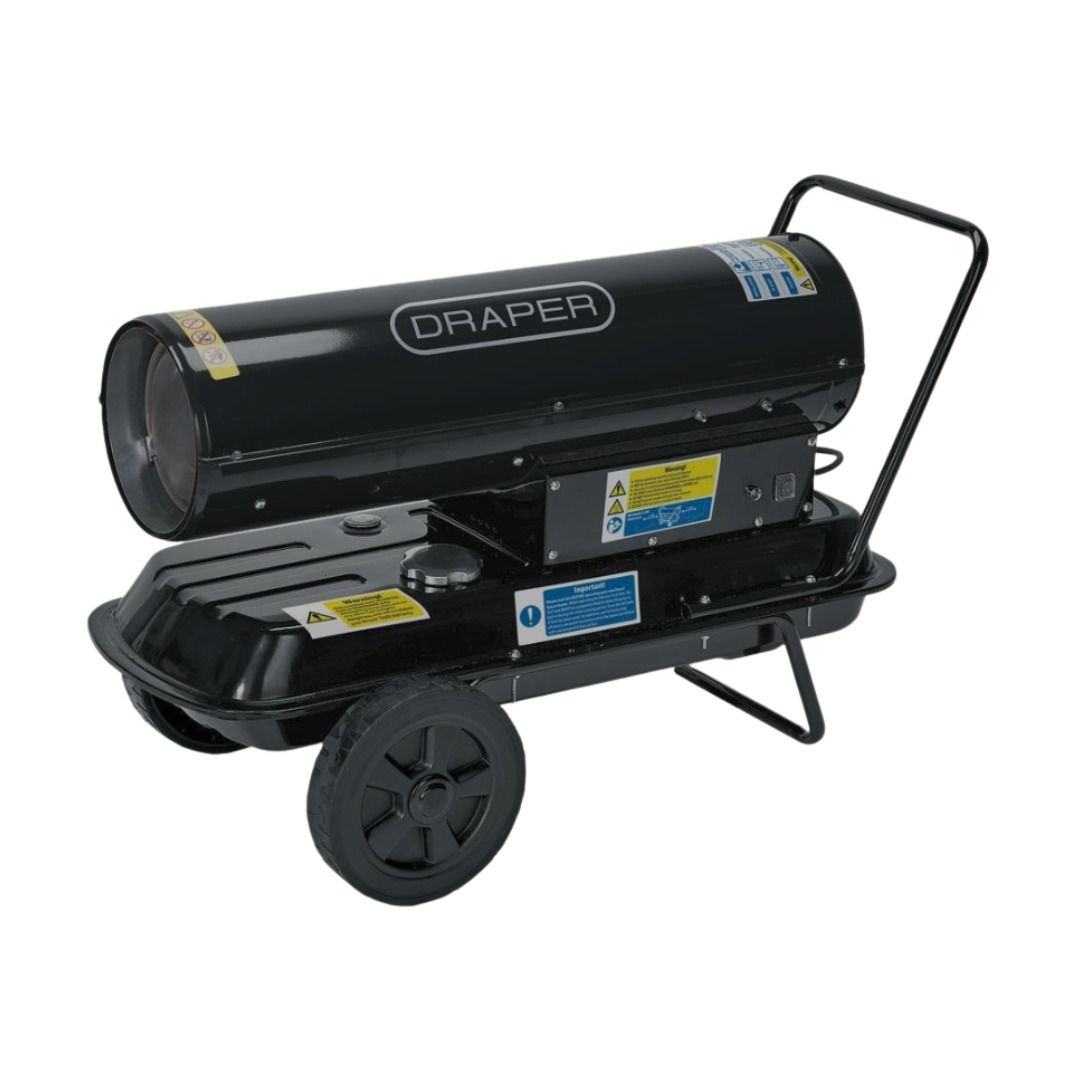
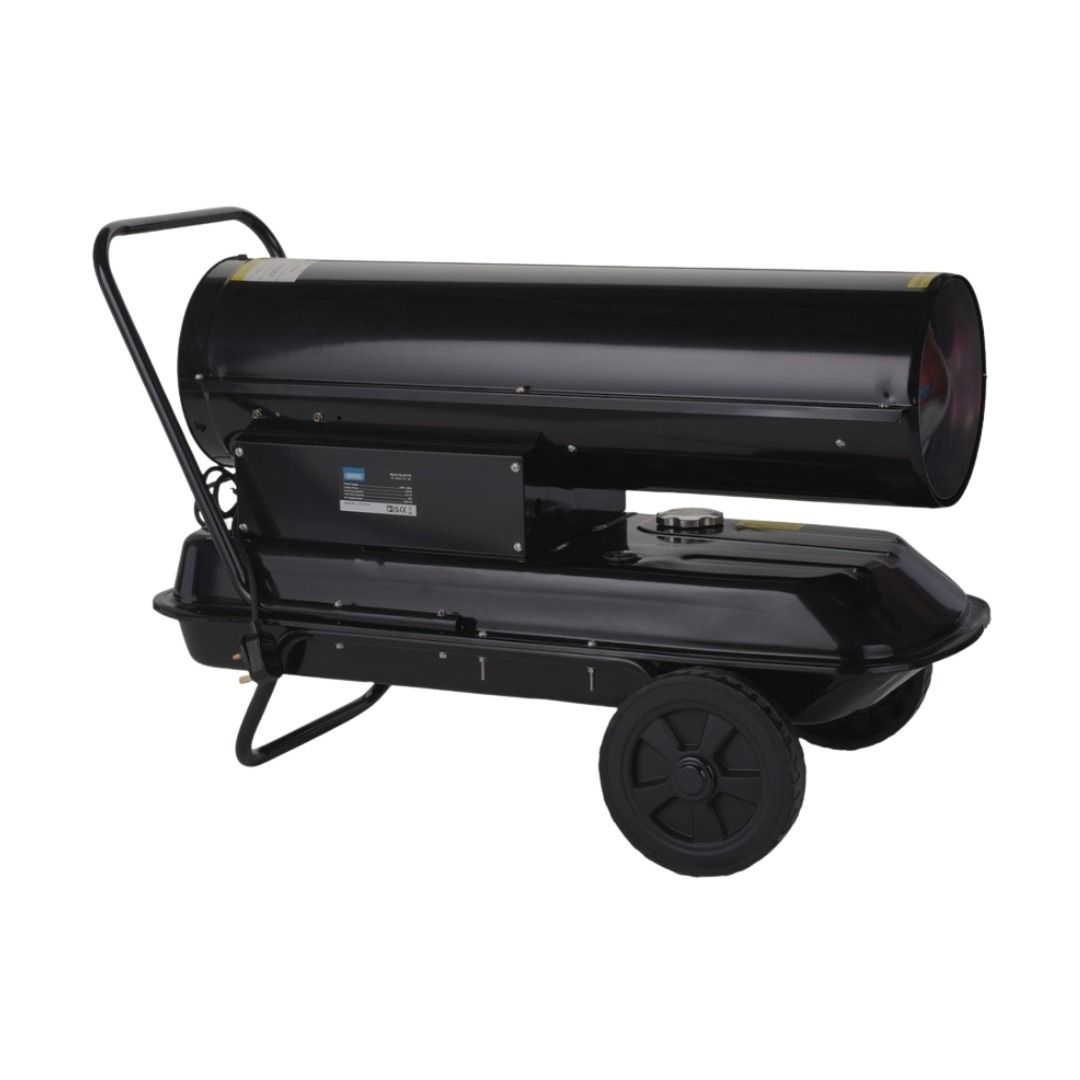
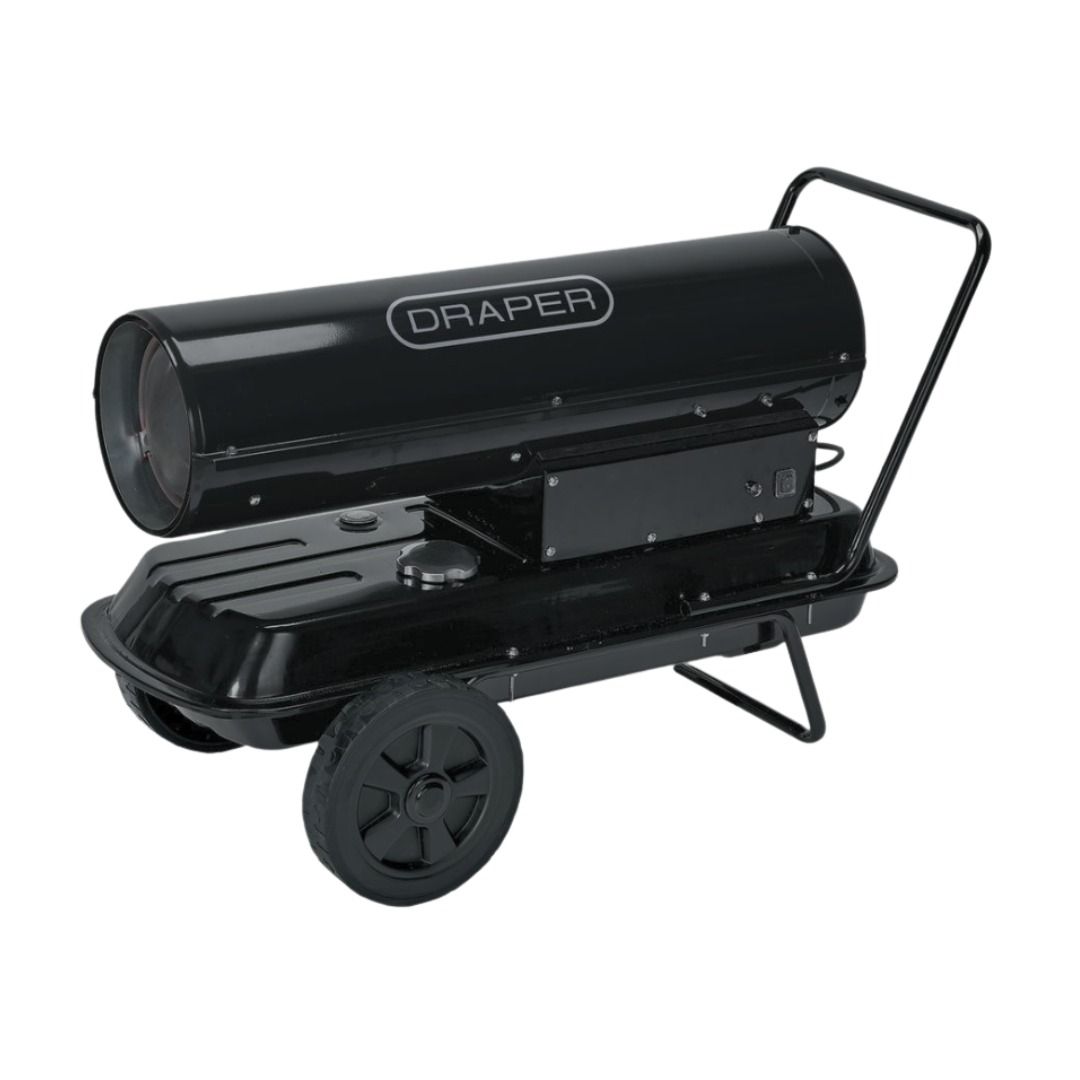
Diesel and kerosene space heater running on a direct-fired combustion system for rapid heating of workshops, garages, factories, and open jobsite spaces on 230V mains.
- Direct-fired 20kW output, 68,250 BTU, 450m³/h airflow
- Compressor pump for efficient and even heat distribution
- 19L fuel tank
- approximately 12 hours run time at 1.87L/h
- Accepts diesel or Grade 2 and above kerosene
- Steel frame with two wheels and transport handle
- CE and UKCA marked
- 12 months parts and labour warranty
- For use in well-ventilated open and semi-open spaces only
Draper 230V Diesel and Kerosene Space Heater 20kW - Direct-Fired
Diesel and kerosene space heater running on a direct-fired combustion system for rapid heating of workshops, garages, factories, and open jobsite spaces on 230V mains.
- Direct-fired 20kW output, 68,250 BTU, 450m³/h airflow
- Compressor pump for efficient and even heat distribution
- 19L fuel tank
- approximately 12 hours run time at 1.87L/h
- Accepts diesel or Grade 2 and above kerosene
- Steel frame with two wheels and transport handle
- CE and UKCA marked
- 12 months parts and labour warranty
- For use in well-ventilated open and semi-open spaces only
Order 1x to earn 328 FASTPoints
Order to earn 328 FASTPoints
Log in to access trade discountsDraper 230V Diesel and Kerosene Space Heater 20kW
Diesel and kerosene space heater running on a direct-fired combustion system, designed for rapid heating of workshops, garages, factories, and open construction jobsite spaces where electric heaters cannot deliver sufficient output. The 20kW compressor-pump system forces heated air at 450m³/h across the space, reaching working temperature quickly and maintaining it across a full shift on a single 19L tank of diesel or Grade 2+ kerosene. CE and UKCA marked, carried on a wheeled steel frame for repositioning between spaces.
This heater is direct-fired. Combustion gases are exhausted into the heated space along with the warm air. It must only be used in open or well-ventilated areas with continuous fresh air supply. It is not suitable for enclosed spaces, residential areas, or sleeping areas under any circumstances.
How direct-fired combustion heats large spaces that electric units cannot reach
An electric fan heater or oil-filled radiator runs out of practical output in a large, poorly insulated commercial space. At 2kW or 3kW, an electric unit cannot overcome the heat loss through shuttered workshop doors, uninsulated roofs, and concrete floors during winter. Workers end up cold, productivity drops, and energy is wasted running undersized units continuously at maximum. A direct-fired diesel or kerosene heater operates on a fundamentally different principle: combustion of liquid fuel generates 20kW of heat output, and the compressor pump forces that heat into the space at 450m³/h, warming a large area quickly and holding temperature across the working day at a fraction of the running cost of equivalent electric output.
Key Features
-
Direct-fired 20kW compressor pump system: Combustion heat is forced through the space at 450m³/h, reaching working temperature rapidly in large, draughty commercial environments where convective electric heating is inadequate.
-
Dual fuel compatibility: Runs on standard diesel or Grade 2 and above kerosene. Fuel availability on site determines which is more practical, and the heater accepts either without adjustment.
-
19L tank, approximately 12 hours run time: At 1.87L/h fuel consumption, a full tank covers a full day's work with margin. The on-board fuel gauge gives a visible read on remaining fuel without needing to open the tank.
-
Pressure gauge for pump monitoring: The on-board pressure gauge allows pump pressure to be checked and adjusted at the relief valve during operation, maintaining combustion efficiency throughout the session.
-
Wheeled steel frame with transport handle: Two large wheels and a steel transport handle allow the unit to be repositioned across workshop or site floors without lifting. Gloss black powder coat protects the steel body against the conditions of commercial use.
-
CE and UKCA marked: Meets UK and European conformity requirements for commercial and industrial heating equipment.
Who is this for
Trades and roles:
-
Workshop managers and mechanics
-
Site managers and site supervisors
-
Facilities managers
-
Agricultural and farm managers
-
Plant hire operators
Industries:
-
Construction and civil engineering
-
Automotive and vehicle servicing
-
Agriculture and horticulture
-
Manufacturing and warehousing
-
Events and temporary structures (open and semi-open only)
Specifications
| Specification | Detail |
| Product Name | Draper 230V Diesel and Kerosene Space Heater 20kW - Direct-Fired |
| CMT SKU | ELDSHT20 |
| Product Type | Direct-fired diesel and kerosene space heater |
| Voltage | 230V, 50Hz |
| Motor | 220W |
| Fuse Rating | 13A |
| Heat Output | 20kW, 68,250 BTU |
| Airflow | 450m³/h |
| Fuel Type | Diesel or kerosene, Grade 2 or higher |
| Tank Capacity | 19L |
| Fuel Consumption | 1.87L/h |
| Run Time (full tank) | Approximately 12 hours |
| Pump Pressure | 0.35 bar, +/-10% |
| Maximum Heating Area | 180m² |
| Cord Length | 1.2m (approved) |
| Dimensions | L 830mm x D 390mm x H 490mm |
| Weight | 16.5kg |
| Finish | Gloss black powder coat |
| Certification | CE marked, UKCA marked |
| Compliance | WEEE registered, Class I appliance (earthed) |
| Warranty | 12 months parts and labour |
Compatibility
| Workshops with continuous ventilation | Suitable |
| Garages and automotive premises with adequate ventilation | Suitable |
| Factories and industrial buildings, open plan and ventilated | Suitable |
| Construction jobsites and semi-open site structures | Suitable |
| Agricultural buildings with continuous fresh air supply | Suitable |
| Large semi-open spaces requiring rapid heat | Suitable |
| Enclosed spaces without continuous ventilation | Not suitable |
| Residential, domestic, or living spaces | Not suitable |
| Sleeping areas | Not suitable |
| Sealed marquees or enclosed event structures | Not suitable |
| Dusty environments | Not suitable |
| Areas where flammable gases or vapours are present | Not suitable |
| Use with extension lead | Not suitable |
| Unattended operation | Not suitable |
Who is this for
The direct-fired diesel and kerosene space heater is used by workshop managers, site supervisors, and facilities managers who need to heat large, draughty commercial spaces quickly using liquid fuel rather than mains electricity. The 20kW output suits spaces that electric heating cannot warm to a working temperature, including vehicle workshops, construction site structures, agricultural buildings, and open-plan factory areas where the heat loss through large doors, uninsulated walls, and exposed roofing exceeds the capacity of electric alternatives. It is equally used by plant hire operators who provide temporary heating to construction sites, events, and agricultural clients across the UK.
This heater produces combustion gases as part of normal operation. It is only appropriate for spaces where continuous ventilation is available and confirmed before use.
Typical applications
-
Heating a vehicle workshop or MOT centre during winter months, where large roller shutter doors allow ventilation and the 20kW output maintains a working temperature for mechanics handling cold metal components.
-
Providing temporary heat to a construction site welfare structure or open-plan site building ahead of concrete work in cold weather, where a mains supply is available and adequate ventilation exists.
-
Heating a farm building or agricultural machinery shed during winter maintenance periods, where the open structure provides continuous natural ventilation and diesel fuel is readily available on site.
-
Supplementing inadequate permanent heating in a factory or warehouse during a cold spell, positioned to direct airflow across the working area and reduce cold-start time for machinery and materials.
-
Providing rapid heat to a large semi-open temporary structure at an outdoor event or exhibition where the space is open at front or rear and ventilation requirements can be met.
-
Heating a plant hire or equipment yard during winter maintenance work, where mechanics and engineers need a workable ambient temperature in a large open bay.
How to use
Step 1: Assemble the wheel axle, wheels, and transport handle before first use, following the assembly instructions supplied with the unit.
Step 2: Confirm the space is open or well-ventilated with continuous fresh air supply before positioning the heater. Do not position in an enclosed space.
Step 3: Position the heater on a firm, level, fire-resistant surface. Ensure a minimum clear distance of 2.5 metres from any combustible materials, curtains, or objects at both the front outlet and the rear of the unit.
Step 4: Fuel the heater outdoors or in a well-ventilated area with the heater switched off and fully cooled. Remove the fuel cap and fill with clean diesel or Grade 2+ kerosene to the Full mark on the fuel gauge. Do not overfill. Replace the fuel cap securely. On first use, fill the tank completely to allow the pump to bed in during the initial running period.
Step 5: Connect the heater directly to a 230V mains socket. Do not use an extension lead.
Step 6: Ensure the ON/OFF switch is in the OFF/O position before connecting. Move the switch to the ON/I position. The heater should start within five seconds.
Step 7: If the heater does not start, return the switch to OFF/O, wait ten seconds, then retry. If it continues to fail, check that there is sufficient fuel and that the fuel cap is securely fitted.
Step 8: To shut down, return the switch to the OFF/O position and unplug from the mains socket. Allow the unit to cool for at least 20 minutes before moving, refuelling, or storing.
Common mistakes
-
Using in an enclosed or poorly ventilated space: This heater produces carbon monoxide during normal operation. Carbon monoxide is colourless, odourless, and lethal at low concentrations. Never operate this heater in any enclosed space regardless of how briefly it is needed.
-
Using the wrong fuel: Only standard diesel or Grade 2 and above kerosene are acceptable fuels. Petrol, oil, used oil, paint thinners, and other flammable liquids must never be used. Incorrect fuel risks explosion and serious injury.
-
Refuelling while hot or running: The heater must be fully switched off and cooled for at least 20 minutes before refuelling. Fuelling a hot unit risks ignition of fuel vapour.
-
Connecting via an extension lead: The heater must plug directly into a 230V mains socket. A coiled or undersized extension lead generates heat and creates a fire risk.
-
Leaving unattended while running: This heater must not be left unattended while connected to the power supply or operating. If you need to leave the space, switch off and unplug.
-
Storing with fuel in the tank: Drain the fuel tank completely before storing the heater for extended periods. Fuel left in the tank can degrade and contaminate the fuel system, causing starting failures at the next session.
Safety
This is a direct-fired combustion heater. Burning diesel or kerosene produces carbon monoxide, a colourless and odourless gas that causes loss of consciousness and death at elevated concentrations. The heater must only be used in open or well-ventilated areas with continuous fresh air supply. It must never be used in residential spaces, sleeping areas, or any enclosed space. A minimum clearance of 2.5 metres must be maintained at the front outlet and at the rear of the unit at all times. Never position the heater near curtains, timber, fabric, fuel containers, or any combustible materials. Some external surfaces become extremely hot during operation. Do not touch any metal surface other than the handle or wheels during or immediately after use. Allow at least 20 minutes for the unit to cool before handling. Annual inspection and servicing by suitably qualified personnel is recommended to maintain safe operation.
Maintenance
Clean the heater body with a dry cloth only after each use, once the unit has fully cooled. Clean the fan guard and grille with a dry cloth or brush, removing any dust or debris. Clean the fuel filter at least twice during each heating season by removing it from the tank and rinsing in clean diesel. Drain the fuel tank before any period of storage using the drain plug on the underside of the tank. Wipe any fuel spillages immediately. Do not use water to clean the inside of the fuel tank. The nozzle, spark plug, photocell, and pump should be inspected, cleaned, and replaced where necessary at least once per year by suitably qualified personnel. The heater should be formally serviced at least once a year using only identical Draper replacement parts. Contact Draper Tools for servicing and spare part enquiries.
Frequently Asked Questions
Q: What is a direct-fired space heater and why does ventilation matter?
A: A direct-fired space heater burns diesel or kerosene and exhausts the combustion gases directly into the heated space along with the warm air. This means carbon monoxide, water vapour, and other combustion by-products are present in the air being circulated. Carbon monoxide is colourless and odourless and causes loss of consciousness and death without warning at elevated concentrations. Direct-fired heaters must only be operated in open or continuously ventilated spaces where fresh air is being exchanged constantly. An indirect heater, by contrast, vents combustion gases outside via a flue and delivers clean warm air, making it appropriate for enclosed spaces. If you need to heat a sealed or poorly ventilated space, you need an indirect heater rather than this unit.
Q: What fuel does this heater accept and where do I source it?
A: The heater runs on standard diesel or Grade 2 (Class C2) kerosene, also known as paraffin or 28-second oil. Red diesel (gas oil, Class D) is also acceptable where its use is permitted under current UK regulations. Either fuel can be used without adjustment to the heater. Petrol, used oil, oil compounds, paint thinners, and alcohol must never be used under any circumstances as they risk explosion and serious injury. Always ensure the fuel tank is clean and free from rust, dirt, and water before filling, as contamination causes ignition failures and may require cleaning of the fuel system.
Q: What spaces is this heater not suitable for?
A: This heater is not suitable for any enclosed space without continuous ventilation, including sealed workshops with doors closed, residential rooms, bedrooms, caravans, vehicles, or any sleeping area. It must not be used in dusty environments, in the presence of flammable gases or vapours, or in marquees and sealed event structures. It is not a domestic appliance and must not be used in residential living areas under any circumstances. For heating enclosed spaces safely, an indirect heater with a flue to vent combustion gases externally is the correct specification.
Q: What clearance does the heater need from surrounding objects?
A: A minimum of 2.5 metres of clear space must be maintained at both the front outlet and the rear of the heater at all times during operation. Do not position the heater near curtains, timber, fabric, packaging, fuel containers, or any other combustible materials. The heater must also not be positioned below or pointing towards a mains socket or outlet. Some external metal surfaces reach extremely high temperatures during use, so no person or object should come into contact with the heater body other than the handle or wheels.
Q: What is the approximate running cost per hour at current fuel prices?
A: The heater consumes 1.87 litres of fuel per hour at maximum output. Running cost per hour is calculated by multiplying 1.87 by the current price per litre of diesel or kerosene. At typical commercial diesel prices, this makes the heater substantially more economical per kilowatt of heat delivered than equivalent electric output, particularly for spaces requiring sustained high-output heating across long shifts. A full 19L tank provides approximately 12 hours of run time.
Q: What should I do if the heater does not start?
A: Check first that the fuel tank is sufficiently filled and that the fuel cap is securely and correctly fitted. Ensure the ON/OFF switch was in the OFF/O position before connecting to the mains. Move the switch to ON/I and allow up to five seconds for the heater to start. If it does not start, return to OFF/O, wait ten seconds, and retry. If the heater starts briefly and then shuts off with the indicator light flashing, this typically indicates insufficient fuel, a dirty fuel filter, or incorrect pump pressure.