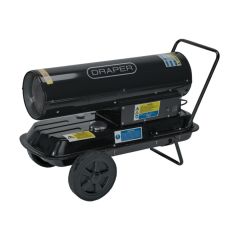
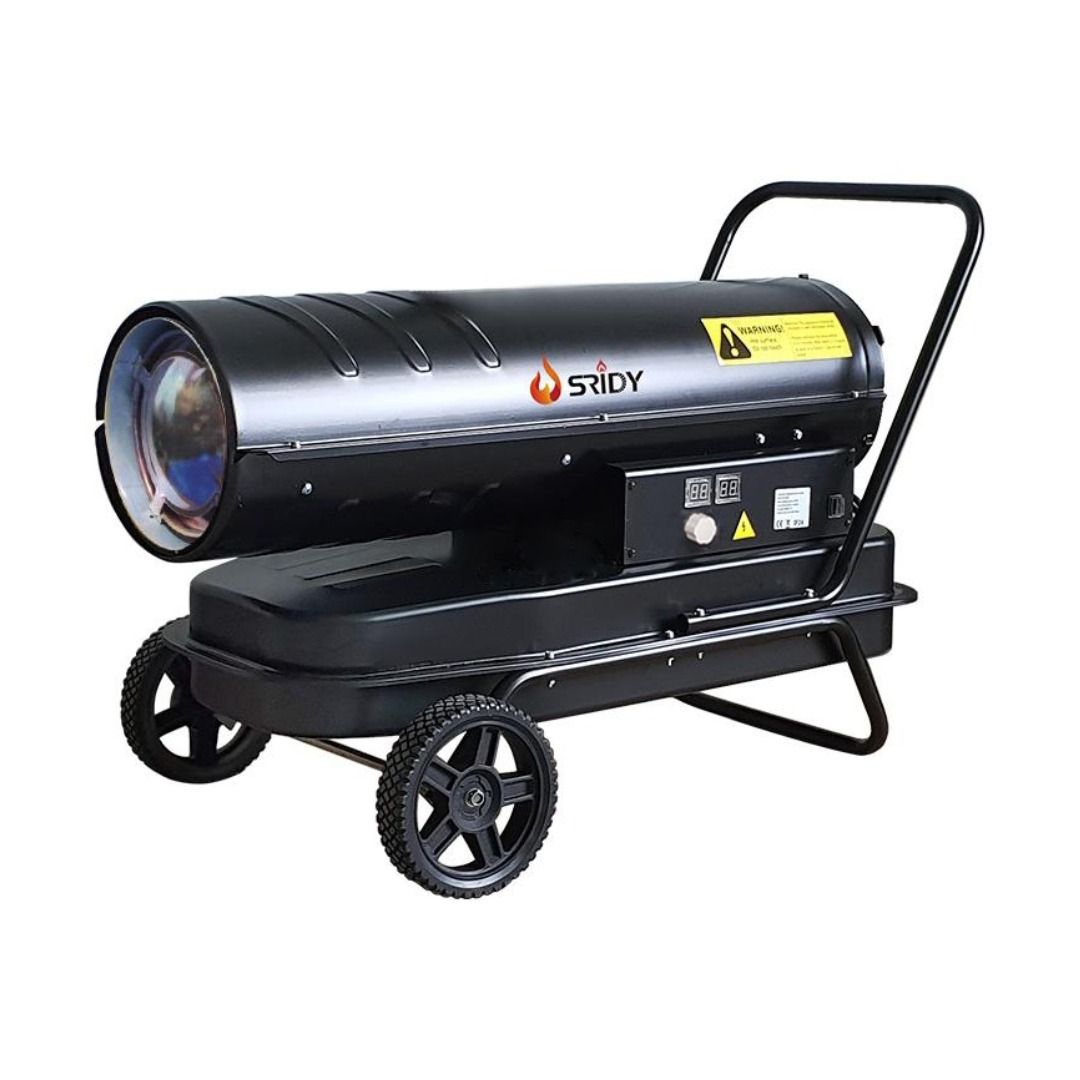
Diesel and kerosene space heater, 30kW direct-fired, with a 38L tank for large workshop, warehouse, and construction site heating on 220-240V mains.
- Direct-fired 30kW output, 102,300 BTU, 720m³/h airflow
- 38L fuel tank
- approximately 17.7 hours run time at 2.15 kg/hr
- Accepts diesel or kerosene, thermostat temperature control
- Overheat protection with automatic shut-off
- Wheeled steel frame with transport handle for repositioning
- For use in well-ventilated open and semi-open spaces only
220V Diesel and Kerosene Space Heater 30kW - Direct-Fired 38L Tank

Diesel and kerosene space heater, 30kW direct-fired, with a 38L tank for large workshop, warehouse, and construction site heating on 220-240V mains.
- Direct-fired 30kW output, 102,300 BTU, 720m³/h airflow
- 38L fuel tank
- approximately 17.7 hours run time at 2.15 kg/hr
- Accepts diesel or kerosene, thermostat temperature control
- Overheat protection with automatic shut-off
- Wheeled steel frame with transport handle for repositioning
- For use in well-ventilated open and semi-open spaces only
Order 1x to earn 224 FASTPoints
Order to earn 224 FASTPoints
Log in to access trade discounts220V Diesel and Kerosene Space Heater 30kW
Diesel and kerosene space heater running on a direct-fired combustion system at 30kW, designed for large workshops, warehouses, factories, and open construction structures where a 20kW unit cannot cover the required area. The 38L tank delivers approximately 17.7 hours of run time at 2.15 kg/hr consumption, covering a full extended shift and overnight periods without a mid-session fuel stop. Thermostat temperature control and overheat protection maintain safe, consistent output across the working day. This is a direct-fired unit. Combustion gases enter the heated space directly. It must only be used in open or continuously ventilated environments with adequate fresh air supply.
How a 38L tank removes mid-shift refuelling from large-space heating
A smaller 19L or 20L unit running at the same output level needs refuelling roughly halfway through a full working day. Refuelling a hot diesel heater on a busy site or workshop floor carries real risk: the unit must be switched off, disconnected, and given time to cool before the fuel cap is removed. In a cold warehouse or large workshop in the middle of winter, stopping heat output for 20 to 30 minutes to cool and refuel mid-shift is a productivity and comfort problem. The 38L tank eliminates that interruption entirely, running continuously for 17.7 hours at rated consumption before a fill is needed.
Key Features
-
Direct-fired 30kW combustion output: At 30kW and 720m³/h airflow, this unit reaches working temperature across large spaces significantly faster than the 20kW class. Suited to any space above 180m² where a smaller unit would struggle to maintain temperature against heat loss through large doors, high ceilings, and uninsulated roofing.
-
38L tank, approximately 17.7 hours run time: The large-capacity tank covers a full extended shift and overnight periods on a single fill. At 2.15 kg/hr rated consumption, it covers the full working day with margin at rated output.
-
Thermostat temperature control: Adjustable thermostat cycles the burner on and off to hold the space at a set temperature once it is reached, rather than running continuously at maximum output. This reduces fuel consumption during long sessions and maintains a consistent working environment.
-
Overheat protection: Automatic cut-off activates if internal temperature exceeds safe operating limits, providing a secondary safety layer alongside correct positioning and clearance requirements.
-
Wheeled steel frame with transport handle: Two large wheels and a steel carry handle allow the unit to be repositioned across large floor areas without lifting. Suited to workshops and warehouses where the heat source needs to be moved between bays or areas.
Who is this for
Trades and roles:
-
Warehouse and logistics managers
-
Workshop managers and mechanics
-
Site managers and site supervisors
-
Agricultural and estate managers
-
Plant hire operators
-
Facilities managers for large industrial premises
Industries:
-
Construction and civil engineering
-
Warehousing and logistics
-
Automotive and vehicle servicing
-
Agriculture and horticulture
-
Manufacturing and large-scale fabrication
-
Events and temporary large structures (open and semi-open only)
Specifications
| Product Name | 220V Diesel and Kerosene Space Heater 30kW - Direct-Fired 38L Tank |
| SKU | ELHE0005 |
| Model Reference | DH-30 |
| Product Type | Direct-fired diesel and kerosene space heater |
| Voltage | 220-240V, 50Hz |
| Heat Output | 30kW, 102,300 BTU |
| Airflow | 720m³/h |
| Fuel Type | Diesel or kerosene |
| Tank Capacity | 38L |
| Fuel Consumption | 2.15 kg/hr |
| Run Time (full tank) | Approximately 17.7 hours |
| Maximum Heating Area | 310m² |
| Safety Features | Thermostat temperature control, overheat protection with automatic shut-off |
| Dimensions | L 910mm x W 455mm x H 595mm |
| Net Weight | 19.5kg |
| Use Type | Well-ventilated commercial and industrial spaces only. Not weather-resistant. |
| Motor Wattage | Pending supplier confirmation |
| Certification | Pending supplier confirmation |
| Warranty | Pending supplier confirmation |
Compatibility
| Application or condition | Status |
| Large workshops with continuous ventilation | Suitable |
| Warehouses and logistics buildings with adequate ventilation | Suitable |
| Factories and large industrial buildings, open plan and ventilated | Suitable |
| Large construction site structures and semi-open buildings | Suitable |
| Agricultural buildings with continuous fresh air supply | Suitable |
| Large semi-open spaces up to 310m² requiring rapid heat | Suitable |
| Enclosed spaces without continuous ventilation | Not suitable |
| Residential, domestic, or living spaces | Not suitable |
| Sleeping areas | Not suitable |
| Sealed marquees or enclosed event structures | Not suitable |
| Dusty environments | Not suitable |
| Areas where flammable gases or vapours are present | Not suitable |
| Use with extension lead | Not suitable |
| Unattended operation | Not suitable |
Who is this for
The 30kW direct-fired diesel and kerosene space heater is used by warehouse managers, large workshop operators, site managers, and agricultural estate managers who need to heat spaces above 180m² where the 20kW class cannot maintain working temperature against the heat loss typical of large commercial buildings. The 38L tank and 17.7-hour run time make it particularly suited to operations running extended shifts, multi-shift patterns, or overnight heating cycles where mid-session refuelling is operationally impractical. Plant hire operators supplying temporary heating to construction sites and large agricultural clients also use this output class as a standard unit for buildings up to 310m².
This heater is direct-fired. Combustion gases enter the heated space as part of normal operation. It must only be operated in open or continuously ventilated environments.
Typical applications
-
Heating a large vehicle workshop or commercial garage with multiple bays during winter, where roller shutter doors provide continuous ventilation and the 30kW output maintains working temperature across all bays simultaneously.
-
Providing temporary heat to a large warehouse or logistics unit during cold periods, where goods handling or vehicle loading requires operatives to work in a thermally stable environment across full shifts.
-
Heating an open-plan factory or fabrication workshop where high rooflines, large floor areas, and regular door traffic create heat loss that a 20kW unit cannot overcome.
-
Supplying construction site heat to a large semi-open building in progress, ahead of concrete pours, plastering, or floor screeding requiring minimum ambient temperatures in cold weather months.
-
Heating a large agricultural building during winter livestock care, lambing, or machinery maintenance where the open structure provides continuous natural ventilation and diesel fuel is available on site.
-
Providing rapid background heat to a large semi-open temporary structure at an agricultural show, trade event, or outdoor exhibition where adequate ventilation can be confirmed before operation.
How to use
Step 1: Assemble the wheel frame and transport handle before first use.
Step 2: Confirm the space is open or continuously ventilated before positioning. Do not place in any enclosed space.
Step 3: Position on a firm, level, fire-resistant surface with a minimum 2.5 metres of clear space at the front outlet and at the rear of the unit.
Step 4: Fuel outdoors or in a well-ventilated area with the unit switched off and fully cooled. Remove the fuel cap and fill with clean diesel or kerosene to the Full mark. Do not overfill. Refit the fuel cap securely.
Step 5: Connect directly to a 220-240V mains socket. Do not use an extension lead.
Step 6: Ensure the power switch is in the OFF position before connecting. Switch to ON. The unit should start within five seconds.
Step 7: Once the space reaches the target temperature, adjust the thermostat to hold that level. The burner will cycle on and off automatically to maintain temperature without continuous full-output operation.
Step 8: To shut down, switch to OFF and unplug from the mains socket. Allow at least 20 minutes to cool before moving or refuelling.
Common mistakes
-
Operating in an enclosed or poorly ventilated space: This heater produces carbon monoxide during normal combustion. Carbon monoxide is colourless and odourless and accumulates without warning in enclosed spaces. Never operate this unit in any space without continuous fresh air exchange, regardless of how briefly it is needed.
-
Refuelling without allowing the unit to cool: The fuel tank and surrounding components reach high temperatures during operation. Always allow at least 20 minutes after switch-off before opening the fuel cap. Hot vapour released from a warm tank poses a serious ignition risk.
-
Using incorrect fuel: Only standard diesel or kerosene are acceptable fuels. Never use petrol, used oil, paint thinners, or any other flammable liquid. Incorrect fuel risks explosion and serious injury.
-
Connecting via extension lead: The unit must plug directly into a mains socket. A coiled or undersized extension lead generates heat under load and creates a fire risk.
-
Running without checking clearances: A minimum 2.5 metres must be clear at the front and rear at all times. In a busy workshop or warehouse, this clearance is easily encroached during the working day as materials and vehicles are moved. Check before each session.
-
Storing with fuel in the tank: Fuel left in the tank during storage degrades and can contaminate the fuel system. Drain completely before any period of extended storage.
Safety
This is a direct-fired combustion heater. Burning diesel or kerosene produces carbon monoxide, a colourless and odourless gas that is fatal at elevated concentrations. The heater must only be used in open or well-ventilated spaces with continuous fresh air supply. It must never be used in residential areas, sleeping areas, or any enclosed space. A minimum clearance of 2.5 metres must be maintained at the front outlet and at the rear of the unit at all times. Keep all combustible materials, including fuel containers, timber, fabric, and packaging, well clear of the unit during operation. External metal surfaces reach very high temperatures during and after use. Do not touch any surface other than the handle or wheels during or immediately after operation. Allow at least 20 minutes to cool before handling. The heater must never be left unattended while running or connected to the mains supply.
Maintenance
Clean the heater body with a dry cloth only, once the unit has fully cooled after each session. Clean the fan guard and grille with a dry cloth or brush to remove accumulated dust and debris. Clean the fuel filter regularly during the heating season by removing it from the tank and rinsing in clean diesel. Drain the fuel tank completely before any period of storage using the drain plug on the underside of the tank. Wipe fuel spillages immediately. Do not use water to clean the inside of the fuel tank. Annual inspection of the nozzle, spark plug, photocell, and pump by suitably qualified personnel is recommended to maintain safe and efficient operation.
Frequently Asked Questions
Q: What is the practical difference between this 30kW unit and a 20kW unit, and which do I need?
A: The output difference matters most in large, poorly insulated spaces where heat loss through high rooflines, large doors, and uninsulated walls exceeds what a 20kW unit can replace. A 20kW unit is suited to spaces up to approximately 180m². This 30kW unit is designed for spaces up to 310m², and the higher 720m³/h airflow rate means it also distributes heat more rapidly across large floor areas. If your space is above 180m² or if you regularly find a 20kW unit cannot maintain working temperature in cold conditions, the 30kW is the correct specification.
Q: How long does a full 38L tank actually last in practice?
A: At rated consumption of 2.15 kg/hr, a full 38L tank gives approximately 17.7 hours of run time. In practice, thermostat-controlled operation reduces actual consumption below the rated maximum because the burner cycles off once the set temperature is reached. In a well-insulated space with the thermostat set appropriately, real-world run time will exceed the rated figure. In a large, poorly insulated building with high heat loss, consumption will be closer to the rated level. Either way, a single fill comfortably covers a full working day without a refuelling stop.
Q: What spaces is this heater not suitable for?
A: This unit must not be used in any enclosed space without continuous ventilation, including sealed workshops with doors closed, residential buildings, domestic garages with closed doors, sleeping areas, caravans, or any confined structure. It is not suitable for dusty environments, areas containing flammable gases or vapours, or sealed marquees and enclosed event structures. For heating enclosed spaces where ventilation cannot be guaranteed, an indirect heater that vents combustion gases externally is the correct specification.
Q: What fuel does this unit accept and what grade is required?
A: The heater runs on standard diesel or kerosene. Red diesel (gas oil) is also acceptable where its use is currently permitted under UK regulations. Grade 2 (Class C2) kerosene, also known as 28-second oil or paraffin, is suitable. Petrol, used oil, waste oil, paint thinners, and other flammable liquids must never be used as they pose an explosion risk. Always ensure the fuel tank is clean and free from rust, dirt, and water before filling, as contamination can cause ignition failures and blockages in the fuel system.
Q: What ventilation is required to use this heater safely?
A: The space must have continuous natural or mechanical fresh air exchange during the entire period of operation. As a general guide, provide a fresh air opening of at least three square feet (2,800 sq cm) for every 30,000 kcal/hr of rated output, and increase this if more than one heater is operating in the same space. The key principle is that carbon monoxide produced by combustion must not be allowed to accumulate. A fixed CO detector in the space provides an early warning layer, but correct positioning with adequate ventilation is the primary safety measure.
Q: What does 2.15 kg/hr fuel consumption mean in running cost terms?
A: At 2.15 kg/hr, the heater consumes approximately 2.5 litres of diesel per hour at rated output. Running cost per hour is calculated by multiplying 2.5 by the current price per litre of diesel or kerosene at your site. At typical commercial diesel prices, the cost per kilowatt of heat delivered is substantially lower than equivalent electric output, which makes direct-fired diesel heating cost-effective for spaces requiring sustained high-output heating across long shifts and over extended winter projects.
Q: What maintenance is needed between uses and at the end of the season?
A: After each use, clean the exterior and fan guard with a dry cloth once the unit has cooled. During the heating season, clean the fuel filter at least twice by rinsing in clean diesel. At end of season, drain the fuel tank completely before storage, clean the tank interior, and store the unit in a dry location away from direct sunlight and combustible materials. Annual inspection of the nozzle, spark plug, photocell, and pump by suitably qualified personnel is recommended.