
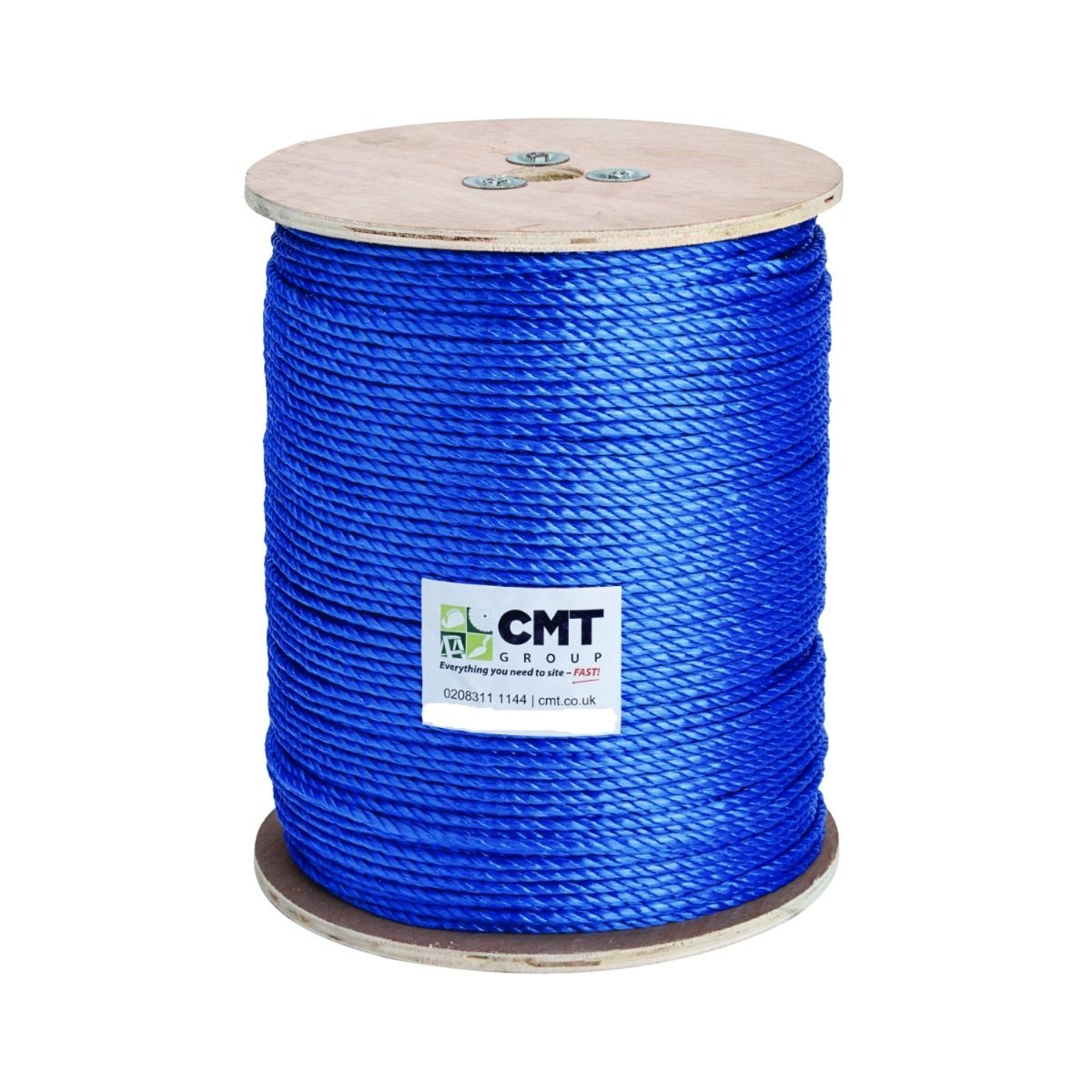
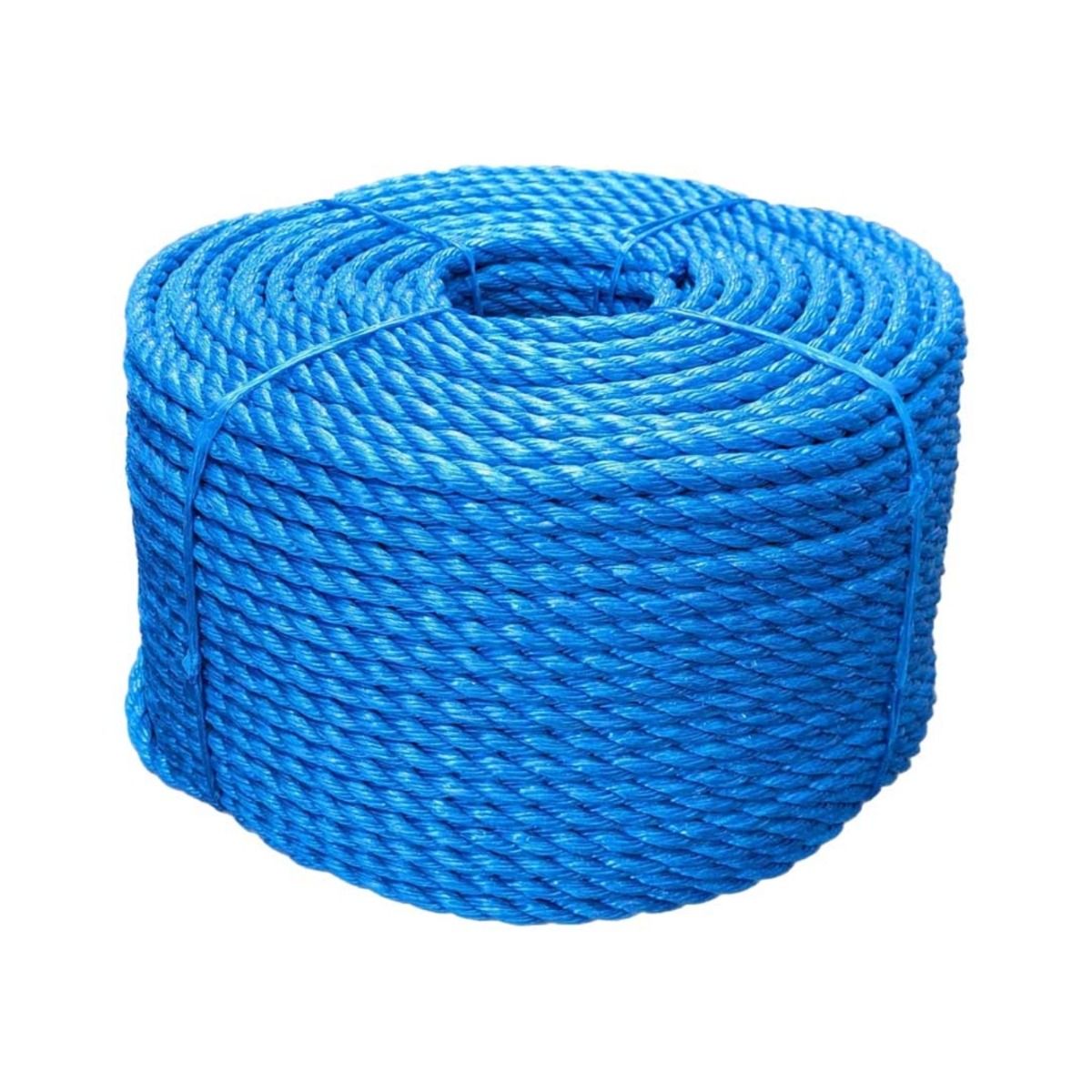
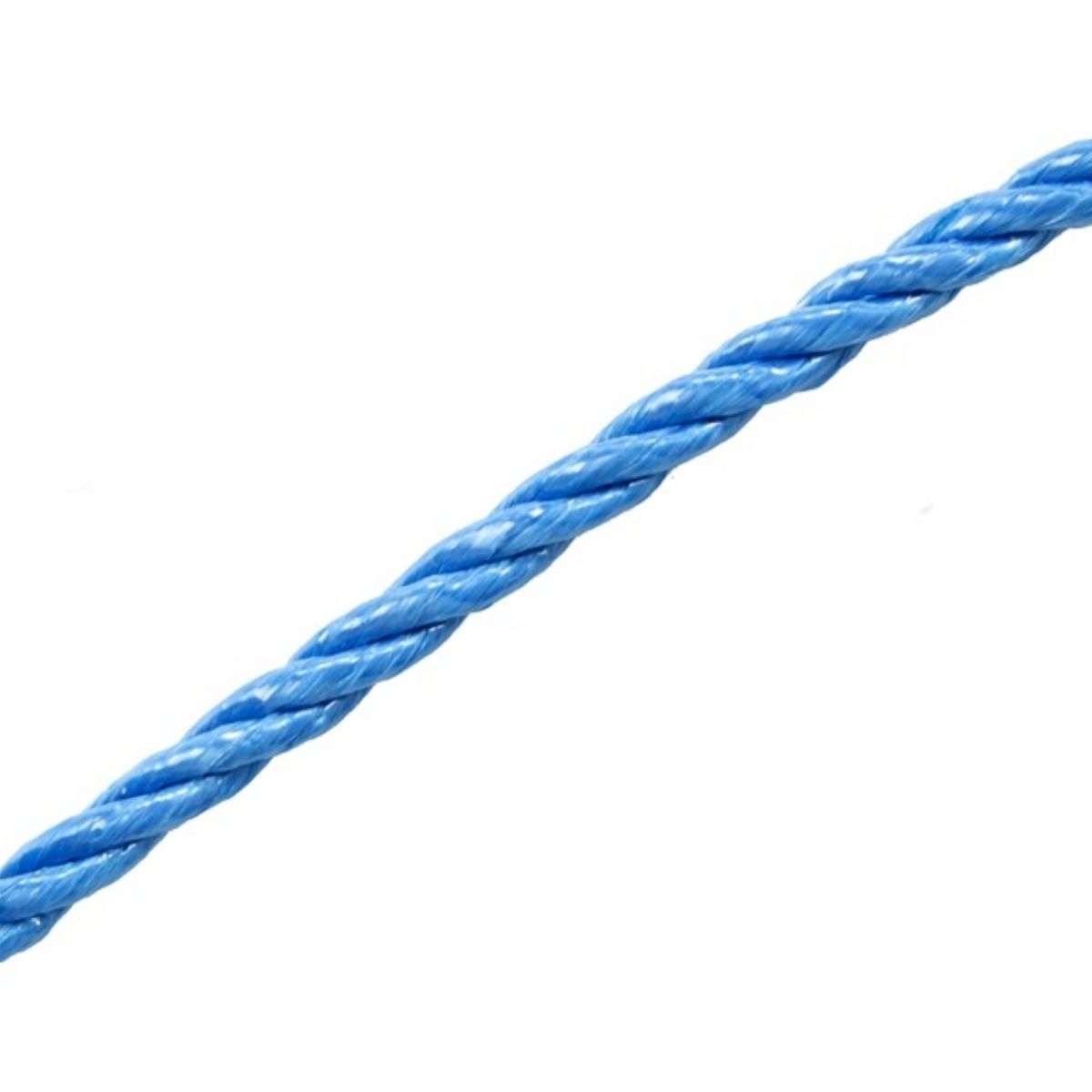
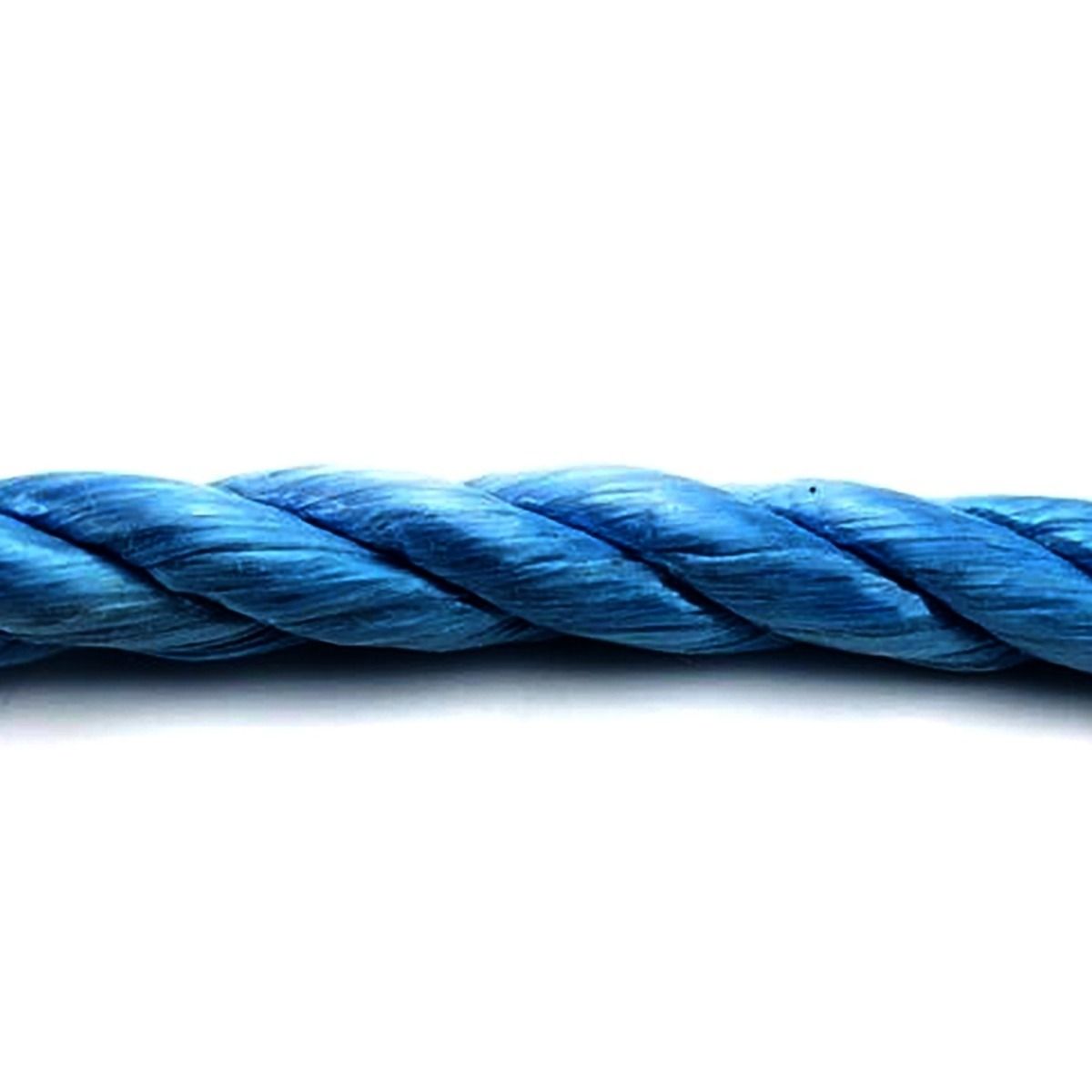
Blue 3-strand twisted polypropylene rope for fastening, securing, and general site, marine, and agricultural applications. Available in 6mm, 10mm, and 12mm diameters in 220m coils and 6mm in a 500m drum.
Not for fall protection or lifting applications.
- 3-strand twisted polypropylene construction, lightweight and weather resistant
- Floats on water, suitable for marine and waterside applications
- Resistant to moisture, rot, and UV degradation
- Available in 6mm, 10mm, and 12mm diameters
- 220m coil or 500m drum format
- Not for fall protection, lifting, or load-bearing applications
Blue Polypropylene Rope
Blue 3-strand twisted polypropylene rope for fastening, securing, and general site, marine, and agricultural applications. Available in 6mm, 10mm, and 12mm diameters in 220m coils and 6mm in a 500m drum.
Not for fall protection or lifting applications.
- 3-strand twisted polypropylene construction, lightweight and weather resistant
- Floats on water, suitable for marine and waterside applications
- Resistant to moisture, rot, and UV degradation
- Available in 6mm, 10mm, and 12mm diameters
- 220m coil or 500m drum format
- Not for fall protection, lifting, or load-bearing applications
Polypropylene Rope
Blue 3-strand twisted polypropylene rope for fastening, securing, and restraint across construction, marine, agriculture, and engineering applications. Polypropylene is lighter than nylon or polyester, resists moisture and UV, and floats in fresh and salt water, making it the standard specification for outdoor and marine use where natural fibre rope would rot and sink. Available in 6mm, 10mm, and 12mm diameters in 220m coils, and in 6mm on a 500m drum for high-volume site supply.
This rope is not rated for fall protection or lifting. Do not use as a lifting sling, fall arrest lanyard, or any fall restraint component.
Why Polypropylene Is Specified for Outdoor and Marine Rope Applications
Natural fibre rope absorbs water, loses strength when wet, and deteriorates rapidly in outdoor storage. Nylon rope also absorbs water and sinks. Polypropylene does not absorb water, does not rot in persistent damp conditions, and is the only common rope material that floats. For construction site securing, agricultural use, and marine applications where the rope is exposed to weather and moisture, polypropylene provides consistent performance where natural and nylon alternatives fail.
Key Features
-
3-strand twisted construction: Three clearly defined strands wound together. Easy to inspect for damage, straightforward to knot and splice, and consistent in diameter throughout the length.
-
Floats on water: Polypropylene has a specific gravity below 1.0 and floats in both fresh and salt water. Standard for marine retrieval lines, buoy markers, and waterside cordons.
-
Lightweight: One of the lightest common rope materials. Long lengths remain manageable to handle and transport on site.
-
Weather and UV resistant: Does not rot, does not absorb water, and resists UV degradation in outdoor storage and use significantly better than natural fibre alternatives.
-
Multiple diameters and lengths: 6mm, 10mm, and 12mm in 220m coils for site and general use. 6mm in a 500m drum for high-volume applications and large-site supply.
Who Is This For
Trades and roles:
-
Site managers and site operatives
-
Groundworkers and civils contractors
-
Agricultural workers
-
Marine and waterway operatives
-
Events and facilities managers
Industries:
-
Construction
-
Agriculture
-
Marine and waterways
-
Engineering
-
Events and outdoor facilities
Specifications
| Specification | Detail |
| Product Name | Blue Polypropylene Rope |
| Parent SKU | ROPE |
| Material | Polypropylene |
| Colour | Blue |
| Construction | 3-strand twisted |
| Floats | Yes (specific gravity below 1.0) |
| UV Resistant | Yes |
| Weather Resistant | Yes |
| Water Absorption | None |
| Industries | Agriculture, Construction, Engineering, Marine |
| NOT Suitable For | Fall protection or lifting applications |
Variant comparison
| Specification | ROPE22006 | ROPE22010 | ROPE22012 | ROPE50006 |
|---|---|---|---|---|
| Diameter | 6mm | 10mm | 12mm | 6mm |
| Length | 220m | 220m | 220m | 500m |
| Best for | Light general purpose fastening | Medium duty securing and lashing | Heavy securing and high-visibility lines | High-volume and large-site supply |
Compatibility
| Application or condition | Status |
| General fastening and securing on construction sites | ✓ Compatible |
| Securing tarpaulins and sheeting | ✓ Compatible |
| Event barriers and cordon lines | ✓ Compatible |
| Marine and waterside applications | ✓ Compatible (floats) |
| Agricultural lashing and securing | ✓ Compatible |
| Outdoor and weather-exposed use | ✓ Compatible (UV and weather resistant) |
| Fall protection or fall arrest | ✗ NOT SUITABLE (not rated or certified) |
| Lifting applications or use as a sling | ✗ NOT SUITABLE (not rated or certified) |
| Overhead load suspension above people | ✗ NOT SUITABLE |
Who Is This For
Blue polypropylene rope is a general-purpose fastening and restraint rope for construction sites, marine environments, agriculture, and engineering. It suits site operatives securing materials, tarpaulins, and temporary barriers, agricultural contractors needing bulk rope for lashing and cordoning, and marine operatives requiring a floating rope for waterside retrieval and marker lines. The 220m coil and 500m drum formats suit both individual site requirements and bulk purchase for ongoing volume supply.
This rope is not rated for fall protection or lifting applications.
Typical Applications
-
Securing tarpaulins and sheeting over materials, aggregates, and plant on construction sites.
-
Forming temporary event barriers, pedestrian management cordons, and exclusion zone lines.
-
Securing loads on flatbed vehicles and trailers for short-duration site transit.
-
Agricultural use including fencing support, bale securing, and temporary livestock barriers.
-
Marine retrieval lines and buoy marker lines where the rope must float on the surface.
-
Waterside barrier and safety demarcation lines adjacent to construction water features and drainage works.
-
General site and workshop bundling, lashing, and temporary restraint.
-
Cordon lines and safety warning perimeters on construction sites.
How to Use
Step 1: Select the diameter. Use 6mm for light general-purpose fastening. Use 10mm for medium-duty securing and lashing. Use 12mm for heavier securing tasks or where a more visible and grippy rope is required.
Step 2: Uncoil from the coil or unwind from the drum. Avoid kinking as you unwind by letting the coil or drum rotate freely.
Step 3: Cut to the required length with a sharp knife. Seal the cut end immediately with a flame to prevent the twisted strands unravelling.
Step 4: Tie using appropriate knots. A bowline for fixed loops, a clove hitch for attaching to posts or rails, and a round turn and two half hitches for securing to anchor points. Polypropylene holds knots well.
Step 5: Inspect the rope before each use. Do not use a rope showing fraying, kinking, significant UV bleaching, or chemical damage.
Common Mistakes
-
Using for lifting or fall protection: this rope is not rated, tested, or certified for these applications. Do not use to suspend any load above people or as any component of a fall restraint or arrest system.
-
Not sealing cut ends: always seal cut ends with heat immediately after cutting. An unsealed end unravels quickly under use and loses structural integrity at the cut point.
-
Storing in direct sunlight over extended periods: polypropylene resists UV but prolonged outdoor storage in direct sun shortens service life. Store under cover when not in active use.
-
Kinking during unreeling: kinks reduce rope strength. Unwind from the coil or drum by rotating the supply rather than pulling from a stationary coil.
Safety
This rope is not rated for fall protection or lifting applications. Do not use to suspend loads above people, as a lifting sling, as a lanyard, or as any component of a fall arrest or fall restraint system. For lifting applications, use a purpose-rated lifting sling tested and marked with a working load limit. For fall protection, use a system conforming to EN 361 and the Work at Height Regulations 2005. Inspect the rope before every use. Do not use rope showing kinking, fraying, UV bleaching, or chemical damage.
Maintenance
Store in a dry, shaded location. Avoid prolonged direct sunlight. Rinse with fresh water after salt water or chemical exposure and allow to dry before coiling for storage. Inspect regularly for fraying, kinking, and UV degradation. Replace when visible damage or structural deterioration is present.
Frequently Asked Questions
Q: What diameter should I choose?
A: 6mm suits light general-purpose fastening, tarpaulin securing, and cordon lines where a thin, manageable rope is sufficient. 10mm provides more substance and is more comfortable to grip for sustained manual tensioning. 12mm is suited to heavier securing tasks, more visible barrier lines, and applications where a larger diameter is easier to handle in wet or cold conditions.
Q: Can this rope be used for lifting or fall protection?
A: No. This rope is not rated, tested, or certified for lifting or fall protection. Do not use to suspend loads above people, as a lifting sling, or as any component of a fall arrest or fall restraint system. For lifting, use a purpose-rated sling. For fall protection, use a system conforming to EN 361 and the Work at Height Regulations 2005.
Q: Why does polypropylene rope float?
A: Polypropylene has a specific gravity below 1.0, making it less dense than water. It is the only common rope material that floats in both fresh and salt water. This makes it the standard specification for marine retrieval lines, buoy marker lines, and waterside working cordons where a rope that sinks would be unrecoverable.
Q: What is the difference between the 220m coil and the 500m drum?
A: Both contain the same 6mm blue 3-strand twisted polypropylene rope. The 220m coil is the standard format for general site use and regular ordering. The 500m drum provides a higher-volume supply in a dispensable reel format, suited to large sites, high-volume cutting applications, or operations that regularly need bulk lengths from a single supply.
Q: Can the rope be cut to shorter lengths?
A: Yes. It cuts cleanly with a sharp knife. Always seal the cut end immediately with a heat source to prevent the strands unravelling. The 220m coil and 500m drum allow lengths to be cut as required.
Q: How does polypropylene cope with UV and outdoor exposure?
A: Polypropylene resists UV and weather degradation significantly better than natural fibre rope, which rots and loses strength when wet. However, all polypropylene rope degrades over time under sustained direct UV exposure. Store under cover when not in active use. Replace rope showing significant UV bleaching or surface degradation.
Q: Is this rope suitable for salt water and marine use?
A: Yes. Polypropylene does not absorb water, does not rot, and is unaffected by salt water exposure. Rinsing with fresh water after salt water use and allowing to dry before storage extends service life, but the rope is not damaged by occasional salt water immersion.
