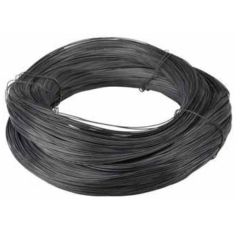
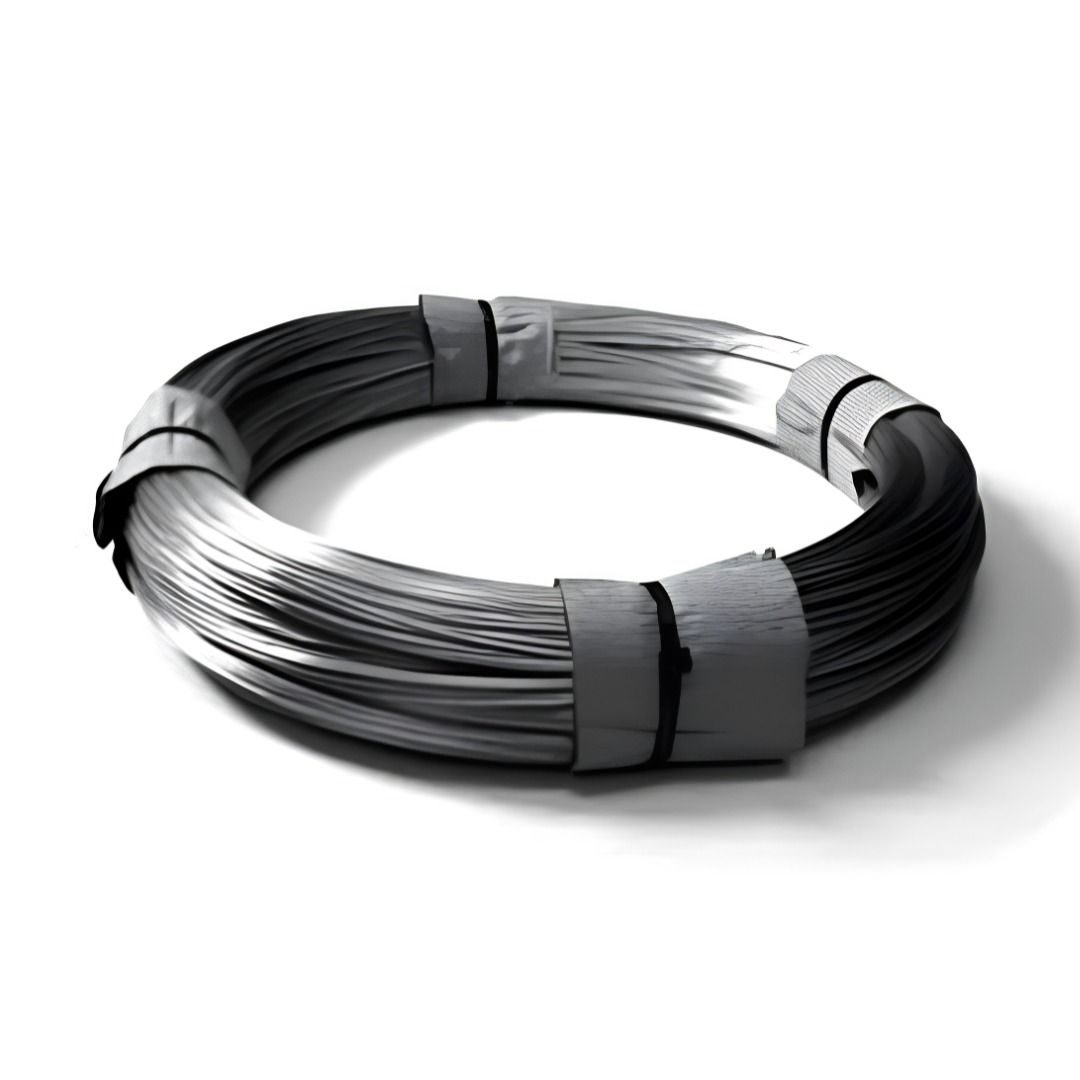
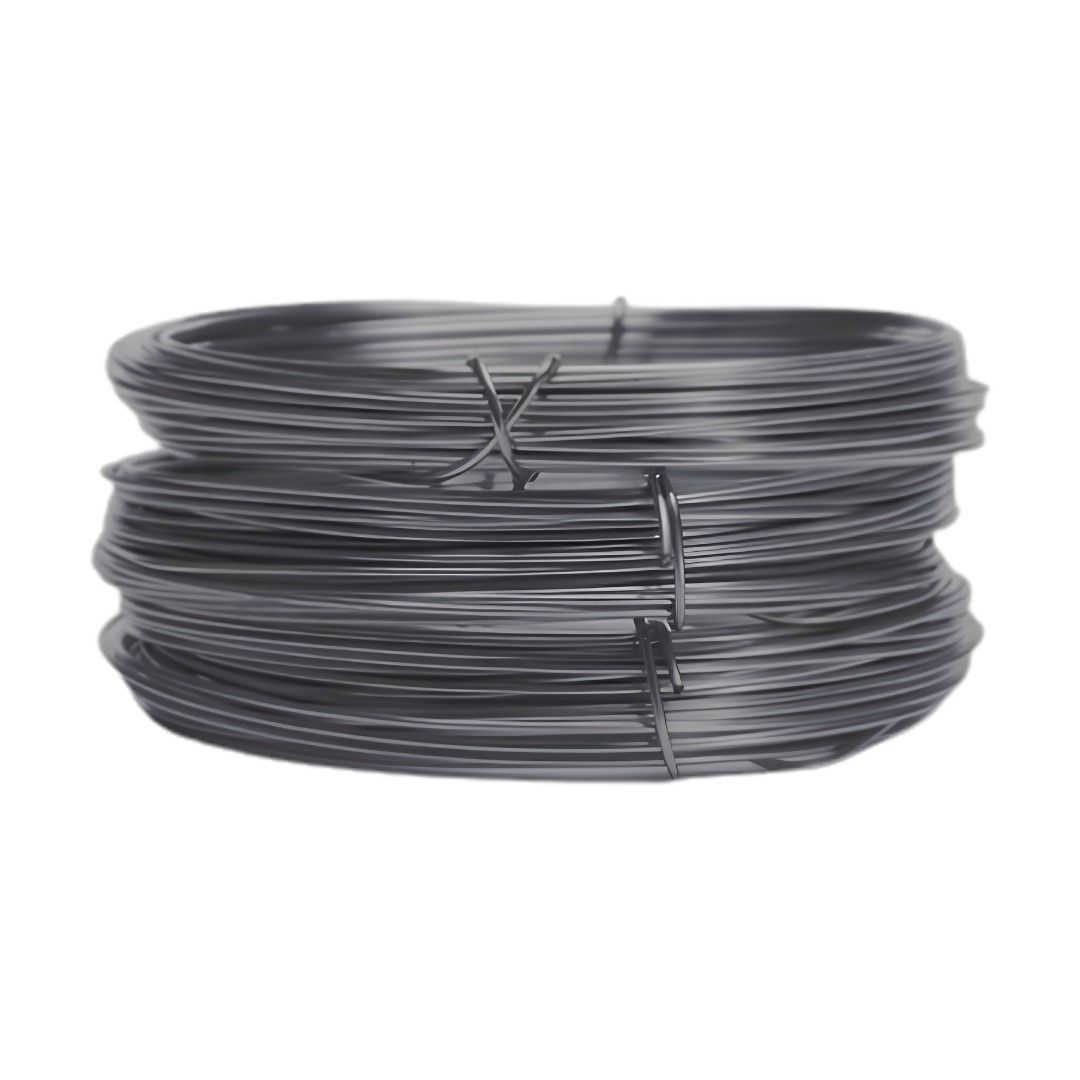
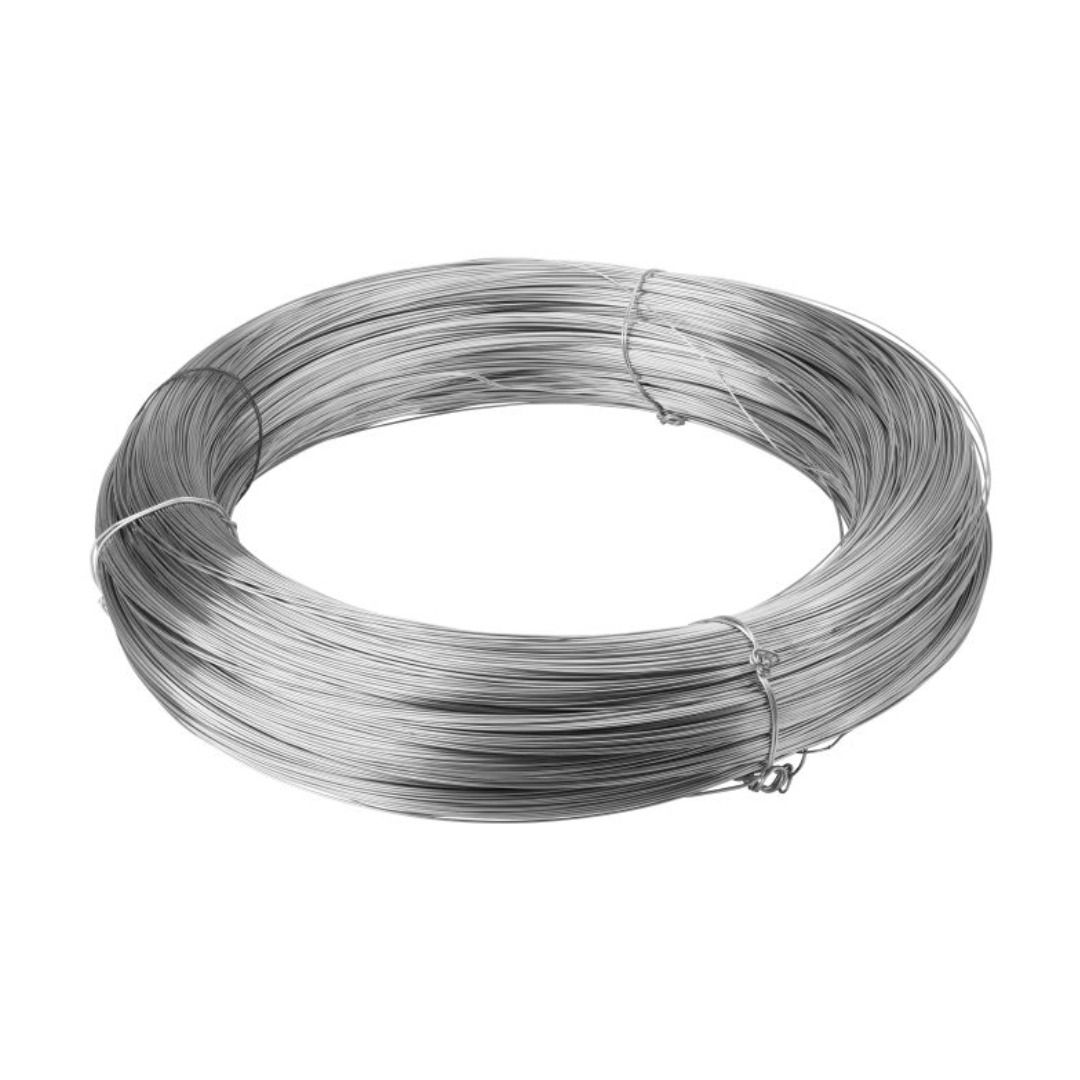
Grade 304/A2 stainless steel tying wire for construction, civil engineering, and site applications where corrosion resistance and a clean finish are required.
- Grade 304/A2 (1.4301), EN 10088-2
- 1.2mm diameter, 18 Gauge SWG
- 15kg coil, approximately 1,600 metres
- Soft and malleable, bends and twists by hand or tying tool
- Meets UK DoT Specification for Highway Works
- Corrosion-resistant, prevents rust staining on concrete
- Suitable for rebar, insulation, fencing, cables, and general tying
Stainless Steel Tying Wire - Grade 304 18 Gauge 15kg Coil
Grade 304/A2 stainless steel tying wire for construction, civil engineering, and site applications where corrosion resistance and a clean finish are required.
- Grade 304/A2 (1.4301), EN 10088-2
- 1.2mm diameter, 18 Gauge SWG
- 15kg coil, approximately 1,600 metres
- Soft and malleable, bends and twists by hand or tying tool
- Meets UK DoT Specification for Highway Works
- Corrosion-resistant, prevents rust staining on concrete
- Suitable for rebar, insulation, fencing, cables, and general tying
- Buy 6 for £159.65 £133.04 each and save 8%
- Buy 12 for £143.21 £119.34 each and save 18%
| BULK DISCOUNT | 6 | 12 |
|---|---|---|
| Price | £133.04 £159.65 | £119.34 £143.21 |
Order 1x to earn 144 FASTPoints
Order to earn 144 FASTPoints
Log in to access trade discountsStainless Steel Tying Wire - 18 Gauge 15kg Coil
Grade 304/A2 (1.4301) stainless steel tying wire in 15kg coils, used across construction, civil engineering, and site applications where corrosion resistance or a clean, stain-free finish is required. Soft and malleable at 1.2mm diameter, it ties easily by hand or with a standard tying tool, and its Grade 304 composition meets the UK Department of Transport Specification for Highway Works for fixing steel reinforcement on highways, bridges, and other exposed infrastructure structures. Each 15kg coil contains approximately 1,600 metres of wire.
How Grade 304 stainless prevents rust staining and long-term corrosion in reinforced concrete
Standard black annealed tying wire is the most widely used alternative, but it oxidises when exposed to moisture, the rust migrates into the concrete cover and produces the surface staining visible on older reinforced concrete structures. In coastal and chemical environments this deterioration accelerates significantly, and the wire can fail well before the structure reaches its design life. Grade 304 stainless wire resists surface oxidation and prevents rust migration into the concrete, which is why the Department of Transport mandates its use for reinforcement fixing on exposed highway and bridge structures, a requirement adopted by local authorities for road development projects nationwide.
Key Features
-
Grade 304/A2 (1.4301), EN 10088-2: The most widely used stainless steel grade in construction and civil engineering, providing good corrosion resistance in everyday environments. Austenitic composition, non-magnetic, easy to form, and compatible with stainless steel reinforcement bars where galvanic compatibility between bar and tying wire is a specification requirement.
-
Meets UK DoT Specification for Highway Works: The Department of Transport requires 1.2mm Grade 304 stainless tying wire for fixing all types of reinforcement on exposed faces of highways, bridges, and other structures. This wire meets that requirement and the same specification is adopted by local authorities for road development projects, including major infrastructure schemes.
-
Soft and malleable: The wire bends, twists, and ties cleanly by hand or with a tying hook or pistol tool without pre-forming or annealing. It can be worked repeatedly at the joint without breaking under normal tying loads.
-
15kg coil, approximately 1,600 metres: Sufficient for large-scale reinforcement fixing, insulation banding, or extended site work without frequent coil changes. Coils are individually wrapped for protection in transit.
-
Corrosion-resistant, prevents rust staining: Grade 304 does not rust under normal construction and civil engineering conditions. It prevents the surface staining that iron-based tying wire causes on exposed concrete, and performs significantly better than galvanised wire in conditions where the galvanic coating is compromised.
-
Wide application range: Suitable for fixing steel reinforcement bars and mesh, securing insulation jacketing in industrial and HVAC environments, fencing in coastal or exposed locations, cable management, pipe hangers, garden and horticultural tying, and general site applications where a durable, corrosion-resistant wire is required.
Who is this for
Trades and roles:
-
Concreters and groundworkers
-
Civil and structural engineers
-
Insulation installers
-
Fencers and groundsworkers
-
General site operatives
Industries:
-
Construction and civil engineering
-
Highways and infrastructure
-
Oil and gas (insulation)
-
Agriculture and landscaping
-
HVAC and industrial processing
Specifications
| Specification | Detail |
| Product Name | Stainless Steel Tying Wire - Grade 304 18 Gauge 15kg Coil |
| SKU | TYWBS |
| Material | Stainless Steel Grade 304/A2 (1.4301) |
| Material Standard | EN 10088-2 |
| Wire Diameter | 1.2mm (18 Gauge SWG) |
| Wire Form | Soft annealed, malleable |
| Coil Weight | 15kg |
| Approximate Length | 1,600 metres per coil |
| DoT Compliance | Meets UK Department of Transport Specification for Highway Works |
| Corrosion Resistance | Good in everyday construction and civil engineering environments |
| Colour | Silver/bright |
Compatibility
| Application or condition | Status |
| Steel reinforcement fixing (rebar and mesh) prior to concrete pours | ✓ Suitable |
| Highway and bridge reinforcement per UK DoT Specification | ✓ Suitable |
| Local authority road development projects | ✓ Suitable |
| Use with stainless steel reinforcement bars | ✓ Suitable |
| Insulation jacketing and banding (oil and gas, HVAC, industrial) | ✓ Suitable |
| Fencing in coastal and exposed outdoor environments | ✓ Suitable |
| Cable management, pipe hangers, and general site tying | ✓ Suitable |
| Garden and horticultural tying applications | ✓ Suitable |
| Submerged marine or coastal splash zone applications | ✗ Grade 316 recommended |
| High chloride or aggressive chemical environments | ✗ Grade 316 recommended |
Who is this for
Stainless steel tying wire is used by concreters, civil engineers, groundworkers, and insulation installers across construction, infrastructure, and industrial site applications. It is the specified material for reinforcement fixing on highway and bridge structures under the UK DoT Specification for Highway Works, and is adopted by local authorities for road development projects. It is also used wherever a clean, non-staining wire is required, including insulation jacketing in oil and gas and HVAC systems, fencing in coastal or chemically exposed locations, and cable and hanger work where long-term corrosion resistance is the deciding factor.
Typical applications
-
Fixing steel reinforcement bars and mesh prior to concrete pours on construction sites and civil engineering projects.
-
Securing reinforcement on exposed structural faces of highways, bridges, tunnels, and other infrastructure where the UK Department of Transport Specification for Highway Works applies.
-
Lacing insulation jacketing around pipes, vessels, and equipment in oil and gas, HVAC, and industrial processing facilities.
-
Fencing applications in coastal, agricultural, and exposed outdoor environments where galvanised wire would corrode prematurely.
-
Attaching concrete spacers and wire chairs to reinforcement cages to maintain cover depth before pour.
-
Securing cable runs, pipe hangers, and support systems in construction and industrial environments.
-
Garden and horticultural tying where a rust-free, durable wire is required.
-
General site tying applications where a clean finish or corrosion resistance is preferable to black annealed alternatives.
How to use
Step 1: Wear construction gloves before handling. Cut wire ends are sharp and can cause puncture injuries.
Step 2: Uncoil the required length of wire. For reinforcement fixing, cut lengths approximately twice the circumference of the joint plus 150mm for the twist.
Step 3: Pass the wire around the joint or fixing point. Twist the two ends together firmly by hand or with a tying hook until the joint is secure.
Step 4: Avoid over-twisting. Twist until firm resistance is felt, then stop. Over-twisting stresses the wire at the joint and can cause it to snap.
Step 5: Trim excess wire ends close to the twist using wire cutters. Protruding ends are a puncture hazard and can encroach into concrete cover depth, creating a corrosion path.
Step 6: Store unused coils in a dry location away from iron and steel swarf, which can contaminate the stainless surface and cause localised rust spotting.
Common mistakes
-
Over-twisting at the joint: firm hand pressure is sufficient for most tying applications. Twisting beyond the point of resistance stresses the wire and causes it to snap cleanly at the joint, requiring the tie to be repeated.
-
Using Grade 304 in highly aggressive environments: Grade 304 is appropriate for standard construction and civil engineering conditions. In coastal splash zones, submerged marine structures, or environments with sustained high chloride or acid exposure, Grade 316 (1.4404) is the correct specification.
-
Storing next to ferrous materials: iron particles from nearby mild steel tools, swarf, or reinforcement contaminate the stainless surface and cause localised rust spotting that is often mistaken for the wire corroding. Store stainless wire coils separately from ferrous materials.
-
Not trimming wire ends: protruding twisted ends are a site puncture hazard and, in concrete work, can encroach into the specified cover depth, providing a potential corrosion path to the reinforcement.
Safety
Wear construction gloves when handling tying wire. Cut wire ends are sharp and can cause puncture injuries to bare hands. Observe good manual handling practice when lifting 15kg coils. Trim twisted wire ends immediately after tying to eliminate snag and puncture hazards from protruding ends. Stainless steel presents no known health risks under normal handling conditions.
Maintenance
No ongoing maintenance is required for stainless steel wire in normal use. Store unused coils in a dry location away from ferrous contamination. If surface discolouration from iron contamination occurs, clean with a proprietary stainless steel cleaner and rinse thoroughly with clean water.
Frequently Asked Questions
Q: What is the difference between Grade 304 and Grade 316 stainless tying wire, and which do I need?
A: Grade 304/A2 provides good corrosion resistance in everyday construction, civil engineering, and industrial environments, and is the grade specified by the UK Department of Transport for highway and bridge reinforcement work. Grade 316/A4 (1.4404) contains molybdenum, which provides significantly better resistance to chloride-induced corrosion, it is recommended for coastal splash zones, submerged marine structures, and chemical processing environments with sustained high chloride or acid exposure. For the majority of construction and infrastructure applications, Grade 304 is the correct and most economical choice. Specify Grade 316 for elevated corrosion risk environments.
Q: Does this wire meet the UK Department of Transport Specification for Highway Works?
A: Yes. The DoT Specification for Highway Works requires 1.2mm Grade 304 stainless steel tying wire for fixing all types of reinforcement on exposed faces of highways, bridges, and other structures. This wire meets that requirement. The same specification is adopted by local authorities for road development projects across the UK and was used on major infrastructure projects including the Mersey Gateway bridge.
Q: What is this wire NOT suitable for?
A: Grade 304 stainless tying wire is not recommended for environments with sustained high chloride or acid exposure, including submerged marine structures, coastal splash zones, and aggressive chemical processing environments, where Grade 316 (1.4404) should be specified instead. It is also not the most economical choice for interior or fully protected applications where no corrosion risk is present, where black annealed tying wire provides comparable mechanical performance at lower cost.
Q: Why use stainless tying wire instead of black annealed wire?
A: Black annealed tying wire is cheaper but oxidises when exposed to moisture. The rust migrates into the concrete cover and produces the surface staining visible on older reinforced concrete structures. In exposed or coastal conditions, iron-based wire can deteriorate significantly over the design life of the structure. Grade 304 stainless wire resists this oxidation, prevents surface staining, and is the only type compatible with stainless steel reinforcement bars where galvanic compatibility between bar and wire is a specification requirement.
Q: How much wire is in a 15kg coil and how do I estimate quantities?
A: A 15kg coil of 1.2mm stainless tying wire contains approximately 1,600 metres. Yield per coil depends on the tying method, joint spacing, and whether double or single loop ties are used. For typical rebar lap joints tied by hand, each tie uses approximately 300 to 500mm of wire. As a planning guide, 1,600 metres provides a significant volume of ties per coil, but project quantity calculations should account for the specific layout and tying pattern.
Q: Can this wire be used with a mechanical tying tool?
A: Yes. The wire is soft and malleable at 1.2mm diameter and is compatible with hand tying hooks and standard pistol-style mechanical tying tools. When using a mechanical tool, confirm the tool's stated compatible wire gauge before loading. Hand tying is straightforward for most applications, the wire bends and twists cleanly without requiring pre-forming.
Q: How should I store unused coils on site?
A: Store in a dry location away from iron and steel swarf, mild steel tools, and ferrous reinforcement where iron particles could contaminate the stainless surface. Coils are supplied individually wrapped for protection, retain the wrapping where possible during storage. Keep off the ground on a pallet or shelf to avoid moisture ingress from below.