Groundwork Tools

Groundworks crews rely on durable site tools for digging, levelling, drainage, paving and breaking ground in demanding conditions. CMT Group supplies MAX spades and shovels across insulated, polyfibre, ash and all steel handle options, alongside forks, rakes, lutes, crowbars and pickaxes for construction, civils, drainage and utilities teams ... Groundworks crews rely on durable site tools for digging, levelling, drainage, paving and breaking ground in demanding conditions. CMT Group supplies MAX spades and shovels across insulated, polyfibre, ash and all steel handle options, alongside forks, rakes, lutes, crowbars and pickaxes for construction, civils, drainage and utilities teams. Tool selection should account for ground conditions, task type, site environment and any insulation requirements near underground services. Procurement teams can source groundwork tools for operative kits, van stocks, depot replenishment and project quantities through account-based ordering with fast UK delivery. read more...read less
Groundwork tool types, site use and buying considerations
| Tool type | Common site use | Buying considerations |
|---|---|---|
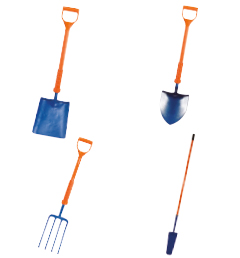
| Insulated Handle | Insulated-handle groundwork tools for trenching, digging, draining, cable laying, post-hole work, clay grafting and fork work where site rules or risk assessments call for insulated handle tools near underground services, cables or electrical infrastructure | Check product specification, insulation rating or standard where stated, tool type, handle design, blade or head shape, ground conditions, service detection requirements, safe digging procedures, site rules and manufacturer guidance before ordering |
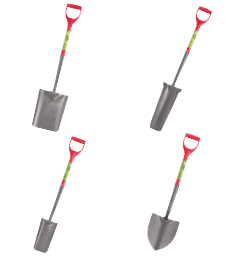
| Polyfibre Handle | High-use spades, shovels and forks for wet, exposed or demanding groundworks environments where teams need strong, weather-resistant handles for daily site work | Check handle strength, grip, tool weight, blade or head type, ground conditions and repeated-use requirements. Polyfibre handles are often chosen for durability, moisture resistance and long outdoor use |
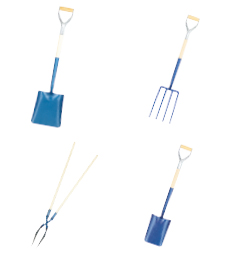
| Ash Handle | Spades, shovels and forks for digging, shifting and site preparation where teams prefer a traditional wooden handle with natural shock absorption and familiar handling | Check handle finish, tool balance, blade or head type, site conditions and storage environment. Ash handles can offer good handling comfort but may need more care in wet or harsh site conditions |
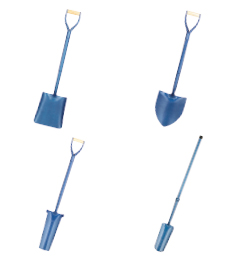
| All Steel Handle | Heavy-duty spades, shovels and forks for compacted ground, rubble, hard site conditions and repeated impact work where handle strength is a key buying factor | Check tool weight, blade or head type, grip, site conditions and user handling requirements. All steel handles can help reduce handle breakage at the socket but may feel heavier during extended use |
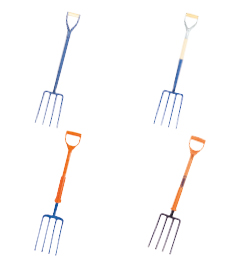
| Forks | Lifting and moving stony ground, hardcore, gravel, aggregate and spoil on construction, drainage and groundworks sites where a spade blade may struggle | Check fork type, tine count, tine strength, handle type and the material being handled. Match the fork head and handle specification to the ground conditions and expected site use |
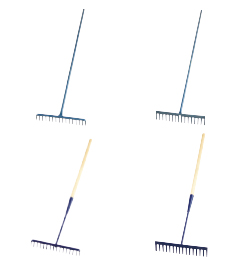
| Rakes & Lutes | Spreading, levelling and finishing asphalt, aggregate, screed and loose material across road, paving, car park, drainage and infrastructure works | Check head type, head width, blade or tine specification, handle type and finish requirement. Lutes and asphalt rakes should be selected for the surface material and finishing standard required |
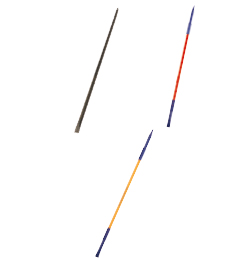
| Crowbars | Levering paving slabs and kerbs, breaking compacted ground, stripping formwork and supporting demolition or site preparation tasks on construction and civils sites | Check bar length, weight, profile and leverage requirement. Longer bars can provide more force where space allows, while shorter bars may be easier to manage in confined trenches or restricted areas |
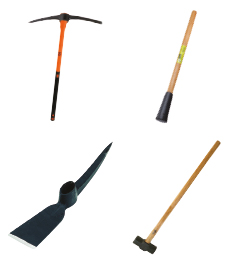
| Pickaxes, Sledgehammers & Mauls | Breaking clay, shale, tarmac, compacted soil and hard ground; driving stakes and posts; impact work across construction, civils and groundworks sites | Check head type, head weight, handle type, ground conditions and task intensity. Pickaxes suit digging and breaking in hard ground, while sledgehammers and mauls suit heavier impact tasks |
Frequently asked questions
How should site buyers choose between handle types when ordering spades or shovels?
The CMT Group Groundwork Tools range is organised into four separate handle categories, each representing a distinct buying path for site teams and procurement buyers.
Insulated Handle tools may be specified where site rules, risk assessments or project requirements call for additional protection near underground services, cables or electrical infrastructure. Buyers should check product specification, any insulation rating or standard where stated, service detection requirements, safe digging procedures, site rules and manufacturer guidance before ordering. Insulated handles do not replace safe digging practices or service detection procedures.
Polyfibre Handle tools are suited to wet, exposed or demanding environments where teams need strong, weather-resistant handles for daily site work. Polyfibre handles are often chosen for durability, moisture resistance and extended outdoor use, and are available across spades, shovels and forks.
Ash Handle tools offer natural shock absorption and traditional handling characteristics that suit teams doing extended digging and shifting. Ash handles can provide good comfort during use but may need more care in persistently wet or harsh site conditions.
All Steel Handle tools are a heavy-duty option for compacted ground, rubble, hard site conditions and repeated impact work. All steel handles can help reduce handle breakage at the socket, though buyers should check tool weight and grip suitability for the expected duration and intensity of use.
Which groundwork tools are most commonly ordered for construction and civils teams?
Spades and shovels are the most frequently ordered groundwork tools for site teams, often in more than one handle specification where teams work across different environments or site types. Forks are a standard requirement for sites involving stony ground, hardcore, aggregate and spoil. Rakes and lutes are regularly ordered for asphalt and screeding work on road, patching and paving projects. Crowbars and pickaxes are a common part of the van kit for teams doing site preparation, kerb work and breaking.
Teams on active groundworks sites typically need several tool types running at the same time. Ordering across the range in a single delivery reduces procurement frequency and helps maintain site readiness across the project.
When should groundworkers use a fork rather than a spade for excavation or site work?
Forks are the more practical choice when ground conditions make a spade blade inefficient. In stony or compacted soil, loose aggregate, gravel, hardcore and spoil from excavation or backfill, the tines of a fork penetrate and lift material more effectively than a flat spade blade. Digging forks handle bulk material movement and turning in these conditions more efficiently, where repeated spade strikes against consolidated aggregate or stones would slow progress and increase tool wear.
Spades are generally better suited to cutting into undisturbed ground, forming and edging trenches, and moving or placing cohesive soil and clay. Where a site team is doing both trenching and aggregate backfill, both tool types are likely to be needed on the same job.
What are rakes and lutes used for in groundwork and road construction?
Lutes have a wide, flat head designed for spreading and levelling asphalt or screed to an even surface. They are commonly used for road patching, surface dressing, car park laying and concrete surface work where an even finish is needed before compaction or curing. Asphalt rakes handle the initial spreading of hot or cold asphalt before luting, and can be used for aggregate spreading where a wide, even distribution is needed across the surface.
Site rakes are used for general material spreading, aggregate levelling and clearance that does not require the precision of a lute. Buyers should check the head type, head width and tine or blade specification to ensure the tool matches the surface material and finishing standard. Lutes and asphalt rakes are not the same as general site rakes and should not be used interchangeably on surface-critical work.
What is the difference between Groundwork Tools and Groundwork Equipment in the CMT Group range?
Groundwork Tools covers the hand-operated tools used directly by site operatives: spades, forks, crowbars, rakes, lutes and pickaxes for digging, levelling, breaking and material handling. These are individual operative tools, typically held in van kits, site toolboxes and depot stock for day-to-day groundworks tasks.
Groundwork Equipment covers larger items used in groundworks operations, such as compaction equipment, generators and mechanical site equipment. Power tools and plant items for heavier site work are held under Plant & Machinery. Buyers equipping site teams with hand tools and operative kits should use this Groundwork Tools category.
How should buyers specify crowbars, pickaxes or sledgehammers for different site tasks?
Crowbars and pinch bars are used for levering and breaking tasks including lifting paving slabs and kerbs, stripping shuttering and formwork, breaking compacted ground and demolition work. Bar length and head weight determine the leverage capacity available. Longer, heavier bars provide more force for heavy breaking tasks where there is space to operate, while shorter bars are easier to use in confined trenches or restricted working areas.
Pickaxes are suited to breaking clay, shale, tarmac, hard-packed soil and light masonry. The shape of the pick and mattock head suits different ground conditions and materials. Sledgehammers and mauls are used for driving stakes and posts, breaking concrete and masonry, and impact work on site. Buyers should match the head weight and handle type to the task requirements and the physical demands on the operative.
Can CMT Group supply groundwork tools for project rollouts, depot replenishment or ongoing site teams?
Yes. CMT Group supplies MAX and Richard Carters groundwork tools, including spades, shovels, forks, rakes, lutes, crowbars, pickaxes and sledgehammers for construction, civils, drainage, utilities, rail and maintenance teams.
For project quantities, depot stock or repeat site supply, procurement teams can use the EDGE B2B Portal or speak to the team about stock availability, account-based ordering and delivery options.
The wider supply service is supported by supplier-level accreditations including BSIF Registered Safety Supplier, BSI ISO 9001:2015 Quality Management and CHAS Elite. Product suitability depends on the individual item, task, ground conditions, manufacturer guidance and any project-specific or site requirements.
How should procurement teams manage repeat orders for high-use digging tools on active sites?
Spades, shovels, rakes and forks see regular wear on active construction and civils sites, and planned replacement cycles help avoid tools going out of service mid-project. Tracking tool stock across vans, site cabins and depot locations supports better visibility of when replacements are needed, and avoids emergency ordering at short notice.
Account-based ordering through the EDGE B2B Portal supports repeat purchasing with consistent trade pricing and a full order history, making it straightforward to reorder the same tool specifications without re-selecting products each time. For regular site supply or project-based replenishment, speaking to the team about standing supply arrangements and volume ordering can simplify ongoing procurement.
Managing groundwork tool supply across vans, depots or live sites? Buyers can source practical tools for digging, drainage, levelling, concrete work and site preparation, with support for project setup and planned replenishment. For project quantities or specialist groundworks requirements, speak to the team.
UK-wide delivery
Next-day and VIP same-day delivery on stocked groundwork tool lines, with nationwide coverage for trade and project accounts.Stock availability
Large stockholding and repeat ordering support for digging tools, levelling tools, drainage tools and depot replenishment across handle types and product ranges.EDGE B2B Portal
Self-serve procurement with trade pricing, order tracking and easy repeat ordering for account holders.Wider site range
Order groundwork tools alongside hand tools, tool tethering, measuring and marking products, groundworks equipment and site machinery from the wider Hand & Groundworking Tools range.Sustainable procurement
Supply support for responsible procurement, project planning and social value commitments across construction and infrastructure work.Shop Groundwork Tools by Type
Groundwork Tools
Groundworks crews rely on durable site tools for digging, levelling, drainage, paving and breaking ground in demanding conditions. CMT Group supplies MAX spades and shovels across insulated, polyfibre, ash and all steel handle options, alongside forks, rakes, lutes, crowbars and pickaxes for construction, civils, drainage and utilities teams ... Groundworks crews rely on durable site tools for digging, levelling, drainage, paving and breaking ground in demanding conditions. CMT Group supplies MAX spades and shovels across insulated, polyfibre, ash and all steel handle options, alongside forks, rakes, lutes, crowbars and pickaxes for construction, civils, drainage and utilities teams. Tool selection should account for ground conditions, task type, site environment and any insulation requirements near underground services. Procurement teams can source groundwork tools for operative kits, van stocks, depot replenishment and project quantities through account-based ordering with fast UK delivery. read more...read less
Groundwork tool types, site use and buying considerations
| Tool type | Common site use | Buying considerations |
|---|---|---|
| Insulated Handle | Insulated-handle groundwork tools for trenching, digging, draining, cable laying, post-hole work, clay grafting and fork work where site rules or risk assessments call for insulated handle tools near underground services, cables or electrical infrastructure | Check product specification, insulation rating or standard where stated, tool type, handle design, blade or head shape, ground conditions, service detection requirements, safe digging procedures, site rules and manufacturer guidance before ordering |
| Polyfibre Handle | High-use spades, shovels and forks for wet, exposed or demanding groundworks environments where teams need strong, weather-resistant handles for daily site work | Check handle strength, grip, tool weight, blade or head type, ground conditions and repeated-use requirements. Polyfibre handles are often chosen for durability, moisture resistance and long outdoor use |
| Ash Handle | Spades, shovels and forks for digging, shifting and site preparation where teams prefer a traditional wooden handle with natural shock absorption and familiar handling | Check handle finish, tool balance, blade or head type, site conditions and storage environment. Ash handles can offer good handling comfort but may need more care in wet or harsh site conditions |
| All Steel Handle | Heavy-duty spades, shovels and forks for compacted ground, rubble, hard site conditions and repeated impact work where handle strength is a key buying factor | Check tool weight, blade or head type, grip, site conditions and user handling requirements. All steel handles can help reduce handle breakage at the socket but may feel heavier during extended use |
| Forks | Lifting and moving stony ground, hardcore, gravel, aggregate and spoil on construction, drainage and groundworks sites where a spade blade may struggle | Check fork type, tine count, tine strength, handle type and the material being handled. Match the fork head and handle specification to the ground conditions and expected site use |
| Rakes & Lutes | Spreading, levelling and finishing asphalt, aggregate, screed and loose material across road, paving, car park, drainage and infrastructure works | Check head type, head width, blade or tine specification, handle type and finish requirement. Lutes and asphalt rakes should be selected for the surface material and finishing standard required |
| Crowbars | Levering paving slabs and kerbs, breaking compacted ground, stripping formwork and supporting demolition or site preparation tasks on construction and civils sites | Check bar length, weight, profile and leverage requirement. Longer bars can provide more force where space allows, while shorter bars may be easier to manage in confined trenches or restricted areas |
| Pickaxes, Sledgehammers & Mauls | Breaking clay, shale, tarmac, compacted soil and hard ground; driving stakes and posts; impact work across construction, civils and groundworks sites | Check head type, head weight, handle type, ground conditions and task intensity. Pickaxes suit digging and breaking in hard ground, while sledgehammers and mauls suit heavier impact tasks |
Frequently asked questions
How should site buyers choose between handle types when ordering spades or shovels?
The CMT Group Groundwork Tools range is organised into four separate handle categories, each representing a distinct buying path for site teams and procurement buyers.
Insulated Handle tools may be specified where site rules, risk assessments or project requirements call for additional protection near underground services, cables or electrical infrastructure. Buyers should check product specification, any insulation rating or standard where stated, service detection requirements, safe digging procedures, site rules and manufacturer guidance before ordering. Insulated handles do not replace safe digging practices or service detection procedures.
Polyfibre Handle tools are suited to wet, exposed or demanding environments where teams need strong, weather-resistant handles for daily site work. Polyfibre handles are often chosen for durability, moisture resistance and extended outdoor use, and are available across spades, shovels and forks.
Ash Handle tools offer natural shock absorption and traditional handling characteristics that suit teams doing extended digging and shifting. Ash handles can provide good comfort during use but may need more care in persistently wet or harsh site conditions.
All Steel Handle tools are a heavy-duty option for compacted ground, rubble, hard site conditions and repeated impact work. All steel handles can help reduce handle breakage at the socket, though buyers should check tool weight and grip suitability for the expected duration and intensity of use.
Which groundwork tools are most commonly ordered for construction and civils teams?
Spades and shovels are the most frequently ordered groundwork tools for site teams, often in more than one handle specification where teams work across different environments or site types. Forks are a standard requirement for sites involving stony ground, hardcore, aggregate and spoil. Rakes and lutes are regularly ordered for asphalt and screeding work on road, patching and paving projects. Crowbars and pickaxes are a common part of the van kit for teams doing site preparation, kerb work and breaking.
Teams on active groundworks sites typically need several tool types running at the same time. Ordering across the range in a single delivery reduces procurement frequency and helps maintain site readiness across the project.
When should groundworkers use a fork rather than a spade for excavation or site work?
Forks are the more practical choice when ground conditions make a spade blade inefficient. In stony or compacted soil, loose aggregate, gravel, hardcore and spoil from excavation or backfill, the tines of a fork penetrate and lift material more effectively than a flat spade blade. Digging forks handle bulk material movement and turning in these conditions more efficiently, where repeated spade strikes against consolidated aggregate or stones would slow progress and increase tool wear.
Spades are generally better suited to cutting into undisturbed ground, forming and edging trenches, and moving or placing cohesive soil and clay. Where a site team is doing both trenching and aggregate backfill, both tool types are likely to be needed on the same job.
What are rakes and lutes used for in groundwork and road construction?
Lutes have a wide, flat head designed for spreading and levelling asphalt or screed to an even surface. They are commonly used for road patching, surface dressing, car park laying and concrete surface work where an even finish is needed before compaction or curing. Asphalt rakes handle the initial spreading of hot or cold asphalt before luting, and can be used for aggregate spreading where a wide, even distribution is needed across the surface.
Site rakes are used for general material spreading, aggregate levelling and clearance that does not require the precision of a lute. Buyers should check the head type, head width and tine or blade specification to ensure the tool matches the surface material and finishing standard. Lutes and asphalt rakes are not the same as general site rakes and should not be used interchangeably on surface-critical work.
What is the difference between Groundwork Tools and Groundwork Equipment in the CMT Group range?
Groundwork Tools covers the hand-operated tools used directly by site operatives: spades, forks, crowbars, rakes, lutes and pickaxes for digging, levelling, breaking and material handling. These are individual operative tools, typically held in van kits, site toolboxes and depot stock for day-to-day groundworks tasks.
Groundwork Equipment covers larger items used in groundworks operations, such as compaction equipment, generators and mechanical site equipment. Power tools and plant items for heavier site work are held under Plant & Machinery. Buyers equipping site teams with hand tools and operative kits should use this Groundwork Tools category.
How should buyers specify crowbars, pickaxes or sledgehammers for different site tasks?
Crowbars and pinch bars are used for levering and breaking tasks including lifting paving slabs and kerbs, stripping shuttering and formwork, breaking compacted ground and demolition work. Bar length and head weight determine the leverage capacity available. Longer, heavier bars provide more force for heavy breaking tasks where there is space to operate, while shorter bars are easier to use in confined trenches or restricted working areas.
Pickaxes are suited to breaking clay, shale, tarmac, hard-packed soil and light masonry. The shape of the pick and mattock head suits different ground conditions and materials. Sledgehammers and mauls are used for driving stakes and posts, breaking concrete and masonry, and impact work on site. Buyers should match the head weight and handle type to the task requirements and the physical demands on the operative.
Can CMT Group supply groundwork tools for project rollouts, depot replenishment or ongoing site teams?
Yes. CMT Group supplies MAX and Richard Carters groundwork tools, including spades, shovels, forks, rakes, lutes, crowbars, pickaxes and sledgehammers for construction, civils, drainage, utilities, rail and maintenance teams.
For project quantities, depot stock or repeat site supply, procurement teams can use the EDGE B2B Portal or speak to the team about stock availability, account-based ordering and delivery options.
The wider supply service is supported by supplier-level accreditations including BSIF Registered Safety Supplier, BSI ISO 9001:2015 Quality Management and CHAS Elite. Product suitability depends on the individual item, task, ground conditions, manufacturer guidance and any project-specific or site requirements.
How should procurement teams manage repeat orders for high-use digging tools on active sites?
Spades, shovels, rakes and forks see regular wear on active construction and civils sites, and planned replacement cycles help avoid tools going out of service mid-project. Tracking tool stock across vans, site cabins and depot locations supports better visibility of when replacements are needed, and avoids emergency ordering at short notice.
Account-based ordering through the EDGE B2B Portal supports repeat purchasing with consistent trade pricing and a full order history, making it straightforward to reorder the same tool specifications without re-selecting products each time. For regular site supply or project-based replenishment, speaking to the team about standing supply arrangements and volume ordering can simplify ongoing procurement.
Managing groundwork tool supply across vans, depots or live sites? Buyers can source practical tools for digging, drainage, levelling, concrete work and site preparation, with support for project setup and planned replenishment. For project quantities or specialist groundworks requirements, speak to the team.