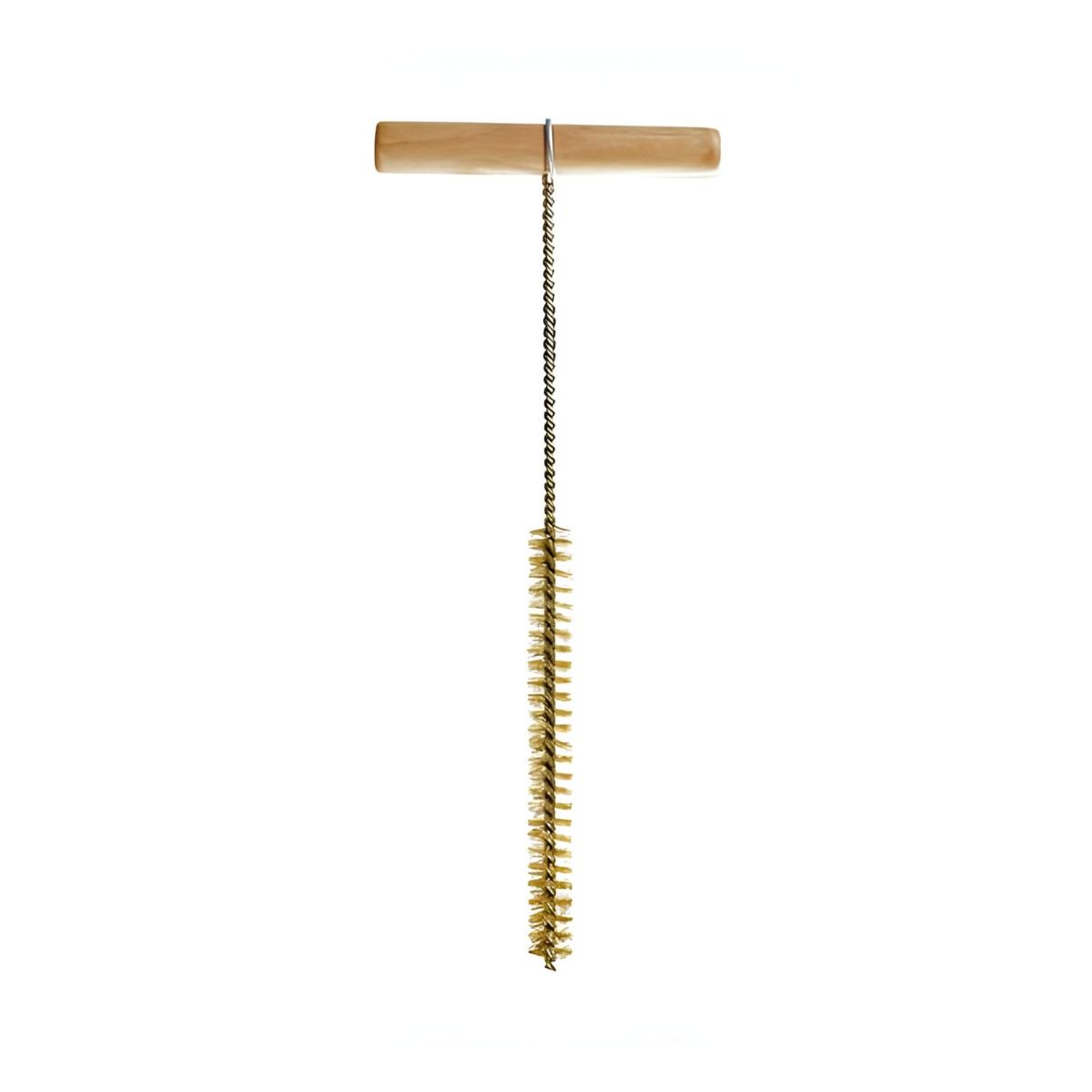

Round wire hole cleaning brush designed to clear dust and debris from drilled holes before chemical anchor resin is injected.
- Round wire bristle construction
- Removes dust and debris from holes
- Improves resin bond strength
- Hand operated
- Wooden T-bar handle
- Available in different diameters
Round Wire Hole Cleaning Brush - For Chemical Anchor Resin
Round wire hole cleaning brush designed to clear dust and debris from drilled holes before chemical anchor resin is injected.
- Round wire bristle construction
- Removes dust and debris from holes
- Improves resin bond strength
- Hand operated
- Wooden T-bar handle
- Available in different diameters
Round Wire Hole Cleaning Brush
Round wire hole cleaning brush built to clear drilling dust and debris from a hole before chemical anchor resin is injected. Hand operated with a wooden T-bar handle, it reaches the full depth of the hole to leave a clean bonding surface behind. Available across five diameters to match common chemical anchor hole sizes.
How leftover drilling dust weakens a resin fixing
Drilling a hole always leaves fine dust and debris coating the inside surface, even when the hole looks clean to the eye. That dust sits between the resin and the base material, stopping the resin from bonding directly to the substrate and reducing the fixing's actual load capacity below its rated performance. Brushing the hole with a round wire brush, then blowing it clear, breaks up and removes that surface dust so the resin bonds to the material itself rather than a layer of debris.
Key Features
-
Round wire bristle head: Reaches the full circumference of the hole wall to dislodge dust and debris a flat brush would miss
-
Wooden T-bar handle: Gives a firm grip for repeated in-and-out brushing strokes during hole preparation
-
Hand operated: No power tool or compressor needed to use it
-
Five diameter options: Covers the common range of chemical anchor hole sizes from 12mm to 30mm
-
Reusable: Designed for repeated use across multiple holes and installation jobs
Who is this for
Trades and roles:
-
Groundworkers and steel fixers
-
Site installers
-
Merchant counter staff
Industries:
-
Civil engineering
-
Structural construction
-
Builders' merchants and trade counters
Specifications
| Specification | Detail |
| Product Name | Round Wire Hole Cleaning Brush - For Chemical Anchor Resin |
| Product Range Code | CB |
| Product Type | Round Wire Hole Cleaning Brush |
| Bristle Shape | Round |
| Handle Type | Wooden T-bar |
| Operation | Hand operated |
| Recommended Use | Hole preparation before chemical anchor resin injection |
| Size / Diameter | 12mm (CB12), 16mm (CB16), 20mm (CB20), 25mm (CB25), 30mm (CBW30) |
Diameter Reference
| Brush Diameter | Product Code | Typical Use |
|---|---|---|
| 12mm | CB12 | Small diameter threaded rod and rebar holes |
| 16mm | CB16 | Medium diameter threaded rod holes |
| 20mm | CB20 | Medium to large diameter holes |
| 25mm | CB25 | Large diameter threaded rod and rebar holes |
| 30mm | CBW30 | Largest diameter holes in this range |
Typical Users and Projects
Groundworkers and steel fixers preparing drilled holes before injecting chemical anchor resin for structural fixings. Site installers use it as a standard step in any resin anchor installation, regardless of which resin brand or cartridge is being used. Builders' merchants and trade counters stock it as a companion item alongside chemical anchor resin and applicator guns.
Typical applications
-
Cleaning drilled holes before injecting chemical anchor resin
-
Preparing holes for threaded rod and rebar installations
-
Repeat use across multiple holes on a single installation run
-
Removing dust after drilling in concrete, masonry or natural stone
-
Companion tool alongside a blow-out pump during hole preparation
-
Stocking at builders' merchant counters alongside resin cartridges
How to use
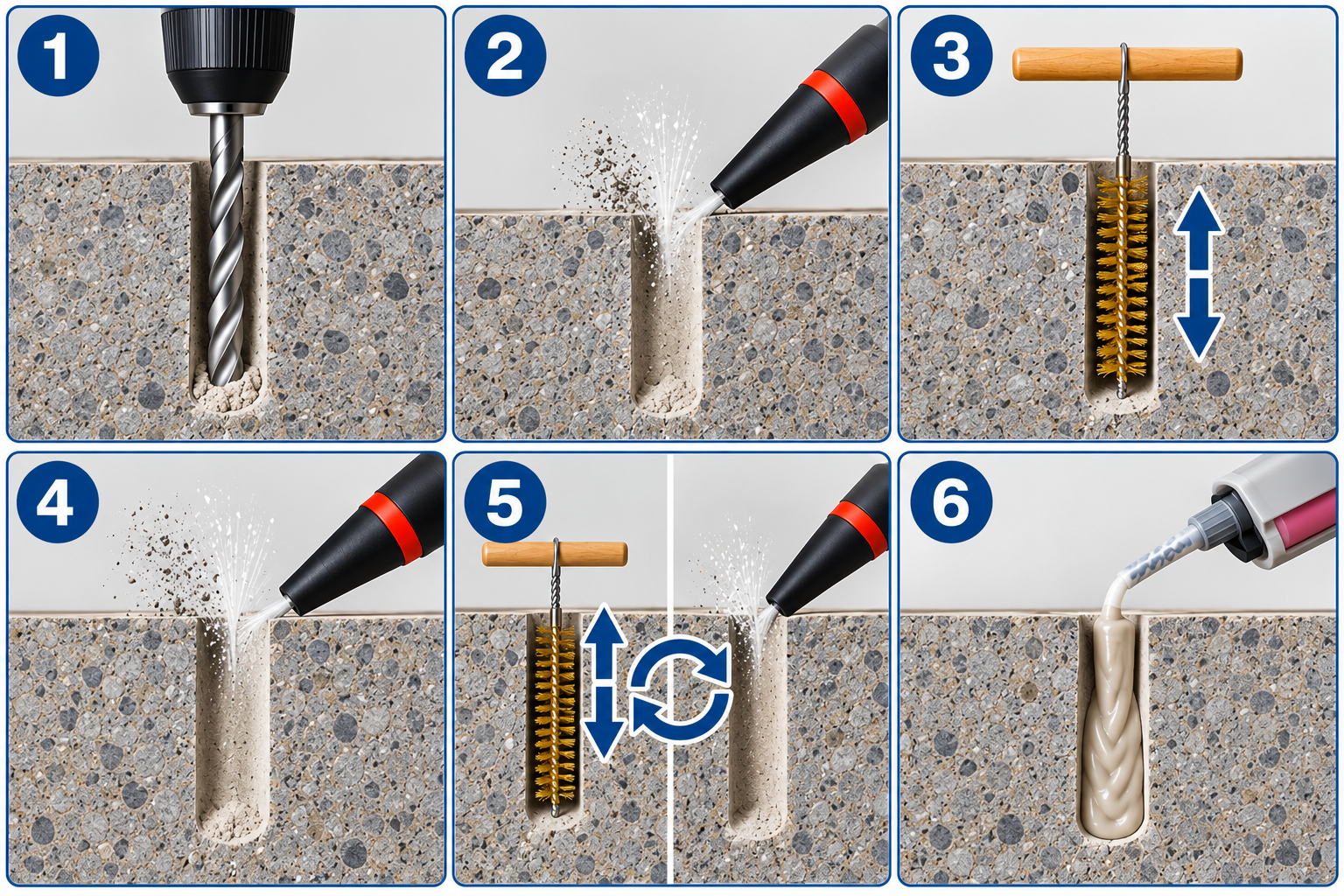
Step 1: Drill the hole to the correct diameter and depth for the stud or rebar size being installed.
Step 2: Blow the hole clear of loose drilling debris.
Step 3: Insert the brush and work it in and out to scrub the full length and circumference of the hole wall.
Step 4: Blow the hole clear again.
Step 5: Repeat the brush and blow sequence three to four times, or until the hole is visibly clear of dust.
Step 6: Proceed with resin injection following the resin manufacturer's instructions.
Common mistakes
-
Using the wrong brush diameter: a brush too small for the hole leaves parts of the wall uncleaned, one too large won't fit
-
Skipping the blow-out step: brushing loosens dust but doesn't remove it, a blow-out pump is still needed to clear it from the hole
-
Brushing only once: a single pass often isn't enough, the full blow-brush-blow sequence should be repeated three to four times
-
Assuming a clean-looking hole doesn't need brushing: fine dust isn't always visible but still coats the hole wall
Safety
Wear eye protection when brushing and blowing out a hole, dust and debris can be expelled during the process. No specific hazards beyond standard site dust precautions apply to this brush itself.
Maintenance
Tap or rinse out accumulated dust after use and store dry to prevent the wire bristles corroding. Replace if bristles become significantly worn or bent out of shape, since this reduces how well the brush contacts the hole wall.
Frequently Asked Questions
Q: Why do I need to brush the hole before injecting resin?
A: Drilling leaves fine dust and debris coating the inside of the hole, even when it looks clean. That dust sits between the resin and the base material, preventing a direct bond and reducing the fixing's actual load capacity below its rated performance. Brushing the hole breaks up that surface dust so it can be removed, usually followed by blowing the hole clear with a pump.
Q: How many times should I brush and blow out the hole?
A: Manufacturer installation instructions for chemical anchor resins typically call for a repeated sequence, blow, brush, blow, brush, blow, repeated three to four times or until the hole is visibly clear of dust. This brush is designed for that repeated in-and-out use across a full installation programme, not just a single pass.
Q: What is this brush NOT suitable for?
A: This brush is a manual hole preparation tool only, it doesn't replace the blow-out pump step in the cleaning sequence, both are normally needed together. It isn't designed for use with a power drill or rotary tool. Selecting the wrong diameter for the hole size won't clean effectively, a brush too small won't contact the full hole wall, and one too large won't fit the hole at all.
Q: Why use a round wire brush rather than a flat brush?
A: A round wire brush reaches the full circumference of a drilled hole in one pass, since its bristles extend outward in every direction as it's inserted and rotated or moved in and out. A flat brush is better suited to a straight-edged surface or slot rather than a round hole wall. For standard cylindrical anchor holes, the round design cleans more of the hole surface with fewer strokes.
Q: How do I know which brush diameter to use?
A: Match the brush diameter to the drilled hole diameter for the stud or rebar size being installed, using the resin manufacturer's setting parameters table to confirm the correct hole diameter first. This range covers 12mm, 16mm, 20mm, 25mm and 30mm to suit common chemical anchor hole sizes. Using a brush smaller than the hole leaves parts of the hole wall uncleaned.
Q: Can this brush be reused across multiple jobs?
A: Yes. It's designed for repeated use rather than as a single-use item, and the wire bristles hold up across multiple holes before wear becomes noticeable. Rinse or tap out any accumulated dust between uses and store it dry to avoid the bristles corroding.
Q: Can I buy these hole cleaning brushes in bulk across all sizes?
A: Yes. As a low-cost consumable used throughout any chemical anchor installation programme, these brushes are well suited to bulk ordering through CMT Group's EDGE procurement portal, where stock levels across all five diameters can be tracked against a project. Bulk and trade pricing is available.