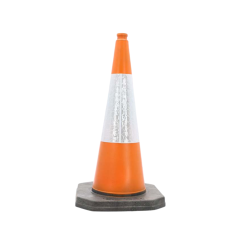
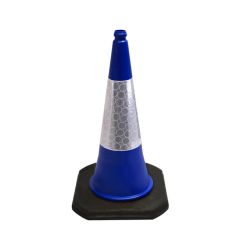
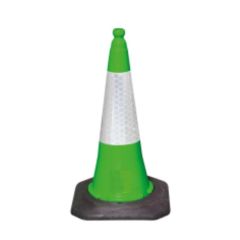
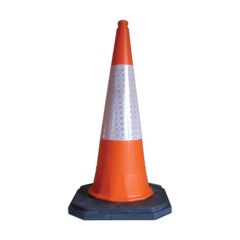
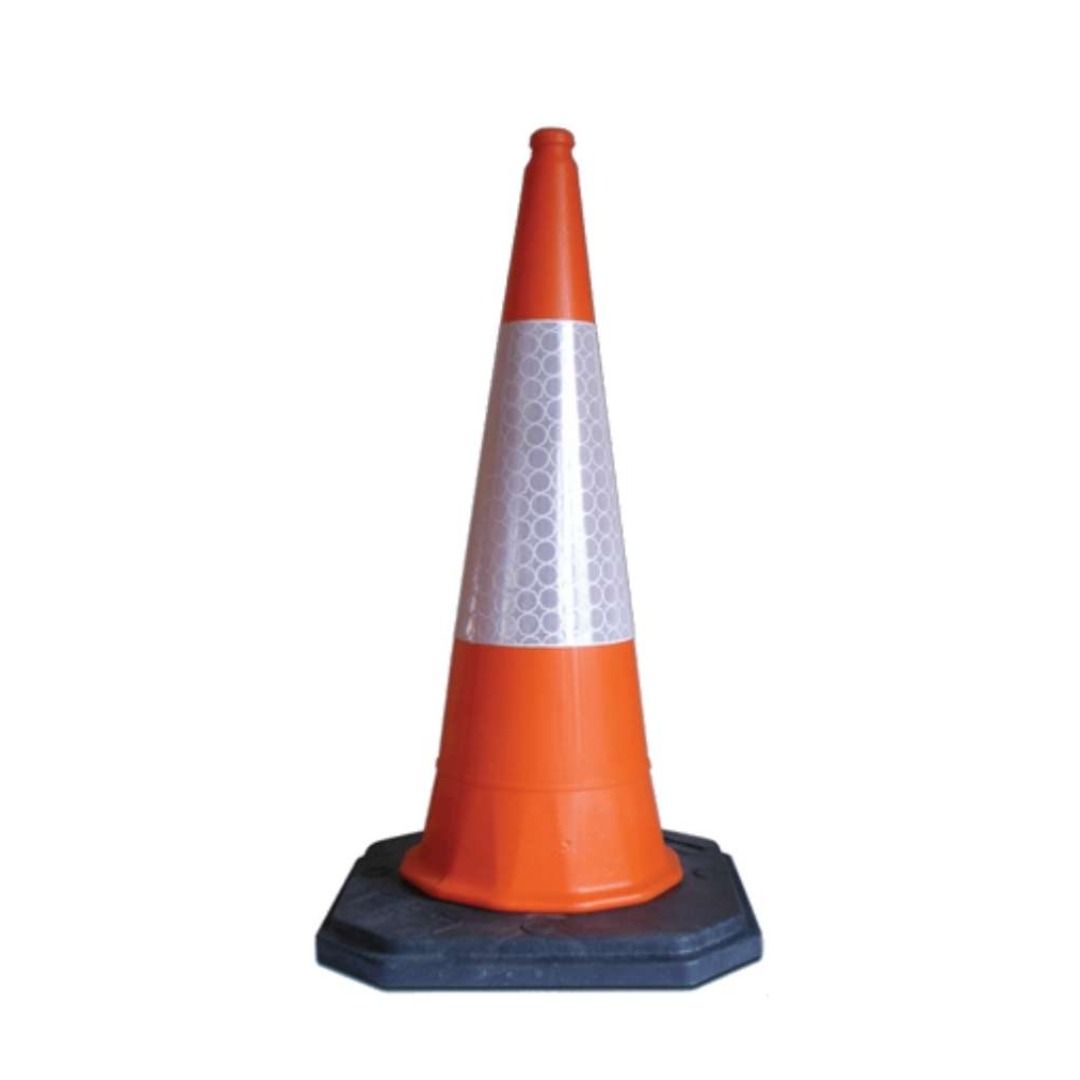
750mm two-piece orange road traffic cone with white prismatic reflective sleeve full view | CMT Group UK

A 750mm two-piece orange road traffic cone for Chapter 8 highway works, road reinstatement, utility street works, and construction site traffic management on UK public roads and private sites.

  • BSI Kitemarked to BS EN 13422
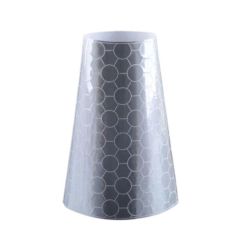
  • Pocketed prismatic reflective sleeve
  • Two-piece construction
  • 100% recycled PVC anti-slip base 
  • Available individually or in bulk packs
  • Logo embossing available on base and top, minimum one full pallet

750mm Road Traffic Cone - Two-Piece Orange

Code
RS2RC750
160+ In Stock

A 750mm two-piece orange road traffic cone for Chapter 8 highway works, road reinstatement, utility street works, and construction site traffic management on UK public roads and private sites.

  • BSI Kitemarked to BS EN 13422
  • Pocketed prismatic reflective sleeve
  • Two-piece construction
  • 100% recycled PVC anti-slip base 
  • Available individually or in bulk packs
  • Logo embossing available on base and top, minimum one full pallet
£15.54 £12.95
  • Buy 150 for £14.34 £11.95 each and save 8%
  • Buy 300 for £13.14 £10.95 each and save 15%
  • BULK DISCOUNT 150 300
    Price £11.95 £14.34 £10.95 £13.14

Order 1x to earn 12 FASTPoints

Order to earn 12 FASTPoints

Log in to access trade discounts
160+ In Stock

750mm Road Traffic Cone - Two-Piece 

Two-piece orange road traffic cone built for traffic management contractors, civil engineers, utilities operatives, and site managers deploying on UK public highways and construction sites under Chapter 8 of the Traffic Signs Manual. BSI Kitemarked to BS EN 13422 and supplied with a pocketed prismatic reflective sleeve as standard, this cone meets the certification requirements of local authority and Highways England procurement frameworks where self-declared conformance is not accepted. Available individually and in bulk packs of 100 and 200 for fleet procurement and high-turnover operations.

How two-piece construction reduces whole-life cone replacement costs

A one-piece cone damaged in service, cracked body, split base, or impact deformation, goes to waste as a complete unit. On a fleet of 100 or 200 cones deployed daily on live carriageways, that replacement cost accumulates rapidly. The two-piece design separates the top section from the base at the point of manufacture, so when one component is damaged, only that component needs replacing. A cracked top is swapped for a new top. A split base is replaced with a new base. The cone does not become a write-off because one part failed. For traffic management contractors and utilities teams running large cone fleets on high-turnover daily deployments, that difference in whole-life replacement cost is measurable across a season.

Key Features

  • BSI Kitemarked to BS EN 13422: Independently assessed and certified by BSI rather than self-declared. Required on many local authority and Highways England procurement frameworks where self-certification is not sufficient. The Kitemark is visible on the cone body.

  • Pocketed prismatic reflective sleeve fitted as standard: The prismatic pocketing delivers greater retroreflectivity than a standard flat reflective sleeve, maintaining visibility at approach speed, in wet conditions, and after dark without a separate beacon. Fitted as standard, not a paid upgrade.

  • Two-piece construction for component replacement: Top and base are separate units. When one is damaged, replace only that component. Directly reduces per-cone replacement cost on high-turnover fleets compared with one-piece alternatives.

  • Virgin HDPE blow-moulded top: The cone body is manufactured from virgin high density polyethylene for consistent dimensional accuracy, impact resistance, and colour stability across the service life of the cone.

  • 100% recycled PVC anti-slip base: The base is manufactured from 100% recycled thermoplastic PVC, providing a stable, anti-slip footprint on road surfaces. Meets recycled content requirements relevant to ISO 14001 and sustainability-scored procurement frameworks.

  • Easy-grip apex: The blow-moulded access point at the top of the cone allows operatives to pick up, stack, and de-stack cones quickly without snagging the reflective sleeve, reducing handling time during deployment and recovery.

  • Logo embossing available: Base and top can be embossed with a company logo or identifier. Minimum order quantity is one full pallet. Bespoke base colours available on request.

Who is this for

Trades and roles:

  • Traffic management contractors

  • Civil engineering operatives

  • Utilities and street works operatives

  • Site managers and CDM coordinators

  • Highways maintenance teams

  • Event and temporary road closure contractors

Industries:

  • Highways and road construction

  • Utilities: gas, water, telecoms, and electricity

  • Civil engineering

  • Construction site traffic management

  • Event management and temporary road closures

 Specifications

Specification Detail
Product Name 750mm Road Traffic Cone - Two-Piece Orange
SKU / Product Code RS2RC750
Height 750mm
Construction Two-piece — separate top and base
Top Material Virgin HDPE, blow-moulded
Base Material 100% recycled thermoplastic PVC, anti-slip
Reflective Sleeve Pocketed prismatic sleeve, fitted as standard
Sleeve Grade D2 prismatic retroreflective
Colour Orange with white prismatic sleeve
Weight (approximate) 4.15kg
Certification BSI Kitemarked
Standard BS EN 13422
Further Compliance Chapter 8 Traffic Signs Manual; Traffic Signs Regulations and General Directions; The Red Book 2013
Recyclability 100% recyclable
Embossing Available on base and top — MOQ one full pallet
Bespoke Base Colour Available on request
Pack Options Individual, pack of 100, pack of 200

Compatibility

Application or condition Status
Chapter 8 lane closures on A-roads and dual carriageways up to 50mph ✓ Compatible
Utility and street works daily deployment and recovery ✓ Compatible
Construction site internal traffic and pedestrian segregation ✓ Compatible
Reflective cone sleeves (RS2RC series) ✓ Compatible
Danger Overhead Cables sleeve (RSRSDOC750) ✓ Compatible
Skipper retractable tape unit (SKIPPER01) ✓ Compatible
Telescopic demarcation poles (RSTDP-RW) ✓ Compatible
Flashing beacon — requires RSMULCB bracket ✓ Compatible with bracket
Roads with posted speed limit of 60mph or above ✗ Use 1000mm cone
One-piece road cone range (RS1RC series) ✗ Not interchangeable
Substitute for vehicle restraint systems or pedestrian barriers ✗ Not suitable


Who is this for

This road traffic cone is used by traffic management contractors, utilities operatives, civil engineers, and site managers deploying on UK public highways and construction sites under Chapter 8 of the Traffic Signs Manual. It is suited to high-turnover daily deployment operations, street works, highway maintenance, and utility reinstatement, where the two-piece construction and component replacement model directly reduce whole-life fleet costs. It is equally relevant to procurement teams on local authority and Highways England frameworks where BSI Kitemark certification is a stated requirement and self-declared BS EN 13422 conformance is not accepted.

Typical applications

  • Chapter 8 lane closure and taper layouts on A-roads and dual carriageways up to 50mph under the Traffic Signs Manual.

  • Utility street works deployment for gas, water, telecoms, and electricity maintenance where cones are set out and recovered daily across multiple locations.

  • Footway diversions and pedestrian management on construction and highway maintenance sites requiring compliant traffic cones at the carriageway edge.

  • Construction site internal traffic routes and vehicle-to-pedestrian segregation under CDM 2015 site traffic management requirements.

  • Overnight and multi-day site demarcation where the pocketed prismatic sleeve maintains retroreflective visibility without a separate beacon.

  • Public events and temporary road closures where a BSI Kitemarked cone is a condition of the local authority licence or event management plan.

  • Road reinstatement and pothole repair operations requiring rapid cone deployment and recovery across multiple daily locations.

How to use

Step 1: Check the reflective sleeve is correctly seated on the cone body and the top is fully engaged with the base before deployment. A partially engaged top will separate under vehicle draught or wind loading.

Step 2: Place cones at the spacings required by your traffic management plan, consistent with Chapter 8 Table A1.3 for the road type and posted speed limit.

Step 3: Use the 750mm cone on roads with a speed limit up to 50mph. On roads with a 60mph limit or above, the 1000mm cone is required under Chapter 8. Do not substitute the 750mm cone where the 1000mm is specified.

Step 4: Before night-time or low-visibility deployment, confirm the prismatic sleeve is clean. Mud, dust, or debris on the sleeve surface reduces retroreflective performance at approach speed.

Step 5: Where a flashing beacon is required, fit the appropriate bracket before attaching the beacon to the cone apex. Do not balance an unbracketed beacon on the cone top.

Step 6: Stack cones for transport with tops nested and sleeves protected. Store away from prolonged direct UV exposure when not in active use.

Step 7: Before redeployment, inspect each cone. Replace cracked tops and split bases individually, only the damaged component needs replacing.

Common mistakes

  • Using the 750mm cone on 60mph or above roads: The Traffic Signs Manual requires a minimum 1000mm cone height on 60mph roads and motorway approaches. Deploying the wrong height cone does not meet Chapter 8 requirements and creates a liability risk for the traffic management contractor.

  • Deploying with a dirty or damaged reflective sleeve: A sleeve fouled with road grime, mud, or diesel residue can lose retroreflective performance significantly at approach speed. Clean sleeves before night deployment and replace sleeves that show physical damage or delamination.

  • Stacking cones without checking sleeve seating on deployment: Cones removed rapidly from a stack can have displaced sleeves. A quick check that the sleeve is correctly seated before placing each cone takes seconds and prevents a non-compliant deployment.

  • Using cones as a substitute for vehicle restraint systems: Road traffic cones are delineation and warning devices. They are not rated to restrain vehicles and must not be used in place of certificated vehicle restraint systems or pedestrian barriers where those are specified in a traffic management plan.

  • Ignoring cracked or deformed cones in the fleet: A damaged cone that does not meet the dimensional requirements of BS EN 13422 is no longer compliant, regardless of its certification history. Remove damaged cones from service and replace the affected component.

Safety

Deploy in accordance with Chapter 8 of the Traffic Signs Manual and the Traffic Signs Regulations and General Directions. CDM 2015 places duties on principal contractors to plan and manage traffic routes on construction sites, cone layouts on live carriageways require a competent operative and an approved traffic management plan. Operatives placing or recovering cones on live carriageways must wear EN ISO 20471 Class 3 high-visibility clothing as a minimum. Do not use the 750mm cone where the 1000mm is required by the Traffic Signs Manual. Do not substitute road traffic cones for certificated vehicle restraint systems or pedestrian barriers where those are specified.

Maintenance

Wipe the reflective sleeve with a damp cloth after deployment in muddy or contaminated conditions. Do not use abrasive cleaners or solvents on the sleeve surface, these degrade the prismatic pocketing and reduce retroreflective performance. Replace cone tops that are cracked, deformed, or no longer seat correctly on the base. Replace bases that have lost structural integrity or anti-slip profile. Both components are 100% recyclable at end of service life.

Frequently Asked Questions

Q: What is the difference between a BSI Kitemarked cone and a self-declared BS EN 13422 cone?
A: BS EN 13422 is the product standard that road traffic cones must meet for use on UK public highways. A self-declared cone means the manufacturer has assessed their own product against the standard without independent verification. A BSI Kitemarked cone has been independently assessed and certified by BSI, the UK's national standards body, confirming the product meets the standard under third-party audit. Many local authority and Highways England procurement frameworks specify BSI Kitemark certification as a condition of supply, self-declared conformance is not accepted on those contracts.

Q: What speed limit roads is the 750mm cone suitable for?
A: The 750mm cone is suitable for use on roads with a posted speed limit up to 50mph under Chapter 8 of the Traffic Signs Manual. On roads with a 60mph limit or above, including motorway approaches, the Traffic Signs Manual requires a minimum cone height of 1000mm. Deploying a 750mm cone where a 1000mm is required does not meet Chapter 8 and creates a compliance and liability risk for the traffic management contractor. A 1000mm variant is available separately.

Q: What does "two-piece construction" mean and why does it matter?
A: Two-piece means the cone body and base are manufactured as separate components that connect together. When a cone is damaged in service, a cracked top from a vehicle strike or a split base from repeated stacking, only the damaged component needs replacing. On a fleet of 100 or 200 cones deployed daily, replacing individual tops or bases rather than complete cones produces a measurable reduction in per-unit replacement cost across a full operating season.

Q: What is this cone NOT suitable for?
A: This cone is not suitable for use on 60mph or above roads without the 1000mm variant. It must not be used as a substitute for a certificated vehicle restraint system or pedestrian barrier where those are specified in a traffic management plan. It is not suitable for permanent road marking or delineation, it is a temporary traffic management device. Do not attach fittings or accessories to the cone that have not been designed for use with this product.

Q: What makes the pocketed prismatic sleeve better than a standard reflective sleeve?
A: A standard flat reflective sleeve returns light in a relatively narrow angle, which reduces visibility when a driver's headlights are not directly aligned with the cone. A pocketed prismatic sleeve uses a structured surface with multiple reflective facets that return light across a wider angle, improving visibility at approach speed, in wet conditions where surface reflections reduce contrast, and in the oblique angles typical of lane change and taper approach. The prismatic sleeve is fitted as standard on this cone, it is not a separately purchased upgrade.

Q: Can I get these cones embossed with our company logo?
A: Yes. Logo embossing is available on both the base and the top section. The minimum order quantity for embossing is one full pallet. Bespoke base colours are also available on request. Contact the CMT sales team on 020 8311 1144 or at sales@cmt.co.uk to discuss embossing requirements and lead times.

Q: How quickly can I get these cones delivered to site?
A: Order by 7pm for next-day delivery to UK mainland sites. CMT Group operates its own fleet of delivery vehicles covering over 95% of the UK mainland, with live order tracking, real-time ETAs, and What3Words integration for precise delivery to a specific site entrance, compound gate, or welfare unit. For volume orders of 100 or 200 cones, contact the sales team on 020 8311 1144 to confirm availability and delivery scheduling.

CMT Equipment Ltd