The complete UK buyer's guide to road traffic cones for construction sites, highway works, and traffic management. Covers Chapter 8 height requirements, BSI Kitemark certification, one-piece versus two-piece construction, colour-coded site conventions, specialist hazard cones, and no waiting parking cones. Includes the full CMT Group cone range with next-day delivery across the UK mainland.
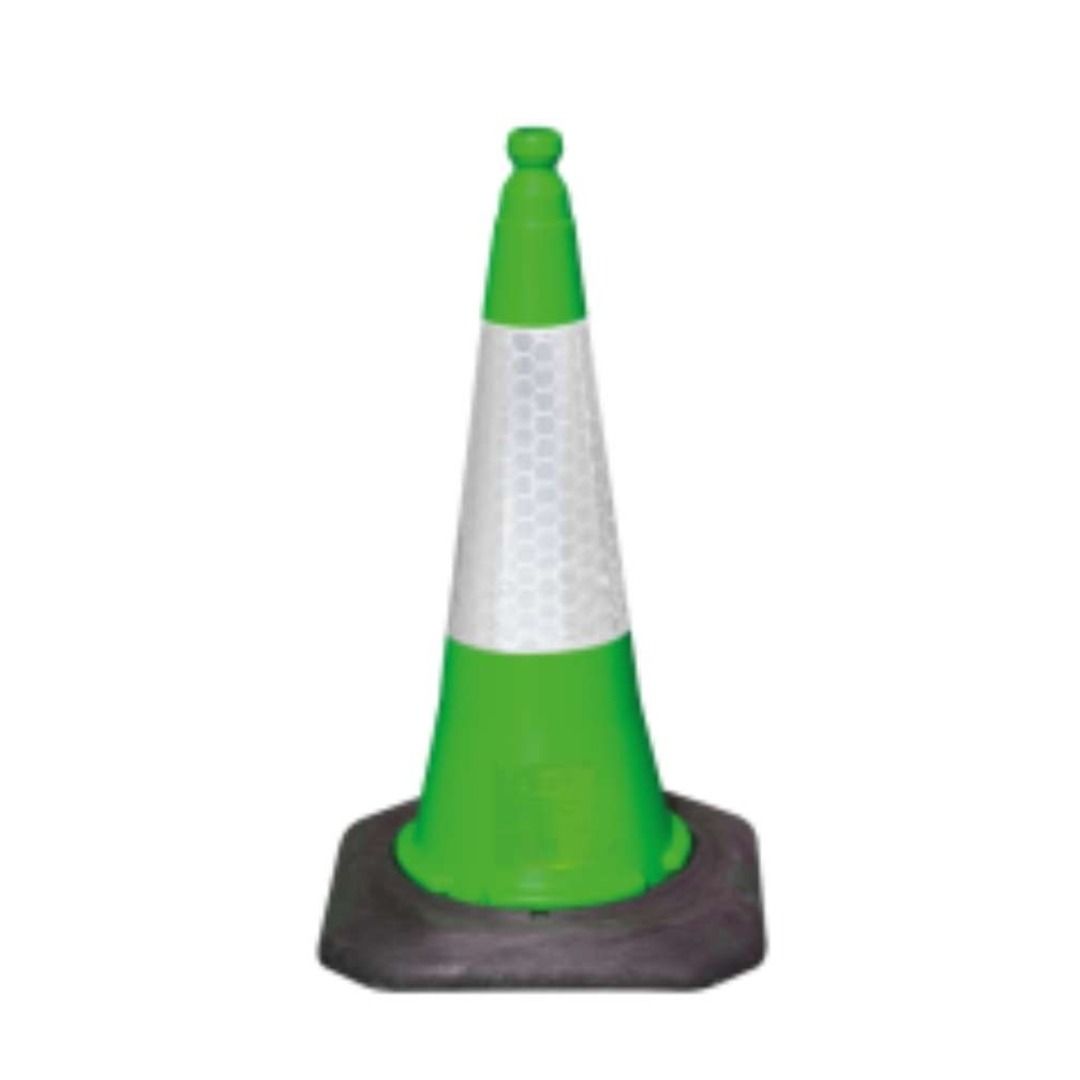
A 750mm two-piece green road traffic cone for ecological protection zones, welfare boundaries, low-risk areas, and colour-coded site demarcation on UK construction, environmental, and agricultural sites.
- UV-stabilised virgin HDPE
- BSI Kitemarked to BS EN 13422
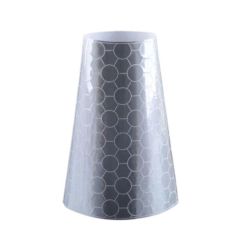
- Pocketed prismatic D2 reflective sleeve
- Two-piece construction
- 100% recycled PVC anti-slip base
- Available individually or in bulk packs
- Logo embossing and custom sleeve printing available, minimum order quantities apply
750mm Road Traffic Cone - Two-Piece Green
A 750mm two-piece green road traffic cone for ecological protection zones, welfare boundaries, low-risk areas, and colour-coded site demarcation on UK construction, environmental, and agricultural sites.
- UV-stabilised virgin HDPE
- BSI Kitemarked to BS EN 13422
- Pocketed prismatic D2 reflective sleeve
- Two-piece construction
- 100% recycled PVC anti-slip base
- Available individually or in bulk packs
- Logo embossing and custom sleeve printing available, minimum order quantities apply
- Buy 50 for £24.80 £20.67 each and save 7%
- Buy 150 for £22.74 £18.95 each and save 15%
| BULK DISCOUNT | 50 | 150 |
|---|---|---|
| Price | £20.67 £24.80 | £18.95 £22.74 |
Order 1x to earn 22 FASTPoints
Order to earn 22 FASTPoints
Log in to access trade discounts750mm Road Traffic Cone - Two-Piece
Two-piece green road traffic cone built for principal contractors, environmental managers, ecological consultants, and site safety managers who need a recognised colour signal for protected zones, low-risk boundaries, and welfare areas on UK construction, environmental, and agricultural sites. BSI Kitemarked to BS EN 13422 and supplied with a pocketed prismatic D2 reflective sleeve as standard. The UV-stabilised virgin HDPE top retains its green colour over extended outdoor project durations, maintaining the integrity of the site colour-coding system throughout the project life.
How green cone colour signals protected zones without additional signage
On a busy construction site, operatives move fast and are not always in range of a site manager or briefing. A physical boundary marker that communicates zone type instantly, without a sign, a verbal instruction, or a barrier, is the most reliable way to protect a sensitive area from accidental encroachment. Green is the established site convention for ecological protection areas, welfare boundaries, and low-risk zones on UK construction and environmental sites. Placing green cones at a TPO tree root protection zone, an ecological buffer, or a welfare perimeter tells every operative on site exactly where the boundary is and what it means, without any additional communication. On sites with environmental management plans, Tree Preservation Orders, or BREEAM requirements, that clarity is a practical compliance tool as much as a safety measure.
Key Features
-
UV-stabilised virgin HDPE top: UV stabilisation prevents the green pigment from fading over extended outdoor project durations. On a long-running construction or environmental project where the cone colour is part of the site safety system, colour retention is a functional requirement, not a cosmetic one.
-
BSI Kitemarked to BS EN 13422: Independently assessed and certified by BSI under licence KM649097. Meets procurement requirements where BSI Kitemark certification is a contractual minimum, including sites operating under ISO 14001 or BREEAM frameworks where supplier certification is a scored criterion.
-
Pocketed prismatic D2 reflective sleeve fitted as standard: Maintains visibility at night and in all weather conditions. Outdoor events, agricultural sites, and environmental projects often run in poor light and wet conditions where sleeve retroreflective performance matters as much as on a highway.
-
Two-piece construction for component replacement: Top and base replace independently. On sites running colour-coded cone systems across large areas over long project durations, replacing only the damaged component reduces maintenance cost significantly.
-
100% recycled PVC anti-slip base: Consistent with the environmental and sustainability ethos of the projects where green cones are most commonly deployed. Relevant for contractors working under ISO 14001, BREEAM, or sustainability-scored procurement frameworks.
-
Green for recognised site colour coding: Green is the established industry convention for ecological protection zones, welfare boundaries, and low-risk areas on UK construction and event sites. Colour conventions are not statutory requirements under Chapter 8, which specifies orange as the standard highway cone colour, but they are consistent industry practice on construction, environmental, and event sites.
-
Embossing and custom sleeve printing available: Centre and base can be embossed with text or logo. Custom sleeve printing is available. Both are subject to minimum order quantities.
Who is this for
Trades and roles:
-
Principal contractors and site managers
-
Environmental managers and ecological consultants
-
Site safety managers and CDM coordinators
-
Event managers and outdoor event organisers
-
Agricultural and estate operations managers
-
Facilities managers on large or multi-zone sites
Industries:
-
Construction and civil engineering
-
Environmental consultancy and ecological surveying
-
Agriculture and land management
-
Outdoor events and festivals
-
Facilities management
-
Film and media production on outdoor locations
!Please contact our team, who will be happy to confirm exact delivery dates.
Specifications
| Specification | Detail |
|---|---|
| Product Name | 750mm Road Traffic Cone - Two-Piece Green |
| SKU / Product Code | RS2RC750GRN |
| Height | 750mm |
| Construction | Two-piece, separate top and base |
| Top Material | Virgin HDPE, UV-stabilised, blow-moulded |
| Base Material | 100% recycled thermoplastic PVC, anti-slip |
| Reflective Sleeve | Pocketed prismatic sleeve, fitted as standard |
| Sleeve Grade | D2 prismatic retroreflective |
| Colour | Green with white prismatic sleeve |
| Weight (approximate) | 4.15kg |
| Certification | BSI Kitemarked, licence KM649097 |
| Standard | BS EN 13422 |
| Further Compliance | Chapter 8 Traffic Signs Manual; Traffic Signs Regulations and General Directions; The Red Book 2013 |
| Recyclability | 100% recyclable |
| Embossing | Available on top and base, minimum order quantities apply |
| Sleeve Printing | Custom text and logo printing available, minimum order quantities apply |
| Pack Options | Individual, pack of 100, pack of 200 |
CONE COLOUR CONVENTION REFERENCE
Colour conventions are established industry practice, not statutory requirements under Chapter 8 of the Traffic Signs Manual.
| Colour | Primary Site Use |
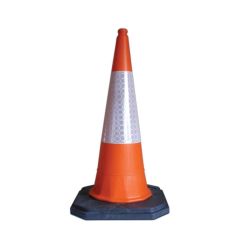
| Orange | Standard highway and Chapter 8 traffic management, general construction site demarcation |
| Yellow | Electrical works, overhead and underground cable hazard zones, warehouses and industrial facilities |
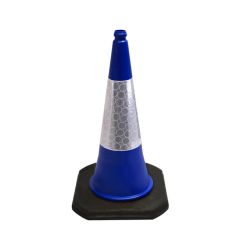
| Blue | Water mains, potable water services, subterranean utility works, water industry operations |
| Green | Ecological protection zones, low-risk areas, welfare boundaries, agricultural and environmental sites, outdoor events |
Compatibility
| Ecological protection zones and TPO tree root protection boundaries | ✓ Compatible |
| Welfare area and low-risk zone boundaries on construction sites | ✓ Compatible |
| Agricultural and estate temporary demarcation | ✓ Compatible |
| Outdoor events and festival site zoning | ✓ Compatible |
| Reflective cone sleeves (RS2RC750 series) | ✓ Compatible |
| Skipper retractable tape unit (SKIPPER01) | ✓ Compatible |
| Telescopic demarcation poles (RSTDP-RW) | ✓ Compatible |
| Flashing beacon, requires RSMULCB bracket | ✓ Compatible with bracket |
| 750mm and 1000mm orange two-piece cone range | ✓ Same sleeve and base system |
| Chapter 8 standard highway traffic management (orange required) | ✗ Use orange cone for highway works |
| One-piece road cone range (RS1RC series) | ✗ Not interchangeable |
Who is this for
This green road traffic cone is used by principal contractors, environmental managers, ecological consultants, and site safety managers who need a recognised colour signal for protected zones, low-risk boundaries, and welfare areas on UK construction, environmental, and agricultural sites. It is equally suited to outdoor event organisers and agricultural operations managers who need temporary demarcation that communicates zone type instantly without additional signage. Procurement teams working under ISO 14001, BREEAM, or sustainability-scored frameworks will find the 100% recycled PVC base and BSI Kitemark directly relevant to supplier qualification criteria.
Typical applications
-
Marking Tree Preservation Order root protection zone boundaries on development sites where protected trees must be kept clear of plant, machinery, and personnel throughout the construction programme.
-
Demarcating ecological buffer zones around protected habitats, bat roosts, nesting areas, and sensitive ground where access must be controlled without permanent fencing or signage.
-
Defining welfare area boundaries on large construction sites, separating rest areas, canteen compounds, and first aid points from active work zones.
-
Temporary demarcation of field boundaries, machinery exclusion zones, and access routes on agricultural and estate management operations.
-
Zoning welfare areas, green rooms, and low-risk pedestrian routes at outdoor events and festivals where colour-coded boundaries are part of the event safety management plan.
-
Marking environmental monitoring site perimeters where access to sensitive areas must be controlled during survey or remediation work.
-
Internal site compound zoning where green identifies low-risk or non-operational areas within a larger site layout that uses a multi-colour cone system.
How to use
Step 1: Confirm the green cone colour convention is communicated to all site operatives before deployment. Colour conventions are not statutory but they are only effective when everyone on site understands what each colour means. Include cone colour meanings in site inductions and toolbox talks.
Step 2: Check the reflective sleeve is correctly seated on the cone body and the top is fully engaged with the base before deployment.
Step 3: Place cones at consistent spacings around the perimeter of the protected zone. For TPO root protection zones, follow the root protection area calculation set out in BS 5837:2012 and the relevant planning condition or ecological management plan.
Step 4: Before low-light or overnight deployment, confirm the prismatic sleeve is clean. On ecological and agricultural sites, mud and soil contamination on the sleeve is common and reduces retroreflective performance after dark.
Step 5: Stack cones for transport with tops nested and sleeves protected. Store away from prolonged direct UV exposure when not in active use. UV stabilisation in the HDPE top retains the green colour over extended project durations but unnecessary UV exposure accelerates any material ageing.
Step 6: Before redeployment, inspect each cone. Replace cracked tops and split bases individually, only the damaged component needs replacing.
Common mistakes
-
Not briefing operatives on the colour convention before deployment: A green cone that no one has been told the meaning of provides no protection. Colour conventions only work when they are part of the site induction, the environmental management plan, and the daily briefing on active ecological or environmental sites.
-
Using green cones for highway works: Green is not an approved colour for Chapter 8 highway traffic management. Only orange cones meet the Traffic Signs Manual requirements for use on public highways. Using green cones on a live carriageway creates a compliance risk and may not be recognised by drivers as a traffic management device.
-
Allowing the sleeve to become fouled without cleaning: On ecological and agricultural sites, cones are frequently deployed in muddy, wet, and vegetated ground conditions. A fouled sleeve significantly reduces retroreflective performance. Clean with a damp cloth before any low-light or overnight deployment.
-
Treating green cones as interchangeable with orange on a mixed site: On a site running a colour-coded system, mixing cone colours in the wrong zones undermines the entire system. Green cones must only appear at green-zone boundaries. If operatives see green in what should be an orange zone, the colour coding loses its meaning.
-
Replacing the entire cone when only one component is damaged: The two-piece design exists precisely to avoid whole-cone replacement. A cracked top replaced with a new top restores the cone to full service. Discarding both components when only one is damaged increases replacement cost unnecessarily.
Safety
Colour conventions for cone use on construction and environmental sites are established industry practice, they are not statutory requirements under Chapter 8 of the Traffic Signs Manual. Green cones must not be used on public highways in place of orange Chapter 8 cones. On construction sites, CDM 2015 requires principal contractors to plan and manage site traffic routes. Operatives placing or recovering cones in areas with plant or vehicle movements must wear EN ISO 20471 high-visibility clothing appropriate to the risk level. Do not use road traffic cones as a substitute for certificated fencing, barriers, or vehicle restraint systems where those are specified in a site environmental management plan or planning condition.
Maintenance
Wipe the reflective sleeve with a damp cloth after deployment in muddy or wet conditions. Do not use abrasive cleaners or solvents on the sleeve surface. Replace cone tops that are cracked, deformed, or no longer seat correctly on the base. Replace bases that have lost structural integrity or anti-slip profile. Both components are 100% recyclable at end of service life. The UV-stabilised HDPE top retains green colour over extended outdoor project durations but inspect periodically for significant colour fade, which indicates the UV stabiliser has reached the end of its effective life.
Frequently Asked Questions
Q: Why would I use a green cone instead of an orange one on a construction site?
A: On a construction site running a colour-coded cone system, each colour signals a specific zone type without needing a sign or a verbal instruction. Green is the established industry convention for ecological protection zones, welfare area boundaries, and low-risk areas. An orange cone at a TPO root protection zone or an ecological buffer tells operatives nothing specific about why they should not enter. A green cone at the same boundary, on a site where the colour convention has been briefed, communicates the zone type immediately. On sites with environmental management plans, Tree Preservation Orders, or BREEAM requirements, the green cone is a practical compliance tool.
Q: Is the green cone Chapter 8 compliant for use on public highways?
A: This cone is BSI Kitemarked to BS EN 13422 and meets the structural and retroreflective requirements of the standard. However, Chapter 8 of the Traffic Signs Manual specifies orange as the required colour for highway traffic management cones on public roads. Green cones must not be used in place of orange cones on live carriageways. This cone is intended for use on construction sites, environmental sites, agricultural land, and event venues where colour-coded demarcation is applied independently of Chapter 8 requirements.
Q: What site colour coding convention does green represent?
A: Green is the established convention for ecological protection zones, welfare area boundaries, and low-risk areas on UK construction and environmental sites. It is used at TPO tree root protection zone perimeters, ecological buffer boundaries, welfare compound entrances, and any area where a low-risk or environmentally sensitive designation needs to be communicated visually. Colour conventions are industry practice rather than statutory requirements, but they are widely recognised across construction, environmental consultancy, and event management sectors.
Q: Why does UV stabilisation matter on a green cone specifically?
A: On a site where the cone colour is part of the safety system, colour consistency matters throughout the project. A green cone that fades to a pale or yellowed shade over a long outdoor deployment may no longer be immediately distinguishable from a yellow or white cone at a distance, undermining the colour-coding system. UV stabilisation in the virgin HDPE top slows pigment degradation, maintaining the green colour over extended outdoor project durations. This is particularly relevant on ecological and environmental projects that may run for months or years.
Q: What is this cone NOT suitable for?
A: This cone must not be used on public highways in place of orange Chapter 8 traffic cones. It is not suitable for use as a substitute for certificated fencing, ecological exclusion barriers, or vehicle restraint systems where those are specified in a planning condition or environmental management plan. It is a temporary demarcation device that communicates a zone boundary visually — it does not physically prevent access by plant, machinery, or vehicles.
Q: Can I mix green and orange cones in the same cone fleet?
A: Yes, and many contractors do. The green and orange variants share the same two-piece construction, base system, and sleeve specification, so they stack and store together without compatibility issues. On a site running a multi-colour system, holding green cones for ecological and welfare zones alongside orange cones for traffic management and general demarcation is standard practice for principal contractors managing complex site layouts.
Q: Can I get these cones embossed or printed with a project or company identifier?
A: Yes. The top and base can both be embossed with text or a logo, and custom sleeve printing is available. All are subject to minimum order quantities. On long-running ecological or environmental projects where cones are deployed across a large site perimeter, embossing with a project identifier or ecological zone designation adds clarity and reduces the risk of cones being misused or relocated without authorisation. Contact the CMT sales team on 020 8311 1144 or at sales@cmt.co.uk to discuss options and lead times.