
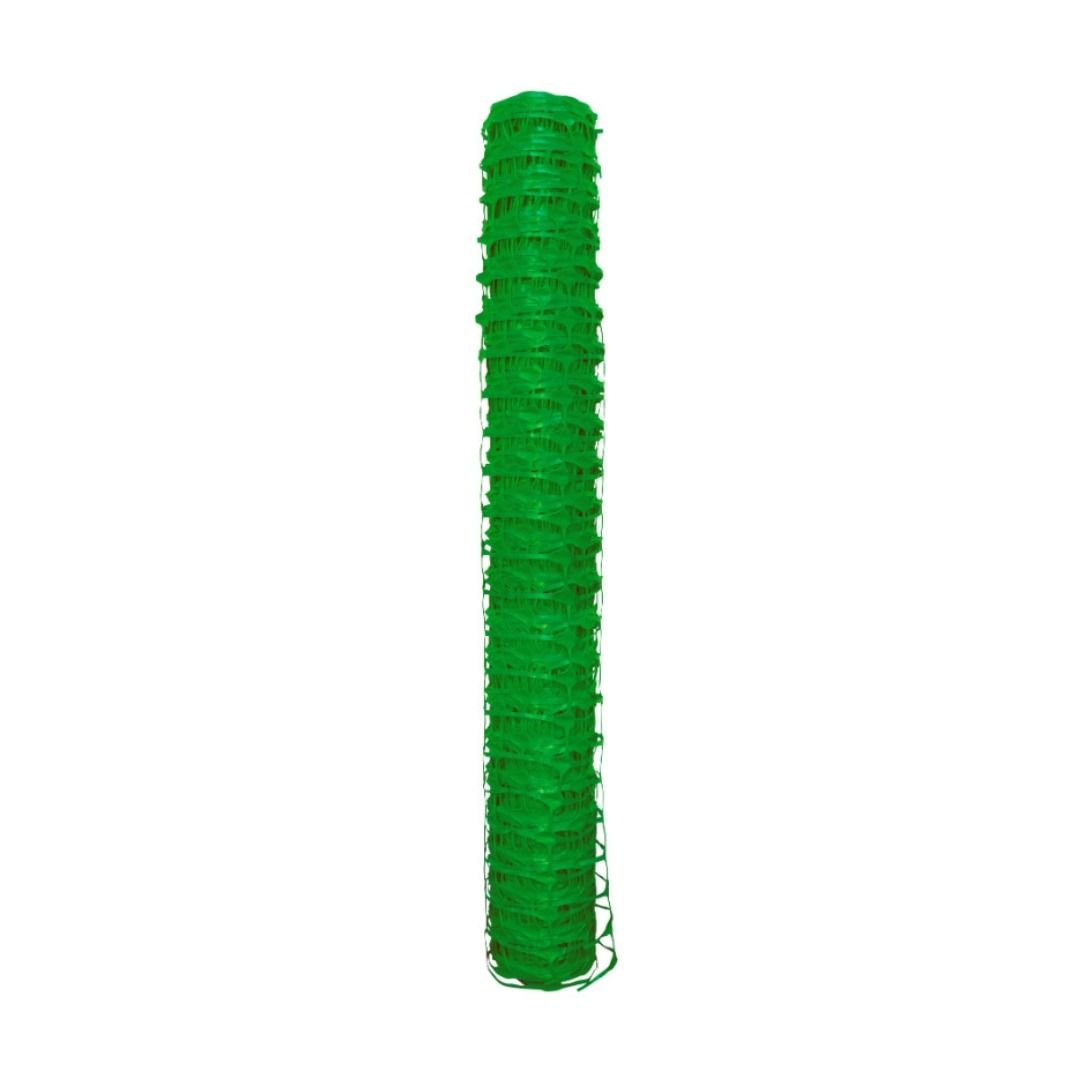


Green high-density polyethylene mesh barrier fencing for temporary landscaping boundaries, environmental exclusion zones, tree protection areas, and low-profile site demarcation.
- HDPE construction, weatherproof and UV-resistant for extended outdoor deployment
- Green colouring blends into vegetation and natural environments for low-profile demarcation
- Flat oval mesh,lightweight
- Reusable and rollable for storage and redeployment across multiple projects
- Attaches to T-posts, timber stakes, fencing pins, or existing site structures
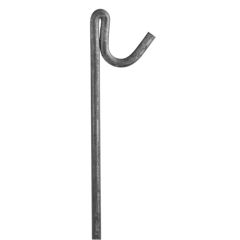
- Fencing pins sold separately, one pin per 5 metres recommended
- Available in a 1m x 50m roll
Green Mesh Barrier Fencing - 1m x 50m Landscaping and Environmental Demarcation
Green high-density polyethylene mesh barrier fencing for temporary landscaping boundaries, environmental exclusion zones, tree protection areas, and low-profile site demarcation.
- HDPE construction, weatherproof and UV-resistant for extended outdoor deployment
- Green colouring blends into vegetation and natural environments for low-profile demarcation
- Flat oval mesh,lightweight
- Reusable and rollable for storage and redeployment across multiple projects
- Attaches to T-posts, timber stakes, fencing pins, or existing site structures
- Fencing pins sold separately, one pin per 5 metres recommended
- Available in a 1m x 50m roll
- Buy 6 for £23.35 £19.46 each and save 7%
- Buy 12 for £21.56 £17.97 each and save 14%
| BULK DISCOUNT | 6 | 12 |
|---|---|---|
| Price | £19.46 £23.35 | £17.97 £21.56 |
Order 1x to earn 20 FASTPoints
Order to earn 20 FASTPoints
Log in to access trade discountsGreen Mesh Barrier Fencing - 1m x 50m
Green HDPE mesh barrier fencing used by landscaping contractors, environmental consultants, arboriculturists, civils teams, and local authority operatives to establish temporary boundaries around tree protection zones, environmental exclusion areas, landscaping works, and countryside boundaries where high-visibility orange or blue fencing would be visually intrusive. Each roll covers 50 metres at 1 metre height and attaches to standard timber stakes, T-posts, fencing pins, or existing site structures. The green colouring blends into vegetation and natural ground cover, maintaining the demarcation function without the visual impact of brighter barrier colours on sensitive or public-facing sites.
How green mesh fencing maintains demarcation without visual intrusion on sensitive sites
On landscaping projects, public parks, and sites adjacent to residential areas, the use of high-visibility orange or blue barrier fencing creates visual conflict with the natural environment and can generate complaints from neighbouring residents or planning authorities. Green HDPE mesh barrier fencing provides the same physical demarcation function as other barrier colours while remaining visually recessive against grass, hedgerow, and tree canopy backgrounds. It defines the boundary clearly for site operatives working within the zone whilst reducing the visual impact on surrounding areas throughout the project duration.
Key Features
-
High-density polyethylene construction: Extruded HDPE delivers UV resistance, impact tolerance, and dimensional stability across extended outdoor deployment in all weather conditions. The mesh retains its shape and colour without becoming brittle during long-duration landscaping and environmental projects.
-
Green low-profile colouring: Visually recessive against grass, vegetation, and natural ground cover. Appropriate for tree protection zones, public park works, and environmentally sensitive sites where high-visibility colours are inappropriate or contrary to planning conditions.
-
Flat oval mesh aperture, 100 x 26mm: The elongated oval opening allows airflow through the fencing line, reducing wind load on the fence and maintaining stability when attached to lightweight timber stakes or fencing pins in open ground.
-
Reusable roll format: Unrolls for rapid deployment and re-rolls for storage without damage to the mesh structure. Suitable for repeated use across multiple landscaping and environmental projects, reducing per-project cost against single-use alternatives.
-
Universal attachment compatibility: Secures to timber stakes, T-posts, round timber posts, existing hedgerow stakes, scaffold tube, and site boundary structures using cable ties or wire fixings. No specialist tools or fixings required.
-
Lightweight handling: At approximately 4kg per 50m roll, a single operative can carry, unroll, and fix the complete roll without mechanical assistance across open landscaping sites.
Who is this for
Trades and roles:
-
Landscaping contractors and groundskeepers
-
Arboriculturists and tree surgeons
-
Environmental consultants and ecologists
-
Site managers on public-facing construction projects
-
Local authority grounds maintenance teams
Industries:
-
Landscaping and horticulture
-
Environmental consultancy
-
Construction on environmentally sensitive sites
-
Local authority and public sector
-
Agriculture and countryside management
Specifications
| Specification | Detail |
| Product name | Green Mesh Barrier Fencing - 1m x 50m Landscaping and Environmental Demarcation |
| SKU | RSMFG |
| Material | High-density polyethylene (HDPE) |
| Colour | Green |
| Mesh type | Flat oval openings |
| Mesh aperture | Approximately 100 x 26mm |
| Roll width (height) | 1.0m |
| Roll length | 50m |
| Approx. weight | 4kg per roll |
| UV resistance | Yes — aging and corrosion resistant |
| Weatherproof | Yes — suitable for outdoor use in all conditions |
| Reusable | Yes |
| Installation method | T-posts, timber stakes, fencing pins, or existing structures |
| Recommended pin spacing | Minimum 1 fencing pin per 5 metres |
| Fencing pins included | No — sold separately |
| Pack format | Single roll, clear polybag with label |
Colour options
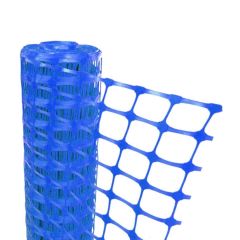
| Blue (standard) | RSMFB |
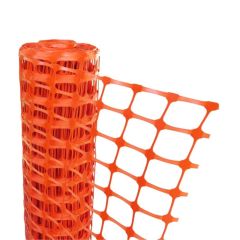
| Orange | RSMFO |
| Green | RSMFG |
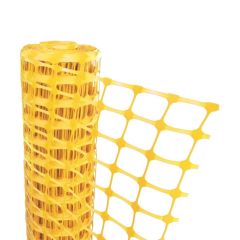
| Yellow | RSMFY |
Barrier fencing colour guide: UK construction and site use
| Colour | Primary use | Typical applications | Sectors |
|---|---|---|---|
|
Blue
|
General site demarcation and controlled access zones | Site compound perimeters, access restriction boundaries, railway possession limits, pedestrian exclusion zones | Construction, civil engineering, railway, utilities |
|
Orange
|
Active hazard warning boundaries | Excavation zones, overhead work areas, live service exposures, roadwork hazard zones | Construction, highways, utilities, gas and water |
|
Green
|
Environmental and low-profile boundaries | Tree protection zones, environmental exclusion areas, landscaping boundaries, countryside and agricultural use | Landscaping, environmental, agriculture, local authority |
|
Yellow
|
Utility and services demarcation | Gas, electricity and water service exclusion zones, underground services surface marking, specific safety zone demarcation | Utilities, gas, electricity, water, highway |
! Colour coding conventions vary by principal contractor and sector. Always refer to the site safety plan or RAMS documentation for the colour convention applicable to your specific project.
Compatibility
| Application or condition | Status |
| Tree protection zones and arboricultural exclusion areas | ✓ Compatible |
| Landscaping and horticultural boundary demarcation | ✓ Compatible |
| Environmental and ecological exclusion zones | ✓ Compatible |
| Public park and open space temporary boundaries | ✓ Compatible |
| Agricultural and countryside boundary demarcation | ✓ Compatible |
| Garden and domestic boundary demarcation | ✓ Compatible |
| High-visibility hazard warning zones | ✗ Not suitable — use orange |
| Permanent perimeter security fencing | ✗ Not suitable |
| Vehicle impact containment | ✗ Not suitable |
| Anti-climb or high-security applications | ✗ Not suitable |
Who is this for
Green HDPE mesh barrier fencing at this specification is used by landscaping contractors, arboriculturists, environmental consultants, and local authority grounds teams who need to establish temporary boundaries in natural or public-facing environments where high-visibility orange or blue fencing would be inappropriate. The green colouring makes it the correct choice for tree protection zones under BS 5837:2012, ecological exclusion areas around protected habitats, public park works where visual impact on visitors must be minimised, and agricultural or countryside boundary demarcation where the fence line needs to blend into the surrounding landscape. Site managers on construction projects adjacent to residential areas or within conservation areas also specify green barrier fencing where planning conditions or community relations require a low-profile approach to site boundary marking.
Typical applications
-
Establishing tree protection zones around retained trees during construction and landscaping works in compliance with BS 5837:2012 guidance on trees in relation to design, demolition, and construction.
-
Defining ecological exclusion zones around protected habitats, nesting sites, and environmentally sensitive ground during site clearance, groundwork, and civil engineering operations.
-
Creating temporary boundaries around landscaping works in public parks, open spaces, and amenity areas where visual impact on park users must be kept to a minimum throughout the project.
-
Demarcating restricted areas on countryside, agricultural, and estate sites where the fence line must blend into grass, hedgerow, and vegetation backgrounds without visual intrusion.
-
Providing garden and domestic boundary demarcation during landscaping, ground preparation, and planting works where a temporary low-profile barrier is required.
-
Protecting newly seeded or turfed areas from pedestrian access during establishment periods on public and private landscaping projects.
-
Cordoning off works areas on golf courses, sports fields, and recreational grounds where a visually discreet temporary boundary is required around maintenance or construction zones.
How to use
Step 1: Determine the fence line and calculate the number of fencing pins or timber stakes required. Use a minimum of one fixing point per 5 metres. In exposed or windy conditions, reduce the spacing to one fixing point per 3 metres.
Step 2: Insert fencing pins or drive timber stakes into the ground at measured intervals along the fence line. For tree protection zones, ensure fixing points do not penetrate the root protection area of any retained tree as defined in the arboricultural impact assessment.
Step 3: Attach the leading edge of the mesh roll to the first pin or stake using cable ties or wire fixings at top, middle, and base of the mesh. Fix at three points on every support to prevent the lower mesh from billowing and disengaging.
Step 4: Unroll the mesh along the fence line, attaching to each subsequent pin or stake at three fixing points as you progress. Keep the mesh taut between supports to maintain a visible, upright fence line.
Step 5: At the end of the roll or at a change of direction, cut the mesh cleanly using snips or heavy scissors and fix the cut edge securely to the final support.
Step 6: At the conclusion of the project, remove all fixings, re-roll the mesh from one end, and secure the roll with cable ties for storage and redeployment.
Common mistakes
Using green where a hazard warning colour is required: Green is a low-profile, recessive colour. It is not appropriate for active hazard warning zones, excavations, or areas where maximum visibility of the boundary is required for safety. Use orange for hazard warning applications.
Fixing into the root protection area of retained trees: On arboricultural tree protection installations, driving stakes or pins into the ground within the root protection area can cause root damage that undermines the purpose of the protection zone. Plan fixing point locations to avoid the RPA before installation begins.
Under-pinning the fence line: One fixing point per 5 metres is the minimum for standard conditions. On exposed sites or in persistent wind, reduce to one per 3 metres. A sagging or collapsed fence line fails its demarcation function and may constitute a non-compliance on tree protection or ecological exclusion installations.
Single-point fixing at the top only: Attaching the mesh with a single cable tie at the top allows the lower section to billow outward and disengage from the support. Always fix at top, mid, and base at every support point.
Leaving mesh in contact with soil or standing water for extended periods: Whilst HDPE is weatherproof, mesh in prolonged contact with wet soil at ground level will accumulate debris and degrade faster than mesh held clear of the ground surface. Inspect the base of the fence line regularly on long-duration installations.
Safety
Green HDPE mesh barrier fencing is a demarcation product. It defines a boundary and deters casual access. It does not physically prevent determined entry by adults, provide vehicle containment, or substitute for solid hoarding or root protection fencing on sites where structural protection of trees or habitats is specified by an arboricultural or ecological consultant. On tree protection installations, the fence line should be agreed with the project arboriculturist and referenced in the site-specific arboricultural method statement. On ecological exclusion zones, deployment should be confirmed with the relevant ecologist before works commence.
Maintenance
After each deployment, remove all cable ties and wire fixings before re-rolling. Inspect the full roll for tears, cuts, or areas of UV degradation before reuse. Rinse with clean water to remove soil, vegetation, and debris before storage. Re-roll firmly and store in covered conditions away from prolonged direct sunlight between projects.
Frequently Asked Questions
Q: Why is green the correct colour for tree protection and environmental demarcation rather than orange or blue?
A: Green barrier fencing is visually recessive against grass, hedgerow, and tree canopy backgrounds, which makes it appropriate for sites where the fence line must blend into the natural environment rather than stand out against it. On tree protection installations, public park works, and projects in conservation areas or sensitive landscapes, planning conditions or community relations requirements may specifically require a low-profile approach to site boundary marking. Orange and blue fencing fulfil hazard warning and general construction demarcation functions respectively. Green fulfils a distinct low-profile demarcation function that neither of those colours can serve appropriately in natural settings.
Q: Is this fencing suitable for tree protection zones under BS 5837:2012?
A: Green HDPE mesh barrier fencing is widely used to establish tree protection zones on UK construction and landscaping sites in line with BS 5837:2012 guidance on trees in relation to design, demolition, and construction. The specific requirements for tree protection fencing on any project, including fence type, height, and fixing method, should be agreed with the project arboriculturist and referenced in the arboricultural method statement. The fixing points for fencing pins and timber stakes must be located outside the root protection area of any retained tree as defined in the arboricultural impact assessment.
Q: What is this fencing NOT suitable for?
A: This fencing is not suitable for active hazard warning zones where maximum boundary visibility is required. It is not appropriate for permanent perimeter security, anti-climb applications, vehicle impact containment, or any situation requiring a structural barrier. It provides no resistance to determined access by adults and must not be used as the sole protection measure on high-risk excavations accessible to the public. For hazard warning demarcation, use orange barrier fencing. For structural containment, use rigid temporary fence panels.
Q: Can this fencing be used to protect newly seeded or turfed areas?
A: Yes. Green HDPE mesh barrier fencing is a practical choice for protecting newly seeded lawns, turfed areas, and planted beds from pedestrian access during the establishment period. The green colour is visually appropriate in a garden or amenity setting and the lightweight mesh can be fixed to short timber stakes without causing ground disturbance to the seeded surface around the protected area.
Q: How does green mesh barrier fencing differ from the other colours in the range?
A: All colours in the barrier fencing range share the same HDPE construction, 100 x 26mm flat oval mesh aperture, 1m x 50m roll format, and weatherproof specification. The difference is the demarcation function each colour serves on site. Green is the low-profile colour for landscaping, environmental, and ecological applications. Blue is for general construction and railway demarcation. Orange is for active hazard warning. Yellow is for utility and services demarcation. Refer to the site safety plan or RAMS documentation for the colour coding convention applicable to your specific project.
Q: How many fencing pins do I need for a 50m roll?
A: The minimum is one fencing pin per 5 metres, giving a minimum of 10 pins for a full 50m roll. On exposed sites or where the fence line is subject to pressure from wind or contact, reduce the spacing to one pin per 3 metres, requiring approximately 17 pins per roll. Fix the mesh to each pin at three points — top, mid, and base — rather than a single point at the top.
Q: Can this fencing be reused across multiple landscaping projects?
A: Yes. The HDPE construction and UV-resistant colouring allow the mesh to be re-rolled, stored, and redeployed across multiple projects. Service life depends on handling care during installation and recovery and on storage conditions between uses. Inspect the full roll before each redeployment and replace any roll showing significant tearing, brittleness, or loss of mesh integrity.
Q: Why buy green mesh barrier fencing from CMT Group?
A: CMT Group operates its own delivery fleet covering over 95% of the UK mainland. Order by 7pm for next-day delivery nationwide, with live tracking, real-time ETAs, and What3Words integration for precise delivery to any site entrance or compound gate. For procurement teams managing ongoing landscaping or environmental project requirements, the EDGE portal provides contract pricing, bulk ordering, role-based spending controls, and full delivery visibility from a single account.