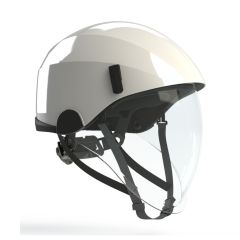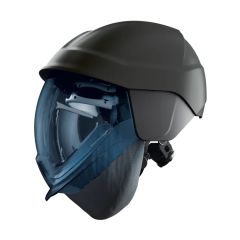
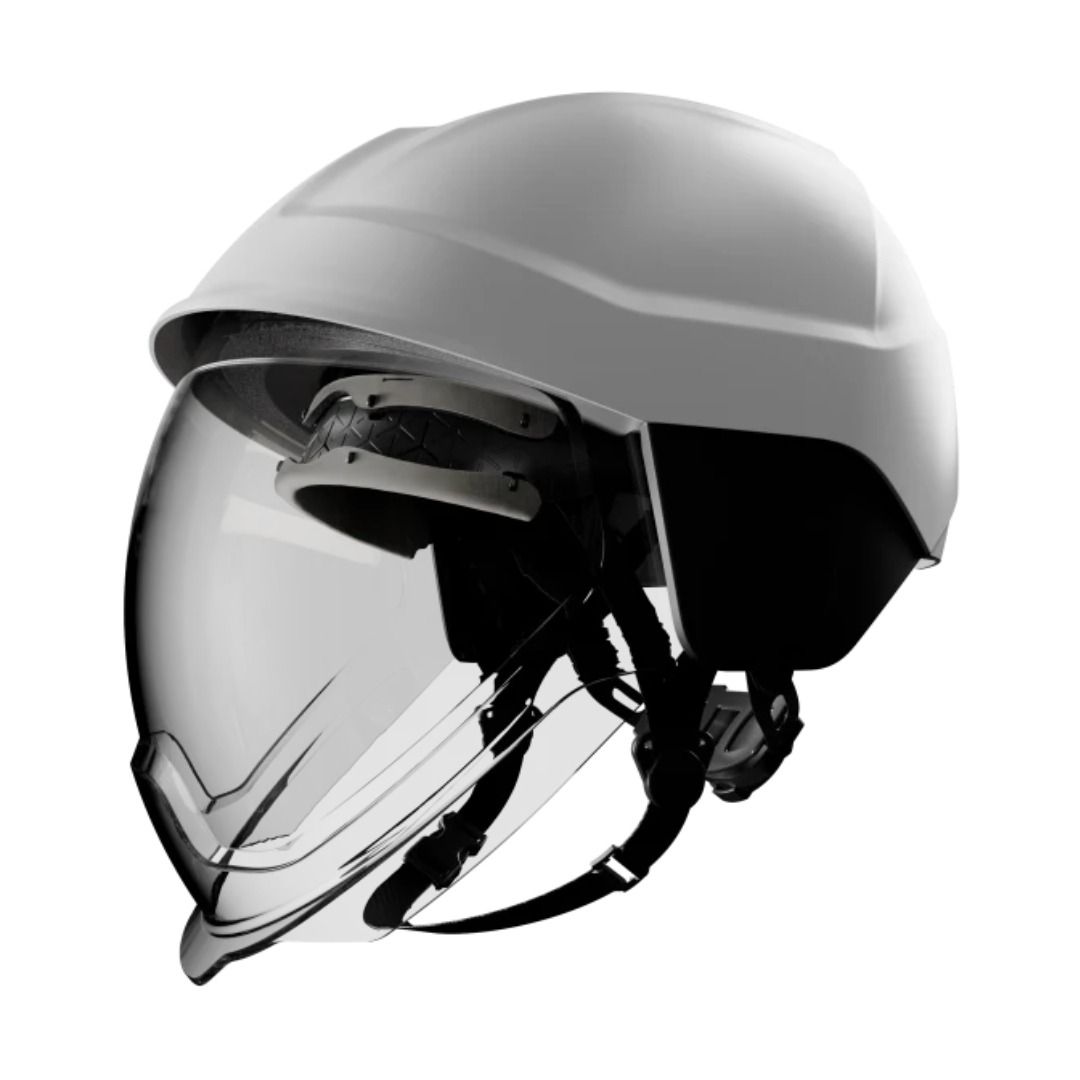
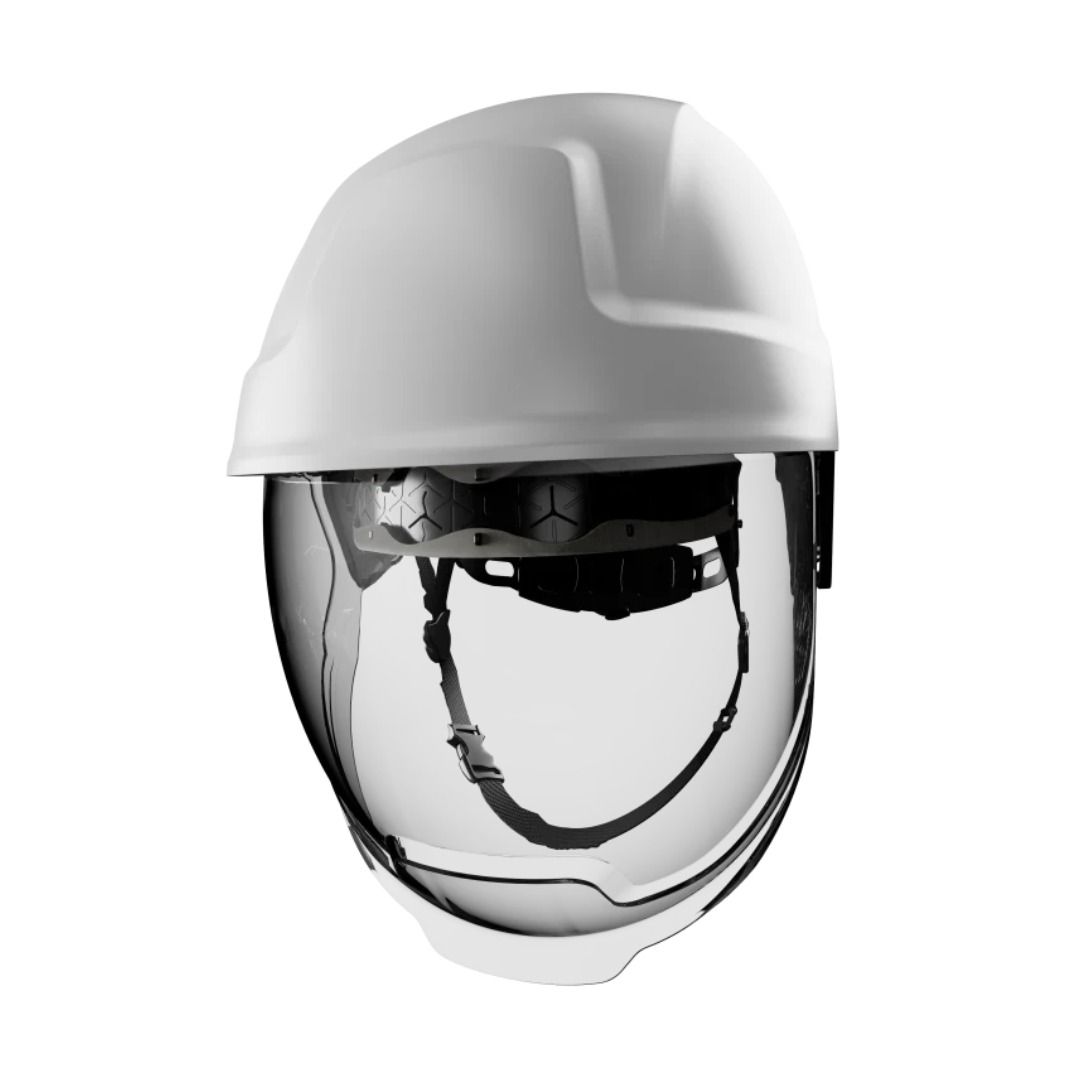
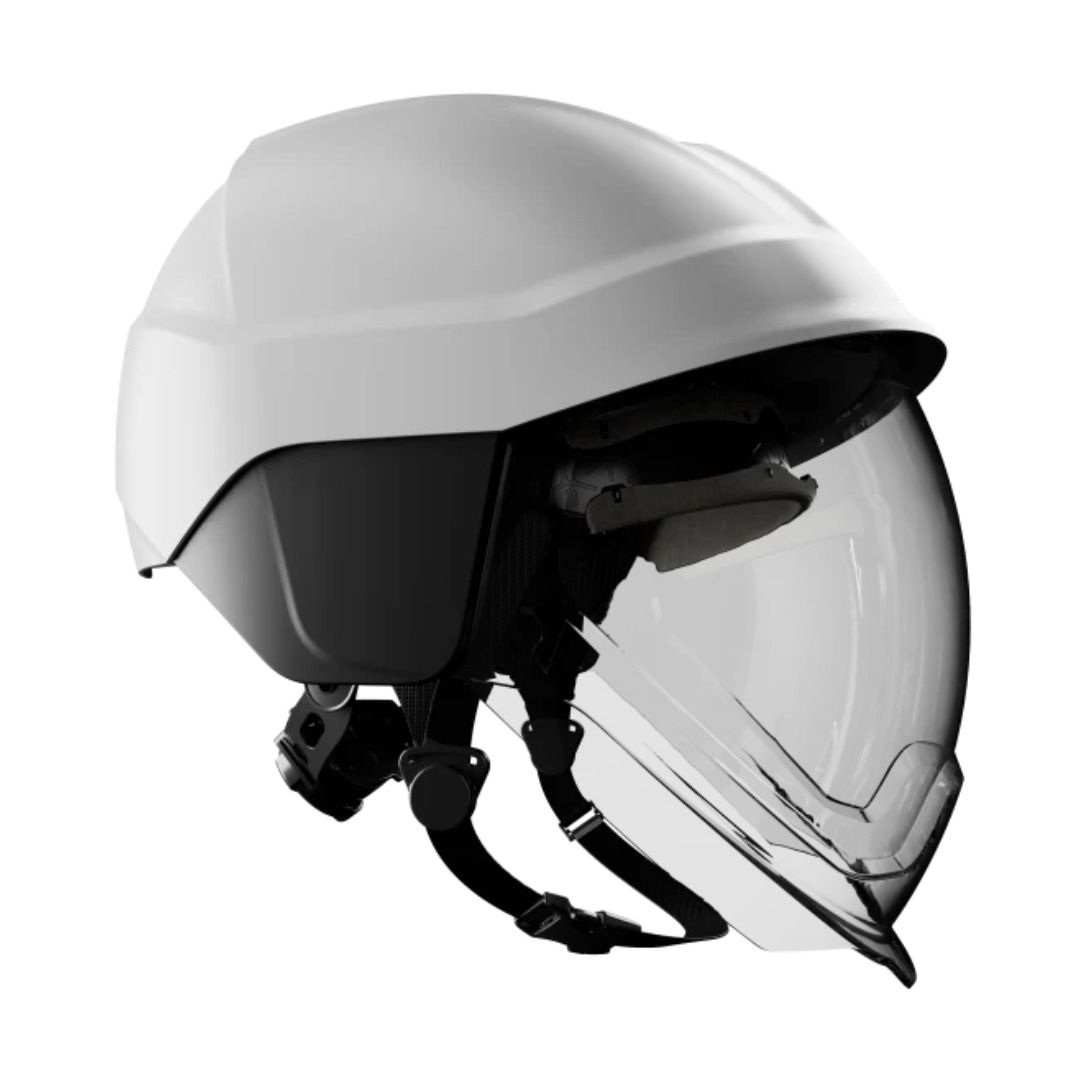
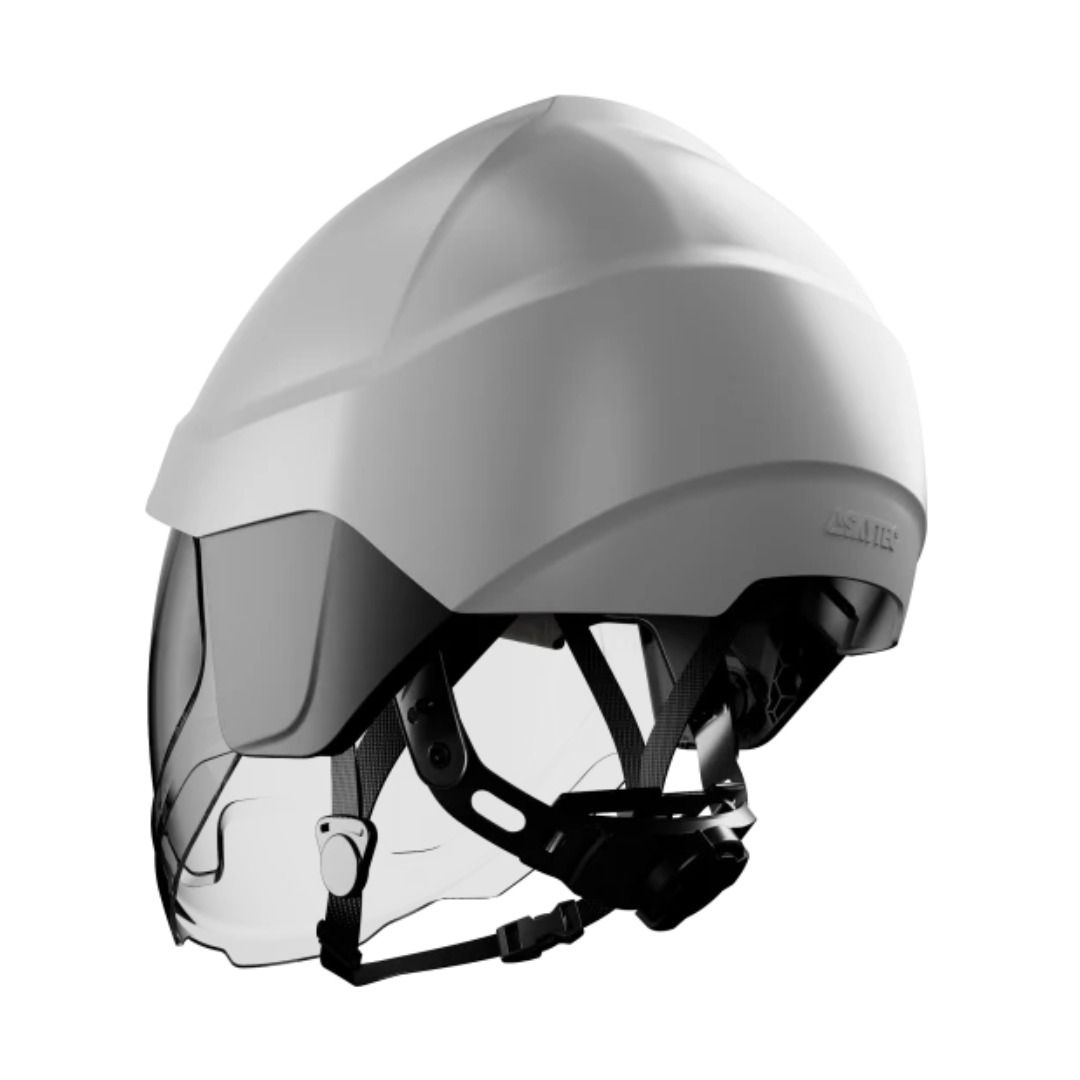
Arc flash Class 2 safety helmet with an integrated retractable visor and detachable textile chinguard, designed for electrical engineers and utilities operatives working in arc flash risk environments.
- GS-ET-29 Arc Flash Protection Class 2
- EN 50365:2002 electrically insulating, 440V AC
- EN 397:2012 + A1:2012 certified, CE marked
- Integrated retractable visor, dual position locking, Impact Level B
- Anti-fog and anti-scratch visor, EN 166:2001, 2.3mm polycarbonate
- Detachable rotating textile chinguard, fire-retardant nylon skeleton
- PC/ABS shell, foam liner, 4-point adjustable chinstrap
- Rated to -30°C
Skytec E Pro 2 Arc Flash Class 2 Helmet - Integrated Visor and Textile Chinguard
Arc flash Class 2 safety helmet with an integrated retractable visor and detachable textile chinguard, designed for electrical engineers and utilities operatives working in arc flash risk environments.
- GS-ET-29 Arc Flash Protection Class 2
- EN 50365:2002 electrically insulating, 440V AC
- EN 397:2012 + A1:2012 certified, CE marked
- Integrated retractable visor, dual position locking, Impact Level B
- Anti-fog and anti-scratch visor, EN 166:2001, 2.3mm polycarbonate
- Detachable rotating textile chinguard, fire-retardant nylon skeleton
- PC/ABS shell, foam liner, 4-point adjustable chinstrap
- Rated to -30°C
Order 1x to earn 144 FASTPoints
Order to earn 144 FASTPoints
Log in to access trade discountsSkytec E Pro 2 Arc Flash Class 2 Helmet
Arc flash Class 2 safety helmet with an integrated retractable polycarbonate visor and a detachable rotating textile chinguard, built for electrical engineers, utilities operatives, and maintenance teams working in arc flash risk environments.
The E Pro 2 is certified to GS-ET-29 Class 2 and EN 50365:2002, with EN 397:2012 + A1:2012 industrial helmet certification and CE marking, delivering combined head, face, and chin protection in a single system.
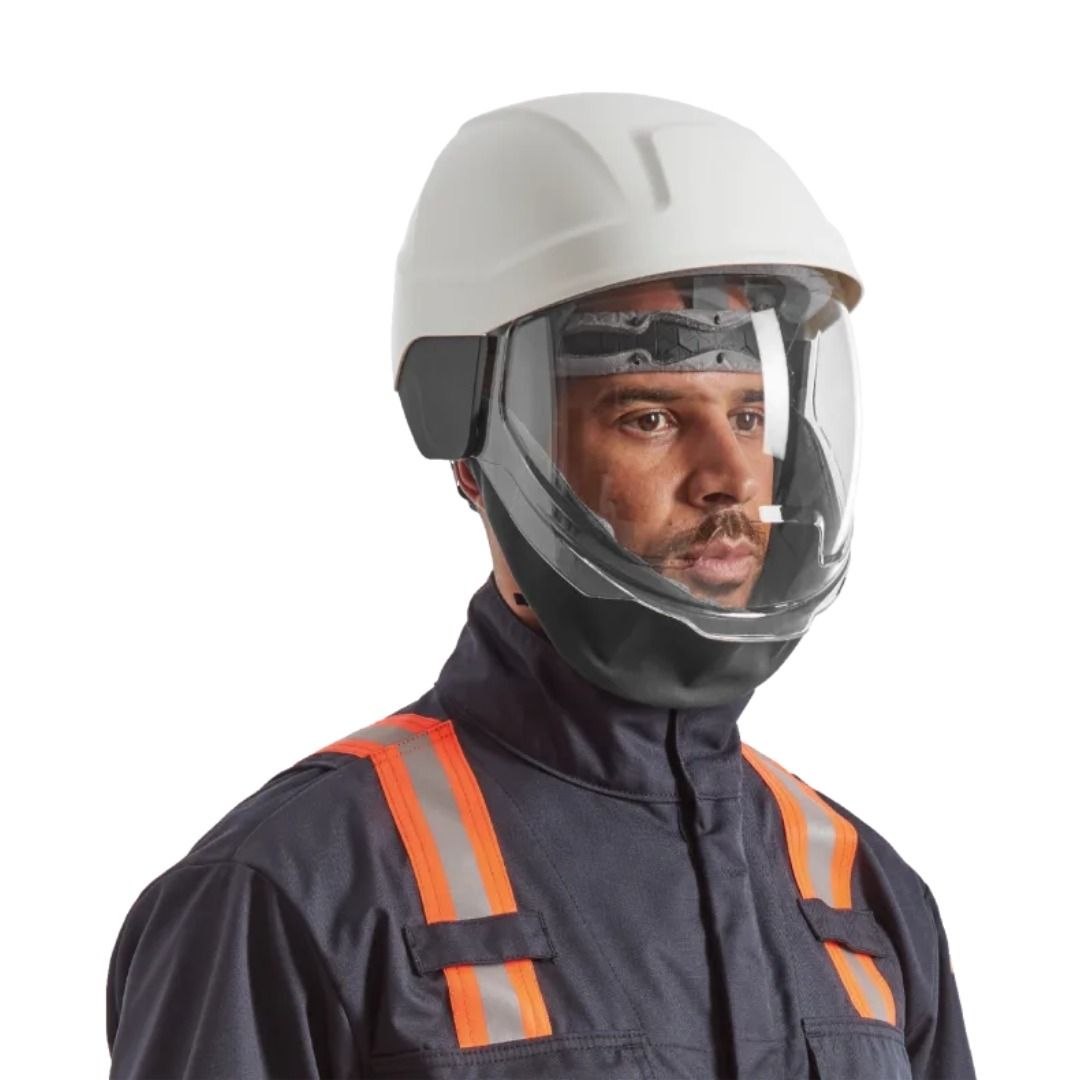
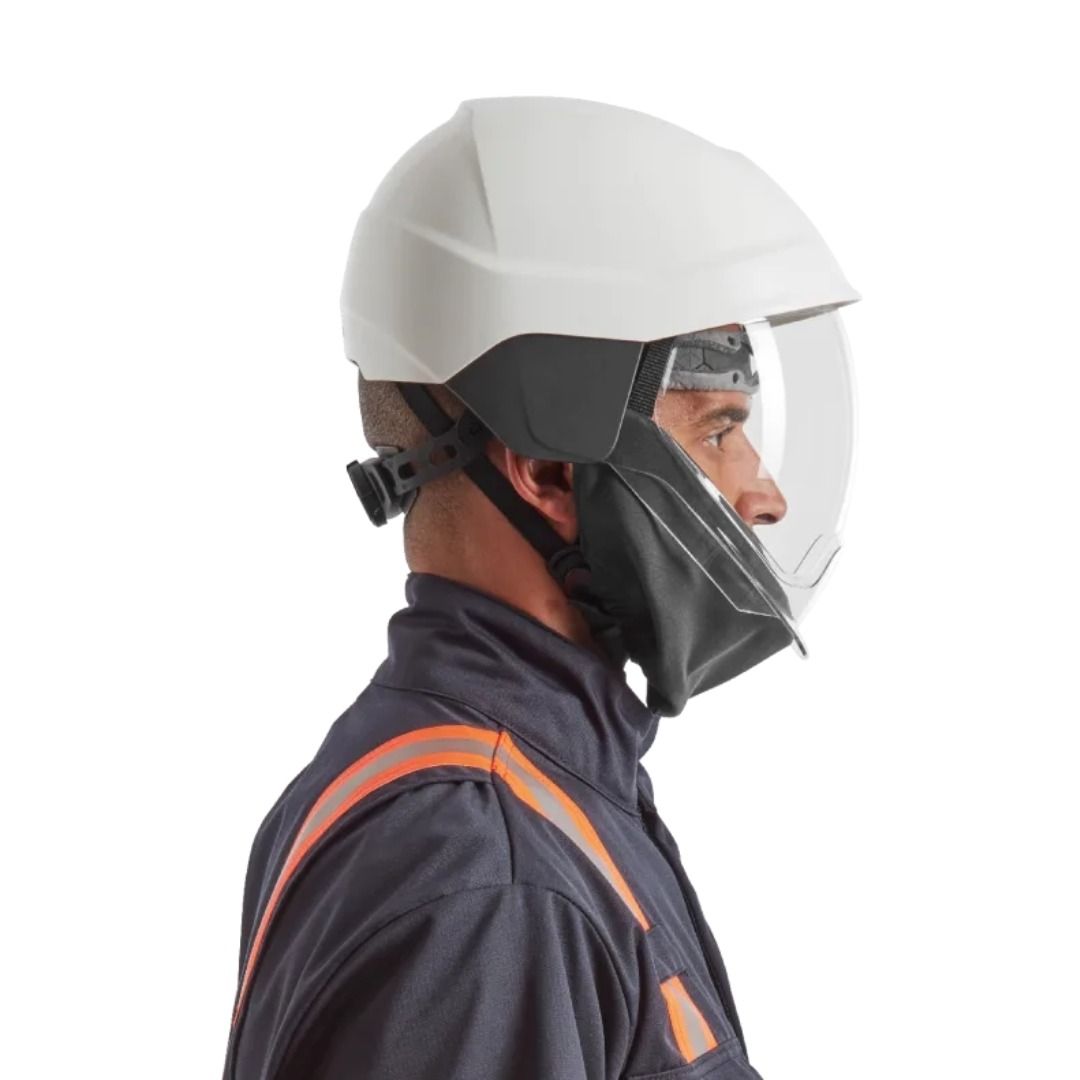
The detachable chinguard extends arc flash coverage to the ears, chin, and sides of the neck, areas left exposed by a visor-only helmet system.
How the textile chinguard closes the coverage gap in arc flash head protection
A visor alone covers the face and eyes. In an arc flash event, the ears, chin, and lateral neck are exposed to the same thermal release and molten metal ejection that the visor deflects from the face. Site operatives often improvise additional coverage with balaclava hoods or layers that create fit problems with the helmet and slow down pre-work preparation. The E Pro 2 addresses this with a detachable rotating textile chinguard built directly into the helmet system, constructed from a nylon skeleton with fire-retardant fabric and designed to deploy quickly without removing the helmet.
Key Features
-
GS-ET-29 Class 2 arc flash protection: Class 2 is the higher of the two arc flash protection classes within GS-ET-29, the European benchmark standard for arc flash helmet and visor systems, corresponding to higher fault current scenarios than Class 1. GS-ET-29 Class 2 is the classification most commonly specified in UK electrical safety PPE requirements for substation, switchgear, and distribution network maintenance work.
-
EN 50365:2002 electrically insulating, 440V AC: Certified for use on or near live low-voltage installations up to 1,000V AC and 1,500V DC. The optional EN 397 electrical insulation requirement, tested independently to 440V AC, provides verified electrical resistance performance of the shell material as a separate confirmation.
-
Detachable rotating textile chinguard with fire-retardant nylon skeleton: The chinguard extends head and face coverage to the ears, chin, and sides of the neck. Detachable for tasks where full coverage is not specified, and rotating to deploy without removing the helmet. Nylon skeleton structure with fire-retardant fabric throughout.
-
Integrated retractable visor, dual position locking, 2.3mm polycarbonate: The visor retracts fully into the outer shell when not deployed and locks into the working position via a defined locking mechanism. The 2.3mm polycarbonate thickness meets EN 166:2001 Impact Level B. The sphere-shaped design provides a wider field of view than flat visor alternatives.
-
Anti-fog inner surface and anti-scratch outer coating, EN 166:2001: Anti-fog treatment prevents condensation build-up during transitions between cold outdoor and warm indoor environments. Anti-scratch outer coating maintains optical clarity over the service life of the visor. Full EN 166:2001 marking: 2C-1.4 1 B 8-2-1 K N.
-
PC/ABS shell with foam liner and 4-point adjustable chinstrap: Polycarbonate outer shell for rigidity under impact and thermal loading. ABS inner for impact energy absorption. The 4-point chinstrap secures the helmet, visor, and chinguard as a complete system against displacement during the pressure wave of an arc flash incident.
-
Wheel ratchet adjustment, 53cm to 62cm, replaceable sweatband: Ratchet adjustment accommodates a wide head size range without tools. The replaceable polyurethane/foam sweatband extends service life and maintains hygiene across extended working periods. Shelf life: 5 years from manufacture date.
Who is this for
Trades and roles:
-
Electrical engineers
-
Utilities network operatives
-
Substation maintenance technicians
-
Switchgear operatives
-
Cable jointing teams
-
Industrial maintenance electricians
Industries:
-
Utilities (electricity distribution and generation)
-
Chemicals
-
Highways and infrastructure
-
Maritime
-
Construction (electrical)
Specifications
| Specification | Detail |
| Product Name | Skytec E Pro 2 Arc Flash Class 2 Helmet - Integrated Visor and Textile Chinguard |
| SKU | SKH00002AZ |
| Helmet Category | Arc Flash Class 2 Safety Helmet with Integrated Visor and Chinguard |
| Arc Flash Protection (GS-ET-29) | Class 2 |
| Electrically Insulating Standard | EN 50365:2002 |
| Electrical Insulation (EN 397) | 440V AC |
| Industrial Safety Helmet Standard | EN 397:2012 + A1:2012 |
| Very Low Temperature Rating | -30°C |
| Molten Metal Splash | Tested |
| Lateral Compression | Tested |
| Eye/Face Protection Standard | EN 166:2001 |
| Visor EN 166:2001 Marking | 2C-1.4 1 B 8-2-1 K N |
| Visor Tint | 1.4 Blue or I/O Waterproof |
| Visor Optical Class | 1 (for continuous work) |
| Visor Impact Rating | Level B (medium-energy impact) |
| Visor Treatment | Anti-fog (inner), anti-scratch (outer) |
| Visor Thickness | 2.3mm polycarbonate |
| Chinguard | Detachable rotating textile, nylon skeleton, fire-retardant fabric |
| Shell Material | Polycarbonate and ABS (PC/ABS) |
| Liner | Foam |
| Peak | No peak |
| Chinstrap | 4-point adjustable |
| Adjustment System | Wheel ratchet |
| Harness Material | Nylon |
| Sweatband | Replaceable (Polyurethane/Foam) |
| Size Range | 53cm to 62cm (adjustable) |
| CE Marking | ✓ |
| Shelf Life | 5 years from manufacture date |
| Colour | White shell, black secondary |
| Weight | 740g |
| Dimensions | 295mm (L) x 224mm (W) x 240mm (H) |
Compatibility
| Application or condition | Status |
| Live low-voltage electrical work (up to 1,000V AC / 1,500V DC) | ✓ Compatible |
| GS-ET-29 Class 2 arc flash environments | ✓ Compatible |
| Outdoor electrical work at temperatures down to -30°C | ✓ Compatible |
| Substation, switchgear, and transformer maintenance | ✓ Compatible |
| Utilities, chemicals, maritime, and highways electrical maintenance | ✓ Compatible |
| Tasks requiring extended chin and neck coverage alongside visor | ✓ Compatible |
| Environments requiring EN 50365:2023 Clause 4.3 certification | ✗ Not certified |
| Arc flash specifications requiring cal/cm² rated visor (ASTM F2178) | ✗ Not rated |
| Electrical installations above 1,000V AC / 1,500V DC | ✗ Not rated |
| Welding operations | ✗ Not suitable |
| Applications requiring respiratory protection | ✗ Not suitable |
Who is this for
The E Pro 2 is designed for electrical engineers, utilities operatives, and industrial maintenance electricians carrying out live low-voltage electrical work in environments where arc flash risk has been formally assessed and GS-ET-29 Class 2 protection has been specified. Its primary users are substation maintenance teams, switchgear operatives, cable jointers, and electrical maintenance technicians in the utilities, chemicals, maritime, and highways infrastructure sectors. The integrated visor and detachable chinguard system is particularly suited to sites where the risk assessment identifies exposure risk to the chin and lateral neck alongside the face, and where combined Class 2 arc flash head and chin protection is required as a single assessed unit.
Typical applications
-
Carrying out switching operations on live low-voltage switchgear in electrical substations and distribution networks.
-
Performing fault diagnosis and live testing on low-voltage electrical panels in utilities and industrial facilities where de-energisation is not reasonably practicable.
-
Cable termination and jointing on live or recently de-energised low-voltage distribution systems.
-
Inspection and planned maintenance of transformer equipment and associated low-voltage switchgear within the EN 50365:2002 voltage scope.
-
Electrical maintenance in chemical processing facilities where GS-ET-29 Class 2 head and face protection has been specified in the site arc flash PPE programme.
-
Maritime electrical maintenance requiring combined arc flash head, face, and chin protection as a single system.
-
Highways and infrastructure electrical maintenance requiring Class 2 arc flash head protection at outdoor temperatures down to -30°C.
-
Live electrical fault response on low-voltage infrastructure in utilities distribution networks where combined visor and chinguard coverage is required by the site safety rules.
How to use
Step 1: Inspect the shell, visor, and chinguard for damage before each use. Check the visor surface for cracks, deep scratches, surface crazing, or thermal discolouration. Remove from service if any damage is found.
Step 2: Adjust the wheel ratchet within the 53cm to 62cm range until the headband seats firmly without pressure points.
Step 3: If your risk assessment requires it, attach the chinguard and rotate it into the deployed position. Confirm it seats correctly around the chin and ears with no loose edges.
Step 4: Secure all four points of the chinstrap, adjusted so the strap sits flat under the chin with no slack.
Step 5: Pull the visor fully down until it locks into the deployed position. Check the locking mechanism has engaged and the visor forms a consistent seal with no gaps at the sides or chin. Do not begin live electrical work until both visor and chinguard are confirmed in position.
Step 6: After use, clean the shell and visor with warm soapy water. Do not use chemicals or abrasive cleaners on any component. Air dry before storage.
Step 7: Replace immediately after any arc flash incident, regardless of visible condition.
Common mistakes
-
Leaving the visor retracted during live work: the visor must be locked in the deployed position before any live electrical task begins, without exception.
-
Not deploying the chinguard when the risk assessment requires it: if your site arc flash PPE programme specifies combined face and chin coverage, the chinguard must be deployed alongside the visor.
-
Using this helmet where EN 50365:2023 Clause 4.3 is specified: the E Pro 2 is certified to EN 50365:2002 only. If your PPE specification references EN 50365:2023, this helmet does not meet it.
-
Continuing to use a helmet after any arc flash event: internal structural degradation from an arc flash incident is not visible. Replace immediately.
-
Cleaning with chemicals or abrasive products: warm soapy water only. Solvents and chemical cleaners degrade the PC/ABS shell and polycarbonate visor.
Safety
This helmet is certified to EN 50365:2002 for electrically insulating protection on low-voltage installations up to 1,000V AC and 1,500V DC, and to GS-ET-29 Class 2 for arc flash protection. It is not rated for work on electrical installations above these voltage limits. Under the Electricity at Work Regulations 1989, suitable PPE must be selected and used for all live electrical work where de-energisation is not reasonably practicable. The visor must be locked in the deployed position and the chinguard attached before live electrical work begins. The shelf life is 5 years from the manufacture date marked inside the shell. Replace immediately following any arc flash incident. This helmet does not carry a cal/cm² arc flash energy rating; if your risk assessment specifies protection by incident energy, the Skytec E Pro 3 carries a 28 Cal/cm² rated visor system and should be considered.
Maintenance
Clean after each use with warm soapy water. Do not use chemical or abrasive cleaners on any part of the helmet, visor, or chinguard. Air dry before storage. Store out of direct sunlight in original packaging where possible. Inspect shell, visor, and chinguard before every use. Check the visor locking mechanism engages cleanly in both positions. Replace the sweatband when it shows visible wear or loss of shape. Replace the helmet at 5 years from the manufacture date, following any arc flash incident, or when any damage is identified during inspection.
Frequently Asked Questions
Q: What does GS-ET-29 Class 2 mean and how does it relate to my arc flash risk assessment?
A: GS-ET-29 is the European standard used to test and classify arc flash protection in safety helmet and visor systems. Class 2 is the higher of the two protection classes within the standard, corresponding to arc flash scenarios at higher fault currents than Class 1. In UK electrical safety specifications, GS-ET-29 Class 2 is the arc flash classification most commonly referenced for substation, switchgear, and distribution network maintenance work. To verify this helmet is appropriate for a specific task, confirm that your site arc flash risk assessment specifies GS-ET-29 Class 2 head protection, or that the protection class it requires does not exceed Class 2.
Q: What does EN 50365:2002 cover and how does the electrical insulation work?
A: EN 50365:2002 is the standard for electrically insulating helmets used on or near live low-voltage electrical installations up to 1,000V AC and 1,500V DC. The E Pro 2 also meets the optional EN 397 electrical insulation requirement, which independently tests the shell's electrical resistance performance at 440V AC. These are two separate verifications: EN 50365:2002 establishes the helmet's suitability for use in low-voltage electrical environments, whilst the EN 397 test confirms the shell's resistance to current flow at 440V AC. Both are listed in the helmet's CE certification and appear in the conformity documentation.
Q: What is this helmet NOT suitable for?
A: The E Pro 2 is not rated for electrical installations above 1,000V AC or 1,500V DC, which falls outside the scope of EN 50365:2002. It does not carry a cal/cm² arc flash energy rating under ASTM F2178, so it cannot be directly matched against incident energy values from a formal arc flash hazard analysis. If your specification requires a cal-rated visor, the Skytec E Pro 3 carries a 28 Cal/cm² ASTM F2178-rated system. The E Pro 2 is not certified to EN 50365:2023 Clause 4.3; if that specific standard version is referenced in your PPE documentation, this helmet does not meet it. It provides no respiratory protection and is not suitable for welding.
Q: Why does the detachable textile chinguard matter for arc flash protection?
A: A visor covers the face and eyes but leaves the ears, chin, and sides of the neck exposed to the thermal release and molten metal ejection of an arc flash event. The E Pro 2's chinguard addresses this by extending coverage to those areas using a nylon skeleton with fire-retardant fabric. For tasks where a risk assessment identifies thermal exposure risk beyond the face, or where site safety rules require combined head, face, and chin coverage, the chinguard provides protection that a visor-only system cannot. It is detachable for tasks where full coverage is not required, and rotates into position without removing the helmet.
Q: How is the E Pro 2 different from the E Pro 3, and when should I specify each?
A: The E Pro 2 is certified to EN 50365:2002 and GS-ET-29 Class 2, with no cal/cm² visor rating. The E Pro 3 is certified to EN 50365:2023 Clause 4.3 Class 2, carries a 28 Cal/cm² visor rating under ASTM F2178:2023a, and holds IEC 62819 APC 2 alongside GS-ET-29 Class 2. Specify the E Pro 2 where your site PPE documentation references EN 50365:2002 and GS-ET-29 Class 2 without a cal/cm² requirement. Specify the E Pro 3 where your arc flash risk assessment produces incident energy values that must be matched directly against a cal/cm² rated system, or where EN 50365:2023 is specifically referenced.
Q: How do I correctly deploy the visor and chinguard before starting live electrical work?
A: Attach the chinguard first if your assessment requires it: rotate it to the deployed position and confirm it seats correctly around the chin and ears with no loose edges. Then pull the visor fully downwards until it clicks into the locked position. Once both are deployed, check the visor forms a consistent seal with no gap at the sides or chin, and that the chinguard has no unsecured edges. Do not begin live electrical work until both components are confirmed in position and the chinstrap is secured.
Q: How long does this helmet last and how should I maintain it?
A: The shelf life is 5 years from the manufacture date, which is marked inside the shell. Clean after each use with warm soapy water only. Do not use chemicals, solvents, or abrasive cleaners on the shell, visor, or chinguard. Air dry before storage and store out of direct sunlight. Replace the sweatband when it shows visible wear. Replace the helmet immediately following any arc flash incident regardless of visible condition, as structural damage from an arc flash event cannot be assessed visually.